How COVID Threatens the Brain - With Dr. Frank Heppner | The Empowering Neurologist EP. 119
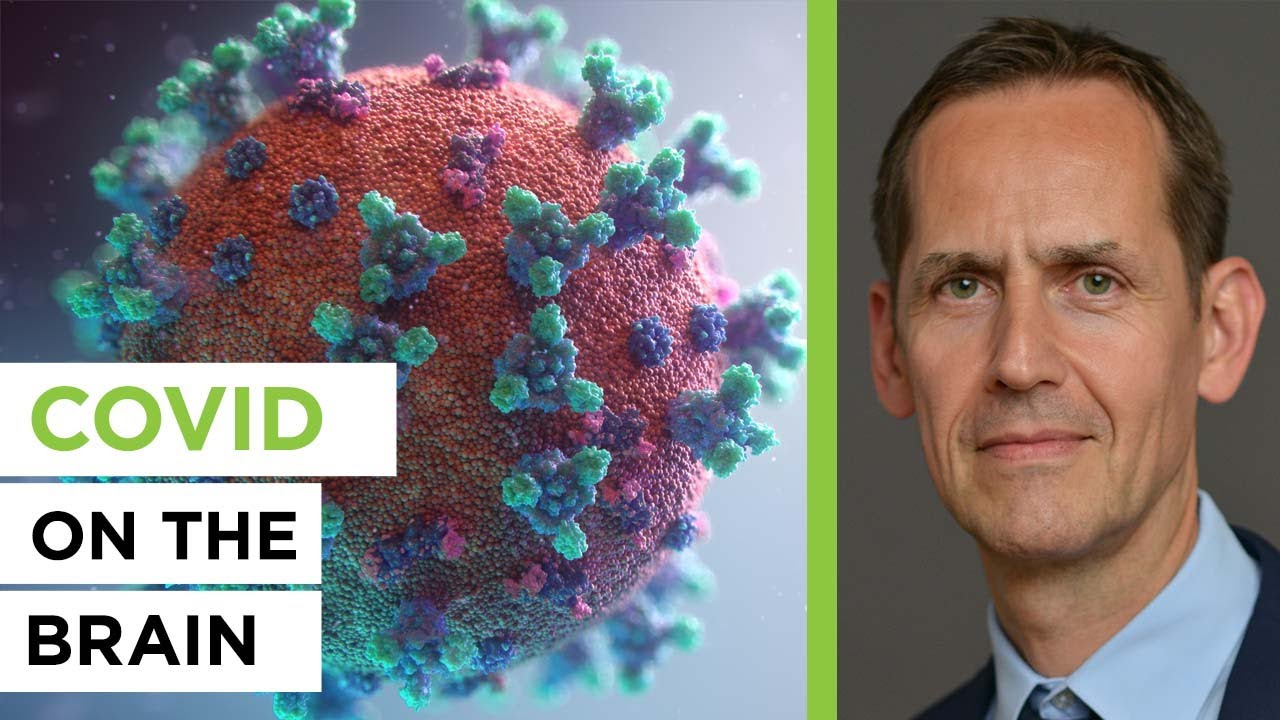
In this episode of The Empowering Neurologist, Dr. David Perlmutter interviews neuropathologist Dr. Frank Heppner about the ways SARS‑CoV‑2 can invade the central nervous system and the downstream neurological consequences. Heppner describes his autopsy series (≈100 cases) that revealed high viral load in the olfactory mucosa and neurons, supporting the olfactory nerve as a primary entry route. He also reports detection of virus in brain endothelial cells, suggesting a secondary blood‑borne pathway that may compromise the blood‑brain barrier. The virus was found in the brainstem and other regions not directly linked to the olfactory system, raising concerns about autonomic dysregulation (breathing, heart rate) and cognitive deficits. Heppner discusses microvascular thrombosis and microinfarcts as common vascular lesions, and emphasizes that neuroinflammation—likely driven by the immune response rather than direct viral cytopathy—underlies many long‑COVID neurological symptoms. He speculates on a possible link between COVID‑induced inflammation and amyloid deposition, drawing parallels to Alzheimer’s disease, and notes early animal work showing that systemic inflammation can precipitate Alzheimer‑like changes. Mitochondrial metabolic alterations in microglia are observed, though causality remains uncertain. The interview touches on therapeutic questions such as CNS penetration of antivirals (e.g., remdesivir) and the need for immune‑modulating strategies. Finally, Heppner outlines future research priorities: detailed mapping of immune actions in the brain, integration of gut‑brain‑immune axes, and interdisciplinary collaboration to translate findings into preventive and therapeutic approaches.
Chapters
You demonstrated, I think, nerve-to-nerve transmission or spread via nerve to nerve, almost in a synaptic way, really through multiple brain regions.
That's true. We found the virus then also to be present, for example, in brainstem, so in regions which are very important for regulation of central functions like breathing, like heartbeat, which are regions which are not directly connected
Well, hello everyone. Welcome again to The Empowering Neurologist. We have a very interesting program today. Today we're going to attempt to answer the question, how does COVID enter the brain? And beyond that, what are the implications of where this virus goes in the brain and what it does in the brain? We'll be interviewing Dr. Frank Heppner from Germany. Dr. Heppner is really leading the charge in terms of giving us information so we can understand what in the heck's going on in the brain with respect to COVID-19 and what are the implications. So let me tell you a little bit more about Dr. Heppner. Dr. Heppner is a full professor and chairman of the Department of Neuropathology at the Charity Hospital University in Berlin. He has also done quite a bit of training in neuropathology, having done work here in the States as well. He was an assistant professor at Scripps Institute in Florida. He also has worked as a tenured professor of neuropathology at both Queen Mary University in London and the Thomas Jefferson University here in Philadelphia. He's been a full professor of neuropathology at the University of Freiburg in Germany and also Emory University in Atlanta here in the States, and has served as a senior director of biology neuroscience discovery with the Janssen company. So we're very delighted to have the opportunity to spend time with him today. Well, hello, Dr. Heppner. Welcome to the program.
Hi there, David. It's nice We're going
to be covering the invasion of the brain by this virus, but I'd like to just start off by, if you could, for our viewers, give us a sense as to how things are going along in Germany right now with reference to the pandemic.
Well, of course, Germany is also hit pretty heavily. We are right at the beginning of the so-called third wave of the corona pandemic. We have right now increasing cases again. We are facing also, as a society, society a lockdown situation, and we still suffer from, so to speak, the problems that arose in the first and second wave. I think this is something that is very important. We typically forget to talk about those longstanding effects that we are suffering still from the very beginning of the pandemic, and therefore we are hit in the very same fashion as many other countries. Despite the fact that we, I think, have a pretty good health system, which helped us to at least get the best possible support for those who were hit heavily by the corona pandemic.
Now, you are having a significant percentage of your new cases representing variants of concern, correct?
Yes, that's right. We have about 80% of mutants, namely the B.1.1.7, 1.1.7 variant is very common here. And this, as it is widely accepted right now, is of course more infectious and apparently also more pathogenetically striking. And therefore this of course increases the severity of this third wave.
One of the things that we've been talking about on the program here has been the notion of long-haul COVID. In other words, these extended symptoms that people are experiencing. We recently interviewed Dr. Del Rio from Emory, and he And he indicated that as many as a third of people, even those who had minimal symptoms to begin with, with their COVID infection, will go on to have issues. How long they're going to last is unclear. And I think, correct me if I'm wrong, but that really prompted you to begin to explore how COVID affects the brain, how it gets into the brain, and what the implications may be. So let's start off by just characterizing the method of entry. How does this virus get into the brain? Then we'll take it from there.
So, I mean, I, as a neurologist, As a neuropathologist, of course, I was intrigued in the very beginning when the first cases were coming up and the first deaths were occurring. We very early on here at the Charité in Berlin decided together with the surgical pathologists, together with the forensic pathologists, to study the cases in detail. And of course, we were struck by the fact that there were initially the acute Neurological symptoms, so the loss of smell, the loss of taste, headache. But very early on, as you pointed out, the first cases of the long COVID were coming up. I mean, the term, the term was coined later on, and we talk about the first wave when we started to ask the question, so how is the brain affected and how would the virus get into the brain? That was kind of the March to August last year, where we studied about 40 cases. In the meanwhile, we have looked at 100 autopsy cases. And the 2 questions were in the center of our interest. It was, as I mentioned, how would the virus make it to the brain? And the second is, what does it to the brain? And we, of course, were assuming that coronavirus could maybe take the same type of approach that other viruses would typically do, that is, take advantage of cranial nerves, where, you know, you have some extensions from the brain to the periphery, so to speak. And one of the most common nerves that is sort of abused by neurotropic viruses is the olfactory nerve. And we were basically mapping the olfactory nerve, starting from the olfactory mucosa, up to the specific brain regions, and we're just asking whether we can find the virus there by genetic methods, by protein methods, by ultrastructure. And the result was, yes, that in most cases we have a very high occupation of the olfactory mucosa, and specifically there of the neurons, of the olfactory neurons within the olfactory mucosa. So this is obviously the port of entry, and then sort of the virus climbs up to the brain and distributes then in the brain also to regions which are not directly connected to the olfaction or to the olfactory nerve where the signals are processed.
You demonstrated, I think, nerve-to-nerve transmission or spread via nerve-to-nerve, almost in a synaptic way, really through multiple brain regions.
That's true. We found the virus then also to be present, for example, brainstem, so in regions which are very important for regulation of central functions like breathing, like heartbeat, which are regions which are not directly connected to the olfactory nerve in the first place. Maybe one important thing is, and that was also one of the things we asked, is in which cells in the brain we can find the virus. And there, and this is supported by many other studies in the meanwhile that were published, we were not able to detect the virus virus in nerve cells or in glial cells. We only found the nerve to be present in endothelial cells, so just next to vessels. And this, of course, is still an important question. It's not entirely clear whether the virus can be also detected in other cells, but it also makes it possible that there is, besides this nerve entry, that whether there is also a bloodstream entry, since— Yes. Endothelial cells, of course, are then the next port of optional additional entry besides climbing up the cranial nerves.
So if indeed there is some availability to enter the brain through the endothelial cell, that really just opens up the, then the entire brain for colonization.
Exactly. And this, of course, would also explain why we can find the virus in brain regions that are not directly connected to the brain nerves, like the brainstem or other regions. And as mentioned, this is in line with a couple of other studies that look now into the virus and brain infection also in deceased COVID-19 patients.
I want to get to that in just a moment, the potential role that the brainstem involvement is having in terms of autonomic dysfunction, but having said that, let me go back just for a moment for the endothelial topic. Is there evidence of increased blood-brain permeability, barrier permeability in this virus?
Well, I think the data is not I mean, the data is there, and of course the limitations of approaching this experimentally are obviously limited. And therefore, one can only assume that in the entire context of— and we should talk about that in addition— of the response to the virus, namely the immune response, the cytokine storm, for example, that this is known to open up the blood-brain barrier. So I would assume that the same takes place also in COVID-19 cases.
And one other tangential question that comes to mind, I promise we'll get back to the brainstem in one moment. Is there evidence that remdesivir as an antiviral does have good permeability into the brain, as do the typical herpes simplex type antivirals?
Well, that's a difficult question to ask a neuropathologist. I mean, this is the typical limitation and typical discussions When it comes down to how good this drug in general is able to enter the brain. You may have physiological data, pharmacokinetic data, which you typically then have in a healthy setting. But of course, you would not be able to mimic this and address this really in total, with total insight in a pathophysiological setting.
You've given us evidence That there is involvement of multiple regulatory centers in the brainstem that are involved in autonomic function, et cetera. So what might some of the clinical presentations be or relationships be that we might be seeing, for example, in a patient in an intensive care situation that might be related to dysregulation centrally?
Of course, I mean, the classical priority symptom is the lung dysfunction. And of course, if you have an ITS patient that has a lung problem due to COVID-19, and on top you may have an affection centrally by dysregulation of this region, of this brain region that directs and orchestrates the lung function, the breathing, this of course does not help. I mean, this is the least to say, and it's of course difficult then to subtract and assign why The breathing function is disabled. It's difficult to say because, you know, you basically have the lung problem and on top you have a central problem that also affects the brain. So it's, as I mentioned, it's difficult to subtract and really say where the general problem comes. But I think it's important to keep in mind that breathing dysfunction may very easily, by this explanation, come from a central problem.
And what about cognitive dysfunction?
I mean, cognitive dysfunction, especially when we now point to the long COVID problems, to the dizziness and then these types of things, which are long-lasting problems, I think it's important to state that we found that there's kind of an inverse correlation in the amount of virus we find in the brain and the duration of the disease. It brings and opens up the discussion whether it's virus-triggered, whether this is an active process through the virus, or whether this is the reaction, for example, of the immune system to the virus. And the fact, as mentioned, that we see little virus the longer a patient is diseased points to the fact that the immune system is rather the problem of, for example, these long COVID neurological problems. and also the cognitive decline. And this, of course, is very interesting when we switch back and look at what we learned over the last decade about neuroimmune and inflammatory effects in the brain in the context of dementia, of neurodegeneration, where we have learned that the inflammation can be a trigger of cognitive dysfunction. And going back to COVID-19, I think that many of these neurological problems and these problems with cognition are rather triggered by the virus that then acts through the immune system. So it's more an immune problem in the end.
Oh, that's interesting. So I mean, our viewers are pretty familiar with the notion of chronic inflammation underlying things like Alzheimer's, certainly Parkinson's. Is there any sense that there is any relationship between this infection and ultimately an amyloid type of response?
I think it's too early to say that because, I mean, we know about COVID-19 only for 1.5 years. But if you ask me, I mean, my basic research field is Alzheimer's, is neuroinflammation. So I've been working on innate immune reaction on microglial cells in the brain for decades. And my pretty simple answer is, Yes, there will be infection. I'm expecting this because I'm a strong believer in chronic inflammation does trigger cognitive dysfunction, which may be, of course, as kind of a surrogate marker, trigger also a higher amount of amyloid deposition. I think amyloid deposition is one of the typical ways how a dysfunctional brain Is mimicked or is transported.
That's a cause of concern that, you know, hearing you say that, it's something I've been thinking about. You know, we characterize amyloid as being an antimicrobial peptide and wondering if indeed there would be, if this would be enough. There's speculation, certainly work of Dr. Ruth Itzaki, that amyloid is a response element as it relates to chronic HSV-1 infection. And, you know, my concern is if the number of people who are expected to get COVID, if that, whatever that number is, it's a large number on the planet, and whatever percentage of those do have, in fact, a central nervous system involvement, then the long-term implications as it relates to what we just talked about, this upregulation of amyloid production, could really have an impact on the set point of cognition for our planet, if you will.
On the other hand, I don't want to sort of point to too shocking scenarios. I think we've been suffering from that as well a lot within the COVID-19 pandemic. But I think that, you know, subtle infections or obvious infections, virus infections, bacterial infections are something we are exposed to the entire life. And I think We only understand with these type of very acute and very severe viral infections that they also do something probably long-term-wise to our brains. But this is certainly not the only virus, and we have been exposed earlier to such events. And I remember, for example, a very intriguing— to me, a very intriguing animal study where mice were very early on exposed to a very general inflammatory stimulus. And these mice that were not altered whatsoever did develop Alzheimer-like changes. So, this is one of the very strong experiments and proves to me that pure, early-on, subtle inflammation will have an impact to your brain and will, of course, do something. And there's so many other studies that show that, that of course any type of inflammation, even if you do not notice this, like in the COVID-19 context, may have an impact. So I think anti-inflammation is something that systemically, but also brain-wise, is something we have to keep much more focus on. And if we, you know, translate medicine into something that will turn into more prophylactic procedures, I think this is the goal of many medical approaches, to not see patients and try to heal them once they're diseased, but rather to prevent diseases. Having this in mind will also certainly put our efforts towards avoiding inflammation in general terms.
Well, that said, you know, the original rodent work was done by giving these animals lipopolysaccharide, or LPS, and then it was followed interestingly by giving them dextran sodium sulfate, which did what? Disrupted the integrity of their gut lining, allowing LPS to make its way into the systemic circulation. And as you rightly characterized, did indeed produce Alzheimer's-like changes in those rodents. So to your point exactly, then we've got to do what we can to maintain gut lining integrity as it relates to the future health of our brain. You know, we live in a time when there's still quite a bit of pushback relating things going on within the gut to the brain, but when, as you well mentioned, we make this relationship to inflammation as being that bridge, then it becomes certainly a lot more meaningful, a lot more understandable, and certainly leverageable in terms of our lifestyle choices. I'd like to move on, if we could, to the notion of any vasculopathy as it relates to the brain that may explain some of the pathology related to COVID-19.
Yes, I think this is one of the obvious and generally accepted second, or at least substantial, affections, that endothelial cells systematically and systemically in the periphery, but also in the brain, are affected, that we have an endothelitis. And this, of course, in combination with the affection on the bloodstream and coagulation, makes us prone to suffer from thrombosis. And thrombotic events or thromboembolic events, of course, specifically in the brain, are yet another very striking phenomenon that many of the COVID-19 diseased patients that we looked at were suffering from. I mean, there were first initial clinical descriptions. There was this New England Journal of Medicine paper from our colleagues in Mount Sinai that described the first signs, and then the first autopsy reports confirmed it. And also we see large infarction due to thrombosis, but we see also many small vessels affected in the COVID-19 situations, which make not large areas of infarctions, but make these little tiny microvascular problems, microinfarcts as we call them, which you only can detect by the microscopic assessments. And in addition, in combination, they of course are yet another reason why cognitive problems may arise because, you know, in some you have an infection on originally healthy CNS tissue in those situations.
Dr. Heppner, there's been some indication that the binding to the ACE2 receptor might allow this virus to induce a mitochondropathy, may actually affect mitochondrial function, mitochondrial replication, etc. And in that the brain is so energy dependent and therefore rich in mitochondria, Has there been any observation that this may be occurring and therefore explain some of the dysfunction?
Well, there I can only speculate. I mean, we have ongoing single-cell genomics assessments where we have found glycolytic changes in microglial cells in the brain. This, of course, is a bit difficult when you take autopsy cases, Because you have an agonal phase where you anyway have metabolic changes. So, this is difficult in this situation to assess. But, I think, as you mentioned, it's very likely that this may play a role due to the energy consumption that the brain typically has. But, maybe one point to the ACE2 receptor status. I think it's important to state, and this brings us back to— which cells we found to be infected within the brain. ACE2 is not very highly expressed in the brain, and it— I think there's no really convincing data that would say there's ACE2 expression, for example, in neurons, which explains why we do not typically find it within the brain and why we more easily find it in endothelial cells. So I think this is also something, because it gives us a reasoning about the pattern where the virus can be found in the brain. Still, it's there in the brain, and we discussed already the consequences of the presence of the virus.
There's a pretty direct, at least physical connection between this olfactory input and the hippocampus. So are you finding much involvement of the hippocampus in terms of therefore memory?
Well, the memory, I mean, I can only again refer to our study with the autopsy cases, And, of course, it's very difficult in tissue to make any assessment about the functional status of brain regions such as the hippocampus. We only could look at the amount of neurons, of healthy neurons, which again is a pretty bad correlation to make with the functional intactness during life. So, from this perspective, it's very difficult to make a proper statement.
There's kind of a notion here, certainly amongst younger people, that the risk of death from COVID-19 infection is really low, certainly less than 1%. Therefore, why should we worry? And yet, with what you're seeing, I think at least in your specimens, was fairly pervasive. How would you respond to this idea that, look, if I get it, I'm not going to die, so what's— why is everybody so excited about it?
Yeah, I mean, it's a difficult question. I mean, twofold answer. Of course, the classical one, You may be a spreader and you may, you know, give it to someone who is directly affected. And the second part of the answer clearly is, I mean, you just look at the acute issues. We are well aware of them and you may, if you're young, go well away with it. But do not forget about the potential long-term effects. And as discussed in the very beginning, there are clear cases where you have very subtle COVID-19 problems and you basically feel normal, but you still end up having long COVID. And we don't know about the ending of long COVID. I mean, we have not experience of the long-term long COVID outcome, and it may well be that these long COVID problems may be rather permanent. And this is a risk that even young people may have to face. And therefore it's better for everybody, even for the young ones, to protect and to get vaccinated and to take any kind of protection.
You're doing some really amazing work. It's breathtaking. You know, I've read not only what you're doing now, but what you've been doing over the past decade or so. And it's breathtaking. I mean, I think that it's important for our viewers to realize that we interview a lot of clinicians to give them ideas about what they could do in terms of changing their lifestyle. The benchwork, the hard science that explains what's going on, I think is so incredibly valuable, certainly these days. I wonder if you could just speculate in terms of what's next, in terms of what, what you're gonna look at next. What would be the most important thing upcoming that you think you need to explore?
In the COVID-19 context, I think we certainly would like to understand the true actions of the immune system. As mentioned, I believe, and I think many in the community believe, that the immune actions are initiated, triggered by the virus, but then the immune action as such is basically resulting in the bad outcomes. So to understand what specific immune actions are taking place is, I think, key to know how specifically modulate, in a therapeutic sense, modulate the immune system to avoid any bad outcome. And this, in a bigger picture, I think, will tell us a lot how, going back to my original index disease, which is Alzheimer's, how we can even learn for these long-lasting neurodegenerative diseases where we have learned that neuroinflammation also plays a role. So to look how systemically the immune system, even in the brain, even in chronic protein deposition diseases, how this may be altered by the immune system will be the next step. And as mentioned, I think we can learn a lot. from diseases like COVID-19, because in the end, I think this is all connected and we have to think not just in certain disease entities, and we even should look beyond the brain and understand that the connection of— we talked about the gut, we talked about how the gut is affected by what we eat, and we also will learn by this How this entire system is altering the immune system, which then also affects brain function. And it's all connected, it's all a big system, and I think this is the exciting next steps that we go beyond disciplines, beyond the compartments, and learn from each other— clinician, basic sciences, the different disciplines. And I think this will be not the next, but this will be even the next step after the next step where we bring things together. And that's— That's what I'm looking forward to and what I would like to really do also on the bench.
Well, let me just say on behalf of all of our viewers and people who follow what we're doing, thank you, because what your work is all about is really contributing an awful lot. It's really very helpful, and thank you for spending time with us today.
Thank you very much, Dave. It was a pleasure to talk to you. Thank you very much.
That is some very, very interesting research that Dr. Heppner has performed and continues to perform. Really, we need to move away from the notion that COVID-19 is exclusively a pulmonary issue or an immune issue and realize that it does aggressively affect the brain, and as we talked about today, this may well explain some of the long-haul symptoms that seem to be so very common these days. Thank you for joining us today. I'm Dr. David Perlmutter on The Empowering Neurologist, and we will be back soon.
More from David









Newsflash: Alzheimer’s Is Not Caused by What We Thought | Dr. David Perlmutter

