Is Psychiatry Looking in the Wrong Place? A Radical Rethink of Brain Health | Dr. Daniel Amen
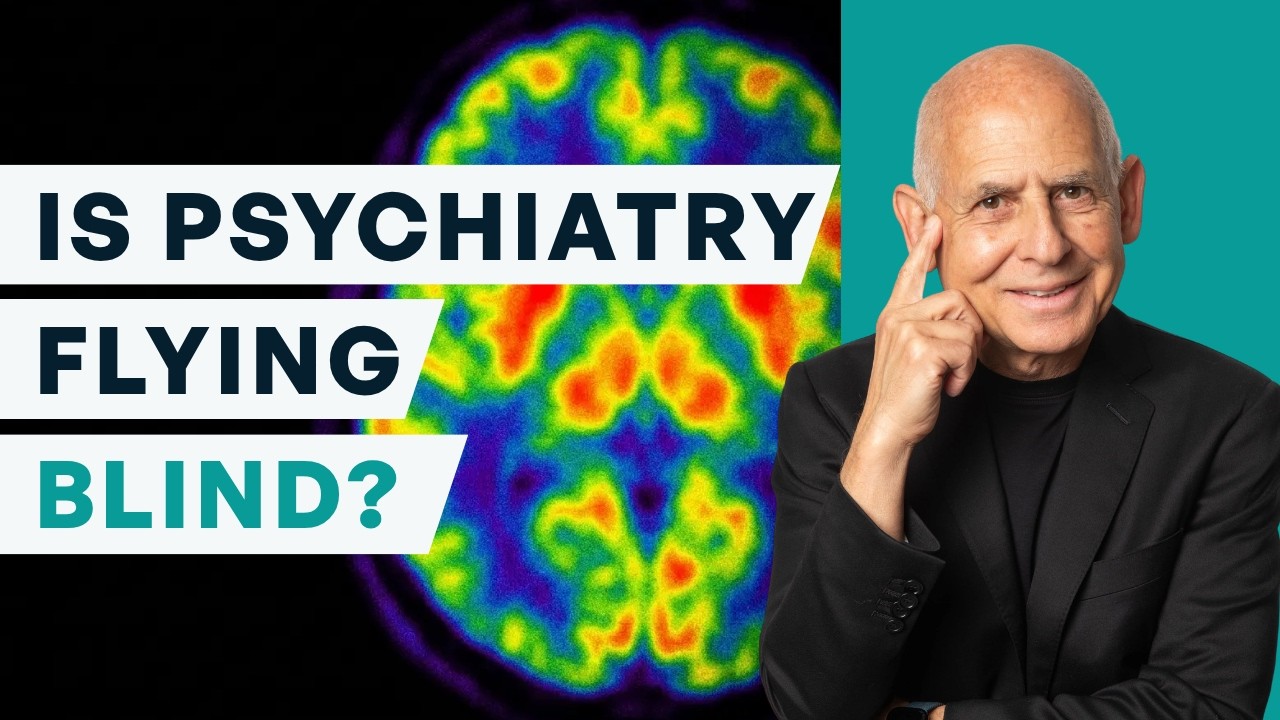
In this hour‑long podcast, Dr. David Perlmutter interviews Dr. Daniel Amen, a psychiatrist‑turned‑neuroimaging pioneer, about why psychiatry should image the brain before prescribing treatment. Dr. Amen describes his clinic’s massive SPECT database (≈300,000 scans) and explains how functional brain patterns—high activity, low activity, traumatic injury, and toxin‑related dysfunction—guide personalized interventions such as SSRIs, hyperbaric oxygen, supplements, or lifestyle changes. He shares striking findings: 22 % of patients with mood disorders show unreported mild traumatic brain injury; obesity correlates with 8 % reduced brain volume and a 16‑year‑old brain; adverse childhood experiences produce limbic hyper‑activity; negativity and low hope manifest as reduced frontal and insular activity, raising suicide risk. The conversation covers the use of machine learning to detect network‑level abnormalities, the role of microglia, infection, and chronic stress, and the potential (and cautions) of psychedelics and ibogaine. Dr. Amen emphasizes neuroplasticity—hippocampal stem‑cell generation, the ability to reverse “doom loops” of chronic pain, and the impact of volunteering, kindness, and flossing on brain health. Promotional segments introduce Dr. Perlmutter’s book Brain Defenders, the 3×4 Genetics test, Optosutics 40 Hz light device, and Dr. Amen’s new book Change Your Brain, Tinge Your Pain. The episode concludes with a call to a national brain‑health revolution campaign and practical daily advice for protecting the brain.
Chapters
Well, why would psychiatrists be the only medical specialists that never look at the organ they treat? Depression is like chest pain. Nobody gets a diagnosis of chest pain. Our imaging database is now almost 300,000 scans. So on my computer today, I have 200,000 scans. And that's why large-scale studies— SSRIs for depression work no better than placebo. And 22% of the time, We saw evidence of traumatic brain injury that was not reported by the patient.
Well, hey everybody, we're going to get right back to the podcast, but I want to share something with you that is very personal. You know, for decades I've been a practicing neurologist. I've been asking a single question, And what makes a good brain go bad? More importantly, obviously, what can we do about it? And that question has led me to write my new book, which is called Brain Defenders. It's now available for preorder. And in this book, I'm going to take a hard look at where we are today and offer up some challenges as to where we are today in terms of what we're being told. You know, despite all the attention on targeting proteins, misfolded proteins like beta amyloid for Alzheimer's, We still don't really have any meaningful treatments for diseases like Alzheimer's and Parkinson's disease per se. And we certainly can treat symptoms, but as it relates to treating the underlying issue, we're falling short. Many of these approaches manage the symptoms at best, but without really addressing what's driving the underlying process. And this science is evolving, but what's really exciting is the emerging research on what I've called the microglia. I didn't call it. But that's what they're called. These are the brain's immune cells. And when they're balanced, they are protecting, they are repairing. Well, when they're dysregulated, and we can talk about why that happens, and we do talk about it in the book, they can drive inflammation and lead to brain degeneration, often long before symptoms appear. And here's the empowering part. These microglial cells are deeply influenced by your day-to-day lifestyle choices, your nutrition, your sleep, Your environment. And in the new book, Brain Defenders, I share both the science and provide a practical roadmap that'll help you calm inflammation, supportive microglia, and really ultimately take control of your brain's destiny. And if you preorder your copy today at braindefenders.com, you can receive some special bonuses like a sneak peek at chapter 1, the full glossary for the book, And curated offers from my favorite brain health products, many of which I've discussed here on the podcast. This is a new way of thinking about brain health. And I truly believe that this book hopefully is going to change everything. I can't wait for you to read it. And I think you're going to be as excited as I am about the information you're about to receive. That said, let's get right back to our podcast. Well, hey everyone, Dr. David Perlmutter here. Welcome again to The Empowering Neurologist. There are moments in medicine that we've all experienced when somebody challenges the status quo and really forces a new conversation. I've been trying to do that for an awful long time as it relates to prevention of Alzheimer's, for example. And our guest today has done exactly that for psychiatry. He's Dr. Daniel Amen. I've had him, as you know, on the podcast several times in the past, and he never ceases to bring us new and exciting information from his incredible research, from his interpretation of his SPECT scans. And he has spent decades asking a simple, but I think disruptive question, and that is, why are we diagnosing and treating mental health conditions without looking at the brain? Why are psychiatrists the only specialty that doesn't image or evaluate the organ that they actually treat? Dr. Amen has been named by the Washington Post as the most popular psychiatrist in America, and I can see why. He is a former infantry medic and board-certified psychiatrist who trained at the Walter Reed Army Center, and he is the founder and the CEO of the Amen Clinics with 11 locations now nationwide. And he and his clinics are the home for the world's largest database of functional brain scans in psychiatry, numbering now more than 300,000 scans. Wow. 100,000 SPECT scans from patients across 155 countries. Dr. Amen is deeply involved in clinical work as well as research and has written 12, count them, 12 New York Times bestselling books, including Change Your Brain, Change Your Life and The End of Mental Illness. He has brought brain health into the mainstream awareness and conversation really in a way that few physicians ever have. Uh, his work looks at things like traumatic brain injury, uh, childhood development, aging, autism, and even the neurological impact of negativity. And of course, how our lifestyle choices impact brain health, brain functionality, uh, and brain improvement in patients who are experiencing a brain issue. In today's conversation, we're going to explore the science and let's face it, the controversy behind the whole notion of imaging the brain in psychiatric care and look at what decades of Dr. Amen's data reveal about how our brains change across our lifespan. And most importantly, what can we do? What can each of us do to protect and to optimize our brains starting today? So I'm really looking forward to rejoining my good friend, Dr. Dan Amen, and exploring his latest research on the use of SPECT scanning and the brain. So, Dr. Amen, hello. Good to see you.
Hi, David. What a joy to see you as always.
I want to jump in with an idea that you've popularized, and you've said that we should always image before we treat. You know, you've really made your mark in this world on imaging the brain. And I, you know, you really have this kind of unique position in the world of psychiatry that we should image the brain Prior to treatment. That's a unique position that, that you have. So why should we image first?
Well, why would psychiatrists be the only medical specialists that never look at the organ they treat? It perpetuates shame, stigma, disbelief, and you miss incredibly important information. Depression is like chest pain. Nobody gets a diagnosis of chest pain. Why? It doesn't tell you what's causing it, and it doesn't tell you what to do for it. You can have chest pain because you have a coronary artery blockage, because you have a heart arrhythmia, because you have a heart infection, because you have gas, Or grief, or somebody kicked you in the ribs. It, it's not one thing. Wouldn't you agree that giving everyone nitroglycerin for chest pain would be malpractice? It would be sort of—
I would agree with that, but I'm still stuck on, on what you said originally, that psychiatrists are the only specialty that doesn't image what they treat. I mean, I've never thought of that before. What, what a great entree. But yes, you're right. Uh, giving a chest pain, uh, nitroglycerin across the board would be inappropriate, that's for sure. And so imaging then of the heart and the chest, et cetera, would be the right thing to do. So why then are you unique in this position? What, what are psychiatrists missing?
Well, they're missing the brain and you're a neurologist and psychiatry and neurology. actually used to be one specialty. Freud was a neurologist, and when they got divorced, neurologists got the brain and psychiatrists got the mind, and we sort of lost out on it. You really cannot separate the mind from the physical functioning of your brain. And what we discovered is that when your brain is healthy, you are much more likely to be happy. And as you wrote about in Grain Brain, is that if your gut's not right, your brain's not right, and you're more likely to be depressed, you're more likely be anxious, you're more likely to have ADD. And our imaging database is now almost 300,000 scans. So on my computer today, I have 200,000 scans. And if I go, tell me the one pattern for depression, it'll go, there's not one pattern. That there are certain people who have really high activity in their brain, And there are certain people who have really low activity in their brain. Giving everybody the same treatment would be silly. And that's why large-scale studies, SSRIs for depression, work no better than placebo, even though I know for the right targeted person, they can save somebody's life.
So you are directing your interventions based upon what you're seeing on that scan.
Correct. Now, the scans don't give you a diagnosis. They will never give you DSM diagnosis because the DSM is based on no neuroscience, but it will tell you, oh, you need to calm the brain. You need to stimulate the brain. You need to repair it because it's a traumatic brain injury, or you need to figure out what the toxin Is. So those are the 4 big patterns.
Hey everyone, we're going to get right back to the podcast, but I have an important message for you. If you're caring for somebody with Alzheimer's, any other form of dementia, or even what we call mild cognitive impairment, or maybe you've received one of these diagnoses yourself, or if you're focused on preventing cognitive decline, I want to speak directly to you for just a moment about some serious research that's going on Looking what we call 40 Hz light and sound simulation. We've been actually talking about that on the program. Here's the challenge. Not all 40 Hz light devices are the same. Most use what's called stroboscopic light, and that's the type of light that flashes, then you can see the flashing, and that can cause nausea. It can cause headaches. And if you can't tolerate that, you won't use it. So there is a company called Optosutics. They've solved this problem with a patented technology. That still gives you the 40 hertz light flashing, but through light that looks and feels quite normal. It's the device I actually have on my desk when I'm working. And that's why this company sees a 94% adherence rate and significant improvements across various metrics, including mood, energy, focus, sleep, and memory. And the light is called the Evy light, E-V-Y. You can use it as I do when you're Working on your computer, when you're reading, when you're watching TV, eating breakfast, whatever. It becomes really part of your day, not just another burden. It's kind of passive in the background. So I recommend giving it a try for 90 days. And if you and your family don't see value in it, then you can return the device for a full refund. They cover the shipping both ways. And you can learn more about Optosutics at optosutics.com/perlmutter. You can use the code to get a $200 savings. The code is PERLMUTTER, my last name, 26. This is a device that really is risk-free in terms of getting involved with 40-hertz stimulation. Important information. Let's get right back to our podcast. So it seems like psychiatric diagnoses are really symptom-based. You have a conversation with a psychiatrist and she tells you, well, it looks like you have XYZ according to the DSM based upon your symptoms. And you're certainly looking at it from a structural functional perspective. That said, a question comes to mind, which is where most questions, I guess, come to. And that is, would machine learning, with respect to all of these countless hundreds of thousands of images that you have, would machine learning help you look at trends and be more able to interpret what's going on with how these relate? to specific diagnoses or treatment for that matter?
We're so excited. I mean, we've been using machine learning and SPECT for over a decade. I think my first patient came out on autism, that what we saw in autism is the frontal lobes tended to be hyperactive. The cerebellum tended to be less active. And more hyperactivity on the right side than the left. But when you scan, and we've scanned 3,000 autistic people, mostly children, yeah, some people have that pattern, but a lot of people don't. And so you have to image individual people. To know what is actually going on with them. And it— the AI really helps us look at networks in the brain. So I think of the brain, and I've thought about this for years, it's sort of like a symphony that, yes, it has a lot of individual parts, but it's really how they work together, which parts are up, which parts are down, which parts are balanced. You know, you're either making beautiful music. Yeah. Or you just can't listen to it.
Well, it's interesting what you say about autism and hyperexcitability in the prefrontal cortex, right side, because a newer theory with reference to one of the inroads to autism is hyperconnectivity. Lack of adequate synaptic pruning in the prefrontal cortex has been demonstrated in laboratory animals and is suggested in the autistic brain as well. And that hyperconnectivity because of lack of adequate synaptic pruning would perfectly correlate with, I think, with what you're seeing. It, so it seems to me that, you know, neurologists are all about imaging. And so what you are describing seems to be representing a bit of convergence then, uh, between neurology and psychiatry as if they shouldn't have diverged in the first place. Would, would that be a fair statement?
Yes. And when you see that hyperactivity in the prefrontal cortex, Well, we also see that with OCD, obsessive-compulsive disorder. And one of the hallmark features of autism is cognitive inflexibility, that they like things a certain way, and if things don't go a certain way, they get very angry and very upset. And it's not will-driven behavior, it's they just can't get out of the loops of thinking because their frontal lobes work too hard. And then if you match that with a cerebellum— so I think the cerebellum is the most disrespected, disregarded part of the brain, even though it has half or more of the brain's neurons. And when the cerebellum's not right, timing is off, coordination. But it's not just physical coordination, it's also— thought coordination. So if the frontal lobes are too active and the cerebellum is too inefficient or too sleepy, it's really hard for you to be in the world because you get confused a lot.
I recall back in my neurosurgical days that if we had to get into the posterior fossa, the cerebellum was kind of just sacrificed Because it really didn't do that much. And I think it's quite clear that things are there not just so we can get rid of them, whether it's the cerebellum, the tonsils, or appendix. These parts are there for a heck of an important reason. I want to get back to your scanning for just a moment. How often do you find trauma when you're scanning somebody with a mood disorder, for example? How often do you actually find that there was trauma? You see evidence of trauma that that patient didn't— necessarily report.
So if you go, hey Daniel, what's the single most important lesson from 280,000 scans? Mild traumatic brain injury ruins people's lives and nobody knows it because nobody looks at their brain. And so I think it's, we actually did a study on this and 22% of the time we saw evidence of traumatic brain injury that was not reported by the patient.
So 22% of the time people had an injury, didn't report it. Maybe they didn't remember it. And beyond that though, I think what you're saying is that this has significance then in terms of what you're actually seeing that patient for.
Yes. And what I discovered is you have to ask people 10 times whether or not they had a brain injury. So if you see evidence of it on a scan, it's like, well, have you ever fallen out of a tree, off a fence, dove into a shallow pool? Have you had a concussion playing sports? Have you been in a car accident? And you just can't believe the number of people that go, no, no, no. Oh, the first time this happened to me, someone said, oh, I was 7 years old and I fell out of a second-story window. I was unconscious for 5 hours.
And that might be why they don't remember it.
How did you forget that? It's like, or they fell out of a moving vehicle going 30 miles an hour, or they're in a head-on collision. Your brain, as you know, is very soft, about the consistency of soft butter. Your skull is really hard and has sharp bony ridges. It just is so bad, which is why I did the big NFL study actually when the NFL wasn't telling the truth about traumatic brain injury in football and high levels of damage. So I published my first study in the Journal of Neuropsychiatry on 100 NFL players, high levels of damage. Stop saying you don't know what's going on because that was their position in 2009. But 80% of my players get better when we put them on a rehabilitation program. Now, this is really important because the messaging around CTE or chronic traumatic encephalopathy is wrong. And it mostly comes from Boston University and it mostly comes from neuropathologists. And the messaging is CTE is chronic, progressive, and untreatable, and that you can't see it until the person has died because it's an autopsy-based diagnosis. Brand new textbook, Neuroimaging Brain, or Imaging Brain, said you can see it on a SPECT scan. You can see it on a tau-related PET scan. And I'm very excited because we clearly saw that these were traumatic injury brains, but 80% of our people get better. So if you put them on a rehabilitation program early, as early as possible, healing can take place. Now, it doesn't mean football's not a brain-damaging sport. Of course it is. But if you're going to play, you should be rehabilitating it all the way along.
Maybe I should ask this question earlier. What are you actually imaging? What is your SPECT brain scan actually looking at? Why does it light up in certain areas?
So SPECT, single photon emission computed tomography, is a nuclear medicine study that looks at regional cerebral blood flow. But also mitochondrial function. 49% of the radiopharmaceutical is actually taken up in the mitochondria in the brain. So you're really looking at metabolic activity. It's not like an angiogram looking at blood flow. It's really looking at 3 things: areas of the brain that are healthy, areas of the brain that are low in activity, And areas of the brain that are high in activity. So for example, when COVID came to us, I had many patients that I'd already scanned. They got COVID and they became more anxious or they became more depressed, or in some cases they became psychotic. And when I would image them, it was very clear COVID caused an inflammatory bomb that went off in the limbic or emotional circuits of the brain. And if you get COVID, that in the next 6 months you have a 25% increased risk of having a new onset psychiatric illness. And that, you know, one of the other big lessons I've learned is infectious disease is a major cause of psychiatric problems. And nobody knows that because most psychiatrists never think about it. So they don't think, oh, COVID could have caused this, or herpes could have caused this, or toxoplasmosis, which is one of the worst things for the brain. It's a parasite you get from cats. And it's like when you look, it opens up a whole new world Like, you actually have to remember medical school because, you know, it's like, oh, DSM, you're depressed, take an SSRI. You have ADHD, take a stimulant. It's like, no, it's way more complicated than that.
Chronic traumatic encephalopathy isn't considered a viral or infectious event. It's a post-traumatic, multiple traumatic event. Why does it progress? What can you tell us looking at these scans? In those of your patients who are worsening with time, what's going on? Is it related to the mitochondrial dysfunction?
Yes, but it's also related to the cells, your neurons, that are repeatedly injured. And then the tau proteins break through the cell membranes, causing an inflammatory response that seems to be progressive. And then because you've damaged in large part the prefrontal cortex, so 91% of our NFL patients, they've had damage to their prefrontal cortex, their decisions start to be a problem. So they end up overeating, they end up drinking more than they should, they make bad decisions, they're under chronic stress. And so you see this cascade About physical and mental health problems that lead to bad decisions, which lead to more health problems.
Now, are you able in any way to predict whether an individual's going to be responsive to a particular intervention based upon the scan?
Yes. So if your brain works too hard, you are going to respond to calming treatments. And a lot of people don't know SSRIs, serotonin's an inhibitory neurotransmitter. So I could show you scans and you would go, oh, frontal lobe's way too active. That predicts a positive response to an SSRI. But if they had low activity, it predicts a bad response to an SSRI. So think of the scans Like a map. You've heard it said a picture's worth a thousand words, but a map is worth a thousand pictures. A map tells you where you are and gives you direction on how to get to where you want to go. If we see a traumatic brain injury, we're likely to put you in a hyperbaric chamber. If we see an infection or toxicity, we're going to go find out why. Now, it could be you're a drinker and you need to stop. The scans often act like an epiphany. I have this great case. It's public knowledge. Jonathan Cain is one of the band members for Journey, the rock band Journey, and he was drinking 2 bottles of wine a day. He has one of the E4 genes, had a grandfather with Alzheimer's disease. He saw his scan, which was damaged, and he stopped drinking that day. So the scans are often very good at being an intervention.
You've written in your books quite a bit and even PBS specials about the notion that we can change our brain. So first, what do you mean by that? We can change our brain and then we're going to talk about how do we go about that?
So when I was in medical school, likely you too, we were taught that, you know, once you hurt the brain, it's not coming back. And I think the most exciting thing in neuroscience the last 30 years is this concept of neuroplasticity, that you're not stuck with the brain you have, and every day you can make it worse or you can make it better. And there's evidence that the hippocampus actually produces about 700 new stem cells every day. And my 22-year-old daughter, if she's being good to her brain, she'll incorporate those into her bigger brain. At 72, I'm less likely because as you age, you have less blood flow. And so the hippocampus is not going to be as healthy. Now, you're not stuck with that, right? If you're serious, like both you and I are serious about our health, you can still grow or stimulate or create healthier brain tissue. And I'm endlessly excited about that. And I've done thousands of before and after scans. So actually, Mel Gibson was on Joe Rogan and I had no idea he was going to do this. He talked about coming to see me and I said he had the worst case of PTSD I'd ever seen, which is not true, but it was terrible. And it was after all the sort of public shaming he went through. But doing the treatment that I recommended, which included supplements and hyperbaric oxygen, his brain dramatically settled down. And he said, I used to be in my animal brain, A lot. And he's like, well, now I'm not. He said, and that's a very bad place to be in your animal or
reptilian brain. Now he's back into his prefrontal cortex. So you're actually able to image changes in the brain when people begin to engage life's important lifestyle changes like sleep, exercise, and eating right?
Absolutely. That your brain goes from unhealthy, what we call scalloping, Or instability in the cortex where it's just very uneven. And when John Cain stopped drinking, a year later, his brain's dramatically better.
That's a powerful message right there. I mean, for our viewers that— and I am asked this on podcasts time and time again, is it too late? I mean, when do you know it's too late? And I think what you're saying is giving people a lot of hope that you're actually seeing positive changes on brain scans, which I'm certain correlate to cognitive testing and other markers. Hey, we're going to get right back to the podcast, but I do have an important message. You know, for decades we've been told that our genes are basically our destiny as it relates to health and that everything's locked in place predicting even our future brain health. But let's be clear, your DNA isn't a verdict. It's a roadmap. And I'm talking to you today about 3X4 Genetics. I actually described them in the new book, Brain Defenders. And this is a company that helps you understand your genetics, what you've inherited, and I think more importantly, how your daily choices can influence how those genes are actually expressed. In other words, how you can control your own genetic expression. And, you know, that matters for your health and it really matters for brain health. Including things like memory and mood and, and cognitive resilience. You may carry genetic markers associated with cognitive decline, like as we've talked about APOE4, but possession doesn't equal expression. Your lifestyle, your nutrition and metabolic health, all the things that we talk about here on the podcast can powerfully influence which genes are turned on and which stay quiet. The 3x4 Genetics Test looks at how your genes impact brain function. at a cellular level, and which then through the 3x4 Health Journey, which they provide you, guides you through a clear and a science-backed program focused on inflammation, methylation, oxidation, oxidative stress, things that we routinely discuss here on the podcast that are the key drivers of basically what makes a good brain go bad. And we have spoken with the team at 3x4 Genetics. And they were able to get a special offer for our podcast community. So, head on over to 3x4genetics.com/DrPerlmutter and get that special offer and start really your personalized brain health journey today. Let's get your genes working for you. And let's get back to the podcast. When people finally decide to make those important changes. So, you're actually able to image the improvement over time when people adopt This meaningful program?
It's so exciting. I mean, it's the thing that drives me every day because if with a better brain, you're a better husband, with a better brain, you're a better CEO, you're a better employee, you're better at managing your money, you're much less likely to file bankruptcy. It's your brain works right, you work right. And when your brain is troubled, you're much more likely to have trouble in your life.
We, we talk a lot about the impact of metabolic health, uh, in terms of brain degeneration, risk for Alzheimer's, et cetera. Um, are you able to correlate, uh, general metabolic health parameters with what you see on the scan? You get where I'm going with that? Like, are you able to—
I published, I published these studies on 33,000 people. As your weight goes up, the actual physical size and function of your brain goes down, which should scare the fat off anyone and scared it off me. Like, I come from a family of overweight people. And I sort of always had trouble losing that 20 pounds. And when I figured this out, I think it was 2009, a paper from the University of Pittsburgh came out looking at MRI scans on people who are healthy weight, overweight, obese. And the people who were obese, they had 8% less volume in their brain, and their brain looks 16 years older than healthy people. And I went, absolutely not, and got to a healthy weight, which I've kept since then. And then I looked at my database, and there was a linear correlation to weight and blood flow. I have an acronym I like, maybe we've talked about it before, called Bright Minds. You want to keep your brain healthy or rescue it, you have to prevent or treat the 11 major risk factors that steal your mind. And Bright Minds, the D is diabesity, which is having a high blood sugar and/or being overweight. Both of them are a disaster for brain function.
And those are variables over which we have control. What about chronic stress? People talk about it. Are you able to See on your images findings that correlate with chronic stress? I mean, because you look at the work of Robert Sapolsky so many years ago, looking at the effect of chronic stress on the size of the hippocampus, for example, what are you finding?
So we actually published 3 really important studies in the last 2 years, one on adverse childhood experiences. And as that number goes up, your limbic brain becomes overactive. It's very interesting. It really takes on a pattern that's very consistent with what we see in post-traumatic stress disorder, even though it's different. Your ACE score, adverse childhood experiences, doesn't necessarily give you PTSD, but you certainly had plenty of trauma. We then published a study on Negativity. And negativity is just bad for the brain. It goes with low activity in your frontal lobes. And now we have a new study on hope, and low hope actually looks like negativity, especially in one of the most interesting parts of the brain called the insular cortex, that low hope goes with dramatically low activity in that part of the brain, which increases your risk of suicide. We're actually working on a suicide prediction model based on imaging, and it's low frontal lobe activity and low insular cortex activity. So negativity, chronic stress is really bad for your brain. And I teach all of my patients positivity bias training. Start every day with, today is going to be a great day. You have to train your brain to look for what's right rather than what's wrong. And when you go to bed at night, what went well today? And just that one exercise, if you're serious about it, if you meditate not just on 3 things you're grateful for, but what really went well today. And I got to see you and you and I are friends and I adore you. And that'll show up tonight in my highlight.
And I feel it. It's showing up in my hippocampus right now.
And learning how to combat that negativity. We're doing this great firefighter study right now. We scanned and treated 100 firefighters. This is after the LA fire disaster. And the thing that's been really consistent as they finish treatment is their negativity score goes down. And that makes me really happy for them because their relationships are going to be better. Their work performance will be better.
There is some indication that volunteering is associated with increased size of the hippocampus. Uh, do you ever look at that or recommend people engage in volunteering? And have you seen any data on your scans?
So I'm part of May 16th is Good Neighbor Day. And the group that is putting it on is part of America 250, and they're starting a 250 million acts of kindness challenge. And I'm very excited about this. And I know the research on volunteering grows your hippocampus in older people as opposed to the control group. This was the Baltimore Longevity Study. The control group, their hippocampus kept getting less active or less volume. The volunteer group actually reversed it. And one of the reasons for the mental health crisis in the United States, part of it is social media, and it gets you to think too much about you. And there's a part of the brain called the default mode network, and the posterior cingulate gyrus is often referred to as the self- referential part of the brain. It's the part of your brain that criticizes you, that sees the errors in your life and the errors of other people. But when you volunteer, when you do an act of kindness, not for yourself, but for someone else, it actually turns it off because you're not thinking about you. You're thinking about other people. And so interesting, psilocybin turns it off. And I'm very anxious about the whole psilocybin thing. We can talk about it, but I have a feeling it's going to go the way of opiates and marijuana and alcohol. Oh, we're so excited about it. It's good medicine. And yet they're mushroom parties. coming up on every college campus and people are going to the emergency room with psilocybin psychosis. So I'm anxious about it, but kindness has no side effects.
Well, I would say we're all aware of the recent White House push for ibogaine research for PTSD. And I don't know that that is indicative of the fact that the door has been opened for psilocybin research, But to be fair, I think the psilocybin research, uh, as of late is showing some, uh, positive possibilities as it relates to treating mental health disorders. And I'm just wondering, is there any imaging that you're doing in relation to that or seeing individuals who are using, uh, hallucinogens and what are you finding?
So I actually have ibogaine scans before and after, and just like we talked about, It drops the default mode network, and that can be really helpful if your brain gets out of the loop of chronic negativity, but it doesn't make your brain look healthier. If anything, it makes your brain look unhealthy. Now, from the blood flow perspective, yeah, I'm— One of my patients who his brain was really damaged when he came to see me, it was really better 5 years later and I was so excited. And then he told me he was going to do ibogaine because he was researching it as part of a documentary on addiction he was doing. And I was not happy about it because I felt like he was going to mess up The artwork that I was helping him create, Healthy Brain. In fact, it settled down that area of the brain, but his whole brain looked terrible. And I'm, so as a scientist, curious about it, but I'm very worried about it. Do you remember when marijuana was being legalized everywhere and people are like, there are all these studies, it's good medicine, it's innocuous. And I'm like, but you haven't seen the marijuana scans. And now I think the marijuana thing is a shit show.
Yeah. And I'm going to agree with you. Actually, a study came out last week looking at adolescents who smoke and found that the group that tended to, on cognitive testing, the group that tended to smoke more were higher-level cognitive function to begin with, which was a bit odd. But nonetheless, What happened was brain development plateaued as opposed to continued during their adolescence. It was very striking. And, you know, they called to attention the idea of what THC does in the brain and the fact that the THC content of what kids are smoking these days is so much higher than it used to be back in the day, as it were. But I hear you. I am very concerned about it.
You know, I feel like I've seen this party before. That when I trained at Walter Reed in the early 1980s, benzos were mommy's little helper, and I was taught to use Xanax actually at fairly high doses. And as soon as I got into private practice and started looking at the brain, I completely stopped using benzos because once you start them, people won't stop them and they make your brain look like you're a drinker. And it— now we know they increase the risk of dementia. And then in the early '90s, my first clinic was outside the Napa Valley and alcohol's a health food. You should have 2 glasses of wine a day, which now we know is a complete lie that alcohol's associated with an increased risk of 8 different kinds of cancer and it disrupts sleep. And then it was, well, pain is the 5th vital sign and you are a bad doctor if you're not prescribing opiates and that didn't turn out well. And then marijuana. And so I just feel like the psilocybin thing, even though marijuana for some people is lifesaving and psilocybin may well be, or ibogaine may well be, but it's the messaging that goes along with it. This is good medicine. So my 22-year-old daughter says, Dad, they're not drinking anymore. They're doing mushrooms.
I like the first part of that statement because I've really noted that there's been a significant drop-off in younger people in terms of alcohol consumption. I don't know what they're substituting for it with rather, but at least the alcohol consumption as a neurotoxin is reducing. Tell us about your latest book.
So, I have a new book, Change Your Brain, Tinge Your Pain. And, I talk about the pain circuits in the brain and how chronic pain often gets stuck in your brain. And if you really want to be out of chronic pain, you have to get your brain healthy. And the star of the new book is the doom loop, the pain for any reason, which activates the lateral feeling pain circuit, which is your thalamus and parietal lobes. So pain for any reason, and it can be emotional pain, it can be an attachment loss that'll activate that circuit, but then in turn it activates the medial pain suffering circuit. And that's the one that smears pain with fear and dread, which then leads to an invasion of what we call ANTs, automatic negative thoughts, which then go to nervous tension, which escalates the brain, which then goes to bad habits, and you end up in this doom loop that perpetuates itself.
The brain keeps the score.
So if you've been in pain for more than 3 weeks, it has changed the circuitry actually in your brain and getting your brain healthy. And in the book, I talk about a healing loop, on how to quiet these circuits. And one of the most interesting— did you ever read the work of John Sarno?
Yes, of course.
So I love Dr. Sarno's work and he talks about goodists. So I'm a goodist and good people tend to have more pain because they suppress the rage that they feel. And so part of the book, Pollyanna had to make friends with Hannibal Lecter, And that you need to find a way to get the rage out. And I talk about a treatment that I'm very fond of called ISTDP, Intensive Short-Term Dynamic Psychotherapy, which is basically a rage therapy. And how to get in touch with the things that have really made you furious that you have suppressed because You believe those feelings make you a bad person. And getting the rage out often will quiet the suffering circuitry in the brain and help you not live with chronic pain.
Dr. Amen, if somebody wants to improve their brain today, what's the one most important thing they can do?
So ask themselves this one question. We're actually working on a national brain health Revolution campaign. Very excited about, want your help with it. But it's one question, is what you're doing now good for your brain or bad for it? And does it make the world a better place? If you can answer that with information and love, love of yourself, love of your family, love of the reason God put you on Earth, your brain's going to be better.
Dr. Amen, can you actually reverse brain aging? And if you can, what's the most powerful
Yes, absolutely. You can avoid things that hurt it— drugs, alcohol, being sedentary— and walk like you're late.
Dr. Amen, what's the one simple thing people can do every day that they tend to overlook that's really good for their brains?
Flossing. Periodontal disease is a disaster for heart health, but also brain health. Floss like you mean it. So flossing is a brain exercise.
Dr. Amen, does volunteering help the brain in any measurable way?
It's been shown to increase the hippocampus, one of the major memory and mood structures of the brain. Volunteering also helps quiet the critic in your head known as the default mode network. Get outside of your head and into being helpful to others. Dramatic positive
Dr. Dan Amen, I'm grateful for a couple of things. Certainly grateful that you shared your wisdom with us today. I'm grateful for our decades of friendship and with you and your wife and all of the wonderful things that you've taught me over many, many years. So thank you for spending time with us today.
Well, thank you, brother. I look forward to seeing you soon, I hope.
Well, that was certainly enlightening. I look forward to time I get to spend with Dr. Amen. And, you know, What makes having a conversation with him so compelling is not just the breadth and scale of his work, but the shift in perspective that it demands of all of us. If there's one takeaway, it's this, and that is that mental health is brain health, and the brain is far more dynamic and adaptable and responsive to our choices than we've been led to believe. That's really very important. We tend to think that we can live our lives however we choose and that our lifestyle choices will not be reflected in our brains, but that is not reality. The upside of that mentality is that when we make the right lifestyle choices, we can see improvement. And, you know, whether you're going to agree with every aspect of what Dr. Amen spoke to us about today, he has undeniably pushed this field to reconsider these long-held assumptions about the brain's lack of ability to improve. For example, he's brought visibility to the idea that structure and function as it relates to the brain matter. We recognize that in neurodegenerative conditions, but he's bringing it to the field of psychiatry. Things like lifestyle, previous trauma, nutrition, sleep, and even thought patterns leave what he describes as measurable imprints on the brain. And that's where this conversation intersects so powerfully with the themes that we've been exploring for quite some time here on this podcast. Well, I appreciate the fact that you joined us today. I hope you learned a lot. I know I did. I'm Dr. David Perlmutter. That was Dr. Daniel Amen who joined us. We'll be back soon. Bye for now.
More from David









Newsflash: Alzheimer’s Is Not Caused by What We Thought | Dr. David Perlmutter

