Long COVID Protocols and New Horizons - with Dr. James Jackson | The Empowering Neurologist EP. 165
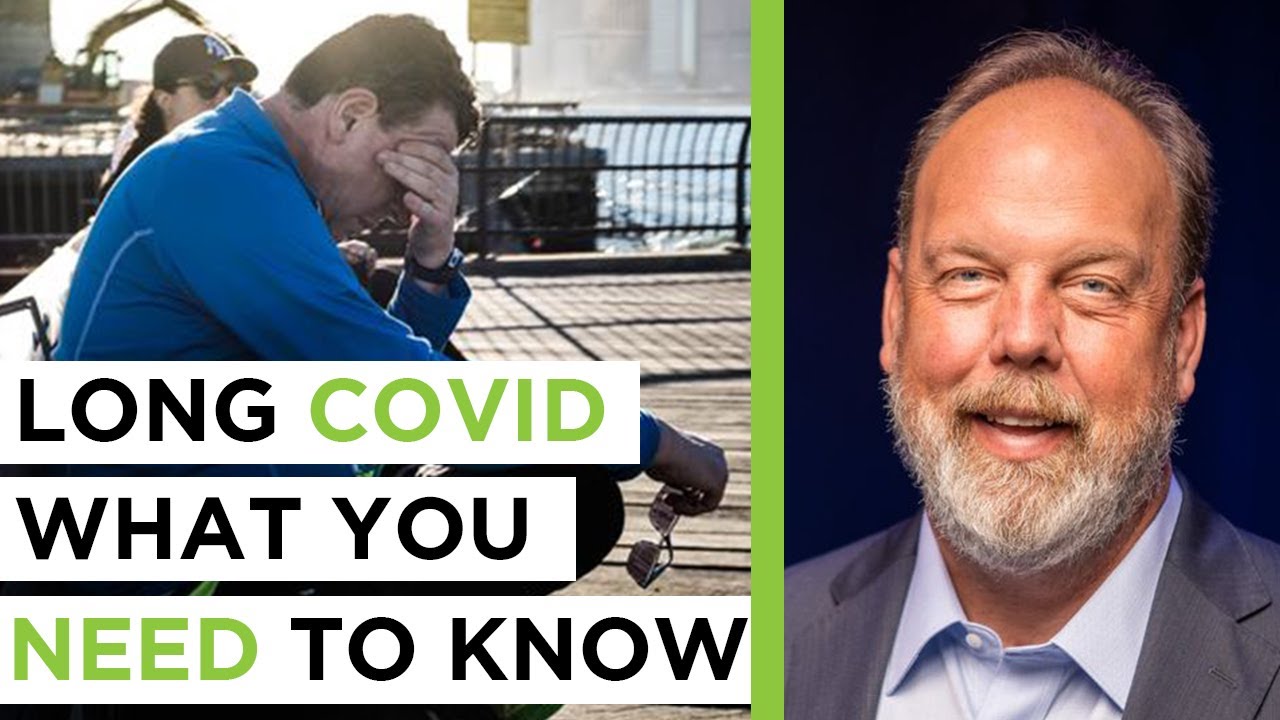
In this episode of The Empowered Neurologist, Dr. David Perlmutter interviews Dr. James Jackson about the massive public‑health challenge of long COVID. They begin by highlighting the sheer scale—up to 200 million people worldwide, roughly the population of Mexico— and note that cognitive complaints are among the most common and disabling symptoms. Dr. Jackson explains that patients often report "memory problems" but neuropsychological testing reveals a broader profile of slowed processing speed, reduced attention, and executive dysfunction. The discussion moves to the ripple effects on families and the need to treat the whole system rather than the individual alone. They stress setting realistic expectations, reinforcing resilience (“the only way around is through”), and preparing patients for a potentially long, non‑linear recovery. Assessment begins with brief screening tools such as the MoCA, but functional red flags (misplacing keys, leaving stoves on, driving errors) drive referrals to a multidisciplinary team: neuropsychologists for deep cognitive profiling, neurologists to rule out medical contributors, and speech‑language pathologists for cognitive rehabilitation. Dr. Jackson describes the emerging role of neuroplasticity‑based interventions, including video‑game‑style brain‑training apps (e.g., BrainHQ), while acknowledging the need for more evidence. Personalization is emphasized—listening to patients, distinguishing between memory vs processing speed deficits, and tailoring mental‑health treatment (anxiety, depression) and support‑group resources. They outline Goal Management Training, a compensatory strategy that teaches “stop‑and‑think” and task‑splitting to manage executive dysfunction. Sleep, nutrition, exercise, and social connection are presented as foundational self‑care. The conversation concludes with the concept of post‑traumatic growth, illustrating how some survivors find new purpose (e.g., a patient who began surfing after severe injury). Finally, Dr. Jackson details objective return‑to‑work/school planning, the importance of addressing shame, securing federal accommodations, and providing concrete paperwork support. Throughout, the tone is conversational, supportive, and cautiously optimistic, offering both hope and pragmatic guidance for clinicians and patients alike.
Chapters
If long COVID symptoms aren't going away, it's important to reinforce to people, you've done hard things before, you can do hard things now, you've— you're stronger than you think you are, and the only way around is through.
Well, hello everyone. I'm Dr. David Perlmutter. Welcome to The Empowered Neurologist. Today we're going to talk about long COVID, and it's time we did. This is turning out to be a very, very big problem. It's been estimated that as many as 30% of individuals who've experienced COVID may have lingering symptoms. We'll define exactly what long COVID is all about in the program, but it's a big number. It's been estimated that as many as 200 million people globally are suffering from That's a lot of people. That would, if that were a country, that would be the 8th largest country on the planet. So we're going to look at what's available to treat these individuals, what's been proven to be effective through the eyes of a psychologist in terms of creating a comprehensive program. We'll define what the cognitive and mental health consequences are of long COVID, why it's important to set reasonable expectations for outcome, And how individuals can prepare for life after therapy in terms of, you know, once they have achieved their best, their optimal, and what they can expect. And even the notion of looking at experiencing this issue as perhaps a gateway to better things, making the lemonade out of the lemon, as it were. So our guest is Dr. James Jackson. The book is called Clearing the Fog. Let me get the fog to clear here on the book cover. And I'm very, very excited to jump into this very, very important program. Well, hello, Dr. Jackson. Welcome to the program. Really delighted to have you here today.
I'm really happy to be here as well to talk about long COVID. Thank you so much for the opportunity to join you.
Well, I am glad that we're together because it's a big, big issue. And I think as you watch the news, watch the literature, It seems like there is such a push to find a treatment, a pill to target the problem as if it is monofactorial, which it's not. But I think you take a real different approach, and we're going to do a deep dive into exactly how you unpack this whole issue and then what therapy you offer up, which is proving to be very effective. But first, let's just talk about how big of a problem we're talking about here as it relates to long COVID.
It's a great question. There are a lot of estimates about how common long COVID is. There was a study done recently by the University of Michigan where they concluded that there were about 200 million people in the world with long COVID. That's about the same number of people who live in the country of Mexico, to give you a sense of the magnitude of things. You know, that's vastly more than live in LA, New York City, Houston, Shanghai, et cetera, combined. It's a huge number of people. It would be a fairly large-sized country. And one of the cognitive complaints— let me take a step back. One of the common complaints people have is cognitive. Cognitive complaints are probably near the top of the hierarchy with regard to long COVID. And that's really why I got concerned about it, because people were routinely talking about their brains not working. Quite as well as they did before. That's not the only problem, but that's a problem that affects literally tens of millions of people in this long COVID era.
So, you know, in terms of the various symptoms that people have, which actually we should probably define what— how long COVID is defined, but in terms of the symptoms, the things people are complaining of, a lot of them are neurocognitive. A lot of them have to do with the brain. And to me, it points to a bit of an energy issue since the brain is such an energy-hungry part of the body. So it's consuming a lot of energy. And in many ways, we've sort of had some experience with this in the past in dealing with chronic fatigue syndrome, this myalgic encephalopathy chronic fatigue syndrome group. And I think in your book, you mentioned that there does appear to be some similarities in terms of what we are now seeing.
I think there's a lot of overlap. It clearly is an energy issue. And when you drill down and try to determine what exactly is going on, it's complicated because if you ask patients what is happening, they often report problems with their memory. But I think the reason they report memory problems is because memory is the term that people associate with cognitive problems. People are not familiar with the term executive functioning. People don't necessarily know the term working memory processing speed. So often people report they're having issues with memory. When we do neuropsychological testing on patients and do a deep dive, we find out that, yes, they do have problems with memory, but often more predominant than memory problems are problems with processing speed, problems with attention, problems with executive dysfunction.
It's the executive dysfunction, which involves planning and organizing, multitasking, things of that sort, that in my experience is especially concerning with patients because that problem derails them on their job. It creates problems in social situations. It really limits their lives in key respects. So that's the one that we worry about the most. You make a point that, you know, when you talk about the sheer number, the astounding number of individuals who are affected, but that it's a much bigger problem because the family is affected as well. So in your work, you're actually working with the patient in terms of his or her integration of their deficits into the family and leveraging the family connection dynamic to bring about improvement.
We are. It's very much a family problem. And I think people who think it is an individual problem solely do so at their own peril. You know, I think in the hyper-individualized Western world in which we live, often we think of patients as an N of 1, and we forget to remember that they exist in a broader social or familial context. What we see predictably, not surprisingly, consistently, is that when patients develop cognitive problems with long COVID, often that changes the dynamics in the family. Often that means that they're no longer working as the breadwinner, which means the other spouse is perhaps no longer at home. They're now entering the workforce. The dynamics change, and we see the impact on families, the ripple effect, if you will, which is why we try to to treat people not necessarily just as individuals, but we try to treat the whole family system. When we do that, we have much better results.
You have a great quote by Robert Frost in your book, uh, the best way out is through. And you use that quote in the context of there being no shortcuts, that, um, you know, it's going to take a lot of work. So a patient And hopefully family decide that it's time to do something and they present in a clinic such as yours. And what's— how do we start? What do we start preparing for that appointment prior to the appointment? How do we get started in the process of recovery?
It's a great question. And that's exactly the situation that unfolds. Patients show up at our clinic, they ask questions. They often have not been given a lot of advice or guidance. I think the first thing that I do when I encounter a patient is I try to remind them that we are on their side, we're on their team, we're supporting them. And this is crucial, that there's no quick fix, that there's no magic wand, whether it's talking about cognitive function or mental health function, whatever. There's no magic wand. This is going to take some work. That is, it may take some cognitive rehabilitation, and that might be challenging. It might take some acceptance, and that's going to be difficult. That is, you might need to find a way to live with some things that you don't want to live with. And I'm never casual about that. I'm never glib. But I think it's important if long COVID symptoms aren't going away, it's important to reinforce to people you've done hard things before. You can do hard things now. You're stronger than you think you are, and the only way around is through. You can live with some things that you haven't wanted. Serendipitously, I think, as I talk about in my book, a few years before the pandemic, I was diagnosed with OCD. And I went to see a psychologist. I was very distressed. And I said, how can we burn these symptoms down? You know, how can we pull them out like a weed? And she's very kind, so she wasn't really laughing at me, but she was kind of laughing like, you know, that's not the way it works, Jim. You've got OCD now. You know, we don't necessarily wave a magic wand and get rid of it. We can, though, help you find a way to live with it. And in that experience, I became— I became convinced that this is a template for thriving, learning to live with difficult things. And that conviction has really informed a lot of the work that I've done with long COVID survivors. Even as we aggressively hope for, we pray for therapies that will, that will take these symptoms away, that will transform, even as that is our desire, we know that if things don't ever change, it's still possible to live a meaningful life. And that's what we reinforce again and again and again and again.
This is incredibly, incredibly important and valuable because I think clearly what you're saying is You're setting reasonable expectations on the front end that these individuals, some of them may not realize a full and permanent improvement. I mean, you make a big point that it's a real event. I think you objected to the term brain fog and then quoted some statistics indicating that some studies have shown that these individuals may have lost as much as 2% of their brain tissue. Uh, such that—
that's right—
the creation of reasonable outcome, reasonable expectation, especially early on, uh, in other words, preparing patient and family for that, I think is really very important. So they're not going through a program expecting the individual to be able to jump right back in and be, and be fully functional.
It's so important. And in that vein, and I do prefer the term brain injury to brain fog, or at least cognitive impairment. I mean, there's clearly a spectrum. There are some people who have very, very mild deficits that aren't particularly disruptive. And then there are many who have profound deficits that are. But when we think about brain injuries, if we think about athletes, if we think about soldiers, people in car accidents who have a brain injury, whatever the case, many of those people have found a way to thrive. It hasn't been so simple. You know, it's occurred in the context of rehabilitation, but many of them are working, they're finding meaning, they're engaging in valuable things, even though their cognitive functioning isn't what it once was. So I think there's a 2-part dance that we do. One is we're going to monitor and calibrate expectations. And 2, we're gonna reinforce this idea that even if we've diminished expectations, even if things aren't exactly the same, We can find a way for you to still be successful. We can find a way for you to still be effective. You might have to ask for help more. You might have to ask for accommodations. It might take longer, but stay in the fight and find that social support you need. And lo and behold, good things are going to happen over time.
You know, I want to tell you that as you're speaking, I imagine if I were that patient and hearing those words, I would be very comforted right now. For you to have explained what you just did, that I'm not alone and you've been through this with others. And, you know, again, reasonable expectations prepare me so I can use my fortitude that I've used thus far in life to get through this next challenge. And I think that's so, so very important to know what to expect. But you also interestingly talk about some red flags. when an individual has some cognitive impairment? You mentioned things like managing your finances and healthcare decisions and driving a car, so walk us through how you assess for that and what the implications are.
It's a great question. The first thing I would say, sadly, is that many patients with long COVID go to see their PCP, whoever that person might be, And the issue of cognition is never really addressed. Sometimes it's never brought up at all, and if it is, it too often is given short shrift. And that continues to be a surprise and a disappointment. Almost never are patients referred for cognitive rehabilitation. Why that is exactly, I'm not sure. So often when people come to a clinic, at least when they come to our clinic, we are going to do some Brief screening of them. We might use a simple tool like the MoCA, a brief cognitive assessment, recognizing that that has some clear limitations, but it's not nothing. The thing that we're going to prioritize even more, though, is we're going to prioritize function. So regardless of how you do on a cognitive screening test, if you are routinely putting the keys in the refrigerator, if you're routinely leaving the stove on, if you're backing into a car in the parking lot, as our patients often complain of, walking out of the store with sunglasses on your head that you forgot to pay for and being accused of shoplifting, as one of our patients was, you know, if these things are happening, I'm not so concerned about what your cognitive testing says or doesn't say. If these things are happening, we want to send you for help. We're prioritizing function. So real life events. Yeah, exactly. So if we notice those problems, we're going to send you straight to a speech and language pathologist. We're going to send you to a neuropsychologist and get a comprehensive assessment, use that assessment as the basis for cognitive rehabilitation. And we're going to get after it with a focus on trying to help you reclaim your cognition, because many of our patients say, If their cognition is okay, the rest of their lives can be okay. But if their cognition is not okay, not very much feels okay.
Well, you made it very clear in your book that it's a team effort, that you have a variety of different professions that are brought into the therapeutic realm. One of them you just mentioned, a neuropsychologist. And I wonder if you can just talk about why a neuropsychologist has a role in the assessment and moving forward in the treatment of this patient.
It's helpful to talk about neuropsychology because a neuropsychologist, more than an internist, more than the doctor you would see at your clinic, is going to do a definitive deep-diving look at your cognitive functioning, they're going to do a couple things. They're going to be able to evaluate where you're at relative to where you should be, and crucially, they're going to be able to find out using some very sensitive tests what exactly the nature of your problems are. Sometimes they're going to give you news that you don't like, that is, you're more impaired than you thought you were and we're going to have to address that. Sometimes they're going to give you good news, meaning You thought you had dementia, but we've just shown that you don't. You know, your memory actually is fine. And maybe they're going to tell you that the bigger problem in your life is stress and depression, anxiety, and that is making the cognition look worse than it is. So these are all open questions. Neuropsychologists are going to help tease that out. And they also are going to be able to provide insights into what areas need to be targeted for rehab. Is it processing speed deficits that you have? Is it memory problems? Is it executive functioning? All of that is going to be teased out by this neuropsychologist. When our patients get neuropsych testing, typically covered by insurance— sometimes long waiting lists are a barrier, but typically covered by insurance— they find it incredibly empowering to get a deep dive, a comprehensive look at what their cognition is. It's a place to start.
As a neurologist, I've often been downstream of the neuropsychologist, received the neuropsychologist's report, and then there are domains that I would deal with as a neurologist. And you make a point for a neurologist on the team as well. Why do you need a neurologist?
I think the ideal combination is the neuropsychologist working with the neurologist, the neurologist being much more of an expert in the medical origins, if you will, of these cognitive problems, being able to rule out medical contributions, for instance. That's often the role that they play. So routinely, if we have the good fortune, we're sending people to a neuropsychologist and a neurologist Together, they are coming up with recommendations which often include seeing someone like a speech pathologist who typically is the expert in the cognitive rehab arena. Increasingly, as our patients get cognitive rehab, they do better. We're also really interested in more novel computerized approaches, video game-based approaches to brain training that we think can leverage this natural push toward neuroplasticity. And many of our patients with the best outcomes who have seen a neuropsychologist and a neurologist, they benefit from both traditional cognitive rehab and a neuroplasticity-based treatment. You can see that these are adding up here. Now we've got a neuropsychologist and a neurologist and a speech pathologist. But it really takes a village to treat these long COVID patients. It takes a village.
I think the point on the neurologist is very, very well taken. So glad that they're on the team because, you know, there are issues that a neurologist could identify, whether it's metabolic or it's deficiency of something like, I think you mentioned in your book, vitamin B12. Not that that is the issue, but it could certainly be, A, hampering the recovery and the plasticity, And be contributing to, but not fully responsible for, some of the deficits that you may be seeing. Having said that, let's get into the whole notion of plasticity, the whole idea that there's recoverability. And how important is that in terms of, you know, the thought of that, the concept, in terms of what you're messaging to the patient in terms— vis-à-vis their ability to recover?
I was a dyed-in-the-wool skeptic of video game-based approaches to brain training, computerized approaches to brain training. I was quite a skeptic and pretty firm in my position. And as I looked into the data more and got to know thoughtful experts working in this space, it changed my mind considerably. And I went from skeptic to agnostic to believer, if you will. You know, there are, there are weaknesses in video game-based approaches that, that aim to leverage neuroplasticity. It's a rapidly emerging field. There are bad actors, all of that. But I think if we don't consider the possibility that the brains of our patients can change, as Norman Doidge pointed out in his great book, The Brain That Changes Itself, I think we're really selling things short, selling the science short. I think we're selling our patients short. And I think it's really important to consider the possibility that there are fundamental improvements born of neuroplasticity that can happen in these patients. We see it happen and it's really encouraging. I think we don't know what the exact parameters are. We don't know about the conditions exactly in which that happens. We don't know about how long the benefits hold. So many questions. But to close the door on an entire approach to brain training, one that is scalable, by the way, you know, that could be done with millions of people, is really imprudent. I love speech and language pathologists. I love them. But There are not enough of them to go around, you know, not enough neuropsychologists and neuropsychologists and neurologists to treat 200 million people. So if we can find a neuroplastic solution that relies on an iPad or an iPhone, that could really be game-changing. And we're cautious but optimistic about that.
Hmm. How important is the notion of personalization in terms of treating that individual? I mean, we live in a Western medicine world that kind of is a one-size-fits-all approach to our various medical maladies. You have high blood pressure, here's the drug. But how important is personalization as it relates to these long COVID individuals?
I think it's hugely important. And how exactly we personalize care, I'm not sure. But I think the concept is so important. And I think it starts with what you might call good clinical medicine. And what I mean by that is, even as I embrace technology and we use it, a lot of good treatment of long COVID survivors starts in the clinic with listening to them, listening to what their problems actually are, and then tailoring treatments to those. So as a neuropsychologist, the question is, I need to go beyond, hey, you're telling me you've got memory problems. I've got to find out, is that processing speed? You know, if, if they're processing speed problems and I treat them as if they're memory problems, that's not going to work. Equally, in the mental health realm, if patients have not anxiety but PTSD, let's say, then I need to do something very different than just sit and talk to them about their childhood, right? I need to use an empirically validated approach to treating PTSD. So it all, I think, hinges on proper diagnosis. And I think proper diagnosis hinges on taking the time to ask the right questions. Unfortunately, many of our long COVID survivors feel like providers are not sitting down and taking the time to ask the right questions. You know, too often they feel dismissed, too often they feel minimized. And we're trying hard at Vanderbilt and elsewhere To give them a forum to be heard because they don't necessarily feel like it. When we hear them and understand what's going on, we can tailor their treatment.
As we move into the more therapeutic part of your new book, you begin by talking about goal management training, the notion of working with people in terms of their expectations. I wonder if you can just kind of unpack that whole idea of what goal management training is about and why it's important.
Yeah, goal management training developed by a number of folks at Cambridge and the University of Toronto is the best approach that we currently know of that we have developed for the rehabilitation of executive dysfunction in particular. And goal management training basically teaches people some very specific but helpful skills. And one of those is to try to learn to break complicated problems down into bite-sized problems that can be managed really well. And one of the techniques we teach people is a really simple one, and it's one your listeners can use. It's simply called stop and think. We just teach people to stop in the moment, in the middle of a busy day, in the middle of a stressful day, ask what they're doing, ask what strategies they're using, reorient, and pursue a little bit of a different path. We ask people to anticipate stressful situations, and as they're in those, to stop and think. So one simple example, not too long ago, we had a patient at the hospital He had a lot of prescriptions to pick up. He lived a couple hundred miles away out in the country. He blew right by the pharmacy in a rush. He got 150 miles down the road. He realized he needed these really important medications. By then, the pharmacy was closed. What was he gonna do, right? Stop, think. Goal management training is a simple strategy that we work with, with patients where we say, hey, before you leave the hospital, stop and think. Right? Before you leave the grocery store, stop and think. Before you leave your house, stop and think. It's a simple thing, but it works. It's a tool, one of many, that is empowering to patients, and it's one that they can learn.
Well, it's a tool, and you have to have the right tool. And I have to tell you, having the hinged Rapala when you're fishing, I was totally there with that. Just for our viewers, you were talking about how nothing would catch a fish. I think you were a young boy at the time, but this particular lure that was a hinged— and Rapala is the brand name. I know the lure quite well. I have several, whether it was a floater or a diver, and how that seemed to work. Right. So, I knew Rapala quite well. You talk about the importance of considering another tool, and that is splitting tasks into subtasks. What does that mean?
First, I'd say, let's go fishing sometime. That would really be a lot of fun. Let's go fishing with Rupalas. But seriously, splitting tasks into subtasks is just as it sounds. It is helping people recognize, to use the old saying, how do you eat an elephant? Well, you eat it one bite at a time, right? So, how do you plan a wedding? How do you plan a complex schedule? How do you figure out how to tackle a big job? You take these complicated tasks and you split them into subtasks and they become manageable. And it's these tools, if you will, that help people compensate. The approach to rehab we're talking about is called a compensatory approach. So it's these tools that help people compensate for deficits. And what we find is that when people learn techniques like stop and think, when we help people learn to take complicated tasks and split them into subtasks, they can be often as effective as they were before. It might take a little longer, they might have to be more deliberate, but learning these techniques and learning them so much that you've integrated them into your behavior They're embodied in you. It allows you often to function at a high level, to stay in your job, let's say, as opposed to go on disability, which is what everyone wants to do to remain in that job.
You have some views on brain training apps that everyone's learning about, seeing. How might they be useful in the treatment of long COVID?
I think they are absolutely worth the try. Many of the commercially available brain training apps are quite inexpensive. For instance, there's a company called BrainHQ, and they have quite a strong research basis, and their brain training apps are very affordable. So that, I think, is the key. I'm in favor of a lot of experimentation, especially if there's some basis for it, if it is not going to break the bank right now. Flying to Nepal to try some experimental therapy and getting a second mortgage on your house so you can afford it, I question the wisdom of that, right? But a brain training app that is going to cost you the same as buying a Diet Coke at McDonald's every day, I'm really in favor of that because even if it doesn't work, it hasn't cost you too much. And the good news is there's evidence that this does work in the neuroplasticity vein. There's good evidence that it does work and our patients feel like it works. And I think importantly, while this has to be studied, this has to be studied. Anything that keeps patients engaged that is not harmful to them, I think generally we are in favor of. We're in favor of engagement, and these brain training games often keep our patients very engaged.
So they're doing, they're doing something. They have the sense that they're involved in something, whether it's hugely therapeutic or not. At least they're left with the notion. I mean, that's why placebos are often effective, right? Because you're doing, you're taking the placebo pill. So just the fact that they're doing something is really important. Anxiety and depression seem to be very common complaints. How common are they, and what are you going to do about them?
Yeah, they're hugely common. I mean, if you look at the stats, they vary widely, but probably conservatively, probably between 20% and close to 30% of people have some symptoms of anxiety or depression. If they're subclinical, that is, they're waxing and waning and they're not hugely impactful on, on daily life, we're less concerned about them. We're more concerned about them if they are disruptive in people's life, by which I mean, you know, they're affecting your functioning and they have some intensity that is not decreasing. So I've benefited a lot in my own life from individual therapy. It's been transformative for me. There's good evidence for the effectiveness of therapies for anxiety and depression. Anxiety in particular, it's very treatable. So we refer people to individual therapy when we're able. And at Vanderbilt, we also have a full menu of support groups that are really helpful. Now, obviously, we can't accommodate every patient with long COVID in our support groups, but if patients can find support groups, whatever those are, we find those are hugely helpful for people with symptoms of anxiety and depression, partly because They are engaged partly because those support groups offer just what is advertised. They offer support. And there is great value in being in community with other people who share a common story with you. So the support groups are valuable. Mental health treatment is valuable as people can get it. Also learning that you can have anxiety and depression and that you can coexist with those. That's an important insight for our patients. That's an insight from, from acceptance and commitment therapy. The idea that, yes, we'd like to change our symptoms, but if we can't change our symptoms, we can change our relationship with our symptoms. And that's something that I'm a big proponent of. The idea that, yes, we want to improve your depression and anxiety, but even if we don't, you can find a way to notice it. Mm-hmm. As opposed to be hooked by it.
That's a, that's a really powerful perspective. I mean, it just changes the game that, you know, we may or may not be successful in making a particular problem go away, and if we're not, then we're going to accept it and learn how to coexist. That's really very important.
Absolutely.
Sleep seems to be a common complaint in long COVID, and gosh, in our general population as well. And that said, lack of restorative sleep, I think, really stands in the way of improvement. What have you noticed and what do you do with that?
Yeah, it's really interesting you're raising this. I'm coming off of leading a support group.
Well, you wrote about it in your book. I'm doing my best here.
Yeah, you're doing a good job. But it's curious because just 30 minutes ago, I was on a support group with patients who said, Oh my gosh, I'm not sleeping very well. Sleeping problems were a common complaint in these support groups. So I think it is a problem. And I think we're learning, as you noted, both about the neurobiology of sleep and about the fact that sleep is likely the, the cause of far more harm is lack of sleep than we fully appreciate. So I think the first thing that we need to reinforce with patients is just the idea that it's important, right? That it's important. I think for many, it's not something they pay much attention to. And in general, what we're trying to do is highlight the importance for these patients of self-care as a strategy to cope with long COVID. Get more sleep. Eat in healthier ways. Engage in exercise as appropriate. socialize, et cetera. It's part of a menu, part of a constellation of self-help approaches in which we're trying to help people restore some balance, and in that, to cope better with their long COVID symptoms.
You know, in the spirit of the world gives you lemons, make lemonade, you talk about a concept that I hadn't actually considered called post-traumatic growth. And, um, you know, just another thing that, that you've described that was so enlightening to read about, the whole notion of, you know, that there may be a blessing here moving, moving through it and what, what it looks like in the future. So tell us what you were getting at when you were describing this notion of post-traumatic growth.
It's a really lovely concept. It's an unfamiliar concept to many, sadly. But a really lovely concept and one that has been studied empirically and well-validated. And that's this idea that when something really bad, something really hard happens, there's something about the struggle with that that can produce some really meaningful growth, especially in the spiritual realm, in the realm of meaning, in the realm of gratitude. We see it all the time. We can't force it on our patients. You can't You can't pour it down their throat, as it were. You can't inject them with it. You can invite them to consider it. And when we invite people to consider it, we often see it unfold and it unfolds in beautiful ways. We have a patient— I talk about her in the book— a delightful young woman who was in the ICU, lost most of the toes on one of her feet. And a couple of years ago, I got an email from her. Hadn't heard from her in a while, and it had a video attached. And there she is on a surfboard. She's surfing off the coast of Belize or Costa Rica. And it was amazing. It was amazing. Yeah. And there was a message included which said, sometimes people don't just survive, they thrive. She was an example of someone who had recognized there were some new horizons and new meanings and purposes that she could pursue after this great loss she had. She is planning on helping to start a therapeutic retreat for people involving surfing. So people find a new meaning, they find a heightened sense of purpose, and we try hard to foster that in our patients. And I'm happy that sometimes together we succeed in that.
That was really unexpected. You know, we've heard it in other contexts. We've certainly, you know, heard of stories of people who have adversity and then rise and do something with it. But I hadn't, you know, considered it. I should have perhaps in the context of long COVID. At the end of the book, you offer up some really practical points and strategies that relate to assessing an individual's ability to get back to work/school and what's involved in that, and from your perspective as being the one who's helping facilitate whether that ends up happening or not.
Sure. We want to be really objective in helping people make decisions about return to work or return to school, because we have seen situations where people return to work before they're ready, let's say, and then they take a giant step back because they're fired from their job. They return to school too soon because their, their brain is not ready to do the things it needs to do. They drop out of school and then that starts another entire cascade of problems. So neuropsychology plays a role. Often cognitive testing will tell us what people's limitations are. But often the greatest challenge is having a conversation with patients and encouraging them to be honest with me or with themselves about what their limitations are. to return to school too soon is this deep sense of shame they're feeling for not being who they were before. So often the therapeutic opportunity is, hey, we're going to work through this shame, we're going to work through this embarrassment, we're going to help take that away. And with that shame gone, we're going to free things up so that you can make objective decisions about returning to work, objective decisions about returning to school. Guided by data. We're aggressive in helping people get accommodations because we know that when people get accommodations, federally mandated accommodations, they tend to do better. And that's what we've seen, that when people get accommodations at work or at school, often they can thrive, and it's lovely to see.
So you're actually helping them with the interface?
Very often. I've got a stack of papers on my desk even now where I'm writing requests for accommodations. Big part of what we do.
Well, incredible book, and I'm very, very glad that you wrote it. I need not say, you know, the number of people that are out there who are going to benefit from one simple word, and that is hope. And, you know, that's one thing that you instill, that's for sure. But it's also extremely pragmatic, especially the parts that, you know, are very level-headed, saying that here's what our experience has been, what you can reasonably expect or not, and once we've moved through this, you know, we'll help you reintegrate back into where you were, or that may not happen, or it'll happen with, as you say, accommodation, and we'll do the best we can. So Thank you so much for joining us today. This is terrific information.
My great pleasure. Thank you so much for having me.
Well, again, great thanks to Dr. James Jackson for writing this terrific book. It's going to help a lot of people. Try to get the shine off of it. You know, the notion of post-traumatic growth that we talked there— talked about there at the end, I think, was really very important. The idea that, you know, maybe there is some good to come out of this compromise. I hadn't considered that when I was reading the book, but what a comprehensive approach he and his team are taking, really leaving no stone unturned, from medical to neuropsychological to neurological to various forms of therapy, all coming to bear to give individuals their best shot at making the most recovery that they can. And then ultimately coming to grips with the situation that they find themselves in once therapy has been completed and trying to get back to living their lives. Thank you for joining me today on The Empowering Neurologist. I'm Dr. David Perlmutter, and we will be back soon. Bye for now.
More from David






Newsflash: Alzheimer’s Is Not Caused by What We Thought | Dr. David Perlmutter

