Navigating Food Choices - with Dr. Cate Shanahan | The Empowering Neurologist EP. 58
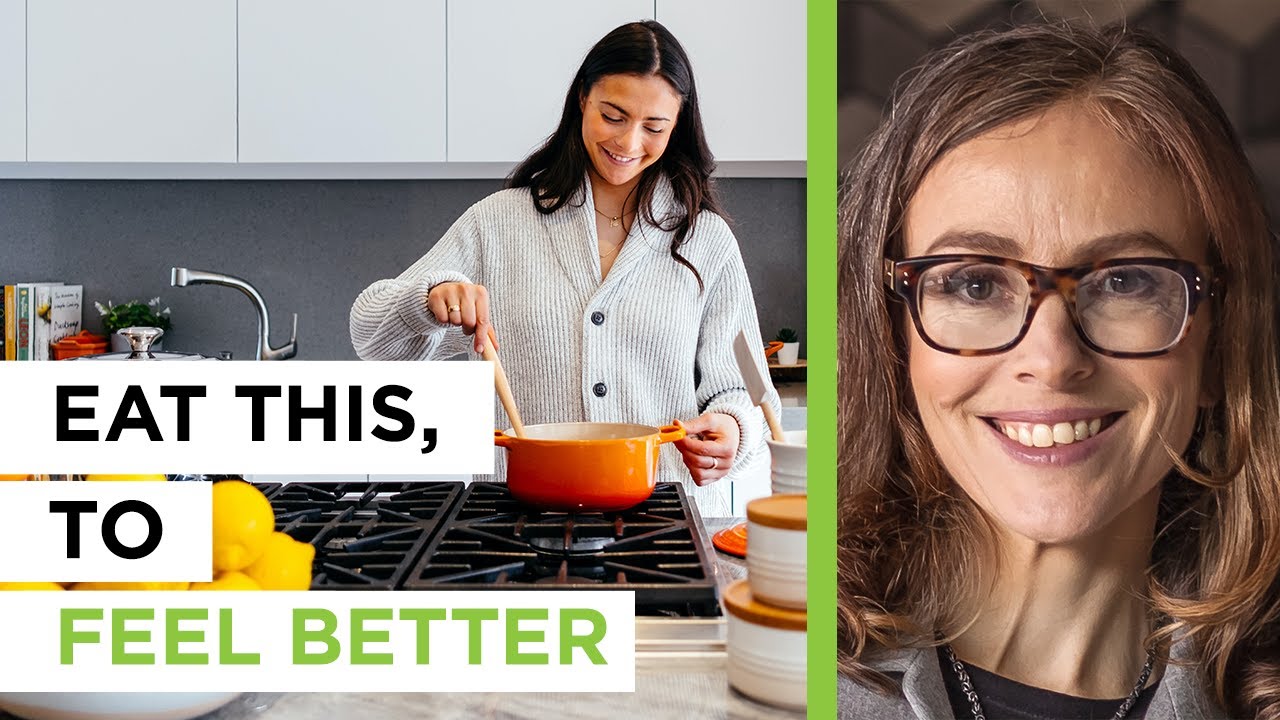
In this episode of The Empowering Neurologist, Dr. David Perlmutter interviews Dr. Cate Shanahan, author of Deep Nutrition: Why Your Genes Need Traditional Food. Dr. Shanahan argues that modern dietary patterns—especially the widespread use of refined vegetable oils—disrupt epigenetic regulation, increase oxidative stress, and accelerate chronic disease. She explains how the science of epigenetics shows that nutrients act as cofactors that help genes express properly, and how the loss of traditional culinary practices has led to a multigenerational health decline. The conversation covers the "good fats vs. bad fats" narrative rooted in 1950s heart‑attack research, the claim that vegetable oils are more damaging than cigarette smoke, and the importance of collagen‑rich foods such as bone broth for connective‑tissue health. Dr. Shanahan outlines the four pillars of a traditional diet—fresh foods, fermentation/sprouting, meat on the bone, and organ meats—illustrating how these practices were common worldwide and are essential for optimal gene function, brain health, and longevity. Practical advice is offered on reducing vegetable‑oil intake, making bone broth, and incorporating organ meats, with the goal of empowering listeners to reclaim ancestral food wisdom for better health and reduced disease risk.
Chapters
Hello everyone, welcome again to The Empowering Neurologist. I am Dr. David Perlmutter. You know, there's probably no more fundamental question than we ask ourselves every day, and that is, what should we eat? What is the best food and why is it so good? You know, we've interviewed so many people on the program talking about their ideas in terms of what makes for a really salubrious type of approach to nutrition. Today we're going to talk to Dr. Cate Shanahan. She is a family physician. She's known nationally in the areas of nutrition and longevity. She trained in biochemistry and genetics first at Cornell and then went to Robert Wood Johnson Medical School She soon recognized the limitations of the pharmaceutical intervention model, as I think many of us have, and ultimately moved to Hawaii with her husband where they began exploring various types of dietary programs really based on foods and practices that were common traditionally throughout history and even into today. And this became the basis of her book that we're going to be discussing today, which is called Deep Nutrition: Why Your Genes Need Traditional Food. And it's, you know, certainly well beyond the notion of traditional food. She touches on epigenetics, how our food choices change our gene expression. She goes into a great deal of research and discussion in terms of the types of fats that we consume. dedicates a chapter to the role of making the right choices in terms of dietary fat with reference to brain vitality, brain functionality, and resistance to disease. So I think it's a very interesting discussion that we're going to have. You know, the real issue with her book, that which her goal is to help create a dietary program that reduces the action of what are called free radicals and really to optimize aging. Her approach is designed to have a real big impact on diabetes and other metabolic issues, as well as generalized inflammation and the role that inflammation plays in chronic disease. So let's just jump right into our interview now. Okay. So, Dr. Shanahan, thanks for joining us on the program today.
Thanks for allowing me to come on your show, Dr. Perlmutter. It's really exciting to be on with you.
And thanks for laboring through our technical issues now that we've upgraded the recording device. So again, for our viewers, we are talking today about this really incredible book called Deep Nutrition. And I want to just jump right in because so many nutrition books and diet books and that are so popular these days really are making a big deal about the macronutrients, about how much protein, fat, carbohydrate, and micronutrients as well, secondarily. But really, you look at what we eat from a very, very different, and I think a far more empowering and a historical perspective as well. So why don't we walk through that at first, and we'll take it from there?
So what I like to do is describe biochemistry as like the math of the body. If, if you want to be able to balance you know, your books, your checkbook, your bank account, whatever, you have to understand math. If you want to be able to understand how the modern diet might be affecting your body, you want to— you need to understand biochemistry. And I do, actually. You don't.
I do.
You do.
Viewers may not.
But yeah, but that is really where you're going to get a lot of the explanations for these diseases, right? If we back up just a little bit, I guess what we're kind of maybe both— the unspoken assumption here that we share is that when we do things right, when we do things the way nature would have it in terms of feeding ourselves, people wouldn't have chronic diseases the way that we do now, right? We wouldn't be able to fly or live to be 5,000 years old or anything. We would still eventually probably die and have some chronic diseases, but later in life, really when we're really old. Yeah. What I have done with Deep Nutrition is try to lay out what aspects exactly of the modern diet are the 2 that are hammering our physiologies to these bits and pieces at this premature early age. I used biochemistry to understand exactly what the 2 worst enemies of your health are. So that's what I spend a lot of the book talking about. And I have one chapter that I was hoping caught your attention called Brain Killer.
About the oils?
Yes. And that one, I talk about how vegetable oil is your brain's worst enemy. And so where right now we have a lot of people with a lot of very useful, helpful pieces of the puzzle as to where do we get these horrible diseases like Alzheimer's and autism and Parkinson's, I feel that the biggest missing piece has been the discussion around the vegetable oils that constitute anywhere between 25% and 45% of the average American's diet. That's a huge chunk of our diet that no one's really looking at closely enough, and I feel like we have a lot to learn by doing so.
Well, one of the One of the interesting things that you start off with is a really, I think, empowering discussion of the notion of epigenetics, that the food we are consuming is actually changing our genetic expression. And that's, I think, a very heady kind of conversation. But take us through that in terms of, you know, really kind of getting away from the focus on the macronutrients and why— how empowering this whole notion of controlling our gene expression with food really is.
Yeah. So the basic— if your basic assumption is that nature knows best, it's not a surprise that the diet that we would naturally eat or that we used to eat when we were totally in touch with living directly from nature would be the best diet, not just for our health and our longevity, but also for our gene function. And the science of epigenetics really kind of explains that connection between what we eat, our dietary choices, and not just our health, but our genetic health. And that means the next generation's health. And so in a sense, you can say that your genes have expectations around nutrition that they will receive through your diet. And when we meet those expectations, our genetic expectations, our genes function properly. And that's what epigenetics really helps explain some of the mechanics and the details of exactly how that happens. This is how, you know, your genes are regulated and there's cofactors, they call 'em cofactors, in your food that actually can directly bind to and interact with your DNA and make sure that certain proteins get expressed at the right time so that development occurs normally so that your— right blend of enzymes are active so that you can burn fat, so that your brain develops normally, so that, you know, you undergo apoptosis at the right point in time, or your cells do, I mean. And so all of those genetic expectations are encoded in our DNA, and they're also encoded in the culinary traditions. And when we get the correct blend of nutrients, by following some of these culinary traditions, our genes express optimally. And when we don't get the nutrients that our genes expect one too many times, that's when we get sick. And we might get sick just ourselves. We might get, you know, we might develop cancer. We might develop diabetes. And then we also, though, pass on genes that may not work as well either for the next generation. So this is why we're actually seeing now that there's children being born with a predisposition to obesity and diabetes that their parents didn't have, that they will, among other things, never grow as tall. They will never have quite as much, um, muscular muscles, right? Because they're predisposed to building, um, fat tissue and they, you know, undergo puberty early. This is all fallout from the modern diet. It's really been a horrible experiment that started about 50, 60 years ago when we started deviating from our faith and our trust in the culinary traditions that got us here. We basically kicked Granny out of the kitchen along with Julia Child, the butter-loving Julia Child, and brought in Bluebonnet and Monsanto and and Dow, and that's the experiment that we've been running on ourselves for the past 3, 4 generations. The fallout from this now is not just affecting the older generation who've been living with it for all that time, but also affecting their children and grandchildren now who are having problems. My patients tell me this very frequently. They say, you know what? My healthier 60-year-olds are astounded the same way that I am that their own grandchildren are having problems that they never even heard of. All these children now with peanut allergies and other immune system problems and, of course, autism. It's all a setup. We've all been set up to be healthy if we would just obey nature, respect culinary traditions, but we discarded a lot of that. We had authorities telling us to discard this. Yeah. I talk about who the biggest bad guy was in a chapter called Good Fats and Bad, because it really did start with a fear of fats in the 1950s. Having done that now, we're seeing healthcare costs skyrocket. It's just a swirling morass of problems that we're having that all could have been avoided You know, if we didn't do that. But of course, if you want to get yourself— empower yourself to get back on the right path, it starts with taking control of what you're eating and getting, getting a handle on— getting, getting a handle on what does a healthy diet even look like, and gaining confidence that it's worthwhile to spend some time back in the kitchen.
Well, you have actually 2 chapters, I think, that are very closely allied. The first one you just mentioned, Good fats, bad fats, and the next dealt with the damaging effects of vegetable oils in terms of the brain. So why don't you take us first of all through the the good fat, bad fat paradigm, and and then we can talk about why we really need to in general avoid certain vegetable oils. Certainly, you know, avocado oil, olive oil are on the eat list, but they're you know by and large the vegetable oils people are consuming. Thinking that they're good because that's what media tells us. You're telling us just the opposite.
Right. The Cliff Notes version of the good fats and bad fats chapter is that back in the 1950s, there was an epidemic of heart attacks, actually starting most famously with Eisenhower's heart attack, and kind of a mandate to get to the bottom of heart attacks. The guy that assigned himself as the go-to guy for getting to the bottom of this is a man named Ancel Keys who came out and said, What? It's saturated fat. Saturated fat is causing heart attacks, and that's it. So everybody stop eating butter and eggs and, you know, go ahead and get margarine. And at the time, actually, the reality was that most cigarette smoking was being caused— I'm sorry, that was the answer. Most heart attacks were being caused by cigarette smoking, right? So if you look at the graph of heart attacks per capita, it actually peaked in the '50s, late '50s, early '60s. Per capita deaths from heart attacks, right? We still have a lot of heart attacks, but people aren't dying so quickly. So the peak occurred in the late 50s and 60s. The smoking rate per capita also peaked in the late 50s and 60s. And what this has to do with fat is that there's something very important that has been overlooked in this whole conversation around what causes heart attacks, and that is a technical term called oxidative stress. Oxidative stress has to do with oxygen reacting in an uncontrolled way with other chemicals. Smoking is bad for us because it causes oxidative stress. It's burning, basically. You feel it burning. It causes oxidative stress in your lungs. We also call the reactions— the result of those reactions lead to inflammation in your lungs and then in your blood circulating through there. The lipoproteins that go through your lungs, they also get impacted. Cigarette smoking is associated with heart attacks because it causes oxidative stress in the lipoproteins. They get oxidized. Fat gets oxidized. It doesn't— it can't get out of your arteries, and so it ends up causing arteriosclerosis. That's how cigarette smoking causes arteriosclerosis. Vegetable oils that are, you know, the soy, the sunflower, the safflower, corn, canola, cottonseed, those are the most common. They are also very— susceptible to oxidative stress. They react with oxygen very easily because their molecular structure is not resistant to reaction— reacting with oxygen. In fact, we need them in our bodies because of the way that they are rapidly capable of reacting with oxygen, but our bodies need to do it in a controlled manner. We use them for important reactions like responding to a cut in our body or for even childbirth. It's mediated by these essential fatty acids, omega-3 and omega-6. But the problem is that when we eat way so many of them like we are now, or when they get refined the way they do in the factory, or when we cook with them, they still react with oxygen, but now it's not being controlled. The result is breakdown products of the primary molecule, the polyunsaturated fatty acids, that have long names like 4-hydroxynonenal and cyclic— heterocyclic compounds and— all kinds of just bad long names. Those compounds are individually— each one of them has been studied, many, many of them, not every last one, have been studied and found to be cytotoxic and genotoxic. The bottom line is also the connection, tying it back to smoking, is that they also, when you eat them, they get in your body and they get in your lipoproteins. Just like cigarette smoking, they oxidize the lipoproteins as well, and that's how you get heart attacks. and strokes and intermittent claudication in your legs and arteriosclerosis that affects your kidneys and your kidney function and so on and so on. I have come out and just declared war on vegetable oil by saying that it's actually worse for you than cigarette smoking because unlike cigarettes, first of all, babies get fed vegetable oil in infant formula. Nobody's actually making sure they're They're 1 month old is smoking. They might get secondhand smoke, but their bodies are not being composed of cigarette smoke. It's the lungs and the circulation and the bladder and a couple other organs that get hit the hardest with the damage from the cigarette smoke, but vegetable oil can go anywhere in your body, and so it can cause many more diseases. Vegetable oil is— Oxidative stress in a bottle, and oxidative stress from vegetable oils— oxidative stress is the great disease maker. So this is just a huge, huge thing that you can do for your health, just to pay attention to how much vegetable oil are you getting, where is it coming from, and figure out how to live without it.
Well, let me, let me shift gears a little bit, and, and that is I'd like to get to collagen because you have a whole chapter dedicated to collagen. And I'd like to, if we could, review what our ancestors used as a source for collagen and then talk about the deficiencies of dietary collagen and then why it turns out to be so important.
So, yeah, so collagen, what is collagen? Collagen is the backbone molecule of your connective tissue. So connective tissue includes your skin, includes your ligaments, It includes your bones even. It includes your— the structure of your arteries is made out of connective tissue. Everything in your body, all of your cells are held together by connective tissue. If we didn't have any, we would just disintegrate into small little piles of sludge. So it's very important. And we have molecules called fibroblasts that make a lot of our connective tissue. They manufacture collagen. It's one of the most common types, one of the most common molecules that's in all the different connective tissues we have in our body. Fibroblasts actually can be turned on or off. Hormones like estrogen and testosterone and growth factor, they actually turn on the fibroblasts and make them do their thing that helps to keep your skin healthy and so on. Yeah. But we can actually— if we eat one of the 4 major food groups that I've defined in our book, Deep Nutrition, which I call it meat on the bone. If we eat meat on the bone, which you can do just by boiling chicken bones after a holiday, save the turkey and boil all that and make turkey broth soup, and whether it's Yeah. Whether it's turkey or chicken or pork or beef or whatever, all the same benefits, though you're extracting some very special compounds when you do that. They've got long names, like everything I'm talking about today, like proteoglycans and glycosaminoglycans. The supplement glucosamine is named after glycosaminoglycans, but you're extracting all these different compounds, and each one of them has the ability to activate those fibroblasts. When you get all the whole nice blend in the soup, literally it is a soup of growth factors essentially that will help your fibroblasts do their thing, whether they are in your joint tissue or in your gut or in your skin or your bones or wherever they are. They are basically a missing food group from the American diet. They're extremely common, like they're ubiquitous almost in actual traditional cooking. When you go overseas, if you go to Asia, you'll see all kinds of soups. You go to France, of course, they're famous for their sauces that are made with stock. French onion soup. Everywhere, everywhere in the world, it's much more common. It is actually one of the 4 pillars of world cuisine, meaning that even in America, we did it until recently. It's a very important ingredient. It's not a macronutrient that we talk about. It's not protein or carb or fat, but it is essential. It has these amazing benefits. Folks have told me that their friends have come up to them and asked them, after they've read Deep Nutrition and started making their own bone stocks or buying it, their friends would come up and say, hey, did you do Botox? They're like, no, I did bone broth. It really has visible, wonderful beauty effects.
You've mentioned the 4 pillars of the human diet a couple of times in our conversation. I think those are the 4 pillars that really support the whole book, and you actually have a chapter dedicated to that. Can we walk through that?
Yeah. What my husband and I did was we were actually living in Hawaii when I noticed that— I was a family practice doctor, and I noticed that I had really healthy patients in their 60s and '70s. When I started learning more about nutrition myself, I started asking them what they ate. Their answers, I didn't even understand them. They were like, dinuguan baduy. I was like, what? It was all these— what some chefs might call bizarre foods. They were eating nose to tail, basically. They were using everything. smartly, that nothing went to waste. I realized that there was just a lot more to food than I had learned as a child growing up as an American child, and then in medical school even where we learned about the macros. We think that plus vitamins and some water and boom, you're done. Now you can just take all your powders and live on the moon. There's a lot more to it. My husband and I realized that we were also at the time watching cooking shows all around the world. But we kept seeing the same kinds of things, that people would be making soups and they would have bone in there and they would be doing this weird thing called fermenting and have like little vats of bubbling stuff. Yeah. We were like, huh, I wonder if there's anything that they all do in common, because this was at the time where a couple of popular diet books were coming out, like the Okinawan Diet and the French Diet, the French Paradox. Then there was a book called The Blue Zones where they were looking at what do all the healthiest or the longest-lived people, what do they do in common? There was like, is there something that there's all in common here that might be important for us to know about? We started really doing it more on purpose than rather just recreational. We got cookbooks from all around the world. We got really old cookbooks from all the English-speaking countries I could from the 1800s. Then we watched more TV. We came up with these 4 pillars because they were everywhere, absolutely everywhere. It's fresh food. Which is just food that's like as nature made it. Didn't even cook it. Fruits and vegetables, yeah, but even things like steak tartare and sushi, raw animal products, raw dairy, unpasteurized dairy. That's the first one. When you have too much of that fresh food, well, you've got to store it for later. This is where fermentation comes in and sprouting, right? Seeds naturally store themselves. You can sprout your seeds by just germinating them using just a little bit of water, and that softens them. Then if you want to cook with them, you don't have to cook them for a day, basically, like we do when we buy kidney beans. They're already either in a can or you got to just cook them in a pressure cooker forever. But if you sprout them, you're actually using nature to make them more nutritious because the process of germination wakes up the dormant enzymes and releases the phytates and other things that will bind the nutrients, things we call anti-nutrients. So that's the sprouting The fermentation is— you're one of the experts on this. This is how you turn— how you get probiotics from food. You just also let nature take its course. You put milk, for example, in the right temperature and the right kind of a container, and you'll get either cheese, yogurt, or a million other things that people make out of fermenting milk. Traditional food. Yeah, traditional foods. That's the second pillar. The third is meat on the bone, which we talked about, but it includes the concept of making sure that you keep your meat moist when you cook it and don't overcook it because heat destroys nutrition. If you get boneless, skinless chicken breasts, you probably notice it's harder to cook them without them drying out than it is if you— a whole chicken.
Can you imagine the poor boneless chicken trying to walk around? How do you do that?
Yeah, I'd like to adopt some and just take care of them. And so, and then the last one is nobody's favorite. It's organ meat. So this is like all the other stuff that we basically just throw out, make glue out of, or give to the dogs. Because liver, you know, when it comes from an animal that's been pasture-raised and not infused with tons of chemicals, it has— it's better when it's organic, obviously, but it bioconcentrates a different blend of nutrients than muscle tissue does. And each organ in an animal's body has kind of a different blend of vitamins and other minerals and nutrients, all of which we need. When we just have the muscle tissue, we're getting a great amount of protein, and sometimes we get some iron as well and other things like ubiquinone and creatinine or creatine. When we have liver, we also get a lot of B vitamins. When we have bone marrow, we get some branched-chain fatty acids. And there's just, you know, this rainbow of nutrients that is available to us, and we're only taking like a little sliver of color in the middle when we stick with just the muscle meat.
Well, I'd like to thank you for spending time with us today. You know, there's a— as I mentioned earlier, there's a lot of books out, and you really offer up, I think, a really different and an in-depth perspective, hence the title Deep Nutrition. It's really a terrific read. Thank you. And I'm hoping that our viewers are going to pay attention to your information because, you know, in a way, it does kind of simplify our lives in terms of letting us become reconnected. And, you know, that might sound a little bit counter to the notion of, you know, popping in a TV dinner in the microwave and being done with it. But in reality, you make it very, very understandable and very simple, and I think that's really important because it makes it very user-friendly. So it's very impressive. And again, thanks for spending time with us today. Are you still in Hawaii?
No, actually, I'm in Connecticut now.
How did that happen? Yeah.
So, well, I wanted to come back to the mainland because, you know, Hawaii is beautiful and I loved it there, but I kind of missed my family because they're on the coast
here. Yeah, island fever. I hear that.
2 days.
All right, well, listen, we'll talk soon. Thank you again so much for your time.
It's been a pleasure to be on the show with you, Dr. Perlmutter. Thank you.
Bye-bye.
Bye.
Well, thanks for joining us again on the program, The Empowering Neurologist. I hope you got some good information again from Dr. Shanahan. The book is again called Deep Nutrition and talks a lot about why we need to get back to the notion of eating foods that are considered traditional. Thanks again for joining us. I'm Dr. David Perlmutter.
More from David









Newsflash: Alzheimer’s Is Not Caused by What We Thought | Dr. David Perlmutter

