Nutrition Affects How We Think - with Dr. Lisa Mosconi | The Empowering Neurologist EP. 80
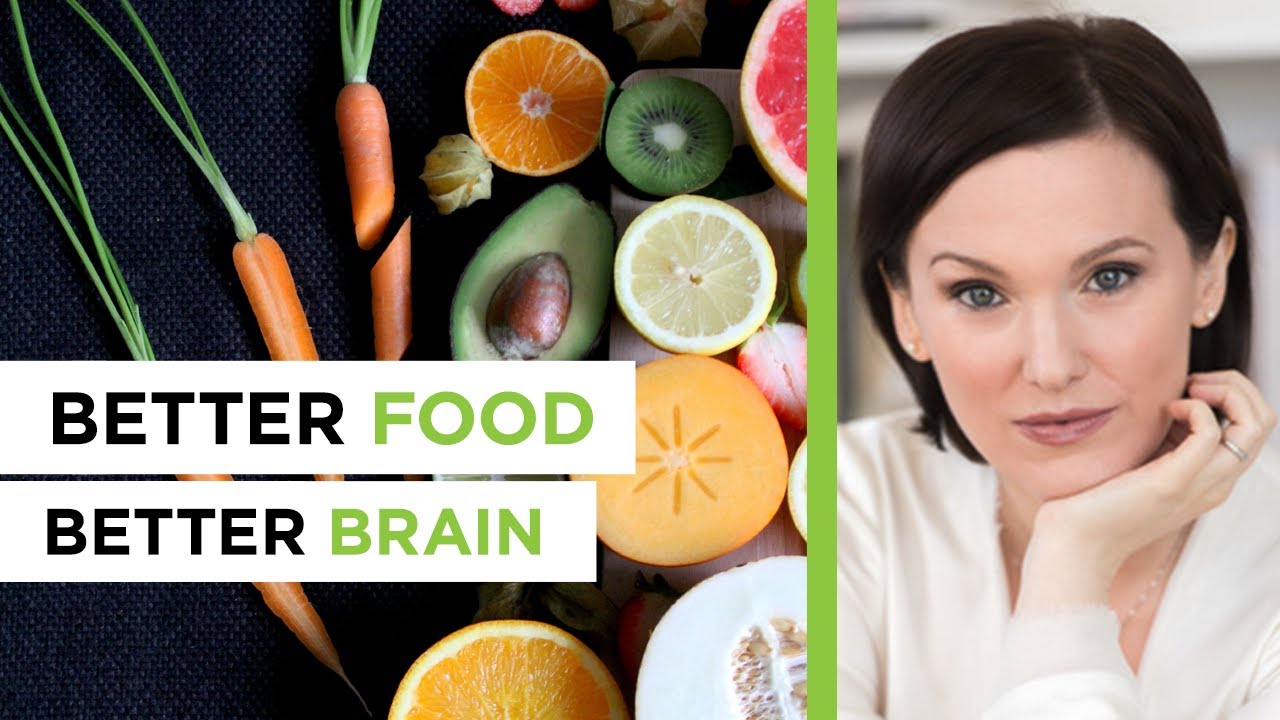
In this episode of The Empowering Neurologist, Dr. David Perlmutter interviews Dr. Lisa Mosconi, a neuroscientist, neuro‑nutritionist, and author of Brain Food. The conversation covers the shift from viewing Alzheimer’s disease (AD) as an inevitable consequence of aging or genetics to seeing it as a mid‑life, lifestyle‑driven condition that can be delayed or prevented. Mosconi explains how her early work on genetics revealed that hereditary mutations account for less than 1% of AD cases, prompting a focus on modifiable risk factors such as diet, hydration, gut health, and physical/mental activity. She details the brain’s reliance on water, the unique nutrient profile of black caviar and eggs, and the concept of “fat redemption mode” – society’s evolving view of dietary fats. The interview delves into saturated versus polyunsaturated fats, the role of medium‑chain triglycerides and ketogenic diets, gender differences in fuel metabolism, and the antioxidant benefits of moderate red‑wine consumption. Finally, Mosconi outlines a “lightning‑round” of supplement recommendations—DHA (from fish or algae), B‑vitamins to lower homocysteine, and probiotics to support the gut‑brain axis—emphasizing individualized dosing and medical supervision. Throughout, she stresses that early, consistent lifestyle choices (hydration, balanced fats, glucose control, gut health) are the most powerful tools for preserving cognitive function and reducing AD risk.
Chapters
Hello everyone, I'm Dr. David Perlmutter. Welcome again to The Empowering Neurologist. We're going to speak today with Dr. Lisa Mosconi. She is Associate Professor of Neuroscience in Neurology at the Weill Cornell Medical College. where she serves as the director of the Women's Brain Initiative. She's also associate director of the Alzheimer's Prevention Clinic and serves on the adjunct faculty at the Department of Psychiatry at NYU School of Medicine, as well as in the Department of Nutrition at NYU. She holds dual PhD degrees, one in neuroscience and one in nuclear medicine, and in addition, she's actually also certified in integrative nutrition, and serves as a holistic healthcare practitioner as well. She is well known for her research on the early detection of Alzheimer's disease in at-risk individuals, and we'll talk about what that means today, and especially in women, recognizing that women make up 2/3 of Alzheimer's patients. She has explored the use of various imaging techniques like PET scan and various MRI techniques to make early diagnoses, and she's actually world-renowned as a neuroscientist and neuro nutritionist. She is passionately interested in how risk of memory loss and Alzheimer's disease can be prevented through the combination of appropriate medical care and lifestyle modifications as well, involving things like diet. And physical and intellectual fitness. She's the author of a new book, Brain Food: The Surprising Science of Eating for Cognitive Power, and we're going to be talking about her new book today. Well, Dr. Mosconi, welcome to our program.
Good morning— well, not morning, actually. Good evening. Thank you for having me.
Delighted, and I really enjoyed reading your book. You could see It's, well, you see it's very much highlighted. I'm still pretty old school.
Me too.
I love my highlighter pen. But that said, you know, your book is all about keeping the brain functional. And why do you suppose it is that there, there is such a reluctance in our modern world to embrace the idea that our lifestyle choices can affect our brain's destiny?
It's a really good question. I think it's in part due to Western medicine and the focus on surgery and medications rather than lifestyle and preventative strategies, especially as far as the brain is concerned. I also think perhaps as brain scientists, we're not doing such a great job communicating with people and really learning from patients' experiences. I think because everybody intuitively knows that choices you make in your life affect your brain. But I think in neurology and neuroscience as well, or any brain scientist, any brain science, the idea has always been that the brain is a little bit disconnected from the rest of you. So the brain is in charge of the rest of you, but nothing can really touch it in return. And I think that's this kind of old paradigm. traditional view has been replaced more and more as science unravels all the different ways that the rest of your body actually impacts your brain, like the microbiome that you're so active
in. You began in neuroscience and then engaged in neuroimaging, and you were involved in looking at the early changes that are noted in the brain that are presaging towards Alzheimer's.
Yeah.
What was the shift in your focus that made you really want to explore the idea that lifestyle changes, particularly diet, might be something important and end up, you know, lecturing and writing books about this topic?
Yes. So my background is very much biology. I do have a PhD in neuroscience and nuclear medicine both. But I actually started more from nuclear medicine, and that's because my parents are nuclear physicists, both of them, which is quite a thing, quite a family to grow up into. And my mom was teaching physics to students who then transitioned to nuclear medicine, and they grew up to be professors and doing research at the university. But At the same time, they used to be my babysitters.
Oh my gosh.
Yes, it's quite a thing. I knew everything about Einstein and all these relativity issues. I did not know who Cinderella was growing up, so it was quite interesting. Yeah, but so as soon as I was old enough to know what I wanted to do in life, I went to them and I said, can I train? Can I volunteer? Can I be sort of research assistant in the department? And they said yes. And the point is that I have a family history of dementia. My grandmother developed Alzheimer's disease when she was in her 80s, and then her 2 younger sisters also developed Alzheimer's disease, and their brother did not. So that was quite a thing for us. And I think in Italy, we're not as prepared to deal with Alzheimer's or dementia as in the United States. There are no nursing homes, everything is done at home. So that was quite intense for everybody. And that happened pretty much when I was in college. So for me, my goal was really to understand the genetics of Alzheimer's and cognitive deterioration. So I started this PhD, I moved to New York, I went to NYU Medical College. I was there for— How long? 10 years actually. I finished my PhD there and that was all about genetics, genetics, genetics. And it's really the research that convinced me that the role of genetics is not nearly as major as we previously thought. So genetic mutations account— are found in less than 1% of the population. And even when we look at all the families, where Alzheimer's disease runs in the family, really only 6% of all these families carry genetic mutations that cause Alzheimer's. And that, in a way, was a huge relief, obviously, and in a way was quite disappointing, given that that was my research career in my mind. And so I really started asking myself, well, what else could could be impacting the brain in such a way that can cause dementia, provoke dementia, or even just activate whatever genetic predisposition one has. So, if it's not deterministic, it's got to be risk factors, right? So, what kind of risk factors are really important? And the more we looked into that, the more lifestyle came up really on top, even much more so than heart disease in some cases, or diabetes. In many cases, they are caused by your lifestyle. And so I started looking into that, and we use these very complicated statistical models where we obviously look at the brain, which is a little new maybe in nutritional science, where having actual information about somebody's brain by means of brain imaging is quite interesting and quite novel in some ways. And then we would look at all the risk factors that could potentially impact brain health and brain aging over time and Alzheimer's risk and development, and diet would always come up on top, at least in my hands. All in.
Well, it's interesting that you just delineated, I think, something that's very important for our viewers, and that is the notion of genetic determinism versus genetic predisposition. Because when you embrace the notion of genetic predisposition, Then the door remains open for us to recognize we have risk, but that something can be done to offset that risk. And in your, in your book, as you discuss offsetting the risk for ultimately developing Alzheimer's, you really made it clear that this isn't just a consequence of aging, but that Alzheimer's is the endgame based upon choices we make very early in life. So if you could just walk us through what might the 20, 30, and 40-year-olds want to know right now in terms of improving their odds at remaining cognitively intact as they get older?
Yes, I think that's the million-dollar question. I think it's important to really reconceptualize Alzheimer's as, number one, something that really happens to a lot of people. Right now we have almost 6 million patients suffering from Alzheimer's disease in the United States alone, and these numbers are going to triple by 2050 unless we find a way to really minimize risk and delay onset and possibly prevent a lot of these future 15 million cases in the United States alone. But really, in order to implement prevention and preventative strategies, The key thing that we need to do is to understand that Alzheimer's disease is not a disease of old age. So when I started, which is in college, most people understood Alzheimer's and dementia as the consequence of bad genes or aging or a combination of the two. And it really turns out that genes are not destiny, like you said, but also aging is not a linear path towards unavoidable dementia. There are plenty of people who live very long and happy lives with no dementia in sight, and there are people who develop Alzheimer's when they're 60 and 70, or 50, and they have no genetic mutations. So I think what's really important to understand is that Alzheimer's is not a disease of old age, but is actually a disease of midlife. So Alzheimer's starts in the brain when we are in our 40s and 50s. And then it takes decades for the brain damage to be severe enough that the brain can't just keep it in check anymore. And then the cognitive symptoms appear, so memory loss and forgetfulness, and you don't know where you put your keys, you don't remember names, and then they gradually decline. So prevention is key, and the best way to start is as soon as possible. And I think, like you said, in your 20s and 30s and 40s is the perfect time to start.
You mentioned that Alzheimer's will increase by threefold by 2050, and you were very eloquent in your book by just making us understand what that number looks like. And it's more than the population, in your words, of New York, Chicago, and Los Angeles combined. Yeah. And that's the number of people in— that's 2050. Yeah. It's not that far away. So, you know, 30, 31 years. Yeah. That's really a huge number, currently costing us globally $1 trillion. And, you know, I think people have to understand the scale of this issue. And I think your point's about paying attention to those individuals younger in years. And, you know, the research has indicated that inflammatory markers that are detected in individuals in their 30s and 40s Are a powerful indicator for risk. One study from the Journal of Neurology showed risk 24 years later in terms of cognitive decline and brain shrinkage. And I've often been asked, well, when does it matter? When should we start thinking about it? Well, is it people in their 20s and 30s? Well, I think their adolescence plays a role in their health in their 20s and 30s. I think if you're having issues with childhood obesity and now type 2 diabetes in your childhood, that's an issue. And I really think it's gestational is when we should start thinking about that, because we know that choices that a mother makes, mother-to-be, Right. have a huge bearing in terms of obesity risk for a child into his or her adulthood, which impacts inflammation, which is obviously a central theme as it relates to Alzheimer's. One of the interesting things that your book talks about that I haven't really seen in any other book to any significant degree, and I was a bit surprised in a very positive way, you talk about water. I thought that was great. Tell us about water and why it resonated with you.
Sure. Well, so I'm Italian, and as I'm sure everybody can tell from my accent, and I actually studied in France. So it's better. And we all drink an enormous amount of water. And it's fresh water, spring water, and we just do it instinctively. And it's just a normal thing. And then I moved to New York and nobody drinks water. And it's so strange to me that most people prefer seltzer or club soda or soda or fruit juice or coffee, anything but water. And as a neuroscientist, that is concerning to me because the brain is really built on water and is optimized to function in water. So we usually think of the brain in terms of dry mass, like how much fat, protein, and carbs are present, but a brain that is alive is actually mostly water, right? It's wet mass in many different ways. So 80% of the brain is water. the entire content of the brain is water. And water is so important for any biochemical reaction to take place inside the brain, including energy production. So what happens is, is the brain is the first organ in the body to really suffer from dehydration. And dehydration is not severe, even just mild water loss, like a 2% to 4% decrease in water volume inside the brain can cause neurological symptoms including fatigue, dizziness, brain fog, confusion. In brain scans, so studies that look at MRI scans of the brain before and after mild dehydration, so people who were mildly dehydrated and then drank and the brain got replenished and refilled with water showed how mild dehydration is really associated with shrinkage of the brain. The brain will just lose mass and volume, and then that's easily reversible by just drinking water. But if the brain is shrinking like a sponge that's been— that really could be a sign that your cognition is going to be off as well. So your reaction time is going to be—
So what is our recommendation then? What do we tell people when they come in and they say, okay, what should I do as regards to water?
Well, so I think then the old-fashioned rule of 8 glasses a day is actually a good starting point because that's really— it pretty much balances out all the water that you normally physiologically lose during the day through perspiration or just movement and urination and all the ways that we have to lose fluids. So 8 glasses of water is really the minimum, I would say, for an average-sized person. And then you want to optimize, I think, depending on where you live. Is it hot? Is it cold? If you live in a warm climate, then you need to drink more water. If you're very athletic and practice a lot of sports, obviously you need to rehydrate more. And also, as people get older, there's a whole feedback system between the brain and the rest of us that kind of shuts down a little bit as people get older. And so many people just don't perceive thirst as well. It's really neurological. And so they tend to drink less. And it's really important instead to keep very well hydrated, especially as we get older and their brains need a little bit extra support, I think. So 8 glasses of water is good. More is probably better, obviously without getting to the point of being hemodiluted. Nobody wants that. But— within reason, like 2-3 liters of water a day is a good ballpark measure. And also water is not just water. That's what I always want to say. If you filter the water, you may get rid of the electrolytes. Oh. So like purified water, like when you go to the airport and everything is purified water, that's fluid, but it's not actually helpful to the brain because it doesn't contain the De-electrolyzed, that I'm rehydrating. So spring water is better, or even tap water that is filtered to be clean, but the filters are not as strong that they actually remove the nutrients along with the toxins.
The other unique thing— there are many, but one other thing that caught my attention because you mentioned it several times was black caviar. I've not read another brain book that talked about black caviar. Tell us a little bit about how did that happen, first of all? I mean, we can talk about the, the DHA content and all that, but how did, how did that enter into the narrative?
In the book or in my head?
Yeah, I mean, you must have, you must have had some experience with caviar along the way and decided to put it in the book.
Oh no, that's actually really neurochemistry. Okay. So I studied a lot of neurochemistry. I really like it. I do brain scans all the time, especially with positron emission tomography, so I really look at the chemistry of the brain. And I was thinking, well, what kind of food is really like a good complement that really mirrors the chemical composition of the brain? Because we know that only select nutrients can get inside the brain, and we know What kind of nutrients the brain really needs for health, for health that they have to be imported through the diet, and they aren't that many. So when you have a list, as scientists are fond of putting out, right? So I had my list of nutrients that I wanted to discuss, and then I thought, well, which food really contains the least, like most of these nutrients? And the one food is caviar. And caviar, I didn't know, I didn't know that caviar in English or in the States is a fancy term. Like, you say caviar, you mean actually like the black caviar or the super expensive kind of fish eggs. I meant fish eggs. So any eggs that come from a fish that is kind of fatty in composition, like salmon, mackerel, even fish, flying fish, you know, when you go for sushi and you have this big— Oh, yeah. Those are all excellent sources of all these nutrients that are really so important for brain health and they come packaged together into fish eggs. So there is DHA, omega-3, like you said, which is the most important and most prevalent brain fat, but also there are antioxidants like vitamin A and vitamin C that you don't usually find in animal foods. Like if you just eat the fish, you don't get the same amount of—
And phospholipids.
Phospholipids, yeah, so combination combinations of polyunsaturated fats with other nutrients like serine or choline that is so important for the brain. There's iron, there's a good amount of amino acids. There are pretty much all the essential amino acids. So it's a really good brain food, and it tastes good.
For so many years, eggs in general, not fish eggs, but chicken eggs or other bird eggs, have been really castigated. In your book, you really validate that eggs seem to be a really good choice for the brain.
Oh, yes, yes, yes. Again, it's really neurochemistry that says so rather than just me, but eggs are incredibly nutritious, and of course, they're optimized to grow a new organism starting from the brain, right? So, the neural tube is—
Interesting. I hadn't thought about it like that. That's great.
Yeah, yeah, yeah. So the yolk of the egg is really optimized to give birth to a functioning chicken, but starting with the brain. So the brain is really the first part that develops. So the eggs need to be optimized to grow that first and to really provide the nutrients that ensure that the DNA in the egg is activated to really create a good functioning brain, which is so important for survival. So, yes, I think eggs are— the point is we can't abuse eggs. Whether you go to a diner and you get an omelet that includes 12 eggs, and that pushes it a little bit too far.
Yeah, well, anything in excess. There was a term in your book, you may have made it up or not, but it was that society is in fat redemption mode. I love that. Can you take us through fat redemption mode? I just thought that was really well said.
Thank you. I find that our society has an interesting approach to diets. We tend to treat diets and nutrition a little bit like fashion. One year you're in, and the next year you're out. The same, a little bit, happens, especially for carbohydrates and fats. I think a few years, like in the 1990s, low-fat diets. Right. Were all the rage. And like in the Women's Health Initiative, which is one of the largest clinical trials of women's health ever, all those women, like thousands and thousands, 45,000, some such number of women were put on very restrictive low-fat diets to try and prevent cardiovascular disease and diabetes and hot flashes and dementia. And it turned out that that was a total disaster. None of that happened. Actually, it made it a lot worse. And that really was the trigger point for high-fat diets to take place, like the Atkins diet. And it's been going, you know, a little bit back and forth. Like a few years ago, everybody was vegan. And today, a lot of people choose to go on very high-fat diets. And what I wanted to say is that our society, after avoiding fat for so long, is now actually coming to appreciate that fat is not the enemy, and it really depends on quality and quantity, and that some fats are actually really good for you. I remember— if you remember Time magazine, they had this huge sliver of butter on the COVID Butter Is Back
was the title. I use it in my talks.
Yes, me too. I think it's adorable. And butter can be perfectly fine. There's no need to not eat good quality butter. It's part of health. We know that butyric acid is a really important brain fat as well, and it comes from butter and it comes from mother's milk. And there's no need to substitute a good product like good quality butter with some crappy low-fat spread made of partially hydrogenated fats, for example, which was the trend until very recently. So I think there are pros and cons to these tendencies. The pros are that more and more foods are being reintroduced in the diet, and the cons is the tendency to go a little bit overboard and say, oh great, then I'm gonna eat 3 pounds of butter every day and— It's going to help the normal—
If some is good, more is better. Let's talk for a second about saturated fat, because I think overall the commentary in your book was fairly negative about saturated fat, but I'd like to have this discussion in the context of things like MCT oil or coconut oil, the types of oils people are taking with the idea of increasing their body's production of ketones.
Yes. I didn't mean to be critical of saturated fat. I was trying to— trans saturated fat, very critical, and I think everybody agrees that it's really the worst type of fat that one can ingest. Saturated fat gets mixed reviews in my field for brain aging and dementia prevention. What we know about it comes from observational studies, really large-scale epidemiological studies that showed in thousands and thousands of people that if you eat too much, that can potentially increase your risk of dementia. And I was trying to use those studies to actually provide a threshold, right? So fat is fat, it's a normal component of everybody's diet, it should be. The problem is that sometimes we eat too much of specific foods, like especially animal foods. I think there's, in America, it's very common to really eat a lot of meat and dairy. And so I was trying to say, well, you know, we have studies in like 6,000 or more people showing that those who eat 13 grams of saturated fats every day have— are almost twice as likely to develop cognitive impairment and dementia as compared to those who eat half that amount on a regular basis. So there are thresholds and balances to be kind of respected.
But you mentioned those are observational studies that really are not very specific in terms of teasing out the type of saturated fat. They're based on food frequency questionnaires, so we really don't delineate between eating lard or bacon versus organic coconut oil or MCT oil. It's tough to take that information and really make sense of it. Clearly, there's a huge move towards a ketogenic diet, and— Yeah. At least from the science aspect of it, it makes a lot of sense when you look at Dr. Bredesen's work, for example, in which he's been able to actually reverse Alzheimer's using a ketogenic diet as just one of multiple interventions. I think we really have to look at that and recognize that many people are consuming these saturated fats, coconut oil being 90% saturated fat— Yeah. In their diets. To me, it's similar to the studies that say eating a lot of meat is a bad thing. Because people who eat a lot of meat have a higher risk for colon cancer. Do I believe that? You bet I do. But it's important that we— and yet I choose to eat meat on occasion. Why? Because I think it's important to look at the studies that don't really differentiate between grass-fed beef and factory-farmed, tainted, hormone-treated, antibiotic-treated, glyphosate- in the food type of meat that is then produced, you know, hoping for alchemy to happen and this meat's going to be somehow wondrously healthful, but it isn't. So I think that's, you know, really a place where these studies have to be looked at carefully in terms of extrapolating and interpreting the data to make these recommendations. But let's talk, if we can, for a moment about your views You were getting to this place on fat versus carbohydrates as a caloric source and how it relates to Alzheimer's risk.
Yes. So, fat against carbs. Well, there's a lot that one can say about it. Also, I didn't address your question before about medium-chain triglycerides. I think I mentioned that in the book. It was found in recent years that they're actually much better for you than other forms of saturated fat. I personally love coconut oil. I use it all the time. I give it to my daughter. She's 3 and a half, and I think for children's brain especially, it's really important to have good quality fat in their diets because their brains are really using it to build up neurons.
Half the fat in breast milk is saturated fat.
Yeah, specific types, and it's really important for for children to have access to that, to those precious nutrients because brain, that's the way the brains are built. You need cholesterol and you need saturated fat for structure and then you need polyunsaturated fatty acids for membrane fluidity and functionality. So that especially is really important for children all the way up to adolescence. Then the point I was making in the book is that after adolescence, actually the brain At least the brain imaging studies that have been done so far have shown that uptake of saturated fat in the brain is really, really reduced substantially because the brain is now fully built and fully formed. All the neurons are there. We do regenerate some neurons, but not the majority of the neurons in our brains. So we don't need as much saturated fat, but more like the polyunsaturated. Varieties like omega-3, omega-6, and the other forms. One thing that seems to be consistent throughout the lifespan is that the brain needs glucose for energy. And I think that's what you meant by caloric intake. So the human brain runs on glucose under normal physiological conditions. 99% of all brain energy typically comes from glucose. And I think the general misconception around glucose is that we tend to think about glucose and it's a simple carbohydrate, right? So carbohydrates in general is a source of energy. But at the same time, the brain needs the glucose to make neurotransmitters and it's really the only substrate that enables the brain to form glutamate, and GABA. So of all the brain neurons, 90% of all synapses, which is where the neurons fire, obviously, you know, just saying, they're glutamatergic. So they use glutamate to really power excitatory neurotransmission, which is anything that requires some form of action requires glutamate, whereas inhibition is driven by GABA. And both glutamate and GABA are made in the brain, by the brain, by astrocytes, using glucose. So glucose cannot be replaced by anything else. And that's the point I was trying to make. So yes, glucose is a source of energy, but it's also really important for anything else broadly that is going on inside the brain.
I think the issue arises when glucose is persistently elevated.
That's right.
And ultimately, we develop resistance, insulin resistance, and, you know, that has very important effects within the brain well beyond glucose now that insulin resistance has been developed. So I think that might underlie some of the negativity in terms of the overall ideology as it relates to diet. We know that when glucose is higher, we glycate our proteins, we increase inflammation, we compromise insulin's ability to permeate the blood-brain barrier, and we ultimately affect brain energetics, which may be a 30-year harbinger towards the development of Alzheimer's. Yeah. Again, it gets back to your statements about how this is really not just a consequence of aging, but we set the stage for this disease very early in life. I want to ask you now, in recognizing your Italian heritage, what are your thoughts on red wine?
Oh, okay. It's good for you, clearly. Red wine is— can I just say one more thing? Sure, of course. About carbs and fat, I also think there's something more that nobody really talks about, which is sex. And I find that hormones and what kind of hormones are more prevalent in your body really kind of determine your ability to burn glucose for energy and to keep your insulin down. So something that is not usually acknowledged in conversations around diet is that men are much more efficient at burning fat than women, whereas women are much better at burning carbs. than fat because of the estrogen. All the estrogens really are excellent at keeping the insulin down and regulating glucose levels even in the context of high carbohydrate diets. I just wanted to throw it out there.
No, it's very interesting. For our viewers, I would say watch the interview I recently did with Dr. Anna Cabeca talking about the role of estrogen in terms of brain glycolysis. And how that might be one explanation for why elderly women have such an increased risk for developing Alzheimer's, because exactly what you're talking about, that brain energetics may be compromised by the lack of the trophic effect of estrogen. You know, beyond your heritage and getting to the Italian— And red wine. And the red wine issue, when I was a little kid, I remember my father used to say, we don't want to drink too much red wine because we might develop Marchia-Fava-Bignami syndrome. Let's not talk about degeneration of the corpus callosum. I learned years later, but I was probably 10 years old and he was teaching me about things like Marchia-Fava-Bignami syndrome, which is this degeneration of the corpus callosum that's seen in mostly Italian men who, who do a lot of drinking of red wine. But let's get back to being more reasonable. Tell us about your thoughts on red wine.
Red wine is one of the many things that one can drink to really increase antioxidant content. I feel like because the Mediterranean diet has been associated with increased longevity and a reduced risk of Alzheimer's, then everybody's used to thinking about red wine as something that is actually good for you. One thing that Italians do and people in the Mediterranean region do when it comes to wine is that they don't drink nearly as much as other countries or other cultures believe. So usually the dose is 1 glass for women and 2 glasses for men, and that's because women metabolize alcohol a lot faster than men, so they need just half. half the dose to show symptoms, basically. If you drink too much, then you'll be a little tipsy. Red wine contains a really good amount of antioxidants, and antioxidants are so important for brain health because the brain is very easily susceptible to oxidative stress and free radical production. And free radicals and oxidative stress really have a sort of rusting effect inside the brain and they make your neurons age faster. And the only way to really bring it down, because the brain has very limited antioxidant capacity, is to really input antioxidant vitamins and minerals and phytonutrients from the diet. So some vitamins like vitamin E and vitamin C are very strong antioxidants, but so are some nutrients from plants like the resveratrol found in red wine, or the compounds that are so important for blueberries, right? Steel beans, they're so good for you, and that's why everybody knows that blueberries are good for the brain, because of these compounds that are not typical vitamins and minerals but have very, very strong effects, that are antioxidants.
Well, that takes us to The last section I wanted to cover, actually, probably one of the last sections in your book, and it is about supplements. Mm-hmm. You mentioned some very important things like DHA and B complex and mineral supplement, things like that, probiotics. Let's walk through the lightning round here. Let's talk about what we should be doing in terms of DHA and why.
So DHA is one of the most important brain fats, and it basically comes from fish. So fatty fish like salmon, herring, mackerel, trout, those are really good sources of DHA. I think as long as people eat enough fish, which is like 2 or 3 servings per week, perhaps supplementation is not needed unless one is deficient. And that can be measured in serum through a blood test. Many people don't eat fish. I keep getting emails here from people who are like, I don't like fish. I hate fish. I don't like anything about fish. I'm allergic to fish. And that is a little foreign to me as an Italian. We eat fish all the time. But I do understand the concern. There's also concern over mercury toxicity. So there are many considerations around that. And if somebody doesn't eat fish, or for allergies, or for personal preferences, then a supplement could be helpful. And that, I think, is best decided in collaboration with one's doctor, because omega-3 supplements can have interactions with, like, blood-thinning medications, like aspirin, some antidiabetic medications as well. So everybody needs different doses and— different sources as well. For vegans, there are high-purity algae oils that could replace fish oil. The thing to keep in mind is that it really depends what kind of fatty acid is included in the supplement. If it's DHA, which is already synthesized, that's very helpful. If it's ALA, it's important to know that the brain needs to take it and convert it. into DHA, and about 70-75% is kind of lost in the conversion. So, it's possible that we will need a little bit more of that.
So, then getting just omega-3s that you might get from a hemp seed or from other— from legumes, for example, because of our really restricted ability to activate alpha-linolenic acid into DHA. It's not really a good idea if you're thinking about getting your DHA levels up to think you're going to take in the precursor, because our ability to make that happen is actually quite limited.
Yes.
Now, you also talk about B vitamins. Why are they so important for the brain?
Oh, they're important for a number of reasons. Some B vitamins, especially B6, folate and vitamin B12 are really important for a healthy nervous system, and they have very specific functions inside the brain. So they're really needed just to— for the brain to be able to produce neurotransmitters. Like serotonin needs B6 to convert tryptophan into serotonin. So there are a lot of chemicals that are so important in the brain that really need these vitamins just to to be formed, to be manufactured inside the brain. And another function of B vitamins is that they keep down homocysteine. And homocysteine is a chemical, it's a substance that we have in the bloodstream, and if it's too high, it can really increase risk of cardiovascular disease, heart disease. And it's really regulated by the B vitamins. So when the B vitamins are low, in many people homocysteine goes up. And it's enough to just replenish the B vitamins to bring down the homocysteine. Mm-hmm. So I think this is really important for dementia prevention because what's good for the heart is good for your brain. And studies have shown that, clinical trials in this case, which I'm sure you agree with, have shown that if you have high homocysteine and you take B vitamin supplementation, also at high doses, that really Slows down brain aging in probably an ongoing Alzheimer's process in people with mild cognitive impairment, which is often a prodromal stage to Alzheimer's. It's often like a step closer to Alzheimer's than just forgetfulness or other problems.
And probiotics, why are they important?
Probiotics are important for gut health. Mm-hmm. And as you have discussed many times, the health of your gut and of your microbiome is really important for the health of your brain because there's a feedback loop system between your gut and your brain. And what happens is that if the bad bacteria in the gut outnumber the good bacteria in your gut, that can create inflammation for sure. And also the bad bacteria are able to make the blood-brain barrier more permeable. Permeable, so they're kind of a risk factor for reduced brain health. So they can kind of hijack your brain by changing that layer of protection, the blood-brain barrier that surrounds the brain. And if the brain becomes more permeable, more bacteria can come in, but also a lot more toxins and more cytokines, more inflammatory markers from the outside. become able to infiltrate the brain. So it's really important to take care of ourselves, I think, as a whole. And probiotics are live bacteria that one can take in the form of pills, supplements, or yogurt, it's probably better. They go inside your tummy and really replenish at least some of the good bacteria. It's important to say that they won't be able to stay there. Unless you have good gut health overall. Fiber is also really important, and prebiotics are just as important for it.
I want our viewers to know that in addition to the great text that you have in your book, there's a lot of great information about how to eat and how to choose your food and some great recipes as well. I want to thank you for spending time with us today. This has been really, really helpful.
Thank you, thank you so much for having me. It's such a pleasure to meet you.
Nice to meet you too. I hope to see you soon.
Okay, thank you.
Okay. What an interesting interview that was. Dr. Mosconi makes it very clear that we play a pivotal role in determining the destiny of our brains based upon the choices that we make in terms of our activity, in terms of the water that we drink, And certainly, as she well described, in terms of the food choices that we make. Again, her book is Brain Food, a very, very interesting read. Hope you enjoyed the program. I'll see you back here soon. Bye for now. Bye.
More from David









Newsflash: Alzheimer’s Is Not Caused by What We Thought | Dr. David Perlmutter

