This ALS Patient Says His Decline Started Reversing with Dr. M. Marc Abreu
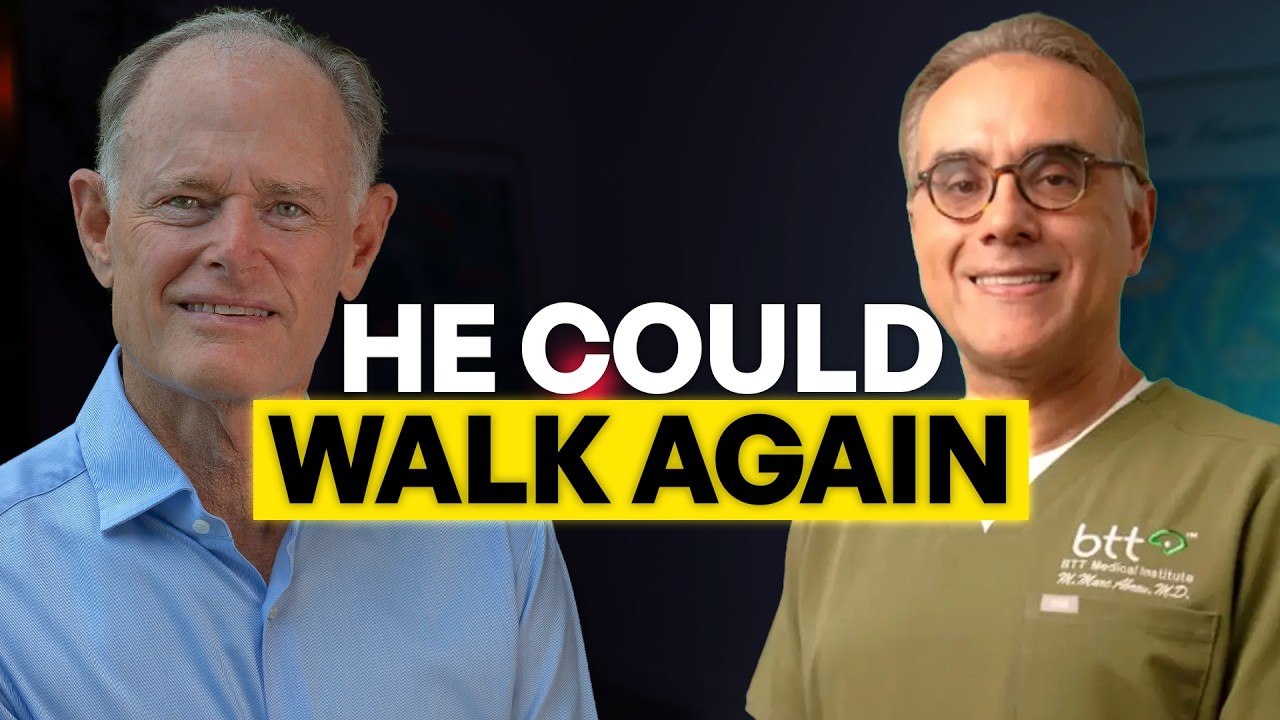
In a 2026‑09‑15 episode of The Empowering Neurologist, Dr. David Perlmutter interviews Dr. M. Marc Abreu, a physician‑biomedical engineer and founder of BTT Medical Institute, about his novel brain‑guided temperature therapy (CBIT2) that purportedly reverses amyotrophic lateral sclerosis (ALS). Dr. Abreu outlines his interdisciplinary training (Brazilian medical school, ophthalmology, physics, Harvard, Department of Defense, laser research, Yale) and the historical precedent of cyclical fever therapy (malaria‑induced fever) used to treat neurosyphilis (dementia paralytica). He explains the thermodynamic rationale: the brain’s language is temperature variation, and controlled hyperthermia can activate intrinsic repair mechanisms. The FDA‑cleared CBIT2 system uses real‑time brain temperature monitoring and AI‑driven cyclical heating. Clinical evidence is presented via a published case report from the Mayo Clinic (EMG‑confirmed ALS, post‑treatment EMG shows no dying motor neurons, patient no longer meets diagnostic criteria) and a detailed patient testimonial from “Kent,” a swimmer diagnosed with ALS who underwent 12 hyperthermia sessions, reporting immediate symptom relief (swallowing, walking) and stable or improved functional measures, though pulmonary function tests remain unchanged. The conversation addresses natural skepticism from the neurology community, the need for rigorous clinical trials, ongoing FDA‑approved studies, and the broader potential of temperature‑based therapy for other neurodegenerative diseases. Kent’s story illustrates rapid word‑of‑mouth dissemination and patient‑driven advocacy. The episode also includes brief promotional segments unrelated to the core claim. The overall narrative positions CBIT2 as a potentially paradigm‑shifting, physics‑based approach to neurodegeneration, while acknowledging the current lack of widespread clinical acceptance.
Chapters
Well, you've made one heck of a claim, and you've claimed that you have cured ALS.
It really challenges a foundational belief in medicine, and that is that neurodegeneration is kind of one way. It's irreversible.
I was declining very fast in terms of breathing, speech, swallowing, and I was losing the ability to walk. Every other measure that he does, they all showed dramatic improvement.
This is an important discovery.
I think there's a natural skepticism. You're trained and learned that that's not possible. The goal is that lives will be saved, human suffering reduced.
It's going to change the world, in my opinion.
I think it's happening right now. I'm going to say truly where the big secret is.
Well, hello everyone. Welcome again to The Empowering Neurologist. I'm Dr. David Perlmutter. We have a Very intriguing, fascinating program for you today. My guest is Dr. Mark Abreu. He is a physician. He is a biomedical engineer, and he's the founder of the BTT Medical Institute. And he is really one of these individuals who is making what we would say is an extraordinary claim. And this is certainly upending a lot of our long-held ideas in neurology. He's claiming that he has reversed ALS, amyotrophic lateral sclerosis, also known as Lou Gehrig's disease. In a recent published case report, a patient with confirmed ALS diagnosed at a leading medical institution, that would be the Mayo Clinic, underwent his very novel brain-guided temperature therapy. And he's going to explain that today. And thereafter, after this very unique hyperthermia treatment, this patient no longer met the diagnostic criteria for having ALS. And we are actually going to speak to a patient That Dr. Abreu has treated today as well. So if it's true, if this, uh, if this type of therapy is actually doing what Dr. Abreu said it is doing, then it really challenges a foundational belief in medicine, and that is that neurodegeneration is kind of one way, it's irreversible. And this new ideology, if you will, kind of opens the door to what is clearly a new way of thinking about brain repair. So I am very excited about having Dr. Abreu here on our podcast and learning about his very, very novel treatment. Let's jump right in. Dr. Abreu, very, very nice to see you. Welcome to the podcast.
Thank you so much. It is an honor for me to be here with you.
Well, you've made one heck of a claim, and you've claimed that you have cured ALS, That's bold. And no one has ever, I think, claimed that before. But to be fair, you are a man of great scientific talent, of wonderful training, and you've really dotted the i's and crossed all the t's. You've done everything right, published your results. So let's get started. You have a novel technique. that you have developed that involves increasing the temperature of the brain, monitoring it, and increasing the temperature of the brain. Let's talk about that first of all, the technique that you use, CBIT2. What is that exactly? And then we're going to talk about how you decided to use that in ALS. And I think if things are going to work out today, we're going to actually speak to your patient. Hopefully.
Oh, yes. Yes. That'd be wonderful because that's the best voice. You know, to hear from a patient and how their lives were transformed.
Yeah. You know what, before we get to the actual technology, can you just spend 2 minutes and tell us about your training? Because I think it's very impressive.
Yes. Well, you know, my— I actually, I am originally from Brazil and initiated my, you know, training medical school, you know, over there. Graduated from the Federal University of São Paulo, did ophthalmology residency, published my first paper in 1984 while I was still a medical student, and I was already using the eye to see the brain. Here's the paper published. You can find it on the internet. So the beginning was trying to understand the brain through the eye. And then, I was able to— the 2 loves of my life would be surgery and physics could be combined into one specialty because you have optics and physics. So then, while I was there, I was the one presenting to professors who would come to the Federal University. And one of them was Dr. Malmini. from Johns Hopkins. And Dr. Malmany was the first one that said, hey, you need to come, you know, to the States. To make a long story short, then to come to the States would mean you have to go back to school. I, at the time, my dream was a doctor from, you know, Watson and Crick, you know, the DNA. And I had a poster of them. And the DNA, Watson actually Not many people know that, but the discovery happened right here in the Midwest. Indiana University. 5 Nobel Prizes, including the discovery of the DNA. So my dream was to go to Indiana University. And people said, what in the world are they going to do in the Midwest? So I actually applied and ended up, you know, being accepted. It was not easy. And I was able also to publish a paper. Wow. in the laboratory of biophysics and physiology, where a lot of the DNA work, you know, was done in terms of the, you know, the biophysics. So that was the beginning. From there, I went— I was accepted at Harvard. Then I was in the physics program and also in ophthalmology. And at that point, I was very fortunate to be invited to work Was our Department of Defense. And it was beautiful because it was to save lives, you know, was working for the DOD to save lives. And we're able to, again, publish a paper under Harvard and the Department of Defense on lasers. You know, naturally, they had the freedom to use the laser as they please. But this objective was clearly to help development of medical lasers. So, it was the first, like a cold laser was a combination of an optical resonator. Not to get people a little headache, so I don't get into much of the details of that, but it's again published. You'll find that PubMed under my name. So, from there, I moved to Pittsburgh, to the University of Pittsburgh. I was able also to publish under the University of Pittsburgh, again, on lasers. And all of this was creating that roadmap to develop the technology that you see today. And from there to Yale and where everything happened. And then about almost 20 years at Yale. And I was, again, the most blessed person to be able to have the most amazing minds that helped me to ultimately discover this structure, thermophysical structure, anatomic thermophysical structure in the brain that allowed me to see inside the brain with a very interesting detail, talking with brain language. The language of the brain is thermodynamics, which means, in a very simple way, is not temperature, but is the variations of temperature. And it's very easy to see why that's the language of the brain. Because when you think about all of our vital signs, the brain does not talk and say, David, you know, your oxygen is low, unless you are really already in, you know, respiratory insufficiency. But, to say, David, you better put a jacket on because, you know, it's getting cold here, or turn on your air conditioner. Those are corrective actions generated at the hypothalamus, the thermoregulatory center. That's why it's connected to something called the pain center. It will create that stimulus for corrective action. And, if you think about 10%. If you're off by 10%, it's fatal with temperature.
It has to be tightly controlled. But I want our viewers to hear what you just said, that you've got one heck of a pedigree. I mean, you've trained with the best, the most respected institutions on the planet, and you're deeply involved in this medical situation, but you're applying deep physics to it. You've come to a place where you're able to control the temperature of the brain, measure it, and then control it, and are elevating the brain temperature. Maybe I'm jumping the gun here a little bit, but I think people are really wanting to know, you know, how do we get to the treatment of ALS by carefully increasing the brain's temperature? So you created a technology. Tell us about the technology in a few words.
I I learned about the technology from Dr. Wagner Horec. He won the Nobel Prize in Medicine in 1927. And, he successfully restored the human brain. At the time, the equivalent of ALS was rampant. It's called dementia paralytica. So, that was very interesting, David, is how life is. About 100 years later or so, there was a study because this was, you know, neurosyphilis. The dementia paralytica was the tertiary stage of syphilis. And, there was a paper studying neurosyphilis. Okay. That's why I say so important for us to share knowledge.
Hmm.
That's why I wrote a 51-page paper so people will understand if they want to pursue that they now have tools. They have the means to understand. The best thing that I could do in my life as a legacy is that every doctor, colleague, scientist who would be interested would learn. So I tried to give that because it was given to me. So Dr. Wagner, what he did is fabulous. So he used— Malarial fever to treat dementia paralytica. Now, go back almost 100 years. They do an analysis of the brains of patients with neurosyphilis. David, what did they find? TDP-43.
Yeah.
What do you think about that? The misfolding protein present in the brain of ALS. So, without knowing, Dr. Wagner, Treated ALS. Successfully. There's people on their deathbed that were back, unable to move, do anything, back singing. You know, I had to learn German, you know, to be able to understand what you're saying. Because back then, I gotta say, you know, I look at when I'm old, you know, 40 years of medicine. This is fascinating. Because now you have the molecular signature of ALS, was the same molecular signature present 100 years ago when Dr. Wegener successfully restored the human brain.
Hey everyone, we're going to get right back to the podcast, but I have an important message for you. If you're caring for somebody with Alzheimer's, any other form of dementia, or even what we call mild cognitive impairment, or maybe you've received one of these diagnoses yourself, or if you're focused on preventing cognitive decline, I want to speak directly to you for just a moment about some serious research that's going on, looking at what we call 40 Hz light and sound simulation. We've been actually talking about that on the program. Here's the challenge. Not all 40 Hz light devices are the same. Most use what's called stroboscopic light. And that's the type of light that flashes, then you can see the flashing. And that can cause nausea, it can cause headaches. And if you can't tolerate that, you won't use it. So, there is a company called Optosutics. They've solved this problem with a patented technology that still gives you the 40 hertz light flashing, but through light that looks and feels quite normal. It's the device I actually have on my desk when I'm working. And that's why this company sees a 94% adherence rate and significant improvements across various metrics, including mood, energy, focus, sleep, and memory. And the light is called the Evy light, E-V-Y. You can use it as I do when you're working on your computer, when you're reading, when you're watching TV, eating breakfast, whatever. It becomes really part of your day, not just another burden. It's kind of passive in the background. So I recommend giving it a try for 90 days. And if you and your family don't see value in it, then you can return the device for a full refund. They cover the shipping both ways. And this is a device that really is risk-free in terms of getting involved with 40-hertz stimulation. Important information. Let's get right back to our podcast. What you're describing is the accumulation in the brain of a misfolded protein, TDP-43. And I think our viewers will know that there's at least a sense that There's discussion anyway about beta amyloid as it relates to Alzheimer's, alpha-synuclein as it relates to Parkinson's. But how do we— and now you're discussing how by induction of a fever with malaria in these individuals somehow had a positive effect on the accumulation of this protein. So that was, I suspect, an impetus for you to further then explore in this tragic disease, ALS, What could be done to replicate that finding or use that finding in such a way that would be safe, but nonetheless could utilize the heating of the brain as would be induced by a fever, but in a much more dedicated and controlled way interacting with the technology? And that paved the way for you to design the With your physics background, this incredible technology. So tell us, how does that technology measure the brain and then heat the brain?
See, there's one key element in all of this. So Dr. Wagner, he tried with erysipela, tuberculosis. There was not much results. So why was because the shape of the fever. When soldiers are coming back from the war, they came infected with malaria. He didn't know about this. He just thought about that there was a high temperature. But interestingly, and that I say thanks to my poor background, because in America, thank God, we don't have malaria, you know. But back in Brazil, I knew about malaria. So, I knew that there was actually a cycle. So, it's a cyclical fever. Right. The secret was in the cyclical nature of the fever. So,
story. This is such a story because I know where you're going with this.
Wow. Yeah. So, sometimes it pays to be poor. Wow. It was the case here. I never, in talking to my colleagues here, nobody knew that malaria has a particular cycle because I've never seen it.
Well, it depends, of course, on the organism.
Yes. But that cycle is where there was the, let's say, the secret. So basically, I just had to combine 2 things. The perfection of the brain is the most perfect computer. And then, I'm going to say truly where the big secret is. The second one, knowing that it's a computer, knowing that I have to create a cycle, I now have this simply to create a computer to talk to the brain, the language of the brain. And then, I wrote the codes and was able to approve the only computer system approved by the FDA. 7 years of a lot of sweat, blood, and tears, but we were able to actually— when you come here and you see computers all over, they are the ones doing the job. So, what was beautiful, the convergence of, let's say, artificial intelligence and all of that to what I was doing.
Just the kind of the chance encounters that you had with these developments and in the history. Louis Pasteur said that chance favors the prepared mind. So you are the personification of that statement. I'm going to jump ahead a little bit and I'll tell you why in just a moment.
Sure.
You developed the technology to basically heat the brain in a controlled way. And in trying to emulate what you had learned in terms of the mechanism, you ultimately treated a patient who was diagnosed with ALS, who you've treated by basically heating up his brain with this very sophisticated technology that's able to measure temperature and control it very directly.
That's right.
And this is a patient and we're going to bring him on right now and talk to him. You all set?
Oh, yes. Wonderful.
Here we go. Hi, Kent.
Hello, Dr. Perlmutter.
Great to see you. And Dr. Abreu, as you know, is here with us today. We started off by talking about Dr. Abreu's, you know, what paved the way for him to discover this technology, create the technology to change the brain's temperature, increase the brain's temperature, and use this as a treatment for ALS. So I wonder if you could tell us what was happening to you when you were at— you finally decided you had to see a doctor and ultimately the diagnosis was made. Tell us your story.
Okay. My diagnosis was fairly recent, about 6 months ago. For the past year, I had been having mild symptoms of difficulty breathing and some slurring of my speech, which was not terribly concerning. We were starting to look for what the cause was, but it wasn't severe enough. In a dramatic fashion, I'm a lifelong swimmer. I was doing a swim race that I do every year. I've done for about 30 years, a 2-mile ocean swim in my own hometown, Hermosa Beach, California. And I had, um, I completely lost the ability to breathe while in the middle of the race, 500 yards from shore. And, um, luckily for me, there was a lifeguard on a paddleboard nearby who saved me and brought me in, and that woke me up to a serious issue. For the next few months, we explored with various doctors what it could be, finally led to a neurologist. who on October 31st, Halloween afternoon, did an EMG and diagnosed me with ALS.
That was how long ago again?
That was just last year.
At that time, they make the diagnosis of ALS, and I would suspect, was that confirmed by a second opinion?
Yes. 10 days later, we went to USC Keck Medical Center, and they confirmed it with an EMG.
And that is an incredibly highly regarded neurological clinic. So they— now that they've made a diagnosis, what did they offer you in terms of what could be done?
Well, things happened very fast for us. So USC offered me a team, and I was to go in and meet with The neurologist, the physical therapist, speech therapy, pulmonary, you know, everybody involved. However, I didn't make it in for that appointment because I found Dr. Abreu almost immediately, and I ended up being in Florida for the whole month of December and most of January and February.
And when you were there, you were getting treatment? And that treatment involved using his device to increase your brain's temperature, basically, correct?
Yes, correct. I've been through 12 of his hyperthermia treatments at this point.
And how did you do after the first treatment and multiple treatments? What happened to your clinical course?
I felt immediately much better, even from the very first one. From during the month of November, after I was diagnosed, I had a very rapid onset and I was declining very fast in terms of breathing, speech, swallowing, and I was losing the ability to walk as well. From the first treatment, which was December 3rd, I felt the ability to swallow was almost fully restored. Definitely the ability to walk was restored. Speech and lungs have taken longer, but each time I've had improvement. Every single treatment I have come out feeling significantly improved in all my symptoms.
Now, one would say that it's great that you're telling us that you're feeling better, but are there any measurements that are improved? For example, your pulmonary function testing, has that demonstrated improvement in those indices?
Okay, so Dr. O'Briar tests for more than 100 Different types of categories. I would say the lung, the pulmonary is the only one that has remained stable. It hasn't gotten worse, but it hasn't gotten better.
Fair enough. For close to 40 years, I have found myself in examining rooms watching a family struggle through the loss of a loved one, not because that loved one aged, but because That loved one had lost his or her cognitive function. And, you know, basically, I think we were all told that there was nothing that could be done. And in fact, I even parroted that narrative for quite some time. But ultimately, I found myself in a place of not being able to accept that. I'm Dr. David Perlmutter. I'm a neurologist, and Brain Defenders is my new book, clearly the book that I have spent my entire career building. It's officially launched, and It's available for order right now, and I truly believe that this is the most important work that I've ever done. Inside, what you will find are the hidden threats that are working against your brain right now, and also the exact science-backed actions that you can take to protect your memory, to protect your cognitive function, your clarity, your independence, your ability to interact with other people starting today, not someday, but actually starting today. For those of you who want to be all in, I'm excited to announce that we now have the Brain Defenders Immersion Course, which is a guided path to put the very work that we describe in the book Brain Defenders into action step by step, so that protecting your brain isn't something that you just read about. It's something that you actually participate. It's something that you actually do. Your brain's future is actually being decided right now by the choices that you are making today. So order Brain Defenders and join the immersion course today. And you can get all this information by visiting my website, which is drperlmutter.com. That's drperlmutter.com to learn more about both the immersion course and the book. I wrote this book for you and for everyone you love. Let's defend your brain together and defend the brains of everyone you love as well. Remember, the time to defend your brain is
Every other measure that he does shows a significant increase, and these are all kinds of things such as the ability to pinch something or your tongue strength, your mouth strength, your balance, even things like your handwriting. I'm not sure I can do that. All kinds of things. They all showed dramatic improvement. And I do believe my lungs feel better, but it has not shown up on the pulmonary tests as an improvement yet. Hopefully that will happen.
Now, have you been back to see your original doctors at all?
I have appointments for when I get home. We did have one full day of that testing that we did after my second trip here to Florida. So yes, I saw them.
And what was their response in terms of what you were doing? How did they respond to it?
They never got a baseline from me because I wasn't able to see them when I was In the most compromised. So the first they really saw me was, um, after the treatments. So they were, um, felt like it was positive that I was stable. That is how they saw
it. And you would agree with that, right?
They had not seen me.
Yeah, yeah. There's one neurologist that I talked to, your local neurologist, who saw you before Before and after treatment. Dr. Amir, if I'm not mistaken the name.
Yes.
And, and he's gone. Do you want to tell a little bit to what he's— because he shared, he contacted me to share, and he used some very strong positive words. But I'll— I'd like you maybe if you could share.
Okay. Amir is a neurologist, but he is not my neurologist. He's a personal friend So he's one of the guys I swim with every day. So he firsthand has seen from me being a very strong swimmer to falling off quite dramatically and then going to the BTT and coming back. And so he's— He saw The peak, the valley, and the peak. He has been quite, I don't know, astounded by what he saw in me. And, you know, he sees me on almost a daily basis.
How did you learn about this treatment in the first place?
There we were very fortunate. 3 days after I was diagnosed, word got around among our friends of what had happened. My wife Jennifer received a call from a friend of ours, Molly, who said to Jennifer that her best friend named Maura had been— had had bulbar ALS just like me. Had been to BTT with Dr. Abreu and had been fully reversed of her ALS. So she was the, literally the first person we came in contact with after my diagnosis, which of course is what led me to immediately contact BTT and schedule As soon as possible. So we were just very lucky that we happened to know somebody who knew about this.
Dr. Abreu, can you tell us about the patient that you actually— the case report that you published and the woman who had actually been evaluated at Mayo Clinic? And then tell us about that case.
Yeah, that was a very important case because of the documentation by what is the number one neurology center. So the key is you have to have the diagnosis to be able to say that you treated successfully. And to have somebody going to the Mayo Clinic and having the diagnosis in which the EMGs shows dying motor neurons and dead motor neurons. So not only dying, they were dying and dead. With all of the potentials, fibrillation, fasciculation. So it was a very good case to show that the diagnosis of ALS was there. They gave her also a letter saying you have 2 to 4 or 5 years to live. And based on the day of the diagnosis, so it was really not much left. And she came on a very, you know, advanced stage. So we treated her. And also the second great point was we needed to have the confirmation that the treatment worked. She was, when she was at the Mayo Clinic, they said, you know, not really much that we can do. You can continue on. In Chicago where his— she resides. And so she went to Northwestern, which is number 6 in neurology. So the top, you know, neurology centers. And they did an EMG. They didn't know the treatment she was receiving. And it was one of the most extensive EMGs I've seen, and even the patient said that, because it's quite unusual to have zero motor neuron dead, but most incredibly, zero motor neuron dying. So it's no longer dead or dying. And then you no longer meet the diagnostic criteria for ALS. We are very, you know, like consistent In the, let's say, the diagnostic, only as an independent third-party diagnosis, because one could question the validity of an EMG sometimes by a local neurologist. But we are talking about the number one Mayo Clinic in neurology, really is, you know, the number one. So the diagnosis were by the experts. That allowed us to publish the case. A very interesting situation is that what happened to most of my patients, all of them, they don't want to go back. The pain of the disease is almost like a force that prevents them from going back. And this patient in particular also didn't want to go back to the MD. I'm doing better. I'm You know, walking and able, you know, to do swallow again. Her sister is the one who forced her even more because EMG is a painful test. So the patients, once they recovered, they don't want to go back and face the same, you know, painful experience both emotionally and physically. But it was This patient in particular, everything worked fine because the sister said, no, you need to go. And by doing so, we were able now to have documentation by a top neurologist. They're the highest caliber and doing a very good job in what they can do for ALS. Is that the answer? I'm going to point out, the answer really is in physics. And if I may say, you know, the challenge, you know, of the brain, the brain has a brain barrier, you know. So we are facing biological barrier. The ideal, or pretty much the only sure way, is if you can activate what's already in the brain. So that's pretty much, you know, what I did. I said, you know, The solution is not in creation by man, but in man understanding creation. You have to understand the human brain. Once you understand that, you're able to find a solution.
Hey guys, we're going to get right back to the podcast, but I do have a very important message for you. I think many of you will recall a conversation I had here on the podcast with Dr. Michael Leone. He is a University of California, Irvine neuroscientist, and what he studied and what we talked about on the podcast is what is called olfaction, our sense of smell, and how things that stimulate our sense of smell are directly wired into the brain's hippocampus and amygdala. And these are the same circuits that govern things like memory and emotion. You know, most of our sensory inputs get routed through a bunch of relay stations, but our sense of smell actually doesn't. It has a direct line in through the centers that I just described. And Dr. León's work takes full advantage of that pathway and enriches this olfactory pathway with a variety of scents presented to you During your sleep.
That's when your brain is already doing its nightly work of clearing out the metabolic debris, things like beta amyloid and other accumulated misfolded proteins. Dr. Leone has done some wonderful clinical research on the idea of stimulating the brain with a variety of different scents during the course of the night. And he has demonstrated that using this approach in some of his research has shown as much as a 226% increase in memory function and 22 minutes in addition of sleep. With his results published across healthy adults, older adults, and yes, even people who are suffering from what is called mild cognitive impairment, MCI, what we consider to be the harbinger for further brain decline. So he and his research team have built a device around this research, and that device is called Memory Air. It isn't a pill, it's not a supplement.
You put it on your nightstand and it does its work while basically you're sleeping at night. Their website is memoryair.com. I've been working now with Memory Air And have developed a relationship such that you can get a 15% reduction in cost of your Memory Air device should you choose to buy one. You use the code PERLMUTTER, and this is also going to get you free shipping and a 60-day money-back guarantee. These statements have not been evaluated by the Food and Drug Administration, and this product is not intended to diagnose, treat, or cure or prevent any disease. Let's get right back to our podcast. So let me— a couple questions come to mind. First, could one argue that this was a spontaneous resolution of ALS? And if you could make that argument, how often is that ever reported, that spontaneously a person fully diagnosed with ALS, all the clinical diagnostic and laboratory diagnostic criteria, spontaneously resolves? I mean, I don't necessarily know of a case of that, but is that an argument?
Well, I actually made reference in my published case report of, you know, there's thousands of patients who are followed, but none of them have this molecular, neurological, structural, the tongue that has atrophy, And very important at the molecular level, because there are molecules known to show the prognosis, meaning demise. And those are normalized after the treatment. Interestingly, not the first treatment, after, you know, the second treatment. So would not only be rare, but is unheard that combination of different, you know, let's say combination of diagnostics showing that the molecular structure, anatomic, you know, and naturally electromyographic. And Kent, I think, is part— I think, no, they are part— they created a group, an ALS group. I don't know how many there are right now of my patients. So they talk among themselves. I don't know how many are in the group, maybe 20 or so, Kent, or more.
Some like that, yeah. Yeah.
All of them are showing their improvements. So, it's not an isolated case. It's one after another. And then, every day, there's a new member pretty much that joins the group so they can say, yes, I have a patient that came in diaphragmatic failure, 2 weeks to live at max. No more diaphragm, very little of the intercostal muscles. Grant, he's known there. He's here and able to restore his pulmonary function.
So one would think then, Kent, in your case, if your doctors eventually did know about it, and certainly the woman at the Mayo Clinic who did have follow-up, that they would be knocking down your door to try to figure out what it is that you're doing and be very thrilled about the fact that you've had these incredible results. Maybe that's not reality. What has actually happened with the response of the neurologists of the patients that you've treated? How have they responded to your discovery?
Well, I think there's a natural, I would say, skepticism. Fair enough. You're trained and learned that That's not possible. And if it— when you say that it's possible, it's outside of what we learn in medical school. Because you don't learn physics or you don't learn how to use fever to treat. I mean, that's been dormant for 100 years, although successfully. That's what's so important to remember. I was not the first one. Thousands and tens of thousands were restored with the, at the time, with malarial fever therapy. And that's why the Nobel Prize was not only in Austria, across Europe, then Asia, including here in our country. Also, they use malarial fever, you know, 100 years ago. So I would just say, will be a matter of understanding better. And also something that we are doing, we are going through Clinical trials. We want the rigor of the FDA. We approved the machine, but the machine now, okay, for treating ALS. And I think at that point, I hope that they will embrace and learn. I try to give as much information as possible to motivate minds who would be interested in creating You know, a path. The challenge is what you do, David. You are an example. I keep— and I was reading all of your books. Of course, I'm not going to be talking much about that because it would take 2 years of interviews. But what you did is beautiful. You saw the forest lurking, all of the animals out there. There's no path. You said, I'm gonna create a path. That's the challenge. It's difficult. If you see, well, there's already a path created, it's more attractive even for our brain, our mind to look at what seems safe.
Has there been outreach from mainstream neurology to see what you're doing?
Unfortunately, not the way that I'd love. I mean, I have, you know, Dr. Mir from California who wants actually to start doing the treatment in California. He saw how Kent was before the treatment, and he was recovered, you know, after the treatment. So, I believe that the more this becomes known, there would be more interest. I'm always inviting everyone, you know, come here, it is open. You know, Dr. Meara will be coming, you know, we're talking about that. And the goal is that lives will be saved, human suffering reduced. That goal will be accomplished.
That's the ultimate goal, not turf, defending turf. That's right. Ken, this is to you. Do you find this frustrating that there's no recognition of what this type of treatment is that you've had for this disease that is, you know, it's somewhat prevalent and there is nothing offered to you except Riliutek, which, you know, is associated with an 8-month life extension. And here you've reversed this disease that was, let's call it like it is, it was a death sentence is what you were told, wasn't it? Yes. And here you are firsthand experiencing a treatment that has really put an end to this, stopped it at least, and you've had improvements in other parameters with other case reports being validated at our leading institutions showing that this is working. How frustrating is this situation for you?
Oh, absolutely. Um, I'm so blessed and grateful that I found it for myself and was able to do it, but all I can think about Is having this be available to everyone, everyone else. And I know it's not able to for, for right now for everybody who suffers from ALS. My wife and I spend probably an hour a day speaking to other people who've been referred to us who have ALS, and we send them to Dr. Abreu. And we're very happy that many of them have and are experiencing great success with it. But it's only a drop in the bucket. So we just pray that as soon as possible, this will become available and approved. And it's going to change the world, in my opinion.
Well, you know—
Can I add one quick thing that was kind of interesting? Sure, go ahead. The, the, uh, um, Kent was skiing. His wife was getting much faster than he was. He was treated and she writes to me and say, almost like, darn it, Kent is again skiing faster than I am. And she sent me the, you know, the video. So, A true representation of the result. He is back again at the podium. His wife is no longer skiing faster than he is after the treatment. Before the treatment, you know, she was, you know, kind of with all of the glory. But, you know, it was because of, of course, the deficiencies because of ALS. And just, Kent did something. He said they didn't want to tell me because they don't want to tell me when they are doing too much. How many hours are you can't? Okay, then they come, oh, I cannot do things. Tell, uh, Dr. Perlmutter, um, what you did on, on the weekend.
Well, before I came to BTT, I was too— I did not have the energy to go out to dinner or visit with friends, maybe a quiet hour. This past Saturday, in between my treatments, The UFC fighting was in Miami and we've never been, so my wife and I decided to go. And we were there for more than 5 hours at a very high-energy, loud place, and I was completely fine. I had plenty of energy and I never could have done that before.
I want to say Yeah, I'm thrilled by what I'm hearing. I'm also extremely frustrated. And I, you know, a lot of my life is frustration because there are parts of neurology that I kind of have a different take on, as it were, as it relates to things like Alzheimer's, which this may ultimately be effective for as well. But that said, that's another story. What needs to happen then for neurologists and, you know, the medical institutions in general to really get their arms around this? What's next? A bigger paper, a larger series, a double-blind treatment, which I sure hope doesn't happen. But what happens next? What has to happen to get this accepted?
I think it's happening right now. Somebody of your caliber that is at least showing a patient Showing results, we could have put patient after patient after patient here from many countries. And the beautiful thing is that actually I just treated today a patient from South Korea with ALS, referred because they know of other patients. We have zero promotion. So I treat the patients, you know, from Japan, from other places. And for me, it was particularly beautiful to see us as a country being able to be saving lives, recognized by saving lives, reducing You know, human suffering. But I think the beginning is somebody of your caliber that now is embracing to show, you know, what is possible. Everything is based on science. Everything is this most solid science. Like I said, even something that was, you know, successfully done. So, I believe it would be, you know, to have— since we cannot do clone you to get others to have the same courage as you do to go and face the unknown, you know, and create new paths. But we definitely needed the courageous, you know, minds that are the bright minds, but courageous, bold to say, I want to, you know, face, I want to learn this, I want to pursue a different path.
So, Dr. Abreu, how do people— how do they get in touch with you at your clinic? What do they do?
We are most welcome. I can put, you know, the, the phone number. It can go, you know, straight to just say we came through, um, you know, your podcast. They will be received with open arms, open heart, and, uh, What we do is that today you probably— I'm not going to say probably, just to say certainly— you saved many lives because this may be the beginning to stimulate other professionals, our neurologists, brightest minds, to, you know, to embrace it. So I think here, I saw it, to have somebody of your caliber, to be interviewing about a technology that is so, in a way, foreign to the mind of medicine because you're not trained to understand, you know, physics or biophysics. And even more to understand the power of something. I had a lecture that I said, you know, I had a— my lectures A little complicated sometimes, but I brought the mosquito. And I said, can you believe if one day you find out that is in this creation by nature would be the solution to save the brain of mankind?
Just so people— let me unpack that for our audience. The mosquito being the vector then for malaria, that's where you're going with this.
So, that's right. The vector that brings— can you imagine that You see, in that piece of nature flying around was to save— I'm talking about 1/3 of the brain of mankind. Humankind right now is at stake according to the World Health Organization. Over 1 in 3 with neurological disease. Number 1 cause of disability in the world, neurological disease. More than accidents, more than anything else. So, Let's embrace— don't embrace me, embrace nature. Because the solution was in me. I simply understood nature and I tried to the best of my ability to share that knowledge that doesn't belong to me. It's from nature. I didn't create, I understood.
Understood. Well, let me say to our viewers, do your very best to get this information out and not just to friends and families of ALS patients, but really to everyone, because this is an important discovery that beyond anything we could— any words to describe how important it is, because I think that, as Dr. Abreu insinuated, there are implications here for other neurodegenerative conditions as well. And we'll probably do that on another podcast. But We really want this word to get out. And I think that we always have to keep an open mind. So that you all know, I'm hugely impressed with what we are seeing being replicated, that these patients are seen at wonderful clinics, diagnosed, and then improve. And that's unheard of in ALS. Kent, I appreciate you taking the time to spend with us today. I know it isn't necessarily easy to be very open about all this, but it seems like you are, and that's a calling. Dr. Bray, we'll be talking soon, and I'm very grateful for not just your work but spending time with us today. Thank you.
It's an honor and pleasure to be with you, and actually, thank you for your work and for opening new paths and new ways of thinking. So, We will fight our true enemy. The true enemy of mankind, humankind, is disease. Let's keep that in mind. Not our neighbor, not, you know, somebody who came from a different place. We have a true enemy. And with the work that you do actually open the path to fight the true enemy. So I'm here to actually say thank you. And what an honor for me to be here. What an honor. Thank you.
Thank you so much.
I think you'll all agree this was quite an exciting experience, and we really need people to push the edge. And what we've explored today, it really is, I think, the edge of medicine where people with bold ideas and clearly meeting the rigorous demands of what is required to say something is proven. On the one hand, the findings that he presents are undeniably provocative with normalization of the EMG and the patient demonstrating functional recovery, as well as the biomarker shifts, all in a disease that we would normally say is basically irreversible and fatal. These ideas force us to really at least consider that something very meaningful may well be happening here. We certainly have to keep our minds open that This is a distinct possibility. On the other hand, I certainly get the idea that this is a single case report, one patient, and in medicine we've learned that sometimes the hard way that extraordinary claims require that we, you know, not just compelling events, anecdotes, stories, but reproducibility, controlled trials, and independent validation. But if this approach does hold up under scrutiny, it could clearly totally redefine how we think about the notion of neurodegeneration, not again as a one-way path, but as having the opportunity to be reversible, a process that's rooted in the resilience of our brain cells and what we are able to do with proteins, in this case based upon exposing them to higher levels of body temperature. If it doesn't, then it still offers us, I think, something that's valuable, and that's a reminder that we've got to keep asking bold questions and embracing the fact that people are pushing the limits while we certainly stay grounded in scientific rigor. Either way, this conversation is exactly the kind we need to be having right now. So I want to thank you all for joining me here on The Empowering Neurologist, now and always. And as we continue to explore, you know, what is the future? What are we looking at in terms of brain health? Thank you. I'm Dr. David Perlmutter. Bye for now.
More from David









Newsflash: Alzheimer’s Is Not Caused by What We Thought | Dr. David Perlmutter

