Unlocking the Science Behind Weight Loss and GLP-1 | Ashley Koff, RD
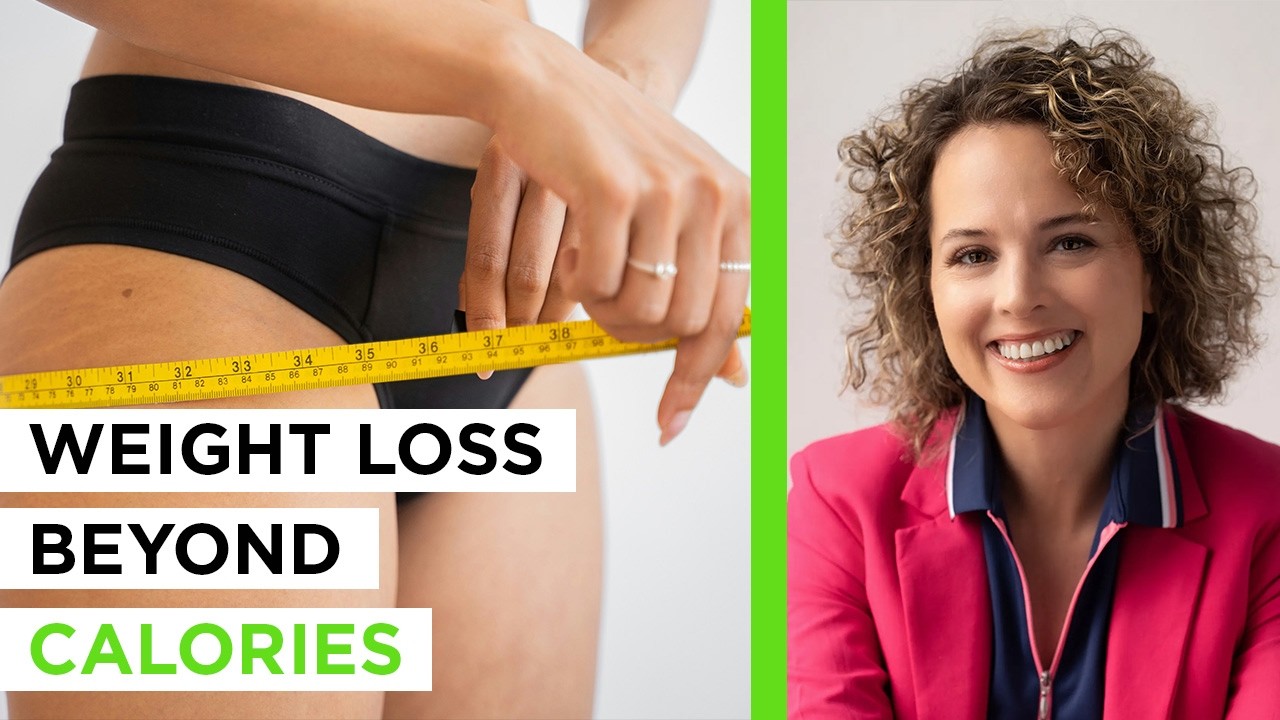
In this episode of The Empowering Neurologist, Dr. David Perlmutter interviews registered dietitian Ashley Koff, author of Your Best Shot, to explore the science and practical implications of weight health and GLP‑1‑based therapies. Koff argues that weight should be viewed as a key performance indicator of overall health rather than a cosmetic goal, emphasizing personalized nutrition, body‑composition metrics, and the role of gut‑derived “weight‑health hormones” (incretins such as GLP‑1, GIP, PYY, CCK). She traces her own journey from conventional dietetics to an integrative focus on gut health, hormone signaling, and detoxification, highlighting how fat‑cell shrinkage releases stored toxins that must be cleared. The conversation delves into the mechanisms of GLP‑1 receptor agonists (e.g., semaglutide, tirzepatide, liraglutide), distinguishing biosimilar peptide drugs from bioidentical hormones, and discussing their prolonged receptor activation versus the natural 2‑5‑minute hormone burst. Koff stresses that these drugs are tools, not cures, and must be paired with comprehensive lifestyle, inflammation, and detox protocols. They critique the current medical model that prescribes GLP‑1 agents without integrated nutrition counseling, raise concerns about dosing adjustments as patients lose weight, and warn of potential side‑effects such as altered hydration, mood changes, and rebound weight gain if gut function isn’t restored. Broader topics include misinformation (“infobesity”), policy barriers, cost/access issues, transgenerational impacts of weight health, and the need for a multidisciplinary, functional‑medicine approach to obesity and metabolic disease.
Chapters
When we shrink fat cells, we increase the release of toxins. Those toxins have to be able to be eliminated properly. And so when we look at a protocol for somebody, I still need to optimize inflammation. I still need to optimize detoxification. The medication alone won't do that. But to your point, could it be a tool? And I think there's a strong argument for yes.
Hey everybody, we'll get right back to the podcast, but I do have some very, very exciting news I want to share with you, and that is that my new book, Brain Defenders, that we've been talking about, uh, on the podcast, uh, is now available for purchase. It is going to be published in August of 2026, but it is available now. If you want to learn more about Brain Defenders, go to the website And that is, oddly enough, braindefenders.com. This is really empowering information as it relates to charting your own brain's destiny. Now let's get right back to the podcast. Well, hey everyone, Dr. David Perlmutter here. Welcome again to The Empowering Neurologist. Today we're going to be joined by somebody that I've known for many, many years. She is at the forefront of really transforming how we think about nutrition, metabolism, and sustainable behavior change. is so important. Ashley Koff, RD. She is the founder of the Better Nutrition Program and the nutrition course director for UC Irvine Susan Semwelly Integrative Health Institute's Integrative and Functional Medicine Fellowship. She's also a faculty member at IFNA, where she teaches an integrative and functional nutrition approach to obesity and weight management. So very qualified to have this discussion with us today. She's the author of the very exciting new book that we're going to be talking about today called Your Best Shot, uh, from HarperOne. She has more than 25 years experience. She's been leading a movement towards the idea of a truly personalized nutrition— nutritional approach, replacing this oftentimes impossible goal that we seem to want to try to reach with respect to achieving perfection And she has a far more humane and effective framework, which is better but not perfect. And that allows a really entrée for all of us. Her work translates this idea into practical, sustainable strategies that are grounded both in science and in her real-world experience in dealing with patients. Through compelling stories and her own journey, she illustrates that optimal health Isn't just achievable, but as she says, it's essential for all of us for living our fullest, most vibrant life. So Ashley's been recognized as one of CNN's top 100 healthmakers, featured in InStyle as Hollywood's leading dietitian, and is widely regarded as one of the most thoughtful and certainly innovative voices in functional nutrition today. I'm excited to have her on the program. I will let you know I've had the opportunity to speak in conferences with Ashley over many years, and very excited to have her on the podcast today. Let's get started. Well, Ashley, it's great to see you again. I think we were together, what, 3 weeks ago, as it were, in West Palm?
Yes. I wish I was still there. That weather compared to Oregon rain. Yeah.
You did a crackerjack job. Your message— and we will certainly jump into the book here in a moment— but your message is and has been so important for so long. And, uh, you know, I think things are really, uh, aggressive these days in the world of weight loss. And I think, uh, you know, I, I was planning to get to this later in the— in our discussion, but I think let's just jump into the misinformation part of the story that people are just, you know, overwhelmed. And, uh, you know, even this past week we've been seeing people that we know being the subject of deepfakes to sell ideas about, you know, Sea salt and vinegar, or whatever it is, to help you lose weight. So, what are we to do? I mean, weight loss is important. It's not the number one goal. I think you've made it very clear in your book, it's, you know, achieving optimal health, and weight loss is a parameter of that. But what are people to do in this world of incredible disinformation these days as it relates to weight loss?
Yeah, it's really hard to parse what information is better and what information isn't. I'm gonna invoke our colleagues, you know, JJ Virgin, Gabrielle Lyon. Like, we're so lucky to have these incredible individuals that are helping transform the conversation around understanding that the body's weight is actually a key performance indicator. You know, we know that weight composition, so bone, muscle, even our water content, and then certainly fat. And you may be someone who appears— you know, I practiced in Los Angeles for 20 years— someone who appears skinny but also have visceral fat. So you may have fat in the wrong location. So we need to look at this as a key performance indicator. I get pushback sometimes times from individuals who come with a message of health at every size, because what they're trying to do is communicate that the diet industry has led people to such a bad place, a bad place of how they feel about themselves, and as a society, really a bad place, you know, from choices. I agree with that, but I would reframe it and not say it's about health at every size. It's about at every size, we need to be investigating your weight health and really understand what your body is showing us. So I think that is the message.
So, I'm gonna take that a little bit further. What does it mean, your weight health?
Sure, yeah. As someone who grew up being told that I never had a health issue, but that I had a weight issue. So, I had a— I was chubby and, as a result, cute until I was about 8 years old. And then, I was not cute and it was fat, and I was teased for being fat. And it—
Chubby's nice, you know?
Chubby's cute, yeah, exactly.
I was told I was husky.
There you go. Yeah, I'm always like, chubby's why at 52, I still get asked if I'm 30. You know, my face is, you know, like that, you know, and that kind of thing. But, you know, it really became— I mean, it led me to really endanger myself, like to not make good choices, to, you know, I'm lucky that I have a very resilient body and had a support system. But, you know, when we look at that, what I really feel like is we have historically been a society that has separated weight and health. And if you have a health issue, you know, so if you have a heart health issue, if you have a brain health issue, if you have a gut health issue, you saw saw a doctor for that and you got a prescription or a treatment protocol for that, weight would be in the conversation. It would be, you know, and if you lost— if you could just lose weight, it would help whatever your condition was. But we hadn't really brought weight health together. And what weight health is, is understanding that your, your health is inextricably linked to your weight. So weight is a key performance indicator, but it's really that weight composition. So we never want someone to lose weight. We want to come in and we want to help you help your body run better. And in And in doing so, that means that we are going to lose inappropriate fat and we're going to optimize your body composition. And that's the real shift.
You're going to optimize health. And optimize health. And recalibration of body fat, muscle mass, etc., is going to happen as a consequence, basically, of reestablishing health. This is a different concept than what people hear about. I mean, I think you have a term, infobesity, that I think you didn't invent that term, as I recall from your book. It was invented, I think, in 19— when was it?
So I first heard it. So Dr. Oz, myself, Jeff Arnold, who's the founder of WebMD, we were asked to speak on a panel at the first-ever digital health section of the Consumer Electronics Show. And I heard someone there at that time use infobesity as it related to in the tech world. And I turned around and I said, you know what, you have coined the term for what my patients were dealing with, that was 2011. So, at that point, I was already like, people are making bad choices or they're really having decision fatigue, which can lead to bad performance, suboptimal performance because of the amount of information. And then, look what's happened in the last 15 years. It's an explosion. Yeah.
So, You, you really call out the idea that people are just overwhelmed by just some ridiculous ideas as it relates to weight in the first place, and certainly weight loss. And what are— I know that calories in versus calories out is something that it's taken a lot of effort on the part of people like you and me to really let people understand that that is almost meaningless.
Yeah.
You know, it, it used to be back in the day that if you burn more calories, you totally burn more calories than you take in, instantly and magically you're going to lose weight. Uh, we now know that there's incredible nuances related to that, but what are some of these ideas that are, are still pervasive that people can tend to glam onto, uh, as it relates to health and certainly weight?
Yeah, one of them is staring at us on every package that exists out there. Um, so I— my quote-unquote first job, it was definitely not my first job, but my first professional job, I worked in advertising and I had the privilege of creating ad campaigns to sell sugared cereals to America to tell them how good they were for them. So, sorry, everybody. You know, it was a short spell there, but I did real good work on that part, you know, unfortunately. But I call the RDAs really dumb amounts. I think that's one of the ones in my chapter— I'll curse here, but it's Shit to Unlearn. You know, we have to work on this. But we moved from RDAs to DRIs. So, you know, just the RDA works better from a marketing standpoint. But if you look at the fact that the one that we use today, for magnesium is from 1997. So literally a different century. It's for a 135-pound woman and a 166-pound man. And it suggests that men need 20% more magnesium just based on gender and body weight there than women. And when we look at that number, even just 400 milligrams, it is so suboptimal when we look at, you know, what the body needs for magnesium. And it could be that actually in the 1990s, maybe we had a little bit less stress, you know, but maybe. Or maybe 400 milligrams was okay at that point. But I don't have a patient that's, you know, under like 600 or 700 milligrams. And what happens is when we take an amount and we come in and we say like, this is, you know, the amount that you should go for, we see on labels, you know, 10% of your daily intake or 100% of your daily intake. Somebody thinks, okay, I've met the amount that I need. And that's really just the need to prevent a couple of diseases theoretically. Like, it just so doesn't understand the body as an ecosystem. What happens when we underdeliver the body, when we have suboptimal amounts, then the body basically goes through its prioritization. You can't affect how the body is going to prioritize the nutrient resources that it has. And so, it'll decide to relax your heart muscle, but not relax your digestive muscles. So, you may experience constipation as a result, or you may experience headaches as a result, you know, et cetera. So, I would say that's, you know, a significant one. Another one that I work on a lot with individuals is, It is so— we're so lucky to see advancements. I was so excited that when we first had hemoglobin A1C, and I was like, oh, 90-day average, like instead of finger prick in the moment. But an A1C is an average. And so, I explain, I try to give the people an analogy, you know, the people, I try to give people an analogy that they can glom onto. If you get arrested or you get pulled over for a speeding ticket, and the cop says, you know, hey, what were you, you know, you were going 65 in a 35. If you turn to them and say, yes, but my 90-day average has been A 35, like, you're not going to get out of your ticket, you know, like, I mean, it's just not—
90 blood alcohol.
That's right, or whatever, you know what I mean, right, on that part. So, what we have today is we have better ways, and we do need to look at what are the trends in your, you know, your blood sugar. So, same with total cholesterol, same with total weight, you know, even same with total bone density. So, I think what we're starting to understand is, you know, just where total calories has failed us, We really need to start to understand what are the— to be able to decode the body's signals. And we just have better ways to do that today.
When you were saying something on the label that really gets you, I thought you were gonna say low fat.
Oh yeah. Oh, that's another one. Yep. Yep.
Low fat, you know, low fat cookies that have 26 grams of sugar per cookie. Right. And are gluten-free. So, yeah, count me in.
Yeah.
But you just started, I think, giving me a segue to ask you this question because we're talking about these, you know, influential chemicals then in the body. And you do a deep dive into what you call the switch, uh, and the leveraging of control over various types of hormones, some of them satiety-related hormones. And I think you're really one of the few individuals in this area who has really, uh, looked at this and not just looked at it and recognized the importance of these types of hormones, but are working with this idea to create programs to take full advantage of manipulating these hormone levels to make it easier for people so they do feel, uh, less urge to eat the wrong things and, and eat more of, of those foods. So what is the switch in the, in the context of your book?
Yeah, thank you. And there's probably— there's the core reason of this is like I was able to understand who I am as a person, you know. So, um, I like literally when, you know, we would go through this, I'd be like, wait, people told me when I was younger to stop eating when I feel full, but I didn't feel full. Like, that's why I kept eating. Or, you know, people would say to me, hey, Ashley, like, you know, eat with your eyes, not with your mouth. You know, like, all these different things. I remember trying, like, 30 grams of fiber before my meal, literally 30 grams of fiber before I started my meal so I could try to feel full. And I was like, what is it about this that isn't, you know, aligning for me? And the first place for me that kind of clued me in was when I actually met an integrative gastroenterologist who said to me, it isn't what you're or what you're not eating, but it's that your body, specifically your digestion, doesn't have what it needs to run better. So, I started my career and literally pivoted and got on a path to fulfill my life purpose by learning that, like, hey, I wasn't fat for not trying, and my belly fat was actually a sign that all those antibiotics that I had been given and then subsequent medications had really shifted the way that my body functioned and my digestion. Years later, when I saw my first bariatric patient, this was about 2004, 2005, I was, like, blown And they were blown away by overnight how quickly blood sugar and their relationship to feeling full and satiety and this, like, literally changed. And one of the physicians said to me, oh, you know, it's those incretin hormones at work. And I was like, what's an incretin hormone? Like, we didn't learn it. Can you imagine, like, dietitians, like, medical school, we don't learn about incretin hormones. I know that—
Can I stop you right here?
Yeah, totally.
Because I want all of our viewers to pay close attention, because if you've opened the can of— not opened the door to incretin Hormones. I promise each and every one of you watching that you're going to be really interested, and you'll know why in just a moment, because this is where the conversation is going. You got it. Go ahead, Ashley.
Yeah, so we have historically— so I was like, oh, these incretin hormones, like, imagine. And I was like, wait a second, you mean that for insulin and glucagon, which I had learned about— we had learned, okay, sugar comes into the bloodstream, insulin needs to be there, it picks it up, it takes it to the cells. You mean there are hormones that regulate that? That their sole job— well, they're not their sole job, but their job is they're the first domino. And I've been starting my conversations with everyone on like domino 5 and not understanding why, you know, maybe the dominoes aren't moving forward. And then you mean to tell me that leptin and ghrelin— and I remember, you know, learning leptin keeps it quiet, ghrelin, grrr, that tells you you're hungry— you mean there are hormones that tell those hormones to go to work? And then here was the biggest moment. Yes, Ashley. And, they exist in the lining of the digestive tract. In L-cells and K-cells, that's where they're deployed, that's where they're secreted from. And, all of a sudden, my mind blew open and I was like, wait, all the damage that I was doing to my digestive system was to the lining of the digestive tract on that part. You mean to tell me that the tract that's around the tube is actually important, that it does something other than just keep everything going on inside the tube? And, it blew my mind open. At the same time that scientists were like, oh my gosh, the Gila monster has a peptide hormone in its venom that's similar to one that's in our own gut, and that it can stay on, you know, it can keep somebody in an appetite-suppressed state for 30 days. Like, let's go figure out how we can make that, you know, into a medication. I turned around and was like, wait, we have hormones there. So, if our lining of our digestive tract isn't working better, or if the vagus nerve that's bringing those messages there, that's not working better, and it just sort of blew open And so, from there, I started on this weight health approach that was to optimize. And I realized nobody's ever going to understand incretin hormones. So, what if I call them weight hormones? So, I used to call them your weight hormones. Now, I call them your weight health hormones. And I started to help people by tuning up their digestive system and then leaning into— and as we got more attention to the vagus nerve, understanding how I could optimize the vagus nerve, et cetera, from there forward. So, that's been— it's really been 20 years of work saying, like, We can do this shot or not. You know, we have a new toolkit now that we can talk about, but a new tool in the toolkit—
Slow down a little bit. Shot or not?
Yeah, there you go.
Uh, let me take a couple steps back.
Perfect.
So you're talking about glucagon and insulin, and then you're looking at things like leptin and ghrelin, which are upstream. But you've identified even further upstream a master control area that's involved in these incretin hormones. That sounds deeply scientific and in the weeds, but so that people can see where this is leading, yes, GLP-1 is what we're talking about here, folks. So the idea is that what you are describing is gaining the understanding that, you know, this is sort of the master control over not just how the other hormones are working, but things like hunger as well. And as we may or may not talk about, even the energetics of our, our cellular function in the brain and in the rest of the body are in some way influenced by the presence or restriction of things like GLP-1 and GIP. So, so that said, that's where we are right now. And you're discovering this, I think, before we have access to the GLP-1 drugs. So you're really preparing yourself, uh, to be, you know, quite the expert once the drugs start to appear and people start using these drugs. Uh, so I'll let you go. Go ahead.
Yeah, thank you. Um, because I get so excited, I, I get out there, I'm like, we've got this. So, those incretin hormones, as you mentioned, the ones— there are a lot of different hormones that are at play with our weight health, but the ones that we can talk about today much more easily: GLP-1. And yes, there's a GLP-2, I'm not going to talk about it. GLP-1, GIP, PYY, and CCK. And, when I started to look at what those hormones do and also what regulates those hormones, it was like this whole light bulb. Now, what's the reason call them the switches in our body, especially GLP-1 and GIP, they're designed like a motion detector. They go on for 2 to 5 minutes, and they're deactivated. And, they're meant to do all their work in that time. That worked in pre-industrialization. That worked when we weren't getting a stampede running in front of a motion detector, right? So today, we need more of a force field where there is no question that the 2 to 5 minutes is challenging. And, one of the reasons that we see 9 in 10 Americans not meeting criteria for metabolic health is because we have too much coming at our systems and our systems are suboptimal.
Let me break that down a little bit again for our viewers. What you're saying is, is that GLP-1 naturally in the body, when it's secreted by being stimulated in the presence of a healthy small intestine and actively functioning, uh, K cells, that it remains active in terms of doing what it's supposed to do for 2 to 5 minutes Yeah. The reason I wanna say it that way is because we have to contra— uh, distinct that with the drugs, the GLP-1 agonists.
Yeah, so that's— I wanna explain that. Yeah.
As long as a week.
Yeah, so that's really key. And in those 2 to 5 minutes, we now know, thanks to the drug actually, that we have receptor sites in the pancreas, in the brain, on the tongue, in the heart muscle, in the endothelial tissue. Like, there are so many places that this needs to go. So, what's interesting about GL— the GLP-1 agonists, So let's just make sure that everyone— I like to have a little lexicon game. There are types of medications that are agonists, which means they work and support your body in working in the way that it actually is already working or is supposed to work. There are antagonists, ones that go in and stop things from happening. So think of like a proton pump inhibitor that might suppress acid or cholesterol medication that might stop cholesterol medication. We're not talking about that when we talk about a receptor agonist. A receptor agonist means that it is receiving it and it's seeing it as something that it can use and use in the way that the body is intended. So GLP-1 receptor agonists were created based off of the Gila monster's venom, which is what we'll call biosimilar to our own hormone. I want to be clear, that's different than bioidentical. If you use insulin, if you're a diabetic and use insulin, or if you use testosterone or estrogen, you've heard the term likely bioidentical. That means it's made synthetically, it's made in a lab, but it's made to completely work the way that yours does and come, you know, and come in on that. Ours are by these weight health hormone recept— the weight health hormone replacements, tirzepatide, semaglutide, the first one liraglutide. So you might know Ozempic or Rybella, or I can never pronounce the names, um, you know, Wegovy, Zepbound, etc. Those are biosimilar. The dissimilarity, the core dissimilarity, is instead of 2 to 5 minutes, They work for 24 hours. That was the first one. And now, 24 hours, 7 days a week. So, they are exponentially, instead of turning something on, switching it on, they're switching it on and keeping it on. And, that dissimilarity has pros and considerations for anyone who is going to use it. If you take something in the body and have it activate for 2 to 5 minutes, so as an example, if it's telling insulin to go to work, for 2 to 5 minutes. That's its job. It's going out and going, hey, insulin. But now imagine all 24 hours of the day for about 7 days, your insulin is getting the message, hey, insulin. That's metabolic activity. And so what I'm seeing in my patients who are using the medication and how when it's working as intended, this is not a side effect, this is working as intended, is that they are staying more in a metabolically active state and they're— we're seeing less effort, less recovery effort for their bodies. So we'll see heart rate variability or fatigue. And those have been deemed side effect issues, but they actually are— when people are told, oh, you must not be eating enough, that's why you're fatigued. No, the medication is working exactly it's supposed to, but it's taking us instead of being a yin-yang in our body in terms of activity and recovery, and it's making us be much more of the time period where we're active than recovery. So we can go into more of those examples, but hopefully Hopefully that helps you understand. When something is biosimilar, it's being received and it's able to be used. But the reason that people are getting benefits is that at that extended amount of time where it's available, it's going all of these receptor sites, but it's keeping those receptor sites. So it's keeping your car in the drive mode for a long period of time as compared to where your body normally would be without the medication.
Hey, everybody. We're going to get right back to this podcast in just a moment, but I wanted to tell you something really exciting about 40-hertz light exposure. We have actually done a podcast on this. We know that when you're exposed to 40-hertz stimulation, this is linked to what we call gamma— increasing gamma activity in the brain. In other words, balance in the brain, which is really a fundamental for brain health and brain functionality. In fact, in early clinical research using what's called 40-hertz stimulation, Researchers have reported signals that are consistent with a slower decline in cognitive function in some participants. So the company that we are talking about, who is in fact sponsoring our podcast today, is OptoCeutics. Their Evie— why Evie? We'll call it Evie Light— is designed to bring 40 Hz light and sound into a simple at-home routine that you can use while you're reading or watching television I use it actually while I'm working on the computer. Optocytics makes it easier to try so you can get 90 days of risk-free trial with support from their care advocate, somebody who's going to work with you. And if it's not creating value, then you're able to return it to Optocytics for a full refund. And how can you lose? They're going to pay the shipping both ways. Quick note, Evi is a wellness device and it's not intended to diagnose, treat, or cure or prevent any disease. And this episode is, as I mentioned, sponsored by the Optosutics company. So if you'd like to try it, go to optosutics.com and use the code PERLMUTTER26 and get $200 off your order. I think you're going to find this device to be really quite amazing. Let's get right back to our podcast. I thought that the way you approached your discussion on not just the GLP-1 agonist drugs, but people who are using these drugs, you did it in a very compassionate, non-accusatory, non-shaming kind of way. And I think, to be fair, that's in recognition that, you know, a significant number of people are on these drugs population-wise. I mean, it's been estimated the next 5 years, as much— as many as 25% of Americans are going to be taking these drugs. That's a grand experiment. Who knows where that's going? going to land. But, you know, to be fair, the results by some metrics— if weight loss is the sole metric, or blood sugar control, I might add— I think are, are pretty profound if you're just looking at solitary metrics like that. I will also say that I don't know where it's going to lead in terms of my field of neurology.
Yeah.
Uh, that the initial studies coming out, for example, in terms of treating Parkinson's with a GLP-1 agonist drug have been mind-blowing. And I've done, you know, some, uh, podcasts and YouTube videos on this. And I'm not saying this is what we need to be doing, but, uh, you know, I think that to be fair, there's a difference between alternative medicine versus integrative or functional medicine. Alternative means you're choosing something else as an alternative approach. Integrative means you're going to bring everything in you can and make your toolbox really big and whatever can help you accomplish the goal. So, you know, I just want to say that I, I don't take GLP-1 agonist drugs off the table in terms of something I'm keeping an eye on, uh, as, as possibly having value as it relates to the brain. I mean, let's go into that. Yeah, go ahead.
I think there's something to pick up on that part. So if anyone is selling you a GLP-1 agonist and literally they selling you. So, I want to be clear, like, as someone who has sold you, I want to be super clear on that. I sell people on better health outcomes. Other people, other companies are selling an ingredient, and they're selling it as a solution. It is not a solution. It is a tool, and it has pros and considerations. It will exacerbate any underlying issues that already exist, and it may create others. What's so fascinating to me from a brain health standpoint is it's enabling us to have a conversation first to show people how the brain works. You know, to help people understand, you know, prefrontal cortex, to help people understand satiety and, you know, why our food should taste delicious to us. Even the fact that when we're learning that GLP-1 is a neurotransmitter behind the blood-brain barrier, and you can't get there with the medication, like, that's not, you know, it's a different— that's different. And so, there's things that I think are going to be really interesting for us to continue to look at. But if somebody said, like, a lot of people are upset saying, like, oh, you know, the medication failed to prevent Alzheimer's from further developing, and you were like, All— we aren't looking at it as—
I should say, that was oral semaglutide.
That was also oral semaglutide. But it— I don't think we see it as a singular solution in that. So when we look at what it is helping us understand is the importance of regulating blood sugar, as an example, and you mentioned, because we can't have the blood, you know, sugar accumulating there, as an example. I think what we also need to give more attention to is detoxification and understanding that when We shrink fat cells. We increase the release of toxins. Those toxins have to be able to be eliminated properly, right? I don't know yet what the increased amount of this circulating hormone would do in the body. You know, does that need to be detoxified in a different capacity? But we also can look at the glymphatic system and, you know, and understand detoxification in the brain. And so when we look at a protocol for somebody, you know, I like— I think We really want to look at. I still need to optimize inflammation. I still need to optimize, you know, detoxification. The medication alone won't do that. But to your point, could it be a tool? And I think there's a strong argument for yes. I also get nervous about the where the medication is going. I don't. I feel a little bit uncomfortable that we're allowed to call, or that it seems like we're going to be allowed to call. What is it called? Orgo. Or glipizide. Or glipizide, the new one that's coming out. It's a small molecule, non-peptide, but it's also being called a GLP-1 agonist. Well, that is not going to be biosimilar to your body. It skips over the first pocket in the receptor site. You know, I can go like further down from a science standpoint. So I think as we move forward and we see research and all these other pieces, there's a lot that we need to have a knowledge base around and have these conversations to make sure that somebody doesn't feel like, well, if I just take this one thing, I'm going to be, you know, here's the prevention tool, you know, on that part. Yeah.
Well, you brought up several points that I'll comment on. First, you know, the notion that there is a sense that, well, these drugs should not have much of a brain effect because they do not cross the blood-brain barrier by and large. Some of the experimental ones are created such that they will.
No, they won't.
But that's really an interesting commentary because what we know does cross the blood-brain barrier are things like insulin, um, and glucose, obviously, and even inflammatory cytokines. And those peripherally in the systemic arena are dramatically influenced by the use or not use of these medications. So you're secondarily having a huge effect on the brain's immune system, the microglia, via the use of these drugs and setting the stage for mitochondrial enhancement, if you will, when inflammatory cytokines are reduced and when insulin is more functional. So, you know, that's one argument. The second thing is, you know, I think you made a great point, and that is that when these individuals lose dramatic amounts of weight, that we store a lot of toxins in our fat cells that accumulate over years. And, you know, years ago, I remember the— we had The Biosphere, where they put these people for 2 years, uh, in a closed environment. And one thing that happened to these people is they got very— they lost a lot of weight and got very sick, and they got very toxic. Yet they're eating foods that are— they're raising them organically, and there's no toxins in the environment. They're self-toxifying themselves.
Right.
That's— I guess that's a bit redundant. But anyway, so I think it's a very important point that when people are starting to lose a lot of weight— and I know that you pay strict attention to this, and it needs to be part of the bigger discussion beyond your work, you know— that when you're losing a lot of weight, you are releasing all this accumulated toxin load into your body, and you've got to deal with that.
Yeah.
The third thought that came to mind as you were speaking a moment ago is that if a given dosage of a drug Semaglutide, or whatever the drug GLP-1 agonist is, is appropriate for a 300-pound person. What happens now to the drug, uh, dosage when they are now 180?
That's right.
Should it not be adjusted?
Oh my gosh, David, you just— yes, yes, yes.
On a milligram per kilogram basis?
Yes, yes. You just— okay, so you just like unpacked— I And even going back to your comment about this is a huge experiment, you know, it under— it belies— and not you personally, but the conversation and so much of the critique of we don't know what's happening with this medication. I understand where it comes to. As a society, we've been very concerned about things that are introduced and where's the research in there. And it doesn't help a lot of people to say that, well, liraglutide's been around for 20 years. It has. I've been working with patients on, you know, using liraglutide for a long time. But I do think that I understand that piece. What I challenge, though, is, you know, we are also in a massive experiment that has not turned out that well with things like proton pump inhibitors and statins that have— like, statins have incredible, incredible value. But the messaging that just the ability to lower cholesterol and also how low do you lower cholesterol, or the idea that lower cholesterol equals heart health, You know, that you're not at a risk. And so, when we have medication, they are an experiment. And, one of the reasons I practice in a whole person, whether you want to call it integrative functional lifestyle, you know, et cetera, on that part is, you know, my job as a nutrition specialist is to come in and look at, okay, if we're using this medication, how is it working in your whole body's ecosystem? And, how do I optimize your body around that part? So, I think that's, that's the, the first part of it. The second piece that you just brought is so important. One of my jobs, and this is why I don't believe that a medical system that has doctors scripting and managing patients for weight health is a good system. Like, you have to have individuals like myself. This is where nutritionists, you know, and certainly qualified nutritionists come in. But is, you know, every patient, like, every time somebody is losing an amount of weight, I'm going back to their practitioner and saying, I want to look at your SSRI. I want to look at your dose of your, your statin. I want to look at your blood pressure medications, like all of those things, because if we can reduce those doses, look at how we can, you know, optimize, you know, how the body is working. And you're also exactly nailing it, which is we should be thinking about the dose, the starting dose that we put somebody on, but also the ongoing or what I might reference as a weaning dose. Yeah. I do work with individuals. I work with teenagers who are on this medication, and I want to make sure that I have them, you know, using the lowest dose possible so that I'm actually optimizing their growth and development, including things like bone health, you know, hydration, brain health, you know, et cetera, as we go through. So, you know, the sort of mass pharma approach to this medication of here is how you do it, and the idea to— use research. You know, it's one of the reasons I'm trying to contribute in a research setting is to use the research that just says you go on it, you increase the dose, you take them to the highest dose, you keep them on that dose, and then you have to just stay on that dose for life. That makes zero sense when you understand the body's immune system.
Never makes sense.
Never makes sense in any medication.
That's it. You know, and it's not just GLP-1s. It's pretty much drugs across the board. And But, you know, I, I will say, again, getting back to what you wrote in the book, um, I, I kind of got the sense that you felt there was a time or an appropriate situation to use a drug like this.
Absolutely.
Hey everyone, we're going to get right back to this podcast, but first I wanted to share some information about olive oil. You know that I love olive oil, so here's a good tip. The most delicious olive oil that you can get is olive oil That comes fresh from the farm. This when the olive oil is at its peak flavor and all the nutritional good things that we talk about, the polyphenols, etc., are really at their peak. When you buy your olive oil at the supermarket, you are getting a an inferior product because they have been sitting on the shelf for months and they basically grow stale. And that's why I've been getting my olive oil direct from small award-winning family farms really around the world. Thanks to a fellow named TJ Robinson. I've done Instagram Live with him in the past. He's known as the Olive Oil Hunter. He's sort of the Indiana Jones of olive oil. He is able to source farm-fresh oils that are vibrant, they're healthful, they're grassy, they're incredibly delicious, and you can use them on whatever you want— on salads, fish, vegetables, meat, and even like I do on scrambled eggs. So if you want to taste the difference that freshness makes, TJ is going to send you a full-size bottle, which normally will cost you $39. He's going to send it to you for free if you pay them just a dollar. That will cover shipping. And that's how he then is able to introduce all of you to this Fresh Pressed Olive Oil Club, a club that we are members of. So there's no commitment. Just send him a dollar. He'll send you a a full bottle of olive oil, you just want to go to getfresh389.com. That's getfresh389.com, and he'll make it happen for you. Let's get right back to our podcast.
I feel like there— and I also think we are such a weight-unhealthy society right now. I believe that we could maybe see— I mean, the, the, like, if I'm going to go to my Pollyanna super excited Is the advent of the invention of this drug going to help us create generational weight health? Like, can we create— can we help parents and adults, especially today, whether it's grandparents, caregivers, parents, aunts and uncles, you know, etc., who can then, by being weight healthy, role model for a younger generation and stop some of the role modeling, you know, that has occurred and create shifts? And we also know that when a population as significant as the population who is weight unhealthy starts to change their purchase behaviors. We know that has an impact on, you know, what's made available. We know that when they are weight healthy, they're able to fulfill their life purpose. So maybe somebody is battling their weight health right now and not coming up with a cure for a cancer, you know, or whatever it is they're meant to do. And even those children and young adults that may need this. But the question is, if we start to help people become weight healthy, Does that then mean— and we know this from fertility, you know, from looking at men and women— that we're imprinting obesity, we're imprinting diabetes in the next generation when we have individuals that are currently, you know, weight unhealthy? So—
That's a concept I think, yeah, that would need some unpacking, that we are epigenetically able to transmit these— I don't think I can call them traits by definition. But you're right that this does imprint and becomes transgenerational, uh, to, you know, uh, it's— we call this vertical transmission, and it's more than one generation. It can be 2 generations out. But, um, you know, I, I have to say, as it relates to, okay, now these people have achieved normal weight health and therefore are more able to contribute and participate in I, I have seen, and I'm sure you've seen as well, direct effects of these drugs on mood in a positive way.
Yeah.
On depression. And have heard that story countless times that, you know, I've— I was, you know, fully depressed until I started taking my Ozempic, whichever one it is. And, you know, is that a direct effect of the drug? Is it a secondary effect, uh, in terms of the drug, in terms of its reduction of inflammation? which we know then plays a role as it relates to neurotransmitters and depression fundamentally? Or is it now they're just feeling better because they look in the mirror and they're finally able to crack the code and, and lose weight? I don't know, but I think it's clear that you've got to be seeing that, correct?
Yeah, I'm definitely seeing multifactorial, and I, I have a couple of suppositions. None of this is in the research. I want, I want to be clear on that part, but That's
your game. Go for it.
I mean, we're like, just like, whatevs, but here's what it is, you know. So, um, alcohol reduction, um, you know, and the— what people are calling food noise. Um, I want to unpack food noise for a second because sometimes, again, in a weight-biased society, food noise is, um, thought about as, you know, this idea that we're always thinking about food, like that I'm just somebody who, like, you know, in front of my eyes, if I'm a cartoon character, It's like, oh, steak, fish, you know, et cetera, on that part. Food noise is so distracting and keeps somebody from being present in their life that it affects relationships, it affects their ability to, you know, creates decision fatigue, it affects other things. And some of the people that I know who have suffered the worst from food noise don't have an extra ounce on them of fat. So, we see this medication, I'm using this medication, In collaboration with practitioners, I want to be very clear: do not go out and do this based on my wording. But we are using it in eating disorder, and we are definitely using it also in disordered eating. So we're seeing that. I've also in a pilot project with individuals with PTSD with some very significant traumas where this is part of the overall treatment protocol there. And so you know there's an interesting when we talk about. Supposition, which is if we can lighten the load, and I believe, I tell everyone, you're going to lose weight reading my book or listening to my book regardless, because when you unlearn that shit that's in there, you're going to be like, oh, thank goodness. Like, I don't have to pay attention to any of that. Like, we have so much that we have to get out of our brain that isn't helpful information. But remember the dissimilarity of this medication, because it's biosimilar, the dissimilarity is that it circumvents your entire digestive system. It is not asking your body, it doesn't go into the L cells or the K cells and tell them to produce more and then have them go through the system on that part. It comes in and by injection or orally goes right to receptor sites throughout the body. So one of the things that I think is happening there is I also think our gut is getting a bit of a timeout. I think it's getting, you know, some of the repair work that's happening in the gut and the gut-brain connection is actually being allowed to have some of that, um, you know, some of that, uh, time off and some of the opportunity. Now, the flip side of that is the reason you will absolutely regain weight if you just flip, you know, overnight decide to come off of the medication is if you don't fix the— what wasn't working in your own production, and if you were not optimizing that, then when you go off of something that's going right to the receptor sites, Your own production has actually been suppressed in that part. And your GLP-1 and GIP might be the only ones that are technically being satisfied in the receptor sites, but when they're not working fully in your gut, your PYY and your CCK are implicated. So, it's also why I see people who are on the medication maybe having issues with, you know, things like hydration, which PYY regulates. So, when we look at all of this and we understand that, what we can understand is whether you're on the shot or not, we are talking about an ecosystem approach. But when we look at depression, I want to also put this out here, and this is a little bit of a warning that I wish came with the medication. And the warning is, be careful. You are going to, in doing something that is so helpful for someone, you are in a way about to blow up their world. And I say that with very, like, as somebody who has worked with weight health for 20 years and has battled this myself. When I still— the other day this happened at the conference we were at. Somebody came up and said to me, Ashley, like, you look amazing. Are you on a GLP-1 agonist? And she, and she then said to me, by the way, I saw you a month ago. I think you might be taking too much because look, your clothes are like loose. And I said to her, I said, so first of all, I don't need— like, this is awful that you're talking to me like this. Um, I didn't have my voice. I was under the weather.
Great, you looked—
well, No, in that moment, yeah, no. And I said, this isn't an okay way to start the GLP-1 discussion. If you wanted to know and ask me, you can ask me. I'm not on a GLP-1 agonist. I said, I also, um, am sick and I've been unable to take anything in for 10 days. And so the reason my clothes are loose right now is that I don't have a voice. I don't feel well. You know, I was like, I was so upset.
Were you sick at the conference?
Oh, I was so sick. I was so sick. Yeah, I was trying to like say hi. Yeah, we were. And I think so many of us were like, Like you know trying to like talk, you know whatever. And what I brought up to her in that moment was I said, you know I think one of the things you and I said to her, I said I just want you to know that my whole life I have feared that like not my whole life, my early life I feared that people were looking at me and were judging at me. And I knew that they were because they also told me like even a doctor said like you have a belly like you know etcetera on that part. And you need to know that that's like that hurts me. Like so even though you're trying to tell me something wonderful, you look wonderful. It's not that you shouldn't tell someone they look wonderful. Wonderful. When you come over and then say, are you on a GLP-1? The way that you're saying that makes people like— I have people who just feel very like all of a sudden very uncomfortable. Okay, that's like very mild compared to what some people are unpacking. And this is my bariatric patients and these are my patients on GLP-1 agonists. They're unpacking sexual trauma. They're unpacking lived experiences where they were tortured or didn't have access to food and as a result, just scrambled and ate whatever was in front of them. Like all of these different things. And so one of the other pieces, while we can say like, it's great that it may be addressing depression, I also am encouraging practitioners to really ask people about, have you felt challenged by any difficult conversations that you're having with people? People have lost friends. They're like, you used to be the friend that would go out and have drinks with me. And now you're not, you know, that kind of thing.
That doesn't happen. I mean, you do a virtual conference with a doctor in Another state, right? You know, something arrives at your house and you start shooting this drug. There's no discussion about that. There's no counseling. Uh, there's no— you know,
that's what I'm trying to change. That's the, you know, like, that's what I'm trying to change.
Overweight in the first place? And are you really overweight? And what, you know, how do we address all the other myriad issues that are going on with your health, right? Aside from, you know, as we start a conversation, this one Or probably 2, if you consider blood glucose, uh, these metrics. And yeah, it's, it's a very, very myopic approach. So
yeah,
I think that what we can say though is that there is a place here, but using this drug requires a much more comprehensive interaction with a professional. That really isn't happening. Yeah.
Especially
now that oral semaglutide
Yeah, I was on a panel with some of the individuals who are selling, and I appreciate what the companies are trying to do. They're trying to make something accessible nationwide where insurance is not making it accessible. So, they're trying to be that, you know, that opportunity. It's built into their sales model to bring it forward. And, my comment there was, if you don't offer services like mine, like nutrition coaching, And it wasn't just— it's not like just to sell the better nutrition program. I said, but, you know, you should be referring to us or to someone who does that. When somebody buys a medication from you, they actually are buying a health outcome. They're not buying just a drug. And you may, like, you may do great all the way to the bank, to your venture capital, to your, you know, all of these other pieces, but you don't get to stand up there and say you're part of a solution, you know, nationwide solution in any capacity because you are endangering lives when you have people. And I say this to physicians too. I feel like physicians, your model, like the traditional physician model, I want to be clear, of providing a prescription, sending somebody off and saying like, come see me in 3 months and we'll do a weigh-in or we'll, you know, check your A1C. That's not okay in this space. This really belongs in the nutrition and the lifestyle, you know, that coaching, you know, space, etc. I think that's important. Yeah, you
know, I, I, I, on the podcast, I never really— I'm very careful not to get political.
Yeah.
But let me just say, it seems interesting to me that there is a big push in Washington to liberalize the availability of these drugs at a time when there is question about vaccine safety, for example, or acetaminophen and its relation to autism, that these things are being looked at. And that, uh, this drug that, you know, is being used by an awful lot of people globally, uh, is being— you know, their efforts to really sanction its much more widespread application with sort of a, uh, a myopic view of targeting obesity. That's the enemy, end of story. Well, truly, you know, one of the factors upstream of obesity is our access, our ready access to ultra-processed foods, uh, how addictive they— they can't— I can use that word because it's true. Mm-hmm.
100%.
Because of their salt content, sugar content, and fat content, uh, they, you know, they trigger very deeply set innate responses, uh, that make us want to continue to eat these foods and not trigger the satiety centers that you talked about. And yet I'm perplexed by this push, uh, you know, for Ozempic for one and all. It seems that it, it's just not in line with the other kinds of pushbacks.
Yeah, there seems to be a— so as somebody who has worked in several different administrations, in collaboration with several different administrations on this key factor, there always seems to be— when you say perplexed, I say like, I don't understand that we are washing our floor with dirty shoes and expecting to have a clean floor. Like, this just isn't, you know, so why am I doing what I do? And why did I write this book? Because after being in D.C., for 10 years and trying, you know, with these places. And by the way, creating weight health in so many of our current sitting representatives who, you know, congressmen and women who are still my patients and who were my patients, but who were voting for things that were against, you know, access and other pieces. Like, in recognition of that, I was like, oh, we've got to— we, the practitioners, and we, the public, have to wrestle control of this. You know, when our army— I sound I had a conversation about that at the time with the head of the Army, and he said to me, we really need you, Ashley. You know, we have such an issue with people who are eligible to join our Army. And I said, oh, I was like, you don't have an issue with that. I was like, you have an issue for the criteria for who should be eligible. I said, you're using just BMI. And he said to me, he's like, no one's, you know, has a good BMI. I said, do you know that we wouldn't have an NFL if we used BMI to say who is eligible to come onto the field in order to play? Order to play. Like, you know, our leading— our, like, our defense should be that we want people to be as strong mentally and physically as possible. And many people who come into the Army are at this weight health, you know, disadvantage. And so how do we optimize that? And he's like, ooh. And then I think he's kind of like, I don't know if we can do all this. I'm like, you can't, but I can. Like, we all can, you know. We can come together and we can say as a society, you know, the shift has to be towards weight If this administration chooses to make— to lower the price of these medications, number one, we should be choosing to lower the price of medications across the board. And we should be putting blame where blame is deserved, in my opinion, which is with the insurance companies and with the pharmaceutical companies that are creating cost structures that are inappropriately disadvantaging the majority of individuals, including myself, you know, in terms of the cost of insurance, you know, for someone who who owns a company and is, you know, et cetera. All of these things are— those are the problems. And that's where we need intervention. So if we make access to the medications better from a price standpoint, we have solved one piece. Like, there's one component. If we do that and we don't solve all the other pieces, if we don't— you know, with bariatrics, you had to see a dietitian and you had to see a social worker. Otherwise, you didn't get approval for this. Why isn't that at minimum included, you know, in that? not hurt, you know, those kinds of things. Yeah.
It's only, uh, one leg of a 3-legged stool, and so at minimum not going to stand. Ashley, Your Best Shot, now that we've talked, I love the— I love the title even more. I mean, it really— I, I get it now because it gives people their best opportunity. And yet, you know, it's looking, as rightly you needed to do, looking at these GLP-1 drugs. Thank you for, for joining me. Um, gosh, it's always great to see you, and I might be seeing you in the next couple of weeks. Is that a fair call?
I think I'm seeing you in the next— like, you can't get away from me the next couple of weeks, the next couple of weeks after that, etc. And it's just, it's my favorite. I love— one of my absolute favorite things about you is every presentation I come to is that I love humor. And humor, I really believe, is one of our best teaching methods. And so your talks are not just engaging and substantive, but they're so— I love how you weave in humor. So thank you. Well,
I appreciate that. Great to see you again. You too. Thank you for writing the book and just great information. I think it's going to help a lot of people. So thanks again. Well, to be sure, that's a powerful and I would say clarifying conversation. Ashley Koff has provided us practical and, you know, really compassionate lack of blaming roadmap for understanding this weight health idea, one that, you know, really moves us beyond the notion, as she well described, of this information overload that is so pervasive today, and certainly beyond a notion of one-size-fits-all solutions to a more personalized and therefore sustainable approach that's grounded in the way that our bodies actually function. Her emphasis, again, is on better, not perfect. Her SWITCH framework that we talked about and her vision for optimizing the body as, as we described, an ecosystem, provide exactly the kind of clarity that people really need right now, especially when they're being confronted by a landscape filled with conflicting messages about the safety and value of these GLP-1 drugs, our metabolism, and nutrition in general. So if you found today's episode valuable, And I hope you did. I cannot recommend her book enough, strongly enough. It's called Your Best Shot, and it's rooted in, you know, her decades of clinical experience. So a very valuable read. Let me thank you all for joining me and really joining us today on The Empowering Neurologist. I'm Dr. David Perlmutter. Stay well, stay curious, and continue making choices that help you live your very best life. That's all for now. We'll be back soon. Bye-bye, everyone.
More from David






Newsflash: Alzheimer’s Is Not Caused by What We Thought | Dr. David Perlmutter

