Weave Your Life for Optimal Brain Health - Dr. Newberg, Dr. Monti | The Empowering Neurologist EP126
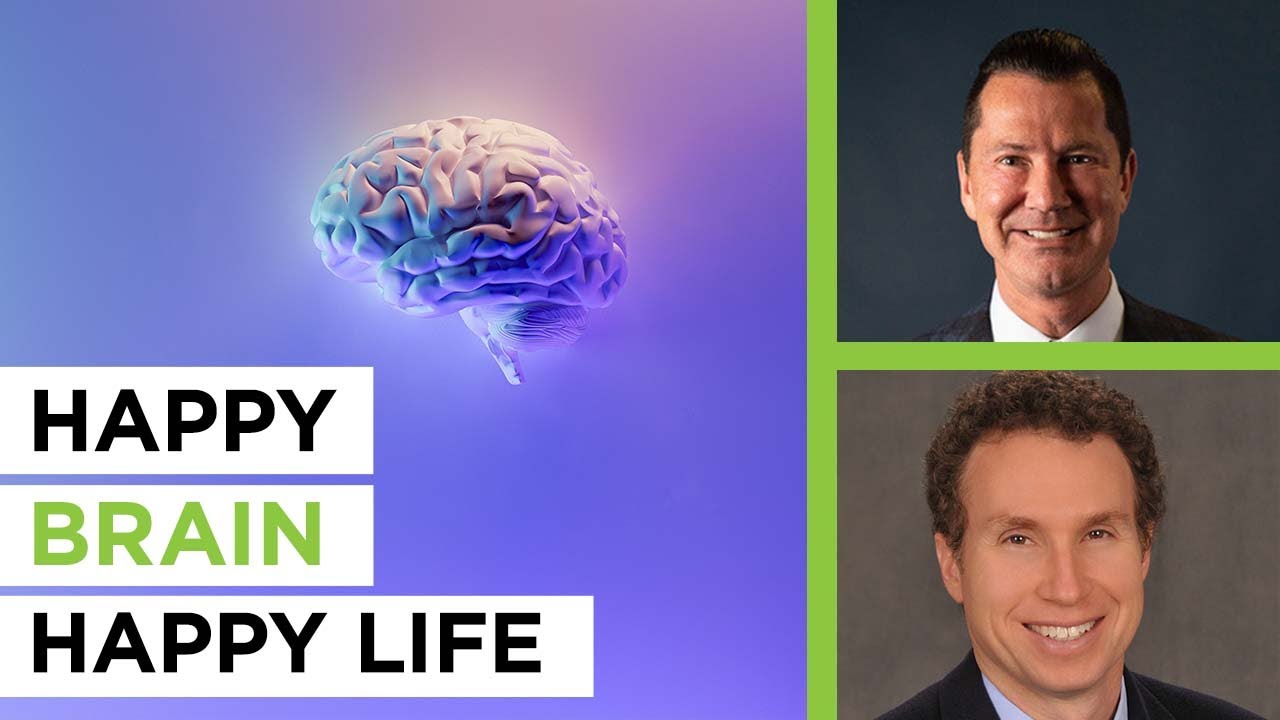
In this episode of The Empowering Neurologist, host Dr. David Perlmutter interviews Dr. Andrew Newberg and Dr. Daniel Monti about their book Brain Weaver and the integrative medicine program they built at Thomas Jefferson University. The conversation weaves together (1) the history and structure of the Marcus Institute of Integrative Health, (2) neuroimaging evidence that spiritual and meditative practices increase pre‑frontal activity and quiet parietal regions, fostering a sense of connectedness, (3) the Hebbian principle of brain rewiring through regular mindfulness, gratitude, and compassion practices, and how this improves executive function and emotional regulation, (4) the central role of inflammation, gut‑brain health, and diet—highlighting omega‑3s, sulforaphane, N‑acetylcysteine, healthy fats, pre‑biotics, and fiber—in protecting neural tissue, (5) clinical studies showing rapid (8‑week) benefits for cancer‑survivor stress reduction, concussion recovery, Parkinson’s disease, and trauma‑related limbic hyper‑activation, (6) emerging technological adjuncts such as transcranial magnetic stimulation, vagus‑nerve stimulation, and the promise of psychedelics, (7) the importance of personalizing a “brain‑weaving” program by mapping individual strengths, weaknesses, stress tolerance, and lifestyle, and (8) the hormetic view of stress—low‑level cortisol supports hippocampal learning while chronic elevation is neurotoxic. Throughout, the hosts stress that mind‑body practices are low‑cost, scalable, and synergistic with nutrition and emerging neuromodulation, offering a comprehensive, non‑pharmaceutical pathway to brain resilience.
Chapters
These ideas, these beliefs, these approaches, these thoughts are what become embedded within the way each person's brain functions. And when they turn to that more positive way of looking at things and being more compassionate and being more optimistic and having more sense of— greater sense of meaning and purpose in the world, your brain works better, your emotional systems work better. And then of course, we all know in integrative medicine, your brain and your body are intimately connected. It helps your gastrointestinal tract and your heart and your immune system. All of them start to work better. And these are simple things that we can do.
Hello, everyone. I am Dr. David Perlmutter. Welcome again to The Empowering Neurologist. You know, it takes a lot to build a healthy brain, to weave a healthy brain. Lots of things have to converge to really create the environment Whereby we'll have a brain that functions really well, a brain that is resilient, a brain that is resistant to decay in the long run. We've been talking about these ideas for quite some time on the program. Today we're going to look at how integrative medicine factors into this whole idea, this whole notion of, you know, the fact that we can really do what we can, the best we can, to build a healthy brain. Looking at other components like spiritual components, how these components can relate to our program, can add to our program as relates to weaving a healthy brain. And the name of the book that we'll talk about today is Brain Weaver by Dr. Andrew Newberg and Dr. Daniel Monte. Let me tell you a little bit about our guests today. Dr. Daniel Monte is a founding director and CEO of the Marcus Institute of Integrative Health and founding chair of the Department of Integrative Medicine and Nutritional Sciences at the Thomas Jefferson University Medical College in Philadelphia. His research focuses on assessing promising mind-body interventions, and we'll talk about that, and brain mechanisms of stress and emotional regulation. And he is the co-author of the popular book Tapestry of Health. Dr. Andrew Newberg, I've been quoting his work for many, many years, is the research director of the Marcus Institute Institute of Integrative Health and a professor in the Department of Integrative Medicine and Nutritional Sciences at the Thomas Jefferson University Medical College. He's the author of 10 books including the bestseller How God Changes Your Brain and is regarded as one of the most influential neuroscientists working today. I've actually, as mentioned, quoted Dr. Newberg's book in many of the books that I have written over the years, used a lot of his research in my scientific presentations. Really very excited about our time together today, so let's get right to our interview. Hello, doctors. I'm so glad that we get to spend some time together today.
Great to be here with you.
Thanks for having me on the program.
What I'd like to do before we jump into talking about the book would be if— I'd like just to talk a little bit about the integrative program that is going on. Perhaps, Dr. Monte, you can open a little bit and just tell us How that program got started, what is the goal? I know you and I had a brief discussion before we went into recording, but tell us what's going on up there.
So we're very fortunate at Thomas Jefferson University. We started an integrative medicine initiative almost 2 decades ago. About 15 years ago, when I was young faculty at Jefferson, I was asked to kind of lead this center of integrative medicine. And I like to tell the story because at the time my mentor in the dean's office said, oh gosh, don't do that. That's career suicide. But I saw it as an opportunity nonetheless. And we created some clinical programs. But what was always important to me was to have a strong research component. So a few years after that, I was working on a clinical trial and needed an imaging partner. And I knew there was this guy, Dr. Newberg, down the road, but he was at another institution that, you know, was the competitor of Jefferson, the University of Pennsylvania. And I thought, well, even if the 2 institutions don't always play well together in the sandbox, this guy seems pretty nice. You know, he has these bestselling books. And I was reading about him in Newsweek. I'm just gonna give him a call. And so I did. And we really hit it off. And so we did this clinical trial together. We'll probably talk about it a little bit today 'cause we got great results where We put together a stress reduction program for cancer patients, and then he really helped us to understand what the brain was doing pre and post. And from there, we built other things. A couple of years after that, I worked hard to be able to help Dr. Newberg come over and be our research director at Jefferson. And over time, we were able to attract other people who invested in the program. We became the Marcus Institute of Integrative Health with expanded locations. The Marcus Foundation actually gave us a grant to put in the best neuroimaging equipment available, an integrated PET MRI machine where we have great anatomic and functional neuroimaging. And then most recently in the last year and a half or so, the, the almost unthinkable opportunity occurred where the medical college allowed us to create the first-ever department of integrative medicine. We call it Integrative Medicine and Nutritional Sciences, but the first-ever in a medical school in the country, maybe the world. And what's really great is the provost actually very strongly encouraged us to put nutrition in the title of our department because, as he put it, you know, no one else in medicine owns nutrition. No one else knows anything about it. Since you guys do, you should put it in the title of your department. And that's what really sort of led to that title. And so the department and the institute together at Thomas Jefferson University comprise the different clinical research and academic programs we have. And we're very thrilled that we have a conference coming up on mind-body medicine. And another Dr. Perlmutter is our keynote speaker, and that would be Austin Perlmutter.
Well, I cannot imagine why in the world you'd be interested in food. I mean, what does food have to do with health? And in particular vis-à-vis your new book, The Brain. My gosh, why in the world would you be interested? Talk about low-hanging fruit, no pun— pun very much intended. And Andy Newberg, I have been looking at your work for years and years. I have used your slides in my presentations. I mean, you've made it so clear At least as it relates to meditation, that there are dramatic changes going on in the brain that are positive. In fact, even in our last book, Brainwash, we quoted you quite a bit. I'll let you know that on the front end because, you know, you've demonstrated quite graphically that structural and functional changes occur in the brain that are good for us in terms of meditation. So— Absolutely. You know, I really— we both really appreciate that. Again, speaking for Dr. Austin Perlmutter, who's downstairs right now making cookies using allulose with his mother, so there you go. I
love that.
Yeah, are we ever going to get to talk about your new book? I sure hope so. So the book, interestingly, is looking not just at the biological aspects of Health and medicine as it relates to the brain, but you're looking at psychological issues, mood issues, spiritual issues, and how they relate to brain health, functionality, and resilience. So let's first start with that. I mean, what is the role, let's just say, of spirituality as it relates to brain health?
Well, David, as you said, I mean, a lot of the work that we have done over the last 10 years here has really tried to document what's going on in the brain when people are engaged in a variety of religious or spiritual practices, practices like meditation, prayer. And of course, some of them can even be secularized and still be very valuable for people. And that in and of itself is always an important point. But when we talk about more specifically spiritual pursuits, you know, we're talking about approaches that people take in their lives to help them to feel more grounded, to give them more meaning and purpose in their life. To help them feel connected to others, to help them to feel connected to the world. And there's a, as you said, there are a lot of changes that we have been able to show in the brain that affect our emotional systems in the brain, the cognitive processes in our brain. And one of the things that we've learned in terms of, and talking about in the context of weaving a good brain, is that the more you use all the different parts of it, the brain has so many different things that it can do. The more you use all those different parts, the better it functions. And these kinds of spiritual practices do just that because they can be uplifting, so they have very positive emotional reactions that people can get from them. Because oftentimes they're very concentrative, you're focusing on a phrase or on a prayer or something like that, you're using the concentrative powers of the brain. And then you're engaging the thought process, you're thinking about— Well, what does all this mean? How do I understand it? What is my place in the world? What are the things that I'm supposed to do and how am I supposed to behave? So all of these different elements wind up kind of all getting mixed into what spirituality brings to people. And that ultimately leads to a very positive kind of brain response, a very positive brain function. So the brain actually works better when people engage their spiritual side.
So let's just jump right in and look at this graphic that actually appears in your new book. And why don't you walk us through what we're seeing here as it relates to the prefrontal cortex and also the parietal area? What is the meaning of the differences in activities that we see?
So when you're looking at these brain scans, what you're seeing essentially is activity in the brain. And the brain works very nicely in that the more a particular part of the brain is being used, the more blood flow it gets. Blood flow is sort of like— I always think about it as the model of the gasoline engine. The more— the faster you go, the more gasoline you want to go into the engine, and that's what blood flow is. And it brings sugar, it brings oxygen into the brain so those parts of the brain can work better. And the colors actually represent the activity level. So the red areas are the most active, followed by the yellow, the blue, and the black. And what we typically are seeing What we're seeing on these scans are a large number of changes, but as you said, specifically focusing on 2 very important ones, the frontal lobes in general become more active when people are engaged in meditation because the frontal lobes turn on whenever we concentrate or focus on some kind of task. So if we're concentrating on a math problem or trying to find our way home in the car, we're using our frontal lobes. If you're then concentrating on something spiritual, on a phrase, on an image, then you're going to use your frontal lobes. And this is exactly what we see. And what's interesting about it is that the more you keep doing it, the brain is a lot like a muscle in the sense that the more you use it, the stronger and the better it works. And so even at baseline, people have more and more activity in the frontal lobes. Now, you also mentioned the parietal lobes, and that's located a little bit more towards the back of the brain. And here we see a slightly different thing happening. So instead of going up, the parietal lobes actually start to quiet down. So you see mostly yellow colors in that. And what we think that is going on there is that as you engage your practice more and more, part of what happens is that you start to screen out a lot of irrelevant sensory information. And if you do that enough, then the areas that receive that information, the parietal lobes, they start to quiet down. What we know about the parietal lobes is that they normally take all of the sensory information and help you to kind of create your sense of self. So if the parietal lobe starts to quiet down, you lose your sense of self. And I mean that in a good way, not in a bad way, that you begin to feel a kind of a blurring of the boundaries between yourself and the world. You start to feel connected to, at one with other people, the world, or again, if you're in a particularly religious practice, maybe even God. And that's exactly what these individuals talk about and describe as part of the subjective nature of these experiences. And we see this going on in the brain itself, in the parietal lobe itself. So these are just 2 of many changes that start to occur in these practices.
So you said something I think was really interesting in, in that there are these subjective experiences that people describe to you, but this is objective. You're looking at a scan that is really quite vivid in terms of what is going on. fMRI, functional MRI, how the brain is functioning during, and as you've demonstrated, even after the individuals have been engaging in these types of practices. What is the implication for the individual, and ultimately I think for the world, the more individuals that are involved with this, but what is the implication for the individual of having increased activity, let's say, in the prefrontal cortex?
So when people have increased activity in the prefrontal cortex, not only while they're doing the practice but even at baseline, what that means— again, I'll use the muscle analogy— basically their frontal lobes are becoming stronger. And we use our frontal lobes every day. They help us with our— what we refer to as our executive functions. That's keeping our checkbook, helping to plan our schedule, concentrating on whatever things we need to concentrate on at work. So if you're activating that and you're allowing that to work better, then you're presumably going to be better at that as you do these practices more and more. And our other studies have shown just that, that it actually— by doing these practices, even if you just do them For, you know, 10, 15 minutes a day over a period of a couple of months, you actually improve your memory and your concentration abilities by 10 to 15%. But maybe even more importantly for a lot of individuals is that the frontal lobe helps to regulate our emotional centers of the brain, what's called the limbic system. And so as you activate your frontal lobes, you're helping to control how your emotional responses go. And so people who are dealing with anxiety or depression, we find that that actually helps to significantly improve those particular symptoms. And for example, the study that Dr. Monte was talking about at the very beginning that involved a kind of meditative, artistic, creative approach to helping to manage stress, those are exactly the kinds of changes that we saw, that the frontal lobe became more active and that the emotional centers of the brain actually kind of quieted down. quieted down. And normally they turn on when we get anxious because they're helping us to feel the anxiety. And what we're seeing is, is that the brain is actually responding better and it's responding more efficiently and in a more balanced kind of way. And that's the kind of brain that we ultimately want to weave.
Not that it was— it's demonstrated in the image that we just saw, but clearly there is an indication of this control then of the prefrontal cortex top-down control over other centers like the amygdala, for example, that demonstrate that with these contemplative practices, there is a reduction of activity then of more— of areas that are more self-referential and more impulsive, and therefore, ultimately, there is the greater good to be wrought about by being involved in these types of practices.
Yeah, absolutely. And Dr. Monte can expand on some of this too, that practices that are not only involved with helping the frontal lobe work better, but that involve things like gratitude and compassion can really, again, the more you do that, the more your brain becomes wired for those positive emotions. And that can be very effective at helping people with a variety of different psychological problems and different traumas.
So what you're talking about then is the brain actually rewiring itself based upon demand or use, the Hebbian principle of neurons that fire together will wire together. But in this case, it's what you're paying attention to, what you're focusing on, is going to then to allow that wiring to happen to then pave the way to be more involved in things like compassion and empathy. So, go ahead, go ahead.
That rewiring is something that we've spent some time looking at with some of our studies. In fact, with the MRI technology that we have now, those communication pathways between different areas of the brain, we get to visualize that now. And this is something that allowed us to stumble across communications that we didn't even know existed before. We recently published on a study of people who had a highly distressing experience, and we showed this one in the book as well, the pre-post brain scan. And after 3 to 5 sessions of a mind-body intervention that really targets the distress of these types of events, people who had this kind of experience haunting them for years and showing this high activation in the limbic area of the brain, in the limb— in the amygdala parahippocampal area. One, after a cue to the distressing event, pre and post, that changed dramatically. But also how the brain talked to itself changed dramatically. The communication pathways up and down to— through the brainstem, and we think about where We have that sympathetic nervous system response. And then one of the things that we also noticed was the communication with the cerebellum. And this is something that only recently people had started to talk about. Does the cerebellum have a role with emotional coordination like it does with motor coordination? And what we were able to really visualize and then talk about and put in a quantitative way is that that communication pathway changed a lot. And this This created a lot of interest and was picked up by a lot of popular press because we could say something new about an area of the brain that was thought to be really focused just on motor function.
You know, Dr. Newberg, when we were talking a moment ago, you were talking about this top-down control executed by the prefrontal areas down to the more emotional centers. And we've recognized literature as of late that demonstrates that there's a threat on this connectivity and functionality, therefore, an ability to regulate emotionality by inflammation. Yeah. And it really, I think, speaks to the section in your book talking about the so-called brain-healthy diet. There was a term for it that you used in the book. I can't pull it up right now, but you talked about why diet is so important, and I think that Ultimately, regardless of who we talk to as it relates to brain health, it seems as if most of what the diet is focused on is ultimately the mechanism of inflammation and i.e., its reduction. But how intriguing is the research then that looks at the threat upon this connectivity through this mechanism of inflammation brought upon us by, you know, perturbations of our diet, Changes in our gut bacteria, lack of judicious use of medication that threaten gut bacteria, threaten gut permeability, and all the things that ultimately end up with inflammation. So you did have quite a bit of information there about what you consider to be the importance of dietary choices. So what other things are important as it relates to the recommendation that you were making with respect to diet?
Well, I'm going to let Dr. Monte handle the diet question, but before I let him jump in, you know, one of the— the study that we have really been focusing on that addresses exactly what you just said is a study of patients with concussion. And in concussion, when you have an actual direct head injury, you know, the problem is that there are people who get better very quickly, and then there's other people, some people who never get better. And then the real question is, well, what's going on? And what we're seeing on our brain scans is this hyperactive areas of— these hyperactive areas of the brain that reflect this level of inflammation and this sort of constant excitatory state that never seem to be able to settle down. And so, part of what we think about on a very basic level is that— on a very gut level, to use that pun, Is that we ultimately are showing that this inflammation is having all kinds of effects on the brain. And maybe if people are able to modify their diet specifically, that we would be able to see improvements in their brain function in a way that by taking medications and all these other things, we really can't do. So, but let me, I'm gonna let Dr. Monte handle the diet part.
Let's get that in just a minute because you brought up an interesting point, and that is that even an event like trauma then can begin this process of inflammation that will continue to smolder unless we are able to activate processes to reduce inflammation within the body and within the brain. We see that with CTE, we see it with—
Exactly.
The football players, anyone who's experiencing, as you mentioned, concussion. And it reminds me of in the early days of MPTP when This form of Demerol, synthetic Demerol, was developed in California and lo and behold these individuals would develop Parkinson's disease. Well, a couple of decades later when some of these individuals would die long after they had the event, the exposure to the toxin, what the pathology revealed was activated microglia, activated immune reactivity, producing inflammatory chemicals in the very part of their brain, the pars compacta of the substantia nigra, as if we're taking the boards. But anyway, the part of the brain that is central to the degeneration of Parkinson's, 20 years later still active inflammation. So, you know, I think everything we can do then to reduce this mechanism, inflammation, whether it's meditation, exercise, and then Dr. Monte will talk about diet. is really so important that we ratchet that up. We live in a very inflammatory world, so I think that becomes our biggest target.
Yeah, well, and the, the study that we did on Parkinson's disease was to look just at that, you know, specific— I know you were both talking about that right before we came on, but the first study that we did looking at the use of a very strong, essentially antioxidant molecule, the N-acetylcysteine, It was an interesting study because we were doing our study in humans, but we were working with a colleague who was looking at the MPTP mouse model of Parkinson's and found that the N-acetylcysteine was actually one of the most effective ways of protecting the neurons against the injury from the MPTP. So, part of what you're— we're seeing all of these connections of if we can reduce the inflammation, if we can reduce the downstream extreme effects of the inflammation, the oxidative stress, then we can actually start to have improvements in the way in which the brain functions. And that's also what we documented in our early Parkinson's, in our first Parkinson's study, which was that not only did people feel better, but we actually were able to show that they had improvements in the amount of dopamine in their brain, which to us was remarkable considering that it's a neurodegenerative disease. But so we're getting to take those first steps to understanding exactly how these processes work and then to figure out the approaches that people can take to help to protect their brains from these types of injuries.
And I also recall mentioning to you prior to our recording that the work of Dr. Jed Fahey looking at sulforaphane in terms of upregulating brain glutathione as a protectant, which is likely the mechanism by which N-acetylcysteine is working in the brain. Is really quite profound. And what does it mean? What's the take-home message for viewers? And that would be, you know, you should be chewing broccoli sprouts or taking a good sulforaphane product, or at least one that's going to ultimately give you glucoraphanin that you can activate through the myrosinase enzyme. Long story, but simply stated, let's say the answer here might be chew broccoli sprouts, eat broccoli. So there's a lot that we can be doing then to work to reduce inflammation and protect the brain. Let me just say one other thing, and that is we're seeing a lot of good data now coming— one study, several studies coming out of Harvard looking at the role of these specialized pro-resolving mediators from omega-3s that are really powerfully influential as it relates then to calming down the process of inflammation, which has its upsides as well. We're always castigating inflammation. In the book, you talk about how medicine doesn't really focus on the brain in terms of thoughts and feelings. It's really, you know, not an area that medicine really chooses to look at. Why not, and why is that important? Maybe that to you, Andy.
Well, I think that we do need to really focus on the individual patients and what they're feeling and what they're thinking about. To us, this is really at the heart of integrative medicine, which is to understand what a person is feeling, thinking, and how that relates to their brain functions, and then how we can help them to better balance those brain functions so that we can get them to the states that they want to be. But we know that a person's beliefs, especially if they are more pessimistic, if they are more negative, they are more likely to wind up having various issues and problems with their brain as well as with their body. And on the other hand, if they have a more positive view of themselves, a more positive outlook on things, then the research also shows that that winds up leading people to a much better outcome, both in terms of psychological as well as physical health. So I think it's really incumbent on all of medicine to think about us as human beings, not just as biological creatures, but as you mentioned in the introduction, as psychological, as social, as spiritual individuals. All of those elements become essential for helping us to understand how brain works and how we can best take care of that brain.
You mentioned vis-à-vis the notion of mirror neurons, how our brain kind of adapts to or reflects the emotions of other— what other people are experiencing around us. So what can we do with that information in terms of how can we leverage that for our own benefit?
Dan, do you want to take that?
Yeah, so, so much to comment on here. This is such a terrific discussion. One thing I wanted to just backtrack for one second to say is I wanted to give Dr. Perlmutter credit for initiating our thought process on that N-acetylcysteine experiment with Parkinson's patients because it was his original study that got us thinking down the glutathione highway. And, we do believe that the N-acetylcysteine is a glutathione precursor is what that positive effect is about. And, we're going to try to prove that in our next spectroscopy study that we're doing right now. But, the issue of mirror neurons and really everything that we're talking about in terms of inflammation and how we navigate the world. A lot of what we talk about with spirituality or the mind-body techniques in the book and that you talk about are to create some sort of space between the stimulus and the response, something that Viktor Frankl used to comment on. But now we add a scientific overlay to it because that's often what we're doing. And if we can meditate or engage in spirituality, this allows us then to create that space between the stimulus and the response. That's what mindfulness is all about. And in so doing, engage in positive emotions, engage with others. One of the things that we often think about in terms of why is it that people who go to religious congregations or engage in spiritual practices in groups seem to do better from— in outcomes that we've looked at. A lot of it is that experience, that community experience that's often lacking. And if we think about the last year and a half where people have been more detached, more isolated, this has really added to the stress and distress and that sympathetic nervous system activation that creates more inflammation. in the body. And so as we think about how do we navigate all of this, I mean, for most of your listeners, they know what the sympathetic nervous system is and that fight or flight branch. But if we kind of just step back for a second, that thing gets activated when there's any perceived threat to wellbeing. It doesn't have to be life-threatening even, just a perceived threat to wellbeing. We've been inundated with perceived threats to wellbeing for the last year and a half. There's a pandemic, there's the vulnerable older people in your family that you worry about, there's kids that you're homeschooling, what's happening to your college students, what's happening to income, and what's your job going to look like a year from now? And so we're bombarded. If we think about the original adaptive survival effect that the sympathetic nervous system is based upon. If we saw a lion in the distance in the jungle, you know, we'd go into fight-or-flight mode. If we're smart, maybe flight, climb up a tree, the lion passes, and the nervous system resets itself to a large degree. But the lions of yesterday are replaced by today, all of those stressors that we're talking about. So we're constantly in that fight-or-flight mode. And so then the stressors are the loudest voice in the brain, and creating that space between the stressors and how we respond to those stressors is really what all of these activities are about. And then on top of that, layered with feeding the nervous system, the brain, lowering inflammation through the right diet, and so on.
Daniel, uh, you really touched upon something just now that I think is really very important. And that is, I think we all understand stimulus and response. Something happens and we immediately respond. And we don't even think about it. It's an innate kind of programming, but that we, through what you just explained, can insinuate a level of control between stimulus and response such that we change the outcome. And that the more we practice what you're talking about, the better we are, the better able we are to modulate that connection. kind of response, that is huge because, you know, those responses are oftentimes unconscious and the notion that we can insinuate a level of control over that sort of responsiveness is really very— it's really very powerful and empowering. And the other thing is, in the book, you mentioned in terms of the stresses of life or being under pressure, a quote from Martina Navratilova. Saying that pressure is a privilege. So in a sense, though, we do— you know, there's a level of performance that is augmented by having a bit of— maybe it's almost a hormetic sort of level of pressure day to day to get the job done.
Exactly. That we need a little bit of stress to function in the world. The problem is right now, there's so much distress by that constant beating and activation of the sympathetic nervous system. And, to your point, when we do these things to sort of create some space between the stimulus and response, the brain imaging that Dr. Newberg has been so great at doing, that was our original study. And, when you give people a cue, I really like the functional MRI studies when There's something active going on. So we see what these people look like at baseline, but we also see what they look like in response to a stressful task, for example. And so in this group of breast cancer survivors who were feeling highly distressed for multiple reasons, when they learned to navigate the stresses of life and create that space and do the daily exercises to reinforce that, At baseline, the brain looks different, but also in response to a stressful task, how the brain deals with that task is very different. I think the good news too is people often think, oh, you know, I have to like do this for years and years before I get a positive response, and I have to meditate 3 hours a day for the next 6 years, and then maybe something will happen. But actually, This was an 8-week program. And we met once a week for 2.5 hours and encouraged people to spend a few minutes each day reinforcing the practices that were learned. And after 8 weeks, just 8 weeks, it was really a dramatic difference. So I like to just remind people of the hopefulness there.
And let me just— I want to pick up on one other important thing that you were alluding to, David. You know, that quote, there is an important piece of that quote that is relevant into the larger perspective of what we try to help people with through this book, which is that we're all different. And so some people like Martina Navratilova can handle that pressure far better than other people can handle it. And part of what we do throughout the book is talk to people about where are their strengths and their weaknesses. Some people can handle lots of stress. Other people have trouble handling stress. Some people are more optimistic. Other people are more pragmatic. Other people, their gut health and their diet is terrific. Other people, their diet and their gut health is terrible. Part of what each person ultimately has to do, and what we try to do is help guide them through this process, is to take stock of what their strengths and their weaknesses are Try to find ways of using their strengths to support the areas that— where they have weaknesses, and then try to put together an entire program that works best for each person. And so, you know, as Dr. Monte was saying, I mean, we all— we can't function without stress. I mean, our body is built to have stress. Our brain, when you stress it by solving a math problem when you're in first grade, teaches you how to solve it. How to be a good moral person, we learn that because we get stressed when we do something wrong and our parents scold us when we're 4 years old. So that's part of how the brain grows and develops. But as you're both saying, sometimes the stressors become too much and it's how one deals with that, but how one also can, maybe people handle stress by using their emotional processes Maybe they need to use their cognitive processes because they can really think through a problem. So part of what we're trying to do is get people to recognize where their strengths and weaknesses are to address the stressors and all the other aspects of their life that have a direct impact on their brain's health.
Well, you know, I think if you look at the primate data, we see that it's a U-shaped curve as it relates to stress, and particularly as it relates to the effect of the stress hormone cortisol. On the functionality of the hippocampal neurons, that at low level we need cortisol in order to allow hippocampal neurons to function properly, to form the connections that are necessary for learning, but yet at very high levels or prolonged levels of even moderate elevation, then cortisol becomes specifically toxic to the neurons of the hippocampus and ultimately leads to issues. But I think you're right about, you know, the fact that like so many body stresses, whether it's thermal stress or caloric restriction or even day-to-day social stress, that a level of that is appropriate and we're geared for that. It's just when it becomes overwhelming, caloric restriction or temperature variations, that things begin to break down. That's really the definition of hormesis.
Sure, absolutely.
I'd like to turn to Andy. You just published a report in, I think it was January this year, with Dharma Singh Khalsa about a form of meditation, just the whole notion then. I think it's pretty much in line with the tenets of this book that we're really kind of missing out in terms of brain health I know we can extrapolate it to immune health and total body health, i.e., integrative medicine, but you concluded that— you both concluded that, you know, this is a really important piece of the puzzle, important pillar that seems to be kind of ignored in terms of the discussion. I mean, the discussion of the day is when is the next monoclonal antibody against beta amyloid coming down the pike? Right. For which our investments in a pharmaceutical company are going to pay off.
Yeah, well, absolutely. I mean, the idea of finding meditation-based practices and mindfulness types of practices, as you said, I mean, it's just so essential to our overall good health. And this is a cornerstone to what we think about in integrative medicine, what we talk about in Brainweaver. There are so many reasons why these practices are good for us. They affect our brain, as we were talking about earlier. They help our brain to be able to concentrate more effectively. They help us to regulate our emotions more effectively. The best news of all is that other than whatever you might have to pay to learn them, doing them is completely free. To us, it seems like such a natural thing that really should be a part of virtually every person's program for helping their brain to function as best as possible. But part of what also then becomes a little bit of a challenge, and again, we kind of go over this, is the individualization. I mean, there are some wonderful programs out there. The one that you were talking about is a meditation practice called Kirtan Kriya, which is a a mantra-based practice where you repeat certain sounds over and over again, and you do that over a certain period of time, typically like a 12-minute period of time. And we have shown through our imaging studies and clinical studies that it has some great benefits. We have a wonderful mindfulness program and mindfulness center at Thomas Jefferson University in our Marcus Institute of Integrative Health that we have done some great studies looking at that, and that has been really effective. We're getting close to publishing a study to show that even in really old people who are in their 80s, you know, you can teach an old dog new tricks, and their brain can change, and their brain can improve. So, you know, we always talk to patients about, well, what are you looking for? What are your goals? And try to help them match up with the program or the practice that best fits their lifestyle, that best fits their time, the time constraints that they have. But as you mentioned, I think everyone should strive to find some of those kinds of mind-body practices that can be so valuable on so many different levels, irrespective of whatever their religious or spiritual perspective might be.
I think that's such a very, very important point. And I think in How God Can Change Your Brain, You really made that point emphatically. I think you showed Franciscan nuns, you showed people involved in various types of meditation, and it didn't matter in terms of the outcome. It didn't matter. And though it seems that ultimately what religions talk about is this notion of being kind, being empathetic, being compassionate, being grateful, Right. and that these are Virtues then that are enhanced by the very practice in terms of having the hardware to participate in those virtues. So it's sort of a feed-forward cycle.
Yeah, absolutely. And as you said, I mean, even though they can be automatic when you do these practices over and over, and you mentioned the neurons that fire together wire together, I mean, these ideas, These beliefs, these approaches, these thoughts are what become embedded within the way each person's brain functions. When they turn to that more positive way of looking at things and being more compassionate and being more optimistic and having more sense of— greater sense of meaning and purpose in the world, then that just— your brain works better, your emotional systems work better. Then of course, we all know in integrative medicine, your brain and your body are intimately connected. So it helps your gastrointestinal tract and your heart and your immune system. All of them start to work better. And these are simple things that we can do. And we don't have to wait for those monoclonal antibodies to come along.
But it's not just good for me. It's good for my neighbor. It's good for my family. It's good for my community. It's good for the planet. It's the extrapolation, that point. You talk about integration. integrative medicine. I mean, we're all in this together. We're hearing that a lot, but, you know, we really— these are the ways to really make that happen. Daniel, let me get back to you for a moment because in the book you don't overwhelm us with supplements, but there are a few— tryptophan, SAMe, omega-3s— that you do mention. Maybe we could just go through those and if you could just talk about why they're important.
Thanks. One of, one of the things that we really like to focus on is fat. Fat is confusing to people, but, you know, fat is very required for the nervous system in the brain, but the right kind of fat. There's inflammatory fat, there's anti-inflammatory fat. And so one of the reasons that sometimes we list as a supplement that people might take the omega-3 fatty acids is because Many people just aren't going to eat enough of them in their diet. Now, we go out of our way to talk about good sources of omega-3 fatty acids. I think most people know that you know fish is a potential source, but we also advise people to limit how much fresh fish you eat if if you do eat fish. Many of our many of the people that we see want to be on a more vegan diet, so it makes sort of supplementing. those fats all the more important, and how we supplement them all the more important. But, you know, the pathway of fat metabolism can either increase the inflammation in the system or decrease it, and that's why healthy fat is so important, and we need enough of it. And in fact, one of the studies that I often like to talk about, even though it had a little bit of controversy when it came out, is on the Mediterranean diet. Which looked at all-cause mortality and cardiovascular events. And they went out of their way in this study— it was a large population-based study— to supplement healthy fat. They actually gave people olive oil, which is a form of healthy fat that's not omega-3 fat, it's in the omega-9 realm, and there's also other anti-inflammatory things in the olive oil, and nuts, almonds and walnuts, we always say, but not peanuts. They're actually a legume and mostly omega-6 and kind of pro-inflammatory. So healthy nuts and olive oil. And by just doing that and giving people the dietary guidelines to eat a more plant-based diet, the outcomes were really quite different than the other group, which was basically given dietary information about a generic low-fat diet. So just avoiding fat is a problem. We tell people, sure, avoid the bad fat, but go out of your way to get the good fat. And that's something that we actually have people supplement as well as one. You know, Dr. Newberg was talking about gut health, and we sometimes make sure that people are supplementing what they need to for good gut health because of that gut-brain connection. Sometimes it's a probiotic, but a lot of times We spend time talking to people about the prebiotics feeding the bacteria because there's a debate about exactly how many of them there are, but let's say there's about 3 times as many bacteria lining the gut than there are you. Now, they're smaller, but in terms of volume, it's bigger. When you think of all of the genetics of that microbiome, who's controlling who? The function is really, you know, what there's so much intrigue about. There's that invisible barrier between you and the outside world, but also what's going on in terms of how they help with making vitamins into their active state and how they interact with the tight junctions in the gut and all of the immune tissue. We often, when we have the medical students rotating with us, I love to ask them what the largest immune organ in the body is as they start to tell me the spleen or the bone marrow, but it's the gut. Remember the year before looking in the microscope at Peyer's patches and gut-associated lymphoid tissue? Ah, because that lymphoid tissue throughout the gut is very significant. And so, when it kind of brings us back to the conversation about inflammation. And so, to minimize inflammation, we want a healthy gut. And so, of course, the diet is at the foundation of that. And when we use the word supplement, what are we— we're supplementing a healthy diet. So I always like to underscore that the supplements don't do much if it's not on the foundation of the kind of plant-based diet that we're talking about. And so if we're having that plant-based diet, the prebiotics are critical too. And so that's what feeds the good bacteria, those resistant starches. Basically, an easy way for just regular people to remember this is fiber, high-fiber diet. Where do we get fiber? We get it from plants. We get it from vegetable sources. We can get it from whole grains as well. But those fibers are important because we have this great slide that we sometimes show patients. And it was in one of the grand rounds that our— one of our colleagues in the department gave, that when you have a diet that's so low in that fiber, that the mucopolysaccharide layer in the gut gets eroded by those bacteria. You need to feed them. Or they eat you. And so, in order to survive. So, sometimes we help people with some prebiotic fiber supplements because they're in transition to the healthy diet and we need to jumpstart the gut function. And every once in a while, a probiotic as well. Now, other things we sometimes talk about for brain health is since sleep is so important— Mm-hmm. And not getting good sleep Leads to more inflammation. We know that, lots of studies. We haven't done a lot of those ourselves, although we have done a study showing that if people sleep sufficiently, their brain looks different than if they don't. And so helping people to sleep is important. Really, the mind-body techniques that we've been talking about are sometimes the most effective thing to do, but sometimes a little bit of melatonin helps. How you do the melatonin is a thought process. We don't use super high doses. There's some data to suggest that's not the way to do it anymore. So we're pretty conservative in our approach to that. And so those are just a few of the things that we think about when we talk about supplementing the good diet.
One last thing. You do mention transcranial magnetic stimulation, and do you foresee that as gaining popularity. Here's some technology. We've been talking about pretty natural approaches, but I'm certainly not averse to considering technology as long as they honor primum non nocere, above all, do no harm. What are your thoughts on transcranial magnetic stimulation?
So far, we're encouraged. There's issues with how accessible that treatment is because There's issues with coverage and then, you know, it's not that available. Oftentimes when I refer a patient for it, I have a hard time finding somebody to do it. We've thought several times of just getting it in our clinic ourselves, but, you know, we might at some point. I think the data has been encouraging. I think that it's also a lot more benign than a lot of the other treatments that are out there. Wow. I mean, many people don't do well with antidepressants. And, you know, they have limited effects. Sometimes they're dramatic for people. But then after you've failed antidepressants or they're still— they've helped a little and they're not doing enough, then what? You know, because the next step of ECT, well, that really is invasive. I mean, you're giving people an anesthetic, you're creating a seizure, whereas transcranial magnetic stimulation is much more benign. And the data so far in terms of safety are great. And efficacy? I think there's a role for it.
I'll even add that we're even starting to do a little bit of work trying to see whether or not it can augment meditation practices. It ties back into that. When we were talking earlier on in the program about the parietal lobe going down or the frontal lobes going up, if you can do something to augment that and to help those areas change, then arguably speaking, you might even be able to enhance the meditative practice. And that gets back to the larger point of all of these things are, you know, you have to think about this in a very integrative way. Your diet, nutrition, the supplements that you take, the mind-body practices, other types of neat new ways of approaching the brain's health and the brain's function. So these are really all very important for helping us to try to figure out the best ways to And we're also
exploring vagus nerve stimulation too.
Yes.
Having opened the can of worms on augmenting meditation, is there any consideration of at least looking at psychedelics in the clinic?
The research on psychedelics has gotten very interesting. There's been some great work that's been done on that. Of course, from the perspective of some of my research looking at spirituality and religion. The whole idea of trying to, what people have found is that those people who have used those psychedelics have very intense spiritual experiences. We actually did an article where we had done a whole online survey of people's most intense experiences, spiritual experiences. And there was a great deal of similarities between those that were achieved under the influence of a psychedelic compound compared to the more natural or non-drug-induced practices or experiences. So I think we're not quite there yet. We have been talking about the possibility of doing some of this kind of research as well. And some of my colleagues who are doing it, very important to at least be looking at what's going on from a brain imaging perspective and how that's affecting the physiology. But it's been very promising research, and especially for people who have significant psychological issues like severe depression, some of the data is very encouraging. So we'll have to keep an eye on it. But as we've kind of been talking throughout the entire program here, as we talk about in the book, there's so many different possibilities, and people need to engage all of the ones that might work for them. And take advantage of the ones that will be particularly good for the issues that they're facing and dealing with.
Well, let me just say, I'm really excited for all that you guys are doing and grateful because it's contributing an awful lot for people. And the book is wonderful. I'm encouraging our audience to get it and read it because it's so valuable. So you're doing great work, both of you, and I want to thank you for spending time with us today.
Thanks so much for having us.
Thank you. Thanks so much.
We'll talk soon. So what did we learn? What is going on in this book is the idea that there's more than biological medicine. There's more than the notion of chemicals and eating right, et cetera, that it's a comprehensive integrative program that keeps us healthy across the spectrum of whatever health parameter you want to look at. In other words, any system in the body, including the brain. And we learned the importance of things like spirituality, like meditation, and really the whole notion of bringing all these things to bear to create an integrative program. So again, an interesting book, Brain Weaver, really terrific authors. Hope you enjoyed it as much as I did, and I'll be back soon. Thank you for joining me. I'll be back soon. Bye-bye. Thank you.
More from David









Newsflash: Alzheimer’s Is Not Caused by What We Thought | Dr. David Perlmutter

