Auspicium NLP Demo - Fast Phobia Cure Spiders
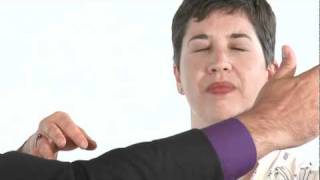
NLP practitioner David Key guides Graham through the Fast Phobia Cure to eliminate his spider phobia. Graham's fear drops from a 7 to near 1 on the distress scale after visualization work, unconscious negotiation, and anchoring techniques. The session ends with Graham calmly handling a real spider.
Chapters
So, okay, in a moment, what you're going to see in this demonstration is the NLP Fast phobia cure. What I've actually done on this fast phobia cure demonstration is actually taken the client's phobia and split it out into three sections. Before they had the phobia, during the phobia, and after the phobia. And I've taken the traditional VK dissociation model, which was one screen, and separated it into three elements. Now, how do I know or how will you know that you're working with a client who has a phobia? How will you know it's actually a phobia? Really simple. All I do is ask them to think about the fear and on a scale of 1 to 10, to calibrate it to SUD. So 10 is you're passing out phobia, and 1 is there's nothing there at all. Generally, 7 and above will mean that the client has a severe fear and has a phobia. And you can use this model on even mild fears, something that scores a 3 or 4 out of 10. You could still use the same process. On a scale of one to 10, 10 is it's passing out fear, and one is I didn't even notice and if I saw one, it's fine. Where are you on that scale?
Seven.
About seven. And typically, anything less than a seven is a real fear. But seven, eight, nines and tens. When I get clients going seven, eight, nine or 10, I'm pretty convinced that they got a phobia. Now, we filmed you just walking in here and you had a physiological change. Your heart rate went. I mean, describe for the camera what happened.
Well, I could feel my heart pounding, and it still is pounding because I'm thinking, I know it's up there. Where exactly is it?
Right.
Yes, I understand and just feel very uncomfortable.
Okay. And we want you to feel really comfortable now because, you know, it doesn't need to be that way. You see, I bet you could have done that even if there wasn't a spider in here. You could have just imagined one and that would have happened. That would have caused the problem to happen. How long have you had it, do you think?
For as long as I can remember.
Right.
I think since childhood.
Since childhood. Okay. And what would it mean to you when it's gone again?
I would like to feel calm.
You'd like to feel calm?
Calm and relaxed. If I saw a spider, it would be fantastic. If I could actually remove one from the house, that would be great.
So basically, you Know what you want. And you don't want to feel the way you've been feeling for the last. How many years would you say that would be without giving your age away? Is it more than 10 years?
Yes, definitely.
So what do you believe about the ability for this problem to be gone within the next 5 minutes, 10 minutes? What do you believe? Be honest to the camera. Do you believe it's possible?
I'm skeptical. I'm skeptical.
Okay. Which is a good thing, you see, because I think it's really important for practitioners who are learning how to do this to recognize that even if the client doesn't believe, you have to believe, and. Or I have to believe, and I just, you know, 100% that this will be gone. Yeah. Okay. Now I know how bad the problem is for you. I've got a feeling of it. You've explained. And does it happen every time you see a spider? Yes, every time. So we know it works. It doesn't happen when you see a garden pee on the floor? No, because some people are scared of bananas and oranges and peas and. But you. What about daddy Long legs?
Not so bad.
Not so bad. But they're similar. But you're okay, but not so bad. All right. And if you saw a banana on.
The floor, that'd be fine.
So you always know how. So do you see one and then you get the feeling instantly?
Yes.
Okay, good. So we know it works. So congratulations. Get ready to get rid of it for once and for all. But I need to. I need to ask your unconscious mind.
Okay.
You see, your unconscious mind is, you know, a bit like the iceberg. Top of the. Top of the water, you've got a little bit of ice showing through. That's your conscious mind, and it's your unconscious mind that effectively is like the control room of a ship, you know, where all the crew are. The captain's, the conscious, the unconscious, like the iceberg is below the. Below the surface, keeps your heart regulated, keeps you breathing, keeps you blinking, keeps you skin color the color it is right now when all the blood is coming to your capillaries. So here's the thing. Your unconscious mind. I want to ask your unconscious mind, would it be okay for your unconscious mind to get rid of the fear today and for you to be aware of it consciously?
Yes.
Yes. You nodded before you actually answered. Yeah, I want to get rid of this thing. Okay. And I just want to ask one more question. This is really important. You see, when I first started doing phobia cures, what I noticed sometimes Was that in the earlier version of description? Go back to the first time you ever got scared. And most people don't even remember. Do you remember?
I can. I think so.
You think so?
Yeah. I'm not 100% sure.
Okay, so it happened many years ago.
Yes.
And you're only born with two fears. Fear, loud noises, fear of falling. Every other fear that you have, you've learned and you learn it in that quickly. It's like less than two seconds. So here's the good news. It means you can unlearn it in that same sort of speed. But what I'm going to do is I'm going to teach you a little process. And when you go, it's a bit like floating into a seat of your favorite cinema. Okay, but I need to check this one thing. It's called a convince, a strategy. You see, when I first actually started working with clients, 90% of the time the phobia would gone. And occasionally it would have stayed there. And I didn't know why until I realized that sometimes people, even though they've got no physiological reaction to the external stimulus, like a lift or an elevator or a balloon, you know, people are scared of rubber balloons. And I worked with a lady many years ago, she had a fear of elevators, and I worked with her and she lived on the 15th floor. Bit of a problem when you've been doing your monthly shop at Tesco's or wherever. And I worked with her, and soon as we did the phobia, I went, took her into a lift because she wanted to, and she was so calm, she was so relaxed. We went up and we came down. She hadn't been in a lift or near one in 15 years. She had the same reaction to spiders as you are. Anyway, we got out the lift and I said, so how are you feeling about, you know. And she went, I'm not convinced that I'm cured. And yet she had no physical reaction. We call it an ab reaction. It's where you have an abnormal reaction to something that's perfectly harmless. Now, I had to check, and she had a convince, a strategy. She needed to go up and down in the lift a certain number of times before she'd convinced herself that she was cured. So I want to ask your unconscious mind, that little voice in your head, how many times would you need a sea or be near a spider, feel calm, feel relaxed before you're convinced that you're okay?
Now I'd like it to be one.
What's the unconscious saying? Is it one or is it More than one?
Probably at four, I think four.
You see, this is really important because if we only worked on once, we might still have some remnants in your mind. Or you might not be. You might know. I'm not convinced. So, four times. Excellent. Good. That's your convince. The strategy. Ready?
I think so.
Okay, this is ready. Take a deep breath into your mouth and out through your nose as you just really just feel yourself. That's it. Relaxing in the chair. Allow the sound of my voice to wash over you as you close your eyes. That's it. And it's just my voice in here. And the feeling of the sensation of the lights of the studio and the warmth against your skin as you're sitting in that chair, wondering. I want you to imagine now that you're floating into the front seat of your most favourite comfortable chair at your most favorite comfortable cinema. You have been to a cinema, right?
Yes.
Good. And when you've done that, I just want you to let me know that you can imagine sitting in that front row now, looking up at no screens at all, just curtains shut.
Yep.
Good. What colour are your curtains?
Red.
Red. Good. So now what I'd like you to do is I want you to imagine sitting in that comfortable chair, hearing what you're hearing, feeling what you're feeling. Listening to my voice will go with you as you just imagine opening those curtains now, revealing three screens. The big screen in the middle, nothing on it, just white. And as the curtains open even further, I want you to imagine a screen on the left, nothing on it, it's just white. And a screen on the right. And there's nothing on that, it's just white. And when you've done that, let me know.
Okay?
Good. So now what I want you to do, as you're sitting comfortably in that chair, feeling calm and relaxed, I'm just setting an anchor on your shoulder so that you can always feel this way. Calm, relaxed. Now, what I want you to do, you know the screen on the left hand side. I want you to create a black and white movie of you as a young baby, before you had any fear, possibly before you even had language. See yourself playing on the floor, carpet, maybe sucking your thumb, playing with your rattles and toys, just feeling calm and relaxed and safe. And do that now in black and white, sitting in the front row, looking up at that screen. And when you've done it, I want you to pause it and let me know you've paused it.
Okay?
Good. Now I want you to scan across to the screen on the right hand Side all the way to the right. And I want you to make a black and white movie of you, fear free, celebrating the fact that you finally overcome the challenge. Perhaps see yourself up there just feeling calm and relaxed and looking good in that picture, that movie. And when you've done that, I want you to pause it, making sure it's in black and white. And pause it and let me know when you've paused it.
Okay.
Good job. So now what I want you to do, I want you to imagine floating, drifting, drifting all the way out of your chair, drifting all the way back behind you, up into the projection booth of your favorite cinema, because there's nobody else in there apart from you. And I want you to go into that projection booth now. And I want you to just notice what you notice about all the equipment that's in there. And I want you to notice there's a big glass bulletproof window where they project from.
Yep.
Good. I want you to imagine the temperature of the glass against your hands as you just imagine leaning up on that window, looking down at yourself sitting in the front row, looking up at the screen. And it's a paused movie as you as a young baby on the left, you celebrating fear free on the right. And in the middle. There's nothing, is there? No, it's blank screen. It's white, isn't it?
Yeah.
And to your right hand side, it says on the DVD that you can see Tracy's old phobia of spiders. That's it. It's a black and white movie. You know, like the old Laurel and Hardy movies. Yeah. And I just want you to imagine taking the DVD out of its box and putting it into the DVD player now.
Okay.
Good job. And in a moment, when I click my fingers, I want you to look through that bulletproof glass window where you're safe looking down at yourself sitting in the front row, looking up at those three screens. And I want you to run a black and white movie of you as a young baby all the way through the worst fears in black and white, all the way to the end of the movie. And when you get to the end of the movie, I want you to press pause and I want you to thank your unconscious mind for protecting you all these years and to recognize that it's been doing the best it could with the resources that it had available at the time. Are you ready to run the movie?
Yes.
Making sure you're looking through that bulletproof glass. And do that. Yeah. Now, all the way to the end of the film. And when you get to the end. I want you to pause the movie. Okay, Good job. Well done. That's the most difficult bit. Over. You see. Now what I want you to do, okay, is I'm just gonna take your wrist. Is that okay?
Yeah.
Just take your wrist. And I'm not going to be asking you to put your arm down as you just hold your arm there right now, wondering about this and that. I just want you to imagine floating out of the projection booth, floating all the way into the end of the film where you're fear free. And do that now. And I want you to see everything through your own eyes. Seeing what you were seeing, hearing what you were hearing, and feel the feelings of being fear free. Now take a look around up there because you're at the end of the film where you're fear free. And in a second, I'm going to ask you to rewind the movie. You know, like you rewind a dvd, everybody goes backwards. But this time you're in the end of the film and you're looking through your own eyes, seeing what you're seeing, hearing what you're hearing and feeling the feelings of just being fear free. But in a moment, when I ask you to rewind, I'm going to ask you to run the movie from the end of the film, through the middle, all the way back to the beginning, beginning in colour, through your own eyes in less than two seconds. And only your unconscious now can do that. Ready?
Yep.
And follow my instructions. Rewind. White out the screen. Good job. Jump to the end of the movie where you're fear free, seeing everything through your own eyes, in color, hearing what you're hearing. And rewind. White out the screen. Jump to the end of the movie. Good job. Rewind. White out the screen. Jump to the end of movie. And rewind. White out the screen. Jump to the end of the movie. Now, I just want you to open your eyes and look how much in a trance you are when you look at your hand. Close your eyes. Good. You see, I want to ask you, when you float into the front row now looking up at the screen, what do you see in the middle screen?
Nothing.
Nothing. Good. See, this is what I want you to do. I want you, as you're sitting in that chair right now, I want you to create a colour movie of how you'd like it to be in the future, sitting in the front row. I just want you to create a movie. Now, it's your film, your brain. When you see a spider, I want you to create a movie of how you'd like to behave around spiders in the future. Now, seeing what you were seeing, hearing what you were hearing, feeling the feelings of feeling calm and relaxed. Are you happy with what you see? Just describe what you're doing in the movie.
I've seen a spider. It's not the end of the world.
What is it then?
It's fine.
It's fine. And what are you doing with it?
It's on the living room carpet. Okay, so I've got a glass and a piece of card. I'll put the glass over the spider.
Good.
Use the card to cover up the bottom.
Spiders have fears of human beings because they're so huge.
And I'm taking it out the front door.
Good, good. And then put it out. And that's it.
That's it.
And it'll thank you for that. Yeah, yeah. It might send you a present. You know, here's the funny thing. Here's the funny thing. As you're seeing yourself doing that now, this is what I want you to do. I just want you to just float up into the movie. Check it out. Are you happy?
Yes.
Yeah, sure.
Yeah.
Great. Excellent. Float back down into the front row, looking up at the screen, and in a second, I'm going to touch you on one of your fingers in the hand that you have that's just floating. And when I do, I want you to allow your arm to come down at a rate and speed that your unconscious mind can integrate the learnings. But more importantly, I want you to run the movie of you taking the glass, and I want you to run that movie a hundred times in the time that it takes your hand to come down at a rate of speed that's unconscious in no less than 30 seconds. It's got to be more than 30 seconds in order to run that and do that. Oh, by the way, you know, when your hand touches you on the lap, you can open your eyes and feel good for the rest of the day and then the rest of your life for no reason whatsoever. Do that now. That's right. That's right. Good job. Good job. How you doing?
Okay.
Okay. Great. That was simple, wasn't it?
Yeah.
An easy process, you know. See, at this point in time, typically you'd want to test. Now, I don't have any spiders or anything, but we know there was one in here. But. But when you think about that now, what happens? Try and get those old feelings back. Oh, come on. You've been doing it for how long? Come on.
Can't.
You can. There's no such Word. My mother always used to say, there's no such word as can't.
They're not there. I don't feel anxious.
I'm sorry about that.
That it's there.
Has it been in there for that long? Did I really have that fear? So when you think about a spider now, what happens on a scale of 1 to 10? 10 is like really bad. 1 is. It's not bad at all. Where are you on the spectrum? Oh, by the way, it's always good to be cautious around spiders that you don't understand that you might be in certain countries in Africa or things, you know. You know, because if you don't understand whether or not it is a venomous or not, it's probably wise to, like, be cautious. Yeah. And be intelligent. But in the uk, if you see a. I had a client, had a money spider. She nearly crashed her car with two children in the bank because she saw a money spider. Not useful, is it?
No.
But when you think about that little one that's up on the ceiling, how do you feel now?
I feel okay.
Do you want to have a look?
Yes.
Oh, it's worth it. Testing it because, you know.
Yes, please. Yeah?
Yes, please. I'd like to see the spider. Hold on a second. A minute ago, if you wanted to run out of the room, come, let's go have a look all on your own. Is it still there?
Is it still there?
It's quite big.
It is quite big.
Yeah.
And I haven't backed away.
So how do you feel about it? I mean, it's not just down or anything. It's okay. It's kind of bored, actually. Do you want to have another closer look? I mean, it's entirely up to you.
Well, no, I think this is close enough.
Okay. But if it was down there now, how would you feel about it now?
I don't know. If it was just.
Yeah, you don't know?
Not sure.
Have you got those old negative feelings?
I don't feel anxious.
Okay.
But I think until that situation happens, if you. That makes sense.
Yeah. You don't feel anxious at thinking about it?
No, none at all.
Isn't that interesting? What's the difference between. This is the thing in my unconscious mind, I go, what is the difference between thinking about it and actually happening? You know, there isn't any because your unconscious mind doesn't know the difference between the two. So I'm quite comfortable right now that you can stand here and not have any feelings. But, you know, what happens is we sort of intellectualize sometimes. Don't we? No feelings. No negative feelings. Are you sure about that?
Absolutely positive.
Because we can always do it again, you know.
No, no, it's fine. Because I know that before I wouldn't have walked underneath that ledge knowing it was there. You wouldn't get close to it until. Until somebody told me where it was because I would think that it was going to drop on my head.
Okay?
So the fact that I willingly came out without knowing, you know, if you.
Thought it was going to drop on your head, now what would you. Close your eyes. Just close your eyes. Close your eyes. That's it. So if you thought it was going to drop on your head, now I want you to see yourself sitting in the front row of that beautiful cinema. Okay? And I just want you, because you had yourself picking one up with a glass, didn't you?
Yes.
Float into the front row now.
Okay.
Looking up at that screen. And I want you to imagine an itsy bitsy, teeny little spider floating down on your hair. And you just notice the feeling. And just notice what? I want you to create a movie of how you'd like to behave. See, I tend to get them out of the way because they're a bit irritating.
Yeah, just brush it away.
Brush it away. And you see yourself brushing it away.
Yeah.
Okay. You happy with that?
Yeah.
Just float up into the movie and just go in there. Now just take a look around. One's just landed in your hair and you brushed it away. It's falling on the ground. Do you kill them or do you let them go?
Just let it go.
Just let it go. That's right. What do you believe now? That you can see yourself doing that?
That everything's fine. And it's not the end of the world.
It's not the end of the world. So what is it instead of the end of the world? Because our unconscious mind doesn't represent negation.
It's fine.
It's fine. Okay, in a second, I want you to run that movie as well. Ten times in the time it takes your hand to come down and touch your side. And do that now. Good job. And open your eyes. Have a look up there. How do you feel?
Okay.
Okay.
Okay. Feel okay.
Job done. Congratulations.
Thank you.
You're welcome. You done that? You weren't expecting that one, weren't you? You okay?
Yes, I am.
Do you want a drink?
Glass of wine and glassy face.
So, Graham, as you've just seen, there's a demonstration of what was originally called the VK dissociation process developed by Dr. Richard Bandler and it is now known as the NLP fast phobia cure. It's a slight variation on the original model. I find it a lot easier if you start the client off in their first movie as a young baby before. Before they ever had any fears. Because what might happen sometimes is that the client thinks they got the phobia when they're like 11 or 10 years old, and invariably they learnt that fear before they can even remember. So just to speed up the process, I start them when they're a young baby and then take them through the whole model.
More from David

How understanding the principles of thought can transform your life | David Key | TEDxInnsbruck