How Thoughts and Feelings Can Influence Your Connection And Rapport | David Key
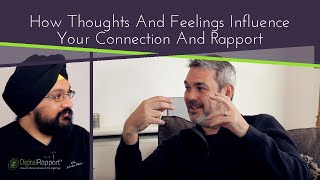
David Key explains that rapport comes from being present and authentic, not from matching techniques. Internal dialogue and insecurity disrupt connection, while quieting the mind allows genuine understanding to emerge. He covers why breathing and body language tricks often fail when applied consciously.
Chapters
What is mind?
What is consciousness? What is thought?
How does the brain create and understand these things? Does the brain transmit and receive random meaning based off our own preconceived notions? Or does it process the bombardment of data on the five senses into something truly meaningful? Newton's first law states that every object will remain at rest or in uniform motion in a straight line unless compelled to change its state by the action of an external force. Could this be true for thoughts, feelings and emotions too? The ancients say that when we get out of our own way and go with the feeling and flow, we bypass conditioning and become present to the moment. Maybe this is a balance of perceptions. They say in this state of equilibrium, judgments fall away, illusions are shattered, and all that is left is right now, a balanced perception and a cleaner connection with others. Join me on this journey as we talk to leading UK personal growth expert, life coach and three principles practitioner Dave David Key, as he shares how your thoughts and feelings can influence your connection and rapport with others.
Hi, I'm Jitenda Palahar and welcome to another digital RuPaul Master Series. And today I have David Key, who's one of UK's top personal development experts.
So.
So, Devki, welcome. Thank you very much for allowing us to come to your house and spend time with you to interview. If you would just like to let the viewers know a bit about yourself.
I moved into the world of personal development, coaching, hypnosis, neuro, linguistic programming and a new understanding in psychology which I've been teaching for a number of years now. So I've been in the industry. I left the IT industry and having worked in that industry for around 15 years and moved into personal development. When I decided that's it, I've had enough of the corporate world. And so you could say for nearly three decades I've been passionate and studying how I can teach people now to make a difference to other people's lives. So the, the problems that human beings have connecting with other people, perhaps in a relationship context, overcoming challenges like anxiety issues like post traumatic stress, conflict at work, leadership challenges. So it's an eclectic mix of human problems that I teach other coaches, other people, helpers, doctors, dentists, sports coaches, how to get the best out of other people.
Sure.
And that's my passion. That's what I do. We have around 40,000 students doing my programs around the world and I'm honored that you're here. When you phoned me up to say that I want to come and interview, I was like, what have I got to Share. So, hopefully, hopefully in this conversation you can find something in there that might be useful for the people watching this video.
No, no, absolutely. I mean, one of the reasons I wanted to meet up with you was because I saw all the work that you were doing and the kind of reach you've had and the successes you've had with, like, the Groupon side of things and your training generally. And because you've been in the industry for such a long time, I thought it would just be perfect to get your experience so that you could share it with the viewers around the whole kind of personal development field. I think one of the main questions that I have is about the topic of rapport. So, as a kind of general thing, what would you say is rapport?
Rapport's a feeling. If I was going to put it in one word or two words or even a sentence, it's a feeling. It's a feeling of connection that we have with another human being, whether it be with our children, and we're just in the loving feeling and getting on with them, and we're not thinking about ourselves or them. It's just we're having fun and playing, whether it be me and you hanging out together and having a conversation and just feel like we're mates, that we've known each other for a while now, we've met each other. But for me, rapport is just that connection where you feel comfortable with somebody else, whether that be feeling comfortable with somebody else face to face, or your mission is to help people get rapport on camera through the written word, through their website, their branding and so many other aspects too.
That's right, yeah.
So, you know, rapport is simple. If I was to ask everybody watching this video, or you or the cameraman, or any of my friends or people that I know that I bump into on a daily, daily basis, have you got any friends?
Yeah.
Have you got any friends? They'll say, yeah. So everybody has rapport in some way with the people that they care about most of the time. But there are days when we don't have rapport with the people that we care about, when we lose rapport with our children, our partner, when we lose rapport with a boss or our clients. So rapport for me, can be simplified down into when you're in a good feeling and the other person's in a good feeling and there's a connection. For me, that's what rapport is, and it's very invisible. But there are a lot of external, physiological, so body language, and there are A lot of tonal sounds that can give away whether or not you're in rapport. Those are the intricacies. If we were to break rapport down.
Yeah, yeah.
But for me, it's just a connection.
Just a connection.
Good feeling, right?
Right.
I mean, one of the things with rapport is that it could be used across different aspects of life. You know, it comes from my understanding of it comes in pretty much everything we do. When you meet someone for the first time, how do you think you can build up that rapport with someone? How can you start to initiate that connection with someone?
Sure.
Well, you know, for years and years and years, I've been teaching neuro linguistic program at nlp, coaching the variety of different models that are out there. And I've been teaching hypnosis all the way up to teaching and training trainers to help and train master hypnotists, therapists and practitioners of hypnosis. So looking at the history of hypnosis, I was saying to you earlier, if we were to look at the library here and see the books that I've got, if I were to pick my top 17 books going back two to 300 years on hypnosis, from the work of Anton Mesmer all the way up to Bondi, teachers like myself, you will see there's a theme running through every single one of those books, and it talks about en rapport, the French for en rapport. And they're saying that you couldn't get the best out of a client. You can't get the best out of a coaching situation in two people unless you're in rapport, unless you have that rapport. It's also a form of trance. It's a state like feeling where there's not a lot on your mind. So in the old days, I would teach people techniques, strategies for getting rapport with somebody that they're not in rapport with. So I think the first thing for people to perhaps consider is that rapport's something that we do and we do it unconsciously. It's certain behaviors. So when we're not in rapport, that's the time to use the skills. I don't feel I'm in rapport with someone, so I need to maybe pace their breathing, match their body language, pace their energy and their feeling. The problem with that is it gives a lot of thinking to people, a lot on their mind. It's almost like, oh, I've got to do this and I need to do that. So if I were to simplify that for people, for Me. Rapport is when you're not thinking about yourself, when all that insecurity is about, how am I doing? Am I in rapport with them? Am I getting on all right with you right now? If I'm stuck in my thinking and concerned about myself and my feelings and whether you like me or not, or whether they like me or not, that's extenuous thinking. That's extra thinking that you don't need.
Yeah.
So it seems to me when people aren't in rapport, they're really just in a. A feeling that is perhaps defined by maybe a little bit of insecurity. And that insecurity is coming from the person thinking. So I like to educate my clients now to sort of say, you know, if you can show up, you be you and not try to be somebody you're not and just talk from your own understanding about what you know, then you're authentic. And when you're in a state and a feeling of authenticity, then people will be drawn to you. Whereas if you're inauthentic, it's like, oh, I need to cross my arms now, because he crossed his arms. I need to scratch my eye. Because they scratch their eye. Oh, they just use the word tickle in that tone of voice. I must match that word back. It creates a lot of effort.
Distraction.
Distractions. It takes you out of a good feeling, and then you can lose rapport because of that. So it's almost like counterintuitive. Hold on a second, Dave. You teach us to pace the breathing and match the physiology. And I would say, now, that was built on sand. That model, that house of rapport was built on sand. Flaky foundations. So understanding your own psychology, when you understand where your experience is coming from, then when you're with someone for the first time and you feel like you're not in rapport, you got an uncomfortable feeling. It's just coming from you and not from the other person. And then you can let that thinking just pass on by. Because a lot of people haven't caught on to the fact innocently that thoughts that they have that causing the feelings of insecurity are transient. Transient being. They float in like bubbles. Thoughts of insecurity. Oh, my God, they don't like me. The boss. The boss is gonna have a go at me, and I need to have rapport with him, and I don't know what to do. If that was the internal dialogue someone was having.
Yeah, yeah.
If they don't understand that that feeling is coming from inside of them and has Nothing to do with the external circumstances. They're going to get a little bit freaked out by it and a little bit insecure, and then they're going to go, what do I need to do to get rapport? Drop that thinking. You drop that thinking about yourself, put your energy out and be present with the other person. You'll have a better connection. That's just the way it works.
Yep. Yeah.
Now, I was just going to say that when you were explaining that it looks like when somebody's in that situation, they're talking to someone, there's a lot of the internal dialogue that's going on and that's the noise within themselves. But if you've got the noise going on inside your head, you're not really seeing the other person kind of thing. Right. You're not, you know, making the effort to do that. So the point you bring about, present is key here because it means that you have to almost ground yourself in that moment in order to open the space, I suppose, to be able to connect with someone.
Absolutely. And it is about creating a space that two people can step into. And for me, rapport's like a dance. Okay. And it should feel good. And when you're dancing in harmony with your partner, whether it's the foxtrot or you just like freestyling in a nightclub, when you're getting on and you're dancing, it's a fluid movement. And it's not, oh, they've moved, I better move mine. And there's not. If they're thinking about it, you're going to tread on the other person's toes when you're dancing. So for me, rapport is a natural, fluid exchange of emotions, of feelings and words. And if you're not present, if you're in your head, I mean, the word present sort of pretty much explains it. We've got now, which is the present moment. So being present is what so many people are. They're already thinking in their head. What's the next question I'm going to ask that person? So there's a noise in their head. Well, how can you hear something that someone's saying that might be really powerful and relevant and beautiful and poignant in the moment? If you've got noise, it's like trying to listen to a beautiful song in the radio when it's not tuned in properly? So as human beings, if we are not tuned in, we're not present and we're in the past. Oh, God. This didn't work out last time I met this person. And in our insecure feelings, we're not present if we're in the future. Oh, God, if I get rapport with this person, I might get some contract or some deal or make some money out of it or get something from the relationship. We're in the future in our head. Well, there is no future and there is no past. We only have this present moment.
That's right. Yeah.
But we get lost in thought innocently. Human beings do it all the time. It's just the way it works now, when we quiet our mind and don't have a lot of noise in there, that's when wisdom comes in. That's when there's this opportunity to hear new thought, new ideas, as opposed to not hearing what someone's saying and already determine what you're going to respond to. To a question they asked two moments ago whilst they're giving you some more information, information that might be useful, that will break rapport. People feel it when you're not present. I mean, my wife is an excellent example of someone who isn't trained in this field but has exquisite rapport with the children, our children. And there's moments in our past, it doesn't happen now. But when I first got involved in this arena was that she would say stuff to me and she said, you're not listening to me.
Right.
You're not here, here, what I'm saying. And I needed to be present, so she wouldn't get a good feeling if I was saying, yeah, I'm listening, I'm listening. But I wasn't really listening. It was like I'd hear noise, okay. And she'd be asking me for some help or doing something because I wasn't present. Yeah, I didn't have rapport, even though I was probably in the same physiology as her, maybe matching a language, but that was very much intellectual in my head type of rapport, as opposed to just connecting with someone.
Right, right, right.
And that means that you've got to almost learn to dial out all that other thinking about what you've got to do tomorrow, or the emails that you didn't respond to or the phone call you didn't make, or, oh, it's this time of year, maybe tax returns are going to be, oh, I'm trying to have a conversation with you. And if I'm thinking about all that stuff, how on earth are we going to come connect? How on earth is anyone going to connect with anyone else if that's up there?
So one of the things you mentioned, there was this thing about listening, then because it's almost like you're saying it's a form of getting present and then listening to the other person. So that listening process, how important is that part of it to help in that rapport situation?
I think it's probably one of the most important aspects. I'll tell you why. Because there's two types of listening. There's listening with your intellect. There's listening with your everything that you know already, your little personal database of experiences in life.
Yeah.
And when we listen with our intellect, information comes in. Okay. And you hear something that you understand because you go in your database, you go, I know what he's saying. Yeah. It's like, for example, you mentioned what inspired you to do this was one of my first books on personal development by Napoleon Hill.
That's right. Yeah.
Think and Grow Rich. Now, to give you that example, to finish the analogy off, if I've read Think and Grow Rich and is in my personal intellectual database of experiences, you mentioned the word Napoleon Hill. I intellectually instantly go to my database. Oh, yes, I know that. And then I'm starting to think about what I already know.
Yeah.
And I'm missing. Yeah, I'm missing listening to something else that might be impactful, Relevant.
Yeah.
So there's listening with your intellect and trying to understand what someone's saying by comparing what they're saying with what you already know and getting lost in that. And then there's listening with nothing on your mind.
Yeah.
Nothing on your mind. If you can listen with nothing on your mind, then you're gonna connect more.
Yeah.
You're gonna connect at a deeper level. So. And it's listening for a feeling.
Okay.
Now, that's really difficult to describe, to give a commune, a technique. Daisy. Listening to the feeling or seeing something new come into your mind that might be useful in that conversation, in that interaction with that other people. So I can only liken it to a metaphor that I have. I used to think I was a good listener. I used to pay attention to every single word. I'd sit forward and be associated into the experience and nod my head when they said something. But that wasn't really listening. That was using my intellect. And I think to contribute in a way that's more impactful when you're coaching or you're interacting with other people. People, it's to listen for wisdom. Now, wisdom you can't see, and it doesn't come from your experiences. It comes in the form of a new thought, a new idea.
Right.
So giving an analogy, Albert Einstein came up with the theory of relativity. Yeah. It wasn't in his database because if it was, he would have already discovered the theory of relativity. It came as an idea, it came as a new thought, and it came through him in the form of a vision, which translated into E equals MC squared, which was theory of relativity. But it was a new thought, it was wisdom that touched him. He came in and it was like, now everybody's experienced that they've had an idea about something that they hadn't had before. That's wisdom. So how do you do that? Well, it's really difficult. But, for example, if we were having a conversation or any of the listeners were having a conversation and they felt they weren't in rapport, the best way to get back in a rapport is to quiet your mind and just listen out for something that's useful in terms of a response. How do you do that? Well, I'm going to give a metaphor and I hope it is helpful. For years and years and years, I used to be thinking of the next question before the person had even finished.
Like what I'm doing right now.
So I'd be thinking of that and I'd miss the point of what they were trying to communicate. So sort of that fell away when I saw that. Trying to find the question. When you. It is like going to butterfly world, running after butterflies with a net, trying to catch them. You're not going to catch them if they're all up there and you're trying to run around. And after an hour trying to catch butterflies, you could get really frustrated because you haven't got the right question. Yeah, let's say the butterfly is a thought. If you settle your mind would be a liken to going into butterfly world and going shh and waiting. And one will come and land on your shoulder. Eventually on your hand, they'll come to you. So wisdom comes to you. You can't chase after it. So you'll know what to ask me if that thinking just falls away. But a lot of the time we want to in an interaction, as human beings, innocently, we don't want to feel like we don't know how to respond. What happens if I ask a silly question and it's not the right one? So really what's behind that is just some other thinking. And sometimes we would say it might be a human thought that has insecurity attached to it, an uncomfortable feeling, a feeling of not knowing or concern or worry. But I can assure everybody watching this, if they can settle their mind down, they'll always know what to do. They'll always know what I was. Even if it is. I really have no idea what to ask you right now.
Yeah, yeah.
Oh, here's an idea. And that's when the butterfly would land on your shoulder. And that's wisdom. And that can't really be taught. That can only be learned from looking in that direction.
That makes sense. It's really interesting when you're talking about the concept of listening and how listening from the kind of intellect side, where we think we know what's kind of coming, as opposed to, you know, just being present and taking it on board using that kind of concept. Do you think that. Because obviously we Digital report. One of the things we're looking at is how you build that rapport online, you know, and what a lot of businesses and people do is that they have an idea or a product or a service. They put it out there thinking that they know what their target audience wants. So they're putting their kind of projected listening, if that, in a way, if that makes sense, onto the audience, but it's not necessarily what the audience needs. So in that kind of context, would you say that listening is also kind of another general approach to kind of knowing and understanding the person?
I think you get to know and understand the person when you're in their presence and you're just present.
Yeah.
And then in time, you'll get a sense of who they are. As I'm developing, hopefully, an understanding of this interaction, this conversation, as much as, hopefully, you're doing the same with me at some level. But, you know, when I first went online to share with the people who might not know, I wanted to appeal and reach out to more people. In the first seven or eight years of my business, I'd work with, say, a thousand individuals from around the uk, but predominantly in the area that my business is based. And then I decided that I wanted to take that online. So I found a route to market. And we're sitting here with 40,000 students, and we were about to get exposure to about 11 million other people through the variety of relationships we have with other businesses. And the reason I share that is because when I first started, I was asked to create a video, and all my experience on speaking on camera was not. There wasn't any. I was used to presenting on stage and having. Talking at events and stuff in front of live audiences, but never on camera. So I hired a guy that talked, taught me how to do it, and the reason being he was offering a free critique of anyone's video that they wanted to put online. This was about five, six, six years ago, right. And I never really believed or got the. An understanding that presenting on stage was different to camera, but it, it really is.
Yeah, yeah.
Also I thought at the time, right? So I had this guy, he worked for QVC and he taught Tony Robbins, Paul McKenna and many other successful TV presenters. And I wanted to learn and get the distinctions between rapport with a group in the live room and rapport with a camera, which is totally different.
Yeah.
And he said, can you send me a two minute video? So I got my iPhone and I put it on a tripod and I did a bit little two minute video and I send it off to him and I got a 45 minute review back from him saying that I'd lost 97% of my audience in the first three seconds of my videos. This is crazy, right? I don't want to do that. I want people to be engaged, to draw them out. So I really had to study my art with someone who had a thin slice of expertise in that field. So again, it was the insecurities that I had on camera that I had to deal with, not, you know, some of the technical skills. Do you look above the camera, look below the camera, how do you look at the camera? They were skills that I needed to learn, as everybody would need to know. But the fundamental psychology behind what was stopping me projecting onto camera was me.
Right.
And I needed to understand that. And I think everybody would benefit from understanding where they get their experience from. So whether it be speaking on camera and having rapport with a camera by getting over yourself. If I could give a bit of advice to people, and that's what was told, he said to me, he said, you really need to learn to get over yourself, Dave.
Right.
I said, what do you mean? He said, they're going to be people that really don't like you on camera.
Okay.
And you can't appeal to everybody's perceptions of reality, of their experience. Like, and he gave me a really good example. He talked about a lady in the uk, Jordan.
Okay.
I think it's her stage name, Katie Price.
Oh, right, okay.
Katie Price. Okay. And he asked me this question. He said, by the way, nothing against Katie Price here. He said, is she your cup of tea? Do you like her? Do you follow her on Twitter and do you follow her on Facebook and do you read her material and she writes articles in some of the red top newspapers? I said, not really. I've seen her on telly. It's not my cup of Tea.
Yeah.
And he went, right. He said, do you know how many people really don't like her work? I've got no idea. Millions, right? He said, do you know how many people like her work? I mean, what do you mean, like her? I said, I don't know. He said, she had millions of followers. Millions of people love her and millions of people don't. She's like Marmite, okay? I said, well, what's the relevance of the point? He said, well, if you try and please everybody in that eclectic mix of human beings on this planet, there are going to people, people that think you're like, mum, like, they'll love you, they hate you, but if you try and appeal to everybody. Yeah, you're really not gonna do so good.
Right?
So he said, get over yourself, because you're gonna have to start to realize that there are gonna be a group of people that don't like your work, they don't like your sound, what you wear, whether you got. I got a lazy eye, whether my voice is irritating to somebody, whether what I'm saying, saying they think it's a load of rubbish. There's going to be a group of those individuals.
Yeah.
Then there's going to be the group that really don't care. They're not interested in what we're talking about. And then there's going to be your raving fans. So really, I think, is when you get over yourself and when you realize that, oh, well, there's nothing I can do to get people to like me. And actually, if you can get to the point where it doesn't matter whether you have people liking you or not, whether you get to the point where you don't really care, not in a oh, I don't care ego sort of way, just like, oh, I don't care that people don't like me, because that's the way it works.
Yeah.
And if people were watching this video now, I'd ask them this question. How many of you watching this video have had a judgmental thought about somebody else? And the answer probably will be 100% of the people watching at some point in their lives have had a thought come in that had judgment attached to it. I don't like Katie Price, or I don't like Donald Trump, or I don't like Theresa May, or I love Theresa May or I love Donald Trump. And here's an example. In America, Donald Trump's. In fact, I don't know, by the time people are watching this, he might not be president, but let's just Assume he's still is when this goes out and he's just becoming president. Half of America were really depressed that he became president or he's becoming president and half of America really happy and celebrating. Well, it can't be Donald Trump that made half of America unhappy and half of them sad. How is that possible? That one individual, by speaking on camera in the newspapers with his own version of authenticity, how can he have decided which individuals were going to like him and didn't like him? They decided themselves. Here's the other thing. This is the illusion that we live in. They think the people that are happy think Donald made them happy because he won the presidency. And a lot of human beings who are upset with Donald Trump becoming Prime minister think that Donald Trump has made them feel bad. It's impossible. It doesn't work that way. It's not logical. What's really happening is the people who are feeling happy about Donald Trump becoming president of the United States of America have gone into the future in their mind. Imagine everything being beautiful and great with him as president, brought that feeling from the future back into their body in the present moment and went, this feels good. And Donald made me feel that way. No, he didn't. You made yourself feel that way with your thinking in the future and imagining possibilities of whatever they're thinking of. Now. The people who feel bummed out that he's going to be president, all they're doing is exactly the same that people like it, but they're doing it in a different way. They're going into the future and imagining it. Terrible. And a big wall around America and, you know, you name it, they're thinking unpleasant thoughts, bringing those feelings from this imaginary future because no one knows what how it's going to be and making themselves feel bad in the moment. So rapport is the same thing. If you get lost in a conversation with someone, you've lost rapport. It's probably because you've brought back a feeling from the future or the past and you're stirring up your emotions and you've lost that connection. That's all that's going on. If you can see that's true, you don't need a freak out anymore and worry about people judging because everyone one will. And here's the other good news. Nobody who, everybody who has these judgmental thoughts, that 7 billion people on the planet at some point in time, none of them ask for those judgmental thoughts to come in. So you don't have to worry about it. They're going to come in. It's whether you act on them or not.
That's right, yeah.
If you let them float by like a bubble out of a bubble machine, you'll be more present.
Yeah.
It's interesting, you say, because there's two things that coming out from there. One is to do with like, almost the kind of niche market, if you want to call it, or target. But in kind of parallel to that conversation is that whole thing about the feelings and the emotions that people are creating.
Right.
It almost seems that if you compare the two together, either targeting a particular niche or whether appealing to those feelings and emotions kind of thing, you can almost like pitch yourself in a way.
Right.
Because it would. Taking the example of Donald Trump, that's kind of what's happening there, isn't it? Because I would imagine that he was kind of targeting, you know, a kind of avatar or demographic or something to get the votes. Yeah, but the. Like you said, the feelings and the emotions created were not nothing to do with him really. It's to do with what the person's kind of visualized.
Yeah, he was the trigger. Yeah, he was a trigger. And he'll have a team of individuals behind him that will be advising him on the language for him that he needs to use and how he can stir up the insecurities in those individuals in order for them to vote for him. People are motivated by pain as well as they're motivated by carrots. And some are motivated with a stick, a bit of push and a bit of pull. All human beings can because of suggestion. I mean, Barack Obama was excellent at using hypnosis. Change we can. What on earth does that mean? All right, change we can. Who's we? What do you mean by change? And it's all around vague ambiguity. So they're using these politicians, these orators. I mean, I've written a review of the work of George Estabrooks, who was hired by the CIA to investigate the work of orators like Adolf Hitler.
Right.
Okay. All those years ago, to see if there was some technique or strategy they were using. They were using language that was vague, ambiguous, which induces hypnotic states. They're hypnotizing people. And we human beings are extremely suggestible. Now, that's where en rapport comes from. Because when you can get someone's mind quieten, you can make suggestions that can influence people. It's why we see stage shows people clucking like a chicken or drinking a pint of vinegar thinking it's a Coke or eating an onion thinking it's a beautiful peach. And Juicy. And they seem to think that it's real because what's happened is all they've done is they've moved their critical faculty, their logic and reasoning out the way and then slid in situation suggestions. Now, not everybody accepts suggestions, but if it's harmless, imagining eating an onion, imagining it's a peach on stage, if that person's way of living their lives go, oh, that would be all right. They'd probably play it out on stage. So we're always influencing each other. Yeah, with language, with our emotional state. We're all in one walking around in an ordered state of consciousness with our eyes open. It's a trance like state. It's called a daydream. I see it in Tesco's every day. You know, people get around to the butter and the bread counter and they're looking up and down for their butter and it's right in front of their face and they can't even see it.
Yeah.
They're in a trance. They forgot. So for me, if people can see that, number one, they've already got friends. Number two, yeah, you can. Wherever there's a problem, there's a human being and thinking and whatever the niche is, if your thin slice of expertise is working in a particular niche, just talk from your own understanding and that in of itself is authentic and will act as a way of connecting.
Yeah.
Which we would call rapport.
Yeah, yeah.
It's interesting because I'm kind of seeing parallels in the sense of that rapport. If you kind of know who you're targeting, who you're speaking to, understanding the person, you can like put suggestion in there and influence them to a certain degree. But you could do the opposite by not having the rapport or not falling like connecting with their values or something. Something you could push them away as well.
Well, look at the logic in that. Yeah, the logic in that is if you're trying to engage a client, a new client, and you're losing rapport, then you've influenced them in some way to not do business with you.
Right.
As much as maybe influencing someone to do business. Well, what is influence? For me, it's. It's such a big subject. I mean, the work of Cial Genie getting to. Yes. I used to teach sales and worked in that industry for. You know. One of my first mentors was a guy called Peter Cobb. Most people watching this would never have heard of Peter. He's retired a long time ago. He was the MD of Apple in the 80s.
Right.
And he was my mentor. He left Apple and Set up a software house.
Okay.
And I was one of the directors there, VP of sales. He was there the journey. And I used to learn a lot of things about influence from him and selling. But it's the psychology. It really is a psychology. And talking about what you understand. You talked about grounding earlier. For me, grounding is just another. When you're grounded, it's just another word for you're talking from what you know. And there's another problem for a lot of people that who try to be generalists.
Okay.
Yeah, they're a generalist when really niching would be useful for them because that's their thin slice of expertise. They understand the language, they understand the market, they understand, you know, their own understanding of what it is that their expertise in that market. So an accountant training to become a coach would be better off coaching accountants.
Yeah.
Purely because he can be that individual will be more authentic than someone who's trying to use the same language as the accountants because they read a book and went on their website and go, oh, yes, I understand what you mean. Balance sheets. Do you really? Because I don't. So I wouldn't try and talk from, from an area that I don't understand. And a lot of people do that innocently thinking that they need to do that to get rapport. It's almost like, oh, I need to say that I understand rugby.
Yeah.
Or football. I go, my friends, they talk about football. I don't talk about football because I guarantee I'll break rapport with all of them because they'd say, you know, you're talking out of your backside, Dave. You really don't know what you're talking about.
So you're being authentic is another key thing then in, in this whole kind.
Of report, I think it's a most important thing. Yeah, you can get rapport with techniques, but that's sort of like you'll get found out very quickly. And you don't need techniques for rapport, if you can see that. A, you got friends, so you must have the skills already.
Yeah.
B, if you understand your own psychology and where your experience comes from. And Virginia Satir. Okay, I'll mention her name. She was one of the greatest family therapists to have lived back in the 70s. She was modeled by the co creators of NLP. The three of them, Frank, Richard Bandler and John Grinder, Frank Pachulik. And the three of those individuals, they modeled her language patterns and her work. And one of them asked her a question, I'm not sure which one, but was Virginia Satir. When you know, when do you use your rapport skills? We've noticed you do certain things when you're in rapport. She says, oh, I probably only do those things because she didn't even know she was doing it. It was all unconscious. It was just unconscious competence. She was good at it. And her response was, oh, I only use sort of do those things when I have a feeling that I'm not getting on with someone.
Okay.
So actually, my advice would be, forget about rapport. Get in a good feeling. And whenever you take that good feeling to any relationship, it'll bring out a good feeling in the other person. And you don't have to think about how to do it because you already know how. The minute we get a layer of extra thinking and insecurity. Oh, I don't know how to get in rapport with the md. I've never met him before. What do I need to do? Be you. Be you show up, be authentic, and just talk to that person. Person as if they were a friend of yours down the pub or in the bar or in the coffee shop or wherever you meet your friends.
Yeah.
A collegial conversation with another person as opposed to a one up, one down. Because a lot of people put themselves down. Oh, you know, I see it sometimes with my students innocently. Oh, Dave, you're the master trainer. And I'm just a lowly layperson who's just starting out learning, coaching with the same as me, another human being, flesh, bones, blood. You have different experiences of life to me. And my thin slice of expertise is to point out that you can already have rapport. You already know your subject matter. You can talk from your grounding. The only reason we break rapport is invariably when the ego kicks in and the ego goes, I need to impress. Yeah, I better talk about this. Oops, I don't really understand this. Now I've lost rapport. Stay in your grounding. In other words, stay in that. That area of expertise that you know for you, and you'll never go wrong. Because people can smell a rat.
Yeah, yeah.
Because that's very important to the whole kind of topic of trust. Because if that trust is there and somebody trusts you, you. You know there's more.
Yeah.
That synergistic dance you were talking about, and the report just gets deeper and stronger.
Yeah.
Talk about deeper, stronger. I mean, one of the things you do in hypnosis is that deep rapport kind of stuff when you go down with the person and really connect on a deeper level.
Yeah.
Talk About.
A bit about that, yeah. I mean, it was quite funny if you were to learn rapport from body language courses. I mean, I trained with Alan Pease from Australia in the 1990s, in 1993. Oh, my word. That's nearly 25 years ago, isn't it? And he wrote Body Language. He also wrote a book called why Men Don't Listen and Women Can't Read Maps. That was the title of his book. And I met his wife, Barbara Pease, and they talked very much about crossing arms. That. Simon, someone's defensive. Well, I can tell you that's not true, not in my world. It's a generalization, right? Someone's sort of talking like this. They're hiding something. Someone sitting like this, they think they're more confident than you or they have one up on you. I mean, there were a lot of generalizations. They may or may not be true, but that's not my area of expertise. But for me, if everybody watching this crossed their arms and just continue to listen what they say, they're not being resistant. They might be cold. So a lot of that information is misinformation that people take on board. They apply it and then they go down a rabbit hole and. And then they go, it doesn't work. And they think there's something wrong with themselves. There's nothing wrong with anybody watching these videos if they're not connected with some. It's just that they're not in a good feeling. I'll give you an example where a universal experience that probably people can relate to. I mean, when I was a young man, many years ago, I'd like to think I'm still young now, but when I was in my teens, just left home at 17, 18, and I was single, so I used to go to nightclubs and go to parties and I always wanted to meet a girl. And when I got in a bad feeling and insecure. Oh, they might say no. If I ever took that insecure feeling up to the bar to meet somebody, a pretty girl that I saw and I went in there and I went over with that insecure feeling, then you know what would happen? They would run away. They would run a mile.
Okay?
So for me, the feeling is key. Get in a good feeling.
Yeah.
And you won't repel people because it's almost like if I use this as an example and your phone as an example, like that. You know, the magnets that draw each other. When we were at school.
Yeah, yeah.
Poles. Positive and negative and. And if you had the polarities in the right order. It would suck in the magnet and they would stick. And you'd think it was really cool. Now, as a kid, I used to turn the magnet around. Turn it around, and I'd go near the thing and it would push it away. Well, that's an invisible energy that you can't see. It's like a magnetic force and it's pushing the other magnet away. Well, I think if two human beings are in a good energy, it's like they suck together and they create that oneness of being in rapport. But if one person's not in a good feeling and the other one is, it can almost like repel them.
Yeah.
So how do you bring a good feeling into your work, into your. Into your marketing, is to understand that and see it play out.
Yeah.
And notice it and observe it. So, for example, you talk about. I was talking about hypnosis and on rapport. It's my cat. Hey. So we're talking about hypnosis and being in rapport. What some really cool things to observe for people who study with me is that when two people go into a trance, let's say I was inducing a trance and you were relaxing and sinking into the chair, and you're. You were there and we were doing some hypnosis. It's invariably body language matches and mirrors when the person's got their eyes closed. So the amount of times that we've been doing demonstrations and the person's been like, sleep. And I've crossed my legs, and the person while they're asleep has crossed their legs.
Oh, wow.
I mean, it's just like there's what I call an unconscious to unconscious rapport.
Right.
I can't prove it. This the edge of my understanding. Even though my thin slice of expertise is a master train of hypnosis, it seems that we connect at an unconscious level. And the way a universal experience that maybe people watching this have had is when they're in a deep conversation with a friend and that friend goes to say something and you go, I knew you were going to say that.
Yeah, yeah, yeah.
How do you know?
Yeah.
Where does that come from? There is something happening at our unconsciousness level. That's what I believe. Don't know if it's true, but I've got loads and loads of anecdotal stories of where that's played out.
Yeah.
Even all the way back to one of our forefathers in hypnosis, Milton Erickson. Milton Erickson was paralyzed when he was a kid and he was in a wheelchair. He Got over his poliomyelitis, and then he relapsed later on in life, and he was in a wheelchair, so he couldn't cross his legs and match mirror. And yet we learned so much from that guy in terms of rapport. He had a deep connection with all his clients, and that was because he didn't have a lot of thinking. He was in the trance most of the time. So he listened to wisdom. He was able to feel someone's insecurities and anxieties and was able to talk to them in a way that helped them start to see that it was all made up.
It was just thought, that's interesting.
I actually remember one of those examples when I was doing a hypnosis course with a colleague, and I remember we were all sitting down. I think somebody sneezed, and all of a sudden somebody coughed and sneezed and it just rippled through. Somebody twisting on the chair and it just rippled through. That's really interesting. And that kind of links up to. With maybe on some subconscious level kind of thing is how we're showing up in the world as well, or what we're doing, which we pick up on consciously and unconsciously in a way that has an effect on a group rapport.
Right.
I mean, you must have seen it enough time when you got one too many kind of situation.
Yeah, Well, I teach group rapport in our presentation training as part of our hypnosis trainers training. If you're going to become a hypnosis trainer, you'll be standing on stage. You need to have rapport with your audience. Otherwise you're not going to manifest any hypnotic phenomena. It's like, hands up, who wants to come on stage? Stage, it's going to be a pretty boring show. So in order to have people decide they want to come on stage, you've got to help them get rid of all those insecurities, those myths that they already have before they go, oh, yeah, I'll do that. Well, in order for people to put their hands up in a group, you want to have group rapport. Now, there are strategies for doing that, but again, being authentic is probably the easiest way. Yeah, but what we're looking for in a large audience, if there was, say, 500 or a thousand people in the room, I would be in peripheral vision, which helps me have less thinking. What I teach golfers, peripheral vision seems to quieten the internal dialogue.
Interesting. Yeah, yeah.
And when we're on stage, we call it a learning state.
Okay.
And what happens when you're in peripheral vision? It's a bit like driving your car down the motorway. And over time, someone. I don't know if you've had this experience of overtaking someone and you get a sense they're looking at you and then you look at them and then. And then they look at you and yet they're looking out the window and you go, oh, my God, I must be a Jedi knight. I made them look at me as I looked at them. All that's happened is they picked you up in their peripheral vision. They've noticed a little bit of movement.
Yeah.
And they looked because they. You moved, your head moved and they picked it up even at 70 miles an hour. That's why when we're driving, if we're in peripheral vision, we can't remember sometimes the last mile we've driven, we've been in a trance. Okay, that's true.
Yeah.
So how does that translate into group rapport? Well, when we're in peripheral vision on a stage, we can see movement. And you tend to find that people who are getting on with people, they tend to mirror and match their body language. Not doing it on purpose. If you went down to your local restaurant and you saw people getting on, someone pick up a drink and then three other people would do it simultaneously, that seems to be the human condition. We seem to mimic each other.
Yeah.
When we. When we feel comfortable, when we're getting on, you see it in the monkeys, in the monkey world. So it's how we learn. It's how children learn to walk. They mimic their parents and they mimic language. In fact, sometimes I say things that I shouldn't say in front of my children. Occasionally I slip out an expletive when I shouldn't do, and then they're copying me. Oops. So they're modeling.
Yeah.
So rapport is almost like people seem to like people that are like themselves. And in a group context, if there's movement, it's like a pebble in the pond. A thousand people. You might have 10 or 20 rapport leaders in that whole group. You can't match a mirror everyone's physiology. It would take you a thousand minutes to get rapport. And then by the time you got to the thousands person, you've broke rapport with the first one. So how would you get group rapport? So what I teach is to look for the ripple and then notice where it's emanating from. Like a pebble in a pond.
Yeah.
And you tend to find wherever the movement is rippling. So if you've got a cluster of 20 people over there all sort of scratching their head, like we just moved. Then at the same time, then that's a sign. Somewhere in that cluster there's a rapport leader. And if you use your observation skills really closely, you'll see that someone might go like that and then three people will follow the person who did it first.
Right.
So you get into rapport with that person and it's almost like you put pass the report of the cluster that they're with. That's the best that I can do to explain people that have to do the training and spend a lot of time. I mean, we spend a lot of time presenting in front of groups to get aware of that, to have a shift in consciousness, to have a shift in understanding so that when we're on stage it's like, oh, that's how group rapport works. So the likes of Tony Robbins, who I spend a lot of time training with, and the sort of early 90s, that's what he does, group rapport. People go to his events and most people have a good feeling.
Yeah.
And they go, he's an amazing guy because he has group rapport with you. And he just paces the people that are the rapport leaders.
It's like some sort of invisible energy, but it is synchronous kind of thing going on.
Absolutely. I mean, how do people match body language when they got their eyes closed?
Yeah.
I mean, that's bizarre.
Yeah.
But it's a phenomena, it's a hypnotic phenomenon. So that would be for me, the translation into group rapport.
Interesting.
I want to talk about group and then I just want to talk a bit about the kind of digital side of things as well, because I know you had quite a lot of successes in that field as well. I remember speaking to Marilyn, one of the interviews as well. We were talking about how she was saying that sometimes just seeing the text written on a page and seeing the person's picture kind of create this kind of rapport thing going on digitally. Right. What's your. From your experience when you've obviously having a product out there that you've sold on the Internet, where you don't really know who's in front of you.
Right.
So you don't know them, you've never seen them, but yet you've sold these products, you know, in some way there's some sort of digital report going on there in some way. So what's your kind of experience and thoughts around that?
When I started my journey three decades ago, I went on the NLP training because I wanted to connect more closely with those difficult clients. I wanted to be a better manager, improve my communication skills. I really was sort of self taught up until that point when it came to business. So I went on this course and then continued the journey. And here I am teaching. But part of that journey is I did a master plan practitioner training, which is the next level up from the what we call practitioner coach, Practitioner, practitioner of hypnosis. And I wanted to get to the next level. So I went on this course. And part of our training was an assignment. We had to do modeling.
Okay.
And we had to effectively model someone with a skill that we wanted to take on board. So we had three people that we modeled. One of them was my mother who came along to the training. She plays bridge for a living. She now teaches. She's in her late 70s, but she's most excellent at remembering cards. And on my master practice, there was a few of us guys and we played poker for fun on the weekends with our friends. And he said, wouldn't it be great if we could learn to count cards and then get. It was just like a little bit of imagination. Would be great if we could break the casinos in London by counting all the cards. And I went, well, my mother's really good at remembering cards. So she came down, we modeled her memory strategy. We also modeled a lady who was a screenwriter. And then. So it was just like fortuitous for me to have a DJ come along because I used to DJ when I was a teenager and early 20s in nightclubs. And I loved it. And we had David Hamilton. Come now. David Hamilton, for those who are watching, you might not remember him, but he was a DJ that was on Radio 1 in the UK and then Radio 2. He's a very successful businessman and we were modeling some of his business strategies. How did he decide which product to pick if he could only pick one? And how does he. What's that process for. For choosing and making business decisions that seems to have supported him over the years in terms of his business success? I wasn't interested in that. I was interested in his DJ because I had a problem. And my problem was this. If I stood on stage at a business conference on behalf of the company I worked for. This was before I became a teacher, set up my own business. All those years ago, I'd be physically ill. I was so nervous and scared of presenting to large groups that I'd actually have my head down the toilet. I won't go into any detail. You can imagine what it is. I mean, it's like, let's not go there. And I wanted to learn a strategy for not being nervous. So I asked David Hamilton. I said, david, can I ask you a question that's totally not related to business? It's to do with your time on the radio. He said, sure. Far away. He was a lovely guy. I said, how is it that you can speak to 2 million people or 10 million people on listening into Radio 1 every morning or Radio 2 every morning and not get nervous? Because I asked him, are you nervous? And he said, now they get nervous. How can you not do that? Two million people. And here's what he said and changed everything for me. He went, well, I don't imagine I'm talking to 2 million people. I said, what do you mean you are talking to 2 million people? Said, yeah, I know I'm talking to 2 million people between 8 and 9 o' clock on a Monday morning rush hour. But that's not what's in my head. That's not what's inside.
Yeah.
So I said, what's inside your head? He went, oh, it's really simple. When I'm talking to the camera, imagining I'm talking to a good friend, just a friend down the pub that I'm having a chat with. And when I tell a joke, I imagine my friend laughing. It's like, really? Is it that simple? So I took that strategy, which is just a concept, a thought, and I tried on that thought. So when I brought out my products online and via Groupon and sent them around the world, I realized that it's just one person watching a video at home on their own or on the train on their iPhone.
Yeah.
And there's nothing to be concerned about. So there's going to people. People watching it go, I don't like this. And there's people that do, but I'll never get to see them.
Yeah.
And when you get over that insecurity and worry about people liking your stuff, you'll be more authentic, you'll show up and you'll bring a different feeling to the table. Right, right, yeah, that would be my final, I think.
Yeah.
Because you probably got gathered already. I could probably talk for another 40 days.
No, we're cool. Nah, that's really cool. I mean, just a little bit more on the online side of stuff. And then do you know when you went about creating your products online, I mean, you had done all the stuff kind of teaching anyway, but then you thought, all right, I'm gonna go online with this. Did you do like Target research? Or put the sales pages as copy in a certain way or any structure to that or that's a really good question, go about doing that side of it.
Well, you know, I, for years was sitting on the fence watching the people that I perceive to be thought leaders in this field. Frank Kern, Ryan Deiss. Now Gary Vaynerchuk. I love his work. I'm actually doing his course now. I've got it with you, Gary Vaynerchuk. So my advice to people, people is consume the content of the experts that you look up to. The models following their footsteps, hang out with the experts online, watch what they do. I sat on the fence for five years before I got off the fence and decided to do what I do now. I brought it out online because I got the logic. I was looking at what these other people doing saying how are they doing so well? And my model was upside down, I was trading time for money. So I'll give an example. A one to one coaching with me right now might be in the thousands of pounds depending on the presenting problem for an hour or two in my time, but for 50 quid a month I could work with 500 people and make £300,000 for 12 hours work.
Yeah.
Now that's a totally different model. It's not like, how can you do that? Well, think of it. Logic. There are people out there that will pay for your high price premium product. But I never saw the logic of working with many because I thought, how can I add value? Well, we're doing that now. We're giving value to the people watching this so you can provide valuable information, education, content, group coaching to a larger audience. And there's only one of you. And I saw the logic.
Yeah.
So we hired a new MD and he came and he went, your first goal is to have on the trial 50 members paying 50 pound a month for your group coaching. People will pay 50 quid to hang out with me for an hour and a half.
Right.
As opposed to maybe £5,000 what some people pay. I was like, right, okay, but 50 people, that's 200 and, or whatever, two and a half thousand, it's like less than we would charge per day for the business. He said, yeah, but when you scale it over 12 months and you do 12 sessions, 12 group coaching sessions, 50 people as a trial is £30,000 worth of revenue. I mean seriously, I never did the math, I never really looked at the detail the next to answer. But to go full circle, to answer your question, have we done our research on that? Yeah, we asked A few people. But you know, how many people would be interested in this? And you know, 80% of people we asked put their hands on. But previously to that I went with a feeling.
Right.
I know there's a lot of things going on in the world. Say you must research your market well, ask questions of your customers. But I went with a feeling.
Right, Right.
As much as I did with my G part, you know, that I just go with the feeling. And I'm guided that way.
Right.
I just trust it. And some of them don't work out. But we're in a game of work. Right. Game of digital marketing. It's just a game. And if people can also back off and go, it's not real life. It's a game. And I can make up my own rules, but there's other people that have been here before me to save. Learning through the school of hard knocks. Learn from the people that have done.
It based on modeling.
Right.
Been there and done it.
Exactly. So it's good to research, find what the experts are doing, see what they're doing, try to model it. Just copy them in a way, right?
Well, yeah, modeling is copying. It's sort of like the model that we have. It works. It's been working for five years, but things change. So now we're doing a group membership program because actually it's in a more powerful model.
Yeah, yeah, yeah.
But that's for people to discover for themselves. But the only thing that stops people performing, whether it be getting into rapport or bringing out new products, is too much thinking and insecure feelings that are being generated via that gift that they have, is to use their thinking in any way they like. So they can imagine it all being terrible or they can just imagine it working out. Now, not being deluded. You still need skills, you still need content. And I think content needs to be outstanding. To demonstrate, differentiate yourself from the people who are recording in their bedroom.
Sure.
You know, good lights.
Yeah.
Understand, you know, editing. So I don't do editing. So I have to give it to someone like yourself. Or we've got other editors as well.
Yeah, okay.
Okay.
So just. Just to summarize on it, from what I'm getting from. From the whole kind of rapport side of stuff is like one. One of the first kind of things seems to be about present skating. The creating the space for something to open up, being present. Listening is a key element of it. So the. The listening then creates like a trust. And being authentic is another element of it. I suppose you could say modeling as well, because the whole kind of matching thing is modeling in a way as well, right?
Yeah, but I don't think you have to even think about it. That's just the symptom. That's the output.
That's good report.
Like if you're in good rapport, you'll naturally be mirroring and matching at an unconscious level. It's just, that's just what happens when people are in rapport, right?
Yep.
But if you try and frigate and it's not authentic.
Yeah.
Then actually it will break rapport. And you go, hold on, I'm doing all this matching and moving and I haven't got reports yet. And that's the output of good rapport. Like if you're in good rapport, you'll naturally be mirroring and matching at an unconscious level. It's just, that's just what happens when people are in rapport, right?
Yeah.
But if you try and frigate and it's not authentic, then actually it will break rapport. And you go, hold on, I'm doing all this matching and mirroring and I haven't got rapport. Yeah. Because you're in your head and you're thinking too much about it. Rapport is just a natural state. I think we all look at kids, they get on just like that.
Yeah.
Because they haven't got too much thinking. Oh. You know, my daughter wears glasses. She's six. She's just started getting thinking about her glasses.
Yeah. Yeah.
And starting to think, oh, what people think with me with glasses. There's only two kids in my class, Daddy.
Yeah.
But for the first five years of her life, she got on with everyone and didn't think twice about the glasses she wore. Does that make sense?
Yeah. Yeah.
So get out of your own way. Don't overthink it.
Yeah.
Be authentic. And the other thing is the research. You talk about trust.
Yeah.
And Professor Marie Abraham did some research and said that when we're communicating, the biggest portion of our communication are our vocal qualities that we have and our physiology. And the words account for only 7% of all of our communication. Well, if the words only account for 7% of all of our communication and 93% is non verbal, we need to get into a good feel feeling when we're with people. Because if we're not in a good feeling, it'll come out in our ticks and insecurities and shift in and face color will go red and blah blah, blah, blah. So it's a major part of our communication rapport is the non verbal stuff.
Yeah.
Like Bruce E Said, don't think, feel.
Absolutely. And he also said, if you've got too much thinking going on your mind, you need to empty your thinking in the. In the metaphor of if there's too much tea in your teacup, you have to empty your teacup.
Absolutely.
And I think, you know, if we finished on that metaphor, anyone who's thinking too much, they've got too much tea in their teacup, they need to empty their teacup and they'll be more authentic than they could possibly imagine.
Absolutely.
That's awesome. That's brilliant. So, David, if the viewers want to get in touch with you or find out more about you, just let them know.
Oh, yeah. Well, thank you. Yeah. So if you're watching this and you want to find out more about what it is we do and how we help people from an eclectic mix of trainings and courses, then go to DavidKey, as in DoorKey.com. so that's DavidKey.com blog. Sign up to our blog. There's some free training on there where I talk about the principles behind all transformation and change. And we have blogs on rapport and other things too, and lots of free giveaways. And we're starting our own V blogging in this chair next week, so we'll be providing lots of free content. They just got to put their name and email address in.
Awesome.
David, thank you very much. I really appreciate it. It was beautiful and hope you guys enjoyed that and see you again soon. Thank you very much.
More from David
How understanding the principles of thought can transform your life | David Key | TEDxInnsbruck