Justin Wharton Interview | Art, Melee, Vaporwave, and the creative process
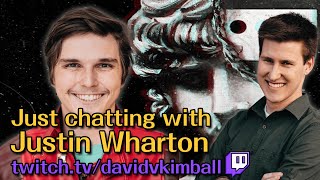
Digital illustrator Justin Wharton talks about discovering vaporwave, his workflow using texture rips from LSD Dream Emulator, and how the Melee community helped him quit his factory job after Genesis 2017. He discusses apparel design, why he left Redbubble for better margins, and his influences from David Lynch to The Caretaker.
Chapters
Hey Justin, how's it going, man?
Doing good. You have crazy, crazy energy. I, I can— I'm terrible at streaming when it comes to carrying super high energy, and you just— that was good.
Thanks. Would you believe me if I told you I didn't drink a single drop of coffee all day?
Oh no.
Well, it's true. I don't drink coffee.
A little quiet. I'm very quiet.
Hopefully that's better now. Is that better, guys?
Hey, Ashley, check, check, check, check, check.
Oh yep, fan of your headphones.
Um, I bought my headphones when I was, uh, trying to start streaming, and, um, I did it as a, uh, donation incentive. So now I conduct all business with cat ear headphones. My doctor loves it. He looks forward to it every month.
Very nice.
He talks to me over the camera.
Love that. Love the color changes too, as Frog points out. So first of all, a little background. Justin, maybe you can talk a bit about what you do. And for those of you that don't know, where your web destination is and where people can find you.
I'm a digital illustrator turned apparel designer. And, um, I've been painting for about 7 years? 7, 8 years? Not including, um, like, just, uh, doing it for fun. I've been probably doing it professionally for about, uh, 5 years. Um, I've been in the community for— the Smash Bros community for about, uh, 4 and a half, I think? 4 years? Um, it's hard to pinpoint exactly, but, um— Then, uh, you can find me on Twitter, Instagram, uh, and my website, but I barely keep it updated because I'm terrible at backend, uh, computer stuff, website stuff. So it's kind of an archive that I keep just in case anything ever happens to, uh, social medias.
That's a healthy outlook to have. And I will say you need credit for having the same username, Jess Wharton, on basically everything. Props to you for that. Very, very proud.
Yeah. It's actually funny. My dad made it when he signed me up for AOL Kids a very, very long time ago when that still existed. He just took out the I-N in my name, and it's just kind of stuck.
What? That's awesome. What a cool backstory. The inner marketing geek in me is kind of freaking out at that consistency and that just really solid branding.
It's hard. And I don't even know if I would take Justin Wharton if it was given to me. That's the crazy thing now. It's kind of integral. So I don't know. And I also make apparel for Panda. So that's kind of big too, I guess. I should also mention that.
Definitely. And so that begs the question, you mentioned about 7 years ago you started getting into painting. So what got you into artwork initially? What was that draw? What inspired you to do it?
I've been drawing ever since I was a kid, and I guess my parents never told me not to, so I just figured, hey, I could keep doing this. I did realism portraits for a very long time. I've always been a digital illustrator when it comes to actual professional work though. So I started treating it more seriously about halfway through high school when I realized this was actually something I'm really passionate about. And then around senior year, I came across Melee, and Melee was the first community that actually accepted me with open arms and the first one that I can actually grew into. I did a ton of paintings before that for all sorts of franchises, mostly Game of Thrones, big box office stuff, but nothing ever stuck.
Interesting, because there's so many passionate fandoms. You think with your kind of— with like your aesthetic and your style, you think something would have taken off if you did something.
Well, I didn't have that style then, actually.
Oh gosh, realism. You did realism, right?
I did realism, yeah. So, um, I did realism all the way up until, um, even into, uh, Smash Bros. And then, um, I got really burned out. And when I say really burnt out, I was like, um, I'm gonna quit burned out. Because I wasn't going nowhere and it was frustrating. And then I discovered vaporwave and it was a lot— really freeing and it was fun. Art was fun again for me. And so that's really what— how that progressed. And I just— vaporwave's a lot about using assets, or at least in that time it was. It was a lot about recontextualizing things that already existed, but I wanted to see if I could do that with assets that I make myself. So doing all the same style keys but still painting. And that's kind of what my approach was to it, and it was fun, and I was having fun again, which is very important. Cool.
When you say you make your own assets, do you have like a library of retro-y looking things you've generated and then do you insert them, or how does that work? How does that happen?
Depends. Um, not all assets. So, um, I paint, so I start from sketch and then go to, uh, black and white. And I mostly work in black and white for 80% of my paintings. But, um, from black and white, I actually do a process called, uh, gradient mapping, which I assign certain darks and lights, uh, certain colors. And then I paint then again over top of that. Um, I have a huge, uh, reference library that I paint from. Actually, what I do mostly is I do texture ripping, and that's actually helped me get a lot of my glitches and effects, is that like, my most secret— not secret, it's an open secret— a lot of my textures are from LSD Dream Emulator. About 4 years ago, I just tore all the JPEGs out of the game and I said, "Hey, I'm just gonna use all these," and They're actually really versatile. So—
Great. I have to tell you, for— I forget which Christmas. I want to say maybe 2018? My brother gifted me two of your pieces. There's a Melee one and there's a Sheik one. And they're in my living room right now on the wall.
I really appreciate that. Yeah, it's been a crazy ride the last four years. Through the Melee and Smash community in general. Like, I didn't even go to events until I went to Genesis, and I went because, um, 2017. Yeah, I have all of them behind me. So, um, so 2017, I went to Genesis, and I had like $12 in my bank account and a flight home. So if I failed, I was really about to land on my face. It went good. And so, I'm really happy to be able to do this for a living.
Yeah, that's a big deal. You mentioned that— you said that the Smash community was one of the few, if not the only community you felt like embraced you with open arms. Can you talk a bit about that? Maybe don't name a community that didn't do that for you, but you can explain like the contrast, like what made Smash different from the other ones.
It was where I got my foothold, and, um, there was a lot of really open people in the community. So when I started, I actually started in Melee Hell, and, um, Melee Hell is, um, interesting because it has a lot of negative connotation to it. Um, I grew up in really, um, I grew up on the internet. You have to understand, I grew up on internet forums, and they, they tore you apart. So whatever, um form I was posting on before, I'd get torn apart on. So I'm like, well, Melee Hell can't do much worse. And actually, to my surprise, they were the complete opposite. They were nothing but supportive of my work. You'd have people, one or two haters or whatnot, but the, the majority outcry was people loved it and they're really happy that they're getting creative and cool work and someone that understood the inside jokes. And, um, on a more broad— less broad, uh, space, you had people like Scar and Toph, and you had, um, people that genuinely supported and, uh, brought like really small creators onto big projects and helped them out. Um, Scar and Toph helped me get a lot of my start with their— with their show and doing stuff with them. Um, a lot of like my connections were through them. So, wow. Um, it was a lot of the community figures, and it being so grassroots that was, um, I was able to grow.
That's super cool. I— it's funny you bring up Melee Hell because that's actually one of the places where I met a lot of community people also. I think I kind of got into competitive Smash around 2012 or so but didn't really get fully integrated until a bit later. But I remember Melee Hell being this like wild west bizarre phenomenon where people just like— you basically get to the point where these people just really love Melee and they're just being bizarre about it and they're being strange and, and, and loud and outrageous. And, and you're right, it does have some negative connotations, but full of degenerates. Yeah, exactly.
At the end of the day, there was a lot of people talking about what they loved. And, um, nowadays there's a lot more, um, control about what you say and do, and it's good. Yeah, um, it really was a wild west in 2012. You're absolutely correct.
Yeah, yeah. And that was— I think it's really funny you bring that up because I, I completely understand what you're saying from that perspective. And so that's really awesome. So you went to Genesis in 2017, you kind of rolled the dice, and it ended up being a success.
Absolutely. Uh, um, uh, I don't know if she's ever active anymore, but Meowth, uh, really convinced me I got on a Discord group of Smash artists and she's like, you really need to come out. And at the time I was working at like a motor factory and I was doing that for like 2 years and hated, hated, hated that job completely. It was good for what it was, but I would come home at the end of the day tired and I couldn't do nothing. And so I, yeah, I went and it turned out great. So definitely was a roll of the dice. So really really blessed opportunity.
So, okay, then I want to go back to what you're saying a little bit about vaporwave and how you said it was freeing and stuff. I know there's like— I, I'm not— I don't know a ton about it, but I do know there's a lot of variants and there's a lot of different kinds of vaporwave, and there's, um, and people can be really snobby about it, and some people have a really classic definition. And so like, where— how did you like get into it? And then what would you say your approach within vaporwave is? Compared to like what you might find other people doing in the space?
Vaporwave is very, very interesting. And at this point, it's more of a blanket kind of term. It's more like saying avant-garde these days because it has so many different approaches. And it's to the point where it's so diversified that I don't even know if I can give you a TED Talk right now about vaporwave. Uh, uh, plunderphonics, uh, if we want to get into it, is the thought process of making music with, uh, repurposing things that already exist. So a classic example is, um, Echo Jams. And Echo Jams basically took, uh, music that existed and transformed it into different music, um, only using digital assets that tore rip, ripped, re-, um, sped up, rewound, and just really made something new out of something that already existed to the point where it wasn't even recognizable for the most part. And, um, that was really the, um, start. You can go back a really far way with something called the Disintegration Tapes, but that's like, uh, it's basically someone who recorded over something over and over again. It's It's experimental in its most true form. And vaporwave has grown so much more than that. You have outrun, which is heavy, heavy synth, heavy bass. I guess not so much bass, but it's more of an '80s outrun feel. Then you have classic vaporwave, which is again the plunderphonics and reusing, resampling '80s elevator music. Finding, like you found something lost. Um, you have mallsoft, which is, um, uh, kind of closer to vaporwave, um, in the true sense that it, um, it's a lot more, um, atmospheric. Uh, like one of my favorite ones is Mallcorp. Uh, it simulates walking through an empty mall. Um, and then you get like really, really crazy with uh, seapunk. And what I'm trying to say is it can go on forever. And in experimental, um, conceptual albums, and it can get really wild what is underneath vaporwave. So you kind of find your niches that you want to be within it. Um, as for the visual style, each one has a very distinct visual style. Um, that's not even getting into like meme wave or retrowave or, uh, synthwave.
Isn't synthwave like a derivative too?
Yeah, it is. It's, um, probably I'd more call it a cousin, uh, under, uh, it's, it's vaporwave adjacent. Uh, a lot of my paintings I call vaporwave, but they're really outrun or synthrun or whatever you want to call it, right? They're just retro. They're fun. They're bright. They burn your eyes. That, that's, that's the, uh, that's how I like it.
Cool. Yeah, and I've definitely noticed that the Vaporwave's kind of become a blanket term, but hey, it's marketable and you do a good job owning that.
You know? Um, the cool thing about Vaporwave is it's— it is experimental, it's fun, and, um, it's cool because you can find really neat artists that aren't big and, um, you can find really cool choices and visions. It has gone hard because of, um, copyright stuff has gotten stricter, um, and it is harder to define what can be used as a sample and what's new. Yeah, um, and it's really been tightening down. But on the reverse hand, a lot of them are getting into things that don't fall under the internet, and they're making, um, vinyls and they're making, um, cassettes. I've bought like 5 or 10 cassettes where I don't even know what's on the cassette off of a Facebook group. And, um, sometimes you get like slowed down, uh, Beyoncé and cut and chopped, and you know you would never be able to buy that online.
Wow, that's— that is creating this new black market of, of like modified content. That's really cool.
It's, uh, it's fun. At the end of the day, Vaporwave is supposed to be fun. You're not supposed to be a jerk. Someone likes some part of it, you know, that's, that's how it is. There's a huge argument about sampling in the past, and is Vaporwave true Vaporwave if you're You're not sampling. And I just think it's silly, uh, trying to cut and draw lines.
Yeah, that's why in every fandom there are people that feel like they need to gatekeep, and there are people that are annoyed at the gatekeepers. That's kind of how it is.
Yeah. And, um, I guess I'm the person that's annoyed because, uh, uh, vaporwave, uh, was— it should always be— not should always be fun, it should be interesting. And it should be accessible to no matter who you are.
That, that is some good background. And how you merge Smash— I'm not just Smash, I mean, you do— you don't just do Smash vaporwave artwork, you do a bunch of different kinds. What— is there a certain kind of— I don't know what to call it— media or, or, um, um like phenomenon that's easily more easily merged with vaporwave, or can you turn anything into it?
Uh, I'm sure you could turn anything into vaporwave. Um, I focus on video games. Um, at the end of the day, most of the stuff I do is video games. Even stuff that's not vaporwave that I paint, uh, I do like a Renaissance and a contemporary kind of line. It is, um, still video game adjacent. Um, it revolves around the nostalgia of video games and of, you know, the experience of playing games. And I think that's kind of what it sums up for me. I have some things that are outliers of that. Pop culture is a huge one. Like, you see a ton of vaporwave surrounding McDonald's or a ton of vaporwave surrounding malls and things that don't really exist in this time anymore. And it's this nostalgia and it's some vaporwave may not be the same ever again because the people that are nostalgic for those things aren't in the same headspace anymore. Right now you're probably going to be looking at more Y2K and people that are being nostalgic on old web browser-based things, Neopets, MapleStory, Club Penguin. That's Club Penguin, uh, that might be a little in a couple years, but yes, um, you're on the same, uh, um, pulse. And that's— it's kind of hitting that nostalgia, um, rush. I don't know what you want to call it, but that kind of area. And, um, that makes me happy. I think nostalgia is a really cool feeling, and I want to explore what makes people nostalgic. Definitely. And that's why I always ask people on Twitter and stuff like What is their favorite memory? What is a cool memory? Like, for me, a lot of vaporwave stems back to when my mom would take me when I was a kid to SeaWorld, and it was just the bright, like, advertisements. It always played smooth rock, and like, that's a very crisp, nostalgic memory for me that's turned into vaporwave, and how I view vaporwave. It's probably why I'm so nostalgic for it. But, um, I like hearing stories like that, and it makes me, uh, really interested in how the human brain works.
Something that was really fun for me is one time you tweeted out this piece of Tahu, the Toa of Fire from Bionicle Universe, in vaporwave, and I was like, my boy hit my nostalgia chords just right.
That's what I want to do. I want, I want to make people think of things they haven't thought about since they were like 8. That's, uh, that, that if, if I'm doing that, that makes me— well, within vaporwave and stuff, that makes me happy. That means I've, um, achieved what I was trying to do, and that, that is— that does make me happy.
Yeah, dude, that was, that was so cool. And, uh, oh, so, so here's on that, on that topic about going online, I'm gonna, gonna put you on blast here. You don't have to respond to this. But I don't know if you're aware, Facebook pages have a page transparency feature that shows every time you've ever changed the name of the page.
So, uh, Voice Studios, we can talk about that.
Cool.
Um, voice illustration. So, um, that was before I really established myself as Jess Wharton. Um, voice, um, if you don't know this, I always sign my paintings with a kanji, and that kanji is voice. So it was before all this. My gaming tag was my inside voice because it was just use your inside voice. It's just a little inside joke. So that's what I tried to market myself as. It never stuck. So when I signed up for Facebook a long time ago, that's what they, they did. They won't let me change to just Wharton. It has to be a studio because Facebook and I don't want to deal with it, so it's just Warren Studio now.
There's a way around. Talk to me afterwards, I might have a solution for you.
Oh, don't worry, I'm not too interested in, uh, in reviving my Facebook.
Okay, I just want to give you a hard time.
It could stay that way. Yeah, it's fine, it's funny.
I, I just wanted to tease you because one thing I've loved doing is because of that feature, I go on like certain pages and I see the, the name history and they have it all tracked And one thing, 'cause the reason they have that, by the way, is what people would do is they would make pages, like back when it was become a fan, not like, it was become a fan of whatever. They'd have some page like, become a fan of that feeling when you step on a crunchy leaf or something like that. And they'd get like—
Next thing you know, it's LEGO.
Yeah, they just change it, yeah. Which I think is a hilarious concept from a marketing perspective. You get everybody super in on, oh yeah, crunching leaves. And then you just like put a brand on it and try to sell merchandise, like fall merchandise. Like that's actually a really brilliant marketing move, even though it's been—
it's been around for a while.
Yeah, definitely. And then people, you know, they kind of don't know why it's in their feed and they don't remember liking the page, but they're not gonna—
they never— they never unlike because at some point, you know, you liked it for a reason.
Yeah, exactly. And they're like, well, this is kind of cool, I guess. And I just think that— and then of course they actually addressed it. So now on that platform, when you change the name, it alerts everybody that likes it and says, hey, this— the name of this page is changing. And I just, for some reason, that really cracks me up. So I wanted to give you a hard time about that because I saw that on your page too. So it's also fun to hear about your rebrand too, though, over, over the years.
Oh, it's, uh, that's what I try to start as, but it never stuck. So I just, uh, that just kind of— and the funny thing is, the only thing that's, uh, branded that is my Redbubble, which is about to no longer exist, uh, for a lot of multiple reasons, and, uh, Facebook. And I recently did Facebook and I'm just going to be taking down Redbubble here soon.
Really? Can you go into why that is? And Redbubble is a website with merchandise stuff, right?
Yes. Redbubble is a direct person to— so basically it's print on demand and it removes the hassle for the artist. And that's good when it comes to certain things. It doesn't offer enough protection for me anymore. In the past, they would protect my work if they— if I had a painting on Redbubble and another person tried to post it. They would have some measures in place. It's not that way really anymore. And two, I now have part— I'm now partnered with MuffinBros.com, which are buddies of mine now in Texas that handle all my stuff for me. And Teespring is a great viable thing for t-shirts. And now it just kind of made Redbubble obsolete for me personally. And the cuts are not the best if you're an artist that's looking for something to host your website on, I definitely recommend either doing it yourself— there's a lot of good sources that teach you how to run a website— and to use different, like Teespring, or there's a couple other ones.
Good to know. I think a lot of— any artist that has anything on Redbubble, I think, would benefit to know that information around the protection piece, because that's got to happen so often where people just re-upload your work or whatever and try to sell it and stuff.
It used to happen a lot more. It was kind of my, uh, point of knowing when I've made it. Um, it got to the point, uh, like 2 years ago when I would spend 3 hours a day taking— doing takedowns. And that was for about 6 months. Um, because filing everything— I still have not gotten to some people on Alibaba. Um, because you have to send in your Social Security card and your birth certificate to set up accounts in China. And I didn't want to do that. So there's like people just making my shirts over in China, and, uh, I just really can't do anything about it.
So that is rough.
That's, that's how it is. That's how it is.
I wanted to draw some attention to the chat. Porky Draws, by the way, thank you for the follow. And Please Exhale, thank you also for the follow.
It's gone, Pete. Yep. Yes, Janna.
Yeah, Porky-san just realized we're about to hit the Year anniversary of Melee Wave collab in a week or two. Cool.
Yeah, um, we are. And, um, if my brain isn't going to explode from all the crazy things I'm juggling with work, I would like to revisit that and do all 80 characters and do a big community event again. But it's reliant on, uh, one, me getting good at Discord again, and two, uh, me, uh finding time in the day to do those kinds of projects. I have a lot more project management skills now, so I think I could definitely do it, handle the project better than I did last time.
Good man. You need good project management skills. Everyone can benefit from it. We also have Majora XRD saying, let's go, Jess and Kirby.
Absolutely. I have Majora's art on my wall. I'm not going to move my camera because you guys don't need to see my room. But on, on my right hand, I literally have about Um, it's, it's a, it's a good, uh, like 5 feet, uh, all around of his art. So yeah, fantastic.
I'm sure, I'm sure Majora appreciates it.
Um, I, I hope Majora makes a book at some point because I would really enjoy picking that up.
Kirby says the 13th anniversary of Super Smash Bros. Brawl is today. Fun fact.
Yes, it is. And I was going to do something to celebrate it, but right now I'm working on a PlayStation painting for PlayStation, not for PlayStation, but of PlayStation. And I'm now— I'm revamping, doing a post of each one of my paintings a day again, but this time I'm doing it a little bit differently. Cool.
Well, look for— well, and that's— this is a good, a good caveat— not a caveat, a good sidebar to say if you use the /guess command, you can follow Justin right there. Oh, handy little Twitter link. He's also— you're also on Instagram, same username on everything. You don't have to think twice.
On everything, on everything, even Reddit, even, um, even Reddit.
So very nice. So if you feel like you missed the hype and you're not aware of his work, you can revisit all of it because he's going through all of it. And, and I am going through all of it for the next 80+ days.
And actually, by the end of those days, there'll probably be a new character to paint.
Yeah, I was, I was wondering, was that today or yesterday you said you posted your very first pieces, right?
Um, so not yesterday, but today. I'm, I'm just gonna go through chronological order of what I have behind me for new people that haven't seen it.
Cool.
Um, you can't even see it, sorry, but, um, I have, I have the, um Basically all AD— I have the roster on my wall. It's what I used to have when I sold at events, but since there's no events, I just stuck it on my wall. Um, but, uh, Twitter is terrible for keeping archives. Um, that's why I have my website. And also I'm a firm believer that, um, you should have a website, uh, because social media is not good for archiving things. Even though you have Instagram and stuff, I don't think you should ever have your content on a different page that you don't have full, full absolute control of. And even though I don't update it, I have my website at the end of the day, and I think that's important.
You own a domain name that you own, you own servers. I—
you are—
I'm not talking to the chats, I can't speak for them, but when it comes to me, you are preaching to the choir, my dude. I'm glad you said that.
Yeah. And so as long as I don't have federal agents knocking on my door, I can do whatever I want on my website.
Yeah. Awesome. I'm so— and if you are a creator that is creating artwork or anything, you should get a website. Just make like a simple portfolio site or whatever you have to do because owning your own thing is a big deal. And, and social sites can change. They can get bought out by other companies. They can get nuked. They can— you can be banned for whatever terms of service you didn't realize you were breaking. So just be careful.
And it is absolutely. And we talked about a little bit about copyright earlier, about vaporwave and stuff. And I think that kind of ties into everything as well. So I think it is important. I want to answer Porky's Jaws question about how good my first event went. My first event went well enough that I was able to quit my job. So I'm not going to give exact numbers, but I was able to quit my job and do this, uh, go to event to event, uh, as my job. So it went very good. I'm not going to give you this, um, uh, you know, gold rush story. Um, I, I don't know if my situation is the same for everyone else. Um, I know some artists that the story is definitely not the same. So, um, it could be that I was in the right zeitgeist of time that people are into vaporwave and people are into Melee and wanting both of them together. Because I've had to adapt over the years and adjust what I do. So I have no idea if the story will be the same for everyone who just wants to buy a ticket to the next major that happens and tries to get a booth. I have no idea. Yeah, and I can help. I can give resources, but at the end of the day, I don't have control.
Yeah, I want to ask too, because of the pandemic, obviously we haven't been having events. So, you know, have you been able to find other avenues? Has it been tough for you? Or—
um, Panda Global, um, has definitely helped me through a lot of it. Um, uh, if it wasn't for Panda, I would probably be working a 9-to-5 right now in, uh, something that is not art. Um, that is how reliant my income was to events and going and selling at artist alleys. Um, I can't thank Panda enough for, uh, and there's been a lot of learning on my part too, but, um, Panda has definitely helped me and, um, I'm very grateful that they have.
What is designing for apparel like and how is it different than the art you were doing before?
Um, so Uh, my paintings though, my process, I can get a painting done in about 4 to 8 hours. Um, if it's a Smash Direct, I can get it done even faster.
Um, that's a good motivator, isn't it?
Oh yeah. Uh, um, yeah, getting people to look at your stuff that normally would never see it is a big, uh, factor. Um, apparel is slow. Apparel, not in a bad way. Apparel is slow, monotonous, and a long-term project. And I think doing the Mellow Wave Reimagined really helped me get into that mindset of I'm working on stuff that you won't even see for 6 months, and I'm going back and forth with samples. Sometimes samples take 4 weeks. So I designed something, hand it off, and I won't even see that physical products until like 3 months. And then if it's not up to par, then the process starts over again. And so that's— it's a different mindset. And also I'm not designing per se for myself anymore because where in the past, like I did the Panda Global Geico jersey where they pretty much gave me complete control. Um, now that is more me reaching out to other artists' job. Um, now I let other people have that creative control, like with Panda vs., which is dropping, um, all week this week. Um, I might as well plug it, 10 AM EST.
Check it out.
Um, yeah, check it out. Uh, but now I'm being more, um, of the backend stuff, which is really motivating and really makes me happy. Um, I, uh, the stuff I make now more represents the brand, and that's really cool because, uh, Panda's a really neat brand. And, um, I don't think I would feel that way if it was a different company because Panda is very, I think, very different from a lot of esports.
Wow, that's great to know. What— when you say you hand off some of the creative stuff to other creators, what was that like the first time? Was it hard to to have somebody be more creative and then have you do more of the management, or was it kind of a relief? What was the balance there?
Absolutely not. Um, a lot of the people that I worked with for Versus are insanely good. Um, and stuff that I probably, um, it's, it's a complete different animal, a lot of the stuff that they create. And I work with, um, not all the stuff is me anyway. I work underneath a brilliant mind, uh, his name's Terry, who's been in the merchandise game for longer than I've been alive. And I'm working with, um, another great designer, uh, um, Bo. And, uh, we both, uh, delegate tasks. I'm more of the, um, financial end, uh, at this point, but I still have 100%, uh, not 100%, but I still give it my all when it comes to design work. I'm still designing things.
Great, so it sounds like a good team to me.
Yeah, it's a pretty, uh, pretty great team, uh, and I, I'm absolutely happy with it.
Awesome. One thing you mentioned, uh, is it takes you, you know, maybe up to 8 hours to work on a piece depending, and then a Smash Direct can make you do it faster. One thing I've really appreciated about what you've done is you are very, very good at 2 core things that most people are really bad at, in my opinion. The first thing you're really good at is you're really good at repurposing— like, it's funny, you just mentioned how a lot of vaporwave is repurposing content for something else, but you're very good at repurposing your own content in timely ways. So you'll find there'll be some anniversary of a game and you'll find a piece that you posted a while ago and then you'll retweet it or you'll repost on Instagram and you just find really creative and fun ways to celebrate your work. And I really appreciate it a lot. And it— and, you know, people are gonna— people are gonna care a little bit more about Bionicle on the 20th anniversary than they would the other time. Then someone's gonna see it. Like, that's really good mindset. You're very good at it.
Absolutely. And, um, you kind of have to be your own social media manager when you are an artist. It's very, um, lucky that I'm insane. And I've painted over like 400 illustrations in my catalog, some that I don't even know if people have seen because of NDAs or whatnot. And maybe those NDAs are gone now, or maybe they never went off or whatever. So I have this huge back catalog and social media is very interesting. Like, I guess a good example is like I spent 2 weeks on a Binding of Isaac painting, but because like it wasn't trending or something, it didn't do any numbers. Then I paint Kirby with a long sword and gave it— gave Kirby wings, and next thing you know, it's like one of my second most liked tweets. Twitter is— you shouldn't put your worth in numbers on Twitter.
Hmm.
It's good for showing and it's good for, um, for getting your work out there, but I don't think it's good to show worth. And I think that's really important to think about.
Uh, one thing that you retweeted recently which cracked me up on those same lines was, you know, fat Yoshi but painted only with the text brush that says tax fraud, and it's this, you know, insanely viral tweet or whatever. And then you said, these posts always remind me that my success will always be reliant on memes. And like, uh, you sp— I mean, you spend 2 weeks on something and it— you're like, oh, I mean, I put my blood, sweat, and tears in this, it's gonna do so well, and it like doesn't perform. And then something you like made out of a meme just went off. So you have no idea what's gonna work and what isn't.
Oh, well, you do. And when, like, uh, Porky could tell you, um, you get kind of your finger on the heartbeat of Twitter. You know what will blow up. Hmm. The thing is though, um, when I go for jobs and when I apply for jobs, they're not looking at those viral tweets. They're not looking at numbers like that. They look at the very masterful things that you've done in your portfolio. That maybe only got 50 likes. One of my biggest jobs that for like the ELC for League of Legends doing the players, they like they contacted me for something that I don't even think got 15 likes on Twitter. And that was one of my biggest commissions ever. So I think it's important to find balance and to make sure you definitely— like, Twitter is terrible. I, I fall into it all the time where you tie your worth into likes, into followers, into stuff. And it's easy for me to say because I have a lot of followers. And, you know, I'm not going to tell you— say, tell you to your face and lie to your face saying that followers aren't everything, because a lot of what we do now, it's tied to our monetary how we get money.
Mm-hmm.
But also, I don't like that because there's a lot of amazing artists and a lot of amazing things out there that aren't tied to Twitter. And it's something that's like a self-struggle that I have with almost every single day. And it's— and it's directly connected to being raised on the internet and being connected to social media and my work way more than I think it should be.
Mm-hmm.
And I think it's kind of a reality check that a lot of artists need sometimes, that a lot of these people that are blowing up and stuff, they're just— they're just gaming the system. It doesn't mean that maybe they're better or worse than you. They just know how Twitter works. Yeah, they just know that, you know, spamming a hashtag and/or saying something funny, totally ridiculous, they know it blows up.
Yeah.
And that's, and that's, that's how it is. So I think, I think it's important to kind of think and know about that kind of stuff.
Yeah, definitely. But I just have to say, that's, that, that all of one thing is what I appreciate that I think you're very good at, is just, you know, being— and I'm like, not everyone is, not everyone has that sixth sense like you mentioned where you can kind of put, you get, get a pulse on what will resonate with a community, whatever. I don't think— I think that's a skill. I don't think everybody has that to to be honest, because I think you have to be— you have to be really immersed in the community and you have to really like be really observant, and I don't think everyone's that observant.
I don't know. Um, I think, um, I'm a firm believer and there's, uh, no such thing as gifted talent. I think, um, and a lot of people argue with me at this point, and I know that people have different opinions. Um, I can't see things in my head. I've never been good at painting. I was never naturally gifted. I've had to work blood, sweat, and tears for everything that I have. And I know a lot of other artists too. And I think it's really disingenuous to say sometimes that, you know, they're naturally gifted or stuff. It's— I think, I think you can learn anything. And so I think it just takes time to understand the system. You know, you don't, you don't walk into Algebra 2 and you're like, oh yeah, I got this, I can clearly do this. But little do you know, you've never studied any time before that. It's— it just takes time and it will always take time. All these people that you see that are big on Twitter, that's because they were big on Instagram. And before they were big on Instagram, they were big on Tumblr. And before they were big on Tumblr, they were big on DeviantArt. That's— it's over so many years. They start understanding how these social media stuff works. It's just they learned the system.
Yeah.
And I don't— I don't know if Um, not to disagree with you, I just think that, um, that's the system and it just takes time. Yeah, it just takes time to learn. Everything takes time to learn.
Yeah, everything does take time to learn. Um, and hey, if we disagree, I have no problem disagreeing with you, Justin. These are all good conversations. Um, so that's the first thing that you're good at. The other thing that I've seen that you're really good at though is, is, you know, um, I guess they're very similar in a lot of ways, but you know what opportunities to jump on when it comes to something new. So you're You're good at repurposing content, which is important in marketing, but you're also good at— I can tell you're like prioritizing what should I be keeping my eyes open for, and then what can I do in response while it's a timely event? Because everything online, everything in general in life has a very short span where it's relevant and then it goes away and flutters away like a bird or whatever. And you're like, what can I do in this very in this very specific time that, you know, that's truly inspired and something that I'm proud of, but also is a chance for me to reach people. And that's the tough balance, and I think you do that very, very well.
Well, thank you. And, um, like, like I've said, that's, uh, but Undertale, he's got a point. Porky does have a point.
Yeah.
Um, there's some zeitgeists definitely that, um, happen, and I think that's a product of social media. That things like the half-life of an idea, how memes used to last way longer than they do now. Like, I think people are tired of certain memes like 30 minutes after they came out.
Yeah.
So it's— and this kind of ties into my thought process about certain things being unhealthy, being that it has become not an echo chamber, but more like a pressure chamber of things being pushed to a point where it's almost impractical for an artist to try to keep up with. And I'm now finding myself that I can't keep up. And that's a crazy thought process because like I said, if something happens, I can paint it within 6 hours. If I can't keep up, I don't know what artists are going to do. Yeah. And there's, there's a lot of really good artists that can and adapt, don't get me wrong. But it just kind of puts into perspective of how crazy it is, may be getting. And yeah, I'm always looking at the next opportunity when it comes to a lot of stuff. Recently there's been things that are happening within the art world that I don't particularly agree with. And it's very interesting because this is probably the first time I've ever had that in my life where I've been kind of against the grain when it comes to like NFTs or other things like that.
And I don't know what is NFT. I don't know what that is.
Not to get too into it. It's basically tokenizing your artwork into a Bitcoin of sorts where really like your artwork becomes a Bitcoin. The issue is that it uses a lot of energy energy and a lot of natural resources.
And, uh, hold on, like, that, that's a lot for me to wrap my mind around. You're saying you're creating artwork that's becoming currency?
Um, sort of. So basically what happens is the art becomes, uh, like a Bitcoin. So like a Bitcoin is a thought process of you own coin, it is a blockchain. So basically there's these websites that if I upload my JPEG or my video or whatever they become that and they become a blockchain. The issue that I have with it is I'm very— I'm an Eagle Scout. I love nature and I'm very nature forward. And when I started, I actually have everything set up to do it. I went through the process, I got everything, I got my socials, I got everything. Checked, I figured it out, and then I didn't pull the trigger because I started learning about how damaging some of the things that happening is. And now today's been terrible. I've seen at least 80 of my fellow artists lock their Twitter accounts because people are going underneath their art and tokenizing their art, uh, without their permission, and there's nothing they can do.
Oh, that sounds really serious.
But the thing is, it's making a lot of people that have never made good money on art a lot of money. And so it's very much of a dilemma. But when you talk about topical things and doing things that are new and always jumping on an opportunity, I'm very blessed to not have to take those risks. I could have very easily gotten wrapped up in all of that, and I chose not to because I'm stable both in my personal work life and through Panda. And not everyone's that blessed. And I think that's something I'm seeing a lot of hate towards a lot of really small artists that have jumped on this bandwagon. They're just trying to get their piece of the cake, very sadly to say. And maybe they didn't do the best research, but maybe they don't have that choice.
Yeah, that's a— that's profound. Um, it is crazy how everything is, is hyper-competitive, and, and yeah, we have these moral quandaries, and how do you, how do you work through all these things? That is a new thing though. And what is— what's the abbreviation you use to describe it again?
Um, NFT. Definitely do a— um, you can do— there's a couple good places that can give you a really good breakdown of what it is.
Okay, thank you.
I will definitely— I have the word, uh, muted on my timeline. So, um, I, uh, I don't know, it's a complicated issue. Um, a lot of people— I love seeing my fellow artists get money, but at the same time, it's not something that I can, um, wholeheartedly get behind.
So, no, I will— I'll be doing research on that because I want to learn more about it.
Um, definitely do.
You, you mentioned 400-some pieces that you've Done. What of everything that you've worked on that's not protected by NDA, that you can actually talk about of course, would you say you're the most proud of? If you can think of one, maybe two, three.
The one that's behind me, I don't, um, I don't know if you can see it particularly, um, the Melee Monk I'm very proud of. Um, it's, uh, it's a classical painting. And then the one that's actually my profile picture on Twitter right now is my favorite. Mm. There's a lot of meaning behind that one. There's a lot of emotions that I'd rather not get into, not because they're bad, but just because they're a little personal. Mm-hmm. That mean a lot to me. And I think those are my favorite. If we want to just talk about really cool art, I think my Samus painting still holds up to this day and it's been like 5 or 4 years. Mm.
Whoa. Uh, for anybody watching on YouTube, links to those pieces will be in the description. For anyone watching on Twitch, sorry, you'll have to wait.
Um, also on that note, I'm really proud of my 5-piece, uh, 5-year-long book that I created, which, um, I'm actually going to be on a call with Muffin Bros here shortly. Um, my book is very expensive at the moment because of, um the process of making it, but we're going to try to get it down to— and this may not work, I'm saying it now because I've yet to approach them— it's going to be bumped down to a very affordable price, and we would like to get that in the hands of a lot more people.
So you're working with Muffin Bros on that?
Yeah, Muffin Bros has always been my supplier when it comes to my prints, and my, uh, controller, uh, things. Um, they were recently hit really bad by the Texas storms, so they're just getting back on their feet, and this is kind of something that I would like to do to be able to get some more revenue their way.
Awesome. Shout out to Muffin Bros.
Absolutely. Shout out to Muffin Bros.
Cool. Well, that's good to know. It's, uh, it's fun to hear what, what the artist's favorite works are and why, and usually it's some kind of deep personal connection, so it's fun to hear about that. Um, speaking of creators though, for— I know there's other artists in chat. I know there are creators out there that you said, hey, it's great when they make money. How does that happen? How— what advice do you have for creators and artists that want to make a living doing this stuff and want to get— maybe not even that, but just get more into doing what they love?
Um, my answer has changed over the years, and I'm, um You asking that has actually really hit home because in the past I would tell people to paint someone with a large following and have the hope that they retweet it and do that over and over and over again until it stuck and you grew a following. The digital landscape's kind of changed. I— because of how the algorithm has changed through Twitter and Instagram, I don't know if that really works anymore. Um, and also there's no shame in having a day job, um, and also doing your creative work on the side too. Uh, I think there's a really bad stigmatization about having a day job and doing creative work. Um, a couple of my buddies didn't even start being full-time until they were 35, um, and doing personal art and work and being able to do that. Um, basically what I would like to say when it comes to doing things, uh, and trying to move forward, I would say yes, um, find a community. Uh, communities always help, and find a close, tight-knit community too. On top of that, painting people that you may know that will retweet it is always helpful. Asking favors sometimes is good too. Um, on the side of that, uh, consistency. Uh, there's always been one thing with my work that, um, has been important ever since I moved. I would post a painting every other day, and, um, that was with school and college and work. Um, I— at the same time, I was kind of miserable. So I don't, I don't know if it's advice that I want to give, but being consistent when it comes to social media is very important. And that is one of the keys to growing at this moment of March 9th, 2021. The information I am giving could be useless in 3 months. Fundamentals. Study your fundamentals. And when you think you've studied your fundamentals to the point where you have it down, study them— study them more. So that's, uh, that's a good one too. Um, if you put in the hard work and you make the right connections and you shake the right hands, and caveat, if you put yourself out there you will meet the people to shake the right hands and make those right connections. A lot of it's putting yourself out there.
Fantastic. That is great advice. I think I completely agree when it comes to having a day job and then doing it on the side. I don't think that should be the exception. That should be the default, I would say, for most people.
I agree, and I'm very surprised it's not.
Yeah, is it really not?
I think a lot of artists, um, understand that a lot of artists that are looking up to other, um, artists that have made it haven't seen this growth or process, and they think that this is the standard. Um, I worked, I worked really hard labor, um, for 2 and a half years, um, and I worked at an auto auto factory. And, um, that, uh, I don't want to call it due diligence or due time or whatever you want to call it. That's because I had to. And, um, that's just the situation it is. And there's people that aren't in the same situation. I'm living at home.
Let's go—
let's just say I'm living at home and I pay rent, but also it's less rent than I would be paying anywhere else. There shouldn't be a stigmatization about all of this just because of— that's how the financial situation is. I'm planning on moving out within the year, but also I— my situation is so much different from someone who was forced to move out of— out of their home when they turned 18 or whatever and have to keep a day job before they can do something creative. And not everyone's blessed and has the same situation as me. Right. So I absolutely agree with you right now that It should— that should be the default, default, that you have a 9-to-5 plus, uh, your, your creative side. Yeah.
And I mean, you know, you can't assume you blow up. Like, there, there's so much competition, there's so much stuff. What you should do is assume you're saving money, and if you really want to go full-time— oh, in marketing there's a term, A/B testing. Do constant testing, put yourself out there, like what you said, you know, put yourself out there, that's a really important thing. Do that while you're at your main job and know you can't have the same output and know you can't have the same time dedicated to doing what you really love. That's just gonna have to be something you work through, but hopefully you're saving up money and then maybe the time where you pull the trigger, you'll have money saved up and you can actually finance what you really love to do at that point. It might be, like you said, 35 or later in your life.
You know, really, and like I said earlier, I almost had to go back to a 9-to-5. That's how things are sometimes. And it's very social, social media. And, you know, when people talk about their experiences, they always put rose-colored glasses on. And I guess what I've always— and there's some people in this chat that used to, when I used to stream, would be part of these rants and whatnot when I would talk about this kind of stuff. But I think it's very unhealthy. And I would, if there's one thing I would like to do on the internet, is I would like to kind of break that connotation that you have to live life a certain way to be successful. Hmm.
That's good advice. Okay, so when it comes to the work that you're making now and the work that you've made, what inspires you to create it, would you say? I know there's probably a lot of disparate things, but if you could think of some examples of things that inspire you.
This man right here. His name's David Lynch. He inspires me a lot. There's a lot of other people back behind me, Miyazaki and whatnot. Um, I think, uh, making something that makes people feel something is really important to me. And so we talked about nostalgia earlier, and that's what drives me. So, um, there's a lot of things that inspire me in making— making a cool piece is one thing. Making a piece that really speaks to someone and makes them think of a memory and makes them contemplate a little bit more or, or stop and think in a good way is what really keeps me going, I guess.
And sorry, can you say the name? David— Dave who?
David Lynch. David Lynch. He wrote Twin Peaks, Elephant Man, Infamous Doom, Eraserhead most of all.
Gotcha.
And he never— he never tells about his work.
Okay.
And that's— and that's really cool too.
What about him— what about David Lynch inspires you so much?
Um, he's— he's unabashedly him. Uh, he— he— all of his work is so personal to him and it has so much meaning, but he will never talk about it. He will never tell you what something means because he wants you to find meaning in it. Just because he made something and it's really emotional to him and you pull apart a different meaning out of it, that is still as powerful to him as— it's more powerful than if he told you what it really meant.
Hmm.
Because to him, art is, uh, creating a narrative in your head. There's— I have a ton of other influences. Um, Norman Rockwell is a huge influence. He is a modern master. There's a man named Zetterstrand. He did all the Minecraft paintings. He was proto-vaporwave before vaporwave was even visually— before vaporwave was even a thing. But all those kind of tie in together of creating crazy out-there things that make you at least stop and think, huh, interesting. Cool.
Would you say that— and this is a broad brush sentence, but would you say if somebody wrote something that's very per— not wrote, if they created a piece that's very emotionally tied to them and very personal, does it diminish the piece to give away the secret and explain it? Or is that— can that work in some context?
It depends on the artist. I, the— I I think it's cool to have people pull apart something that I make or that I've done and pull a different meaning out of it. For some other artists, it's not the same feeling, and they'd rather get a different point across. They'd rather make you feel sadness, happiness. They'd rather take you along this journey of a narrative. I'm not trying to do that. I'm trying to make you maybe think about a warm summer day where you ate ice cream with your father, or I'm trying to make you, uh, have a very nostalgic memory about when you're a kid of going to Toys 'R' Us and buying your first Bionicle. Um, or maybe I'm trying to think— make you think about Exuscalibur existential dread and how there's nothing beyond this veil of life. It just depends. But the thing is, my artwork has two sides. It's a double-edged sword. It could be one and the other, and I can have multiple meanings if I don't tell you because I want you to come to your conclusion about it. Some people want to tell a different story and they want to be very to the point about their story. That's fine. It doesn't diminish their art at all.
Gotcha. Yeah, so I think it has to do with like creator's intent when you think about author's intent or whatever. And some people are very particular about getting that point across about what they intended it to be, and some people are less— are less— they care less.
Absolutely. And, um, it takes— it takes nothing away from it at all. Um, it— you just asked me about my personal, uh, um motivations, and that's kind of one of them. And, um, in the past it's not been so as much, but, uh, as of lately it's been a really driving factor for me.
Cool, that, that's so fun to learn about because you, you've listed a bunch of people that, you know, they have like, they have a, they have their own catalog and they have their own stuff too. So it'd be fun to delve into that one day. Um, absolutely.
Um, also on that point, uh, there's, uh Um, The Caretaker, uh, Ivan Seal, uh, if you would like to look up that, that artist has been driving me forward for a long time.
The Caretaker, Ivan Seal, you said?
Ivan Seal, I-V-A-N-S-E-A-L. He's the artist. It's a dual part, one does the music and one does the art. So, um, it's, uh, really avant-garde and not for everyone, and I actually advise you to look into it before you listen. But it is very creative.
Very nice. So this is a really weird tangent, but maybe it's not so weird. When you're talking about like, uh, creator's intent, I think, I think one of the most fascinating case studies for this disparity between creator's intent and then, you know, fans of the medium is Super Smash Bros. Melee. Honestly, because that's the best example of something that was intended to be very— something very specific, to the point where the creator, you know, gave it its label. He on the record saying this is a party game, and then the community very much has turned it into a competitive game. And what's so funny about Melee is it's a great party game. It's not like Sakurai failed and he made a terrible party game. It's like, no, it's a great party game, but it's also this really good competitive game. And, you know, and in a lot of ways the community— because I mean, Nintendo's not doing anything with Melee in some senses, um, but, you know, and the community has like this own idea what it is, and, and neither is a wrong approach. Um, so, but it just, it's funny because, you know, Sakurai had a very specific intent for the game, and the community has an intent, and sometimes there's crossover and sometimes there's not. And that's just the beauty of it. That's why I like Melee so much. It's so It's— there's so much depth to it.
Um, on that point, you're right, there's, uh, there's a quite a difference. Um, once the world's weird, once you put something out, it's really hard to control. It's like starting, uh, little embers, and when it catches fire, you can't control the raging inferno. Um, and that's something that I don't think any mortal man can do.
Mm-hmm.
Um, does he— should he have say in what he would like you to perceive his work as? Yes. But at the end of the day, at the same time, it's been so grassroots and whatnot that, um, people are acting outside of that kind of control. That's like I've made music and I don't want people to party to my music, but it's an absolute bop and people want to play it at a party, I can't— the second I put it out into the universe, I can't stop them from playing it at a party. Yeah, if that kind of makes sense.
It does make complete sense.
Can he be upset? Absolutely. It's his creation. Um, is that going to stop me from wave shining you across the room? Absolutely not. So, um, I guess my open question is, or the open, uh, statement is, um, if it's not his intent, he can be, uh, upset about it. But at the same time, once you put work into the world, it's hard to take back.
It is hard to take back. And do you even want to take it back? You know, it's, it's made it— in this competitive state has made so many people happy and have given people careers and have just exploded people's livelihoods in a good way. So it's just really interesting to see where things go.
It is interesting, and you can say the same thing about like Toby Fox or any of these other, um, whoever made, uh, Five Nights at Freddy's or something of such. I am not in the state, maybe in ever in my life, to be— to have to think about that thought process. And the— in the past I used to think, well, I used to piece together work, so what if someone took all my, my paintings, cropped them up cut them up, skewed them, and then made something new out of them. Do I have a right to be angry? Because technically they just made a collage of what I've made and they basically vaporized it.
Hmm.
It's, it's a thought experiment that I don't know if I have an answer to. Yeah, I don't know how I would feel. And that's something to think about. And I will really strongly say I don't know if I could ever put myself in Sakurai's or Toby Fox's shoes when it comes to that kind of stuff. Yeah, because I haven't experienced it. I won't know till I get there.
Yeah, yeah, fair, fair.
Um, also, I don't make music. Um, uh, I used to think that I was, um, uh, tone deaf. So, uh, to answer your question in chat, Uh, I don't make music, so only visual.
So, so Kirbyist is first off shouting out all the stuff that you're into, including Caretaker. Um, and he's wondering about what your thoughts are on liminal spaces.
Yeah, liminal spaces are rad. Um, I, I follow a lot of liminal space bots, uh, or, uh, channels or whatnot. Liminal spaces are really cool and, um, really neat to explore, um, creativity— creatively. So, um, I think they're really neat.
I keep bringing this freaking conversation back to Bionicle for some reason, but I'm gonna do it again. Um, something that I've been doing lately is re— I don't know how recently, but at some point artwork CDs, like ISOs, of really early Bionicle artwork have been leaked.
Seen those, and I've seen you do them, and I've always been meaning to ask you, how are you tearing those apart? Is that all on the ISO?
So, good question. So there were a ton of project files for all the artwork for the games, and they were all PSDs. They were all ancient, like, you know, probably CS2 Photoshop or whatever, PSDs with layers. So what I would do is I would find them and then The layers would be labeled, whatever, and it was fun to dissect them. And you could erase the figures and basically create liminal spaces in a Bionicle setting where, you know, you're featuring a Toa character fighter, but then you can strip away the fighter and the dust and all the accentuating features like the light and everything. And you get this like really cool cave or like this really— like this beautiful jungle that they rendered just for this seen. And that has been so fun to play around with in post because it makes you feel— because you recognize it, it's that, that type of nostalgia. And the— but the main character is missing and you're just focusing on this beautiful background, and it has been so fun.
Um, there's a really cool artist, um, I think it's Solar Sands, who discussed, uh, liminal spaces and especially within LEGO art. Um, but he didn't have access to those ISO files. He had access to the Harry Potter ones, I believe. Um, also, by the way, I'd love to get my hands on those, uh, either through you or through someone else.
They're on the— they're on the Biomedia Project. They're on that website. Yeah.
Okay, well then I'll check those out because, um, as I've already said, I use a lot of texture ripping, so I love any assets I can get my hands on. I actually, um, have some for Melee too, so cool.
Yeah, no, definitely check that out. And I think I've queued up like, I don't know, 40 tweets, um, just because I want to just post them and share them. And I've, um, I, I used to post them on my timeline, but I've decided that not a lot of people are into Bionicle, you know, liminal spaces. So I've actually changed it to be a direct tweet at somebody so that if you want to follow it, you have to follow the, the Quest for Mata Nui Twitter and then also also mine if you want that.
But I think you should just open up a new Twitter account. Well, I would consider that, but I really literally just do Twitter, uh, do @liminalbionicle.
Yeah, that's a good idea.
Unfortunately, probably do it now because there's 21 people in this, uh, in this chat that will probably steal that before you can even make it. So chat, if you can go ahead and race them to it.
Yeah.
Um, anyway, Uh, like you said, you have 80 already queued up.
Exactly. Yeah.
Um, it is crazy obscure, but you'd be crazy that, uh, you'd be surprised that stuff like that kind of does, uh, blow up.
Yeah, no, and someone's already done that actually. Someone has a, a compilation of like bionicle liminal spaces, and someone's done that.
Really?
So what? Okay, well, but, but what I— what I— one thing that I'm doing in addition to that is I love sharing like a little bit more details with the file itself because every layer has a name, like, and sometimes it's in Swedish and sometimes it's in English. And there's literally a layer called fart that somebody threw in, which I think is hilarious because people have senses of humor.
And there's absolutely hilarious, of course it is.
And then they have like these little names for them, like bug, or, or like they have these funny descriptive names that are not official names of the characters or anything, but they're there. And I think it's fun to share those things. So that's another thing that I'm doing in this week.
It doesn't surprise me that it would be in Swedish, actually. Are you sure it's not Dutch?
It might be a mix, also Dutch.
Yeah, okay, because LEGO, if being from both, uh, both those locations— yeah, it would not surprise me at all that that's the language it's using.
True.
Um, but crazy tangent aside, yes, liminal spaces are really neat.
Cool.
Hey, Animal TV.
Hey, Animal, welcome.
So yeah, um, yeah, inspirations, um, and it just ties up all that together. Cool.
Yeah, well, um, I obviously I'm gonna use the guest command again so you guys can check out Justin's work. Uh, I've been— I don't know how long I've been following you, but I don't even know how I first came across you. I wish I knew because that'd be a fascinating case study and how you— and how you reached me, but I can't think of when it was.
Um, there's a lot of different, um, uh, Justin eras. Um, there's Melee Hell, there's, uh, my quest through Twitter, uh, trying to collect all retweets from the 5 gods. There's just me vibing, and then there's the, the dark e-girl era that we do not discuss ever. Um, then there's, uh, Redemption, or, um classical. I don't know what you want to call it. It's when I started doing all the, all the Renaissance paintings. And then there's Landscape Justin. I don't even know who that is. He's like a cousin or something. And then now I, I don't know where I'm at. And that's kind of something I've been looking for. But it's— I have a lot of, a lot of different things, a lot of different Uh, Journeys, or A Lot of Different Faces.
Yeah, did you get there? Yeah, not yet.
Uh, not for the retweets. Now, no, we're not gonna go into that, but no.
Okay, all right. Yeah, you know what, I mean, I, I actually think it may have been Melee Hell. I want to say it was Melee Hell.
More than likely it was Melee Hell. A lot of the people that have been following me the longest were from Melee Hell. And that's still to this day, there's a lot of people that have been supporting me for well over 4 and a half, 5 years.
Mm-hmm. I can't tell you when it was, but I'm pretty sure— and it's funny that I don't immediately remember what it was, but I'm almost positive it was Melee Hell. And shout out again to my brother for gifting you— showing up to an event and buying your artwork. So at some point he did that and gifting it to me. And yeah, so just want to give him a shout out.
And yeah, shout out.
Thank you so much for being here and chatting about your work and what you're working on and everything. And this was a lot of fun.
Absolutely. I love talking about art and whatever that tangent about philosophy was. So that's— I very enjoy talking and communicating. I am a very visual storyteller. Very rarely anymore do I stream and/or have these direct conversations with people. So I do enjoy talking and exploring kind of these ideas.
I consider myself lucky then. Thank you. Cywinder in chat just says—
Oh yeah, I was reading it right here. Yeah. Good thing about design. I've enjoyed the conversation so far, Godless. Thank you. I really appreciate that.
Hmm. All right. Well, with that, I think we'll probably conclude the stream. And thanks again for chatting, Justin. And we'll be talking again real soon.
Thank you so much for having me on.
Of course.
Have a good one. Bye.
Thank you.










