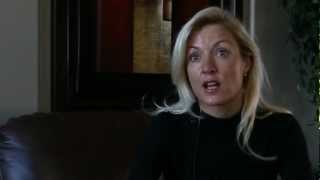
Leading with Heart: A Conversation with Debby Carreau, 2025-2026 YPO Global Chairman
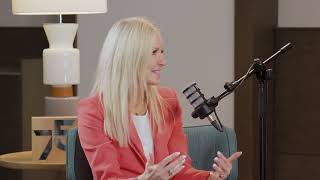
Debby Carreau, CEO of Inspired HR and incoming YPO global chair, talks about leading with heart, navigating DEI backlash, and how AI is reshaping HR. She shares how to build confidence for women leaders and what she's learned from mistakes and conflict.
Questions this video answers
Durban, South Africa
Vancouver, British Columbia, Canada
CEO and founder of Inspired HR
Three
Long Walk to Freedom
Chapters
Welcome to Mistakes over failure. I'm Dr. Christine Crawford.
And I'm Leslie Wingo.
And today we are joined by Debbie Carew.
Thank you for having me.
Thank you for joining us. Would you like to introduce yourself to our community?
Absolutely. My name is Debbie Carew. I'm a YPO member out of British Columbia, and I'm the CEO and founder of Inspired hr.
I'm gonna ask you a quick. I'm gonna ask you six since you volunteered. One. First of all, where are you from?
I was born in Durban, South Africa, and I now live in Vancouver, British Columbia.
Dogs or cats? Dogs.
I have three dogs.
What emoji do you use most often?
On a good day, it's the heart's all over the face. If it's a bad day, it's the face palm. Yeah, that one. That one. That gets a lot of play on certain days.
What is your favorite book?
Long Walk to Freedom.
Business acronyms. Do you love them or hate them?
Oh, my goodness. My team, because we're in hr, we spend our days sending memes to each other, making fun of all the business acronyms. So we really have a lot of fun around the awful language people use in business.
What led you to ypo?
You know what? That's actually a good question. As a female leader, when I started my business, I had tons of girlfriends. But at the time that I started my business, and this is 2007, I didn't know a lot of women CEOs, and so I didn't have that peer network on how do we grow our business? How do we scale it? How do you balance it with work life integration? And one of my clients actually was a YPO member, and he kept telling me about what he was learning at ypo, and eventually he just said, why are you not a member? And it took a while because I didn't know what it was. I didn't know anyone else that was a member. And then once I got in, I found my people.
So you have led nypo, and you're incoming board chair.
I am.
How has that helped you in your business? Or how has your business helped you in your leadership journey at ypo?
So interesting when you start to break them apart, because I feel like everything that we all do today is all part of one thing. I don't feel like, okay, I'm the incoming global chairman for ypo. I'm the CEO of Inspired hr. I sit on these four boards. I don't think of them as sort of separate entities, are all so integrated. And I think everything that we do. Everything's an opportunity to learn and grow. And so everyone you listen to, everyone you meet in an elevator, everyone you listen to at a big conference like we're at here at ypo, I take all of it and I bring it all in together. But I don't look at them as independent things. It's our life is such an incredible journey and I just encourage everyone to think about every person you meet has got a story to tell and something they can teach you.
I think it's interesting everybody's pathway into ypo. Some of them are very traditional. Others it's kind of like yours. So what would be your recommendation advice for people who want to come into ypo? Maybe they haven't heard of the organization, maybe they don't know someone in the organization. What would you recommend their path be?
Well, the first easy one is go to the website. That's sort of the first step because then you understand sort of what our offerings are, what kind of members we have, because we have entrepreneurs, we have family, business, and we have what we call hired guns, people that have big corporate jobs. So find out what kind of members are eligible for ypo, what kind of offerings we have, and then what I would do is find people that are YPO members, even if you don't know them. Most of our members are happy if you reach out. So whether it's on LinkedIn or you follow someone on Instagram, just send them a DM and just sort of say, hey, I heard you're in ypo. Or I saw these photos of you at this incredible conference in Barcelona. Would you be willing to have a five minute phone call with me to talk about it? I think that's important so people understand what it's really like.
What have you learned? What's been your favorite lesson from your fellow ypoers?
Oh my goodness, there's so many. But you know what the big one is for me is I love data, I love learning, I love the academic journey and things like our Harvard program. But the biggest thing I've actually learned at YPO is not those things. It's that how important it is that we lead with our hearts. And I always sort of thought like, you have to be smart and you have to be really focused and you have to be all business, all the time and be professional. And YPO has taught me it's actually okay and even more important that we lead with and we show our hearts and our emotions. It's not just about what you know and what you can do.
We've been talking a lot about culture, business culture, coming into different countries and different organizational cultures. And so, as you think about global leadership and coming into these different places and spaces, what would your recommendation be? Or how do you help people think about leadership when it comes to entering in a space that they haven't been before?
Well, the first thing is people have to come from a place of curiosity and a place of humility. When I very first started traveling globally, I always felt like I needed to do my research and go into these countries and prove that I knew all about their culture and all about their norms and that I was an expert coming in. And I learned very quickly it's not about that. And you can't read in a book about the culture how people are feeling at a certain point in time what their norms are. And so if you lead with curiosity and humility and you just ask the questions from a genuine place, people are happy to tell you about their culture and what's important and how you can help. And that, to me, has just really been so much more impactful. And we travel a lot around the world and go to all these places that we've never been before, and the cultures are so different. And really, that has been a fundamental change. Like, I went for the first time this fall to Saudi. I'd never been to Saudi. And obviously it's a very exciting place now as a female leader to be, whether you're there visiting or you're there working. So just going with a place of curiosity. And I had the opportunity to go to a conference there this fall. Fii and I just spent the day walking around and talking to people, and I was just so fascinated, talking to the women that had recently entered the workforce and their leadership journeys that just that place of curiosity. I walked away learning way more about the Saudi culture than I would ever learn reading books. And that goes for every country that we go to.
So you grew up in South Africa or were born in South Africa and then now live in Canada. What do you miss about Durban in South Africa?
Oh, my gosh. Anyone you talk to that's from Africa will tell you there's a piece of your heart will always be in Africa. And so whether it's everything from the safaris or the smiles on the children's faces or just the beautiful landscape, it is a very, very special place that it's in your heart, it's in your blood, and it calls you back. It's a really, really interesting thing.
We had spent some time talking before the podcast started. And you shared that your children are growing, growing up. How do you think their process of them living in the world as leaders of the future?
Yeah, it's such an interesting time. My son's third year business school and my daughter's in grade 12 and she's going off to university in September in Madrid, Spain. So very far away. Very far away. So her, she had the opportunity to grow up as a global citizen. I travel a lot on business, I travel a lot with ypl and she got the bug for traveling and learning all about culture and people. And so I'm just so excited to see where her global journey takes her because she's really a global citizen. My son's following a more traditional path. He wants to be an accountant, wants to go into a corporate setting. And it's just so exciting to watch. And it's hard. It's hard as a mom because it hurts your heart to even think about the fact that they're not going to be home every day, that you can just knock on their door and have a chat. And then the same thing is it's really hard, I find, to let them be adults a little bit and make their own choices and not try to guide, especially because I'm in HR and we do a lot of recruitment and so you sort of see the careers that are popular. And I have strong beliefs on what I think builds a strong foundation. So I have to really sort of balance having that knowledge and letting them be young adults and make their own decisions, even if they're not what I would have made for them.
So what do you believe makes a strong foundation?
Oh, such a good question. Such a good question. So first, like we said with White Bl is that we need to follow our hearts. You spend so much time at work, like the average adult spends more time at work than they spend with their family, with their friends, all those things. And so you really need to love what you do. We see the growing crisis around mental health. We see people are stressed out. If you're not aligned in the work that you do with your values, it's just going to make life a lot harder. So the first thing is I really encourage people not just to look at careers that are going to good for the future. And we could talk about that because I think that's really important with the amount of jobs that aren't going to exist in a few years, but most importantly with knowing the amount of hours you're going to spend is try to cater that to something that's going to bring you happiness and joy and fulfillment and pay the bills.
Of course. You brought up a very good point. Jobs of the future. What does that look like in your industry? I would imagine AI is causing a lot of disruption as it is in mine, which is comms.
Yeah, yeah. And it's very, very, very, very similar. Right. Professional services is one of these ones where part of it is these tools are almost ready to sort of help productivity. And they're already hurting us in certain areas. Like, the largest part of our business is outsourced human resources. And some of the things that we used to do for organizations, like write employee handbooks or policies or give people talking points for difficult conversations. Most, not most, many organizations now are just going to chat, beat ChatGPT and saying, Write me a policy on vacation, write me a policy on dei, write me this, write me an employee handbook in my voice. And then here's our website. Make it aligned with our culture. So all of a sudden, a large piece of the, the external, the sort of, the outsides of our core business are already being eroded. And I don't have the answers yet.
I want to ask you one more question. In terms of DEI dni, a lot of people have asked me, what do I think is the future of D and being an American, what do you think the future is on D and I around the globe?
See, I am so passionate about integration, about celebrating everyone, about making sure that everyone understands that diverse boards, diverse organizations, diverse countries, it just makes the world better. And so I am so passionate about that. This whole backlash against DEI right now is really, really tricky. And I think branding matters. And I think lastly, you said a little bit before we were actually on MIC is people aren't necessarily anti integration and respect and getting to know each other. The way DEI is done, in my opinion, it was done poorly. The data didn't support the initiatives. I think a lot of people saw this as an opportunity for a career. And I'm going to double down and I'm going to put these burdensome programs into organizations and they just didn't do it well. And that is part of the problem. And it actually hurts some of the things that organizations were trying to do really well because the work is so important. The how it was done, I think, is what's caused so many problems. And in some cases, unfortunately, it probably did more harm than good. And then there's other organizations that have done an incredible job and it's helped build their culture and it's demonstrated that diversity improves almost every financial metric. So it's going to be a tricky time. But the branding matters and using the data to support the decisions. And I'll say one more thing on this, and I think that this is really, really important, is when you're looking at any equity seeking group or anyone that doesn't feel included or anyone that's underrepresented, don't tell them how it's going to be fixed. Ask people how can we support you and how can we make you feel welcome and supported and perform at your best every day. Don't just do something to someone. In Canada, I can't remember the exact knowledge, but we do a lot of work with our indigenous people around truth and reconciliation. And it's nothing about us. Without us is really the language that's used. And so our commitment always is when we're trying to make fundamental change in that area, we do it alongside them. It's never to them.
No. I think that idea of asking people about their experience is important, but I think one place that people struggle is believing them when they say that their experience is different than yours. And so you worked globally, you continue to work even more globally with ypo. How do you establish though that you're gonna believe what they say when they share that their experience is different?
Right.
Because a lot of times we ask folks to share, but then we don't always handle their difference of experience with the same care and belief that we probably should. And so how do you build that trust and that safety is probably.
And you just used such important words there, I mean all of those things, trust, safety, belief, authenticity. And it's. I wish I could say that every leader, when you ask that question and someone shared their experience, that they believed you the first time. And I think there's a couple things that are really important if people in organizations are wanting to share their story, because it is so important that people do, is to find an ally first. Someone that you know that you have a relationship with and let them help you. Because it doesn't always have to be just your voice alone. It's your experience and you own it and we want to hear it. But sometimes it takes another person. Like I may have to say to my boss, Susan, Susan, Christine's got a really important story. Christine and I have talked. I would like you to come and to listen to Christine's experience together. Are you open to it? And so sometimes if you have that ally that's with you. So it's not just about believing you. You've also got someone else who's almost not vouching for you, but is sort of sponsoring that we need to make change, and this is how we do it, and this is how we share a lived experience. Does that make sense?
No, it does. And I hadn't thought about how having someone support you as you share your different experience may also make a difference. Not in your comfort in sharing it, but also maybe how it is heard or received as well.
The thing that comes up for me is how can I better support someone who has a story to share and how can I help them come along? So it's. So there's resolution to it. And as my business coach would say, complain to somebody who can do something about it. Maybe I'm not that person, but I would love to support. How do I properly support somebody?
100%. Yeah. And it's. I also think that we all have an obligation. I mean, whether we're female leaders, business leaders in our community, someone's helped us get where we are. And I think we've got an obligation to be able to help bring everyone along. That's the next generation, or even people that are with us today, our peers, if they're struggling or they've got an experience to share, or they're not having the same experience in the workplace that we are, we have an obligation to support one another as humans.
When you think back years and years ago, what was the best advice somebody gave you?
I've had been lucky enough to have a few good mentors over the years, and they've had such good advice. You know what the strangest one was, is the best advice was actually the hardest to hear. And it was really strange. A long time ago, I was fortunate enough that I moved into leadership and entrepreneurial positions very, very early. And I was a managing partner in a restaurant like 23 or 24 years old by circumstances. And I think a lot of luck. I was successful very early. And then all of a sudden, I ran into a situation where the restaurant wasn't performing, wasn't built large enough for the volume. We. And so many people were like, you can do it. You're the best. You're actually able to do this. No problem. No problem. And it was one of my mentors that actually came up to me one day and said to me, he goes, do you know what the problem is here? And I'm like, no. I said, I don't. We just keep working harder and harder. And he goes, the problem is you. And the look that you just had in your face lastly was exactly what happened to me. I'm like, what do you mean, it's me? It's the first time anyone had not been a cheerleader, but actually said, you need to look in the mirror as a leader and take accountability for this and figure out what you're gonna do to make this successful. It was very different than being a cheerleader. Right. It was actually a really good coaching moment for them to have the courage to come up to me and say, you are the problem.
Wow. So what advice would you give younger women leaders that are just beginning their kind of business leadership journey?
So the biggest one that I find, if we are going to generalize along gender lines here, but the data does actually prove it out, is this is a crazy statistic, but I'll get to my point here is when you look at women that are deemed successful in traditional terms of how we look at success today, whether it's senior level jobs, whether it's financial performance, whether it's an aspirational career, they say that confidence and competence are equally correlated with success. So I'll say that again. So confidence and competence are equally correlated with success. So what that means is even if you're highly competent in what you do, if you don't have the confidence, you're not going to be successful. If you are highly confident and less competent, you're going to hit the same level of success. So in order to be successful, you've got to figure out a way to be confident in your abilities and what you do and being able to step out. And whether it's asking for a raise or promotion or speaking around the table in a leadership meeting, being confident is not something that comes naturally to a lot of women and takes a lot of practice. And Sheryl Sandberg said it best when she said, do something every day that scares you because confidence is like a muscle that you have to build. And it's the one thing that we find that women significantly less than men do not have the same level of confidence when it comes to their careers and business decisions.
Is it specific things like asking for money or does the confidence? Are there other examples in terms of where women could be more confident in asking for X, Y or z?
There's so many. But I'll tell you, if we're talking early career professionals, the number one thing is when you look at whether it's young or at any age, actually it's not really an age thing is when people apply for jobs, there may be 19 criteria. Christine smiling because she's seen the data. Men will apply for the job if they have like three or four of the things on the list. Women, when they have like 17 of the 18 things, like, I don't think I'm qualified for this job. I'm not going to go for it. And so if you think about it, if men are applying for things and they're taking moonshots, right, they're applying for something that's two levels above their pay grade, they've got the confidence to try. I wish more women would do the same thing. We tend to be more literal and we don't apply for something until we're 100% qualified that we're going to be successful. We need to go for those stretch goals. And every time that you hold yourself back from trying for something that's aspirational, those things are incremental over the course of your career. And so it's not just one job you may be losing out on, but it's the next step and the next step and the next step in your career journey that you're holding yourself back from.
Is it a fear of failing as well? Is that mixed into the confidence factor?
I think that's actually a really good observation and I suspect you're right. I don't know. Christine, what do you think?
Well, but I think if you know that you're gonna have extra eyes and pressure to succeed, then I think that fear of failing is intensified. Right. So I think maybe if you felt as if you weren't gonna be representing all women or you didn't have this extra attention, then maybe you would take extra leaps. Because I think as women, you do feel pressure to, you know that you have to look right in a way that you don't know that men have the same pressure. So just to add on this pressure of failing is.
I think it's there somewhere.
Yeah.
And there's one more thing that I think correlated with this that I think is really important to call out is obviously I do a lot of recruitment, but one of the things that the data shows is when selecting a candidate for a job, men are often chosen based on what the interviewers believe their potential is. Women are chosen based on their proven track record. So if you think about it, men are more likely then to get next level jobs, whereas women had to have done the job before, which can be really hard. Again, when you're trying to get that next step in a traditional career ladder.
So you first.
Well, so as a board member.
Right.
How do you help at a governance level? Organizations see the potential in those who are currently being considered or in the room or even in the boardroom. Right.
And, you know, I am so proud of our board and our nominating committees in how we have shifted to be able to do these things. So, I mean, the first thing is to acknowledge your bias, to understand, like, if you don't know what you don't know, you can't do anything about it. And so the first thing is sort of understanding behaviors and what bias we may have. And then over time, what we've really done, not just in ypo, but just in any of the boards that I sit on, is really making sure that we're looking at the criteria for what we're looking for in board members and also what different people's perspectives and journeys can bring to the table, because that's invaluable. And I mean, YPO is just a perfect example of that, is we want to have members that maybe have not been on a leadership journey within YPO for 15 years. Maybe they've had their board experience elsewhere, and their experience in YPO has been as a member. And so we don't just say, well, someone's been on leadership committees for 15 years, so we want them to be a board member. We're like, what do we need to take this organization to the next level and for the next 75 years? And who are those people? And what are the skill sets that they have that are going to help us along our way? And that absolutely includes having members that represent all of our community, both today and what we aspire for it to be in the future.
I think there's a. We're being conditioned with, like, getting things done quickly. We want things to happen immediately with the sugar rush attached to it. How do you. What you're talking about is causing people to change how they see themselves, how they see the world. My favorite saying, and I've said it on the podcast before, is people hate two things changing the way things are. And so how do you encourage people to be. To change and make them comfortable or comfortably uncomfortable with that change?
I actually love your saying, and change is hard. But the other thing we know is the world today, everything's changing, nothing is staying the same, and we have to really get comfortable in that space. And that does go for our YPO board as well. And I'm just so proud of the journey we've been on. We have 40% women on our board. We have people from all over the world. We have all kinds of different diversity, whether it's religion, whether it's color, whether it's country of origin, Whether it's the language you speak, whether it's neurodiversity, we have a very diverse board. And that change has come quite quickly, actually, where if you look at the board from 10 years ago versus today, it looks very, very different. And the conversations in the boardroom are also very, very different. And I would say that we've got a board that's excited about change and is willing to take steps and take a little bit of risk, but make sure we're staying true to our strategy at the same time. And so it' really neat when you've got the different people in the room, the debate is much more robust because you've got so many different perspectives, and sometimes it takes a little bit longer to get where you want to go, but you've got a better answer at the end of the day. And I love it. I think it's just so healthy, and it's just so nice to see that we've gotten to this place.
I think when organizations can have those conversations, there's a lot of trust built into that, and. And it is incredible to see it happen in real time. So thank you for that.
Thank you. And I don't want to say that it's easy. It can be painful. Right. It can really be painful to go through those conversations because we like to move fast and break things, and sometimes to make sure everyone gets heard, we have to move a little bit slower on certain things. That's different than our normal nature and cadence. And so the result is amazing. And we love keep doing it. But I just don't want to think that it's all roses and it's just super easy and decisions are made like this because diversity is great, but diversity, you also need to learn to work together because you're not all the same. You don't think the same. You don't take the same amount of time to make decisions. And so overnight, I think there's some things you need to do. You don't just take a whole bunch of diverse people, put them in a room, and expect them to perform better. It just doesn't work.
The magic doesn't work that way.
Yeah.
But I think that that's really important to share with people, that there are bumps. And I think with your perspective as an HR professional.
Right.
How do people recover from bumps and from, as we talk about, like, your favorite mistake. Right. So we call this mistakes over failure, because a mistake is where you do something that you think is going to be catastrophic and then learn from it, but move forward as Opposed to doing, you know, something over and over again. So how do you suggest that people take these kinds of mistakes? Or what's your favorite mistake that you've learned from? Maybe share that.
Oh, I have so many. I have so many. There's not a day that goes by that I don't think I make a mistake. And it's sort of one of those things that. Exactly. I feel so strongly the mistakes are part of the journey. We're supposed to make mistakes as human beings. We're supposed to make mistakes as leaders. It's how you recover and how you don't make the same mistake again. And I think that that's so important. And white people, we've got incredible tools through forum that we've been taught to do issues clearing or to have a conversation or to go into forum and really share. And so, Christine, if I did something or you did something that upset me, and I'd say, when we had this conversation, Christine, this is how I felt. And I just want you to know, when I walked away, this was my experience, and it's on me. I own this. But I want you to know how I feel. And I think tools like that have been really, really helpful. So instead of yelling at each other in the boardroom, I think it's about, in a respectful way and a really close, trusting environment, having these conversations, because I think without these tools, it would be a lot harder. But there are many times where we've had friction where we have to go and we have to clear the air and have the conversations, and the relationships just get stronger as a result of that. But they're not always easy. Sometimes it's like you have to take a deep breath. Do I really want to have this conversation? And you're like, well, if I don't, the next meeting is going to really awful. So it's like we say, courage is a muscle. This is another muscle. It's when things don't feel quite right, is doing. Or I. Sometimes I call it a check it out in my other environment, right, where you just. You want to check out your feelings. You want to check out if you heard it right, if it landed right. Like, particularly like emails now and texts, I think sometimes they could land wrong. And so just looking someone in the eye and having the conversation is really important.
As I tell my children, there's no sarcasm font. I don't know what that meant.
I love that.
I wish there was, but there's not a sarcasm font.
I am so gonna steal that. We don't. We need an emoji for that? We do, yeah. That would be my new favorite emoji.
So is there a favorite mistake that you can share with us?
You know what, the one that sort of comes up for me, that sort of. I think it's relevant for all of us is we talk about sort of geopolitical, not geopolitical uncertainty. Actually. I'm just gonna go with sort of global nature of people, right? Where we have people from all over the world. And this is years ago now. I love social media. Like, I love posting on Instagram, I love sharing the stories with my family, with my friends, with my coworkers. I love Instagram, I love LinkedIn. I posted a photo, we were in Qatar, actually, and we'd left the situation, but I hadn't thought we'd left the place. I don't ever post in real time where we are somewhere just because I know some people just have different security implications based where they live in the world. I posted something the next day and didn't think anything of it. It turns out it did actually really concern someone. They didn't like anyone knowing that where we were at any point in time. And so the mistake that I made, I thought it was a completely no deal, right? It's like, oh, yeah, we're in Qatar before the World Cup. This is really exciting. And we bring all these people together. But what I didn't realize is the implications for someone else. And so we used our tools in my field to sort of have this conversation and say, what's maybe something for you that's sort of fun and you like sharing. For me, I have very different feelings around it and different implications based on the country that I'm from. And it was just a really good learning experience. And I was horrified. I was mortified because I always thought that social media, I do everything right and I will never post without checking with someone. Like, do you mind if I put. If I post this photo? And so for me, that felt like a really big mistake because I felt like I hurt someone.
But I think it also sounds like for all of us how the learnings from it though far outweigh that initial part. That is hard. And I'm sure it was just as hard for them to say something right as well. So we wanna thank you for sharing your journey and yourself with us. And we thank you for your leadership and service to all of these other leaders who can be sometimes a little difficult. We are not the easiest group in the world, but we just thank you for taking such good care of us and teaching us so much.
Thank you. And thank you both for your leadership and for doing this and just highlighting so many of our incredible members and leaders. It's fantastic what you guys are doing. Thank you. I'm honored to be here. Thank you. Thank you.
Thank you.