5 Steps to Improve Win-Rates
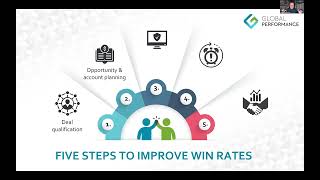
Harry Kendelbacher outlines five steps to boost sales win rates: qualify deals, secure key stakeholder agreements, create urgency around unmet needs, and protect margins through value-based trades. A Fortune 200 company raised its win rate from 31% to 51% in six months using this approach.
Questions this video answers
Win rate rose from 31% to 51% within six months (a 20 percentage-point increase).
Chapters
Foreign.
Welcome back, everybody. Now it is my pleasure and privilege to introduce my good friend Harry Kendelbacher. He is the CEO and managing partner of the Global Performance Group from Austria. He's joining us from Salzburg, where Mozart was born. And I think that you had, when you, when you grew up, you had an addiction to Mozart kugel. That's the moza chocolate, right?
I did have an addiction to Mozart Kogan. And, and as a matter of fact, I still do. The fact that the factory who produces them now is in my village is a bonus.
Oh, that's awesome. And it has a chocolate cover with nougat inside and.
Pistachio center. Pistachio.
A little bit of marzipan. It's nice.
Beautiful.
Yeah, absolutely. Absolutely.
Stephanie, have you ever had a Mozart kugel?
I have. I. You know, I went to Austria a few years back, I never had been before and I just felt like, gosh, we don't talk about Austria enough. It is an incredible place. It's so beautiful and the food is delicious. And yes, all of the Mozart inspired food and activities are lovely.
And of course Salzburg is famous for the Sound of Music. And, and it's literally, it looks exactly like that. And what people don't know is that I was the little boy in the movie. Of course that's a lie. I'm not. I wasn't.
I was in there too.
Yeah, you and me both.
Yeah. No, they're rejecting me because I can't sing.
Me neither.
Good. No. Let's talk about five steps to improve win rates.
Thank you. Pleasure to meet you all virtually. Welcome to Global Revenue Acceleration Summit. Thank you, Gerhard. Thank you, Stephanie, for the kind introduction. My name is Harry Kendelbach. I'm responsible for Global Performance Group. We are an AI revenue enablement boutique that implements sales capability transformation within sales organizations to increase win rates, reduce sales cycles and protect margins. So funnily enough, the topic today is increasing win rates and what does it take? Let me share with you a little bit what we're going to cover over the next 30 minutes. First of all, we're going to take a look at the five steps. And how do we get to these five steps? Do I just come out of my head? Do they come from some regions? Where, where do they come from? And what are those five steps? The second piece is we're going to take two of them to dive a little bit deeper. And one of them is this concept of key agreements that I urge everybody to implement. And the second concept that we go in a little bit deeper is the idea of creating urgency and the variety of ways of how you can do that or how your salespeople can do that in their sales conversations. And then of course how do we implement that system of a transformation? So you get a little bit of a, of an idea of how this is done in the right way. So here's an interesting slide. And behind these logos are stories really and stories of transformations. These are some of Global Performance Group's customers that we've worked with hand in hand to really improve their sales sales performance. Our research team has collected insights from all of these initiatives analyzing really that transformation that these clients have experienced. And I want you to consider really the following question. What did this top performing sales organizations really focus on to achieve elite win rates? And our research is based on our work with those companies and we are going to give you the opportunity the answer today. And as we proceed with this, remember that these strategies aren't just theoretical, they are proven approaches from real world successes and cases. Let's leverage these insights together to elevate your team's win rates. All right, so let's dive into that. The magical five steps of improving win rates.
I'm going to bring up the first two together because they sort of go hand in hand. It really depends on where you are in the sales cycle. Is it a prospect? Is it already an existing client? So I'm going to talk about deal qualification and opportunity in account planning. And it's really interesting. The biggest challenge for sales leaders is that salespeople live in the land of hope. Live in the land of hope. And hope is not a strategy as we know. Hope that this opportunity comes through and hopefully this goes on to the next step and hopefully this will revenue by the end of the quarter. But a lot of the time there are chasing ghosts and they're hoping that things will happen. Now that typically leads to the never ending or never ever closed deal. That's why deal qualification and opportunity income planning is so huge, hugely important and what is this really about? It is spending your valuable time where you get the most return with winnable deals. So ask yourself the following questions if your sales teams are really doing this effectively. What is my ideal customer profile? What's the company size? What's the industry? What's the buying Personas? What is that? What's their problem and can I help them solve it? And is the problem big enough for them? Is the problem big enough worth for them to solve it? Is the problem big enough for them to put financial resources behind it? Are the opportunities aligned with your strengths and with your value proposition, have we really prioritized these opportunities with higher probability of success? That's really the question. And selecting the right opportunities sets the stage for successful engagement and, and increase deal velocity. And these effective qualification selection and planning of these opportunities really ensures that your team invests the right time, the right resources leading to these higher win rates. And remember, it's easier to do nothing for prospects. And that's well documented in our industry. Organizations make decisions really for one out of two reasons, either to gain an outcome or to avoid a risk. Anything else is status quo maintenance. Why should I change if you can't help me gain an outcome or avoid a risk? So get clear on the winnability of these opportunities. So call to action. For the first two steps, if you don't have a proven or a sound deal qualification, opportunity account planning methodology, make sure you implement one. One that integrates into your CRM and that can be coached to and that is easy to execute. Don't give your people too much to do. That's the piece. Some of these things are too over engineered. You know, remember, give salespeople 20 things to do, they will do one. If you give them five things to do, they will do four. So make sure it's simple, it's pragmatic and it's usable. If you have one, great. And if you don't have one, consider contacting us. And remember, with, with deal qualification and opportunity planning, you cannot qualify your way to closure. Right? But deal closure won't happen if you don't qualify. So it's really one element of the five win rates or five steps to win rates. The next step is sales process and key agreements. Now I've been in this industry for 25 years and I've seen many, many, many sales processes. Some are three steps, some are 10 steps, some are better, some are worse. They have, all of them have one thing in common. Salespeople avoid them and they don't use them. Right. So key agreements. That concept of key agreements is really critical to increase win rates and are more than just a formality. It's a strategic method for building strong, collaborative, beneficial relationships. Each agreement is really sort of a sail that catches wind propelling you towards that higher win rate. And agreeing with the client or the prospect on the reality of the situation is really the key to this. So what are the key agreements in your sales process that your people are negotiating with the prospects early on? Well, that's one of the things that we go a little bit deeper in a Second on. So let me move on to the next one and come back to key agreements because I think it's a fabulous, fabulous way of increasing win rates fast. The next element of the five steps win rates package, should I say is or process, is creating urgency. Fact is your biggest competitor is not, is not your competition. Your biggest competitor is do nothing is no decision. We've heard that many, many, many times. But the question is, how are people dealing with that? People make decisions either to avoid a risk or to gain an outcome. So I really need to have a conversation that either helps the prospect or the client to understand and clearly quantify the risk they are taking for not going with you or clearly quantifying the outcome that they will gain by going with you. That's the second topic that we're going to go a little bit deeper on in a second. So let me go to the last step of the five steps, win rates, which is closing and protecting margins. When we get to the end, sort of the sales process, people out of desperation a lot of the times, throw things in to close the business. Protecting means protecting margins at the close of business, staying really strong, defending value and protecting that profitability. Something that salespeople typically are rubbish at, really not good at. Many times they come up with a concession strategy, a strategy that basically says what do I have to give up to close this thing right? What else can I do to throw in to make sure we progress to sweeten that piece? That's the wrong approach when they think and act like that. It drags out the closing of the deal as it invites your prospects or your clients to stay in attention and keep asking for more. So the key to closing and.
Protecting value throughout it is to shape value based agreements and trades throughout the sales process. Not giving in too much too soon at the end of it. And it's a really a strategic part for it. And you know, you got to think about what to give, when do I give it, how do I give it, what signal do I send out by giving it and most importantly, what can I ask for in return? And according to our research with many organizations, these are the five steps to increase win rates, reduce sales cycles and protect margins. So deal qualification, opportunity and account planning, sales process and key agreements assigned to it or linked to it, creating that urgency and close and protect margins as I promised you. Let's take this a little bit deeper and look at the number three again, the key agreements portion of it.
Now. Key agreements. One of our Clients, a Fortune 200 company, had a win rate of 31%. They wanted to win one out of two deals. And we came in, implemented key agreements, not just into the sales process, but really at every level of the sales process and made sure we trained people to execute that. Their win rate within six months was at 51%. So they were winning one out of two deal, an increase of 20% in win rate. So key agreement is a critical, critical element of the sales process. But you know what? Salespeople hate it. They don't like it. Why? Because it's counterintuitive. Because it means they have to ask for things early on in the sales process. And their excuse in their head is, I don't like it because I don't want to upset the relationship. Well, what relationship? Early on you don't have a relationship yet, right? You have created maybe a report, but there is no relationship. If you don't have key agreements in place, the opportunity is not real. So agree early on things like the necessity to change, budget alignment and different needs. It's really key to get this together with the client. So securing these, for example, the prospect's willingness to change is really fundamental. It establishes that relationship and builds trust and collaboration. When the prospect is open to change, they're more likely to actively engage in the sales process without disagreement. You risk encountering roadblocks later on in the sales process, and that's really an issue. It's not just about selling a product. It's about guiding the prospect towards the solution that generally meets their need. And, you know, having things such as an agreement to get access to all the key stakeholders, an agreement on the financial parameters of the opportunity, and an agreement that there is a necessity to change, as I mentioned already, and the different needs that we can fulfill and take to the next level. Every agreement throughout the sales process enhances your probability to win. And remember, key agreements are not what your people have to do at each stage of the sales process. Those are the ticking the box exercise. I'll give you an example. So at step two, for example, there's typically what, a needs assessment or discovery phase or something, or step three, whatever your sales process looks like, right? And some of the ticking the box elements would be, oh, ask the clients questions to identify the needs, you know, identify the decision making process, and so on and so on and so on. The salesperson says, yep, I've done this and yep, I've done that and yes, we can move on to demo, not a problem whatsoever. You see, you have assessed that step based on your assumption and what you think you did you didn't make an agreement with the client? And that's the huge difference. Remember, agreements versus milestones. An agreement is with the client early on. A milestone is really fulfilled and done by yourself. And so that really, really shifts that piece. So a call to action for you. Take a look at your sales process, my lovely people, and all the wonderful milestones or gates or however you call it that you ask from your salespeople to complete at each stage and ask yourself, are those items just a ticking the box exercise or are there real agreements shaped with the prospect? If you don't have these key agreements in place.
And you're interested, get in touch with Global Performance Group. We're happy to integrate it into your sales process. Let's take a look at the fourth step of the win rates process, which is creating urgencies. Probably one of my favorite topics in.
The five steps. Really, what does it take for salespeople to do that effectively? Well, first of all, and I'm going to flick through this very quickly because I'm already a little bit behind on time, is the idea of you've got to have the skills, you got to have the confidence, and you got to have the courage to do it because it's really uncomfortable to raise that urgency, that level of tension. And remember, you don't want to upset everything, anything. You want to make sure you push the deal through and so forth. So really having the skills, the competence of the skill, the confidence results from having practiced it to perfection. And that will really give you the courage to engage and have that urgency discussion. So what really creates urgency in the mind of the buyer? Well, you know, the fact is that as I mentioned, biggest competitor is not your competition. Biggest competitor is no decision. Do basically nothing. People make decisions either to avoid a risk or to gain an outcome. So I need to have a conversation that helps the prospect to understand and clearly quantify the risk that they're taking for not going with you or with us or clearly quantifying the outcome that they will gain by going with you. Now, one part of that urgency discussion is really to generate new needs. And I'm saying new needs. And typically what salespeople do is to meet the prospect and the clients. And they said, well, we're going to find out, you know, we're going to understand the client, we're going to understand the prospect, we're going to ask them 20 questions and, and we're going to, you know, and hopefully they'll tell us there's no issue with asking questions. However, asking the Same old rubbish and boring questions. That's where the issue is. And quite honestly, asking the prospect questions that the salesperson should know the answer already to does not really provide value to the prospect or the client. And if you haven't generated new needs that really helped me run my business better, there is no urgency for me, there just isn't. And when I talk about generating new needs, there's a couple of different terms for those. I'm talking about unspoken needs, unheard of needs, unknown needs, unconsidered needs, underappreciated needs, needs that the client hasn't appreciated that you can help them with and that can have an impact into their business. That's what creates urgency as wallet element. So if I can generate those needs in the mind, it creates urgency to the process. This is when it creates a compelling case of change. A why change is better than the current situation is a result of that. The other point is, is really that cost of inaction conversation. And I absolutely love that part of it because.
Sometimes, you know, salespeople hate that. They find that really difficult. But it's really important to articulate clearly what the cost of an action is and that your solution is a necessity and not an option. Making your prospect understand the cost of inaction isn't about highlighting what they gain by choosing you. It's about what they lose by standing still. It's about instilling that sense of urgency. And the problem a lot of the time is that people confuse two things. They confuse ROI with coi. They confuse return on investment with cost of inaction. So ROI is return on investment and cost of an action are both used to justify decision making or business decision, but they focus on very different sides of that equation. ROI really means, or ROI measure, should I say, the benefit of, of you getting from a specific investment relative to its cost. ROI quantifies the positive impact of taking action. And it's typically used when you say, or when you want to show why a proposed solution, a tool or project is a good investment. For example.
Investing in this sales platform will increase closed deals by 20% and it delivers or will deliver 150% ROI in 12 months. That's ROI. Cost of inaction is different. And the definition really is Cost of inaction measures the hidden or opportunity cost of doing nothing, not adopting a solution, not fixing a problem, or not changing course. It really quantifies the negative consequences of standing still. And it's used when you want to show that in action is more expensive than the proposed solution. For example, by not Adapting this sales platform, same example as earlier. By not adapting this sales platform, your team will continue to lose 10 deals per month, costing you 500k annually in missed revenue. And those two are really linked back to the decision making, right. To gain an outcome or to avoid a risk. So the research clearly states that heightened urgency could contributes directly to increasing win rates. So I'll call to action for you, my lovely people. Ask yourself, do my salespeople have that confidence and the courage to create that level of urgency in their conversations?
If not, drop us a, drop us a line and let's chat. Let's focus. Let's take a look here on the time. No problem. Eight minutes. Perfect. Let's take a look at how we implement this because this is quite interesting. There is a lot of stuff out there in terms of training. Everybody does it a little bit differently. People do it a little bit before and after. We really have an AI supported sales performance enablement process which really drives success. So step one is strategic capability mapping. It's really about performance assessment to accurately predict on where people need help. It's really. And the outcome is a personal learning journey. So identify those skills gap strengths through behavioral assessment to really guide that personalized development. Step two, you got to activate the methodology now by driving this cost of inaction conversation and making sure that people have access to all the different elements of that, you drive it through a platform that drives the engagement and really provide a learner's experience through it. Not just cheap dipping people into it. And you're going to retain the success by AI skill practice and coaching through it. And of course you have to measure the whole thing and everything needs to be linked into the CRM to be able to really analyze the performance of it. Anything you want to implement in terms of the five steps, win rates. Think about a system similar like that. Anything else doesn't drive the success and just save your money. Don't do it. It's. It's better to stay still this way. If you don't implement this as a full process. All right, I'm almost at the end of my 30 minutes. Global Performance Group As I mentioned, we're an AI enablement company boutique that implements sales capability transformation. If you want to hear from us, if you want to learn more about us, hold your phone over this QR code and that will take you through.
Our closed LinkedIn group which graduates of.
An interested party will join and we will share ongoing content research and, and, and different other elements of, of insights and content in that LinkedIn group. So feel free, hold your phone over, we admit you to it and you will gain additional information or go to globalperformancegroup.com or go to the b2b sales trends podcast.com very successful podcast now in our third year of running and lots of insights there for everybody available. So if you don't want to increase your win rates, my lovely people, don't contact us. If you do, you know where to find us. If you want to see, by the way, how your current win rates rank compared to industry average, contact us. We will share the cost of inaction calculator with you. So back to you, Gerhard. Thank you my lovely people for listening. I wish everybody an insights packed day, which I know it will be. I hope you could take a couple of things away from this. Look after yourselves, your loved ones and your B2B customers. Gerhard, back to you, my friend.
Thank you. Harry, I would like to ask you a question that is a challenge. How would you translate the Austrian word into a sales wisdom that salespeople need to be aware of when they deal with customers in the age of AI?
You're testing my, my translation skills here now. I think I, you know, AI is on everybody's lips these days and it, it really needs to be included in all of our processes. But, and here's the big but, the human skill is, is just vital in this. AI will support your processes. AI cannot create urgency for you, so you need that, that engagement, that subtle, subtle conversation in order to drive and close deals more effectively. I'm not sure if that is the right translation. I will look it up after this.
Well, my, my adv.
But my, my opinion is that Kimitlikat is transforming the way you do business.
Into a celebration and not make it a chore.
Absolutely. Interesting, interesting take on it. And we as Austrians know the celebration piece in a big way. We're strong in that, aren't we Gerhard?
And good deals like good beer can't be rushed.
I fully agree with you.
Stephanie, what's your take on that?
That good beer can't be rushed.
Yes.
Very true.
Especially if you're drinking in Austria, I think.
Yeah, very true.
No, this is great. I mean, you know, the, you said your favorite part was the, the urgency driving that urgency and, and wholeheartedly agree there. So many deals are just stuck.
Yeah. And also I, I checked out the podcast while Harry was speaking. People, somebody dropped a link and.
You started it three years ago.
We started it three years ago as a sort of getting our message out a little bit and it really Developed to a great following with. And we're now up to releasing, I think, two episodes now a week.
So. Which is great. It gets a lot of traction, and we're really getting senior sales leader onto it and say, you know, how has buying changed? How do you see. And these people are in the trenches, you know, they, they. They know. They know really what the pain is, and they know what people need to do to get out of it. And it's. It's interesting, those five steps. You know, a lot of. A lot of companies have maybe two or three steps already in there, but if you have one link that's missing, you have an issue. So you really need to do all five to perfection. And that's what increases the percentage of win rate 100%.
Yeah. But also the podcast keeps you on your toes because you speak to so many bright people that make you look smarter.
You know, I only have to ask the questions. I don't have to sound smart here.
That's right. That's right. No, we're very pleased. And. And now people are engaging with us, wanting to come onto the podcast, which is in early days, that's the other way around. But now we don't have to reach out at all anymore. And people say, can we be a guest on it? And we've been very selective about who we let on these days, which is great. Good problem to have.
Absolutely.
I have a question. Has Gerhard been on the podcast?
He was one of our early ones when we were still desperate for guests. No, no. No disrespect, but repeat episode, you're hereby invited for it. I make a slot for you, my friend.
Well, you. You need to. Stephanie really was asking, when can I be on your podcast?
That's right. That's right. Well, anything's possible. Let's do it.
I don't know. It's so selective, so might be long wait there.
No, this is great.
We'll find a way. No worries.
Oh, very good. Now, Gerhard, where can they find Harry? Can they visit him somewhere here?
Maybe global performancegroup.com? yes. And we dropped a number of links in the chat for his podcast, and.
Michaela did a great job. You can also visit the sponsor booth, and you can connect with Harry on LinkedIn. And you can also book a meeting by.
Typing infolobalperformancegroup.com and I know Harry is.
Every conversation I have with Harry, I walk away with some insights I didn't have before. I don't know how he does it.
It's about that Austrian chocolate, Gerhardt.
That's right.
Thank you so much. We appreciate being part of this great summit that you're putting on. Thank you.
More from Gerhard



What Selling Looks Like When Your AI Agents Have the Context Your Sellers Do

Better Conversations, Smarter Support: Wearable AI in Business






When Scarcity-Built Systems Meet Abundance - The Judgment Gap in AI-Powered Sales Leadership
