"AI-Powered" Is Just a Label: What Really Makes the Difference Using AI
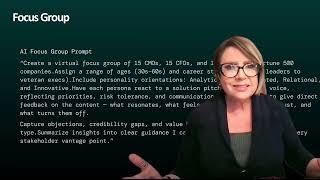
Marianne argues that AI's real value in B2B sales comes from precision and relationships, not automation. Sales teams buy tools but underuse them, and call summaries miss sentiment. She recommends AI-driven focus groups to test messaging, detailed account profiling, and feeding transcripts to LLMs to catch missed cues and objections.
Gerhard, thank you so much for inviting me back again. You know, I'm so excited to talk about what organizations are doing with AI, both in sales and marketing. And, you know, it's been around for a couple years now, so we know more, there's more use cases, there's more best practices. And so I want to dive into that a little bit because, you know, I work with enterprise tech companies and so B2B enterprise tech, so I get exposure to a lot of sales and marketing organizations and I can see what they do. And while I see a lot of, and all of us see this on LinkedIn, it's just so much AI promotion and hype and everything going on. But what's really working and what are organizations really doing? Because I definitely see a lot more AI implemented on the marketing side than I do in sales. And I also see a lot of inconsistency on the front lines in sales. And so I, I wanted to give some, some tips and tools and things that organizations can do right now to really get an edge on building relationships and accounts, because that's really where you want to use AI. You don't want to offload your thinking. You know, I think all of us at this point have just received this deluge of AI generated content and it's actually desensitized people to outreach because is this real? We've even had people ask us on phone calls, are you real? And I think, okay, AI is not that good. Right? But that's the level of suspicion that's out there. So that's what I want to talk about is what you can start doing. So here we go, let's dive into this. You know, I see in sales a lot of inconsistency, as I mentioned. And one of the things, and one of the reasons is like with all tools, I see a lot of companies will buy tools for their sales teams and, and they're enabled in their CRM. So whatever CRM they're using, we can get in there and we can see they bought all this stuff and nobody's using it and they're not using it for account planning, they're not using it for sales. Intel, you know, note taking is not great. So any type of AI type of overlay in that isn't really providing any depth to within their own data set. So that's problem number one. Also, I don't see a lot of good use cases of, hey, this is how you can leverage the AI tools to build relationships and accounts. It's more used for shortcuts. So replacing conversations. So hey, write me an email. That's not the best way to use it. That's really just being kind of lazy. And while I do see a lot of really slick ways that marketing is using AI to better understand intent and better on the, on the digital marketing side, on the actual sales relationship building side, because we'll ask reps and we'll talk to them and say, hey, what are you guys doing? And we get everything from some pretty sophisticated use cases all the way to yeah, I need to get into this and learn it. And they're really literally doing nothing. So, so, and these are really big deals that we're talking about. So that's going to be really key to this, is how can you use it to advance relationships. Your competitors are in that same boat where they're not using it to make a deeper connection with them. So you can have an advantage just by spending a little bit of time. You know, I talk about this self inflicted wound of using AI poorly because, you know, even like the other day, all of us get all these LinkedIn messages and so there, and there's all this LinkedIn automation now. And I actually got a message from somebody that I knew, but it sounded a little weird, you know, because I thought, why would you ask me that here in that way? So one of the things that we do is we use focus groups. And focus groups are great because it gives us some feedback on messaging, it gives us feedback on how different people might consume things, how they might interpret information. I'll show you a couple other examples. I'll do a screen share in a minute. And that's the thing that really helps, is to give it really specific directions. And, and so the way to do that is you map out a focus group of who you want. So like here we want 15 CMOs, 15 CFOs, you know, we give them ages, backgrounds, where they're at in their career, personality types, all of these things. So we give it a pretty heavy prompt to be able to give us back what a likely response would be to different messaging. And it really does help to fine tune. So it's not doing it for you, but it's helping to kind of signal back to you, like, okay, how would somebody interpret this? Because that's one of the things that I see is a lot of inconsistent messaging, especially when there's different people involved in accounts, is like one person might send one thing and then somebody else sends something else. And there's just so many breaks and people are busy if they read something they don't understand or if it's not relative to them to what they're doing, they'll just kind of ignore it. And I talk about that a lot is factoring in the people that weren't in the meeting that's going to be reading this stuff. So this really helps you to be able to proactively craft the right thing so that if anybody forwards it around, nobody's going to say I don't know what this is. Right? Because a lot of times even if you're talking about a service and if you're saying it in a way that somebody might read it and say, this is software, we don't need software. And you have to be able to catch that before it goes out. Because once it goes over to somebody like that that thinks we don't need this, now you got a ditch to dig yourself out of that you didn't even know was there. So that's really important. So what you're looking for is signals and accounts and the advantage of relationships. And I'll tell you, you know, like I was at Saster this year and there's all this AI and it's really slick stuff, right? Like all this agentic type of solutions that are out there and ways that you can accelerate engagement on the marketing side. But some of it's getting into, hey, we want to have these AI SDRs. And I mean the bar for SDRs is already pretty low. And you know, when I think back of when I first got into tech, there were kind of these pre sales that were very much peer almost with the, with the account executives and they were very capable of doing discovery. They managed the relationships over time. They were very large deals like with Boeing or something like that. And that was a different role than what we see today. And today companies have staffed their front lines with the most junior, inexpensive people they can find. And they are tasked with engaging with the most intolerant, time starved, zero attention span for bad outreach type of executive. And it's a mismatch just right out of the gate. One thing that I see, and a lot of companies and a lot of people watching this, you probably use a tool like GONG or Chorus or something like that because there's a ton of tools like that now. And I'm finding that the summaries that they provide afterwards are very positive about the call when the call wasn't really necessarily that great. So there's a disconnect there. So something that I see happen is, you know, this call will happen and it's recorded. And then afterwards, it gives this kind of glowing summary about what happened. But the reality was there was a lot of disconnects on this call. So there. There were people that were losing interest. There were people messing around, you know, doing email or whatever. You know, they were making weird faces because they didn't understand stuff. You know, things were said that weren't necessarily the right timing to bring something up. So there's all these things that happen that Gong just totally misses or any other tool. So I'm not just slamming Gong, but I'm just saying there's not that sentiment that's built into it. So that will tell you, like, hey, this need to do some triage over here in this area. So that's. That's one thing that can be missed. Now, some of them have some trigger words, like if it. If it picks up a negative term or something like that, it might let you know, but that's not gonna catch it. So the thing that really needs to happen is when accounts are moving around on the team or different people are getting involved. The great thing about it is the way it's set up, you can actually see what happened in that call. And you can watch. You can watch their gestures, you can watch what their reactions to things were. And. And I know Gartner had released their kind of, you know, modern empowered rep profile. And, you know, I thought it was kind of funny because there were three things that it mentioned, and basically it boiled down to, first, there's the need to be tactical and have the ability to read the room. And I think, is that really an extra skill now? I mean, we should be able to read the room. So that's kind of table stakes, but that's considered very developed now is to be able to read the room. So there's that and also being able to manage a conversation in real time where if something comes up or if their interest changes or they bring up another subject, that you can change subjects and you can talk about it. So there's a measure of expertise that you have. And that's another thing that you can use AI for is really understanding where your solution applies in this situation and doing that before the call. So that's. That's important. And then using AI as a partner, and so that's where it's really going to empower you to be able to cover all the bases with this. Because once they misunderstand something and it creates a little break, that's where you start losing stuff. So even though you have all these tools and you have all this ability. There's things that you're just going to completely miss because of these breaks in understanding what's happening in the relationship. So I'm gonna show you a couple of things that you can do to prep for calls now. So hold on one second, let me bring up my screen. So here's a meeting prompt that we use. And so what we put in here first is we'll give it directions to tell us what to do in an account. So give us the financials, M and A sentiment, leadership changes, and then it gives us back a profile of what is going to be happening in that account. And the interesting thing is it gives us insights into their appetite for change. Do they have any M and A activity or any rifts going on, positive sentiment, Any concerns the company culture? How are they at adopting tech? So I built this out for this demo if we were selling like AI powered inventory management. And there's going to be this, this list of executives in the meeting and how can we address all of them with what would be important to them and also how can we speak to their specific vantage point and what they would be concerned with? So this is going to help you put something together that is so spot on for them. And believe me, a lot of people are not doing this level of prep. They're wasting those first calls with prospects just asking super basic stuff and what you can go in there with something like this, I mean you can go in there and like own the room because you know what this company, what position they're in. I just had a meeting with a company this week and I did this exercise beforehand and I knew exactly what they would be dealing with. And as that was coming up in the conversation, I was able to bring that up. So what a great use of time instead of just asking really basic things that are available in the public domain that you could prep ahead of time. Now once you have a prompt to ask these types of things, it just takes a minute to run this and then you can actually bake it into a presentation. So let's say that you do that and then you're going to have your gone call and it's recorded and then you get your summary. So now I'm going to show you that. So hold on a second. Okay, so now you have your gong call and you get your summary back. So throw that into your chatgpt or whatever it is that you're using and then have it tell you what you missed, what were some important things, what is some objections and concerns that they had, you know, what would be a follow up strategy, what was missed, what did they not say, what were some cues to be able to dive into. And you can really get into it, I mean, for the sake of time for this, I'm not getting too deep into it, but I'm just showing you how you can be so specific with what you're saying and doing both pre, during and after meetings so that you can make sure that you've got so much precision in what you're doing that you really stand out. Because again, the marketplace is very loud, everything's very busy right now. The amount of outreach and the volume of that is huge. And so it's really important that you have so much precision in what you're doing. So here, I'll get back to my slide. Hold on a second. So in conclusion, what I've showed you in using these focus groups and using account profiling and things like that, that gives you so much advantage, both pre meeting, during the meeting, after the meeting, your follow up, it just lets you go in there with so much precision. And believe me, you're going to really stand out because relationship building is still a core part of big deals. And you know, while it's normal for us to talk about all this automation and people in tech and you know, it's a really, not to mention all the hype of it, but also just the normal conversation, it's a very hot topic. But to the companies that we're selling to, they're doing business like they have been. And so being able to leverage that to go in and do and say the right thing at the right time, that's huge. And so that's really what I want to impress, is to use it to set yourself up for success. You can use it to gain domain expertise in their specific company, what they've been dealing with. And then when you go in there and know that ahead of time and you spend that time, that makes such a huge difference because believe me, it's not happening with what their typical experience is. And that's where sales resistance comes from. It comes from bad experiences. And so you can actually turn that around and have a much more meaningful impact that's more memorable for them. So I did create a focus group kit, so feel free to reach out. We're here, we have our booth here, so please stop by and I'll hand it back over to Gerhard. And it's been really great to be here. So we're looking forward to the next couple of days.
Thanks, Marianne. I have a Question for you.
Yes.
So my question is, what can companies do today for their teams?
You know, I think from what I've seen, and I work with a lot of sales teams, they're assuming a lot. So they're assuming that teams know how to. How to use AI. So a lot of the direction is what not to do in AI. So it's saying, don't do this, don't use this one. These are our approved ones. You know, don't put any contracts in here, don't put proprietary information in here. So there's lots of what not to do. But I don't really see them giving them examples like the focus groups and things that, that I showed you. So. And the, the knowledge and the ability to figure out how to use this is just kind of left to them very much like how I see a lot of tools that are bought. It's like, okay, we've enabled this and, you know, here's a tutorial and go for it. Right? So I think that they really need to group their sales reps and show them, look, this is how to prep for a meeting. These are some tools. Here's some prompts. And that is something that I have not seen on sales teams, is giving them some structure as to what they can do that would have some really significant impact in the sales cycle. I do see them. It's mainly a lot of what not to do. And then the tools they do have, you know, like, maybe at home they're using ChatGPT, and at work they can only use Copilot or some other thing. And so they. They don't really have a way to do it within their environment that they. The improved environment. So that's what I think one thing that they should do right away and.
Another thing that people need to do is head to the sponsor booth, but also go do the Vanilla Group dot com.
Yeah, thanks. Yeah, we'll be here. So I'll look forward to meeting more people.
Thank you so much, Marianne. You always make a wonderful contribution. I loved your presentation and I hope you join us again at our next summit.
Yeah, thanks so much. I really appreciate it. Thanks.
More from Gerhard



What Selling Looks Like When Your AI Agents Have the Context Your Sellers Do

Better Conversations, Smarter Support: Wearable AI in Business






When Scarcity-Built Systems Meet Abundance - The Judgment Gap in AI-Powered Sales Leadership
