AI Revolution: CROs Unleashing Revenue Growth in the Digital Age
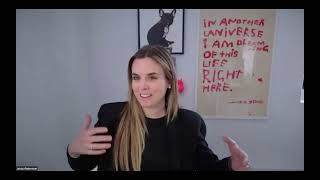
Panel from April 11, 2025 moderated by Warren Zen with CROs Jerry Demos (Process Street) and Jessica Robertson (Intel AI). The discussion centers on how AI is reshaping the CRO role — shifting responsibilities toward data-driven orchestration and tool management while stressing that strategy, ICP, and product-market fit remain primary. Panelists contrast efficiency gains (capacity, top-of-funnel automation) with questions about effectiveness (closing, differentiated GTM), describe experiments in account-based management and account mapping, and predict consolidation and deeper tooling for later-stage sales and partner/CS orchestration.
Chapters
We have Warren Senna in the house, he's going to moderate the panel and the topic is AI and how CEOs can unleash revenue growth. And he has two panelists that are extraordinary cos that. Warren, why don't you introduce your team? Sure, sure, sure. Hi everyone. Thank you Gerhard, for having us and hello everybody.
Yeah.
So as you may have seen me up here before, Gerhard, it's been pleasure enough to have me around. I'm Warren Zen. I'm the founder of the CRO Collective and we work with chief revenue officers to help them succeed and work with companies to help their companies make sure their CROs succeed. And today I'm really happy to have two great CROs with me here. We have Jerry Demos and Jess Robertson, whom both are. I'll let them introduce themselves. Both CROs. And we're going to talk a bit today about how AI is transforming Croatia roles and their goals. So Jerry and Jess, why don't you introduce yourselves?
Yeah, Jerry first. Okay, I'll go first. And thank you here. Thank you for having me. Look, I'm. I'm chief revenue officer at a company called Process Street. Process street is a AI enabled platform providing automation to regulated industries. And so I've joined this company just recently. My background is in tech sales and once upon a time I was a partner at KPMG as well, which has sort of always set me up for enterprise sales throughout my career. So that's been my focus and now I'm living here in New York. So great to meet you all.
Great, Jess. Yeah.
Hey guys. My name is Jessica Robertson. I'm the CRO for a company called intel AI. We focus currently on changing the way that people sell through their relationships and their company's relationships and orchestrating and automating that into your go to market practices. So super excited. My past is in startup world tech sales, everything from Pre revenue to 50 million. And super excited to be with you today, Warren. Thanks for having me.
Of course. Absolutely. So I'm thinking it's interesting, right? Just a thought came to me. It's like you're not a company today if you don't have AI at the end of your. Should I change my company to crcollective AI?
Maybe I should.
You know. So old timer here the.com address. So. And it's telling because that's very much indicative of where we're at right now today. And that's what we're talking about. Right. So I guess the first thing I'd ask both of you. Let's kind of wax on this question, which is how do you see AI transforming CRO's role in terms of revenue and growth and process optimization? You just go ask the question, however.
Sure, I'll take it. I think our role is changing massively from people managers to real like engineers and orchestrators of the go to market strategy. Right. Like at one time it was all about how many butts and seats and every person controlled, you know, some portion of the outcome of the revenue channel. But I think we're seeing, you know, driving efficiencies and adding tools so into the overlay of also managing people. Right. So combining those two forces, making us more efficient, but also doing it in all the right ways where we have to be more data centric than ever before, we have to be more technologically advanced than ever before, watching all of these systems and coordinating these systems not just in our own teams, but in the revenue organization as a whole. So sales, marketing, cs, even coordinating with product on how these things overlay so that feedback loop can be there. I think it's. We're kind of in the height of that change I think right now from just pure people and process management to pure engineering and you know, product orchestration along with people management.
Yeah, I totally agree with that. In fact, I think the job is getting harder only because the rate of change is expected. The expectations set by investors and you know, the access to customers, all these dynamics are changing at the same time. And you know, you used to be able to make your investment decisions and your tooling decisions and you know, kind of keep that in place for 6 to 12 months before you really had to make some significant adjustments. And I'm finding that now adjustments are required, if not quarterly, then potentially even on a monthly basis. A lot of experimentation with new tools coming out to see if that gives you the edge. So you need a lot of time spent learning those new tools, testing them in the marketplace and then deciding whether they would become part of your permanent tech stack or not. So there's that whole technology piece that Jess was just talking about, like really having to be a, you know, a mini CTO for your organization. And then there's all the people change, managing all those tools and, and the experimentation through with your people as at the same time you're trying to reshape your go to market. So it's a challenging time, I think, to be a CRO. Not that it was ever easy, but I think with the advent of AI and all the new solutions coming out, I don't think it's getting easier. Even though that's the promise, I think for the time being it's going to be more complex and.
More challenging.
Yeah, it's fascinating, isn't it?
Right?
I mean, there's no doubt that the conversation always is around greater efficiencies, more predictability, greater automation, more intelligence, less people. But the iterative process to get there is another distraction. It's like almost like another part of the business now. We're almost like we're In a way, CROs are now guinea pigs for new things. And that takes up a whole section of our brains, which is not just running the business and building growth, but also seeing how new tools work the marketplace. And we've become almost crash test dummies at the same time that we're trying to grow a business. So, you know, how are you managing that? I have a lot of experience with my clients who are dealing with this, but I'd be interested more specifically, like when you're running your business and both of you, you have your goals, right? You have these clear goals, which are revenue goals. And at the same time you're saying, you're being told, well, you know, we're missing the market, there's competitors using tools where not. Or there's just a fomo, general fomo. How do you manage what to focus on, what not to focus on. And do you have sort of say in the matter or are you more at the mercy of what you're being asked to do?
I think for in my role, it's you, you, you led into it a little bit for me. So it's, it's starting way before implementation, right. Like you're almost fully analyzed and you're not almost, you are fully analy the entire stream first to identify any place that you can potentially automate or become more efficient in that space. Because what we're being asked to do is not just meet the goal, do it efficiently, mega efficiently, right? Like this world is demanding efficiency right now, not just hyper growth at all costs. That's not an option anymore. So when we're asked to do this, it's like you have to do deep analysis before you even go. And that leads into your. Do you have any say or not? Yes, we have say. Or at least in my case I have say. But it's got to be with the right conviction, conviction backed by data within the entire process. So you go through this deep analysis and for a lot of salespeople who come up through the sales rink, they're not that analytical, right. In general like they don't have these big data mines. So we're seeing the position itself adapt a bit into needing that as a resource. If you aren't that yourself, becoming more data and analytical driven if you weren't already, and really understanding how to look deeply at each part of the funnel, right. All the way through the customer lifecycle from attribution in the very top of the funnel, all the way through retention in the very end. And understanding where there's weaknesses, where there's opportunity and weaknesses could be hid under success. By the way, success doesn't just mean that the number is there, there and staying. It's how efficiently, how much did it cost, how much did it, you know, does it effort, does it take from the people standpoint? So I think there's so much analyzation that has to happen even prior to implementation. And then what you're talking about is right, we become guinea pigs because so many of these companies, like how many startups are there in the space serving CROs today that have just done a piece of the pie, Right. So then that's where that orchestration of the entire tech stack, where do they overlap? What do you have that does half of this and some of that? And I think we'll see a consolidation in the coming years of all of these tools. They'll begin to do more. There'll be buyouts of some of the small guys. But I think Nonetheless from the CRO's perspective, it's first got to be attached to a board objective and if then it's attached to a board objective after deep analysis and proof of such, then we have say in doing and changing our org as needed.
Got it?
Yeah. For me, look, I have accountability and responsibility across the entire revenue generating departments of the organization in traditional sense of the CRO. And we're constantly fighting with the idea of best of breed tools versus something that can service most of the organization's needs. But I think I'm not going to spend as much time on that as I am on the structural challenges. Because you know, the tools will give us efficiency but they won't make us effective unless we've nailed down things like the ICP and we've got the right go to market strategy and we've got a differentiated product and we've really nailed all those fundamentals which I think we're doing a great job of, don't get me wrong. But that's going to drive a much bigger gain for you know, CROs, I think than, than the tools, the tools come into it because if, I mean, for example, in my sales organization that the AI tools have really driven a lot of capacity for doing research, for understanding, you know, being able to build a unique selling proposition by customer. And you can do that in enterprise. You can't do that when you're, you know, tackling smaller customers. But in the enterprise segment, we can invest.
Half the amount of time, in some cases, you know, 10% of the time it used to take to develop a bespoke proposal to develop a unique proposition. So it's great from an efficiency point of view, but that doesn't mean it makes us more effective. It doesn't necessarily lead to greater revenue. It improves capacity. I don't have to go hire the next five people to increase capacity because those tools are bringing that efficiency. But the thing that I'm most concerned on a daily basis is the effectiveness of those things, which is why we're constantly experimenting and trying things to see what's going to improve effectiveness from. Right from the, you know, from marketing right through to, you know, the bd, the qualification, sales conversion, customer success. Anything in that domain that improves effectiveness for me is going to be a much more important investment and use of my time than things that just give us capacity or efficiency. So that's, I think they're the trade offs you make as a CRO. It's like, you know, where do I need the capacity? Where's my biggest constraint? So if your constraint is going to be capacity, sure. There's so many tools out there that really help improve efficiency, not so many that improve effectiveness. I'd love to have that debate with many, with other CEO.
Yeah, no, it's a great, great point. I mean, I so get this. I do think that even in my opinion, CRM systems, you know, early adoption of Salesforce, et cetera, companies made the mistake, I think we still do, of borrowing technology to replace strategy. It's, it's not the answer. You know, you have to have your shit together before you can get a complex technology. And I think that companies sometimes make the mistake of saying if we invest in a very complex technology everybody's using, it's going to sort of automatically advance us into their other competitive categories. I don't think that's true. I think just because I bought a race car doesn't mean I'm a better driver than the people that have been driving for me a long time. And if you don't have really good driving skills, you shouldn't be operating heavy machinery until you know how to do it. And I Think the danger I'm seeing that right now is that, you know, AI sort of creepily is not as, you know, let's say, like, defined. Defined that way as much as it's more in the sinew. You know, I see AI as more like a tendon or cartilage as opposed to a brain, right? And that way it seems easy for me to sort of replace my tendons with technology. But that's. If. If the stuff that it's connecting isn't working, then I'm connecting to. It's not going to work very well, you know, So I. I still think the things we're working on with our clients a lot is just those things. Jerry, it's basics, right? It's like, are you targeting the right people? Do you have a differentiated message? And I see that stuff being overlooked because A, there's a belief that these technologies will solve the problem, and B, they're distracted by them. Like, they're. It's more exciting for them than to solve the basic problem. So, you know, as a CRO, I'd love to talk more about that. Like, how do you manage the kind of compulsion, right, to kind of pull your company into this morass of experimentation while not getting the basics together when you're being sort of asked to provide me with data that shows that we're competitive in the marketplace as opposed to just, we have our basics together.
I think you said it already, Warren. You have to know that you can do the basics first. Like, can you sell without anything? Like, does your product work for the customer that you're trying to sell to? Because, like, no solution on the market is going to fix that. Do you have a sales process that can even be made efficient? Because who cares if it's efficient if it doesn't work? Like, it's. You're solving for the wrong problem there. So it's like the. I see so many companies keeping super wide ICPs, like, keeping their TAMs bigger, not like kind of floundering within the world in which they can play. And the first thing that I did, I know, upon starting here is go to the narrowest part. Succeed, win, and then expand. And then you can take the part where your success is already working at a basic level. Right? Like, I think some. Sometimes we get so caught up in this change of automation and the fact that we have to be data analysts and, you know, tool orchestrators, and we forget that, like, sometimes we should just be AES again and learn. Like, is it working? Like, be in front of your customers? What are you hearing you have to put your customers first, you have to show value so much earlier than ever before. So before you even start thinking about how do we make it efficient or what tool do we put there to make our salespeople better? Go back to the, you still need great people. You still need to know who you're selling to and what problems you're solving solving and the values you can bring up front. There's no replacement for that stuff still. And I don't think we're getting to the point where a human's going to be out of the loop anytime soon. Like that's, that's my philosophy. I think that it's going to stay in and that's one way to differentiate these days. But I think all in all like those basic things that you just said, if you're not doing them you're, it doesn't matter. You can buy all the tools like it'll, you'll, you won't win, you won't grow. Yep.
Yeah that's true. Well at least your growth will, will be, will continue to be ad hoc across industries. So I've joined a committee that's got 3,000 customers and over a million users and by all means successful. So we're now looking at what's the next, what's the next growth, what's the next S curve I guess for the company. Right. If you understand the S curve of growth. So it's really difficult to say hey you know, we're in 10 industries and we're going to focus on this one and go from 10 to 1. Nobody's going to do that. Nobody's going to say no to revenue. You know, I bad revenue because it's not bad revenue but it is more expensive revenue. And then you've got to decide okay so we don't want to go to one, what do we go to five? Do we go to four industries? Three industries. And that comes down to capacity issue. And my before where I was talking about those technologies that's where it can really help where if you can focus on one or two industries or three or whatever your capacity is but then you can use technology to syndicate or almost run it as a second or third priority tier but you can highly automate it. Your go to market your response to customer inbound the way that you generate revenue in those industries you kind of get to eat your cake and eat it too. But it's not your priority and that's okay. I think, I don't think you have to say no to everything and be depends on your stage of growth and depends on, you know, what you're trying to achieve as a company. But for us, it's a question of how do we continue to not hinder that growth. We're not going to fuel the growth that's secondary or tertiary to, to our strategy. And we're going to put all our proactive engagement and resources into those three industries that we really care about that are most heavily regulated and we have the most credibility in.
But you know, every, every founder out there will be thinking, yeah, I'm, I'm not going to say no to business, but then I've got to make some strategic decisions. And, and the way that we do that, we think about, okay, well where, where are we going to invest all of our marketing dollars, like all of our outbound effort, all of our campaigns, what message is it going to send? And through all that, if somebody in another industry, you know, if we find a recipe for success that we can do it especially through our partners. We've got an incredible partner network and they're out there and they're killing it in the education sector. Well then that's great. We're gonna, we're gonna support them on that because we don't have to be the experts because they've got that credibility in the industry. So we're gonna, we're gonna work with them instead to push that industry and help them be successful in that industry. So I think you can, you know, spread yourself out and have a, you know, a strategy to the market that says we're going to do X, but then also be doing two or three other things in the background that there could be experiments about new products, they could be experiments about new industries, they could be experiments about partners in your go to market motion. And I think that's important too that you're not just experimenting with tools, but you're experimenting with, with the other levers in the business for how you're going to drive their growth.
Yeah, some of the ways we do that is expansion by overlap. Who else overlaps with what these, you know, this TAM or this particular industry wants from us? How can we deliver similar product service implementation features to a completely different industry with minor messaging changes or with minor value prop changes? And that's kind of how we've looked at growing into being kind of non verticalized, if you will, like still having a very narrow ICP on what they need. Like your ICP being the problem that you solve, not necessarily who you solve it for type of thing. So that's been working well for us too.
Yeah. And I mean the one thing that we use as our North Star as well is our, you know, our scores on Capterra or G2 or GitHub, you know, and we've got, you know, we've got the highest score in the, in our category there. So that's become always a company has always been customer obsessed. So whatever we do, as long as we're not diluting that and we're not losing that positioning, then experimentation is pretty open. So we look for those adjacencies. We look for partners who are specialists who can deliver scale. Especially if you start looking at other markets and you know, smaller markets overseas, which would be interesting but a distraction for most kind of startups, which is what we still see ourselves as.
I like to. You kind of hinted at this, but I like to get in the weeds a little bit more around some specific AI platforms or initiatives that you're working on right now. How are you using them? How are you deciding what to use? What's the deployment, what are they being used for? How do you measure their success across sales and marketing, customer success, what's the way that you're doing this? What's your process for experimentation and what drives your decision making?
Either one of you, go ahead.
Yeah, we've taken, I mean I focus most of my time on completely automating the extreme top of funnel enrichments, waterfall enrichments, making sure you know who your customer is, mapping that account really, really intelligently understanding your relationships and how to map relationships within the org. Like something super debilitating in the past has been that CRM's customer relationship. Managers can't map relationships. They're super structured data and they're super narrow in form. But I focus a lot of time automating the repetitive work that just doesn't, it doesn't bring you money no matter what you do right. Once you get to has the potential to bring you money. And I see that the place as where I put the most tools and the most time trying to spend automation and then I think on the kind of the middle of the pipeline on side it's really all about mapping the account. Intelligent mapping of not only the contacts in your account, the accounts, what's happening at those accounts, what are the indicators that success will happen or success is possible from a budgetary people, time of the year cycle, whatever the case may be their customers, what are they being affected within a macroeconomic type of way? Really understanding your customer and the challenges that they're facing. That enables you in the backside of the cycle to drive urgency, have all your ducks in a row be organized, delivering the customer what they need when they need it, at all times. So some of the like room automation tools helping you guide the sales process all the way to understanding like hey, you have a problem with urgency in this one. Pipeline management all the way through this is like these are the places that I've been focusing and I think that there's a lot of tools out there without like going into tool naming conventions. But I think that the top of funnel is the easiest place to go and drive a lot of automations really quick and get the data better. But the bottom of the funnel is the place where I think it's the spiciest right now in the AI world with how much we can learn and how well we can map these companies once they're in our sphere.
Yeah, that's really interesting because I agree with that. And one of the things we've been putting in place is a structured account based management program and surprisingly there's really no great software out there around that yet that I've been able to find. So you kind of rely on LinkedIn, you've got your own internal CRM, you've got external data points that you want to track about a company's performance, about their filings, about news they might have, but there's nothing that really brings it all together to you. And we've been developing that in house. The great thing about being a company full of engineers is that they're always handy with being able to build things for us. So we use AI right across our product. There's no part of our product that doesn't have AI improving that product. And it's the same thing across marketing, sales, customer success. We're constantly using various tools, our own in house built tools and a lot of products that we buy and trial and use across the business. So the account based management piece is the one I'm bringing up is because it's probably the area that I've looked at and not found a great solution and it's probably an area that we're now trying to cobble something together and it's not really, it's not great but you know, we're still able to bring in data from multiple sources and make sense of it and give us some sort of idea of what our customers are working on. And we're just trialing it now with a subset of our customers across the business.
So that we can identify where we can add more Value like where can you know what is that company going through? Where do they potentially need help? So it's much more than what a CSM or a customer success organization would usually do. It's taking it to that next level. So I don't know if you've seen anybody doing this well Warren, but I'd love to, I'd love to hear about it.
Yeah I am. I mean I agree with you. I, I think it's interesting I'm hearing this thing called sort of ABM as a service. You know that it's almost like everything's account based marketing now because you can get that specific with everybody you're reaching to. And, and I do believe AI is going to bring a lot more a very degree of high specificity through outbound as opposed to making it generalized. And instead of making it a discipline where we just take some accounts and make them abm, we just sort of look at the world that way and I think that actually makes a lot of sense. I'm seeing a lot more of that. We happy to talk about that. So the last couple minutes we have here, I'm curious to know both of you maybe be a bit prognosticators here. Like what do you think are the most promising AI technologies or trends that CROs should be thinking about right now? What's. What are you looking out at as being like maybe weirdly as it may seem like in the next six months or so when the world is a different place all of a sudden six months from now.
What's your forward looking perspective on that?
Yeah, I think that like to narrow down just a little bit more. I think some of these amazing orchestrator tools like you've introduced me to a couple Warren. Like top of funnel orchestration like CRM management. I think CRMs have failed us in so many ways with just really crappy repositories for bad information. So I think you'll start to see that like really take a hold. People will get well they'll never get away from the CRM because it's the one source of truth that we've all just committed to blindly in some ways. But I think we, you'll see every organization go to some sort of data orchestration making sure that data gets put into the single source of truth and that they're actually able to collect everything. I think you'll see people start putting their networks, that's my hope, a little bit selfishly back into the go to market strategies.
Putting their network back in will cut through some of that noise like you just said, right. Like there's so much noise inundating everybody in the sales process. I think we'll go back to the good old days and people will start to rely on their networks and rely on the trust of their friends before being the guinea pig. Because I think we're just all tired of being guinea pigs. We just don't have the time for it anymore. And then I think in late stage there'll be something Jerry, I also haven't come across like a really late sales stage slash account management tool that helps for that. The final stages to ensure that you know, the efficiency around the close and what's happening. I think there's some interesting things out there. They're not fully baked yet but I think that's where the next phase will go is in that later stage sales cycle. Even partner management tools and things like that are pretty scarce these days. So I think the world has ran to the top of the funnel for, for products build because it's a really hard thing to get right. So I think the next it'll just cycle itself. It'll just go on through the sales cycle. And that's kind of what I see is that the bottom of funnel and post sale things are really lacking these days and there'll be more advancements there. That's kind of my prediction.
Yeah.
Also consolidation like these tools will start to do more collectively all the way through.
Yeah, I'm optimistic that that will happen too and.
I'd love to be able to, you know, buy something that, that helps me with doing a better job on partner management rather than trying having to build it ourselves. And the bottom of the funnel as you say, is another area where you know, we could do a much better job. I think with, with better tools. Right now that process is working, but it's not efficient. Right. So first you got to get it efficient, then you'll get it effective. But the one thing I am concerned about, and I don't know what I don't think, I think the tools, the AI tools aren't helping with this at all is you know, what you can do around outbound. And I think that just the.
People getting jaded customers are switching off email is just, it's not dead, but it's going to get dead very soon I think and Google and Microsoft and everyone else throttling emails and you know that's going to be really interesting to see what AI agents and how AI can help us be more effective outside in new channels.
That's a good thing. I'll tell you why. I think that we're reaching peak nonsense on Outbound. And I think that when it reaches that critical mass, it'll have no choice but to be changed. I think we're very close to the point where it just stops working and then we're forced to have to innovate. And I think that's. We have to get there. Sort of like we're all alcoholics and we have to hit bottom before we go get rehab or something like that. It's, it's horrible what's going on right now. So I, I do agree with you. I think that's gonna be a major place where it's gonna make a big change. Anyway, I appreciate it. This has been a great conversation, as I expected. So thank you both for, for being here and sharing with you.
My pleasure, of course. Yeah.
Hey, thank you so much to the three of you, Jessica and Jerry and.
Warren, you, you were pragmatic in your conversation. I loved your frankness of it. And wow, I like this peak nonsense. I'm taking that to the bank. Thank you.
Please do. I also like your comment early on, one where you talk about borrowing technology to fix strategy. I think it's very common, Very common. I see it all the time, Happens all the time. You can't replace strategy with technology. But it is, it has done a lot.
So.
And you, you sort of made another analogy with the crash test dummy. You know that you. Yeah, I have a thought on this.
Yeah.
I think what's going on is PE firms are secretly using their startup portfolios as crash test dummies to invest in AI platforms and they're letting their companies die, but learning from them about which tools can work and then they invest in those. I think we're all have to be careful about not being sort of abused by that process. I could, I think it's a smart idea, frankly. But companies got to be careful that they're not sort of just being used as like. What was it called again? It was that, was that, that show Westworld, which is. They just created a whole world just to test data, you know.
Similarly, you know, Jessica, I'm, I'm intrigued by your company's technology. Tell the audience why they should look into your solution.
Yeah, we. It's kind of what I alluded to without saying anything too much. We believe that in peak nonsense that that is just noise. Right. Everything is noise right now. And outbound, albeit is still working. I still do outbound at my company right now. But like I said, we're going to default to who do we know? And the hardest part, there is no great system to identify who it is. You know, my CEO likes to call it the reality of relationships. Right. LinkedIn is no indicator of who you know. It does not matter. You don't know your relationships with there. So this is what we do at Intel. We are helping you actually understand who you know through a really collective part of public data sources, internal data sources to your company. And we're bringing not only the technology but new strategies to companies on how to use our technology. So we're really integrated and implemented tool all the way through the process because we know exactly what Warren said. Like some of these strategies don't exist in companies today. And having a tool to drive that strategy and kind of having them packaged together is where we come in. So that's our whole theory, is that we're going to come back to buying and selling to our friends and people that we know and trusting the process only through proof and only through that proof of value. So this is where we're plugging ourselves into the go to market sphere. I appreciate you giving me that opportunity to tell the crew about it.
Go to intel AI.
Intel AI. You can find me on pretty much any version of social media out there. I'm happy to chat with you.
Awesome.
More from Gerhard



What Selling Looks Like When Your AI Agents Have the Context Your Sellers Do

Better Conversations, Smarter Support: Wearable AI in Business






When Scarcity-Built Systems Meet Abundance - The Judgment Gap in AI-Powered Sales Leadership
