Always Be Contracting: Why the Best Salespeople use the Contract as a Closing Tool
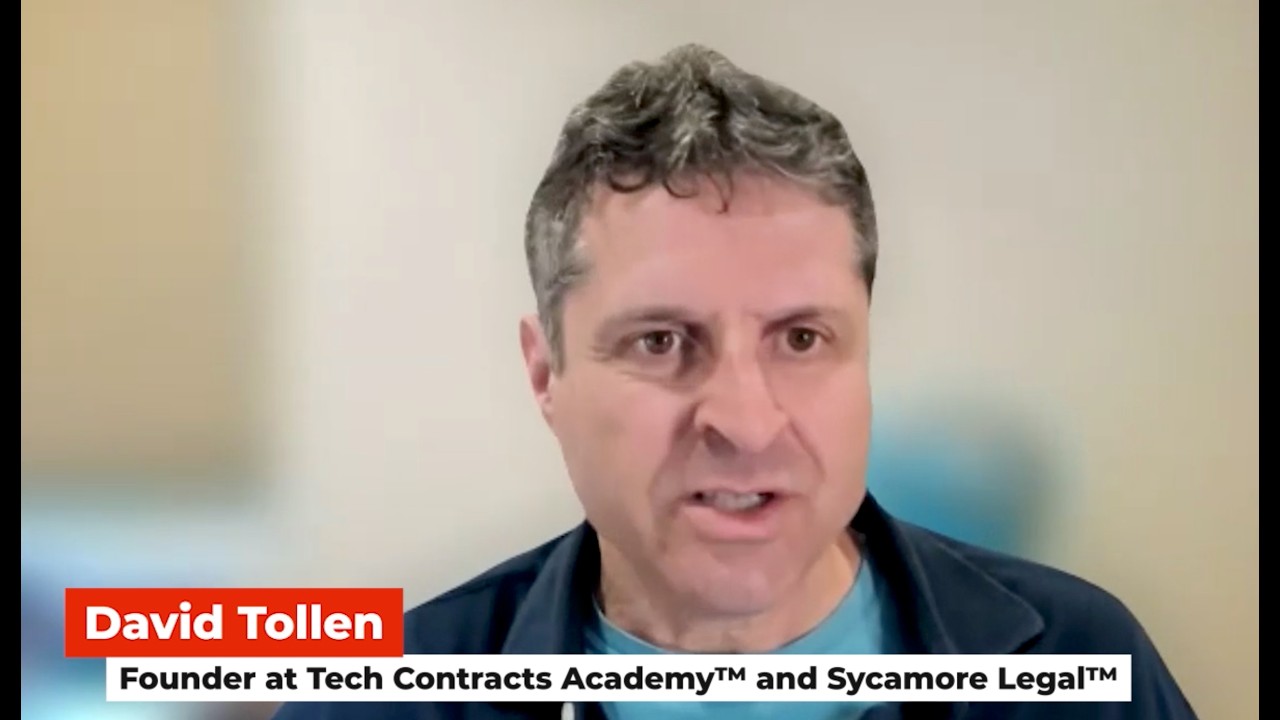
Attorney David Tallon explains how top salespeople use contract discussions as a closing tool. By proactively explaining legal clauses like data indemnity terms before customers see them, salespeople reduce sticker shock and accelerate deals. His training teaches non-lawyers to translate legal language into business terms and mediate between customers and legal teams.
Chapters
Hi, my name is Gerhard Gschwandtner and welcome to Selling Power TV. Today we have the great pleasure of meeting with David Tallon, and he is a pioneer when it comes to using contracts as a sales tool. Welcome, David.
Thank you, Gerhard. It's great to be here.
So explain, how did you, uh, came down this road teaching sales professionals about using contract terms as a closing tool?
Yeah, it started early in my career when I started to notice that some of the sales professionals that I worked with, some of the best ones, some of the ones with the, with the biggest numbers, were kind of sticking their toes into my realm. I'm an attorney and I was representing technology companies. I've been a general counsel and I've been outside counsel, and they were doing They were doing technology deals, and most of the salespeople were doing the sort of normal structure where they'd finish the, quote, commercial terms, and then I'd dive into the legal terms. But there were a few of these really high-number salespeople who I found had already discussed a lot of the legal terms with the customer by the time I was even involved. One in particular I remember, and I talk about this in our main training for salespeople, He would go through the difficult issues and prepare the customer. And to my surprise, I found this, this was making it better. The customer wasn't necessarily happy with the issues raised by our contracts, but they were pre-prepared. There was no kind of contract sticker shock, a term I eventually adopted, because they'd been warned. And this salesperson, he didn't understand contracts at a lawyer's level. None of these people I'm talking about did, but— understood them well enough to have very meaningful conversations with, with the customer. And I found again and again that salespeople like this, that the, the, the very best, the very most sophisticated were, were doing this and were also in some cases literally mediating between the customer and me, which again sort of rubbed me the wrong way at first until I realized this really helps. It was a, it was a good part of my education from these salespeople.
Share a little bit about your background as a trainer and as a negotiator.
So I'm an attorney, and I began my career doing technology and intellectual property matters at a global law firm and eventually found my way to an in-house position. I was the general counsel of a small publicly traded software company, and I did a few other things. I did a startup. I was a business development guy with a sales responsibility, among other things. At a technology startup. And eventually I started my own practice, which went through various iterations called Sycamore Legal. As part of the business development I did early on, I wrote a book because I had been doing trainings for other lawyers on how to do tech contracts. It led me to write a book that went with the trainings. And I wrote the book not just for other lawyers. I wrote it with simpler English, very basic stuff. And I had in mind particularly contract managers. And the book has turned out very successful. It's published by the American Bar Association. It's one of their absolute top bestsellers. It's been top 3 to 5 since it was first published. It's called The Tech Contracts Handbook. And this led to me training a lot of non-attorneys, contract managers, et cetera. I eventually formed a training company, which I now also run, called Tech Contracts Academy. And we train lawyers and contract managers. Of course, it eventually became clear that this sort of magical performance I had seen from these salespeople in my career, they could benefit from this same thing. In fact, I discovered that a lot of salespeople— so all these experiences sort of built towards doing, doing all this stuff for salespeople. And as the training business has grown, we've done trainings for lawyers, trainings for contract managers, trainings for IT staff, and then eventually started doing trainings that included salespeople.
How do you see the role of the salesperson in those contract negotiations?
The role is not to become some kind of junior lawyer. The role is to have a general grasp of the real business issues at stake. You're probably the person, as the salesperson, most able to understand the customer's business concerns, and so most able to see in advance What in our side's contract is likely to cause a problem? Or maybe you're on the customer's paper and you see, you know, the kind of things that customers want and you've seen this before and you happen to know our side is gonna have some problems with this. You're in a very much a first position to detect that and to come up with a game plan. And the goal of the game plan, of course, is Very simple. Avoid delayed deals, avoid long negotiations, avoid lost deals, avoid the contract blocking that contract negotiations can swoop in at the end of what seems a great deal and keep it from even happening. Close deals. And I like the term always be contracting, but it doesn't require deep knowledge. It requires that you understand these basics and are in a position to explain them to the customer and also explain the the business concerns underlying the customer's position to your side, possibly injecting a bit more sympathy, a bit more understanding than your lawyers and contract managers might otherwise feel, not having worked as much with the customer.
In your book, you have a really interesting twist on the language where you reframe the language of legal terms into commercial terms, which makes it a lot more reasonable for the salesperson.
And the way I'd put it is this. There isn't really such thing as a line between legal terms and commercial terms. One of the reasons salespeople don't get involved in the broader contract negotiation is they think, I've got to pick the product, the delivery times, the price, the basic commercial terms, and that's my job. And then someone else is going to do these other terms, legal terms. But if you think about it, you need to sign contract to close. And given that the fundamental concern behind all the concerns, all the terms, is profits— are we going to make money? They're all business terms. The legal versus commercial terms distinction is at best a staffing question. Maybe you are the first line of staffing and work on the commercial terms, and the lawyers and contract managers are the first line or the main— line on legal terms, indemnities, warranties, limits of liability, data security. Maybe, but don't imagine they're terms in different languages and that you are somehow blocked from looking at them. If you look behind all of them for what is the business concern, how does one party make money, lose money, et cetera, as a result of this clause, you'll be in a very good— position to assess it. And the other thing I'll just throw in that is helpful to understand, there's no— not only is there not such thing as legal terms and commercial terms, there's no such thing as legalese. They're not written in another language. You speak English. You can figure out what a long, painful clause says. It's just like reading technical specs. We sometimes have to do that too. It can be clunky and ugly, but you can figure it out. And that too is very empowering if salespeople want to wanna play, wanna play a mediator role, a proactive role in avoiding contract negotiations that stop the deal.
What you're saying is, or what I'm hearing is that the more the salesperson understands how clauses affect the decision-making process, the more they can persuade the buyer in the early stages so that there's no surprise later on.
I like to use an example of one of the most lawyery complicated, difficult-to-understand clauses you get in contracts, particularly tech contracts, which is an indemnity. It's just most lawyers don't even really understand indemnities. We spend a lot of time in our trainings explaining and debunking myths about them. But put that aside for a moment. This is— we know this is a clause your legal staff is going to be involved in. But there's also some familiar patterns that happen with indemnities that you are perfectly able to explain to the client. Like, let's say Your company just doesn't give a data indemnity. You're selling software as a service. You're selling artificial intelligence, whatever. And your company has just a— they've said it's a flat line. We are not doing a data indemnity. And a lot of companies take this position. This is certainly on the list of things that will cause sticker shock if you have reason to think the customer is really expecting that. Some customers expect that. Maybe they're getting it from their smaller vendors. It's also something— there's things about it you can explain to the customer and help them at least get ready for what may be a debate on it with legal with more sympathy and understanding of your position. For instance, an often misunderstood thing— customers think there's no data indemnity. That means the tech vendor is not responsible or liable if they leak our data. Great thing for the salesperson to start out. If you feel it would be helpful to proactively let the customer know to avoid that sticker shock and to talk about this more quietly than when the contract negotiations really start off, you say, you're going to see that there's no data indemnity, but there is liability for data. Indemnities and liability aren't the same thing. The indemnity is where we say we're going to defend you against a third-party lawsuit. And yes, that's not there, but we've got terms that say we're liable. We've got terms that say we protect your data. If we breach those terms, we're liable. Right there with this simple explanation on a very lawyery, very legalistic concept, you take one of the more explosive areas of negotiation and you let some of the wind out of it in advance. You can explain to the customer and get them at least ready and maybe accepting. And of course, then you can turn around and offer the same kinds of explanations of customer views to your own legal department.
Where did you learn how to negotiate the trade-offs that are always inevitable before you pull the deal over the finish line?
The trade-off negotiation has been a big part of my work from the start. And it's, you know, young lawyers often start out very well-informed about the technicalities of the clauses and with no business sense, no sort of sense, okay, technically this is risky. But that doesn't mean we can't do it. And it takes some experience to do that. What I like about working with salespeople is I find that you very often see they're starting there. They're starting with the business sense. They're starting with the balancing of interests. And we want to charge more, but if we charge less, we can sell more. And I mean, that sort of business balancing is their starting point. Lawyers usually have to learn that, and I did. And a lot of times contract managers have to learn that. And it was the process of learning that. to some extent being educated by salespeople who, you know, these really good salespeople I had the privilege to work with that started to train me how to do my job better.
What's your advice for salespeople when it comes to developing a constructive relationship with their legal department?
Yes. So as I'll speak to you from the point of view of someone who's mostly been in the legal department rather than on the sales side, although I'm Now a salesman for our trainings. And I've, as I said, I've had a business development role. As I said, lawyers and contract managers, lawyers in particular, are professional arguers. The ones who thrive in this position negotiating contracts, they're happy to argue. So arguing is generally a bad strategy. Once in a while you get somebody who just enjoys arguing and doesn't get mad and likes bouncing ideas around. And sure, argue till the cows come home. But in general, if you take the position of sort of trying to educate them, they don't really understand, or tell them, I hear this from salespeople all the time, the lawyers don't understand real business issues. Condescending to them is not a great strategy. So it's a question of offering them this unique thing that they will recognize that you have that they don't, which is, I know these people, I've been talking to these people, I know what their concerns are. And it's also a function of really listening. Lawyers like to talk. Contract managers often like to talk. Clearly, I like to talk. You listening gets both the— has both the enormous advantage of building connection with them, and also you need to understand what's at issue. The other thing to watch for, and this is going to be your trickiest part in all this dealing with your legal department, there will be points where they say, It's just our policy. We won't bend on this term. It's just our policy. That's a very frustrating thing for anybody to hear because there's no reason behind it. Usually when you get to that level, it's not that there's a secret reason, it's that your lawyer contract manager doesn't know the reason and is, and he or she isn't safe just bending that policy without knowing what it's for. Gotta accept that. Gotta recognize that. Do not wanna put them in a position where they're gonna be in trouble. Your job is not to overcome that and say, hey stupid, You should know the reason behind your policies. They should. But to say, okay, who can we talk to? Can we figure this out together? And maybe it's not you going over their heads. Maybe it's them and you going together to talk to— maybe there's someone higher in the legal department who understands the policy. It's looking for ways to collaborate with highly articulate, argumentative people without going to battle on being articulate and argumentative.
I think there's a lot of psychology involved. And as you say, lawyers have big egos and they love to win.
Yeah. Even the negotiators, we want to win the negotiation. Most of us will admit there's no winning. It's a negotiation. But deep down, I won.
Somebody once said, you know, the purpose of a good negotiation is not to haggle over who gets the biggest slice of pie. The purpose is to make more pie for everyone.
Yeah, that's right. And if you— if the other side gets more pie, but you got more pie than you needed, or that you're, you know, you, you got an optimal amount, it doesn't matter if the other side got more pie. But that's, that's negotiation theory. And, and actually, you know, I say negotiation theory, but our trainings are not exactly on negotiation theory. They're on teaching salespeople to understand all these legal issues, which you combine with your existing negotiation theory, your existing negotiation skills, this knowledge of the legal issues, and deploy them together.
David, give me 3 What are the key outcomes that the salesperson can expect after they go through your training?
Outcome number 1 is the ability to pull off situations like what I mentioned with the indemnity, to foresee likely difficult clauses, particularly if you've been through negotiations and you, you may already know where you're gonna run into trouble. To make an informed judgment, are we gonna proactively address this? The answer won't always be yes, because sometimes you feel like no, or says the sale is at a difficult, the quote commercial terms are at a difficult moment. I don't want to rock the boat right now, but at least be aware that you're sacrificing a chance to pre-address. So one outcome is that ability to pre-address, to pre-address these issues. Another outcome is a deeper comfort and confidence in your role as a salesperson. So always be closing really means always be contracting. If you are ignoring the role of the contract and of getting it signed in your process, you are walling yourself off from one of the steps that is necessary for you to get your commission, for you to close the deal. So the more you understand and have sight into what the underlying issues are, the more you're going to feel plain old comfortable in the negotiations and ready to deal with come what may. And then the other outcome is that ability to mediate, is to bring those 2 parties together Not with arguments, but with understanding. If you can help them, and this is really the key, you understand the business problem the customer has, you understand the business problem that's driving your side, you're able to look away from the terms themselves. Let's not get into where there's a comma, if we're introducing a new sentence, et cetera. We're going to zoom in on the issue and say, are these 2 business goals Even compatible? By the way, sometimes there is an unbreakable goal where the 2 sides have incompatible needs. You might as well not waste your time on that sale and move on to another one. But hopefully that's not the norm. You're saying, are these compatible and how? And say, okay, how do we make these 2 business needs compatible? And then turn back to terms and build on that. And you can play the role of refocusing everybody's attention on those underlying business goals and then building language to support them.
Where can people learn more about you and your course?
Yeah, so the course is called Tech Contracts for Salespeople. Very creative name. It's a 3-hour program, or rather there's a 3-hour on-demand version which anybody can get by going to our website. It's techcontracts.com, and we'll have a link specifically to the salespeople course for you. So you can take the course individually, It's in short modules, so you're not sitting down in front of a computer for 3 hours. You take it on and off as you please. You can also buy a package for your team. You can have, you know, and we have volume discounts for larger teams. You can have your whole team take the on-demand course, or you can have your team contact us and we can do an in-house version. We can do a live version where I train your team in person by video or in person live. And we can even customize those. Sometimes we'll say, let's go beyond the normal program. What are your particular concerns? So you can find all of that through techcontracts.com, which has the sales page. As I said, we'll link that specifically and our contact information. And yeah, it's a great course. I hope you'll take it and I hope you'll find it useful.
And I have to agree because I went to your website and I listened to the— I thought maybe I listened for the first couple of minutes just to get a feel for it, but then you hooked me in with all your stories. You're a great storyteller and you're a great teacher.
Oh, thank you. Yeah, and I think one of the videos you listened to is on the salespeople page at our site. So before you do anything, you can listen to me babble on and tell one of those stories.
Thank you so much, David.
Thank you, Gerhard. It was a pleasure.
More from Gerhard



What Selling Looks Like When Your AI Agents Have the Context Your Sellers Do

Better Conversations, Smarter Support: Wearable AI in Business






When Scarcity-Built Systems Meet Abundance - The Judgment Gap in AI-Powered Sales Leadership
