Beyond Copilots, Coaching and Call Insights: AI That Changes What Happens Next
Richard Barkey presents iCoach, an AI coaching system that moves beyond generic copilots to change how salespeople actually sell. A two-year study of 350 reps showed an average $143K annual revenue lift per person and 50% improvements over standard LLM copilots. The system embeds methodology, assessment, and adaptive learning into a closed loop that connects preparation, execution, and improvement.
Chapters
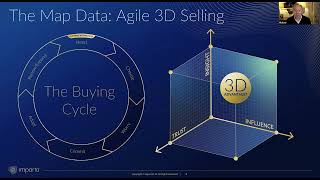
Thank you Gerhardt, very much indeed. And I have to say what a great conference it's been so far. I really enjoyed the keynote and the ethics conversation in particular. And with respect to one of the comments in the ethics conversation, I'm not a tech bro. I'm somebody that's run a training business, a sales training business for nearly 30 years now. But what we do understand is how to sell, how buyers buy, and also how to change human behavior because that's what we've been doing all this time. So when I talk about AI that changes what happens next. I'm really referring to how do we get salespeople to do something differently so AI can augment lots of things about the sales stack. And I really enjoyed the last session on AI based kind of qualification and generation of leads. What I'm about is helping human beings to do their job better to enhance the performance of your human salespeople. So I want to start this slightly unusually, by asking you, all of you a question, if I could. So we're using a tool called slido. You may be familiar with it, if you wouldn't mind just pointing your phone camera at that QR code. It'll take you to an anonymous page where you can just answer this question. Which tools are regularly used in your revenue stack today? So, so a vanilla LLM copilot, chatgpt, Claude, et cetera, a conversational intelligence platform like gong, a sales enablement platform like maybe mindtickle or a Lego, some kind of AI role play or some kind of AI coaching. Now we recognize that there are many more aspects of the sales tech stack than that, and I'll come on to that in a moment. But just trying to understand where we are in terms of the spread of adoption with this group in the audience today. So everybody is using LLM, which is good and hopefully using it. Well, I must admit it's quite interesting seeing how the different LLMs are kind of leapfrogging each other. I've just switched over to using Claude most recently because I'm getting much better results. But I'm Pretty sure when 5 point what are we on 5.3 comes out for OpenAI, I might go back to that. What we're seeing here is so everybody's using a vanilla LLM. We've got a third of people doing AI roleplays, which is great. A third of people doing AI coaching, 14% doing conversational intelligence and 7% using sales enablement. So thank you very much. For those who've answered that question, I have another question for you, for those who've answered that, or even if you haven't, and that is this. How confident are you? And that should now come up in your phone as a second question. How confident are you that those tools have measurably changed seller behavior in those key moments that decide revenue? The pitch, when the client says, yeah, that's great, but we're going to do it next year, or when it goes quiet after the pitch. So one is not confident, five is it's measured, it's proven, and we're happy there's ROI and allow you to interpolate in between those two extremes. So, based on the sample so far, a nice normal ish distribution, but it seems like most people are sort of in the middle. There's some impact, but certainly not what we would call measured and proven. In fact, as more people answer this question, it's pretty clear that we are sort of stuck in the middle here, which is not surprising for reasons I'll come on to, but very interesting to see that. Obviously what we want to do is to try and skew that to the right so that people are seeing genuine value and genuine sales performance improvement, not just time saving and cost reduction. Because AI, when it's used right, can be a source of genuine competitive advantage, but vanilla AI, and I think it's fair to say a lot of platforms out of the box are not doing that yet. So thank you again very much for your participation there. I'm going to just set out a taxonomy of revenue enablement because I think there's so much going on out there and we are a sales training company, a sales technology company. Even as we look at our own stack, we're kind of going, okay, there's an awful lot of choice here. And as Gerhardt said earlier, things are coming out every day. Every time I look at emails from companies like Selling Power, there's something else has been launched. So this is a very simplified view, but it's still quite complicated. I think at the base layer there is something that I call layer zero, the data layer. So that's your CRM core revenue data, Revenue intelligence and forecasting, things like Clary and Gong, data enrichment and intent, so zoominfos 6 sense and so on. Above that sits what I'm calling the enablement tech and assistance that are kind of embedded in that tech rather than being separate from it. So sales engagement, like Apollo, conversation intelligence like Gong or Chorus or rivoma, content enablement, like Seismic or HighSpot, LMS and LXP and customer success platforms so you've got that layer of enablement tech, all of whom have of course now got AI and agents embedded in it. And then you've got the capability and services layer. So companies like Imparta three years ago, methodologies and training with human and a bit of AI like us, Richardson, Korn, Ferry and so on, practice, roleplay and skills assessment. So Yoodli second nature hyperbound, that's kind of AI based role plays and deal execution which I think is an emerging area where Claude Cowork is pretty interesting. And at the very top we have an orchestration and revenue enablement layer and that's kind of a gentic orchestration of multiple vendor agents and governance, risk and compliance. So it's no wonder that we're all seeing, you know, a little confusion in the space here because there's an awful lot of different components. And this is, it's not a bad taxonomy, but it's certainly not complete. One of the things that's happening is the barriers between these different areas. And by the way, I'm super happy if you guys want to take screen grabs. I'll give you an email address later if you'd like a copy of these slides to write to. So one of the things that's happening, as I say, is these kind of definitions are collapsing somewhat. So Imparter now actually does all of these things. So we do orchestration training, AI role plays, conversational intelligence, content enablement, LMS and a degree, not fully, but a degree of revenue intelligence. And I say that just to illustrate how I think the platforms that exist today and I include things like Salesforce in that are going to be either replaced or looking very different in two to three years time. So I would like to propose a way to think about enablement and again I'm not looking here at kind of generating and scraping deals and generating pipeline. I'm thinking about the enablement of your humans. I'd like to propose a way of thinking about this that closes one critical loop or gap in what's been done right now. So right now you have conversation intelligence that will go and give you a debrief on a call that's happened. But it's not connected into the learning that helps people to get better and it's not connected necessarily into the coaching that helps them prepare for a call. So I call this the closed loop enablement system. And there are two fundamental cycles here that are very closely linked as in part of we've spent much of the last 30 years on the left hand side here in the learning cycle, but always trying to drive application on the right hand side. But I think now we are very much focused on both in an equal measure. So if I'm a salesperson working on a deal, I might begin at the top right of this loop by preparing for some kind of interaction with a customer. And then I do it. I have the call, I do the pitch, I write my plan, whatever it might be, and then I will review that and assess how well it went. And I can also, the AI can also assess how well I did. But that assessment has to be contextual. The AI has to understand first of all what was going on in that customer call, where is the customer in the buying cycle? Because what you assess a customer against in the early kind of need stages is very different from what you do if they've, if you're in the post pitch period where they're alleviating risk and trying to build consensus between different stakeholders. And so if you look at most pure AI platforms in the sales space, it's no surprise that the main example they give is discovery or objection handling because that's what they know about. But there are actually 100 plus skills that you might need around the customer buying journey. And the AI needs to understand that to be able to assess properly. And then you can help somebody improve with E learning, with role plays, with coaching and so on. And then you follow up, the manager follows up that learning and the seller follows up with the customer if there's something else to be done. So that's the model that I would propose to think about this kind of continuous cycle of improvement of performance and learning. One way to think about this is I want sellers to be better for the call, not better informed after it, if you like that. So how does the stack that we've talked about fit with this? So you know, copilots and content enablement and some pre core coaching sits there in prepare in do you do have some deal execution agents and content enablement in assess there's conversational intelligence and revenue intelligence. Improve, you've got training, lms, AI role plays. Follow through is largely sales engagement and CRM in the stack at the moment. But each category is kind of focused on one stage in that cycle. None of them close the loop and most of them are not methodology aware. And it doesn't mean it has to be in part as 3D methodology or challenger sale or whatever. It's about just understanding biopsychology, understanding what best practice is in terms of the way you use decision science and behavioral economics. To get people to take action as well as bring insight. So there are some real gaps in the way that we use our technology today. I think it's a bit like you have a teenager, you're trying to teach them to drive and you give them a SAT nav. But the SAT nav has no map data and on its own it doesn't teach you to drive. It gives you some information that can be useful, not much without the map data, which is the methodology if you like. And it doesn't bring the skills to the fore because they're not necessarily designed to create skill and they sometimes create the wrong skill or rather naive skills. So let me turn to the way we try to solve this problem then. The map data, if you like, is what we call agile 3D selling. So we think about the customer buying cycle, which is often very nonlinear, and we help people to work out exactly where the customer is in the journey in that unique situation, choose the right method, the right sales motion out of the many that are available and then execute it using the thing on the right, which is the 3D advantage. This is from our major research study. In fact, both the agility part and 3D are research based that identified three key elements of what good selling and actually good sales Management is all about bringing insight, influencing the customer to act and building, maintaining and building and maintaining trust. Interestingly, you can actually assess AI against that 3D model as well. Most AI is pretty good at insight, really bad at influencing sellers to do things differently and moderate on trust, as the ethics team said. So that's the map data and the system is what we call icoach and that is a personalized proactive coaching system to close that loop between performance and skill. So in the prepare stage you have the ability to research. The AI will research somebody that you're going to be talking to and create a role play tailored to your role, which it knows about and tailored to that individual that will allow you to practise the key skill that you need for that interaction in advance. The manager gets information on that. We give you coaching. A lot of coaching in this space is used to mean performance feedback. That's a type of coaching, but it's not the type of coaching you need before a call. The type of coaching you need before a call is rooted in frameworks like grow or our version is called igrow that actually helps you work out what to do differently in that call, hence smarter for the call. And there might simply be expert advice on how do I deal with a ridiculous Concession request from procurement that I'm about to get. Then in do we have decision making tools, creativity tools, and we're about to release something that gives you live feedback on a call that's got to be done very carefully because you don't want to distract somebody. But there are ways that we have to do that. Then in assess we have a variety of ways to look at skills, 180 degree assessments, AI interviews based on what you've done in the past, call assessments, email assessments, roleplay assessments. And we are developing a kind of win loss buyer based assessment as well. Well, improve. There's a thing called adaptive learning which isn't just an E learning, we do have that too, but is a way of understanding the user's confidence, skill and knowledge in a particular topic. And as that changes over time, picking in an agentic way the next best thing to do with that user. Is it a mini role play? Is it a bit of micro learning? Or is it perhaps just a reflective question? Because they're actually quite good, they just haven't realized it. And then following through is sort of all about really content creation nudges, following up and being proactive both with the user and with the agents and with the manager. Sorry, this little arrow off to the left is interesting because the data, the telemetry that we get out of what people are asking for coaching about and where the remaining skill gaps lie allows us to recommend areas where it might be worth doing instructor led training, whether virtual or in person. Because you've got 40 people over here that still need issue, need help with pitching and there's a new competitor that we've detected that would require this kind of way of thinking about that pitching in a specific campaign. So if we just make this concrete, if I take an account that's stalled, the system will send me a nudge, it will give me lots of suggestions. Some are assigned by the manager, some are things that you know, it goes. I think you might want to look at this. I might then create a plan on how to approach that account. I might even do a pre play role play to practice as well as getting coaching from the system. On what questions do I need to ask, what pain questions at the strategic level, at tactical level and so on to unblock that account. I might then actually do that and be able to ask questions in real time if I need. Then I might do an assessment which again is aware of the methodology and aware of the context of the call. And I might then do some learning to improve myself after the call and Then finally follow through, perhaps by setting myself an action and the AI getting in touch in a week's time to make sure I've followed through on my coaching contract. So, very simple example, but the key thing here is it is proactive and it's very personalized to the user. It draws on a very wide range, range of agents. I'm not going to go through these in detail, but we're building new agents all the time and custom agents for clients. We're about to roll out a big onboarding program for a US client that uses some specialized agents to manage cohorts and nudge people to do what they should be doing and things like that. I think there are five, actually six tests of what makes good closed loop enablement in my mind. So one is it's got to be personalized to the individual, it's got to be proactive, it has to be primed with that methodology and it can be yours as well. So we have a way of ingesting your own methodology or playbooks if you have them. It doesn't have to be ours, although ours often is broader and therefore fills the gaps. It's got to be pull based. So an AI that just goes, here's 10 bullet points of an idea of what to do doesn't change behavior. You've got to pull the user through that and it's got to be present in the stack, in the workflow at the moment of need. And of course it also has to be protected. It's got to be secure, safe, explainable, ethical. And as was discussed earlier, it has to be able to mitigate bias because bias is there, but there are ways to mitigate it. So personalized. This is just a screenshot from the system. The AI sometimes takes over the whole screen, sometimes it whizzes over to the right so that you're working on something with the AI. And in this case it's working on my profile, what it understands about me, which will help it to, to kind of coach me in a much more personalized and effective way. So it will interview me, it'll ask questions, I can update that stuff on the left myself or the AI will do it automatically as I talk to it. That's personalized. Proactive is this kind of email nudge teams message nudge that goes, it's about time we talked about this primed. So our expertise covers everything from forecasting and territory management right through to commercial strategy and everything between negotiation, customer success. It's very important that you can flip around between different issues without the AI stumbling and having that expertise not only in the source of the role play, but also built into the coaching through rag and other techniques means that it reduces hallucination because it's actually got that key current information research based at the front of the AI's mind, which helps to kind of avoid bad advice, effectively pool based. So we adhere to the International Coaching foundation standards for coaching with our AI coaching. So you know, demonstrates ethical process embodies a coaching mindset. And again, this is very different. This kind of empowering coaching is very different from what you would typically hear people talk about as coaching, which is basically means performance feedback. Try that again. Which is part of the answer, but by no means all of it present. I think there's an awful lot of platforms out there. We do have a platform, but really our key sort of use case is where you know, there might be copilot that orchestrates our agents when needed for doing coaching or you know, we can even orchestrate other vendors agents so that through mcp so that basically you end up with, you know, the seller having to go to as few, a few places as possible to get information on your stuff on coaching, on role plays and so on. And then when it comes to protected, I'm not going to go through this in detail but it's super important obviously that the right standards are in place, but also that the vendor in this case us thinks about hallucination, explainability, bias, transparency, guardrails and cognitive offloading, which is really important. So there is research out there. I don't have time to go into it right now that suggest that people who use AI and without using it in the right way, when it's mainly the AI pushing information, their skills degrade, they atrophy. And so you actually want to make sure that the AI is building new neural pathways for your humans and not allowing them to get lazy in their thinking. That's really super important. Does it work? And the answer is it really does actually. So we did a study of 350 people across eight clients in two years. So much of this was actually predating the fully agentic version, but nevertheless we got 148, sorry $143,000 per person per year of revenue increase that was validated by the managers of those people. So not just R say but attributed to the AI and validated 96% people said they would recommend and we're delighted as a training company, a sales training company to be winning awards that are about AI in learning, not just in sales learning and AI in enablement, not just in learning. So that's, that's really encouraging for me. We started doing a study to compare Copilot, just as an example, vanilla LLM with iCoach on four key tasks. So discovery, call planning, composing an email, deal, qualification, call assessment. This is early data. We're about to roll this out. So if there are clients out there who would like to join in with this study, we'd be delighted. Each of those tasks is measured by the user on our system and on copilot, and they rate it on five different criteria using a one to five score. And on each of them, again, provisional data. But we're seeing a 50% improvement in quality, usefulness, influence over what I actually do versus a vanilla LLM. You know, you can do this stuff in copilot, but it's not as good. And compared to pure training, we see in that same data 52% of individuals and managers, because this is great for coaching managers in their coaching and other managerial skills as well. 52% seeing behaviour change measured significant within four to six weeks, as opposed to typical learning transfer from training of about 25%. Dashboards allow you to close the loop there and I think that kind of information is super key. We combine Power BI dashboards that we can customize with the AI having access to that data as well. So one last thing, just before we finish an offer for you. If you feel like this is interesting and you'd like to test this for your team, we invite you to try it out. So we're having a special conference offer here, which is a fixed scope performance sprint for 50 people, three months with defined success metrics, has access to all the ip, integrated E learning and agents. It'd be sitting in teams or standalone. We can do more integration, but that might involve a bit more work and that's to be discussed. We'd put in some of your company data so it's got that there to work on. We have packs of information for your security approvals and AI ethics approvals. We'll do onboarding with your stakeholders, run a launch webinar for the pilot participants and all that for $10,000. Special conference offer price. I've never done a special offer before. I don't know what you think, but we're so excited about it, we'd like people to try this out. So that's an offer. My LinkedIn is on that QR code, so I'll put that back up again in a second. But just to remind you, really, this is about cloak. Excuse me. Closing the loop between performance and skills in a continuous process that also integrates with the normal kind of training, instructor led training, manager coaching that you would do as well. So thank you very much for your time. I'm Richard Barkey. It's been my pleasure. And if you would like a copy of the slides, please write to me or to Adam Norton. The addresses there that that QR code on the Left is my LinkedIn QR code on the right is our website and I live and breathe this stuff. I love it and I would love to talk to you. Thank you.
Well, people love what love your message. A quick question by Martin is asking a lot. What is being covered by a coach? You know, sit down. How do you suggest the sales manager continues to be involved after that AI role play and where does the manager add additional value?
That's a great question. We were very worried initially that good AI coaching might stop people wanting coaching from their manager. Because I'm a real believer in coaching and human coaching as well as AI. The evidence we've seen is actually the opposite, that somebody who has a really good experience with an AI coach becomes more amenable to coaching and is more likely to ask their manager for coaching and is also more likely to kind of correct the things that managers often do wrong. So one of those is in the grow model, when you get to options, you're supposed to ask the person what they think. Most managers will go, okay, so here's what you should do. But when they've had the AI asking them, as well as asking insightful questions, people are more likely to go, maybe I could give you my thoughts. So I think the manager has a role in coaching still the key thing for me, you've got to close the loop between the AI and the seller and the manager as well. So the manager agents, which we're continually developing, allow the manager and there's a bit of question about, you know, kind of GDPR and what you do with somebody's, you know, skill data. Do you need their permission to share it with the manager? Is that okay? And it depends partly whether there are workers, councils involved and things like that. But fundamentally, in a development sense, the manager should have access to that skill data and can help individuals based on that telemetry, but also look at their team and go, where should I be spending the most time and create an effective coaching and performance management cadence within that team. So I still see human managers I always have as being one of the biggest levers for change in a sales team. And I think the AI is not intended to replace them. I think some people do, but it's not the idea. I think it's there to help them be more effective as well.
Can you show the slide of the tests of closed loop enablement again?
The one where we show, Hang on, you've seen behind the scenes here. Do you mean that one? I think there's a little delay on this, isn't it?
Is that the one you mean enablement? Well, that's not about enablement. I, I'm, maybe she means the loop.
Oh, okay. So forgive me. I can just show that slide again. Is it?
Yeah, yeah, I think so. I thought personally this is a brilliant way to illustrate the performance cycle in a very simple, easy to understand graphic. And what's your take on that, Stephanie?
I think it is. And I wanted to kind of mention something that you were just talking about of AI. Is it going to replace or is it supporting? How does that work? And what we see in the research is that that AI coaching, especially initially, it really supports the learner to start to build up confidence. And as they're getting that feedback and that coaching and that training, they, they're now engaging in approach behavior instead of avoidance behavior when it comes to practicing and going to talk to the managers. And they're even interpreting the feedback in a way that's different because it's starting to create this culture of feedback translating from the bots to the people. So, yes, I think you're really on to something and I love this. As you went through and you're talking about the different components related to that with the examples, I thought that was very helpful.
Thank you very much. I'm going to just say something here. I think it's taken me 30 years to be able to distill this into something this simple.
Yeah, but, but also it shows your unconscious bias towards learning, which you put in gold.
Well, I, I, I, I do think, you know, I mean, I don't think AI isn't entirely forced for good. You know, I think there are, there are risks here and I do think keeping the emphasis on humans and, and the way we improve is, you know, something that I'm very keen to do. So, yeah, I think that probably is an unconscious bias, maybe even a conscious one.
Let's talk one, one more second about the, the impact that's had, you know, the $143,000 that really stuck out there must have been a tremendous sense of validation that your system works.
Yeah, yeah, it was, and it, and it was a very rigorous process. So the the total impact over that study was, and it was just over a two year period with those 350 people was in the millions. And I think when it was the individuals attributing improved deal size, improved deal velocity, we wouldn't have won this without it. I got the margin up, the impact was actually double that. And then what happened was the managers and the leaders from those eight clients got involved and went, yeah, that was probably just because that was a good client or the product was a good fit there. So I don't believe that, but I'll give you this much credit. So it was kind of whittled down. That impact by the managers, which is what we asked for, is good. But if you think about the ROI on that, you know, even if you're at a, I don't know, 70% gross margin, that much extra revenue and there was a margin impact through negotiation as well, that's a pretty substantial ROI on, on the cost of something like this. I mean it's in the thousands of percent. So it was, it was a great validation. I was really, really happy to see that data. We waited a while for it to do.
Do you think that there's an opportunity for companies in your space to improve the pricing model and get a percentage of the growth?
Ah, absolutely. So whenever somebody asked me if we would do success based pricing, my answer is always yes, we'd love to because I mean the great. The reason I came into the sales training world is it is a world where you can make a real difference. There's a non linear relationship between your sales capability and how much you win. You know, you're this, you lose, you lose, you lose, you lose and then suddenly you win. So I love this, what we do because it can generate significant results. What tends to happen when we say yes and we go, so what are you going to give us? Half a percent of the increase? That seems reasonable. And then they go, hang on, that's like 20 million. So I think we've been taken up on it a couple of times and did quite well out of it. But most people then go, actually we'll just pay whatever it is per person.
That's awesome. Well, thank you so much for joining us. I suggest that anybody who is listening right now head over to the sponsor booth, check out the content assets. Richard is in my opinion one of the most prolific sales training leaders that has made a very successful transition into the world of AI where you've been able to integrate everything in a, in a way that it gets predictable results. Congratulations.
Thank you very much. And if I may, thank you to both of you for a great conference so far. Looking forward to the rest of it.
More from Gerhard



What Selling Looks Like When Your AI Agents Have the Context Your Sellers Do

Better Conversations, Smarter Support: Wearable AI in Business






When Scarcity-Built Systems Meet Abundance - The Judgment Gap in AI-Powered Sales Leadership
