Building A Culture of Accelerated Learning
Roderick Jefferson argues sales enablement must become a strategic revenue partner, not just a training function. He outlines Sales Enablement 3.0: clear charters, cross-functional GTM alignment, structured onboarding with coaching, and metric-driven programs that combine data, AI, and human judgment to accelerate rep productivity and ramp time.
Chapters
I am so excited to introduce this next speaker because he is a true friend and colleague and he is a pioneer in sales enablement. He's a best selling author. He's the bridge builder between strategy and execution. Please put your hands together for a wonderful keynote speaker and he can work a grill like nobody else can. Ladies and gentlemen, please welcome Mr. Jefferson. Rod, take it away, brother.
Thank you so much, Joe, Ben, it's. First of all, it's good to catch up with you and Gerhardt. And to the folks that are out and about.
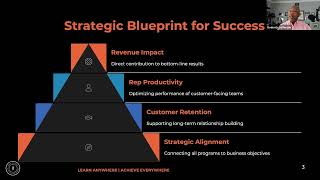
You are. I'm officially taking you on the road with me now, Joe. You're going to be my new hype man. How about that? I love it there. Alrighty. I'm sure they didn't come to hear about my barbecue skills, so let me jump right into this thing. You know, what I want to talk about is what has changed? As Joe just said, I am one of the pioneers in EnableMate, one of the OGs, one of the grandfathers, if you will. But I'm looking at it from a completely different lens, I think now than I've ever done before. And that is how do we now ensure that we're not just falling in line with the direction of learning, but that we as enablement practitioners and professionals are helping to guide and push this thing forward? Right. It's now time to move from, as it says here, being order takers. And I think we've gotten past that. But I feel like in the conversations I'm having as a consultant now that we're still kind of viewed as the fixers of broken things and broken people, if you will. And we have got to get out of that piece because if we do, I think the value and the roi, and that's another thing, I see a lot of folks conflating the two, which is value and roi. To me, value is an emotional statement. It is a, you know, I think and I feel, whereas the roi, as we know, is a hard line, how do we impact and influence? And I always say that around revenue because we're not driving revenue. And I hate when enablement people say that because unless you are carrying a bag out there, you're not driving. But what we are doing is impacting and influencing. So before I get into how do we do things differently, let's kind of go, you know, back to the future, if you will. And I look at it and for those that know, my book is Sales Enablement 3.0 and I get this question a lot. What was 1.0 and what was 2.0 and how is it 3.0 and why are we there and how did we get there? 1.0 to me was it was literally about training and I could X out enablement and say training right there. Right. That kind of bled into sales enablement. It was really reactive. We were then kind of fixing things. We're at the basic level of getting information out to people, but we really hadn't gotten to the point of enablement yet. Then we went to 2.0. That's where we started to step into the phase of enablement. And that's really kind of structuring and putting processes around things and a small bit of metrics. And at that point I still saw us as the kind of smiley sheets and buttons each. Right. Which is not my idea of fun at all. Because for anyone that knows me or seen anything on any of my social media, this is where we've got to get to. We've got to get away from just talking about sales enablement. It has to really be about go to market enablement. How are you impacting the entire GTM span based on one thing, the buyer's journey. For too long we've tried to shoehorn our prospects into our sales processes, our sales methodologies, our selling motions. And just like Jen Alanu said before us, our prospects can smell this a mile away. We want you to have a conversation with me. Don't give me another presentation. I want you to be that strategic business partner inside of your organization. I want you to become the translators of dialects and languages. And what I mean is you've got to be able to speak marketing, product marketing, hr, sales, et cetera, and then be able to go back to sales and give that back to the. To that their. Excuse me, take from sales and give the needs to the other lines of business and take it and give it to them in salespeak so that they understand it, but talk to them in their own language in each one of those. Is it easy? No, it's far from easy. But it's one of those pivotal transmission transformational moments that we have to make and we have to do it right now. So I look at this kind of as a pyramid around what's that blueprint? We have to. Everything we do has to be about revenue impact. And I know that it has been tough if you are an enablement practitioner out there, because with all the cuts we've all got cut up, including myself, at some point where you're like, you know what? They're going to make cuts, they don't drive revenue, they impact. It's very easy, it's squishy. They don't have the hardline stats and metrics. This is where it has to stop. Right now, everything that you're doing, processes, programs, platforms, tools, all have to impact the bottom line and they have to show a correlation. Excuse me, immediately. Rep productivity. The one thing that I hear about from all of the clients that I'm talking to and prospects is how do we get folks on faster? How do we now get these people ramped up in a more consistent and in a faster way? Because your C level folks and your board are all being metric and measured by rep productivity. Because the faster you can get them up, the faster you start to re to see revenue. The other thing is we've got them aboard. What are we doing now to retain our customers? How are we starting in the very beginning, whether it be the messaging, positioning, all the way up front with marketing, into the bdr, sdr, to ae, to scs, and then we've gotta bring in a closer and a tighter relationship with customer and client success. Why? Because if we don't, we build this big beautiful hallway. And all we're doing at that point is taking these folks and pushing them right out of the back door out of a short hallway. So focus on retention. And once you do that, now that's where you start to strategically align across all of the lines of business. Everybody is very, very clear on communication. Everybody is clear on the collaboration and what the deliverables are and everybody's held accountable. And then finally, that's where true orchestration starts to build again around the, the needs of your business, in the business, in the buyer's business. Excuse me, the buyer's journey up front as opposed to all of your sales focus. Where does it start? Oh, it starts with the charter. And I love this part because so many times I have either walked into a net new position or now as a consultant, I walk in. The first thing I say is, can I see your enablement charter?
We've got one. We've kind of got one. We're putting one together and I say, great. And I look through it and I say, I love that you guys have your value prop. You've got the overview of your roles, responsibilities and all those fun things. Where's the part where you talk to your stakeholders and internal customers, as I call them, about what you're not responsible for? Notice I didn't say what we don't do. That's very different. What you need to do is show the value of what you bring, also the ROI that you bring. But most importantly, here's where it's not the best use of our time. We're not here to build out beautiful things and we're not here to fix things. We're not here. And notice it's all about in the messaging, it's in the positioning of how you do it. It's about talking about what's valuable that you bring, what ROI you bring, versus saying, you know what, that's good, but that's not what we do because then things become defensive. The next piece is very, very clear boundaries on your scope of definition of what your organization does. If it takes you longer than 30 seconds to explain what your company, excuse me, what your organization does and the, the ROI you bring, take some of the words out of it because now you're saying way too many things and you're going to lose your internal folks. Everything. And I can't say this enough, has to be metric based. It's the KPIs, it's the measurements, it's the, the measurements that all come back to accelerated speed, to revenue, increased productivity per head and excuse me, productivity per head. And finally, how are you going to help your clients or your prospects increase productivity and efficiency or decrease pain? Because short of those things, especially in today's market and all of our geopolitical environment that's going on, if you can't do that right now, you serve no value. And finally you can't build in a vacuum anymore. No longer is it enablement, bills things, throws it over the fence and says, okay, here it is, here's our playbook. I'm going to say right now, I think playbooks are probably one of the worst things that's ever happened to enablement. And I say, let me be very specific, not all playbooks. I, I'm talking about our enablement playbook specifically, because what it's done is it built something that was about as useful as you handing it over to someone and say, this was printed here, go read this. No, instead, now it's all about circling the wagons, making sure that all of your stakeholders are at the same table so that everyone's very clear on the adoption, the execution, but more importantly, what's incumbent upon them to own the positive modeling of what you're trying to put in place. If I'm putting something out to sales or to CS and I don't have the buy in and I don't have the partnership with the leader of that organization, guess what, you just Built something that's going to fail right away. So it's key that you make sure cross functionally. Everyone's at the same table, everyone's speaking the same language and everyone it's far. So everybody comes together and how do you do it? It's about making sure that there are multiple people, excuse me, multiple segments of your enablement processes, programs and platforms. First is the pre boarding piece. I think that enablement starts before you sit your butt in the seat. The more that you can get them onboarded or onboarding should I say, the faster you're going to help these folks accelerate because now once they come in, they're no longer asking or you have to focus on the kind of the what pieces. No, no, you're talking about the why and the how. Now clearly the next piece is making sure that we've got those role specific breakouts and, and those components and content that now directly align to how do you do your job today? Not ramping you up, but how do you step into a moving stream? Because we all know what's too technical for one is not technical enough for another. And I think the more that you can do the role specific piece along with the foundation, it starts to instantly build that collaboration and that partnership between each of the lines and the roles so that not only do they learn their job, but they also understand the value and the ROI from connecting arms with everyone else. Then there's my favorite part. There's the ever boarding. And a lot of people do ever boarding. Don't get me wrong, the pieces that I'm seeing that are left out are the accreditations and the validation component. And notice I did not say certification. Certification is a technical term. Accreditation is more of a stand and deliver of a specific message to a specific ICP where now you get a chance to understand their needs. You go through the actual disco and qual, you get through the objection handling, you get a chance to really focus. Is this just a glorified case study? No, it's not. Because now you're doing it with the leader. So the leaders are a part of this process and now they understand specifically how to do the individual coaching to these folks that are required, where their soft spots are as well as where their strengths are. Because now what that does is it takes out the peanut butter approach of sales leadership and it really gets them focused on individual coaching. Let's go back to the the Everboarding for a minute. It's more than just an assessment. It's upfront understanding what works, what doesn't. Work. But why and what's been tried. The next is it gives you an opportunity now to really personalize. And this is working with the sales leaders. And I say this humbly, most sales leaders that I've worked with do not know how to coach. And I'm honest about it, what they know how to do is to in their minds motivate and nudge towards hitting the number or they focus on how they were able to be successful. And now they're trying to create these clones of themselves. Not how it works generationally anymore. Now it's about individual coaching, providing that, that practice, as it says, and that opportunity to show what they know, if you will. And then finally for you as a leader to focus on pertinent and personalized feedback. The final pieces. And it all comes back to measurements and metrics. Where are you today? Where are you now that we've done this? And how do we take you to the next level?
Metrics are important and I'm not talking about the old school smiley sheets and butts and seats. It's time to put those things to bed and put it to death in a really, really deep, grave, if you will. I'm looking at six pieces. One, what's the time to productivity or, or the ramp time? How fast are they getting to their first and their second close? Because that first one could have been in motion. It could have been a whale, could have been a bluebird, it could have been something that fell in place. It's that second one's important because now it shows their skill set from cradle to grave of how they did this. The next is productivity. Now they were able to do X. How do we get them to the next piece? The next is is critical. And that's about win rate there. Our win rate. Win rate was here. It was here at another. Right? And how are you getting up there? The content that is now a collaborative metric between both enablement sales and product marketing. Because now they're saying this, these are the top 30 pieces of assets and content. Here's what's working, here's old things that need to pull it out. So it's also one of those force mechanisms of having a sunset process as well as a feedback process from the field back into the business, from the business out to the field. And the last is what are we doing from a content perspective and how is that being perceived, received and used? It's not just the responsibility of marketing and product marketing. As I said earlier, you are, excuse me, the translators of dialects and languages, which means now We've got to bring content to the table as well as the structure, the content and the processes and programs. The world has shifted and it has shifted on its axis. And how's it shifted around? Making sure that we're now telling stories. As I said earlier, it's kind of like why we don't like buying cars or anything else out and about. It's because we don't want to be sold. We don't want a presentation, we want a conversation. What, what I read the other day was 80% of people, if they didn't have to talk to a salesperson, they wouldn't. They're already upwards of 80% down the road. But before they even talk to someone, no longer are they expecting us to educate them. No, no, no. They want us to differentiate for us. And also answer this question. Why you? Why now? And how can you help me either increase productivity and efficiency or decrease pain? And it comes through making sure that not only do you have the data, but that you know how to message and position it for that particular individual or company. The next is being able to, to leverage data as well as AI to find those patterns. And look, in old school we used to call it tribal knowledge. It hasn't really changed a whole lot other than the fact that we've got way better and way cooler tools now to be able to utilize those pieces, to find those patterns faster and also to replicate on those pieces that, that are weak working and pulling away the ones that aren't. And at the end of the day, it's taking the content of data and AI and tying it together with the context from the human component and now making that the story that you're out there telling. And that's where it goes back to those accreditations. It's no longer about just trying to check a box and say, yes, you can do that. And it's how do you now tell this as a story? How do you make this compelling? How do you make it engaging? And how do you now get directly through discovery and qualification and objection to what their needs and their pains really are? Sometimes it's not about pain, sometimes it's about increased productivity and efficiency. So for those that are being taught, oh, go and manufacture or find paint, not always pain, but when it is pain, now you become the, the professional that says, I understand your pain. Now let's figure out, do you need an aspirin, do you need a Vicodin, a Valium, or do you need an extraction from the way that you're doing now and turning around that big Royal Caribbean ship, if you will, of moving in a different direction. How do you do it? As enablement folks, we have to become strategic, excuse me, strategic partners. We gotta move from just being what we were at one point as trainers or training and now from being a helper to really structuring and pulling together processes, programs, platforms, the five Ps that I talk about all the time. And once you've got that down, now it's getting to that next level of really being an internal business consultant, or if you are an external consultant, of taking what you've learned as a strategic advisor now and saying, here's what I've seen, here's what I've seen. Work or not work? Not. Oh, this is the way to go do it. The one thing I would never say as a consultant is go do this without understanding what's been tried, what's worked, what isn't working. What they want is you to come now and say as a revenue architect that this is what you've seen. Here's the transformation that you've seen, Here are the case studies around it and, or the testimonials or the conversations that I can have because I need to talk to someone that looks like me, not someone in a broad specter or a different segment, but someone that has going through these very same things. They can talk to you before, during and after of what the outcomes were. That's where you become that revenue architect as opposed to just simply being a consultant. So let's talk about how do we get there from a tactical perspective and a strategic perspective. The first is, as I said, create that charter. Define every part, the mission, your roles, responsibilities, your metrics. But more importantly, you also got to include what you not doing and what does not bring high value. Remember, enablement is about scalable, repeatable processes and programs, but it's also about being able to implement these things, to learn from them, to measure them, to metric them, and then finally to be able to iterate on those and find and develop and deploy the clearest, most concise in as least of enablement, ease as possible in clear understanding of language that your stakeholders will value and understand, be able to share those things. So when you're going out, it's not just the responsibility of product marketing to say, you know what, hey, we've got all these case studies, that's great and I love that. But how do we now turn those into stories that are scalable and repeatable so that when our folks are out there, one, they're doing it consistently so that they're not confusing the market. And secondly it becomes more muscle memory. As an old athlete, I know long time ago but as an old athlete the one thing we did was and there was a simple mantra. The way you practice is the way you play. You don't just flip a switch and the lights turn on. You've got to be put into these situations of the last 10 seconds of the clock or we have to score here or we've got to stop them. Guess what? Let's take that same mentality with our our sales professionals and put them into those sometimes hot seat and sometimes you have to remember we're just building muscle memory so when they get out there they go oh I already know that. Objection, we've worked on that. Or you know what, we've gone down this. Let's twist it a little bit. And here's what I really want to understand from you. The more you can do that before, when they get into that situation, it goes without saying they are ready to go and prepared. How are we going to do it now? Oh, there's a new growth equation. It's not just go do these things and iterate. It's now the three legged stool of IQ + EQ +AI. And if you leave one of those out, you will not be successful in today's market. It requires that human piece of doing your research and having all of.
The processes and programs and all that in place. It also brings in the EQ play piece of the collaborative piece across the entire go to market because we all see things from a different lens and that's why we have these different lines of business. It's about bringing those all together and then finally it's about utilizing and leveraging the right AI tools. And I say the right because there's a bazillion of them. And as, as Jen said in her session before me, there's probably a whole lot more that will just invented while I was just talking. Everything is not for everyone. You have to find the right tools that fit for where your company is in the maturation cycle and also how your particular ICP or ideal client profile wants to buy today. And once you do that, what you now do is it now takes not only scale and replication, but as we know the things that we used to take a day or days or weeks can now do in a matter of minutes.
How do we do it now tactically? Because everyone I'm talking to over and over and over I hear, yeah, but AI is going to take this job And I won't have a job. And you know what? I'm honest about it. Some jobs are going to go away, but what happens is there are others that will be created because if we can use AI to, to leverage and move towards being more human, that's where we have the win win. So bringing that, that context, in making sure that, as I said, that eq, you're using that for context and for connection and connecting the fund. The third is making sure that you can turn these all into stories that can be replicated and scaled over and over, and that they have value to the receiver. Even as young kids, we all learn it's not about the sender, it's about the receiver. So get closer to them. So I want to leave you with four takeaways. First, embrace AI. It's not coming. We all know it's here, but it still has not gotten to where it's going to get to. And it's happening rapidly. So make sure that you don't become that dinosaur. And we know what happened to them. They're all extinct now. Make sure you're staying ahead of the game and that you are as an enablement practitioner, you're using these and you're practicing and playing with them so that now you can talk from a perspective of a user. Practical application, not just, oh, this was a cool tool that does this and it does that right. Here's an example. I use both Claude and I use ChatGPT. Like a lot of us, I use Claude whenever I want to iterate on something or I want a framework. And once it's there, I put in my context as a human, I take it over to chat. Then at that point my chat actually connects to Canva and I say, hey, love this piece. Now create a visual for me. Imagine how long all this would have taken if I were doing this manually. The next is identify.
More from Gerhard



What Selling Looks Like When Your AI Agents Have the Context Your Sellers Do

Better Conversations, Smarter Support: Wearable AI in Business






When Scarcity-Built Systems Meet Abundance - The Judgment Gap in AI-Powered Sales Leadership
