Building the Agentic Sales Organization
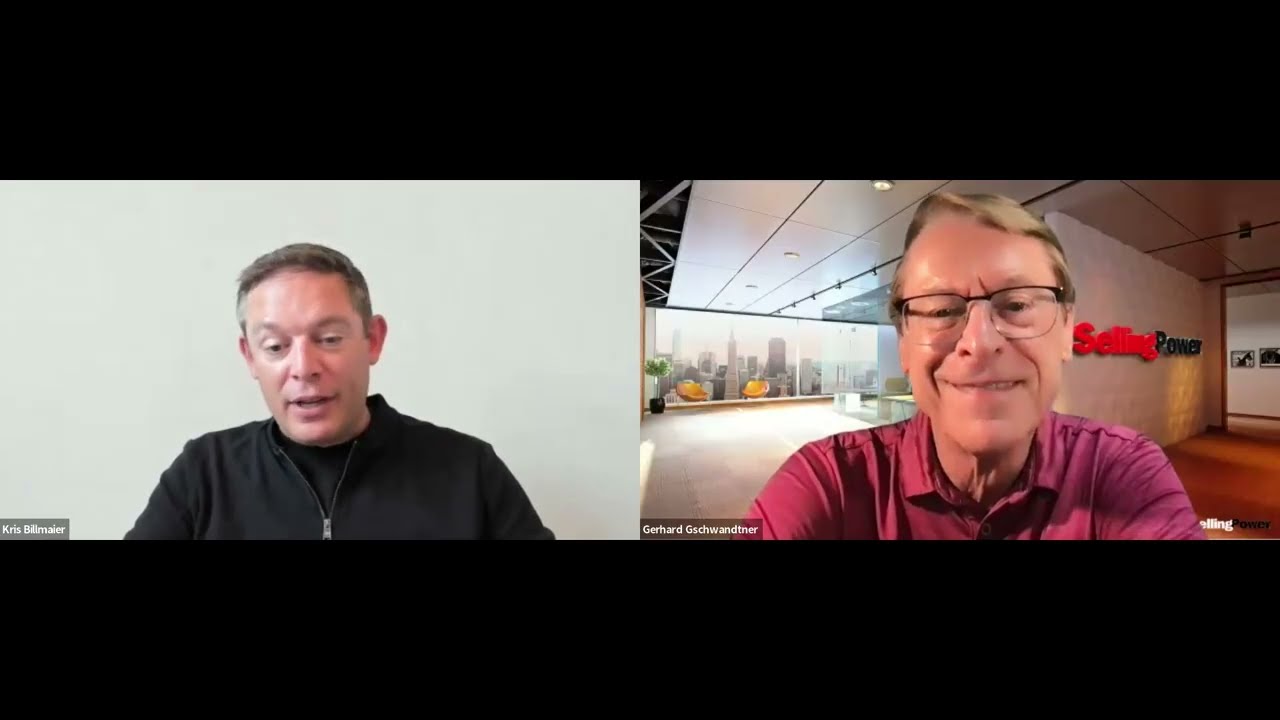
Chris Bilmeier, a former baseball captain, explains how Salesforce is turning CRM into an agentic system where AI agents handle prospecting, meeting booking, and documentation. Cloudforce embeds 37 sales skills via Claude, while one SDR leader now oversees 100 humans and 400 AI agents managing hundreds of millions in pipeline.
Chapters
Chris, I would love to start with what you learned. You played baseball. First of all, that's an amazing sport. And you worked for the— played for the Detroit Tigers. And you were team captain at Notre Dame. And so you were in a sports world that is totally different from the world of business. What did you extract from the sports world that you could apply to sales, to agent force, to Salesforce, to Claude force?
A lot of forces.
That's great.
Yeah.
What is that driving force from sports that can drive business?
Well, I think, well, one, thanks for having me. I'm excited to be here. But I think the thing that I extract out of this is I was a, I was a good baseball player, but I was a great teammate. And I, to me, it always is about team. And so throughout my career, I've kind of gone places where I knew I could learn from great leaders, but I could also surround myself with great teams that had the opportunity to win. And whether you're in sports or whether you're in business, whether you're building product, I think team resonates so much. And so, I mean, that's the main pull-through for me is that, is that aspect of team Uh, you know, winning as a team, not winning as an individual.
So what, what are the 3 qualities a good team player, uh, is bringing to the team?
I think it's, uh, one, we always say everybody gets the coffee. So everybody goes out and everybody is— there's no just exclusively manager people. We all do the work. Uh, 2 is there's a selfless nature to it, uh, where you're willing to do the thing that you need to do to make the, you know, the sum of the parts better. And 3, I think it's, you know, pulling together versus pulling separately, right? I think there have been organizations where I've been at that is very individualistic in nature, and that never works. You only go so far as your team does. So those are my 3 kind of steel threads.
Wow. I remember interviewing a, uh, somebody from a basketball team. And she said, um, so goes the leader, so goes the team. So it's really the leader that needs to embody the team spirit. So my question is, did you have to unlearn something in business that, uh, drove you to success in sports?
You know, that's a really good question. I, I can't point to one specific thing of unlearning. I think the thing that I always try to do is, you know, I, I have things that I'm good at and I have things that I'm really bad at and I hate doing. And I don't ever try to fix the things I'm bad at or hate doing. I try to bring teammates along to supplement for where I'm not strong. And so the thing that I think I learned and got better at throughout was understanding people's strengths and how the team comes together across a different set of skills versus having 12 people who could do the same thing incredibly well. So rounding out, making sure that you have all the right people with all the right skills and pulling them through and understanding what that looks like.
So Salesforce had an incredible week last week. Yeah, it was probably the most successful quarter in a decade. How do you explain that?
I think it's our strategy coming together, right? I mean, I think, you know, Mark announced headless several, well, probably a couple of months ago now. But I think when people start to see what that really means, working wherever you want to with the full context trust and intelligence of your go-to-market motion at your fingertips, it, it, it's kind of a seeing is believing moment. And I just actually got off a conversation with a couple of startup founders, and we were talking about kind of the value of CRM in, in this kind of new world where AI is so at the forefront. And, you know, the thing that I look at is people used to go into CRM Click on an opportunity, click on a lead, click on a contact, and kind of understand the context of that one thing. But now with AI and, and with kind of the headless motion, you understand the connectivity more between like things. And that is a multiplier for businesses. And so I think we're just going to continue to see more adoption, more growth, more usage patterns of CRM and of Sales Cloud, of Salesforce, because it's where the context lived and it's where your business methodologies and workflows and intelligent outcomes live. So I think we're in a really great spot. I think we have a really strong, strong position.
So define what Cloudforce is all about.
Well, it's the number one CRM meeting the number one AI, really. And I was lucky enough to be part of that Overall push where we built 37 out-of-the-box sales skills that call Sales Cloud directly via MCP and pull through those outcomes into Claude. And then Claude is an amazing harness and intelligence layer that acts on that, that builds the things that you need to do to accomplish the main tasks in your day. And I think for us and for our customers and for our sellers. Sure, there's a productivity angle here, but this is really about driving growth. This is about taking those sellers who are reaching quota, meeting quota, and turning them into President's Club sellers because productivity gains have to equal growth gains. And so that's really the push for us with our partnership with Anthropic.
So when it comes— you talked about 36 skills. What's next? What's coming after that? How does it impact the manager and how does it change the manager's role?
Well, I've always thought of a revenue organization as kind of the output of the rep and the entire team. And when I think about the revenue leader, I think about always knowing where you are in the quarter. Right. I mean, I think in the past, we've seen, you know, kind of, hey, this is my gut feel on the forecast, this is what I expect to close. But through what we've built in Salesforce and in Sales Cloud, we have what I consider to be the ground truth of the data and that kind of data foundation that allows you to get at Am I actually going to make my number? Because I think that's the, that's the question that revenue leaders every quarter ask themselves. How do I have confidence that I'm going to make or exceed my number? And with AI, great, you can learn more, but you need great data to have that great AI scenario that says, no, no, this is what your forecast is going to be, this is what your pipeline actually is, and this is where you need to plug in as a leader to make sure you hit the number. So I think that's what we're doing. I think that's what our partnership with Anthropic is amplifying. And, and I think that's how it drives impact for revenue leaders.
So the revenue leader or the sales director or the VP of sales, they know their number. They can trust the data. How do they help salespeople get better?
Yeah, well, I think there's a couple of ways. One, I mean, I won't get into depth into product features, but like, for example, we launched a call coaching product that effectively understands your calls, your conversations with your customers, and then after the fact says, here's what we got right, here's what we got wrong, here's what you can do better next time. And that's all set by the ops or the sales leader, uh, and it's aggregated. For the sales leader as well. So you can look across the entire team and say, oh, here's where my team needs to balance, or here's where my team needs to get better, and here's where they're shining. So I think a lot about learning from the data to train our sellers and learning from the data of who's doing what best and what are they doing and how do I extract that simply and easily to make sure that I have a team of sellers who are You know, spot on with their messaging.
So you have said many times that CRM is becoming an agentic revenue orchestration process. Explain that.
Well, I think CRM in the past has been looked at like contacts, accounts, opportunities. This is how I manage the kind of underlying data set where I'm going to eventually You know, get revenue from. I think what CRM is becoming and transitioning into is really that agentic revenue orchestration system that you, that you're mentioning. So that I use the underlying data as— think about it as like it's my operating system. The dataset for CRM is my operating system. And what do I do on top of that operating system? Well, I prospect intelligently and for you. I do handle inbound and outbound. I book meetings on a rep's behalf. I create documentation that allows them to prep, and I help them move deals down the funnel. And to me, that's so much more than CRM. That's action on top of CRM to generate outcomes. And that's really the world I think we're in now and going to even more aggressively is, yeah, if your job's to book meetings, we're going to help you book meetings. If your job is to help You know, close the quarter, we're going to help you do that. It's all about outcomes for us. And to me, I think that's really what a revenue orchestration system looks like.
So you said that you don't log into Salesforce anymore, you just query the Slack channel.
Yeah, I mean, I'm a heavy Slack user. I have another screen right here, my Slack's up and running. Yeah, I have certain skills that run for me every day that tell me, you know, I'm, I'm accountable for the Sales Cloud forecast and pipeline and, and all of that. Um, tells me whether or not I'm going to make my number. Uh, and I have that run for me daily and it's connected to my Salesforce simply via MCP and it's pulling back everything I need. It has my calendar integrated, so if I want to prep for anything, I click one button. I ask Slackbot to go deeper. It's really kind of eliminated the swivel chair nature of the way I used to be and put everything in one place for me to have an intelligent picture of my day. And I don't know, a couple of my favorite things are I have a routine that runs every day that says, here's what your email looks like, here's what I can do for you, here's where— why you don't even need to log into your Gmail anymore, here's all the Slack messages that are in your queue, how do you want me to respond to them? And then obviously You know, thinking about revenue, thinking about sales, and thinking about product to drive sales. It's all there for me.
It is an amazing shift because I remember interviewing Marc Benioff back in 1999, you know, where salespeople were promised to get a 360-degree view of the customer, but they had to input the data. And now the shift is that Salespeople no longer have to work for the tool. The tool works for them.
Spot on. That is, that it's like you're reading my Dreamforce keynote, which is coming up in a couple of weeks. But I do believe that CRM is now working for you.
Yeah.
And, you know, we, we love to say that we put CRM on autopilot, but it's really true. We, we have a product in Momentum, which is our call recording and insights tool. That, um, that literally takes a call and in real time writes back to the CRM so reps don't have to think about, oh, what, what did my week look like?
Yeah.
On Friday, how many reps do you know who have on Friday said, I need to update the CRM because my boss wants me to, so I'm going to try to remember what Monday through Thursday looked like and have an admin day on Friday? And That's just, you know, incomplete data. And now we're making it complete and we're taking that burden off the rep. And at the same time, that great data, it solves for the revenue leader as well, because the revenue leader now has a complete picture of what's actually going on in the business. It's a powerful moment.
So I could technically tell Salesforce, give me a list of the 7 most likely prospects that haven't responded to my last 3 emails.
And write an email for, for me to send to them. And we will. And the nice thing, if you do that in Slack or if you do that in Coworker, which we recently launched, um, we understand how you write because you write a lot in Slack, right? And you've written a lot of emails that are logged into Salesforce. So we can do that really simply in your voice. And so, yeah, all those things are very achievable now. And I think we're only gonna get more proactive with those kind of scenarios because why should you need to know the question to ask? Why couldn't we just put it in front of you because we said, this is how you're gonna make your quarter.
So every salesperson gets a promotion to being the director of a revenue generating machine.
I like to think so. I like to think that Every salesperson will manage one or more agents that share a common goal. We have this pretty cool story internally. The person who heads all of our SDRs, we have so much inbound. We're very blessed to have so much inbound. We have so much inbound that we didn't have enough humans to scale to respond to all of that inbound that we got. And so we actually have a person who manages 100 people who are SDRs. And then manages the equivalent of 400 agents so that nobody ever goes without a, hey, I saw you were looking at this, or I heard you were talking. So we always have that outreach, and it's generated hundreds of millions in pipe that we never would have seen otherwise. Uh, and now she takes a number based on what her agents do for her, which is pretty amazing.
So, um, what does the manager's morning look like, um, um, when they have 100 agents working for them?
I think it— I think it's a, uh, here's where you need to focus in. Because while the agents are handling certain things, selling's still about people, right? So if I have 50 more meetings booked today because I'm a manager or I'm an AE, or 50 more meetings booked this week, That's great, because I think what happens is we spend less time on the kind of work that doesn't really matter, you know, the writing back to CRM, all of those kind of things, and we focus on the things that do matter, which is engaging with customers intelligently and building those relationships. And so I think everything we're doing is a push toward that and a push toward growth through that.
So that really that new age requires a mindset shift. And we have a steeper learning curve because those things that you were describing, this is not something we grew up with. This is something we need to learn and we need to unlearn old habits.
I think it's, um, maybe it's applying old habits in a new way. Because if you've built something that's tried and true in how you engage customers, and now agents or assistive experiences can step in and help you augment that, um, I think it's about embracing tools where it's valuable. And, and again, focusing on your strengths and focusing on the things that you want to do. And I think most sellers want to sell to people and engage with individuals. And so yeah, it's, it's a shift of mindset, but it's a, I need to adopt, I need to understand how this is applicable to me, to how I sell, to how I engage with customers, to how I run my team. And I think if we do that, there's a massive unlock of productivity, which equals growth.
Well, I always like to think that success is the result of 3 things: the right mindset, the right skill set, and the right tool set. And, um, you, you said that, um, Salesforce is hiring more sellers, not, not fewer. Um, so explain that. That's, uh, that really erases that, that fear that salespeople won't be needed in the future.
I think if you, if you're a seller and you're driving growth because you're using tools that, you know, have provided you to make you more efficient, why wouldn't we hire more sellers? We want to drive revenue growth, you know, as a multiple aggressively. And so you still need people to do that. People still want to talk to people and close business and have people who are accountable to talk to them when Things go right and things go wrong. And so for us, it is about creating those 10x sellers. But if I can hire 10% more 10x sellers, that's gonna drive massive growth for my company.
I'm curious, you have worked for many different bosses and what have you learned from Marc Benioff that helps you Achieve a higher level of awareness of where you can make a difference?
That's a good question. Uh, I learn a lot from Marc every time I'm in a conversation with him. Uh, and I think what I've learned most from him is be in front of customers and ask the right questions, but listen a ton. Uh, and, and, you know, he's got the beginner mindset thing down. I always feel like my roadmap is set based on conversations I have with Marc about where he sees the future going. And so the creativity, the beginner's mind, engaging and obsessing about customers, and how you communicate matters. And so I think those kind of 4 things to me are things that I always take away from my engagement with him.
What are you most excited about the upcoming Dreamforce?
Oh, I just love being in a room with all of our customers. My favorite thing to do is jump on the keynote stage and, and like just embrace the room because, you know, we've now been a Gartner Magic Quadrant leader for the last 20 years. That's not us. That is us plus our customers because we all build together. And the thing I'm excited for is the listening tour that happens in every customer meeting that I will have throughout those 3 days. And so it's, I think of it as it's my opportunity to learn. And so that's what I'm really excited about.
Give me an example of what you have learned from a customer, a Salesforce customer that has impacted you.
So direct impact to our roadmap. In the last year have been going down a path of building an agent to do prospecting, an agent to reach out to customers, an agent to book meetings, an agent to build account plans, blah, blah. And what I've learned from our customers is we created agent sprawl, and it was too hard to manage a multitude of agents across the sales cycle. And what they actually wanted was the intelligent sales harness that had multiple skills that learned for them. It was easy to use, easy to set up. And so we've directed our roadmap exactly to that. And we'll be talking more about that next week, but I think you'll see some exciting things coming from us. That's just one very straightforward learning, but I, you know, I spend probably 50, 60% of my time with customers and the other 40% building products, and the two are directly applicable, right? Every time I hear a customer talk about their problem, I take it into that product meeting, and it's really nice to have that flywheel.
It's very interesting because I studied John Henry Patterson, who founded NCR, and he said that talking to customers is really the only way to create better products.
I think you learn where people are in their journey.
Yeah.
And what we've learned is some people are on the bleeding edge wanting to you know, grow as fast as possible with agent adoption. And some, you know, aren't sure yet. And I think everybody is curious, which I'm really excited about. But I also think it's about meeting their customers where they are with the toolset that works for them. And I couldn't agree more with that statement.
There's another phenomenon about Salesforce, which is I've studied and analyzed some of the great leaders that, uh, came through the organization. Some of them are still there. But, uh, in the aggregate, there have been about 26 books that have been published by Salesforce alumni. And, uh, so that speaks to the fact that, um, Marc has, with his beginner's mind, has created A learning organization that also teaches.
Yeah, I think, well, I think a lot of us have learned and grown so much. I mean, I'm, I've been in Salesforce 8 years now and I feel like I'm still learning things every day. And so when you could give back based on your understanding of what we've got here, which is so special, I think it's awesome to do that. I'm not ready to do that. I know you, you mentioned that the other day in a conversation. I have a lot more learning to do before I can impart.
Chris Bilmeier with the bat. Or maybe you just call it At Bat: How to Win in the Age of AI.
Well, you're recording this, so now I'll have to give you attribution for it. So maybe you can write the opening.
Exactly. I'd be happy to. Jill, why don't you join us? I know you have a ton of questions for Chris as well.
Well, I have some observations. I've got, I guess, 3 kind of like high-level ones. Just what I'm getting from this is, you know, you mentioned mindset, skill set, tool set, and these tools help sales reps be more prepared and just to be more efficient. And then kind of a funny thing is, you know, I always thought being a slacker was a bad thing, but I've learned from Chris, he's a slacker. He uses Slack all the time. So I have a new goal. to become a Slacker because it's integrated. So it just makes it even that much easier.
Much easier. Yes, definitely use it. Your productivity in your life will change.
Yeah, I know. I got to get with it. Maybe you can be my mentor to help me with that.
There you go.
Happy to.
That was probably the best acquisition Mark ever made. Hmm.
I think it— I think right now Slack is having an amazing moment. And if you think about the multiplayer nature, of Slack and then introducing agents into that multiplayer world, it is really becoming the business operating system. And, you know, I, pretty much all of my tools are useful inside of Slack at this point. And so I really don't, I don't really leave, you know, so it's pretty impressive and pretty empowering.
Right. So it just sounds like from a user perspective, salespeople, they can just get into Slack and get everything they need without going into systems and dashboards and like searching It just boom.
Just there. Yeah, absolutely. The skills you need when you need them in a conversational interface makes everything very seamless and simple.
Jill, what do you, what do you think about the opening where Chris talks about everybody's getting coffee?
Everyone's getting coffee?
Everybody's getting coffee. There is no hierarchy.
Everyone is getting coffee, including myself. I was like, busted. Did he see me drinking my coffee? Just the thing we used to do.
I used to say when I started at Salesforce, a great mentor, Ryan Etay, used to always tell me that everybody gets the coffee. And it's just a focus and a function of like, we all do the work, we all set the example. And if you do that, you become a great teammate. And I think that's at the end of the day, where we started is kind of where I kind of end up is like, you have to surround yourself with a great team. Now, some of that team can be agentic now. And I think that's really, really interesting and inspiring for the future we're headed into.
Yeah, I love that.
So what do you do to keep selling more human?
Keep selling more human? Have engaging conversations. Yeah, I'm actually curious when we're going to start writing letters again. I mean, because the nature of the sales cycle is inherently human, the special touch that you show up with in a call Like I always tell our sellers, day 1 needs to feel like day 100 with your customers. And to me, we now have the tools to make that happen because of the context of CRM. And so I, I really think that we can walk into meetings now fully prepared and fully confident to have that day 1 equals day 100 conversation.
Do you think that you add a tool where you can Tell an agent to write a handwritten postcard to a client?
I don't know if I'm, I'm doing script scripting yet, but I'm sure somebody will come up with that.
But, you know what? With all these tools, it's gonna make us so efficient that we're gonna have time to write them ourselves. And one of the things is we're talking about trust too. Like, I think sometimes when we try to have AI do something and make it seem like it's us, then that's where we lose trust. So let's use AI to be more efficient, to have the best conversations. Right? But then there's certain things that just we need to do. Like, you know, and as you talk about, Chris, like with crowded markets and a lot of, you know, competing companies in whatever area everyone's listening to, everyone here is, you know, they're part of, we need to stand out. How do we stand out? Like going back, now that we have all these tools to make us more efficient, now do we have time to write a handwritten note? After a great conversation to say, thank you so much for your time. Here's what I learned. Like, you will stand out among all the other salespeople competing for the business if you start doing some of those things.
I also think to that point, acting as the trusted advisor, like somebody you can lean on, not somebody who's just selling into. It's, hey, why do I go to Chris? I go to Chris to figure out how I should be using the tools that have been given to me Like those kind of relationships are so meaningful way beyond just the close, right?
Yeah.
So I think that's a really big push that we should all lean into.
Yeah, develop that relationship to be that trusted advisor.
Chris, final question. What day is your keynote and then what time?
9:00 AM on September the 16th. That's Wednesday morning. So day 2 of Dreamforce, we're gonna kick things off with a bang. Come see me. We got 3,000 seats to fill, and I gotta have standing room only.
And I know you're gonna get a standing ovation. It's gonna be great.
I'm gonna make everybody stand up and applaud themselves.
Will you let everyone know where is it happening? What city is it?
It's happening at Moscone Center, San Francisco. So it's Dreamforce. It's our biggest event of the year. It's our Super Bowl. And again, I'm on 9/16 at 9:00 AM.
Right. Great. And for those overseas, we have people from 60 different countries worldwide attending this event. I suggest you watch it online live. Absolutely.
Stream us. We're there.
Great.
Where should they go? To salesforce.com?
Salesforce.com. We'll be streaming. Links will be all over salesforce.com. You can get it from there.
Awesome.
I'll see you then.
Thank you, Chris. That was so enlightening. Best presentation of the day. You made my day. Thanks for doing that.
He doesn't tell that to anyone. Only you.
Thanks for having me. This is awesome. It's great to have a conversation with you both. So thanks for everything.
Thanks.
More from Gerhard



What Selling Looks Like When Your AI Agents Have the Context Your Sellers Do

Better Conversations, Smarter Support: Wearable AI in Business






When Scarcity-Built Systems Meet Abundance - The Judgment Gap in AI-Powered Sales Leadership
