Developing and Coaching Interpersonal Skills that Drive Growth
This YouTube presentation (speaker: Kashina Cussin, Carew International) explains why developing interpersonal skills—especially emotional intelligence—is crucial for sales and leadership. It contrasts the ‘art’ (interpersonal skills) and ‘science’ (strategy) of selling, introduces Carew’s Customer Impact Assessment that measures six behaviors (listening, acknowledging, exploring, responding, judgment, hostility), and offers coaching strategies, best practices, and a brief Q&A.
Chapters
Well, hello everyone. My name is Kashina Cussin, and in our session today, we're going to talk about the challenge, but the importance of developing your team's interpersonal skills and sales. And if you've been in a leadership role, you know that this sounds really easy to do, but can actually be incredibly challenging. So my hope is that you all walk away today with some strategies to help you do this moving forward. So there I am again. My name is Kashina Khasan. I am a client, partner and certified trainer at Carew International. And for those who don't know, Karoo International is an organization that offers sales leadership customer experience training. We've been in the industry for 50 years or so and work with clients all over the world, across all industries. And in fact, I will touch on this a bit more on my next slide. But I'm actually a former client of Carew's, so I went through our sales training program many years ago, and it had such an impact on me that I left that job so I could do this for a living. People always tell me that's a great pitch, but it's really just the truth. So who am I to tell you how to develop your people, and why should you listen to me? I want to share a little bit about my background. I very reluctantly accepted a sales job out of college, and I say reluctantly because the truth is, I always associate the word sales in a negative way. Almost like working in sales was sneaky or gross. Now, I had zero strategy, I had goals, and to be honest, I often hit them. But if you asked me how I was doing that, I don't think I would have been able to tell you. You know, I went through numerous sales trainings and was once told by a trainer that I was never going to make it in sales because I was too nice. And then, as I mentioned, I went through Carew's Dimensions of Professional Selling program, and suddenly it all clicked and it brought sales as a career into focus for me. I was no longer embarrassed by working in sales, but was actually quite proud of it. And as I moved into leadership roles at that organization, I really found a passion for developing people and was recognized for my ability to do so. So how did I do that? How was I successful in sales, even though I had no strategy? And how did I develop good people who ended up moving into leadership roles? Let's dive in. Now, if you've worked in sales, you understand that there are really two major components in sales. You have the art of selling, which Are those interpersonal skills needed to connect with people? And then you have the science of selling or the strategy, creating account objectives, finding your customers gaps or pain points, areas of opportunities, presenting your solutions by being knowledgeable of your products and services. And of course, closing. Well, we have a saying at Carew International. We say, all things being equal, people buy from people they like. All things being unequal, people buy from people they like. So we have to get people to like us if we're going to be successful. And a lot of sales trainings I had been to prior to Carew told us we needed to build trust, credibility, rapport, respect, or told us how important it was to build good relationships with customers, but never actually explained how to do that. Now, lucky for me, the art of selling was what I was kind of naturally good at. Again, if you asked me how I was good at it, I wouldn't have been able to articulate it, but it just kind of came natural to me to connect with people. But I quickly learned early in my career that this is not a natural skill that everyone has. I remember, you know, I would hear calls that my colleagues were making and I would cringe at some of the things that were said or the vibes that my colleagues weren't picking up on. But how do you give that feedback? It's difficult. And just like there's an art of selling and a science to selling, you also need to coach and develop both of those skills and attributes. Coaching to the functional skills tends to be a whole lot easier. Oftentimes it's technical, it's fairly straightforward. Did you describe our product accurately? Did you ask for the business before ending the call? Did you? The feedback tends to be less subjective and more objective with these functional skills. But that's not really the case when it comes to interpersonal skills with these. There's room for interpretation here. It tends to be more behavior focused and less process focused. And coaching and developing these interpersonal skills tends to be more personal and can therefore cause some hurt feelings and therefore really require some great emotional intelligence or eq.
Now, it's very easy to let people figure that out on their own. Right? I'm going to make sure my team knows our products, our services, and that they're following our processes. And unless they say something crazy, I'm going to let them figure it out. But we can't do this. These interpersonal skills are more important now than they've ever been. Studies show that only 36% of people have the ability to understand and manage emotion now worth noting that 90 to 95% of people believe they have this ability, but only 36% of people actually do. Emotional intelligence accounts for over 60% of people's personal and professional achievements. Think about that. And another statistic I read recently was the demand for emotional intelligence skills is likely to grow by six times in the next three to five years. And lastly, a company that prioritizes emotional intelligence is 22 times more likely to perform higher than companies that do not. So we truly, we owe it to our reps the opportunity to not just develop their technical skills, but their people skills or their emotional intelligence if they want to move up in the organization.
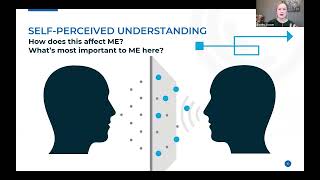
So what are the most important interpersonal skills needed in the workforce in 2024? According to recent studies, these are the top 10 most valued. And if you look at this list, it looks fairly easy, right? Just need to be a good communicator who exhibits empathy, can problem solve, resolve conflicts, actively listens, able to negotiate, network, and of course, be a great teammate. It's all easy, right? It's not. And there's a lot of reasons it's not that easy. But one of the biggest reasons is a little thing called perception. So let's talk more about this. We all know the saying, your perception is your reality. But there are really two different types of perceptions we can operate in. When we're communicating with others or we're attempting to build relationships, whether that be with clients and customers, or subordinates, teammates, family members, you name it. We can either be in selective perception or objective perception. And when we're in selective perception, the message that we're hearing often gets filtered through our own lens. All the things that make us us. Our past experiences, our biases, our fears, our motivations, values, goals, things we like, things that we dislike. All of those things come into play when we're in selective perception, because that's our reality. And oftentimes this leads us to filter someone else's message through our lens as to how does this affect me or what's most important to me here? And as you can kind of see from the visual, the problem is that we might not get the full story or see the full picture. Maybe we're only getting 75% of the message, or maybe we have a completely different understanding of the situation. We've heard it all. We've all been in that meeting where you've walked away with a completely different view of how it went from someone else and thought, how the heck did they get that? Selective perception. When we're in objective perception, we hit the pause button on all of our filters and all the things that make us us. And we don't filter the message through our lens, but rather how it is or how the other person sees it. And instead of having that block up or that filter out up, that was filtering some of the message around how it was affecting me instead. When we're in objective perception, we're thinking, how does this affect them? What's most important to them here? And by doing this, we tend to be actively listening more, showing empathy, and simply put, we build better relationships.
Now, we have a saying at Karoo when it comes to relation, excuse me, when it comes to perception. And it's that dictionaries define words, but people give them their meaning. So to bring this back to coaching and developing your team's interpersonal skills and the role perception plays, what does a manager mean when they say, you need to be more likable or you need to go in with the right attitude, connect with people more? As we discussed, not only could it be that they think they are doing those things by their meaning and their definition, but we're certainly not telling them how to do it. There are a lot of other misconceptions and challenges around developing people's interpersonal skills that aren't just about perception. Now, I have heard all of these quotes over the years from colleagues, clients, training participants. You name can't be taught. You either have it or you don't. At the end of the day, it's all about results. And what that really means is you can be a jerk and still be successful in sales and leadership roles. Really? An old dog can't learn new tricks? I heard that one very recently. It's not worth hurting their feelings. So full transparency here. That quote was mine. Remember, my trainer said, I'm too nice. But in all seriousness, when I first moved into a leadership role, I didn't want to hurt people's feelings by giving them constructive criticism or feedback about their personality. I thought it would hurt them, that they'd be upset with me and it could hurt our relationship. And lastly, this happens to others, not me. I had a colleague who was not seeing things the way the rest of his team was seeing things. And afterwards, he asked me to hang back after the meeting and tell me what I'm missing here, Kashina. And I said something to the effect of, I think you're seeing things through your own lens right now, Matt. And he said, no, that's not it. I don't do that. My team's doing that, not me.
But here's the thing. We all do this. It's human nature to filter messages through our own lens, and oftentimes we don't even know we're doing it. So the first step to being good at being able to develop other people is that you have to know you're not above this as a leader. In fact, your team's success really starts with you. The first important piece of having a high emotional intelligence is self awareness. You need to understand yourself and be able to recognize your own filters, manage your emotions, and offer your perspective, not facts. Just because you think it doesn't mean it's a fact. And of course, you really need to be able to manage your own emotions. I used to work for someone who would fly off the handle at the drop of a hat. If we lost a deal or if something we were expecting to happen didn't happen, he would lose it. Now, I once crossed my arms during a meeting and he asked me to hang back to let me know that my body language was giving off a negative vibe in the room. And I should probably work on that now. Do you think I wanted to take advice from a guy who flies off the handle at the drop of a hat and overreacts like that? I didn't want to take that advice. But let me ask you this. Was he wrong? No, he wasn't. Fast forward a few years, and I had a new leader who was calm, cool, and collected and never flew off the handle. He was just always a steady presence. And he once said to me, you know, Kashina, people really look up to you as a leader here, and oftentimes they follow your lead. I don't know if you know you're doing this, but sometimes when you hear something you don't like, you can read it and it comes across in your body language. And I really encourage you to be more aware of this and work on that. Now, that guy and that approach, that hit home for me, and I became more aware of this and was able to avoid it in difficult situations in the future.
As a leader, you also need to create a supportive environment. One where you can be honest, but not brutally so. We don't want to hurt people. Be vulnerable, share the bad stories, not just the success stories. I've always found when I've shared the bad stories, the horror stories, the ones that I cringe about, things I've done that I've screwed up, when I share those with my team, it bonds us. It shows that empathy as a leader. And lastly, be clear and Be consistent. You don't only coach when things are going wrong or when things are going right. Coaching and developing your team should be constant and it should be consistent. Try to be specific and not ambiguous. And one thing I've learned is it helps to coach to behaviors versus feelings, and that takes some of the emotion out. Now at Carew, we have sales training. Participants take a communication style assessment or a customer impact assessment that looks deeper into how sales professionals handle objections, conflicts, and really just provides an understanding and strategies to mitigate potentially negative behaviors that could impact your interpersonal relationships with customers. When I went through this program as a sales rep, I thought, okay, this is pretty cool. It kind of validated for me that I do form good relationships with customers and I have those good interpersonal skills needed to be successful. When I went back through the same program as a new leader, it clicked. This is how I can give negative feedback to my team without hurting their feelings or hurting our relationship. So let's dive into these six behaviors that we measure and what the impact on the customer is. The first behavior that leads to building better interpersonal relationships with people is to listen. When we listen, we aren't thinking about how this message relates to us or how it impacts us. We show empathy, unselfishness, and active patience to not interrupt. We've all had conversations with that person who the whole time you're talking to them, they're just quickly interrupting you and making the story about them. And it certainly doesn't bond you to those people. Whereas when we show these listening behaviors, the customer, the other person, feels important. They feel heard. The next behavior we measure and can coach to is your ability to acknowledge. When we acknowledge others, we're not necessarily agreeing, but we're building some rapport and some. Some trust. We're showing empathy here again, sensitivity, concern, support. People who can't acknowledge other people's perspectives typically remain in that selective perception mode and won't build the kind of relationships that we need to with our customers and colleagues to be more successful. Now, think about times you've been in a situation where you're upset or you're frustrated and the other person stops and says, I can appreciate how you felt that way.
What does that do? It kind of immediately makes you relax and let your guard down a little bit, right? It can also bond you to that person, especially when the acknowledgment could be, you know what? I'm really sorry that's how you felt. I've been there myself. I've felt that way before. And that's not a good feeling. The impact for the customer, the other person, is that they feel seen, they feel validated in their concerns or whatever it is they might be sharing with you. The next behavior we measure in building good relationships is exploring. People who ask more questions versus talking about themselves tend to have better relationships with people. When we're exploring in a conversation, we're not just jumping right to our solution. We first listen to what's being said, we acknowledge we've heard it, and we dig deeper by asking some more questions. I have worked with many, many sales reps over the years, and it is crazy how little we explore with our customers before we start pitching our stuff. But this also happens internally, where we assume we have all the information and we immediately jump to a judgment. Now, remember, dictionaries define words, but people give them their meaning. So we need to make sure we ask questions to ensure a mutual understanding. And if we do that, the impact is that our customers walk away feeling understood, important, and cared for.
The last positive behavior we measure in our customer impact assessment is responding. When we're responsive, we are not reactive. We're showing intentional thought and consideration. We might be recommending a solution or a next step, but the impact is the customer should feel supported and attended to. I want them walking away from that conversation, going, kashina really listened to me, acknowledged how I was feeling, asked me some good questions, and I feel confident she's got a good solution here. That's the goal. That's what we want. Now, there are two behaviors that we measure that can really prevent you from connecting with people. And the first one is judgmental behavior. Anytime a customer or another person feels like they're being judged in any way, the impact will be that it can cause them to shut down. It could cause some anxiety, some hurt feelings. Sometimes the problem is that the rep doesn't even know they're coming across that way. Oftentimes, they're not purposely intending to come across in a judgmental way. But I think back to things I've said or questions I've asked to kind of steer the customer exactly where I wanted them go, and I cringe. I wasn't trying to be judgmental, but I can now see that I was absolutely coming across that way. I don't want that. The sixth and final behavior we measure is hostility. Combative, argumentative people are going to have a hard time building good relationships. Now, you can't just go and say to your reps, don't be such a jerk. But you can say, you know, I understand how challenging it can be to deal with different difficult customers or difficult colleagues for that matter. I don't think you intend for this, but sometimes when people disagree with you, you can become a little argumentative. And it's not to say that what you're saying is wrong, but I think by arguing less and instead acknowledging that you've heard them more and you can see their perspective, I think you'll seem less hostile and a bit more empathetic. That's a good way to give some feedback.
After you complete the customer impact assessment, you receive your scores for these six behaviors and you also understand what the ideal scores scores are which are balanced. And ideally, we want to see your listening, acknowledging, exploring and responding behaviors. We want to see those scores between 20 and 30 so that we have a balanced approach and can form good relationships with our customers. We want to have a judgment and hostility score of less than 5. Now, does that make you a bad person if you have a higher judgment hostility score? Yes, it does. No, I'm just kidding. Of course it doesn't. I once had a trainer say to me, oftentimes people who can come across judgmental and a little hostile, it's actually misplaced passion. And I've always loved that.
So again, when I went through carew's Dimensions of Professional Selling program, I discovered a way to make my reps more aware of their own emotional intelligence. And it really gave me some behaviors that I could coach to versus making the general connect with people better feedback. So here are some examples of what coaching to these behaviors can sound like. You did such a great job not jumping in with your pitch when the customer mentioned their gap, but you kept listening and you really showed the customer they were important.
When it comes to acknowledging, I think one thing that you tend to do in conversations with both customers and colleagues is to jump from listening to asking a question and it begins to kind of sound a little bit like an interrogation. And I think people become a little bit defensive. Try taking a moment after you've heard someone to acknowledge it and just show them that you've heard them without jumping right to the next question. I think that will help.
Great job in asking some more questions before jumping right to that solution. I think the customer felt like you were truly trying to understand their situation and they immediately opened up and started sharing things with you that allowed you to build some trust with them. Your solutions were on point. Next time, hold off on going there until you've asked a few more questions. I think you'd build even More credibility with people and they'd be more apt to accept your solutions if you took the time to dig in a little bit deeper. That's what it sounds like now. When giving feedback on these two behaviors, judgmental and hostility, these are two big words, words it's really important to show your empathy as a leader. So I had used this earlier when we were on the hostility slide. But what you're really looking for is to say, I know you're not trying to come across this way. I appreciate the passion you have for our organization. However, when customers give us the objection that they're happy with their current supplier, you do tend to start asking some leading questions that essentially tell them why they shouldn't be happy. And it can come across as a little manipulative and ingenuine, which I know you aren't and don't want to seem as such by me saying that it takes the sting out a little bit and it doesn't feel as personal or hurtful.
Okay, so in summary, we've got our customer impact assessment that judges six different behaviors and identify our ability to use these or overdo them under do them. What's really cool when it comes to coaching to these behaviors is that you can almost put a dotted line next to each of them. Listening, acknowledging, exploring, etc. As to how that makes you better at communicating, Showing greater emotional intelligence, being able to problem solve better and resolve conflicts more. So this can really, truly help you and your team. Get them so that they feel comfortable and confident with those 10 most valued interpersonal skills in 2024 in the workplace. Okay, the one of the final things I'll say is some best practices when it comes to developing your people, especially developing these interpersonal skills or the art of selling it is important. You've seen this word come up a few times in this presentation, but it's more important now than ever to be empathetic. Be open, be honest, not brutally so. Again, we're not here to hurt people. Be self aware. Again, recognize your own filters. This is my perspective. It doesn't mean that I'm right, but I want to offer it to you. Be humble and be vulnerable. Again, I think it's so important to use your horse stories when you're trying to work with your team and developing them. It no longer feels like Kashina is judging me, but she's been there, she's been in my shoes, she's made these mistakes and we're in this together. Be timely, be specific. What you can't say to Your people is. You know, I've noticed these past six months you just need to connect with people better. Okay, boss, what do you mean? You know, be more friendly. That doesn't help. We want to be timely. We want to say, when you had that conversation just now, I noticed you did a really great job of acknowledging and building that rapport. Great work. Be clear about what it is that they did well and what it is that maybe could have had a negative impact to the customer or the conversation. Be uncomfortable. Sometimes these conversations can be uncomfortable, but they're important conversations. Be invested in your people. And the last one is a shout out to that trainer who told me that I was never going to make it in sales because I was too nice. It pays to be nice. Now, I showed you a few challenges or misconceptions about the importance of developing interpersonal skills. These three quotes here were actually all provided to me last month in a sales training program I facilitated. I had a gentleman named Scott who has been in sales for many years and over our week together said to me, it can't be taught. You either have it or you don't, Kashina. At the end of the day, customers don't care about how nice we are. It's all about the results. And lastly, he said, I know I'm not supposed to say this, but an old dog can't learn new tricks. A week ago, as I was preparing for this presentation, I had an email come into my inbox from Scott that I had to share with you all. And as you can read, Scott let me know that he actually used the layer methodology. Listen, acknowledge, explore, respond. He used that with a customer and that 15 minute meeting turned into a 90 minute meeting with the customer committing to buying more products. So let me wrap today by saying we owe it to our teams to help them develop these skills and grow in their career. If you would like to learn more about CareW's programs or you actually want to take the Customer Impact Communications assessment and better understand your style and how you might be able to build better relationships with others, you can go ahead and scan this QR code. As I said at the beginning of this presentation, I am incredibly passionate about this topic. So please don't hesitate to reach out to me if you want to chat more at all. Thank you so much for attending this session. I appreciate your time. Please don't hesitate to connect with me on LinkedIn or send me an email. And with that mark, I'm going to stop sharing my screen.
Hey, thank you, Kashina.
Wow.
I can take a deep breath listening to that presentation. Thankfully, that layer method, absolutely. Hey, if you haven't jumped over, jump out to their virtual booth and get that 500 discount on the program that I hope you're the one delivering it because, wow, you did a great job.
Oh, thank you, Mark. I appreciate that you're hard.
I mean, was this good or good?
It was fantastic. I loved the message about the 36% of the average emotional intelligence. And if you want to be successful, you need to boost it up to 60%. So my question is, what was your most memorable sale?
Oh, my gosh. That's a really interesting question. Okay, I will tell you. This one is close to my heart because remember, I'm a nice person. I was in higher education sales for a long time. And so I remember once as an admissions advisor, as a sales rep, sitting across the desk from. From someone, and I was selling her why she should enroll at our college in early childhood education. And at one point she said to me, kashina, I just have to stop you. I can't do this. I'm not. I'm not college material. I'm not ready. And I wouldn't normally do this with many people, but I felt a kindred spirit. And I remember I took my hand, I put it on hers, and I said, you remind me of my mom, who is a teacher, and she's been teaching for 30 years. And Jen, you're meant to be a teacher. You can do this and I will help you. And I'm not kidding. Fast forward a few years. She graduated with her associate's degree, bachelor's degree, then her master's degree. And this is a true story. She is now the kindergarten teacher at my son's school. So, and, and. And that is the actual school that my mom was a teacher at and where she retired. And so every day I see Jen said, I'm here because of you. And I love that. That's my favorite story.
And it shows you a level of emotional intelligence where you not only engage your left brain, your thinking brain, but your right brain, your emotional brain where you reach out, you touch someone, and you transform somebody.
Yeah, that's just it. We're pretty lucky to be in sales. I really do believe that way. And I've been incredibly blessed in my career to be able to sell something like our sales training programs at Carew that have made an impact on me.
I remember meeting Jack Carew, who developed a program. He was a former Marine and wrote a wonderful book. And now Jeff Sealey is the CEO of the company. And he has an incredible passion.
Making sure that more people can receive your message. That more salespeople will transform their clients lives. Like you have done.
That's right. Thank you so much, Gerhardt. Thank you, Mark. Thank you all for having me. I really appreciate it.
More from Gerhard



What Selling Looks Like When Your AI Agents Have the Context Your Sellers Do

Better Conversations, Smarter Support: Wearable AI in Business






When Scarcity-Built Systems Meet Abundance - The Judgment Gap in AI-Powered Sales Leadership
