Driven to Succeed: The Blueprint for Sales Greatness How to Build Momentum, Master the Process
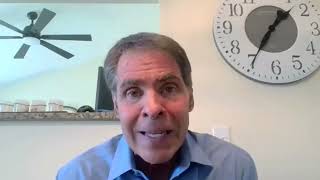
John Chapin, Senior VP of Mental Toughness University, draws on 38 years in sales to argue that inconsistency, not lack of talent, kills most salespeople. He recommends time-blocking prospecting, following a repeatable process, and persisting through follow-up, since many deals close after multiple contacts.
Questions this video answers
38 years.
678 pages.
2010 Axiom Sales Book of the Year.
81% of appointments are set after the fourth contact.
80% of salespeople never make it to the fourth contact.
Chapters
Foreign.
Welcome back, everyone. Now you're in for a treat. We have John Chapin in the house. He's a senior vice president and business partner of Mental Toughness University. Welcome, John.
Thanks for having me. Gear, Harv. Good to be here.
What should we know about you that's not in your LinkedIn profile?
My background is sales. 38 years of sales experience. I was the number one sales rep in three industries. So that was a. I was in the financial planning industry for a while. I was in the textile industry and then I sold bank equipment for Diebold. In all three of those, I was a number one sales rep. You know, I learned a lot of what works and some of those were telephone, some were face to face, some were a combination. But it really kind of hit me with the fact that, you know, the success principles and sales are all the same. If you're good at sales and anything, you can, you can sell anything. It, it translates. But then I went out and I decided that I wanted to start my own speaking training business. So I went out and wrote Sales Encyclopedia. It's the largest sales book on the planet. 678 pages. It was the 2010 Axiom Sales book of the year. So these days, yeah, I speak, train, coach salespeople more these days on the Fortune 500 companies and things like that. And that's where the mental toughness, where we're doing, we do a lot of attitude in addition to the sales skills. But my focus has historically been sales skills.
You say in your book that most sales struggles aren't about talent, they're about consistency. Let's analyze that and unpack it for me. What is the cause of inconsistency and how can salespeople fix that?
Think about anything in life, right, is going to be consistency. How consistently are you working out? Are you eating right? Are you doing everything you need to do? Right? So it comes down to that. And what happens with salespeople, though? Salespeople have a habit of when things are good and business is good. A lot of them, including me, over the years, getting a comfort zone really easily. Either that or you're doing a bunch of prospecting in the beginning and you get a bunch of leads and then you make a bunch of sales and you're executing on that and all the sales and you take care of the new customers and everything else, and then you don't have time to prospect and go back to the pipeline and things like that. So it's the consistency in the most important things which are prospecting, presenting, closing You've got to constantly be doing those, and you've got to constantly know the most important thing really, for new business and consistency is prospecting. So you've got a time block, time in your schedule to consistently prospect, to be consistent. You've got to schedule that stuff. You've got to have a plan for that, especially prospecting, because that's the biggest thing I see salespeople fall down on because it tends to be the hardest thing to do, the most uncomfortable thing to do, and the thing that salespeople least like to do. So that's generally where the consistency lacks. So whatever it is, though, whatever you need to do, and wherever you're lacking, again, just make sure you have that in your schedule and that's time blocked in there so that you're consistently doing it.
So what you're saying is you need to have a process, a plan, stick with it and trust the process like.
Anything in life, right? You're going to have goals, you're going to have your plan, and then you're going to have your scheduled plan. The larger companies, your Fortune 500, they usually have a process in place. I find it's the smaller companies, the anywhere from 100 million, 250 million on down that don't usually have a great process in place. It's more kind. Okay, you know, go out by osmosis, kind of figure it out. If you find yourself in that situation, you find you want to find the top sales reps and you want to bribe them, buy them lunch, buy them dinner, pay them, do them, whatever. Do whatever you have to do to find out what they do, find out what their process is and follow their process. And it's simple. If you do the same things, you will get the same results. So. But yeah, once you get that process down and you know exactly what it is and it works, then it's just rinse and repeat, rinse and repeat, and you just keep going.
Every top producer that I've ever met, they have a moment when the switch flips for them. What was your turning point and what did that teach you?
It's funny you mentioned that because it kind of brings me back to my early days where I really, really struggled in sales. The average stockbroker when I started was opening their first new account their second week in the business. It took me nine weeks. It was embarrassing. It really was. And what happened was I went through failure after failure after failure and figured out, and I don't know why the light went on one day and I have a sudden Said, wait, I get these guys in this, in the office that are killing it. And so I just started asking them for help. I actually went around, I had this big tape recorder and I would go. So being a Stockbroker was after 4 o', clock, of course, Eastern time. And I would go with this big tape recorder and I would say, you know, give me your presentation. You know, and they would give me their presentation. And then I get on the phone the next day and I do the presentation. Because I go home at night and I'd write it out and I'd have it, and then I'd have the script. So I do the presentation, I get to the end, and they'd say, I gotta talk to my wife. And I'd say, all right, so can I call you back tomorrow? 10 or 2? You know, I was already getting the alternative of choice and things like that. I had that down, right? But sure. So then I went to the five guys in the office. What do you say when somebody says, I gotta talk to the wife? Boom. So then I got that down, I had that written down. Then I said, okay, is there something you say after that or a close or something like that? So they gave me that. And the first one, I called that guy and I got him on the phone and. And he said, yeah, no, you know, I still haven't talked to my wife yet. I said, sir, I completely understand that. And at the same time, and I went right into it and it worked. And I did that with all the objections all the way through until I finally had them all nailed down and I had everything that basically they said and did. And of course, I worked on that script. I memorized that script so I could say it naturally so it didn't sound like I was reading it, so I could focus on how I said it and. And, you know, not lose my place and everything else. And then I just copied that. And next thing you know, you know, two years later, I'm in the top 1% in the company. And then next thing you know, I'm number one out of 3,000 brokers.
Let's talk about the challenge of a deal going dark. You had that great convers. And the customer promised to get his or her team on board. And then there's silence. What do top performers do?
You've got to make sure you've got. You've really got somebody who's interested. Because what happens is. So let's say an insurance agent walks in to get some business insurance. He walks into a large business and he happens to get the decision maker. And the decision maker says, yeah, sounds great, this, that, whatever. So you got to understand the most important part of a sales conversation is the mindset of the audience, the mindset of the prospect. What's going through their brain. What's going through their brain is, I'm busy, this person's got me now and I just want to get rid of them. So the easiest way to get rid of you is to make you think that they're this hot lead and they're super excited and just call me back on Tuesday and this or that or whatever. Like any part of the sales process, you need to be really direct, you know, in a nice way, right? Not in tone, but in how you say things. So if I go in, for example, and I'm talking to a guy and he goes, oh yeah, no, love to, you know, review my business insurance. And yeah, it's been a while and you know, why don't you call me Tuesday? And I go, okay, no, absolutely. What time on Tuesdays is morning better, afternoon better, you know, and you nail that down, you get a specific time to nail that down. So, so you make sure you get that locked in and you say, so let me ask you, you said you're interested in your business insurance. Yeah, I am. You go, okay, what in particular are you interested in looking at? You got to nail them down. You got to find out specifically why they're interested, why you got to make sure they're not just telling you that to get rid of you. Because the majority of people are. The majority of people don't like to say no to somebody. Now you've got that analytic personality type, those lawyers, accountants, engineers, they have no problem going, no, get out of here. Okay, which is nice. They do us a favor. Most people don't do that. 80, 90% of people don't do that. So you got to make sure, you got to mail down on specific things they're interested in. Of course you're writing those down because those are their hot buttons. And then you're making sure you have a specific time when you're going to be following up with them. But then also you got to lock that down. So you got to ask them, you got to go, okay, so if you're in person, you give them a business card, you say, there's, there's my number right there, you know, underline it, hand it to them, say, is there anything outside of a tsunami, tornado, hurricane that's going to make you miss that appointment? Tuesday at 10 o'? Clock? No, no, I'll definitely be there. Okay. Can you do me a favor? Sure. Can you give me the courtesy of a quick call if something changes, you know, and you got to lock that down. So you got to make sure they're interested, you're going to make them earn that. And then you got to lock down that appointment. Like if anything, if somebody's ghosting, you can't just be, hey, John Chapin, following up, give me a call back or whatever. You know, what if they're busy executive, they're even trying to figure out who the heck John Chapin is, right? So you're always leaving with benefits. You're always leaving with a reason that they want to get back to you. So in business sales it might be, hey, John Chapin with ABC company again. We've got a special program for trucking companies. We've been saving them an average of 26% on their workers comp insurance. We spoke last Wednesday again, I'd like to talk to you about this, whatever, you know, give me a call, this, that or whatever. But you've got to give them a reason, a compelling reason to call you back. And then every time you're calling them, you're calling them with maybe some new information with something they haven't heard before. So a reason to call you back, plus a little bit of new information to kind of keep the interest. Because like I said, the biggest reason first off with follow up is 81% of appointments are set after the fourth contact.
80% of salespeople never make it to the fourth contact. So one of the biggest issues is follow up or lack thereof. But when you do follow up, you've got to do it the right way. You've got to let them know who you are, why you're calling. Because every call almost is like a cold call. Your follow up call, your third call, your fourth call, your fifth call. That's why if I'm calling somebody for the fifth time and they let me know that cost is important, coverage is important for this, this is important, that's important. I got those written down. So I say again, I want to get your cost in line with what you're talking about. I want to make sure you're covered on this item here. I want to make sure you're covered here and I want to make sure you're covered here. I'll drop them all in the voicemail. If they gave me nine reasons why they're potentially interested. They're getting all nine reasons on that voicemail to remind them and bring Them back up to. Oh, shoot, that's right. Oh, man, my cost. Oh, that building. That's not covered. Oh, this other thing, this other thing, this other thing. You got to bring them back up to speed. And I'll even do that in the beginning of a phone call. So if I get them on the phone, I'll say, hey, John Chapin, ABC Company. Again, I'm just following up with you on this, this, this, this, and this. I'll open my live phone call on that so that they're right with me and they're right back in that mindset of where they were.
There's one word that comes to my mind when I listen to you, which is discipline.
The important thing with discipline and discipline, you're going to develop like a habit, right? Because the thing with discipline is once you're disciplined, once you're showing up and you're making the calls you need to do every day. So top sales reps, again, they know how many calls they to get, the prospects to get the sales. So let's say they've got to make 25 calls. They know that's what they've got to do, and they Normally make it 26 or 27 or more. But let's say, you know, they're making the 25 every single day. Then one day when they get a flat tire on the way to work or they get in a fight with their spouse or something else happened all of a sudden on that tough day when they don't feel like doing what they normally do, it's like people who work out all the time and then they miss a day or two and they feel like crap. It's the same thing. If you're in a habit of making those calls and then something happens, you'll still put your game face on and do them. If it's a habit because you're locked in, you're used to doing it.
Would you say that this is the number one behavior that gives salespeople a greater chance to be in the top 10%?
Yeah. Self discipline. Regarding the most important sales traits. Prospecting, presenting, closing. The thing I notice with the top people is they get those calls done no matter what. I was working with a Fortune 500 company at this guy Peter Page. He's the number one sales rep in the company, so he's killing it. He's, you know, number one out of like 3,000 sales reps. And one day he's out prospecting what a salesperson should do, and he got in a car accident. He totaled his car. He didn't get beat up too bad. He ripped his pants. He got his face kind of beat up. The paramedics showed up there like, pete, you got to go to the hospital. He's like, no, no, no, I'm fine. Pete's thinking, I still have to make my prospecting calls, even though I get in a car accident. So he jumps in a cab. This is before Uber. He goes out, he makes the rest of his calls, and then what are the top salespeople do? What do champions do in any sport or anything else? They're always looking for the advantage and the supposed disadvantage. They're always looking for the opportunity. So Pete's thinking, what's the advantage here in wrecking my car and being all beat up? And he thought of two prospects he hasn't been able to get to. So he's cold. Call them. He showed up before hours, after hours. He's done everything to get through the gatekeeper and do all sorts of stuff. He's tried email, text, carrier pigeon, everything. And he says, today's the day. So he takes the cab to these two locations, walks in with his business card, limps in for effect, goes up to the receptionist and says, peter Page, I'm here to see Mr. So and so. You have no idea what I've been through today. To see him now, this person who's been preventing him the whole time from getting the decision maker, she's now off making a sale. And I wasn't there. He wasn't in the office. I don't know how it went, but I'm guessing she said something along the lines of, oh, oh, my God. There's this. There's this guy out in the lobby, torn pants, his face. I mean, he's on Halloween. I don't know what he's doing. Well, he gets to talk to both of those people. Two months later, one of them ends up being his third largest account. And by the way, do you think that when Peter tells them he's going to do something, they believe him? I mean, they have slackers, right? They have people showing up late to work, leaving early, doing the minimum to stay on the payroll. Here's Peter gets in a car accident, totals his car and shows up.
How would you describe the mindset Shift. Shift that people need to make, from chasing deals to commanding the sale.
You have to decide why you want it. Why is it important to you to be number one? Why is it important to you to be in the top 1% and be financially independent and help your family out or your parents or, you know, anybody else you want or contribute to the charities you want to contribute or take the vacations you want to take or do anything else. That is the first shift is you have to be committed to.
More from Gerhard



What Selling Looks Like When Your AI Agents Have the Context Your Sellers Do

Better Conversations, Smarter Support: Wearable AI in Business






When Scarcity-Built Systems Meet Abundance - The Judgment Gap in AI-Powered Sales Leadership
