Elevate Talent on the Front Lines
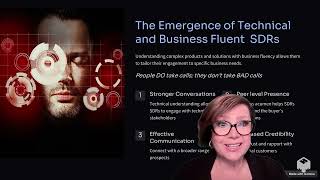
SDRs should be experienced business developers, not junior activity machines. Data from 6,800 calls shows peer-level conversations generate better pipeline and faster deals than high-volume meeting chasing. Hire journalists and project managers, train them to talk like adults.
Questions this video answers
6,800 calls
52%
19%
80%
85%
Chapters
Gerhard, thank you so much for having me. I'm so excited to be here and also to be a sponsor. So I want to invite everybody to visit the sponsor booths. There's a lot of great companies here that you can visit with over the next couple of days. And this topic that I'm talking about today of elevating talent on your front lines is something that I have a lot of passion around. I've worked in B2B tech, sales, enterprise tech for many years and the evolution of possibilities has changed so much. The sales landscape has changed, sales and marketing tech has radically changed and there's some things that haven't changed that much. And one of those are SDR roles. And I want to give everyone some different perspectives on the potential of those roles and how it can fit in a lot more strategically into the sales cycle. So I've only got 20 minutes, so I can't get into everything. But I want to give you something to think about of what the potential is. So I'm going to talk about some, some outcomes and some numbers and the potential of where you can actually see some pipeline growth just from some changes on the front lines. So there's a very traditional SDR role and I look at the job specs that people have and it's all very similar in that they're looking for more junior level folks with limited experience. It's a much lower paying role. A lot of KPIs around dials and volume and output and it's more of an activity based type of role. It's not really viewed as a key part in the development of that account other than getting the sales reps in front of them. So the thing that happens because of that, and I've written a lot about this, you can look on our blog, I write a lot of articles on LinkedIn is by putting the least experienced person person in your organization and tasking them with reaching the most important stakeholders in the company, that's a mismatch. You're mismatching knowledge and business acumen and background and understanding of the whole domain that they're working in and you're going to miss a lot of opportunities. And there's a few other things that happen too of just how that role is viewed. It's a very high turnover role. It's viewed as a stepping stone, it's the start of their career or they're paying their dues because they want to be an account executive and they're not looking at this role and the company doesn't look at this role is a real serious part of the relationship process with accounts. The result of that is you're missing engagement. It's just something that organically happens because you, you've got these high volume expectations where it's just meetings, meetings. Meetings is the expectation and it's not really relationships and discovery and finding out where you need to be in the right place at the right time. But also prospects aren't going to talk to people that aren't a peer level match. And everybody has experienced the challenge of accessing your prospects. The B2B space is very noisy and prospects get a lot of outreach. And the interesting thing for me is I own an agency, but I'm also a prospect. So I get a lot of outreach and I can see what companies are doing. And it's not something that's changed all that much in the, in the last 15 years. It's still very meetings focused. I can always tell if someone is gold by meetings because it's just all about the meeting. And if I present an objection to something, jump on a meeting, let's talk about it. People don't have time for that. They want to know what they're going to talk about. And so you have to have somebody on those front lines that can carry themselves in a conversation to get past that. Just send me information because they can't answer a question and can actually start building that relationship. So I'm going to, I'm going to give you some examples here and some in the four core areas to think about. I see a lot of training around buyer Personas or product training or battle cards and things like that. But there's a soft skill element that plays a huge role in being able to engage. And when I'm training folks, I'll tell them, talk to your prospects the way you talk to your next door neighbor. Hopefully you like your next door neighbor, but if, if you're talking to them in a way that's just really comfortable and normal people respond to that because they get bad outreach all day long. How are you going to stand out from that? You'll stand out by having a business call instead of a sales call. I mean, how many times have you heard your prospect say, is this a sales call? And it's just because of their experience. Those aren't good calls to have. So having those skills of just a normal business conversation is really high value because you're going to get less resistance and having enough knowledge about the domain that you're working in and that technical expertise so that you can answer questions. And I'm not suggesting that your frontline team has these real deep, technical conversations, but they should be able to conceptually talk about things to a level that avoids the just send me something. Because when they. When your prospects get to a point where this isn't a good use of their time anymore and you can't answer questions for them, then they just say, send me something, and then you're pretty much dead in the water. At that point, your front line is really building relationships for you. So I'm going to talk here about some numbers. So this was the result of 6,800 calls. And so we looked at the conversations and the outcomes of those conversations based on. Based on more of a deep dive type of conversation that is much more advanced than a typical just getting meetings. So 52% of prospects reached. And so a prospect qualified as somebody that is a influencer, a key influencer or stakeholder. Basically half of those conversations were a meaningful discussion. And what I mean by that is, there we found out what is happening in that account so that you can be in the right place at the right time. Are there contracts coming up for renewal? What are they running now? Are they happy with it? What kind of challenges do they have? What would it take to change? And all of that. It's not like a survey type of conversation. It's just a normal conversation that these things are woven throughout it. And when you end that call, you have a ton of information so that you can be in the right place at the right time. So out of those 52%, 19% had a buy cycle coming up within 12 months or they were already in one. And the sales team can engage. So those are pretty big numbers. And that's the potential. So it's not about sitting there pounding the phones, trying to get somebody to have a meeting. It's being able to engage with who you're getting on the phone and have those conversations. I'm a big advocate of conversations versus email, because reaching out via email, you can have this long thread going. You still don't know anything. And the things that you can find out in five minutes in a conversation are so vastly different than this email trail trying to get somebody on a meeting. I knew a company that was scheduling hundreds of meetings every year just to schedule like or to close 30 deals. And that's what happens when you're just focused on meetings, is you've got this huge churn of meetings and presentations and things like that because it's kind of backwards where you get them. You get them in a meeting and then you find out what's going on versus finding out what's going on. And then you have a meeting that's a lot more precise based on what they're looking for. For. So the, the emergence of this much more fluent SDR is going to. You're going to have much different outcomes. So something that I've said many times is people do take calls. They don't take bad calls. And most of the calls they get are bad calls. Every single one of us that are at this conference today has got bad calls. And you know exactly what that feels like. You know what they're looking for. It's not a conversation that you want to have. And when you elevate the talent, when you take a different approach to it, you're having stronger conversations. It's effective. They're having a peer level conversation. This here you can see my green screen and increased credibility. And that's something that makes a difference because prospects get bad calls all day long. So to get a call that's different and somebody that understands their business and somebody that's asking the right questions, just by asking the right questions demonstrates credibility. And just the fact that you asked that lets them know that you know what you're talking about. And so that's huge to think about. So how are you talking with your prospects today? How are you having those conversations today? Is it very meeting focused? I know a lot of times when, when you're talking to an sdr, it gets to some questions. They're like, well, let's schedule a meeting. People are very busy. They're not going to schedule a meeting unless they know what it's about. And you need to get that question answered. So that's a real roadblock in just organically developing that relationship with a prospect. So I am a big believer in non traditional hiring profiles because you can find people with those skill sets that you're looking for. I'll. I'll give an example of a company that I spoke to. It was a huge software company. And they said, we want people that have been salespeople in these industries and this background. And I thought, is that the skill you're buying? That's not the skill you want? The skill you want is someone that can get into an account that, and navigate that very complex management structure and find out who are the stakeholders, have conversations with them and pull a ton of information so that you know what to do at the right time. So you'll find you'll have some meetings now, but you also know how to market to those companies and how to develop those accounts. You'll know what they're running, you'll know what their decision process is. So that's a much different conversation than a sales conversation. And I look for people that have that type of requirement in their background. Journalists, for example, great hiring profile journalists are very persistent, very engaging. They know how to craft a narrative, they know how to weave conversations and they know how to guide those conversations so that they're asking the right questions, they're pulling for pulling answers. That's a great, great profile. I also hire people that come out of project management or things where they had to make a lot like requirements gathering people that had to make a lot of calls and ga and be very persistent and ask the right questions and dig deeper and kind of not take things for the, the maybe the first response but put some context around that. So those type of backgrounds are great. If and I can go ahead and send me an email, I can certainly talk to you about where to look to find those types of folks. And it is different, it's going to take some work to be able to, to look in that different, that different talent pool. But what you're going to find is you're going to have a much more powerful team on the front lines that are uncovering both your near term and your long term opportunities. And the thing I see with SDR teams is people often aren't thinking long term. They're not thinking of next quarter, next year because it's very much of a fryer drill of appointments on the front lines. You're not going to miss opportunities by putting a more experienced resource on the front lines. You're going to find more in fact, but you're not going to have a volume of just churning meetings that should have never been scheduled in the first place. So a couple of use cases and this actually speaks specifically to this idea of having outbound volume based appointments and a more deliberate business type of discussion where you're uncovering much more detail. So one company, it was a global telecom company that was looking at engaging in very long, very large network infrastructure opportunities. So comparing the, the high volume meetings, lots of meetings. Reps love meetings, they just show up. But the business development effort was less meetings, more value. So at the end of this 12 month pilot they were able to say 80% of the deals that closed, 80% of the large deals that closed came from the business development conversations because everybody was able to do the right thing versus just a ton of meetings and Just show up and it's not a fit. The other point of this is conversion to opportunities. So again, being able to identify is there an actual opportunity or a bicycle going on in this account and being able to detail, that will see much more conversion. So on this particular one enterprise tech company, they were seeing 85% of the qualified leads that came over converted to opportunities. So the impact on the pipeline was huge. And that's something to think about, the cost versus value. So you can put five low skilled, inexpensive SDRs in front of prospects, or you could put two or three more experienced business development reps that are having much more depth to conversations. You're going to see difference in the pipeline.
The ROI is there, definitely. You're going to see increased pipeline, you're going to see faster sales cycles. So another piece of this is you're going to, you're going to accelerate 30, 60, 90 days faster because you have more information to work with. So if you are just scheduling a meeting, you know nothing, you have another call that's kind of a discovery, then you have to keep tracking people down and organizing calendars and all that. And then they get busy and they go dark. So that's, that's a challenge that is very common. I know everybody here has experienced that. But by getting more depth, you can do things that are more precise, that engages them and it also creates a responsiveness. I always say before a relationship with a prospect becomes mutual, you're going to have to chase them down in the beginning. But then after a few times and they have some good experiences, then now they're in and now they're responsive and now they're engaging with you. And so you're going to see that happen a lot faster when they have a better experience sooner.
And again, you have, your path of what's happening here is different than the objective of a meeting versus having an objective of a relationship and understanding what's going on. And again, when you're hiring somebody that can navigate that conversation and there's ways to interview people that you can uncover are they the right fit for this? You can train them on how to navigate conversations and how to do that, but they have to be of the right mindset to do that. And I'm sure some of the people that you have today on your team you can work with. But there's also a way to look for people in the hiring process that can fit this kind of profile. And what you're going to end up with is qualified meetings that are going to see a lot More conversion, a lot more pipeline and a lot more positive incomes, that is revenue attainment. So the whole point of this is your front lines can be a very strategic part of your sales organization. It can help you to uncover near term immediate schedule meetings but also gain a lot of intel about accounts and so that you can plan those accounts more effectively. That's something that is going to be so important in the months ahead because again, it's a very loud space. And with AI you can see that organizations are actually increasing their outreach. And it's funny, I remember when GDPR came into play and everybody was all paranoid. It actually like doubled my email volume that I'm getting. And the, the same thing with AI, it's very much increased the, the outreach because now there's this, this ability to scale with messaging. But is it, is it doing the right thing for you? And that's another thing to think about is are the outcomes you have getting the best possible results and so standing back and looking at your front line more strategically that's going to help you. And if you are using other tools. I know We've created some GPTs.
Internally to look for really specific things around account profiling and different things that are happening so that again, everybody can do the right thing at the right time. So I want to thank you for having me, Gerhardt. It's a great conference and I also want to encourage everyone to reach out to us. I've got some different resources I can point you to myself and Meredith and Laura are at our booth and I want to thank everybody for, for coming to the conference. So thanks so.
More from Gerhard



What Selling Looks Like When Your AI Agents Have the Context Your Sellers Do

Better Conversations, Smarter Support: Wearable AI in Business






When Scarcity-Built Systems Meet Abundance - The Judgment Gap in AI-Powered Sales Leadership
