Executive Health: The Foundation of Your Success
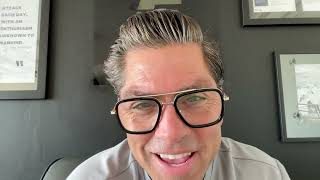
Josh Hotzenpiller (President of CEO Life; founder of My5) presents a first-person talk about executive health and how leaders avoid burnout and thrive. He recounts his rapid company growth during COVID, a subsequent health crisis (high blood pressure, panic attacks), and uses the pilot concept of spatial disorientation to frame leader breakdowns. He offers a three-stage disorientation model (gradual/neglect → rapid/unexpected → graveyard/irreversible) and introduces "My Five": Identity, Health (holistic practice), Circle (support network), Work (apply unique abilities), and Mission. The talk mixes personal anecdotes, practical prompts (daily practices, walking, talking to oneself), and cited statistics about burnout, productivity, resilience, job fulfillment, and mission effectiveness.
Chapters
Hey, what's going on? My name is Josh Hotzenpiller and I am President of CEO Life and I'm founder of My5. And let me tell you a little bit about both of those real quick. And then I want to spend the remainder of our time talking about you. CEO Life is a national movement of executives and leaders. It's a social club, relationship first club for leaders that need to find people like them. So if you ever find yourself going, man, is there any other leader out there that understands what it's like to feel isolated and making payroll and making numbers? And I need that network. That's what we do. My5 is a app that's launched in October that's designed to help you focus on the five areas of your life that you need to be focused on in order to be successful. But let me tell you about how I I got started with my five.
Covid hit. I was running a software company, a film agency, and I just done my first TEDx talk and I a bunch of our clients asked us to get into virtual technology, which sounded awesome at the time. We ended up in a very long story short, we ended up raising $16 million from one of the largest software only VCs in the world. And. And overnight we went from zero to over 100 employees, $14 million in revenue in 12 months. It was absolutely chaos. All while everyone else was trying to figure out where do I live, where do I work, all these things and what happened to me on Father's Day 2021. So about a year after getting into this, my blood pressure spiked to 187, I had panic attacks, I wasn't sleeping. I found myself at a cvs and I'll never forget this day. I was sitting at a CVS and I had three things. I had beta blockers, prescription beta blockers, a Tylenol PMs and whiskey. And I remember having one of those moments where I was like, man, who am I? How did I get here? And the way I got there, really at its core, and I'm going to use this as an analogy, is spatial disorientation. And maybe you've heard of this, but what it is, this happens to pilots. It's. It's an inability of a person to determine your body position, your altitude, your senses. Everything's misleading because there's no visual cues. And so what happens is oftentimes in business, we get so out of whack, we get so disoriented with everything around us because of stress, pressure, expectation, all these things. As A matter of fact, this is. About 80% of pilots in fatal accidents involves spatial disorientation. In other words, if an airline, if an airplane, if a helicopter, if it crashes, there's an 80% chance it's because they lost their way, they lost their sense of identity. And I don't think this is any different than in business. I think when you see leaders crash and burn, I think when you see businesses underperform, it has to do with us losing our sense of direction, our sense of purpose, why we exist. So why does spatial disorientation happen for pilots and how does it happen? Because I want to use this framework for us to think about. This happened in our lives. How do we make sure this doesn't happen in our lives? I want to give you three ways that this happens. The first one is a gradual disorientation. Gradual disorientation or a slow drift. And this really starts with small compromises or neglected care in our personal and professional lives. Look, here's the deal. Every single one of us have the opportunity every single day to make small compromises as it relates to our self care. I remember for me, I can remember right where it was. I just started drinking every night. I would go home and get home and be stressed out of my mind and I would just grab a whiskey and it was like these small little compromises that said I'm just going to, instead of taking care of me, I'm going to check out. And what begins to happen when we make these small compromises? It's not long until we get into the next thing, which is rapid disorientation. Rapid disorientation. And we really see this when the unexpected comes. And so here's what happens. Stage one is neglect. Stage two is when the unexpected happens. And let me ask you a question. In business, in life, are these two things not true? Did they not happen over and over and over again? Are we not watching small compromises or small neglect and the unexpected? Do those not just collide into us all the time? You know, my lack of self care ultimately started with the whiskey. And the next thing you know, I'm on beta blockers. I'm taking these beta blockers because I'm saying I need to control some way all the feelings and all the emotions. And then what pilots talk about is the third stage, which is the graveyard disorientation. Graveyard is when there's no turning back. You're in one of those spirals where you just go mayday, mayday, mayday. And there's no Turning and back. And this is really where we see a sense of all loss of direction, purpose. And we start to have destructive patterns in our life. And the reason why I want to bring this up is because. Because we don't deal with this, because we don't talk about this. It's not shocking when all of a sudden you see a leader go from compromises to an unexpected moment to ultimately full breakdown and loss of direction. I had this interesting moment when I was working with the portfolio company. They invited me out to Boulder with all the CEOs. All these CEOs came from all over the world. It was actually a really cool experience. Belgium and Newfoundland and Tel Aviv and Germany and of course, places all over the country. And I was there, and I was really there in a graveyard space. I was there where, man, it was hook, line and sinker. I was done. And remember, we all sat around a table and there's all these young leaders, and the businesses were from all over the place, not just location, but size. There was pre revenue that was burning millions of dollars on AI even before the AI revolution. There was unicorns, companies that had $100 million in revenue and more. And then there was guys like me that was in between. And I remember sitting around the table and everybody, one by one, was just saying how amazing. We're killing it, we're crying, crushing it, you know, all the terms. And I remember it got to me and I was like, man, I'm struggling. I'll be honest with you, I'm struggling. And here's the areas I'm struggling, and here's some of the kind of outs I just kind of confessed. One by one by one by one, everybody said, me too, me too, me too. I watched people break down and cry. I watched people confess to being on illegal drugs. I watched people confess to alcoholism. All these things that was going on. And I'm thinking to myself, man, it was just two seconds ago that everybody's killing it. And now the truth comes out. And one of the things I want to talk about is how do we get the truth out? How do we get our healthy version of us before we get to a graveyard disorientation? That's where we want to get to. Well, it starts with orienting your mind. It starts with reorienting your mind. And this is what I think is so important. During my kind of the height of my crazy and my unhealth, I learned about neuroplasticity. And if you don't know what this is, it's a fascinating truth. And this is what it is. Every night that we go to bed, our brains are healing and recreating new neurons. And these new neurons don't know anything yet. They don't know that the sky's blue and the water's wet and that this shirt's gray. They don't know these things until we. We educate them. And of course, we auto educate. Right? That's how the brain works. But one of the things I began to learn during my time of going through all this is that when I woke up and I began to speak panic, and I began to speak doubt, and I began to speak fear, and I began to speak, like, over high expectations. When I began to speak that over myself, my brain would begin to respond to that. And so one of the things I had to begin to learn to do was retrain my brain every morning. And so one of the things I do is I walk every morning about five miles. And I mean, has nothing to do with my five, but I walk five miles. And one of the things I had to start doing was talking to myself. And I'd always laugh because I'm sure when people are driving down the road, they're seeing, you know, during COVID they're seeing this guy talking to himself out loud. There's no earbuds in. And what I began to talk to myself on were some of these key areas that I want to talk to you about. I began to talk to myself about who I wanted to be and how I wanted to live and the output of my life. And I ended up coming up with these five things called my five. And I want to walk you through them because I think they're vitally important to your life. I think they have the power to transform your life in a big way. And I think if you're anything like me, you need them. So let's take the first one, my identity. If you're going to be a healthy leader, if you're going to thrive in this world, you got to have a healthy identity. Yet our identity is the first thing that gets compromised. Let me explain. Harvard Business Review defines enmeshment and as one of the key contributors for leader and CEO burnout. And really what it is, it's a situation where boundaries between individuals blur with their work and they can't separate themselves from work anymore. In fact, 70% of leaders report burnout comes because they're unable to separate themselves from work. See, a lot of us.
Either we want to or we don't want to, but we've got a hero Complex. We, we've got a hero. And let me explain what I mean by that. We feel like we've got to save the day. And maybe it's not so false, the feeling. Do you ever feel that way? Like if you don't do it, no one else will. If you don't do it, no one else will. And I think that there's a lot of truth to that. But there's also a leadership seal to that. Right. I like to tell the story of. And it's a great video. You should Google it if you like this story afterwards. But it was one of the Bulls championships. They get to the end where they do, you know, the big city hall where they speak to everybody, all the fans come, the parade. And during one of the final games to win, Michael Jordan knew he was going to get double teamed, probably triple teamed. And Steve Kerr said, hey, Michael, if you want to pass to me, you know, go ahead and do it. And all of a sudden Michael gets double teamed and passes over to Steve Kerr. Steve Kerr makes a shot and wins. And he and Steve Kerr jokes about how in the big moment, Michael couldn't handle the pressure and he passed to Steve Kerr when all reality, it was Michael's idea. And one of the things I think we forget is that if we're going to be healthy leaders, if we're going to thrive as leaders, we've got to pass the ball. We got to pass the ball. You can't take every big shot, you can't make every pass, you can't be responsible for everything. You can't live and die. And as the only thing, and I think so often, leadership, whether it's true or not, we carry the weight of every shot, of every pass, of every rebound. And we think to ourselves, if I don't, it won't. If I don't, it won't. And here's the problem. If I don't raise leaders, if I don't delegate responsibilities, I won't, I won't survive, I won't thrive, I won't make this. It's not just about if I don't, it won't. If I don't, I won't. I won't survive. And I can't tell you how important it is as a leader to understand if you wake up every day and you can't separate yourself from work, if you can't separate your identity, if you can't separate responsibilities, if you can't heal and reprieve and you can't trust somebody else in the big moment, Ultimately, you are going to get into that graveyard spin. So I want you to think about your identity a little bit. I want you to think about where you get your value, where you get your purpose. When you think about when you're most excited and somebody says, tell me about you, and you talk about all those things. Do you have an identity that you value outside of work? Do you have an identity that you get excited about outside of work? It's a huge question to ask and you need to think about your identity. Let's talk about your health. Here's something to think about. When your health. If you don't have. Fine. If you don't have time to take care of your holistic body. Your holistic body. I love today's world that we live in right now because it's, you know, the CEO gets up at 3:30 and cold plunges and, you know, takes all the different mind juices and everything else that they do. And.
They'Re like this. We think about health as just this one physical thing. We don't think about health holistically. We don't think about our emotions. We don't think about our spirituality. We don't think about our relationships. I know all of these encompass health. I thought this was interesting. Leaders who prioritize holistic health see a 25% increase in their overall productivity. I've never met one leader that didn't say, I need to be more productive. I need to be more productive. Yet stress causes brain fog and stress causes emotional strain. Yet I love what this thought is. Holistic health. American Psychology association talks about holistic health. I like to talk about health as a practice. When you think about practice, what is your health practice? And I think oftentimes we don't have a practice or a rhythm or a system or a process. One of my good friends is an NFL quarterback and I was asking him about, you know, he said the most stressful days of the year are right before draft days because you don't know if they're going to draft somebody new, what they're going to do with you. Of course, the NFL is a doggy dog world. And. And I always ask, how do you go get through that process? And he says, with my practice, I have a practice that I do every single day. And I just don't deviate from it. Even when I feel like it, even my emotions are up, I just don't deviate from it. I was laughing. Some of you might remember this, that I was growing up and there was a famous basketball player named Allen Iverson. And you might even know where I'm going with this story because he's more. He was this incredibly storied basketball player, Olympic gold medal winner, all star, just an incredible basketball player. But practice, I don't know if you remember this practice, he went viral because he didn't want to show up to practice and he got all mad at his coach because his coach was like, you've got to show up to practice. And he's so angry that he's got to show up to practice. But what the coach knew, what we all know, is that practice leads to performance. Practice leads to performance. And for so many of us, we do not have a holistic health practice that as a result we're watching our performance go down. So I want to ask you, when you think about your holistic health, it's not just your physical, it's your emotional, it's your spiritual, it's your relational. It's the full areas of your life that you begin to go, I am a holistic being. You're not just a physical being. You have a mind, a body and a spirit. And all of them need to be taken care of correctly so that you can thrive and really lead. Alright, let me bring the next one. My circle. So we've talked about my identity. I've got to be able to separate from work. I've got to be able to have value, purpose, meaning outside of work. In order for me to do that, I've got to have other people that are carrying the weight and the identity of the organization that I trust to shoot the ball. The second thing is your health. We've got to have a health practice. We've got to be in the rhythms of practice. We cannot just run and cold plunge. We've got to also take care of the other areas of our life. Let's talk about our circle. I'll never forget this, where I really thought about the power of a circle. I was leading a mastermind for a group of leaders and one of the guys was very, very excited about how much he loved the notion of a 3am friend. A 3am friend. And if you don't know what a 3am friend is, it's the friend that you know you could call at 3am and they are going to show up at your house with a shovel and say, who are we burying? The whole notion is they're there for you anytime. They don't ask questions and they just serve you. And I love this idea, but I want to talk a little bit about a circle because what we need is a 24 hour friends. We need 24 hour friends because life comes at you 24 hours. And let me just talk about a little bit what I mean by this, because I wrote these out. They're really fun. The first one is you need a 7am friend. Somebody that gets you up in the morning and fires you up. You ever feel that way? You need somebody that goes, man, maybe they send you a text, maybe they go, you know, maybe something that works for you. Maybe it's just a friend, but it's that person in your life that's constantly going, we got this. This is amazing. What a joy it is to work and thrive. A 7am Friend, I call it. The next one is a 12pm Friend. This is the person that you can process work strategies with. Hey, I need to make a decision. Hey, I've got an issue with an employee. Hey, I'm trying to process this thing out. It's something that says, I've got an immediate business decision. I need somebody that thinks well and understands me and that I can lean on. This is super, super important to have that friend. The next one is a 4pm friend. This is your fun friend. This is the one that goes, man, we're going to go mountain biking, laughing, having fun. In fact, they may have nothing to do with work like you. They may work at Costco or Sprouts. They may have no stress in the world and they don't even want to talk about work. They want to talk about life and kids and fun and sports and they're just that person that gives you a reprieve from life. Then there's the 8pm friend. This is the processor. This is the one that you can go, I'm trying to make long term, big, pivotal decisions. And I need somebody that I can walk through that process with, somebody that can understand that process with me. I need that friend. And then of course, there's the 3am Friend, the one that will show up with the shovel. This is what I found in my life when I was going through that process. I didn't have those core people in my life. I had people and I was at times holding things in, at times just firing all these things out. But what I didn't have was that system and that rhythm of a circle that was circling up around me. 90% of leaders who have a strong support network report being more resilient. I don't know about you, but being resilient is pretty imperative in the world that we live in today. If you're Leading an organization, if you're responsible for a P and L, whatever is going on in your life, man, it is stressful and you need a circle and you need to be more resilient. So when you think about those things, which one of those are you not taking care of that you need to. Let's talk about work. Kind of what we all here for, right? Work. But again, you got to think about my five, right? Because now we're getting to work. But we've already talked about identity, health, and circle. I think these three things have to be in order before you even address work. Isn't that a wild thought? Usually the first thing we address is work. But I think the reason why you see people in that.
That radical downward spiral, that graveyard spiral, is because they begin to try to deal with work before they deal with their identity, before they take care of their health, and before they build their circle of friends. You know, one of the things my dad told me, we all have different beliefs, and I grew up in the church and my dad used to always teach me about money. And he'd say, pay God first, so be generous, Pay yourself second. Save and then live off the rest. And I think it's a very good principle to think about in your own life. If you're not being generous with yourself, if you're not taking care of yourself and then getting to all the other things, you may end up being emotionally, mentally broke. And it's a thought to think about. So let's talk about work. I always think about work and that fun thought of, like, whistle while you work. You know what I mean? It's like, do you have joy in your work? Can you whistle while you work? It's funny. I actually think this is a funny, wild fact. Only 20 to 30% of people can whistle. In fact, can you whistle? Whistle. Right now.
I can whistle. You know, only about 20 or 30% of people actually like their work, too. I thought it was fascinating that both of those synced up. And I wonder what we do with the fact that 70 to 80% of the world out there goes, I don't even like what I do. Especially when we know this. Workers that have a strong sense of purpose in what they do are 64% more fulfilled in their jobs and they report higher levels of well being. You are just a healthier person when you love what you do. And I always talk about it with this, with work. Have you had a flat tire? You ever been driving down the road and you get a flat tire and next thing you know what happens? Everything slows down, right? You can't drive a car at the same speed. It becomes dangerous to even drive it. And then you've got to. It takes you longer to get to where you're trying to get to the damage that gets done when you get a flat tire. But this is what happens when you don't enjoy your work. It's literally like driving a car with a flat tire. I want you to think about this. If you are not loving what you do, I don't mean loving every day. There's going to be days that aren't fun, there's going to be days that aren't fulfilled. But if you're not loving what you do, here's what's happening to you personally. You're driving, you're functioning slower than you would if you loved what you did. You're going to get to where you need to get to way slower. So your daily speed's faster, your longevity speeds faster. And it's dangerous because you're going to have to make a change. And that's why it's so important to understand and go, man, how do I get to a place where I actually begin to love what I do? The reality is we've got to move fast. We've got to run with speeds that are allowing us to do that. And if we're not doing it, we're never going to get there fast. I want you to think about your work. You do work more than you spend time doing anything on the planet. Why? We don't prioritize enjoying it. And here's the thing. I don't want you to think, oh, Josh is saying, I need to quit my job. No, I'm not. What I'm saying is you have unique abilities. You have things that you were just designed to do. You're designed to do it. Some people are designed to sell, to crunch numbers, to create, to. You're designed to do things. And what you've got to begin to do is you've got to find out your unique design and you've got to apply it to your work. If you're a salesperson, but you love to be creative, you got to start thinking about how to get creative in sales. If you're a numbers person, you got to think about how to build number plans that you can work towards, but you got to take how you're designed and apply it to your work if you're going to be successful. But here's the thing you've got to commit to. You've got to Commit to whistling, whistling while you work. It's imperative so you can get to where you want to get to. You do not want to live your life on a flat tire. The last thing I want to talk about is mission. And I think this is really, really important because I mean, look, studies show according to Stanford, that leaders with a well defined mission are 30% more effective in achieving long term goals.
I was talking to a leader of Fortune 100 company, he's a CEO of it and he talked to me about how one of the things I said, do you love what you do? He goes, I don't love what I do, I don't love the industry, I don't have purpose in the industry. How do you stay motivated? Because what I did was I thought about the mission of my life and the things I wanted to do for society and good. And I've really tried to figure out how I can use this organization to help me change the world. And he's like, when I look at other jobs and other opportunities I could go do, I could actually even make more money. I could actually be even in an environment that's more like interesting to me, but I could never make the impact if I left this industry. And what I realized was he had long term goals and in order for his long term mission goals to be successful, the long term goals of the company needed to be successful. And I found that to be so fascinating that the power of mission in our lives. If we can say I have a mission of my life and how does this work begin to line up with it? I could be 30% more effective in achieving long term goals. I want to talk to you a little bit about what we've done here because I want you to see kind of where work fits in here again, we start with our identity because if we're not healthy, nobody's healthy. We talk about our physical lives, we got to think about it holistically and in the circle of our friendships and again, taking care of these things before we ever get to work. Now we slice in work, right? This thing that we spend all this time, but then we bookend it with mission. What would your life look like? The studies show what it would be like. You'd be more resilient, you'd achieve long term goals, you get somewhere faster, you'd have more better well being. I mean all the data is there, but what would it look like for you to build a plan and a life? That said, I'm going to start with an identity. I'm going to take care of my physical life. I'm going to build a circle of influence around me that make sure that I'm resilient. I'm going to make sure that my unique abilities are being applied to work and I'm going to have a mission that sits alongside my work. Look, here's the thing.
Maybe you are where I was. Maybe you're headed to where I got to. But I want to finish and just remind you of this thought. Small compromises will get you into a gradual disorientation in your life. And I promise you this, every one of us watching this, there's something or someone in your life where you're making small compromises and neglecting your self care. You're ignoring those subtle little signs those things are happening and they're absolutely going to lead you to a rapid disorientation if you're not careful. Because when the unexpected comes and it's going to come, it always does. This is business, it's going to come. When it does, you will have a sudden shift and you'll begin to get a rapid change. When that rapid change happens, this happens to leaders all the time. They get stuck into that graveyard disorientation and there's really no coming back from it. And I just want to encourage you today, your business needs you. Actually, let me take a step back. You need you. You need you. Your joy needs you. Your happiness needs you. Nobody's promised tomorrow. You need you. And so it's important that you take care of you. Your family needs you. Your friends need you. This world needs you and needs your innovation and your ideas. We cannot have you not take care of you. And so I just want to encourage you to pay attention to any of those small compromises or ignored signs. I want to make sure that you're prepared for the unexpected so that you never get to a place where you lose. Where you lose direction and purpose. Have any sort of destructive patterns like I found myself in my five take care of you. You've got the power to change the world. And it starts with the little decisions and it starts right now. Thanks for letting me have time to be with you. I hope this was helpful. You can reach out to me at JhotsonPillerCEO Life. I work with leaders all over the country. We do one on one coaching, we do group coaching, we do off sites. It's so important that you take care of you and think about this. You invest in things all the time. Make sure you invest in you because you're worth it. Thanks again.
More from Gerhard



What Selling Looks Like When Your AI Agents Have the Context Your Sellers Do

Better Conversations, Smarter Support: Wearable AI in Business






When Scarcity-Built Systems Meet Abundance - The Judgment Gap in AI-Powered Sales Leadership
