Fireside Chat: Leveraging Personality Intelligence for Sales Success
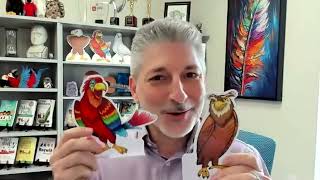
Merrick Rosenberg explains how to use a bird-based personality model (Eagle, Parrot, Dove, Owl) to sell better. Sales reps can flex their style to match customers, managers can adapt coaching to each rep's type, and AI tools analyze calls to track flexibility and improvement.
Chapters
Welcome back, everybody. Our special guest now is Marik Rosenberg. He is brilliant, I have to say, is the author of several books. And you are the CEO of Take Flight Learning. Tell us a little bit about the company and how did it get started?
I've been using styles since 1994. And, you know, I loved the disc model. Nobody owns the disc model, which is kind of fun. It's just out there. And I had this thing where I'd show up and people are so excited and they love the styles and they can see the power. And then you go back six months later, and they're like, which one's the D? And I'm like, okay, yeah, you're killing me. I spent a day with you, and we just felt like it needed to be reinvented and reimagined. And so we took the styles and we linked them to eagles and parrots and doves and owls, and it just changes the way that we interact with people. So it's been. It's been a lot of fun, and it's been. Been helping people to learn about themselves. It's been helping managers be better managers, and sales folks really just boost their sales. So it's. It's a lot of fun and it's impactful.
Well, it helped me understand myself a little bit better too, because I thought I was an eagle and a parrot. And then in conversation with other people, I realized I have so much empathy. So there's a dove in me as well.
Yeah. And we all have all four styles. Nobody's just one, but there's probably one or two which are like home base for you, and you display them all the time.
So walk us through the four styles so we can help the audience understand themselves a little bit better.
Sure. I can share them with you. I'll give you a little overview. So we've got the eagles. Let's start off. In fact, I'll share a screen with you here. So we've got eagles, and if you picture the eagle style, what do you think? I mean, if you saw someone who is an eagle, what do you think their style would be like?
Well, they perched high up. They have a broader view of things, a broader perspective, and they don't have much time. They go for the kill.
Yeah, they're strategic. They're big picture. If you're an eagle salesperson, you want to make the sale right now. If you're selling to an eagle, just give me the bottom line. That's all I need. Just tell me what I need to know. I'll make the decision. Let's just do it. They're results oriented, direct, decisive. In fact, in a way, they're easier to sell. They call it like it is. They tell you what they want, nice and easy. So next up, we've got the parrot. So what do you think? Somebody who's a parrot, that's my style. I'm the parrot. I'm the parrot. Eagle, actually. But what do you think the parrot's all about?
Well, the parrot is more like a PR person that accentuates the positive, that adapts very fluidly to whatever is happening in the situation.
Yeah. And it is the most prevalent style among sales folks. They, they're positive, they're upbeat, they're enthusiastic. They just want their customers to be happy and they want them to be excited about what they're selling. And if you're selling a parrot, they probably talk a lot. You know, it's. It's not like you have to pull the information out of them, it's that you have to contain them because they want to tell you a million stories. Next up, we've got the dove. So when you think of a dove, what do you think?
Well, there's a lot of empathy, understanding. They're the peacemaker, they're the diplomats. Yeah.
They want everyone to be happy. If they're the dove salesperson, they don't push. I don't want to upset the customer. I just want them to be happy. They want their people to be happy. If you're selling the dove, they take a little while to make a decision because they've got to get a consensus decision from everybody. They're all about harmony and collaboration. So, last one, the owl. So if you've got the owl style, what do you think they're all about?
Well, they're more analytical, they need more data, they need more time to digest things. They need to have a meeting before they make a decision.
Oh, yeah. If you're the owl, you are sharing a lot of information, a lot of detail. You're talking to people about the facts, the data, the features, the benefits. You've got to share everything you've got. If you're a buyer, you. You need all that information before you're going to make a decision. So it's. They are all about knowledge. We always think of the owl as the wise one. Any style could be smart, but it's about information and they want a lot of it.
And so, quick question.
When our audience wants to learn more about this, where do they go on.
Your website so they can go to takeflightlearning.com and we'll actually, we're going to be sending everybody a complimentary assessment. So if everybody wants to actually take the profile, see which bird are you? We'll. I'll. At the end, we'll show you how to do that. We'll connect you up with taking the profile, because this way you can really see. All right, what am I? Am I? I'm an eagle. Secondary or parrot? Secondary. Eagle. You can be in any combination of the four.
So why is it important to know your style and know the customer style?
The challenge that we have is that as salespeople, we often impose our style on others, and we do it all the time. And so if I'm an owl and data is important to me, then I'm going to make an unconscious assumption that data is important to my clients. And you're probably going to share a lot of it. How's that going to work? If you're talking to an eagle and you want to share everything you know about your product, every single feature and minute detail, it's probably not going to fly because they don't want that much information. So you have to know your style and you have to be able to read others, or else you're destined to impose your style on them. Not making the sale that way.
You know what's interesting? I've done a lot of sales training, and when I did sales training in Germany, the sales engineer, they were all owls. They overloaded the customer with facts. Where when I did sales training in French, they were more like the parrot. They were very social, wined and dined their customers. And when I traveled with American salespeople, I was really surprised that they're all ROI focused, bottom line, they explain the benefits. They engage in value selling. And when it comes to my home country, Austria, they're more like doves. They're good listeners, they're harmonious, they're harmonized with the customer, and they're very predictable, very consistent.
Different countries around the world have different styles, and different companies have different styles, just as people have different styles. And if you are selling in a way that is inconsistent with your customer, you're not connecting with your customer. And you may never know that the reason you lost that sale was based on style. It's the power of knowing the styles. If I know my style, I can connect with somebody. I can sell them, I can close it. If I don't know my style, good luck, because you may not be connecting. And we know that relationships, that's what makes the deal.
So let's talk about difficult customers. Why is it important to know that style and adapt to the customer style?
So if you remember what I just had on the screen, notice the eagle and the dove, they were opposites. Very often that diagonally opposite style is the most difficult style to sell. And the parrot and the owl were diagonally opposite. They're often the most difficult to sell because you have this eagle who's going to be direct and assertive and right to the point. And the doves, like, how are you? Would you like some tea? Tell me about yourself. They're not connecting. And if the dove salesperson walks in and they're too soft and they want to be very connecting and build the relationship, they're not selling the eagle. The eagle's like, come on, I don't have time. Just tell me what you got. And so typically, our most difficult customer is the one that is the opposite of who we are. And ironically, if you understand your own style, you can balance your style with the opposite. So for an eagle, the most effective salespeople are confident, but if they balance their confidence with humbleness and humility and vulnerability, they're far more effective. Parrots are optimistic, but when they ground themselves with realism, they're more effective. So if you understand your style and you understand others, you don't have a style that you can't sell. And many people have one style that they have a very difficult time with. But if you know the styles, we remove that obstacle. You just got a quarter of the population back, because now you can sell anybody.
So what he is saying is that every style has a little bit of an Achilles heel. How does that apply to sales? Let's. Let's talk about the Achilles heel of the eagle.
Yeah. So the eagle. Their challenge is their desire to close the deal fast. They want to make it happen. And look, I get it. This is what you want your salespeople to do. If you're a sales manager, you want them closing the deal fast. But if you're the eagle and you're pushing too fast, you're going to push people away. Most notably the doves, who want to feel connection and the owls, who want information. The parrot, their big energy can actually overwhelm the owls. And so it's their greatest strength, but it's also their greatest challenge. For the dove, the desire to create harmony and make sure everyone's happy and everybody's on board, that takes a long time. They may lack assertiveness. While they may be great at the front end of the sales process, building the relationship. They may be weak at the back end. Closing the deal and, and negotiating because I don't want to, you know, I want the customer to be happy and they can give away the farm. The owl. That Achilles heel for the owl is information. It's their greatest strength. They know their product better than anyone and they want to tell you about everything they know. But if they're talking to a parrot or eagle, what is their greatest strength, which is the ability to understand the features and benefits of their product. Becomes a weakness because they feel as though they need to share all of it. So it's ironic that our greatest strength can actually be our greatest weakness if we lack self awareness.
The owl is actually telling the customer how to build a watch and not how to tell the time.
Yeah, it's, it's one of the challenges, you know, I, one of the things I often talk about is like there's these myths of what we have been told right from the beginning about things you must do. And the owl is told you lead with value, not with features. You know, convey the power and the impact and the value. But here's the thing, if you're selling an owl, you may want to lead with features because they need it to make the decision. Right. And each style, this is fine. Let's play with each of them. Like the eagle. The eagles were told never start with, you know, in sales training you don't start with price. Who does that? Yeah, if you take too long to get to price for the eagle, they've tuned you out.
Right.
You know, these, so sometimes we have this, these things we were taught, but they don't apply to every style. Like take the dove. I love the, you know, always be closing. Right. The classic Glengarry Glen Ross. Right. I mean from, I mean with Alec Baldwin. I mean it's the classic sales speech of course, of all time, Always be closing. Yeah, always be closing. Try that with a dove. In the first time you meet them, what have you done? You've pushed them away because they, they don't feel connection. That's not the strategy with selling a dove. I would say ABC for the dove. Always be connecting. Let's change it up. And that's how you make the sale.
Three complications. One is the complication of being self aware and being aware of how you communicate. And the second complication is not being aware of the customer style. But you can learn this from LinkedIn, really, or by reading their speeches or watching their YouTube videos. But then there's a third complication. And I want you to address that. What if you're in front of a group of decision makers and all styles are represented? How do you adjust to that?
This is the challenge. And here's what salespeople will do. There's one of two things they often do. Both of them do not work. One, I know the person I've been talking to, because now they've walked you into the meeting with this, with the senior leadership team, and you don't know anyone but your contact. So whose style do you flex to? Well, maybe the person you've been interacting with all along. Maybe the person who you think is the decision maker, who has the highest rank in that room, the CEO. Maybe you just impose your own style. All of those are wrong. What I would say is you don't know what. What's in that room. So you better be what I call the chameleon, and you better be adaptable and hit them all. If I walked into a sales meeting and I don't know if I've got eagles, parrots, doves, or owls, I might walk in and do this. I might say, all right, bottom line, here's what we can do for you. Here's the impact. Here's what we're going to make happen. Here's when we're doing it. Let me tell you something. It's going to be amazing. I'm so excited to be here. We have transformed organizations in your industry throughout the world. We change everything. And I know it's new, and I know it's different. And we're going to be there for you. We're going to help you. We're going to make sure you're comfortable. We're going to make sure your people are comfortable. So let me walk you through step by step, and I'm going to show you exactly how we're going to make a difference in your organization, what we're going to do and how it's going to work, and why we are doing it. So what did I do?
You addressed four styles. But there's even something more remarkable. You change the tone of voice for each style.
Yeah, you picked up on that, which is very intuitive. Yeah. When I'm in eagle mode, here's what we're going to do for you. When I'm in parrot mode, excited. When I'm in dove mode, we're there for you. When I'm in owl mode, let me walk you through step by step, show you exactly what we'll do. You are triggering their innate hardwiring. The eagles walk out of the room, out of that room. They got the bottom line. The parrots are pumped. The dove feels reassured. The owl's got the information. This is the power of knowing the styles. You could use this one on one. You could use this in a room with. With a dozen people. You could do it. If you're making a presentation to an entire organization. If you know the styles, you now know how to adapt to people, and you know how to talk to small groups, large groups, anyone, it doesn't matter.
Out of curiosity, how many assessments have your clients done on the. On the bird family?
Oh, it's a. It's hundreds of thousands. I don't. You know, it's a great question. We've never tallied it up. I mean, we've worked with three quarters of the Fortune 100 companies. I alone have spoken in 47 states. So we have seen. We have seen this country. I've traveled all over the world. I mean, it's amazing. I mean, it's. It's hundreds and hundreds of thousands of people know the styles. They know if you were to walk, they know how to use them. If you were to walk into people's offices, if you were to walk into my office, you would see a parrot and a little eagle sitting on the desk, and there are, you know, you need to be brief, be brilliant, and be gone. Tell them what you have to tell them, and you're out. So it's. It's amazing. It's been just an incredible thing, sharing it with companies around the world.
Thank you. There's another challenge I want you to address, which is the relationship between the sales manager and the salesperson. How should sales managers interact and adapt their style to the salesperson as an individual?
You know, in the same way that salespeople tend to sell in their own style, managers tend to manage in their own style. They don't vary their approach based on the salesperson that they have. I have salespeople. I've got an eagle salesperson. I've got a parrot salesperson. I've got an owl salesperson. No one who's a strong dove. But I've got a good mix of people. I can't manage them the same. When I'm dealing with the eagle, I'm talking about results and impact. What are you doing? How's it working? What's going on? And when I give them feedback, I can give them very direct feedback. If I'm talking to the dove, I check in. How are you? How's it going? Why don't. Let's Go do a walk and talk. We do that all the time. You know, you let. You know. It's like if I'm talking, if I had a. I have doves on my staff, but I would be basically saying, let's go for a walk, let's talk. Let me check in. How are you doing? If I'm talking to an owl, I. I can give them very specific feedback about what they're doing, how to improve it. If I'm talking to a parrot, I guess celebrate their success. They want you to celebrate them and celebrate what they've done. And if you need to give them feedback, make it future focused instead of saying, let's look at what happened in the past. Parents don't like looking backwards. Say, hey, I have some ideas that could make what you just did even better. Do you want to hear them? Sure. What do you got? And then you give them feedback. But you'd have to give them different kinds of feedback. You have to manage performance based on how they want to be managed. As a salesperson, your fundamental or as a sales manager, your fundamental goal is to make your salespeople better, is to keep them happy and make them better. And if you manage them how they want to be managed, you're there. If you're managing them how you want to be managed, I hope they're like you, because if they're not, they're not getting their needs.
So do certain styles work better doing a sales process?
Different styles shine at different times of the sales process. Doves are great at that initial building rapport, creating connection, building trust. Parrots are great about generating excitement, creating enthusiasm and passion. Owls are great at explaining the process, the product, the features, the service that you provide. They can answer all of your questions. Eagles are great at closing the deal. Doves come back a little bit later, and so do parrots on maintaining the relationship and upselling. But at different times of the process, each of those styles will shine. And it shows you why. Sometimes if you have somebody who sells with you, if you have somebody who's very different from you, though, you will complement each other. I mean, imagine these two. You might go, oh, those two going on a sales call together. Are you crazy? Yeah. Let the parrots start in the beginning. Let them build rapport, let them build excitement, let them create connection, let them maintain the relationship. Let the owl explain the product, answer the questions, provide information afterwards. They could work together very, very well. So sometimes people shine at different times. That's why actually it's. It may be good to bring in different People with different skills, not just product skills, but style skills, because you can complement each other.
Obviously, your styles are easy to understand, easy to.
I mean, deceptively simple to apply. Why do people need training?
You know, I always think of training as you have your sales training process. You've learned a model, you have different stages of the selling process. Maybe they're called different things, but there's some pretty standard stages to a selling process. You got to build rapport, you got to create connection, you got to open the sales call, you got to explain your product, you've got to answer questions, you got to negotiate, close the deal, maintain the relationship. The goal of training when you're talking about styles isn't to change your process. Your process got you where to where you are today. But when you add in. We do a training program called chameleon selling. When you add chameleon selling, it's like an ingredient. Like, here's your recipe. You've been making that recipe for years, but you sprinkle in this one extra ingredient, and it changes everything. And it's like that's what was missing. That is what training does on the styles. That we'll go back years later and the styles are still a part of the conversation because the birds are sticky, they're easy. And it's. The training is about taking the styles and infusing them into every aspect of the sales process, from opening that call to reading their style quickly to how do you. Where do you even track this information? How do you adapt to their style? What does that mean about the letters that you write? Probably write letters in your own style, not the style of the person you're speaking to. To every single part of that sales process, to selling different cultures around the world or company cultures, to getting past the gatekeeper. Style plays out everywhere. That's what training should do for you. From a style perspective, it's not about the sales process. It's taking what you're doing and adding that extra ingredient. So you really have a recipe for success that's beyond anything what you've done before.
So how can your solution be enhanced with AI? What do you have on the drawing board?
Yeah, I mean, like everybody, AI is not just coming, it's here. But I will tell you what we have, what is coming soon. We work with workplace AI and we have a product that's coming out very soon. And what you will be able to do is you can be on a sales call. So we. Let's say we're on a sales call. It can read My style, what style I was in during that call, what style you are in during this call. And it'll give you a flexibility rating and tell you how well did you adapt to the person who you were talking to. And it'll give you examples. It's going to say, you said this, they said this. Here's what you might have wanted to say. Here's what you need to add more of. It'll show you, did you focus more on, were you more direct or more indirect? Were you focused more on action or building rapport? And it's wild. It's going to really show you how you just did in that sales call and what you can do next time if you are talking to that person. So AI is amazing. It's going to help infuse the styles into the selling process.
I think what you're doing is you're helping salespeople sort of fine tune their instrument and orchestrate the conversation in a way that it resonates with the customer. So now I like to challenge your creativity. If those four birds were instruments, what instruments would they be in?
A band.
You mean in a band.
You know, when you look at bands, you actually can see style play out. The dove is the drums. They are behind the scenes. They don't. Maybe just for a moment, they're in the spotlight. For most of the time, they keep it all together. Owl tends to be the bass player. It's this rhythm. It's like this foundation. It's very concrete. It's very tangible. Eagles, lead guitarist. Every time, like, I want the spotlight shining on me, like dim everyone else and boom, Just show me. Parrots tend to be the lead singer. They kind of. They often are like rhythm guitar. Not finger picking the fine details. If there's somebody who's doing that, they're the owl. So the parrot's instrument is often their voice. It is probably not a surprise.
It makes a lot of sense. I think that what you want to do is as a sales leader, to help salespeople play their part. Like in a giant musical where everybody plays from the same sheet of music, but individualizes to match the customer style.
Yeah. And look, this is why we often have account managers. A lot of times it's the parrot who just, I want to get out there, I want to talk to people. And the account manager takes care of all the details. Behind the scenes, they're not necessarily seen. Sometimes they're customer facing, but sometimes they're really just behind the scenes. Let me do the detail. I'll put all the pieces in place, and they can be a great compliment. I believe that every salesperson should have an account manager behind them doing all the things you don't like to do, so you can focus on the things you do like.
So when you do sales training, do companies come back and say, train our customer success team or train our marketing team or train our HR team?
Yeah. You know, it's funny. Very often what happens is we'll start at the top of an organization and we'll work with a senior leadership team, and then it will roll down to like an HR team or a level of managers. But once it hits the sales team, it's where they see the measurable impact. It's really hard to measure impact for HR folks, but when you are teaching sales folks how do you use the styles in the process, you see a measurable difference. When we go into companies, they literally will say to us, it's. This is changing the way we sell. It's changing the way we hold sales meetings. The birds are a conversation. In every meeting, they'll say, everybody, let's share your most difficult customer. And they'll say, all right, what style are they? Okay, they're an eagle. You're a parrot. Immediately. Got it. What do you need to do? You need to get to the point. You need to move the process along fast. You need to get to the bottom line. And. And the birds become part of the culture, the conversation. And when we do sales training just infuses the language into the culture.
So you have written six books, or is it seven?
I. I have eight books. I have a ninth on its way. Yeah, I have a. A ninth, which is going to be called Personality. Intelligence is the main title. But as the parrot, I had to add a little fun. So it's personality intelligence. Master the art of being you for your sake and everyone else's. So it's. It's going to be a lot of fun. It's going to a place where no one has taken the styles before. I'm going to show people how they evolve their style to being the chameleon, where you not only have mastered your style, but you have mastered all of them. Most books on styles really just teach you. Here's the model, here's the letters, here's what they mean. Here's their traits. Great. This is. How do you master your style? This will be amazing for leaders. It'll be incredible for sales folks. If you take a salesperson who has mastered not only their style, but has they get to what I call the chameleon. State which is they master all four styles. That's a salesperson that is going to have a tremendous impact.
And you also created the movie. Tell us about it.
Yeah, so we created. It was super fun. We created a movie where you can actually watch the styles in action. Won 23 film festival awards including four international awards for best short. I wrote some songs for the. For the movie and one of. One of the songs won best song in two. Two film festivals which is crazy. One best educational film in many film festivals which was incredible. But it's, it's fun. It's Muppet like characters, you know that level of quality and absolutely it was a blast to do. But it shows people the styles in action. Like I always say, our brand, it's meant to be whimsical. So it's fun and it's easy but it's really about making change and getting a better result than you're getting now. So hopefully the movie does has. Our clients have been loving it. It's just been a blast to share it.
We need to share a link for them for the movie.
Yeah. So I'll tell you the link if you go to birdbrains inc.com that's the name of the movie. Birdbrains inc.com awesome.
So final question. Tell me about the assessment and what can audience do to experience that.
After this we'll send you an email so you can get a complimentary assessment. You can actually take the profile. So when you get the get an email from us, go for it. Take the assessment. You're. You are welcome to to see what it looks like. It gives you a lot of information. I will tell you I've seen every disc based assessment the ones that are out there for sales. This provides more personalized information from a sales perspective than any disc profile that exists. And if you want to learn more about our chameleon selling training program, you can scan that QR code that is on the screen and it will take to tell you a little bit about the training itself. We come in, we do it virtually, we do it in person. Either one works. We do half day versions, full day versions. It's a lot of fun, very interactive. We know sales folks often a lot of parrots so it's got to be enjoyable. But my eagle part of me says but it has to get results and it really does.
Those are the birds that get you to higher roi.
Yes. It's all about getting results. I mean yeah, we should have some fun along the way, but it's about making things happen.
Thank you, Marek. That was very informative. And I recommend that you go to takeflightlearning.com to learn more and scan that QR code. You can also head over to the virtual booth where you have more information and information about the books. We are going to have a 10 minute break before our next session and I want to thank you, Marek. That was fantastic.
Thank you so much, Gerhardt. Always a blast.
More from Gerhard



What Selling Looks Like When Your AI Agents Have the Context Your Sellers Do

Better Conversations, Smarter Support: Wearable AI in Business






When Scarcity-Built Systems Meet Abundance - The Judgment Gap in AI-Powered Sales Leadership
