Fireside Chat: Loving Your Team in an AI World
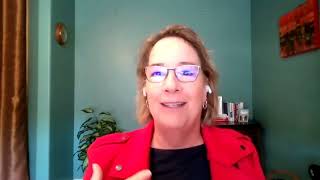
Gerhard Gschwandtner and Helen Fannucci discuss how sales leaders can build trust through genuine care for their teams, and where AI fits in. They argue trust drives retention and forecast accuracy, and show how AI can help with CRM updates, conversation coaching, and role-play scoring when used transparently.
Questions this video answers
November 2022
17 conversations; about 15% of a manager's time
4.8 (on a 1–10 scale)
A Microsoft workplace analytics study of 30,000 sellers
Chapters
Now we have the great pleasure of meeting with Helen Fannucci. She is the founder and CEO of PipelinePower AI. Welcome, Helen.
Thank you, Gerhard. It's so great to be here.
You're also the author of a wonderful book called Love youe Team that was published, what, two years ago in November of 22. Our session today is really all about how to love your team in an AI world, which I think is an interesting title because we live in a world where AI is changing everything. And AI combined with ei, with emotional intelligence, where love is the center ingredient, you can get more roi.
Yes, I love that.
Let's begin with love as a topic in business. Why is it controversial?
I think love is a loaded word for many people, romantically and particularly for leaders and maybe more likely male leaders. They've been very concerned about making sure through the years that they've been appropriate with their team members, and romantic relationships are frowned upon. But when I say love, here's what I'm talking about. I'm talking about the sentiment of supporting your team, caring for your team, bringing out the best in your team, and building trust with your team. And so when I was talking about how to build high performance teams, I was doing a presentation and at a conference on selling. And when I said, okay, supporting your team, I thought, ah, that doesn't capture it. And for me, what captures it is loving your team, and it encompasses all of that. And so I think that some people might think there's a dichotomy between, oh, it's all soft and puppies and roses, and sales is anything but soft. It's about delivering result, making quota, driving performance. In my world, and in my experience, you can only really drive that top performance if you have a team where they know you have their back, they trust you. And by the way, you can only deliver that top performance if customers and prospects trust the seller and trust the company. So it actually comes full circle and we can unpack that much more.
But that's it in the snapshot.
I want to add another twist to that. When you ask people, what is the opposite of love? A lot of people think, what?
Hate.
And it isn't.
The opposite of love is indifference.
Wow, that's good. Yes, yes.
And when you have the absence of love in a sales organization, you have indifference, you have lack of engagement, you have lack of emotional engagement, which means that you devalue your team as a leader.
Right.
And people leave. And you actually can't retain high performers.
If they feel that you're indifferent to them.
And they don't, and you're not caring about them. And it can be a career risk for leaders, frankly, because if you can't.
And I think that there's also the stereotype that business is an act of war and aggression. And. And I think that the way to look at it is love is more an opportunity to nourish, to nurture, to grow. And think about Jim Cathcod's analogy with the acorn. That little seed becomes that huge tree. And the DNA of love is about nurturing. That turns into growth, that turns into results for everybody.
Yeah. Let's get to kind of brass tacks. And I believe that B2B sales runs on trust. It's the trust is the cornerstone of sales.
And I was looking and reading Anthony.
Annarino's book, Elite Sales, and there's a quote in the board that people buy from people they trust to make decisions they don't trust themselves to make. And that is a quote from Chris Beal, and it's in Anthony's book. And as I reflected on that, I thought buyers are at career risk if they make a bad decision. So they've got to trust the seller. Buyers are generalists. Sellers have to be experts. And the way that, you know, a buyer's at career risk is that you're paying your seller to a commission to sell. Because if there was no commission paid and no seller, the buyer would just buy it online. You know, I just bought a laptop a couple weeks ago.
I bought it online.
Not a big career risk. But think about it. So if you're running a larger sales organization like I was at Microsoft, the account executives are expert in mobilizing the resources required to deliver.
Value to the customer. So it's bringing in the product expert, bringing in the financial team, whatever it takes, bringing in the executives. Because in the buying committees at a corporation, there's all these different roles. And so the seller has to be the expert, Bert. And really being able to curate trust and deliver that so that the buying committee and the buyer goes, okay, yeah, we'll do business with you. We'll buy from you. And at a small level, the founder has to be the expert. They're the seller, they have to be the expert. They know more than the buyer knows. And then in between, you have an account executive in a smallish company, they're an expert burden. Maybe they need to go to their boss for a price concession. But that relationship is critical in B2B sales. And it's all about trust. And for leaders, it's all about trust. Too.
Building trust with your team so that they are engaged and able to perform. And I have an example where there's two different teams I was on and this again is at Microsoft and I'll call it the winning team. The leader, the senior leader had an organization of 700 people and was able. She was engaged, she was committed. She had the culture that every team member felt valued. There were performance expectations, absolutely. But they were communicated and there was no surprises. And people worked together on the team and they leaned in to help deliver value to the customer.
And they had people lining up wanting.
To be on that team. Contrast that with another team, which I call the dying team. It was a healthy team. A new leader came in and was indifferent to the team members. They were focused on themselves. They thought they could get the job done by selling up within the company or connecting with the executives at the customer and get their. And what ended up happening over time is the teams underneath started fighting with each other and trust was broke and there was like trying to posture and people left that team and eventually that leader ended up leaving. But you see that dynamic going on all the time. And so it actually is good business to have engaged healthy teams because you can only actually change direction and strategy, which happens all the time in business.
If you have team members willing to go along. And the only way you get them willing to go along is have a culture of trust and engagement.
It's very interesting. It makes me think about what I've interviewed Dr. Abraham Seleznik at the Harvard Business School in. He reminded us in this interview that Sigmund Freud once said that what we need are three things. Three abilities as leaders and as people. The ability to love, the ability to play and the ability to work. And we need to balance those three abilities. So if somebody is excessively focusing on work at the expense of love and play, the outcome is not a happy one. And I think a well rounded leader wants to find that balance, that three legged stool where every leg is equally developed. So it's a stable three legged stool. And when it comes to the comparison between those two teams, the, the second leader that has created indifference in the followers did not win. And you cannot win if you cannot develop those qualities. And I want to add one more thing. The relationship that leaders develop inside themselves, with themselves is a reflection and blueprint of the relationship they create with other people. So if they have a challenge with loving themselves, they cannot love other people.
I'm so glad you brought that because it's really a mindset thing and you can only get performance within yourself if you trust yourself and you have confidence in yourself and that comes out to your team and then also that comes out to customers and the buyer who has to trust. So trust is a, a virtuous cycle, but it begins within ourselves with how.
We feel the confidence, the, the giving. And for me it's the love of.
You know, for the team and then in turn the team loving the customer. And it creates a winning combination.
Right. And I think trust is also related to your ability to put yourself in a position of vulnerability and where you are truly authentic and lay the cards on the table. And in many sales situations it's required because you almost give the customer the opportunity to take advantage of you because you work on that proposal. You do all the, your homework to give the customer the best value and they can say no. And that's a vulnerable position to be in.
Mm. When I work with companies, one of the things I typically hear is our forecasts are not accurate. Our team doesn't know how to forecast. What I often find the root cause is the sellers are not able to be honest with their leader because there's not that trust relationship. And so you're robbing the leader of the ability to really coach the team or lean in to save a deal or whatever you want to say about that, you know, to get the deal back on track. But trust, then also you see that breakdown and sometimes customers or prospects also aren't feeling like they can be trusted, have a trustworthy conversation and that breakdown in communication and trust is a root cause for many of the symptoms we see at a. Oh, we're not forecasting. Oh, the forecast is because we didn't qualify well enough. It's actually a lot of it is underneath. And that's where the EQ people skills, the trust, the support, the love has to be there. It's a foundation or a bedrock for business to exit, exist and then for.
Things to actually be working.
And so I work with leaders and companies to help assess because it's sometimes tricky to really get to the root cause. But often it is trust and not having, not having your team's back and things or they don't feel like you have their back.
And I think trust is a form of misalignment between people, processes and technology. And I think that the distraction comes from technology where people over focus. Let's say, let's talk about AI and how AI can interfere with human judgment, but also how AI can make the workplace a much better place. So can you speak to the specific ways on how AI will help sales leaders manage their team more effectively.
Yes, I will. For example, when I talk to people about you, for those of you who have read my book, you'll know you have 17 conversations about how you manage a team and people go, oh, my gosh, I don't have time to do all that. That's 15% of a manager's time. I did the math on it, on what I propose. And one of the ways that AI can really help is help save time. So it can help remove administrative processes, and we have a lot of those. It can help sellers by automatically putting updates into the CRM system. It can help managers by being able to understand their business.
I don't know about you, but a.
Lot of reports that businesses generate are for somebody other than me. Often I go, I can't really figure out my business from this. With AI, you can go into the CRM system. You can ask it to. You can answer questions that you have about your business. Also, the AI tools like Claude or.
Chat GPT, pick your favorite one. They have the whole kind of Internet already coded into their. Their knowledge base. So if you're frustrated with something, maybe there's a deal. You can ask Chat GPT for strategies or say you're selling to a company, I don't know, Best Buy and you want to learn more about their structure. You can ask Chat DPT or whatever tool you use.
It can be an assistant to help.
You think through challenges that no one has to do the research. It's so great with analytics. I use it all the time. And in fact, I help organizations figure out how to better use AI in their sales process. But I would say also investing in AI tools for productivity, for the team. I know some people have a lot of concern about using AI and there's the trust equation there. And that's opened up a whole new level of buying concerns and issues because, okay, how is that school being trained, all that stuff? Do use personal data or company data to train the tool. But there's all those issues. So I want to acknowledge that. But it's a huge productivity enhancer. And frankly, one of the most important ones is looking at the transcripts from recorded conversations as summaries and just say, oh, because the seller may not tell you everything that they think that they'll tell you what they think is important in the deal, but maybe it's not everything that's actually there that the seller might miss that a manager could go, oh, wait a minute, what about this? So it helps to be asked better questions as a manager, frankly. So those are some of the use cases.
Let's go back to your book. Love your team. Put yourself in the role of a salesperson that got a new job, they got onboarded, they got trained, and now that salesperson is exposed to rehearsal training with AI where they're getting a performance number. Helen, you did a role play and on a scale of 1 to 10, you did 4.8 on. Objection. Handling. So the minute AI is putting some quantitative numbers on your performance, then you start to wonder as an employee, how accurate is that?
Yeah.
So two things there that come to mind for me. One is I would want AI to tell me to cite examples of where I fell short and provide recommendations as to what I could do better.
Right.
So I'd want the qualitative summary along with a quantitative summary. And then the other question, you talked about tuning. So how is that AI role play being tuned on what criteria and is handling objections?
Is that handled? Is that looked at on equal footing with the opening asking for the meeting.
And other skill attributes, or is that being more heavily weighted? As a seller, I would want to know so that I could understand what the management team is looking for in terms of the weighting of criteria. So there's things like. So I have as I created my own role playing bot because I wanted to play around with ChatGPT and I wanted to learn more. So I took one of the conversation chapters from my book, which is on performance management, and I have a custom GPT bot out there if anyone's interested in playing around with it. It does provide scoring, but also provides the reason why manager might fall short if they do that role play.
I want to go back to your book and where you talk about the 17 difficult conversations that sales managers need to master if they want to have a thriving.
Now, what is the number one conversation that sales managers consistently avoid having with their team?
Performance management conversations? Absolutely. Often they wait, they don't address it up front and then they get frustrated because the seller's not performing and it just, it becomes emotionally difficult, it spins out of control. And in my experience, a seller isn't.
All good or all bad.
They have great things that they do, otherwise they probably wouldn't have gotten a job. And they have some things that they need to work on. And if a manager can identify where those gaps are because one, they're having regular conversation with their team members and seeing how it's going, and two, they've made an effort to build trust and have a relationship Then talking about the areas that need improvement before they mushroom into a full scale, that person's failing. But a lot of managers avoid it.
And I think they avoid it at their peril, frankly.
So what is the cause for the avoidance?
It's difficult, uncomfortable. I have had conversations with team members about their performance gaps. In fact, one is so vivid.
A star.
Attainment person, a person that was killing it. From a performance attainment point of view. The numbers were good, but wasn't effective. Working inside the organization and getting people that wanted to work with that individual.
And when I addressed performance, they were.
Very combative with me. They were in denial, combative, not open to it. And it was very difficult. And I actually ended up going to the HR business partner and we had an intervention and that person helped me cut through because that individual wasn't really open to listening.
But then we hit.
But then they got that this was serious and required that they actually start being able to work more effectively with others.
And it wasn't just a check the box set of exercises.
They actually had to.
I had them.
Why don't you find out what your other team members, what their goals are and how you can help them be successful. So over time, over a few weeks and whatnot, they started changing their behavior. And what ultimately happened is that person became much more effective and started actually doing the job they were supposed to do rather than trying to do other people's job and just let go of control. I think it was a control thing fundamentally. But it can be very emotionally difficult to confront somebody and have. You're basically telling them that they're not measuring up in some aspect and that can be hard for people to have that conversation.
I think there are two things that come to my mind when it comes to conversations. The two visual analogies that can be very helpful to think about. What are the walls in the conversation and where are the bridges in the conversation?
I love that.
Yes. The other thing is don't make it about the person, make it about observed behavior or think concrete things. So the bridge is the connecting points and where you're building somebody up and creating more trust. And then the walls are like, this.
Is like a hard edge. This needs to change.
Is that what you meant by that?
Absolutely. Ronald Reagan saying Gorbachev, tear down that wall.
Yeah.
And it came down. It changed the whole political landscape and the economic landscape. And people are working together, collaborate and co create. And that's what companies like to do. Silos, silos are like walls. And the role of the leader is to make sure that the fewest silos possible, and building more bridges.
Yes. I've heard it said that a lot of leaders want their employees to come back to the office because they like having the corner office and have the differential of power. We're on zoom. There's not really. We're all in the same box, you know, size boxes or. That's not a differential of power. I don't know if that's true or not. But the. I think managers need to get comfortable leading effectively, whether they're face to face or remote.
I'm thinking. I remember we did a story on Google in the early days where they strategically built small kitchens and not one massive kitchen. And they talked about the phenomenon of casual collisions where people bump into each other, have a conversation with other departments and learn more about the company in those environments that are engineered to build bridges between people. And I found it very smart because in an industrial society, whether you're a big company cafeteria where everybody creates clicks and it's repetitive, but if you have smaller kitchens, then people bump into each other and find interesting coworkers and that leads to better conversations and better understanding of the whole business.
That's a building bridge tool, if you will, or phenomenon, because then you also get to know people in different parts of the work business.
So there, there's something in your book I'd like to elaborate on, which is that you said that the top sales producers have 40% bigger networks inside the company and they're in front of customers a third more, which I find fascinating.
Yeah. So that came from a workplace analytics study that Microsoft did, looking at 30,000 different sellers and their performance. And so it makes a lot of sense that if you're out talking, when I say out, if you're on the phone or meeting with customers more frequently, you're going to learn more and that's going to generate more opportunities in business. So that makes a ton of sense. And then a network is really key because often.
A seller needs to get to somebody who is on the buying committee, but they may not know that person. So how are they going to get to them? Maybe somebody in their network knows that person. One of the things that I used to do when I had a big strategic sales team is we would sit down and look at the org chart and look at who we needed to be having conversations with because they could impact and influence a deal. And maybe we got our CFO to meet with their CFO if it was the CFO we were trying to get to. So I think it behooves the managers to really help and support their team, build their network, and also make sure that they are meeting, talking with their prospects regularly and even customers if they have also an expansion territory where they're trying to cross, sell or expand or.
Within a given account.
But yeah, that was a pretty interesting.
Study and it's something to keep in mind for leaders to intentionally help their teams expand but also make sure they're having sufficient number of conversations.
Do you have a copy of your book on your desk?
I do.
I would recommend that our audience go to Amazon.com get a copy of Love youe Team. And how do people get in touch with you?
Helen, LinkedIn's the best way. I'm on LinkedIn.
Wonderful. I learned a ton. We are running out of time. I want to say one more thing. What we started out with. We live in the age of AI and your book gives us a playbook for EI for increasing our emotional intelligence. So with AI and ei, we can get more, more roi.
I love that. Thank you. Thank you for having me. It's always a pleasure to spend time with you.
Thank you for contributing to the success of our conference.
More from Gerhard



What Selling Looks Like When Your AI Agents Have the Context Your Sellers Do

Better Conversations, Smarter Support: Wearable AI in Business






When Scarcity-Built Systems Meet Abundance - The Judgment Gap in AI-Powered Sales Leadership
