Fireside Chat: Stroke of Success
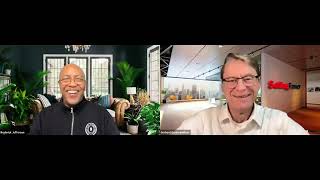
Live fireside-chat between host Gerhard Gschwandtner and guest Roderick Jefferson (recorded for Sales 3.0 Masterclass). Jefferson recounts suffering a massive stroke on October 28, 2021 while traveling for a sales kickoff, the ensuing near-death experience (flatlined in hospital), and a difficult recovery that required relearning basic tasks. He attributes survival in part to hypertrophic cardiomyopathy and very low heart function (reported at ~22%), and shares lessons about priorities: mindfulness, self-care, and centering life on faith, family, friends and fun (his "four Fs"). Jefferson promotes his book Stroke of Success (available via roderickjefferson.com) and a virtual launch on January 13; the chat emphasizes gratitude, community support, and reassessing the costs of career-driven success.
Questions this video answers
October 28, 2021.
About 22%.
He said doctors gave him a 2% chance to live.
Hypertrophic cardiomyopathy.
He cited roderickjefferson.com for book purchases.
Chapters
Welcome everyone. My name is Gerhard Schwartner and we have over 716.
Director level sales leaders in the audience from 56 different countries. And they all want to hear from Roderick Jefferson. He's a good friend, he's a best selling author. He has been a wonderful leader in the sales and revenue enablement community.
He built high performance teams, he led transformational initiatives, he earned the reputation as one of the sharpest minds in the industry. But on October 28, 2021, everything changed. And Rodri suffered from a massive stroke in his sleep. And that transformed his life.
It paralyzed the left side of his body and he was so close to dying, he flatlined. And, and according to the American Stroke Association, 98% of sleep stroke victims never woke. Wake up. And Rodwick has joined the 2% club. Welcome Rodwick.
Thanks, Gerhardt. I am super excited to be here with you and thank you for the intro. Um, it's one of those things where life has been amazing and I always start this way. As difficult as it was to go through that piece, as I talked to my neurologist and my cardiologist, they both agreed that having the stroke actually saved my life because I was going in, in a very, very bad direction really fast. And as you said, I had my stroke on October 28, 2021. And both of them agreed again that had I not had that stroke, I wasn't going to make it to Thanksgiving alive. So I am honored and humbled and grateful to be here with you today.
So you were on top of your game. And I remember when you and I met.
At a video recording at Marketo, I was so impressed with you. I did. We had a videographer there. I remember the conversation. I remember how polished you were, how everything was perfect. And you were before that stroke on top of your game.
A leading executive now preparing for a sales kickoff. And what happened at night. Walk us back.
So it was, I remember it was a Thursday and we were down in Los Angeles and we were going through what was probably my, I don't know, 25th 30th SKO at the time. And we walked the property, we tasted the food, we checked out the rooms, we worked with it and marketing, the usual things that I've done. And it was just the norm until it wasn't. We went out to dinner after we had finished our day and I wasn't unusually tired. But by the time we sat down for dinner, I was exhausted. I mean, a level of tired I've never felt before. To the point where we were Having dinner, we were having cocktails. And I remember I looked up and my head was down on the table, and everyone looked at me like, are you okay? And I said, yeah. Why? She said, because you went to sleep in the middle of a sentence, and that's not like me. And so I said, you know, I am a little tired. I'm going to head off to bed. And it was early. I mean, it couldn't have been 8, 8:30. And I headed off to bed and went to sleep like every other night, woke up the next morning. And I live up in Northern California. So my wife and I, every day, whenever I'm traveling, we jump on a call, you know, compare what's going on at the house, how are the kids, what's happening, those kind of things. And to me, it sounded exactly the way that you're hearing my voice right now to her. She heard gibberish. So she said, you know, I want to walk you through a few things. She said, say your ABCs. I was like, really, babe? Come on now. A, B, X, Q, T, L, N, Y, Z. And she said, Count to 10. And I'm like, I could do that. Literally. And I remember saying I could do that in my sleep. And I said, Sure. 1, 2, 12, 47, 56, 95, 43. And she said, babe, I need you to jump on FaceTime with me right now and see if your face is drooping. I'm like, face drooping? What are you talking about? Well, as it turned out, as you said in the intro so eloquently, and thank you again, that I had had a stroke while I was asleep. So I had been a high level athlete earlier in life, and I had developed something called hypertrophic cardiomyopathy, which a lot of basketball and football players have. Because we work out so much, you get an excess layer of muscle. And so what happened during the night is the normal heart squeezes, and I had no blockage or anything in my heart, but the normal heart squeezes at about 65 to 75% on average. When it gets down to 20%, cardiac arrest hits and you die. Remember that number 20%. So now my wife calls Tim Carlson, who was a director on my team at the time, and he was traveling with me and said, hey, I need you to get him to the emergency meeting room. Immediately. He comes rushing in. Next thing I know, the paramedics are coming in, they're doing all kinds of tests, they're starting out IVs, and they rush me over to the hospital. Turns out that when I got to the hospital, I was at 22% heart function. They only gave me a 2% chance to live. Imagine that. You've got a chance to live, and it's down as low as 2%.
Now, I'd say I'll take that bet any day, because not only did they go through some tests, but that was the day that I was flying home from LA back up to Oakland. They put me on a flight. Now, imagine this. Cabin pressure, altitude, mid stroke. Miracle number two, I made it all the way through the flight. I. I don't remember the first three or four days in the hospital, but my wife said that the first thing the neurologist and cardiologist said is, medically, there is no reason this man should be alive. Not with what he just went through. And flying. That's the first one. Gerard, you want to stop here or do you want me to tell the next piece?
No, tell the next piece.
All right. So I'm in the hospital about 10, 12 days at that point. Now, at that point, as Gerhard said, I can't speak, and I'm a keynote speaker. Imagine no words are coming out, and things that are coming out are making any sense to anybody on the planet. What I did realize is what is the distance between your brain and your mouth is a lot further than it is physically, because I could think of things clearly, but I just could not get the words out. And so I remember one night, one day, I was having a really difficult time breathing, so they put the oxygen mask on me to make sure that I was going to be oxygenated. Then all of a sudden, I heard code. Blue lights are flashing, and it's going crazy. And it's my room number that they're calling out. A ton of people come rushing into my room. And then suddenly I went from beep, beep, beep, beep to be. I'm flatlined. Now, if you've ever been to the dentist and you've gotten the laughing gas or you've gotten.
Anything like that, what happens is you can hear everything, but it's muffled and you can't really hear clear words. And I'm the same way at that point. Now I'm flatlined. So medically, I am dead. I didn't see a white light. I didn't actually leave the room. I floated up to the corner of the room. I'm looking down on the doctors and nurses, and they're working on my body. They're sucking out of fluids out of my body. They're doing chest compression on me, and it's just not working. And then.
I look to my left and I see my mom. My mom died in 1999. And I said, okay, Mama, I'm ready to go. I've done everything that I can do. And I remember her like her words, like it was yesterday. She said, no, baby, I was sent here to let you know two things. One, actually, three things. One, you're going to be okay. Secondly, the doctors are going to figure it out. And the third piece is you'll have to read the book to find out what she told me my new purpose in life was. I don't want to spoil that for you. Then what happened is suddenly I'm sucked back into my body, but I'm still flatlined. And I hear two words that nobody ever wants to hear. One word clear. Oh, no, this can't be good. Do not, please don't. Don't zap me. And the doctor is rubbing the paddles and he's coming down.
To shock me. Now bear in mind, as Gerhardt said, my entire left side, from my shoulder all the way down to my foot, was completely paralyzed. So I couldn't move my left side. Thank God this guy was standing on my right side. And as he was coming down, I went from beep to beep, beep. And at that moment, I reached out and I grabbed his hand before he could. And he couldn't have been more than two inches away from zapping me. Now they're yelling for ert, which is the amer, the emergency response team. They all come in, the other doctors step back. They start run, running all kinds of tests and all kinds of things. And I'm back. But this is where the fight begins. I had to learn how to walk, how to tie my shoe, how to use a zipper, how to write my name, how to hold a spoon. And go through everyday activities that we take for granted. So what I learned from this is take nothing for granted. We all have heard that adage of tomorrow's not promised. I was a guy that didn't have tomorrow. Now, while you may never have a stroke, and I pray that you don't.
As Gerhardt also said, according to American Stroke association, one out of every four adults globally.
Will incur a stroke. That was my second stroke. And I didn't even realize that I'd had a first. And that's why it's called the silent killer. Most people, you get hit and you're not here to tell the story. While I had an amazing, an amazing corporate experience, I was with Siebel eBay, HP, Oracle, Salesforce, Marketo, etc. None of that mattered at that moment All I wanted to do was to be able to walk, talk and spend time with my family and my friends again. And so I'm talking to you today not because of my stroke but because everybody's going through something right now. Life is definitely life and whether it be personally, emotionally, psychologically, geopolitically, whatever's going on, there's a lot happening out there in the world. I want to talk to folks today that are watching and listening to this so that they can focus on mindfulness, on self care. All that oh 60 hours of work as a is a badge of courage. Kill that. Corporate America is here to make a profit, not friends. And I say that because had I actually died and not come back here's what would have happened in secession My company would have written some really flowery things and put it out on social media. They would have released a distribution check to my wife for insurance Then they would have just opened up another wreck because they've got jobs and they've got things to get done. I want you to take a moment and ask yourself two questions. One, what's my why.
Why do I do what I do every day? For me it was provide and protect. For my family the problem is my ego had gotten in the way and then my family became second to my job, my title, my responsibilities, my logo, my revenue, all of that. Now remember I'm here to provide and protect them but instead I would what I was doing was pulling me away from even further from being with them. I'm sure I'm not the only one that can relate to that. The second question I want to ask you and I want you to think about this one. Everyone wants to be successful. We're all striving to do that, right? And the question is.
At what risk and what are you willing to give up? Because for me I almost gave up my life for success, for the awards, for the accolation, for the, excuse me, the accolades, for the salary etc, the big organization flying around in corporate jets and helicopters, meeting lunches with presidents and heads of state. Those are all great stories to tell but what happens when you're not here and you can't tell those stories? So when Gerhardt asked me to come on today I want to make sure that that I shared part of what's going on and that's probably a tenth of what the book is about. It's not about selling books, it's about helping people. One not become what I became. And secondly, realizing that, and I always hear my uncle's voice when I say this. I have never, ever seen a U haul connected to the back of a hearse. All the things you're doing, you can't take it with you. What's really important for me are my four Fs. Faith, family, friends, and most importantly, the one thing that we as adults always forget as we get older. Fun. There it is. Don't leave that piece out. I want you to start living life, not just existing. I want you to live every single day as though it's your last day. Because I known that on October 27th that that was going to begin to be the. Become the ending, the beginning of the end.
I would have lived it completely differently. And now every single day, I wake up and go, if this is my last day, I'm gonna make an impact on someone else. And I'll be damned if I'm not going to have fun today. Gearhart, back to you, my man.
Well, this book is the fifth F.
Phenomenal.
Thank you.
Thank you so much. I. I am releasing my book. It's out right now. If you want to grab a copy of it in hardcover or in.
Ebook, you can go to roderickjefferson.com and grab one. And then I'm going to do my virtual.
Launch party on January 13, and from there on, it's going. And. And so I want to share also with my friends that are listening. Thank you so much for. And. And especially you, Gearhart, because I know this isn't something that's out publicly, but this man, as well as John Barrows and Tim Carlson, checked on me every single day from three to six months after I had my stroke. And I want to say to all of you specifically the same things I've said to my family. My cardiologist, my neurologist, my speech therapist, my physical therapist. Thank you for holding my hand during those dark times, because if it weren't for you, I would not still be here.
It must have been very frustrating for you as a national speaker.
To learn how to speak again.
It was terrifying. But once again, this is where my. My friends in my circle.
Of my tribe, as I call them, put their arms around me and helped and edge me forward. I remember the very first time that I told the story that I just told in Las Vegas at another 3.0 conference. And I remember telling Gerhard, I'm standing in the back, and I am shaking like a leaf. Normally, I'm not nearly as terrified as I was that day. Normally, I got on the stage and go have a conversation for 30, 60, 90 minutes and enjoy it and make sure that it's engaging and entertaining. That day I started I always do a pre prayer before I go out and that day I started and I do it every single time that I go out now.
I always ask God one thing and one thing only.
Make sure that I don't fall and become a meme.
And I'm very serious about that one. But that day changed things for me. It was the first time that I told it publicly and it was during a live conference just like we're doing now. A.
Quick conversation in chat. It wasn't a keynote, it was literally a fireside chat just like today. And I remember I took for a moment just to take it all in and I looked out and there was what, six, seven hundred people out there.
And there was not a dry eye in that room and it had nothing to do with ego at all. The first thing I thought was mama, mission accomplished. Some of the things that you told me to do are happening right now and they've been happening ever since this. So for those out there, if you're looking for a keynote speaker for your upcoming sales kickoff or association or event or executive off site, please reach out directly. I'd love to connect with you and talk about how we can make miracles and magic happen together. Thank you Gerhardt.
Well, I want to want to amplify this a little bit and encourage everyone to think beyond lifespan and health span. You know a lot of people obsessed with living longer, a lot of people want to live healthier. But I think you introducing a third dimension which is with fun you expand the joy span which is how much joy you can give to other people and how much joy you can create in other people because of you are being there and you're making a difference. And, and to me I think that the, the greatest joy out of that experience was for me to realize that friendships are.
Such a vital play such a vital role in our personality, in our well being. And you said earlier, which my ears perked up when you say corporate corporations are there to make profits, not to make friends. So we need to be cognizant of that, that we are responsible for creating and nurturing friendships. And what I feel sad about is that most Americans are lonely that don't know how to make friends and it's actually so easy and the way to do it is to be there for other people when they're needed. And when I had this conversation you were talking a Little funny. When you were in a hospital and we had with those check in calls and, and I thought my role was there to listen and do, to witness and, and not to make things complicated for you and just know that I care about you and, and be there. And I had total faith that you're gonna make it and that, that therapy that you got and the neurologist that you work with, that they will help you regain your natural ability to.
Impress other people and change other people's lives.
Thank you. There. There were days that you had more faith that I was going to be okay than I did. And there were days that you literally carried me because to your point, I sounded, as you said, a little funny. I stuttered so bad that I couldn't even get words out. There were days and you could hear the frustration because to your point, that's what I do. I'm a speaker, I'm a student, I'm a learner, I'm a nurturer and a sharer, and I couldn't do that. And for the first time, I could not provide and protect anybody, including myself. And it took people like you and like I said, John Barrows and Tim Carlson and others, and I don't want to leave names out. I'd be here all year. Thank you to all of you. Because not only did you keep me going, it wasn't about motivation, it was literally about transformation.
Yeah. There's something interesting in the, in the book where you say that if you can't sit still and enjoy your success, you're not really successful.
You're not. You're really not.
Can you expand on that?
Yeah, I'll, I'll give a big, clear analogy on this. There are a lot of people say that, oh, I'm the only one, especially leaders. I'm the only one that can do this. I was talking to a friend the other day and he hit me with something I'm still trying to get my arms and my head around. If there's a task and you're the only person that can do it, is it really that serious of a task? No, it isn't. It's your ego saying it has to be me.
Instead of that. And I go back to something my mom used to say. A lot of people believe that they are untouchable here because they hold on or they're super important because they hold on to information and data. What my mom used to say is you're more important when you can share, when you can give. And I don't mean give to get it's not about creating symbiotic relationships and quid pro quo. Now, as she used to say, you give to give and then whoever you believe in is a higher power, whether it be God or the universe or whoever it is, they will balance things out for you. And it usually comes back in ways.
That you didn't expect. I used to get really upset. Gerhardt YOUNGER in my, my life and career, I'm always helping and giving. When's it going to come back to me? And my wife looked at me and she said, shut up. Yeah, that's exactly what she said. She said, shut up. Your family's healthy, you've got a roof over your head, you've got food, you've got a nice vehicle, you've got a circle of people that you mentor and that mentor you, that absolutely love you. Have you ever thought maybe that's God's way of giving back for all the things that you're putting out?
It was time to change the lenses that I was looking through.
Terry says Stroke of Success is an inspirational read I highly recommend will change your perspective of day to day and when work stresses you out.
Got a lot of amazing comments and.
I want to ask you about the role of gratitude in your recovery.
Gratitude has a whole different definition and impact for me now. Gratitude used to be, oh, I'm thankful for. Fill in the blank.
Gratitude now is I'm thankful for being able to help others. And I'm not talking about just stroke victims. Everybody's going through something. For me, it was a stroke. For you it could be, like I said, emotionally, it could be something at work, it could be something in your marriage, could be something with your children. I think that gratitude is now defined by still having the opportunity.
To fix all those things.
Well, I'm reminded of an interview I did a long time ago when I started selling Power magazine. I was able to interview Senator Sam Irvin Jr. And I remember when I first came to this country, I listened to the Watergate hearings. German and he impressed me. And I thought he was a simple country lawyer. Very insightful. And I traveled to Morganton, North Carolina, where he had his retirement office. And I think it was 82 when I met him. And he said that adversity is the diamond dust that nature uses to polish its jewels.
I love that. Love that.
For those people that are going through difficult times, I'd like to leave you with something that I live by every day and I hope that it helps you to get through those adverse difficult times. And that is one no one succeeds alone. There is a whole band, an entire tribe of people that are nudging you, pushing you, surrounding you, praying for you. And the second piece, and I think I said it in the book, faith is never tested in good times. It's very easy to be faithful and. And kind of forget everything that's going around you until something changes that you have no control of. And I. I pray that you don't ever get into a situation like where I was, where I had to be put into a situation where I had absolutely no control, to finally realize that I had no control.
Take advantage of the opportunity you have now. Love on, hug on your friends, your family, your tribe. Because as I said earlier, and it means so much more now when I say it then before my medical situation, nobody, and I mean nobody, is promised tomorrow.
Therefore, you want to be grateful for the present moment and live in the present moment and live fully and purposefully. And you have discovered in the last four years, you've learned probably the biggest lesson of your life, which is a life of meaning and not chasing just numbers.
Absolutely. Life is meant to be lived, not. Not existed. That's for certain.
And.
I can't say it enough.
We're all striving, and I applied anyone that is moving towards whatever their definition of success is. But I asked that question again. At what cost? What are you willing to give up? Because it's going to cost you something to be successful. And my hope is it's not your life.
Well, B.C. forbes once said that the business of life is not business, it's living.
I couldn't agree more with that one.
Absolutely. I'm glad you live to tell the story. And it's a beautiful story. It's inspiring. A lot of people.
Loved the way you told the story. And I get a sense that I heard the story last year from you in Vegas in front of a live audience, and you didn't have the book yet, and now the book is out and your story has become so much richer and so much more nurturing for everybody and helpful. So I recommend get the Stroke of Success. It's a wonderful book.
And it is available on your website, which is Roderick jefferson.com.
Thank you so much, Gearhart. And again, I say thank you for holding my hand during those dark times.
It was my pleasure and privilege.
I feel honored to call you a friend.
Absolutely. I feel the very same way.
Should we get Thomas back in?
Hello. Hello. What a.
What a story.
Thank you.
You know, I'm. I was in tears myself.
Wow.
I mean, that that's, you know, and. And I. I can appreciate a lot of what you expressed. I was at a stage like that myself. Not that I had a stroke, but that I lost sight of what was important.
And. And I appreciate. I appreciate your message.
Thank you so much.
So what is your Christmas wish, Roderick?
I. I. Oh, wow. I've got a number of those that the. It's not, as you can imagine. It's not for physical gifts or things like that. It's more of a Thanksgiving than a request. I am thankful that I am here to spend time and to be present.
With family, friends, chosen family, and, you know, this grand gard. I have a. My first granddaughter who will be two in two months. I can't wait to spend time with her and learn about her and let her grant learn about her grandpa. Not for being a keynote speaker, not for being executive, not for being successful, not for anything other than he's just here to spend time with her. That is the biggest gift that I can have and ask for my entire life.
Wonderful.
May all your wishes come true. And I can see you plan planning the wedding for your grandchild.
Thank you. Thank you so much.
All right. Wonderful.
Meaningful conversation.
Thanks, all.
Thank you.
More from Gerhard



What Selling Looks Like When Your AI Agents Have the Context Your Sellers Do

Better Conversations, Smarter Support: Wearable AI in Business






When Scarcity-Built Systems Meet Abundance - The Judgment Gap in AI-Powered Sales Leadership
