Fireside Chat: The 7 Levers of Influence: What Every Revenue Leader Must Master in the Age of AI
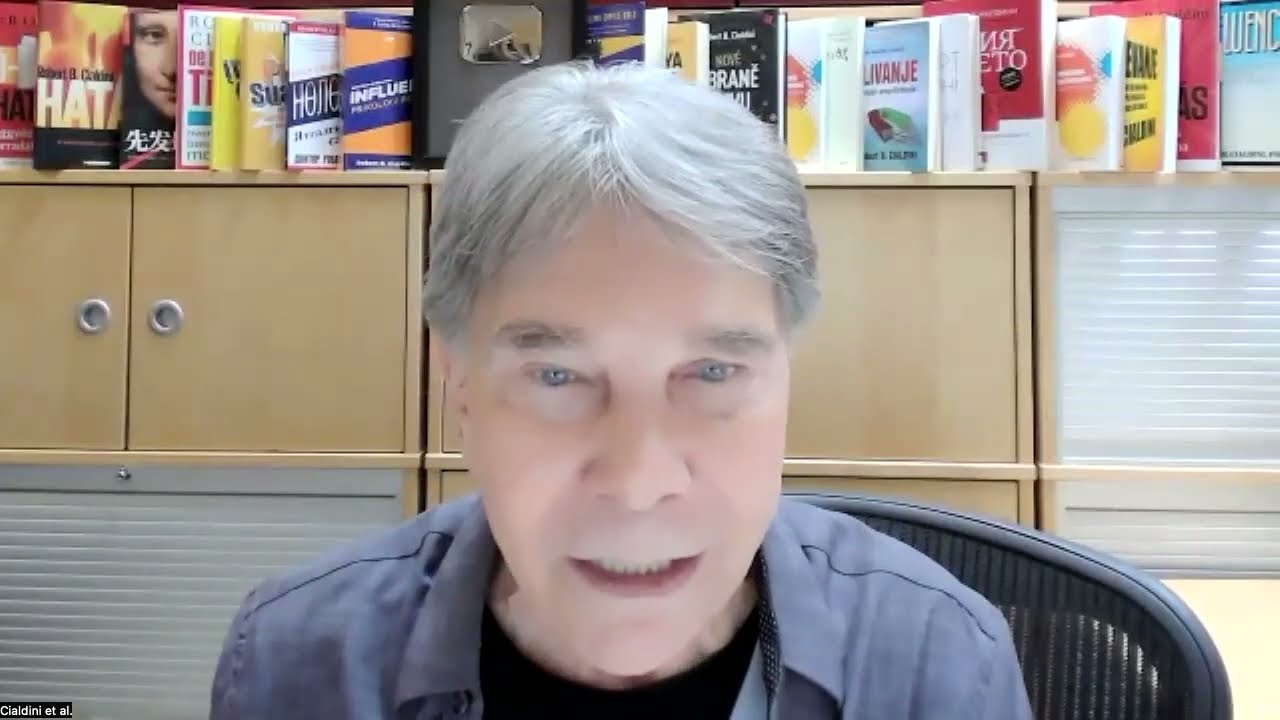
Dr. Robert Cialdini discusses the seven principles of influence, including a new seventh principle called Unity that taps into shared identity. He explains how AI-driven personalization can amplify influence but warns that ethical practices outperform deception, citing evidence from sales cultures and field experiments.
Chapters
Hi, my name is Gerhard Schwandner, and today we have a very special treat. We have Dr. Robert Cialdini in the house. He is the most prolific authority on the topic of influence. Welcome, Robert.
I'm glad to be with you, Gerhard. I'm looking forward to our conversation.
You and I, we met about 14 years ago at Patterson University, and we did an impromptu interview. It got like 164,000 views on YouTube, which was an absolute record for me.
You know, we love these unexpected accidents, don't we? But they tell us something about the merits of what happened just there that we can then try to replicate. And perhaps we can do that today.
Your work has been revised now, and you have a new edition, an expanded edition. Of the book Influence. How has that worked for you?
It's been very, uh, propitious, I would say, because a lot had changed in the literature of behavioral science that I could add to the new edition, the expanded edition of, uh, the book Influence, including that I added a 7th principle, uh, called Unity, that was entirely new, that I hadn't dealt with, uh, previously in that, uh, earlier edition. Yeah.
So when you look back, you've been studying for 35 years why people say yes. So what surprises you most about how little has changed in human psychology and behavior? And what surprises you most about how much the landscape of persuasion has shifted?
In terms of what hasn't changed, I'm heartened, I'm encouraged by the fact that these 7 principles of influence that we have now identified seem to be strong strong and powerful, even though the times have changed, the communication patterns have changed, the technology has changed, and so on. These are features of the human condition. They have been there guiding people to say yes to worthy requests for as long as we've been a species. Actually, I had, I got a, an email from a, an academic at St. Andrews University in Scotland, and he studies ancient texts, including the Dead Sea Scrolls that were written 3 centuries BC.
Right.
And he said, I found all 7 principles in the Dead Sea Scrolls. That means that for thousands of years, these principles have been guiding behavior. They haven't changed. They're part of who we are as a species.
Right.
What has changed the most is the delivery systems that are now available to us for presenting those principles in our messages, seeking yes, seeking assent, seeking people to agree with our proposals or recommendations or requests. Those things have changed. The technology has changed. You know, when when my book first came out, there, there didn't exist an online— there was no internet. And yet people have said to me, your book Influence is the Bible of internet marketing. How could it be? How did you look forward and see what would be true before it actually exists? And I had to say, I didn't look forward. I looked inside us. What were the things that always drove Ascent? Which were the factors that people were always looking for to move them in a particular direction that would lead to good outcomes for them? Those haven't changed. So the platforms we use to deliver those messages and to communicate with people about those factors that steer them correctly most of the time when they say yes to them, Those things have changed, but not human psychology.
That is fascinating. I want to circle back to unity, which you mentioned earlier, the 7th principle. And you said it was hiding in the data all along. So for a revenue leader managing, what's the single most practical way to activate unity? So how can we activate unity in a sales conversation? What is it that most sellers completely miss here?
What unity refers to is a sense of belonging together in the same category that refers to an identity. So you can have a political identity, a religious identity, economic identity, a local identity. Raising those to the top of mind in your audience creates a willingness of them to favor and follow you because that's what we do to people who are one of us, not just similar to us, who are of us. And here the internet is our, our, our ally. We can go online and see what features we share with our audience, which commonalities we have with them, bring them to the surface, and people will be more susceptible to our recommendations. Uh, there was a wonderful study that was done on a college campus where the researchers took a young woman about college age, put her in front of a table asking for contributions to the United Way, right? And because she was similar, she had similar dress, similar age as students, she was getting some contributions. She increased her contributions by 450%. By adding one sentence to her appeal. She said, I'm a student here too, like you. And people, we say yes to those who are of us, who are one of us. Have you heard the, the, uh, the saying, people don't sink the boats they're riding in? Right. If you're a communicator, your best use of the influence principle of unity is to show people that you're in the same boat. They will not sink that boat. In fact, they'll want it to course on into the future in an enhanced way because it's, it's of them. I'll give you an example that's for me. I had a a request for one of my colleagues in the psychology department where I have spent most of my time. It was, this was a guy, let's call him Tim. Not a nice man. Not a nice man. Brusque, doesn't suffer fools gladly. And I said, I need this, I need this favor from you, Tim. And it has to be today because I have a big project that has to be in the mail by tomorrow. 'Can you help me with?' And he said, 'No, Bob, I can't be responsible for your poor time management skills. Bob, no.' And then I said, 'Tim, we've been in the same psychology department for 12 years. I really wish you'd do this.' I had the favor that afternoon. It's not as if he didn't recognize that we had this Unity. We were, we shared an identity, members of this psychology department. But if I brought it to top of consciousness, it changed no to yes. Just like with those students, bringing the fact that they were students at the same university, bringing that to top of consciousness was a lever for change. That's what we have to do. I'm gonna give you one more example.
All right.
Inside your organization, if you've got a new initiative and you want to get buy-in from your peers for it, and you show them an outline of your new idea before you can send it up the line to get it funded, and you wanna be able to get a lot of people who say, yes, this is a good thing, and you ask for their opinion about your idea, that's a mistake. Not to get their input, but to ask for their opinion. It turns out when you ask for an opinion, you get a critic who steps away from you, is not unitized with you, separates and gives you some kind of evaluation. If you change one word and ask for their advice rather than their opinion, you get significantly more favorability to your ideas, and they give you better recommendations for improving it because you made them a partner with you. When you ask for an opinion, you get a critic. When you ask for advice, you get a partner.
You invite them to your boat.
You've put them in your boat. They're not going to sink it.
Right. That's amazing. You draw a sharp distinction between liking and unity. Why is liking different?
Liking is surface similarities. Oh, you like Korean food? I like Korean food. Oh, you like, uh, uh, scary movies? I like scary movies. Unity is about belonging together inside a category that, that reflects your identity as a person. Right?
Got it. It's so, it's tribal.
It's tribal. And you don't have to like the people who are in your tribe, but you do have to favor them to be loyal. To your tribe.
In the world of AI, we have the ability now to hyper-personalize outreach. Will that activate your principles, or does it trigger skepticism?
It does both. The way you've presented the work that you've done to uncover them or to learn about them, whether you do that intrusively or you do that with humanity, intrusively would say, we've now scraped the internet and we know all these things about you, and here are the things that we've decided you would like about our products. That would cause me to move away from people who are using the internet in this intrusive way to learn about me without my permission. If instead I would say, We know from information that you've provided on the internet that you prefer these goals, that you prefer this kind of outcome in your situation, and we want to be your partner in achieving those outcomes. We want to be someone who is helping you based on this knowledge rather than exploiting you based on this. Make it human. And here's one thing that I just like, there was just a study that came out a couple of weeks ago. When you are presenting your case, how often do you present a photo of yourself? Almost never.
Right.
If you present a photo, you've humanized the interaction. There's a person here, not just somebody who's collected a lot of data on you from machines. There's a person here. And if that photo of you shows you smiling, shows your warmth, you get significantly more conversion than if the same photo shows you determined. You know, the kind of thing we like to tell people, we are confident and strong.
Mm-hmm.
No, what they want first before they read about your competence and know-how they want a smile. They want to see someone who is human. I, I saw a, uh, an interview of a, on a podcast of a guy who did research on companies that had receptionists at the desk. When you came in, you met somebody who steered you to wherever you were from. And he asked the question, what's the thing you most want to see? From that person? And the answer was not competence or know-how or experience. It was a smile. That's what I want first. So anything you can do to humanize your messaging in a time of advancing technology that's separating us from one another, people are thirsty for human connection. So here's a lovely study that shows it. How do you humanize, uh, online, your, your online, um, messaging or, uh, maybe your website? If you have a welcoming statement on the landing page of your website, welcome, we're so glad that you've decided to join us. We hope you have a, a great, uh, experience. You get significantly more conversions before they read anything you have to say. It's the warmth, it's the approval, it's the human connection that people are starving for now that you provide at the outset. And that wins the day subsequently.
I want to go back to what you said about smiling because it reminds me of a line in the play Hamilton, where the lead singer says, um, smile more and say less.
Yes. And here's what the research says about that. The smile has to be genuine. People can tell the difference between a phony smile or a genuine smile. All right. So I'm a public speaker these days. I go on on stage and speak about ethical influence. And I was once told by a consultant who specializes in, uh, public speaking, right? How to maximize, how to optimize your results. He said to me, you know, Cialdini, you have a big mouth and people would appreciate a smile at the beginning of your presentation., but then he said something that changed that for me entirely. He didn't say, therefore, smile broadly before you begin. In other words, manufacture a smile, counterfeit a smile in that situation. He said, find a reason to smile broadly at your audience so that it's genuine. And I have never forgotten that. So before every talk, I think of why I should want to smile broadly before this audience. Maybe it's that I know my material is going to be very useful for them, or I have prepared very well the night before. Whatever it is to make me smile broadly for, for true reasons. Then is part of my countenance before I begin.
Yeah, study by the University of Virginia on the benefits of joy to mental health and also to relationships.
Exactly right. So find the reasons for joy inside that relationship. Find the topics that would lend themselves to a joyous outcome. Make contact with those right away and share the joy.
So let's go back to ethics. Uh, what if a salesperson finds himself or herself in a situation where the leader, the company needs to make quota, they want to maintain employment, they don't want to fire anybody, and they want growth at all cost? Uh, and shortcut on ethics. What, what do you say to those people?
We've actually done research on this, and in organizations that have, uh, unethical cultures, there are significant losses to the bottom line that occur. The first is people don't like being coerced to be deceptive toward their prospects, their customers, their clients, their business partners. They don't like being pushed to do unethical things, and it reduces their productivity if they do. Right? Secondly, it increases turnover inside the unethical organization. People don't want to stay in a place where they're uncomfortable being pushed into this kind of stress. Of being, uh, immoral. And then finally, when those people who are unhappy turn over and leave because, uh, of that stress, the organization is, is left with a precipitate of cheaters who then cheat the organization. That's what we found. These are the people that take, uh, laptops from the storeroom, who lie on their re— on their expense reports. Who generate under-the-table deals with vendors. Those are the people who— you've pulled the viper under your coat. It's going to bite you.
There's self-cannibalization on the boat.
That's exactly right. And that's the last thing you want on your boat, right? You sink yourself.
Yes.
Last thing you want. So that's the message I think you can send. And we have done the research on it. It exists. We've shown that those three damaging features to the bottom line, low performance, turnover, and malfeasance, are there in unethical organizational cultures and are not there in ethical organizational cultures.
Let's look at the other side of manipulation and influence. What if somebody has a really great idea and doesn't know how to influence, like the engineer Kodak who invented the digital camera? What if that person had been more persuasive?
Yeah.
The whole company would've been saved.
Two things that I would recommend just off the top, but I would also say, look, you can be more persuasive by understanding what these 7 levers of influence are. So employ them in the way that you you, you make your pitch to others in your organization. I just saw an example. I was watching an interview on a podcast, a VP from an organization, and he said that they were experiencing a big disruption because they changed their IT equipment completely. Everything was changed. The phone systems, the computer systems, the, the AI systems, everything had to be changed to this new approach. And everybody was worried about how it was going to decrease their productivity, their sales, and so on, on, on their staff. And there was one manager of a particular unit. She did something for each of her teammates ahead of the big change. She went through it. And found all the places where people could trip up, all the places where people could improve their performance in that big system. And she wrote out a tip sheet for all of her people. When you come to this thing, here's what you can do. Press F4, or you can, uh, do this, uh, maneuver, change, get it from this, uh, platform over here, whatever it was. She had a tip sheet. That allowed these people to do better, which they did once the new program occurred. But here's the key. In the month run-up to the program where they had the tip sheet but didn't yet have to encounter the, the new system, their productivity went up 19%. Wow. And they were going to give back. So, Reciprocity would be one thing. Always look for what you can do for your people to enhance their outcomes, make things easier for them. They will give it back to you in productivity. The other thing I would say is use, use unity by using the terms we and us in your description of your pitch. Of your idea, not I and you. There's new research that just showed that not only do politicians who use the terms we and us in their campaign speeches win elections 80% of the time compared to those who don't, who talk about me and we and, and, and you, right? It works for— the newest research shows that those leaders, CEOs, who use we and us in their annual, uh, reports and messages to their stockholders and to their teammates, they have better financial performance at the end of the year than those who use I and me. Amazing. Always.
We are in the same boat.
We are in the same boat.
Right.
People want that.
Yeah.
Proceed. I grew up in the state of Wisconsin and the, the National Football League team in Wisconsin is the Green Bay Packers. And I've been a Green Bay Packer fan all my life. Okay. And I saw an article in the newspaper that's that listed the celebrities who are fans of each of the NFL teams.
Right? Right.
Learned that Justin Timberlake and Lil Wayne were both avid Green Bay Packer fans. Wow. Gerhardt, I immediately thought better of their music.
That's so great.
And here's the point that you were just making. I wanted them to be more successful with, of course.
Yeah.
I think they were one of us.
Right.
I didn't, I certainly didn't want to sink their boat. I wanted their boats to sail into the future with greater impact.
Final question. Who was the most persuasive person you've ever met?
Warren Buffett, who is probably the most successful financial advisor of our time, an invest— an investor of our time. I get his letters to shareholders every year, and I notice that he does something that no other CEO does. On the first page, he mentions something that went wrong, and he establishes his credibility and his trustworthiness by showing that not only is he knowledgeable, he knows what went right and what also what went wrong. He's willing to talk about what went wrong. And then he says, but we have fixed that. That mistake will never happen again because we've put policies in place. We've put people in place, uh, to make sure that that never happens. And then he gives us the things that went right. I'm a different recipient of that information than I was before. Because I say this guy is being straight with us. This is a trustworthy source of information. And I, and I open myself to processing that information more fully and believing it more completely, more deeply, because it's coming from someone who's just demonstrated himself to be a credible, trustworthy source of information.
Isn't this also a sign of humility?
It's also a sign. That's right. You know, there's a, there's a saying, uh, to err is human, right? Here's what he recognizes. To admit it is humanizing. Early in the presentation, mention a drawback that you can overcome. Right? That you can say, but, or however, and you bridge to the strengths now, and people are listening to those strengths differently. There are two famous advertising campaigns that use this. One was the, the L'Oréal campaign of a few years ago that said, L'Oréal, we're expensive. But you're worth it. Increased market share by 300%.
So final note to our audience, if you have persuasion impairment, go to Dr. Robert Cialdini's website and there is a new self-assessment. What is the URL?
So it's cialdini.com. And, uh, there's an assessment free that just shows you where your strengths are in the influence process of which principles you most like to use and those that you're not using, even though in many situations they're available for you, but you are missing out on their, uh, their impact. Yeah. And we, we will evaluate with this, uh, short questionnaire which are your strengths and which are the things that you could build even better.
Thank you, Robert. That was amazing.
More from Gerhard



What Selling Looks Like When Your AI Agents Have the Context Your Sellers Do

Better Conversations, Smarter Support: Wearable AI in Business






When Scarcity-Built Systems Meet Abundance - The Judgment Gap in AI-Powered Sales Leadership
