Five AI Solutions to Accelerate Sales
Jonathan Carford walks through five AI categories for sales: orchestration, opportunity analytics, predictive intelligence, autonomous agents, and contextual enablement. He frames AI as an exoskeleton that augments human sellers, names vendors like Momentum and Peel, and argues you should start with revenue goals before picking tools.
Questions this video answers
Bryant University (AI101 and AI and Sales classes; online accelerator program).
Head of Growth at Momentum; founder of the GTM AI Academy; instructor and coach (nickname: 'Coach').
Chapters
Foreign.
Are we ready to bring our audience back into the fold here with Jonathan Carford?
Jonathan is a very suspicious character, and I don't even know whether he's real. Is he real?
Am I real?
He is totally real, and he is pretty awesome. And today he's going to talk about some AI tools.
That are really gonna help people, right? Help us to achieve some of our goals. And I have definitely seen firsthand how the things that Jonathan teaches us will elevate performance.
So tell me about what you're co teaching with Jonathan. Where do you do that?
Yeah, you gotta talk to the class, Steph. Come on.
Yeah, well, we're teaching AI and sales at Bryant University. It's an online accelerator program. And it's just so exciting because the students come back week after week and they are sharing all of the things that they're doing, whether it's getting, you know, a new deal for $10,000 or upselling some of their current customers or just, like, becoming so much more efficient. We're trying to quantify it, but I mean, there's.
It's. It's.
It's so exciting. I don't know. Jonathan, what's your favorite part about teaching that class?
It's a good question. Teaching with you, Steph, is definitely my favorite because you always have this good humor and you have fun with it, which is fun, generally speaking. I do enjoy that. But what I love in general with any type of education is seeing people actually come back with results. That's like, I geek out on that. That's the my life coaching me. I want to see people succeed and win. So I love when that happens.
And I like how you asked. You asked multiple questions, right? You're like, but what happened? How much time was it that you saved? How big was that deal? How much time did it take to do it before, Right? Like, you're helping them understand how the technology is helping them, and I think that helps to motivate people to want to lean into it so much more. So I'm. I'm really excited about what you.
I want to share a quick analogy. You. You brought to mind that what AI is really doing, and you're teaching the students and you see their bright smiles and their excitement about app applying their knowledge. So my analogy now is that AI is like an exoskeleton. What an exoskeleton is to the body, AI is to the mind.
Oh, I love it. I always. I always call AI and different tools my iron man suit because it extends my abilities more than I could by myself, which I love. It's a lot of fun.
So, yeah, take it away.
Let's do it. All right. Well, I just want to say first off, thank you for Gearhart and the team at Selling Power letting me be involved in nothing but a pleasure. I've done this a couple times now and it's a joy every time. So I just want to say first off, thank you. I'm very grateful. So this today, I know the we had a little bit of a typical miscommunication, so I'll take ownership for that. But the what we're going to be covering is more the categories and I'll share some specific tools of AI AI Tech for sales around these categories that I think you should be aware of with your teams. So we get into real quick, very quickly and agenda is going to be you want to cover some key concepts. We'll make sure we're on the same page for some things. I'm going to go over some main tool categories in the top five, I will be sharing some specific tools. But please know there are other tools that fit these categories. But I just want to make sure I can give you specific examples so you can see so you can see obviously what that looks like in real time and then some Q and A if there's any queries, questions, inquiries or that kind of stuff to to know about. So the outcome is I want to give you an idea of what's possible and hopefully let you walk away understanding and let your brain be expanded and never go back to what it was for. That's my purpose and goal here today. So quick thing about me, I'm not gonna spend a lot of time here. My name is Jonathan Carford because my, my last name is hard to say and because I coach the team, I got a nickname once of Coach and it just kind of stuck and everywhere I've been since, someone's called me Coach. So for the last four or five years, I've been known as Coach. I'm currently the head of growth at a team called Momentum. It's a revenue orchestration data platform which is awesome. I'm the founder of the GTM AI Academy. I've had thousands of go to market individuals from sales to enablement to revops go through the academy and I've advised of these companies. You'll see below of Luster recap GTN Buddy Spiky Simby and I teach at Bryant University the AI101 class and obviously the AI AI and sales class with Stephanie, which has been a Lot of fun. So to say that I sleep, eat, speak, play, enjoy AI all day is an understatement because literally I live and breathe this stuff and I just love it. I don't know if I call myself an expert. I always tell people I'm a nerd, so please know I'm a self professed nerd. I'm not sure if I've reached expert level yet, but I'm working on it so we'll get there. Okay, so to kind of level set with some concepts I want to talk about this, this idea of AI agents. So you've probably known about agent AI. The co founder of HubSpot came out with agent AI which is a cool platform and then Salesforce last year came out with Agent Force. I'm sure you've all heard of this. This is the levels that OpenAI has described that will be going on as far as the future of AI and as a whole. To give you some context, level one was when ChatGPT was released two and a half years ago. Level two is when you have the reasoner type models such as Claud 40301 from OpenAI. There's a lot of different reasoning models but that's the next level. And now we're just agents technically been around for a while but we're really getting into agents now and most teams are right around here where they use the reasoner models but they're not quite at the agentic level yet. After that it's going to be more innovators of AI where AI is going to actually be more in the creative field and innovating different technologies or ideas of where we could do like cure cancer or whatever cool things we could do with that. And then level five is when you think about organizations that can work with for an entire organization. Thinking about kind of like when Jarvis on Ironman ran the entire organization of Stark Industries. That's kind of the concept we're talking about is that level of AI capability. So this is from a Boston consulting group last year and they projected this is kind of like the mode we'll be going through. I'll be talking about a few of these but obviously you go from the left hand side of the age old selling, very, very seller driven to the right hand side where it's. It's not necessarily.
I don't want to say replacing salespeople but more of augmenting the salesperson where the when AI avatar, a digital sales avatar can take over certain tasks that the salesperson would have usually done and Then move the deals along or a customer along in the process farther down the sales process than was before, which is kind of crazy. So I'll be showing some different cases here. But to hopefully make this a little bit more applicable, let's take a of qualifying a sales lead, which I'm sure you all know much better than I do of this process. Let's just break it down to five core steps. So in the past this would mean like a human would have to gather lead information. A human have to write the initial email or call. The human would have to obviously have the conversation with the person about the pains and all that kind of stuff. Then the human would have to go in and enter on the bajillion fields in Salesforce and then they'd have to manually do the follow up. So that is like the state of, of most teams, at least at one point. Now where most teams are is right here where they're using ChatGPT for a lot of this process or Claude or Perplexity or some AI they have to prompt. So someone will go in and prompt and saying hey Perplexity, tell me about this account or tell me about this person. And then they'll say hey, you know, Perplexity or chatgpt, help me write an email script or, or a call script. And then I'll say like help me with the suggestions of what I should be asking. Give me what I should put you putting into the CRM. And then the human does the follow up. But they're prompting AI to say based on this call, what should I say in this follow up? Most teams I'm seeing in the market are in this level. The next level is when you start using the AI agent. So instead of the human being the center of this process, the AI agent is now the AI agent goes out proactively by the way and says, hey, you got a call coming up tomorrow. I'm going to go out and lead this or gather information on this. I'm going to approve the information or the email you should be sending out which the human can then approve or just automatically say you're good to go. The agent can then suggest things that the human should ask on the call itself. And then the AI agent can log the CRM. And then lastly is the proposed, the follow up next level is think about that process but now just think about research alone. The multi agent system for lead information for research is something like you'll have an agent that specializes in LinkedIn, another agent that specializes in financial reports, another one that will Focus on writing emails and like each one of these are going to have their specialties and they'll all work together strictly for the purpose of researching. You have this multi agent framework going through the entire process and you'll even have agents who are actually having conversations with humans and then bringing that information back to the human, leading the opportunity to let them know when they should or should not be involved, which is crazy.
So now let's think about this from the view of like a salesperson. So if you have one sales rep, obviously the top of this is a sales rep and you have agents in every single part of what usually would have been a human doing this. So an agent in the schedules, an agent that gets content, an agent that does the conversational analytics, you have an agent for lead generation and all of those feed into a system of record. Usually that's a CRM or it could be a snowflake. But think about this world where all these agents exist and they all talk to each other and feed the information to the human so the human can then spend more time on what they're supposed to be doing, which is actually talking to humans versus all the piddly to stuff they have to do previously. So think about this now times by every team. So you have all this fleet of agents for finance and then you have another one for marketing, another one for customer success, another one for enablement, and then for sales. And then this becomes your organizational agent because all of these sub agents who are serving sales are talking to each other and you'll have one bigger, I should say bigger agent. I'm going to draw this one that is the agent that understands the context of the entire organization so that knows what's happening across the org, which is crazy. From there, if you expand more, think about, okay, what if the organizational agents understood that this company needed something that it did not provide? It could then go out and become a buyer and then go ask another agent from another company saying hey, I need this tech, can you give me a proposal? And this is where you get to this, this place where organizational agents will be talking to other organizational agents around product or technologies or this kind of stuff to where you can decide when the agent will be bringing back to you as a human three options of tech because it went and talked to 300 other technologies for you. Like this is the world we'll be going into is this level. What we don't know is how comfortable humans are or not with the AI experience. This is what we're currently experiencing now of like Saying, do I want to buy a house from an AI agent, real estate avatar? Maybe, maybe not. We have an experience enough to know like, do we like that? But I will say that we didn't think 20 years ago you'd ever get into a car with a stranger. And yet everyone uses Uber and now you have things like Waymo where you're getting into a car with no one. It's just the AI worker or the AI driving around. So to say that this may not happen, I think would be faulty thinking like this is the world we're going into, it's just deciding on who does your ICP care about, what experience do they want? Do they want a human experience or do they want an AI experience?
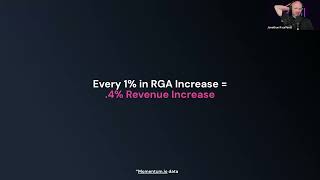
Okay, so in the last 15 months I have seen 530, 15, 552 AI demos. That's not an understatement, it's not exaggeration. I literally count them and I have a list. This AI tick could be anything from company based technologies that you have to have a team by all the way down to things like ChatGPT, Gen, Spark, Manus or all the other AI companies out there. I've seen a lot of technology and so I tried to narrow down the things I think are going to be options or categories for you to be aware of the next year or so into five categories. Before I get into that, I want to point out a couple of things. I'm noticing a trend with momentum that there's revenue generating activity time of 28%. This is the average coming from Gartner, Forrester, McKinsey, Boston Consulting Group, Salesforce. All of them are saying that the average is 20%. Top performing teams with revenue generating activity time. Talking about Salespeople are at 45 to 50%. So I know a team of owner because they use momentum and other tools. Momentum's at the core. They're kicking at 70 to 80% revenue generating activity time. That is absolutely insane, just FYI. But this is the now the new minimum of companies adopting AI and automation is that it takes all the stuff that salespeople would have had to do before and gets it out of their way so they can do what only humans can do. What I'm seeing in, in the marketplace, I wanted to give you this measurement is that for every 1% in revenue generating activity time, the average you could see is a 0.4% increase in revenue. So I'm going to show you tools with the, with the end in mind of thinking, how can we add more revenue by then? Therefore Adding revenue generating activity time for your sales teams. Hopefully that makes sense. So with that in mind, let's hopefully my slide deck will work for me. It's frozen for a second but once this goes to the next slide, hopefully it'll work with me here. Come on slide deck, work with me. Lovely technologies here. Here's an example of this in action. So if you have current revenue 50 million and if you could increase from 25 to 35%, so that's literally a 10 point difference. So that would mean $2 million in revenue impact, which is insane. And all you're doing is you're not expanding headcount, you're not getting anything else, you're just adding more time to your team that's already strapped for everything you're trying to do. So I, I can't over, what's the word? Over. Emphasize how powerful this concept is of thinking about what's taking time of your team, what's sucking them dry, where they're not doing revenue, revenue generating activities. And the more you can understand that and then narrow that down, the better. So I'm going to talk about five categories with this in mind. Orchestration, opportunity analytics, predictive intelligence, autonomous agents and contextual in time enablement. So I'm going to dive in first and talk about these five categories with orchestration. So in order to understand orchestration we have to understand why this is important. In the Google White paper we released two, three months ago they talked about you need three things to have an AI agent. You need an LLM model model which usually people use Cloud or OpenAI. You need some sort of use of tools that's external to the AI, such as Salesforce, Calendar, I mean you name it, there's tons of tools out there, but access to tools. And then lastly you need an orchestration layer. So the question is what is orchestration automation? Think about a 10 step process that all you're doing is automating the 10 steps or automating as much as you can of the ten steps. Orchestration is the next level to where you have multiple automations happening at once that work in concert, AKA orchestration, like music together so they all work in the same place so it's not like overlapping or causing chaos. That's what orchestration does. So I work for a company that is literally an orchestration platform which is momentum. So it's able to do three main pillars which is capsuled in this process. One, able to extract data from your sales calls or CS calls. Clean it, cleanse it, validate it and then it can enter in the data into your different systems record and it constructs in a way to where you can use it in any way you want to use it. Whether it's like what competitors we're hearing about to how the team is performing, like it doesn't matter what it is. And then when you have good clean data, which is the foundation of everything I'll show you by the way, when you have good clean first party data, it opens up the windows and doors of lots of different things to like automating the communication. So let's just say you're a CRO and you want to know what's going on in my opportunities in this region that are over a hundred thousand dollars. Now that you have good clean data, you can ask these questions to an AI and it can populate for you which Momentum could do. Or if you want to have a way for the sales rep to understand what in the world just happened in the last call. Because I have back to back calls all day, it can do that too. So whether it's a high level view or lower level, it can, it can, it can take care of it. The last part is automation. So when you have automation orchestration, you have all these things that need to happen, all these micro tasks that has to happen in the sales process. Orchestration can automate those processes so that all the things that takes time from the sales reps is now automated so they can then focus on the human, I should say the customer or the prospect. Oops, I'm back in a second. So in here this is one example of many, if you know Kyle Norton, this is one one of many automations or orchestration examples. We have a call summary, we identify the next steps and that next steps gets delivered into Slack to the rep and to the customer, gets into Salesforce, goes into a meeting reminder on Google, it just automates the process to where all these things get taken care of so the rep can begin focus on the, the the customer or the prospect. So from here like one more thing I want to show you is that think about all the hundreds of calls you've had in the past. Momentum has the ability to identify from all these different calls different things like the pain or impact or critical event or why, why did it lose? Like and then is there a discrepancy between what the sales rep says why they lost versus why the AI says it lost. So these kind of things are ex apples to where if you didn't have a CRM data you can now go back to Hundreds of calls and update your CRM so it's enriched with your own data which is, I can't even tell you how powerful this is. So that is what orchestration can do for you. Okay, the shift, let's go to opportunity and analytics. So now that you have, when you have first party, first party structured data, you have the ability to then ask things around what's happening across the entire opportunity. So I would assume most people on here have some sort of sales stage process, something like this. Discovery, demo, consensus, negotiation, redline, close one. If not, it's got to be pretty close. The question is, is like how do we get information so that AI is not just I'm looking at one call or one stage at a time, but you have the entire opportunity and it has context on your product, your industry, your information. So one of the companies that I want to talk about is Close Strong. It's an amazing company that does this opportunity analytics and then therefore gives coaching based on the context of the entire opportunity and your industry and your product. And best use cases based on sales. So it's like trained on sales specifically and you can adopt it to Sandler or to Medic or whatever methodology you want to do it, but the AI is trained on understanding on okay, what's actually going to move the dial and how can I deliver information to the sales rep. That's in context of this opportunity and the industry and the product. It's insanely powerful. Here's another example of just seeing like what's the deal quality of this and how do you know where they're at? Is their budget allocated, is the team size there? It helps them, it helps kind of coach the rep of like what, what you should be looking at. And then here's another example of just saying what's the deal summary? Where are we at? What's the health? Have we checked off different things? There's all these things where AI is pretty much doing what a manager would do in mass at scale, which is pretty cool. Next up is predictive intelligence. So a company you saw I probably consulted for. So I'd love to bring these, these GU is company called Luster. They do things a little bit differently to where they have what they call predictive enablement, which is where they're able to identify through your own skill matrix of what kind of skills or competencies drive results for your company. So it's not just saying we think this is good. It's like saying we know this competency is what drives the dial for your opportunities and what it does is able to forecast or predict skill gaps before, before it ever happens, and then give them a scenario of coaching to say, hey, sales rep, you really suck at negotiating. So we're going to give you, before the next negotiation a practice area so we can actually go practice and make sure you're good at it and then reach a level of mastery before the call happens. So you can make sure you can mitigate any risks in that negotiation. Call coming up. So again, super powerful being able to say, okay, what, what's actually moving the dial for our team and how can we proactively mitigate those gaps or risks inside of that type of thing? Okay, next is autonomous agents. This is where you have AI doing things that normally you, you would have a human do. Again, not to replace salespeople. This is, this is from just, you know, this is from Winning by Design. And I'm going to show you this because this is a company called One Minds. This is three months ago, an avatar that they were using. This is one month ago. So you can see the progression of this. Obviously avatar is still cartoony looking. That's a month ago. And then the last one is real. A real AI released a real view during zoom, which is like this. So you can see how fast the AI technology has progressed. It's crazy. So think about the technology that could do things of like interacting with customers throughout the sales process. So think about if you had an AI agent that was in every step of your sales process or customer journey that could answer questions of like, technical problems with the product or going through the website and someone says, hey, I want to see a demo. And you have an AI give you the demo. That means that the AI could then deliver someone to your sales team that's already been demoed, already out of the questions answered, and they just want to talk to somebody about it. So this is the world we're going into where an AI agent is going to be capable enough and accurate enough to not only answer questions, but then show a demo or show a deck or do different things like that, which is awesome. This company here is called One Mind. They're an incredible team. Another one I'm using now, it's a little bit different. Use case is called Peel. This is where you have things like I can put in a deck. In fact, I have an example of this if you ever want to see it yourself. I released a white paper with momentum. I use Peel to put it inside of Peel and it analyzed the entire deck and I can send that deck to anybody and Then someone has the ability to go into that deck and talk to it and then the AI slides through the slides for them and says Based on slide 5, here's the answer to your question. It'll walk someone through my research paper so you can have a conversation with this. It's awesome. Think about this in another view is I could take my demos from my own my own solutions engineer. The AI can analyze my solution engineers demos and then bring them up as it needs to based on the conversation or questions of a human. So it's another way to kind of augment or to accelerate what you're able to do at scale. So if someone wants to have a demo with your website at midnight, they can do that. So kind of crazy some of these things. Lastly and I'll leave some time for questions is contextual in time enablement. So I'm a huge fan and I'm an ex customer of I say X because my current team is too small but exclusive. Last place was asking the question of how do we get the right content delivered at the right time and place to our sales team. One of the things that takes away time from revenue generating activities is looking for content. So the problem is new people or even old people, we have so much content we have no idea where to look to get the information, to send it to a prospect or to educate myself on it. So here's a way where through GTM Buddy, it's pretty much think about your entire database of content from decks to battle cards to anything you have inside your content to help either internal team members or the external customers is in this database. You can chat with it saying hey, tell me what the proof points are for this thing. And it gives me all the information at a, at a Slack chat or through the platform itself. The other way is thinking about, I'll go through this real quick thinking about if they're in email or if they're in Salesforce, they have this ability to they go to where the rep is. They're not asking you to adopt another technology. They go to the rep and they say hey here's your opportunity. I'm going to auto populate for you based on what's already happening in the process. I know the industry, I know who the Persona is, I know what stage you're in and I know what has worked with other people in the same place. So here are, here are a video, here's a case study, here's a thing you can then send to them. It's a click of a button and it Sends it off. So then a sales rep does not have to spend the time to understand what the heck assets do we have that can send to somebody. AI already knows the context and we'll give them the assets it needs to have, which is pretty cool. Huge, huge time saver. Really, really helpful. All right, so I'm going to start, I'll add one more thing. This is more contextually. I have an opinion. We should start with the end in mind. I do not believe you should start any project with AI and ask the question of what AI should I buy. What I think you should start with is the end in mind. So most sales teams, that's revenue. So if as an example is think about if this year you want to go from 11 million to 22 million, you want to grow by double 100%. My suggestion would be is you walk backwards and you say, where is my sales velocity at? Where's my opportunities, my capacity, my average deal size, my win rate, my sales cycle and do a gap analysis of saying, okay, if we want to change to get this revenue number, sales velocity has to change. There's no if, ands, buts about it. It has to change. So the question is, okay, which one of these levers do we think that we can move? In this scenario, it's average deal size. So then when you identify and say, okay, we think that average deal size, the thing we can move the most, then that will inform you on your decisions of what kind of AI tech you should be looking at. So you can say, okay, we know the average deal size is the thing that should help us move through. Now you have an informed decision. So when you go look at any AI technology, your narrow focus is what is going to move the dial for average deal size? And do we know internally the metrics we have that are driving average deal size? And maybe it's like your methodology, it could be the product itself. Like there's a lot of things that your team will need to decide, but it narrows down your scopes. You can then narrow how many tools that you'll be looking at, because there's a bajillion tools out there. And you'll need to have things like, for example, security, make sure you have AI governance. There's some things that are very much data. I know this is sales people talking, but you have to have your data, you have to have your process involved and you have to have governance to make sure this works with AI to get the true power of it. And once you have this in line and you could analyze the different tools. Maybe it's one I showed you today, maybe it's something different. But you can always go back and say, okay, our strategy is to you do a pilot test run on this particular AI technology with the end in mind of driving average deal size. How can we do that? Or maybe it's sales cycle or maybe it's win rates. Like having that in mind and then asking any AI technology to enforce that or to show you how they can meet that is a very, very good thing. Like, I would love nothing more for customers to come to me at Momentum and say, how do you help deal cycle? And be like, let me tell you how. Wow. It's five these five ways. Bam. I have an answer for that, but I shouldn't say. But that is why I would ask you to ask any AI technology of saying, my goal is to go from this revenue. This revenue. I know that my main thing I'm looking at is average deal size. How do you help me with that? Show me how you do it and then you can align to. And then I highly suggest doing pilot runs or test runs with any IT tech to make sure it's hitting the mark. So your strategy and your revenue is light.
If you always are asking like, what kind of tech is out there? There's a ton in the GTM AI Academy. I have 60 different tools you can go look at. I've recorded a bunch that I have permission to record. You can go look at it. It's for free. You go to the academy, go watch them. I also have a AI tool library you can go ask. There's a ton out there. But again, if you reference this, let be your golden light or your shining star. Focus on this first before you start talking about what AI to get and then make sure that you can obviously execute the best way possible. There you go. I got three minutes left. I think I have time. We have any questions in the audience.
You get the Golden Star award for finishing early. You're the first one today, everybody.
I like being on time. I'm a time not seeker.
So you mentioned Luster. AI is a tool for training and coaching.
What are some of the runners up.
That you have seen out there for that category? Yeah, well, obviously Stephanie has a team that she was with with Rain with rainmakers. A little bit different use case, but definitely cool tech. There's no one called Replicate Labs, which is really, really good. They each have their different flavors. Like for example, Stephanie is the back brain of rainmakers. You have all the research around what actually helps people Move the dials so that you have that rich data set as part of its foundation that makes it different than a lesser would be. Then you have replicate, which is a little bit different because it uses more ICP research, a little bit heavier than other places. So it gets more market research to add into it. So every platform has its strengths, but again, it's why you need to analyze what's important for my team to make sure we can move the dial.
So, yeah, there's Cicero, there's second nature, There's Yodle.
There's a ton. There's a ton.
Yeah, it's a value selling is coming out with a value agent.
Where do you see the future of those teaching agents?
It's a good question. I think it's going to become a place where I'm going to. I love Marvel because it's the best way to describe it because people conceptualize this on, on Iron Man, I think it's two. When Tony Stark shows his barf and he's in this virtual reality space and he's like, he's like interacting with his parents, you know, I think it's going to be more like that to where AI is going to get more and more and more advanced to where it becomes a little bit more like real life. Kind of like a flight simulator of a, of a pilot. Like right now it's like zoom. And so it's, it's good, but it's not quite real life. The more. And Stephanie could answer this better than I can, the more real life you can get to apply any type of practice, the better you're going to be. Because if it's any, if there's any barrier of real life application, it'll be a barrier in real life to actually apply it. Does that make sense? So, Stephanie, you probably know better than I would know that one, but.
Oh yeah. I mean, when it comes to sales, you have to feel like I'm learning something that's going to actually help me to do better in my job. This is, you know, a similar challenge that I'm facing. But when we're forced to do training, like it's a compliance activity that just benefits the organization, then there's a lot of resistance and the learning isn't as strong.
To help answer your question, I see technology going to place where either because of things like MCP protocol or agent to agent protocol, which for people who don't know what that means, it just means it's like an advanced API for AI that they'll be able to communicate to Where a team could create this ecosystem to where all these technologies like these agents talk to each other, to where when someone walks in, they have all this industry information, they have all the context from all the calls, they have this agent that's really well trained on the methodology itself like this. They all communicate together to when the human works in the AI is just as smart or smarter than they are and everything they could ever ask, you know, and its entire purpose is to help them perform better. We're not quite there yet, but the.
Person in the room is the AI agent.
Yeah, exactly, exactly. So and then the other question is like, I think it will fine tune because the more the AI will come into the sales process. Like for example, if you have five sales stages, it's very feasible to think that AI could take over the first two steps. And that means that the shrinking of the skills would go down to the last three steps, which means that the skills of the salesperson narrow and go deeper, which means they have to be very, very good at those last three steps versus the entire five. Makes sense. So with that, AI is going to have to adjust as well to make sure that it's giving what the human needs and the human can be really, really good at negotiation as an example. So that help answer the question? Hopefully.
Yeah, I'm just looking at the comments. Excellent advice. Great presentation.
I think you hit a nerve. People want to know more about not just AI, but how to deploy it, how to develop a strategy, how to think about what do we really want to accomplish.
Easy to get lost?
Yeah, it's very easy. Which is why I always tell people to start with what your revenue goals are and business goals. Like don't compare yourself to somebody else. Where are you at? Where's your gaps? What's your process? And focus on that versus trying to think about what anyone else is doing, you know.
More from Gerhard



What Selling Looks Like When Your AI Agents Have the Context Your Sellers Do

Better Conversations, Smarter Support: Wearable AI in Business






When Scarcity-Built Systems Meet Abundance - The Judgment Gap in AI-Powered Sales Leadership
