From Overwhelmed to Future-Ready: Mastering AI to Lead the Next Era of B2B Sales
Sherilyn Castleman, a sales executive with 30+ years of experience, shows how to pair AI with human strengths to double selling time. She recommends writing emails like a 3rd grader (300-400 characters), using AI for pattern recognition and workflow automation, and running 15-minute daily reflections to build competence. Proprietary AI models hallucinate 1% of the time versus 26% for standard LLMs.
Questions this video answers
28%.
About 10 hours per week.
Approximately 20 hours per week (doubling from ~10 to ~20).
87% expect trusted advisors; buyers want to spend about 5% of their buying time with a seller.
An increased open rate of almost 40% (per LinkedIn data cited).
Chapters
You.
I'm Sherilyn Castleman and I've been in sales since before Girl scout cookies were 50 cents a box. And.
I am going to talk about some, just some really great ideas on how you can partner with AI. And one of the questions that I always ask my clients is, is AI your sales bestie or is it a scary unknown? And I have to laugh. I was teaching a course just recently and as I mentioned. Let me just back up. I've been in sales since before Girl scout cookies were 50 cents a box. It's all I've been doing. I've also been a global sales executive for over 30 years and I want to jump right in with a couple tips and then we'll talk a little bit more about AI big picture. So as I mentioned, only 28% of sales executives feel ready for AI. So if you're feeling overwhelmed, you're in great company. The other thing that I've recently discovered is that most of our sales reps are only spending about 10 hours a week in actual selling time. And by implementing some of these strategies I'm going to share with you, you can actually double the amount of time that your reps are in front of clients selling. So how do we get our reps to go from 10 to 20 hours a week? And then finally, Salesforce recently released a report on the state of sales and they said that 87% of B2B buyers expect us to show up as trusted advisors, yet they only want to spend 5% of their buying time with a seller. So we're in front of clients less, we're spending less time selling and we're overwhelmed with what's going on with AI. And, and so my goal is to share with you just a couple things that you can do. The first thing I tell people is just keep it really, really simple. I was training a group of sales leaders for a fintech company last week and I challenged them. I said take your emails, drop it in the chatgpt and to ask it very specifically to draft 100 words sales email and then write it like you're writing to a third grader. If I could leave you with one tip today, write your emails like you're writing it to a third grader. And here's why. So your email will be warmer and more genuine and more authentic. Your email will be more effective. Recently, LinkedIn shared that emails written at this level with about 300 to 400 characters has an increased open rate of almost 40%. And you also will be more make it more Personalized. Now if you think that it just dummies it down. Here's my challenge for you. Try sending. Do an AB testing and do one that's really simple and do your normal email and see what happens. One way to elevate it just a little bit is at a data or statistic point that will resonate with your your reader. So first quick tip is just keep it simple when you are working with AI. The second one is remember to message according to the level of the person you're speaking to. I recently read that if you are writing to, if your end user or your stakeholder is director level or below, they're interested in building a relationship with you. So make your email about building a connection with them, highlight how you can support them in their challenges or help them succeed. And it's all about that relationship. If you're writing to VP of above, you want to emphasize results, you want to talk about outcomes, industry insights driving revenue. You want your, your message to be more strategic. And so that's what we're looking at is not only tailoring it for your audience but changing that depending upon their level. And, and again, at the end of my presentation I'm going to share with you a QR code where you can download this report if you haven't read the new Sales connect report from LinkedIn. And all of the data that I'm talking about is in this report.
Okay, so what we talked about was how do we put this into practice? So how do we get a handshake between AI and human expertise? And the companies that are getting this right are winning and the reps that are getting this right, they've discovered and it's just the Prado principle again, it's the 8020 rule that 20% of the reps who are the top performers, these are the ones that have mastered AI. And so I'm going to share with you a couple other things that you can do with your team to help them master AI. And I know I'm sharing a lot of this very quickly. The slides will be available for download. I also have a couple handouts available. So all of the strategies that I'm talking about are included in the handout with actually the step by step guides to implement this. At the end of my presentation I'll give you a QR code and you can download all this. So don't worry about trying to take lots of notes. All of this information will be provided to you and the slides. But so let's talk about this how future ready organizations Actually get this handshake right. And so one of the first things that people understand, I think is that the true magic is understanding what we do well. We are empathetic. We have the ability to connect authentically with our clients. We have the intuition, we can solve the complex challenges. Your reps are smart, they solution well. We can recognize patterns and relationships within the data. That's what we do well. And we need to focus on that. AI will never take our place in doing that. So one of the things that I always encourage sales leaders to do is assure your reps that an AI agent or bot is never going to take their job because AI will never be able to be empathetic, build relationships and have the type of intuition. What we have, what you want to leverage is how AI is great at assembling ideas and data. So one way that AI is great is parallel processing. And what I mean by that, for example, is I encourage my clients to leverage AI to help you develop your pov. Your point of view. If you bring in information from a discovery interview and you bring in information from the industry, from Value Line or any source that you use and you bring in information about the company from their 10K, from an investor's report, from LinkedIn's Account A.
ID Account ID, you can then ask a generative AI tool to aggregate that and come up with a very simple point of view. And you just say to your client, I'd like to run an idea by you. You can say it in the email, in an InMail, but AI can very quickly do this for you. The other thing that they can do is pattern recognition. Look for any data, insights or pattern. So let AI do the heavy lifting and you focus on what you do, which is being authentic, being having, being intuitive, building relationships. And together this is where you succeed. Now how do we go about doing this? I mean, here's a couple examples. So one of the first ones is.
Improved prompt writing is something that recently.
In the study a lot of sales reps say, I've taken AI training but, but I'm not, I still can't figure it out, it's not working. And so I'm going to save you 20 hours. I took a 20 hour AI writing course and I got two things out of it. Here's the two things. One, ask your whichever AI tool that you're using to challenge you to think more critically. And so say something like, I'm preparing to write a client email about.
CRMs and ask it to help you think more critically about it. And so Encourage your reps to ask AI to help them think more critically. This is one of the best prompts that you can use when you're starting a project, when you're reaching out to a client, when you're starting a campaign, what else should I be thinking about? And the other prompt that I encourage my clients to do is if your prompt is not getting you the results that you want, just say, can you rewrite my prompt to make it clearer and more effective? And then provide an answer for this. You'll be surprised if the answer is not exactly what you're looking for, because sometimes we struggle with, how do I get this prompt right? Just ask it to rewrite the prompt. These were the two takeaways that I got after spending 20 hours and in a, in a, in a course on prompt writing. And so I've just saved you 20 hours. Teach your team how to do these two things, and this will make, make them less overwhelmed and more efficient with AI. The second thing that I did is one of my clients who is in the C suite at Amazon. When she started her coaching session, she was overwhelmed and she started crying. And I was like, hey, what's going on? And she shared with me, she said, for the first time since I've taken this role, I got my weekends back. And here's what I had her do. I had her use the Eisenhower matrix. And if you're not familiar with it, you just. When you make your list every day of everything that you have to do, you block it off as urgent and important, not urgent and not important. And the things that are right here, the things that are urgent, important that you must do for today, you then drop those into an AI tool and ask it to help you be more efficient. If you do this every morning for 15 minutes, you will start gradually finding ways to improve.
Becoming a leader in improving your efficiency as well as your team. If you challenge your team to do this. And so here's what the prompt would look like so you can say, here's my list of my most urgent and important tasks for today. And can you either suggest an approach to prioritize these. Are there any strategies that help streamline this task? Based on this list, what are some insights or challenges I should be aware of? You don't have to ask all these questions. Just pick one and each day, 15 minutes, that's all. And even if you say, well, there's nothing here I can use, if you do it every day, I promise you that you're going to get more efficient. You're Going to get more effective. Your team will and you're going to find. Research is showing us that you can find anywhere from 10 to 12 hours a week. Remember when I told you that your reps are only spending 10 hours a week selling? Do you know what happens if they save 10 hours a week? They doubled their sales time. This 15 minute reflection that I've had teams do has, has been a game changer. It gives people back time and you know, it sells B2B sales leaders are doing with that extra time they're getting in front of more clients.
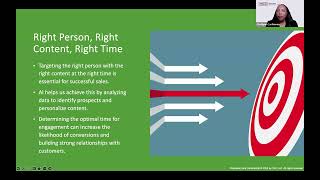
Another idea that I, that I implement is coming up with an AI best practice experiment. And I had a client do this and she charted every week how her team did. And by the end of the quarter, her team had the best quarter they ever had. And what she did is every week she said to her team, let's come up with an idea. And so you have a weekly challenge. For example, we're going to all use this one discovery question. Or you can ask AI what's one thing that my team could do this week that everybody can do? Or what's one question we could ask? And then you just set up a dashboard and every time somebody uses it, they just make a ticket. And so at the end of the week, you can see how many times everybody in the team used it. And then the next week you go on to another, another tactic. And what happens is you're going to see week over week your, your increase in sales going up, because every week your team is going to get better. Now, another way that I've had teams implement this, and this is something that I used to do when I was leading a sales team, is something that I call teach me something AI in five minutes. Now, back years ago, I just did teach me something in five minutes. Today I have teams doing teach me something AI in five minutes. And all you do is at the end of every one of your weekly sales team meetings, you block off five minutes and you have one person teach the entire team their AI best practice. So you put up a calendar and everybody signs up. And so each week, one team member is doing the teach me something in five minutes. And they're teaching their AI best practice to the team. Now somebody may say, oh, I can't do that, and that's fine, they don't have to do it. But if every week everybody on the team is learning one AI best practice, over the course of a year, they're going to learn 50 AI best practices and that will drive that efficiency that you're looking for because your top 20%, 20%, your high performance sellers are going to share their secrets with the team. And I know it's competitive, but people do like to share if you give them a chance to do this. So again, you want to spend 15 minutes of your time looking at how you can become more efficient, maybe challenge your team to do that. If not, set something up. So, so every week your team is learning something, whether you're teaching it to them or their peers are teaching it to them, and then track how that is impacting your productivity, your efficiency, and your effectiveness. All right, so let's talk about how do we build client relationships and enhance this human connection? One of the things I know, Gearhart asked me, what have I discovered? What have I learned? What. One of the biggest things that I learned that AI does is it helps us find the right person with the right content or the right message at the right time. So pause for a second and think about that right person, right content, right time. And so are we sending emails.
When somebody will open them, when they have that pain point? And here's an example of a client who did this. So I had a client and she was middle of the pack for a major telecom and a B2B sales for a major telecom. And she did some industry research and she came up with her pov. And then she went by reading Value Line about industry analysis. She discovered that the trucking industry was struggling with stolen loads at the time. And so she changed how she was messaging. So she changed her message and she had AI write the message to the cfo, right? Rewrite the same message to the, to the operations lead, rewrite the same load to the person who oversaw the fleet manager. Rewrite the same message to the CEO, same problem, but reframed to each person. So she had the right person, the right message. And, and then the timing, she changed timing about when she, when she sent these messages. Her open rate of emails went from 4 to 5% to 12 to 13%. And as a result, at the end of the year, she became the top salesperson in the United States for one of the number one of the largest telecoms in the country just by reframing that message and having chat GPT to do that. You can do the same thing with RFPs if you are, if you are sending in RFPs. A lot of enterprise companies have RFP AI bots who are accepting those RFPs. So you have to, in order to be competitive, you have to have an AI tool working with you. So reframing sections of your RFP for the reader. So buying committees have gotten so much larger. They used to be about six to 12 people in a buying committee. Today, buying committees can be as large as 20 people. And the reason for this is threefold. One, as a result of the pandemic people, it's easier now for people to share virtually. So they're sharing virtually. It's easier for people to get input. But with virtual and because things are moving so fast paced and there's so much information to gather, they are including more people. So with buying committees getting larger, you have to tailor your message, your presentation, your RFP for all these different functional leaders. The only way to do that and do it effectively and efficiently is by leveraging AI. So right message, right person, right time.
You can target the right person and align that content, craft a personalized message and then tailor it and, and be able to move forward with that.
The other thing that we talked a little bit about, the buyer journey has shifted. And so one of the things that's important to understand is that our clients have more information and so they're taking more control of the sales process. One of the things that I recently discovered that several of the.
IT tools that I work with have, have suggested that if you are sending, if you are using a bot and they're sending out your emails for you name your bot and just put down there. So at the bottom of my, my email, it would say, hi, I'm Jennifer Sherilyn's AI bot. People are more responsive when you admit that they are talking to a bot or that a bot wrote it. And they may chuckle and you end and then in the signature block, you say, and I can get you on Sherilyn's calendar anytime you want to just click here versus having these, these written by bots and send it and you read it and you go, yeah, it says Sherilyn, but we know she didn't write it. And so one tip is just, if you be, be transparent, be honest with people and just say this was written by my bot. And, and, and they're helping me be more efficient. People know that bots are writing emails. They, they actually are embracing and engaging with them, learning more. And so just adding links or smart links to your inmails and your emails and your messages actually creates transparency and builds relationships.
So when you are prospecting, when you're looking for right timing, you want to look for things like demographics, online activity, engagement metrics, previous history, intent signals, and Most of the CRMs today, as well as LinkedIn has all of these tools built in. Now a lot of these tools are being released this month and the 1st of January and my understanding is that most of these are included in enterprise solutions or advanced solutions. So check out your tools, encourage your team to do the training. These companies include the trainings with them so that you can leverage this information and use this information to help you succeed with.
Tailoring your message for the right person at the right time with, with the right person. And the other thing that I, that I've discovered is when we talk about being overwhelmed, one of the things I hear from people, well, what about hallucinations? How much of this is true? If you are using an AI tool that is a large language model, something that is just taking public data. Yes, 26% of the information that is shared with you or written is, can be hallucinations. And that's a lot. So you want to double check what you're sharing with clients, what you're writing and what you're putting in there. The flip side is though, if you do a proprietary solution, you can reduce that hallucination down to about 1%. So be mindful about whether you're using your proprietary tool, an in house tool that just has your data, your product, your client information in it, you can trust that. And most of those the hallucination gets down to about 1%. If you're using a large language model, you have to do a little more lifting and double check that the data, the stats, the information, the reference that it, that it may include in your messages is accurate and it's true. So just be mindful and share that information with your reps. There's nothing worse than your rep sending something out and thinking that it's firsthand and the data is true and accurate, only to find out that it isn't. I do have a couple more tips and ideas for you. The other one is that.
Signaling for prospects. This is a big thing, that this is a big area that you can leverage AI for. So not just personalizing your, your outreach, but timing it. When is there, when is it? When are there stakeholder meetings? When is the C Suite team focus on their quarterly report? When might, when do they tend to open their emails? When do you what you know, what are predictive analytics that you can forecast their behavior, their engagement, when are they posting on LinkedIn? When are they reading on LinkedIn? LinkedIn has this new lead ID where every one of us now has an ID on LinkedIn, where LinkedIn analyzes what we've posted, what We've shared so that client sales, B2B sales professionals know what our profile is and we can't change it. And so I'm really excited about can feel scary, but that's the direction we're going. A couple other things on how to get your team more engaged and less overwhelmed with AI is to gamify it. And I love this idea. I've had a couple teams do this and they do a monthly AI hackathon. Now developers, software developers, solution engineers have been using hackathons for years. But imagine your sales team doing a monthly AI hackathon and all you do is you, you set aside two hours a month and you give your team one problem, automating lead qualification, for example, and you break them up. And in the first hour you have them just use AI to come up with all types of ideas on how you might improve this. And then you break it up so that the team can spend the 10 minutes or five minutes presenting and the team votes and then you put together kind of an action plan for your winning idea. Now, I presented this, I recently presented this to a group of sales leaders at Harvard and I got, oh, well, we have Six Sigma for our implementation. And my position is I don't care if you roll it out the next week, you give it to your innovation team or you give it to your Six Sigma team. What it is, is every month, if your team is coming up with new ideas, you're constantly improving and constantly improving. And that constant improving is where that efficiency and effectiveness comes in and that's where companies are winning. So implementation, do whatever works with your company. But what this is about is leveraging those smart sellers that you have who are out there every day on the front lines and they're using AI and getting them to leverage that for two hours once a month to solve your problems. The other one is team self coaching. Now, I know that there are several tools out there where AI is actually becoming a sales coach. I've had a chance to use some of them and they're very powerful. I mean, you're on zoom, talking to a client and they are actually prompting you right when you're talking. And they'll tell you, if the client asks, how much does it cost and you're not ready to talk about pricing, that sales coach will give you an answer. A lot of companies have turned that off. They don't, some companies don't trust it, but you can come up with your own, your own AI coaching playbook and come up with some prompts that your team can use to help them get better. And so if you're using this either when you're coaching them or, or you're giving these imprompts about how can they get better, whether they're asking themselves questions about, you know, what do I need to know before I call this person? What are some possible objections that I might hear? What are three actions I can take to improve my process? And so it, so my, so my challenge is please think of AI as your coach. So not just reaching out to clients, not just writing better prompts, not just right client or right person, right time, right message, but how do you get better? How do you make every single person on your team better? And that is through coaching. And so you can write your own coaching playbook. You can leverage the coaching tools that are out there. But AI is just, it's an incredible partner when it comes to coaching sessions. Whether you do it self coaching or with your team or you, you develop your own coaching playbook.
And the final thing that I wanted to just summarize was when you look at.
Being overwhelmed with AI for me it helps when I simplify things. So the mnemonic I came up with was scars. And I always say wrap yourself in success with scars. And so the six areas that I have discovered in all of the training that I've taken in all the, the conversations that I've had and the first one is that AI can support. There's AI tools out there for capturing your follow up, your insight, your action items. I love it when account executives start using an AI tool to, to send meeting notes and follow ups and action items. It just takes, it just cuts so many hours out of their time. The next one is coaching and we've talked about that. How do you get real time guidance during sales conversations or if you don't do that, how do you coach yourself after every single call? I use this something as simple as well and better. I will go in after I finish I a call. I will say I just finished chatting with this company about this need and what, here's what I propose. Here's what their pain point was. What did I do well and what could I have done better? I go into AI after every major presentation, call or anything and say here's what I did, what could, what did I do well? What could I have done better? Just something as simple as that is a coaching. It can be your assistant with prospecting. Several companies I've talked with have said AI will replace SDRs or BDRs. I like to think that AI will actually elevate SDRs and BDRs to make them account executives. I don't think they're going to be replaced. I think they're going to be elevated. Our stands for relationships. We've talked about how it will actually help you be more empathetic and more connection and build warm relationships with people. F stands for future predictive. You can leverage it to look for signals. You can leverage it for forecasting. And finally, the S means just streamlining your workflows and your sales process. And so with that, I'm going to, as I promised, here's the QR code. If you just point your phone to this, you will go to a very a simple website that has links where you can download the slides you can download. I have a handout that talks about several of the ideas that I shared with you here on how actually to do that. And then there's also one that talks about scarves and the six areas that you, you want to look at as a sales leader for your team. And these are the six work streams that you want going at the same time. And this will hopefully make you less overwhelmed about AI. If you're looking at these six work streams, you focus on building relationships and what we do well and let AI do what it does well and implementing something systemically with your team. So is that every week you're improving your efficiency and your effectiveness.
Awesome job. Sherlyn, I have a quick question. You've written the book on the post pandemic sales strategies and what book is in the works right now?
So funny should ask. I thought about writing one on AI, but I will tell you that I was supposed to teach, I was supposed to present at your last AI conference and I had to totally change this deck. So in 30 days, what I was talking about 30 days ago was obsolete. I mean, for example, 30 days ago I was at a conference when they were talking about your sales reps need to become learn how to code so that they can build their own AI tools. Well, today the message is sales reps should click, not code. We don't want them coding. You want them clicking. And so you look at the new tools that are coming out and people can just click, click, click and build their own AI tool right on their desktop. And so 30 days ago I would have said code. I don't believe that I can write a book that is not going to be obsolete in 30 days around AI.
I'm working on virtual.
Communications and training programs to share some of this so that I can keep it updated.
I love that.
And.
Best session so far. Thank you so much. I'm reading the comments. Great session. Thanks for sharing your insight. Thank you so much Sherlyn. That was really wonderful.
So relevant, so practical, so useful. I just went on your website and use that QR code and I will download that and re read the presentation. I I know by the time I'm reading it it's going to be obsolete, but I'm still curious.
It will. But I will tell you for anybody if you don't follow me on LinkedIn, I post on LinkedIn just about every day. I'm constantly posting what I'm discovering with AI. And part of this insight I have is I'm an influencer for both Salesforce and LinkedIn, which means I get to sit in their product meetings, I get to get the insights and then I can share that with my network. So I do know with some of the AI tools and things that are coming and tips and ideas and I'm very transparent. I will share that and I'm very much about actionable insights. And Gearhart again, thank you. Thank you for having me on. I always enjoy presenting for sales 3.0 and if anybody has any additional questions, just ping me on LinkedIn and I will answer those or shoot me an email and if anything else I can provide you just let me know. And I'm excited about this.
Just in closing, I think that AI will make your great performers better and if you have average or not so great performers, it's just going to amplify that because a fool with a tool is still a fool. And so I'm going to leave you with that.
More from Gerhard



What Selling Looks Like When Your AI Agents Have the Context Your Sellers Do

Better Conversations, Smarter Support: Wearable AI in Business






When Scarcity-Built Systems Meet Abundance - The Judgment Gap in AI-Powered Sales Leadership
