From Strategy to Execution: Empower Your Team with Integrated AI Solutions
Thomas Ross, VP of Sales at Soar, argues that AI works only when tied to business strategy. He walks through a platform that integrates transcription, meeting analysis, and coaching to consolidate communications data for training and revenue growth, citing internal stats on lead increases and cost reductions.
Chapters
What are we going to do with the next generation? So we've got a whole new generation of salespeople coming up. And you know, Stephanie yesterday was doing a great job talking about all the folks that she's training. And the question they have to her is, where are we going? Things are changing. Some of these skills that we're learning, are they applicable? Are they not applicable? How. How is all this going to be relevant? And these are all key questions today with respect to AI. And I love that this event is encapsulating so much of that in a manner by which we can all start to decipher and to really make sense of when it comes to our business. So, hello, everybody. I'm Thomas Ross. I'm the VP of sales. As said with Soar now, SOAR is a portfolio of AI solutions designed to uplift humanity. So it's an incredible portfolio of products created by Paul Allen and Clint Carlos are the two main founders. Paul Allen, you might have known and remember from Ancestry.com, just an amazing individual. And frankly, if it wasn't for Paul, I wouldn't be here. He's the reason I'm here. And I loved so much what he's doing. Not only am I working with him by way of their go to market strategies, but. But I'm also an active investor and I'm a true believer in what they're doing. So when I speak today, it's not just from the perspective of trying to promote any one solution or otherwise. It's about uplifting humanity and it's about driving AI through your businesses in a way that really makes sense. So let's get to it. So when we think about it, the biggest problem today is business communications. And what I mean by that is that has been recognized as the single most important type of communication that we need to train people on. In fact, so much so that over $400 billion is spent annually to get it right. And yet less than 25% of those trained, according to executives, are actually changing because it's not impacting and creating behavioral change. And that's what we're here to talk about. We're here to talk about the gap between learning and there's so many different methodologies that we've heard over the last day and a half here that can help do that. But how do we change behavior? How do we take that and translate that into behavioral change? And that's part of what we want to talk about today. And in addition, in fact, of course that's what we do and we're going to talk a lot more about that so that that makes more sense to you. But the real question isn't just about what type of AI should you be using and why, but rather, are you even as an organization ready for it? So the truth is most organizations are not ready for it. The truth is that 50 to 70% of companies are unprepared for it because they haven't planned for it. So we're now moving from what I call playtime ST to implementation stage, and that's where we are today. And it's really important that as we consider this solution that I'm going to give you some really high points about and any other solution, it's really important to know that one size does not fit all and that every opportunity we have has to be based upon a strategy. So what's our go to market strategy might be the case? What, what's our revenue goals? What are our sales and marketing objectives? How do we want to train people? How does all that align with our objectives? Or do we even have a grand plan? Are we just grabbing a little bit of this, a little bit of that, a little bit of the other thing? You know, I asked a CEO not that long ago, and I do this on a regular basis with many of our clients, how many actual AI solutions he thought they were using with respect to their enterprise and their network today. And he told me that he thought it was three or four. So when we had an opportunity next meeting to include the CIO and a few of the other individuals in the company, we were to find out that they were well over 20, close to 30. Right. And the reason for that is because they were just happenstance buying and implementing tools that weren't aligned with goals and strategies. And therefore they were not yet getting any kind of clarified opportunity to really get success and results. Now, here's the interesting stat. Most American workers today, 63% say they're not even using AI. And yet well over 85% of companies have reported that it's in place. So what that tells us is if there's actually a gap between what companies think they're doing and what their employees and their people are, are actually doing. And that raises a whole series of other questions. Well, as we see sales and in fact, revenue opportunities for AI in general booming from 51 billion in 2020 to almost 650 in 2028, we see there's an enormous market. And when we were listening to Mark Benioff this morning, well, he just blew the lid off that by way of some of the other things he's talking about with respect to digital employees and digital labor. So this market is enormous and it's all driven by AI. Don't kid yourself. AI is the core for all of it. But what are the challenges? So the challenges are data security, That's a big one. Team participation, how do you get engagement, how do you get everybody involved? Costs, what are those? Especially if we've got 25 different solutions across our enterprise, that's not going to work. Fear. So people being fearful of new technology, focus, strategy, your existing technology, stack, competition, growth, revenue. And of course, what are the customer expectations? And that's the key one. What kind of customer experience.
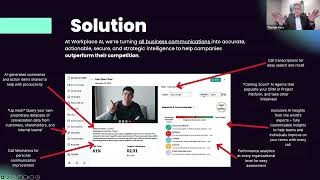
Do we want to create? The reality is sales has radically changed. If you see my post on LinkedIn this morning, if you get an opportunity to do that, you'll see that in fact, I feel, and most will agree that customer experience drives everything. And the way to improve upon the sales process as it relates to that is to start to create a better way to use business intelligence and the data that you bring in every single day, day after day, week after week, month after month, but you're not using. So there's a way to do that, and that's what we're here to talk about. So not only will that help you by way of communication and improving communication with your teams, it will do the same with, with respect to your customers, your vendors, your suppliers, and every other person that touches your organization in any way. So what we want to do is we want to create a conduit by which all of your data is coming home and can be analyzed and can be queried, and can be reported upon, and can be used for training, for coaching, for, for reports, for querying. How many customers are asking us about this? How did my sales team do in this particular month by way of the way they're presenting the results they're getting, et cetera. So this provides us just an incredible opportunity to do that. So when you think of how transcription tools came out a year or so ago, or two years ago, this is those on steroids. So now what we've done is we've transformed the basic transcription tool into a much, much broader funnel and conduit to bring in all business communications, whether it be, you know, video based, whether it be ip, voice based, whether it be ERP or platform CRM based. The point of this exercise is to integrate in your network, bring the data in and then be able to slice and dice it in a manner by which allows you to do all the great things as an organization you want to do through one portal, not 25. And that's where we really want to live. So integration as we'll talk about is critical to that process. So when you use a tool like this, you gain a lot of the things that many of you might be familiar with with transcription. But. But now, as you can see here on the bottom, we can actually start to coach, we can start to evaluate, we can start to accredit and certify folks and teams and systems against many different methodologies. So in this case I'm using Stephen Covey by way of leadership, but I could just as easily be using some of our other large sales organization clients whose methodologies are also in our system. So by using our system as an organization, you have access to methodologies, hundreds and hundreds and hundreds of different organizations methodologies that you can pull in and utilize to now start to evaluate, improve, coach and teach, train your teams, whether it be human resources or whether it be sales and customer experience, frontline people. Now you'll notice that I speak more and more about that as I feel that sales and, and customer experience are really the same thing. Because with AI now front and center by way of the conversations and all of the sessions you've heard over the last day and a half, AI is at the center of it. So now AI is going to be out there actually creating legion, right, and connecting with customers. And we have sales agents built into this to help with that process by way of analyzing and coaching as well. But the point being is that AI is going to drive and create many of the customer opportunities that our well trained sales teams and customer experience teams need to be able to pull out and continue on their journey by way of closing and activating clients so they become great long term clients and not just one offs. And that's why this is such an important process for us to consider.
Now this is another great tool. I love this tool. So if you're a sales rep, you're going to love this. And that is the ability to rate from a meeting. So I've had a meeting with somebody, could have been over my phone, right? It could have been a video call such as the kind that we're kind of doing here with Zoom or go to meeting or whatever format it comes in at. We can take that meeting, we can put an AI analysis against it and I can create an email in, in, in very, very short period that I can now respond back to the people I just met with in a way that's productive from the meeting that I just had, and I may take a quick look at it just to make sure I didn't miss anything. I can also go to outcomes and Next steps and create an actual list of next steps and include that if I want, or I can send it as it is. But as a salesperson, as a sales professional, as a customer experience professional, I'm done. So I'm now on to the next one. That's the power of AI. The power of AI is in helping us expediate and to move forward through the process in a way that's impactful, productive, and keeps us moving so that we're not digging through this and digging through that and looking for this and trying to figure out what was said and what wasn't. It's all here. I can move on. And that's the power of this. And I think that most people will find that very powerful. So this is an interface. This is the interface of our system. So there's a few of my meetings over a period of time. Any one of these meetings can be analyzed, it can be categorized, and I can query some or all of them individually as a group, as a team, in any manner by which is effective. In so doing, I can create a report against myself. How am I doing in my sales process? Am I achieving the levels and the steps in the BAT process that I should be? And can I continue to improve? Can I be accredited in some of the organizations that we work with by way of their methodologies and gain that accreditation and gain the skill set that I'm after? Can I continue to develop and improve in a way that also includes including my teams? So now if I'm a sales manager or a CRO, I can grab my entire sales team. I can take all their calls week over week. And you can imagine if you've got 10, 20, 30 sales reps, all doing four or five meetings a day, multiply that out. There's no way I'm going through all of those to see how they're doing. This does it for me like that. Now I can immediately see the weak spots, the positives, the things we can continue to work on. And even better, I can take all the feedback from those customers and see what they're saying. And you know, just like you've heard here many times, if I ask the right question, I'm going to get the right answer, right? So it's all about the prompts, it's all about the questions, because this is AI. But now I can create a report that basically asks the questions. And I can format that and create an insight module around that, or I can do it against my data in any way that I so please. But I can ask, are customers asking about this? How many times are they concerned with pricing? Do they want pilots? Do they want intros? What are my clients and customers actually asking all of my people on a consistent basis? And now we can continue to develop and improve our product, our solutions, our presentations, our communication in a manner by which our teams get better results. That's the power of AI. That's what AI can really bring. And it's exciting. So these are just some of the stats. There's literally thousands. And we can pull them in on the basis of what you want for you, for your team, for your organization, and in addition for your customers, based upon what it is you're measuring. So there's so many powerful ways to really take advantage of using this. And AI provides us the key tool to doing this. But, and you'll hear me saying this more and more, it does need to line up. And we're going to make sure that it does with your objectives and your goals, because that's where we have to start. If your goal is to improve customer service, is to improve sales revenues, is to improve the way my sales teams communicate with people, any of those kinds of items, this is a great tool for you. So these are the things that we want to align and make sure make sense, and we want to start from there on your behalf. So the opportunity, right, as Harvard Business Review found, is that Companies that utilize AI experienced a 50% increase in leads.
50% increase in leads. Nothing happens in sales until somebody sells something. You can't sell something if you don't have a prospect. And that's what AI helps us to do. 60 to 70% reduction in call time and cost reductions of 40 to 60% with a 60% increase in sales. Now, if that doesn't catch your attention, we're all in the wrong place having the wrong conversation. So you can't ignore this stuff. This is where it has to be and we need to move forward. So as I talked earlier with respect to Stephanie and the conversations that were had yesterday around what we need to be doing with the new generations, this is what we need to be doing with the new generations. We don't want to stick them into old methodologies. We want to stick them in new processes that are impactful, effective. They're going to have fun, they're going to enjoy it, and they're going to get results and by extension so are we.
So we have a model here that's a little different than most. Obviously we have the individual licensing that, that, that folks can use. We have corporate licensing. Here's something that's a little different that I'll just add as a flavor before Gerhardt gets going on me. But we can brand this folks. So if your company and many of our enterprise clients want to brand it as their tool, because remember, every meeting you have goes out to all your clients and vendors, then it can be branded with that corporate name. In fact, most of our clients, one way or the other take advantage of that. And our goal is not to just promote our brand, but it's to promote yours. Right? And to give you the opportunity to utilize AI in a way that will create incredible growth and an opportunity. So this is just a quick overview of where we're at now and where we're going. So where we're going right now we're using ajantic, we're using full business intelligence reporting, full team individual AI query as we talked about. But we're now, as I speak, bringing in AI agents, full sales agent support for lead generation qualification as well as universal interfaces to work with any tool. So it's moving quickly. And if you're still waiting to see what you want to do, it may be too late. You need to move fast. And we need to speak about how we can put this in place. This gives you an idea of some of the methodologies that, that are available in our system today by which people can pull down and actually help their teams approve leadership training, sales training, et cetera, et cetera. So that's just a very, very quick example of that. And then lastly, let's get started. Right. There's no greater risk than the status quo. What got you here will not get you there. And I can't emphasize that enough because people do get stuck. Lastly, we have a roadmap, an AI roadmap and revenue playbook event seminar on site coming up March 13th in Virginia. I invite any and all of you to go to our registration. Find out more about that. It's a half day workshop, but I warn you, we are going to beat you up. It's not something you're going to come at just to take a pamphlet away because we're not interested in that. We're interested in you rolling up your sleeves, talking about your tech stack, creating a strategy and walking out of that session with real steps to take going forward. So this will accelerate your revenue and really create a Playbook for you going forward.
You know, we just dropped the the link to the masterclass in the chat. There is a question. What, what is the source of the stats?
You had very optimistic numbers in terms of increase of sales. Where do those stats come from?
Many of those stats come from our stats and then some of them are industry stats. So there's a mix with respect to any stat in particular. I'd be glad to show anybody the source, but most of those success are ours on the basis of clients.
The question that goes through my mind when I listen to you and where you say customer experience and sales, it's all the same. What I want to know is because I have a hunch that we are not good at measuring the customer experience because we measure customers experience like with numbers. It's the same thing when sales managers don't help salespeople get better because they only try to manage the numbers. And I think that customer experience sentiments need to be analyzed in a different way than what we have done before because we do have AI 100%.
I couldn't agree with that more. AI gives us the depth, the real time data that we can correlate and bring into actionable steps now. And that's really what we're talking about with our platform. In fact, as an example, you can actually query all of your meetings. Imagine all that data that you've collected as a team over the last month. Never mind the last year, just the last month. I can query that data and I can see what's the number one question my customers ask.
How many times did my sales team do this? How many times did my customer experience person do that? And then I can correlate all of that data with the actionable steps that we can implement right now.
Thomas, can I ask a crazy question?
Sure can.
As a former professional athlete.
The NFL, when they're looking at employees, players, right. They have the these tests that they give them, you know, how do you play, what do you do, et cetera, et cetera, et cetera. But a big thing is they give them an emotional test, you know, about their personalities. How would you react outside of the game? And this whole personality and emotion.
Do you do what you do? Do you look at any of that?
Oh, 100%. So in a number of different ways. A, we can read that in the videos, real time and after, and then work with the team to improve that by way of their body language, the way they're coming across with their sentiment, the way they're communicating, the way they're actually Accentuating or not, should they even have come in today, rather than doing that call and so on. So we can certainly do that. We can also do training and video training and bring that in and do the one on one training. So there are many different ways that you can do that. I hope that was helpful. It was spot on. Thank you.
I think the other sort of perspective that I take away from you is you have a unique way of looking at AI because you are working in a company that has sort of a family of AI tools. And I think that your perspective is, if I phrase this correctly, is that you don't want to look at your business.
Through the lens of a tool.
With an eye towards improvement. But you are saying that you need an orchestrated strategy to look at your entire business and then match the tools to the strategy and design for the outcome.
That is, that's. That. You couldn't have said that any better, Garrett. That is so true. There are so many great AI tools and every day when we all get up, there's 150 more. And that's going to continue. The pace of that is incredible. There is going to be consolidation, there is going to be focus in one area or another. There are going to be tools that become more prominent. But all that said, if you don't have a strategy, who cares? You're wasting your money.
Right?
Right. So you need to have a focus. You need to know what you want in the first place. And that's where we play a role, because we're not just interested.
So, and, and going back to the masterclass, where what I'm excited about is that there are really three phases of, of a chess game. There's the opening, there's the middle game, and there's the end game. And in a transformation masterclass like yours, the opening is all about your business, where we analyze what are the assets, the liabilities, the threats, the opportunities. So we lay all the cards on the table. And then in the middle game, we are going to look at the world of AI, the power of the solution, the. The power of the possibilities. And so we understand what can be done, because a lot of people have no clue what I can do in those different areas of your business. And then in the end game, we are going to put it all together into one roadmap, into one playbook that is going to help you get to that 60% or 3x increase in sales and lower cost in a very dramatic way. And I have seen it. I've seen you doing the magic. It is incredible. But it is, it requires some work, it requires a lot of thinking. And I think that my, my final word is that we need to use our own intelligence to the max to seize the opportunities that are available with AI tools to get to where we want to go. And Mark Benioff talked about the total addressable market. That's another AI tool that you can use to align your company with the sweet spot in the market. Not only with that, but how to achieve exponential growth.
Agreed. And all these things are critically important for that. But the idea that after our session you're going to walk out with a document, electronic or otherwise, that is going to give you the roadmap to now physically, step by step, take in order to achieve what you just said. Gerhardt, there's nothing more powerful and more important. Stop playing and start implementing. And that's really what we're talking about. Tools like this are phenomenal. There's been nothing but great solutions and ideas provided in the last day and a half. I hope I've been able to add a little bit to that. But that said, it's up to you to make the difference for your company. Don't go out and buy the next flavor of the month or the next shiny object. Look at what you need as a company and let's build a plan.
It.
More from Gerhard



What Selling Looks Like When Your AI Agents Have the Context Your Sellers Do

Better Conversations, Smarter Support: Wearable AI in Business






When Scarcity-Built Systems Meet Abundance - The Judgment Gap in AI-Powered Sales Leadership
