From Training to Transformation: Using AI to Accelerate Impact
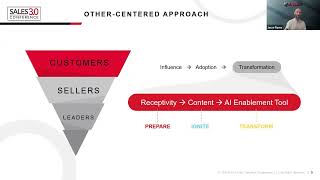
Jesse Rome outlines a three-stage methodology for lasting adoption: Prepare with AI-driven assessments and customization, Ignite with engaging content and manager buy-in, Transform through practice, certification, and integration into daily workflows. Real transformation means a shift in identity and confidence, not just knowledge.
Chapters
Foreign. I know a lot of people have been sitting over the last couple days, so I'm standing, I'm trying to bring a whole new energy to, to the summit, to the presentation. So my name is Jesse Rome, VP of Training over here. We've heard a lot of incredible, incredible speakers over the last couple of days. We, we've learned about AI search, we've learned about the AI pipelines, we've learned about the latest trends and everything that we can do to really kind of maximize the impact of, of our team so far. But what we have not touched is we can have the greatest product in the world, the greatest process, the greatest launch in the world and the best AI idea, but none of that matters if nobody uses it. And so what we're going to talk about is how can we drive that usage and how can we leverage AI to get that impact going. So I'll be with you for the next 20 minutes. I'm looking forward to tons of engagement in the chat, tons of energy coming from you all. Hope you guys are just as excited as I am. So, quick intro. We're going to talk about the forgetting curve, what our other centered approach looks like here at aslan, what the transformation process will look like. We'll make sure that we save at least 5 plus minutes for Q and A. So let's dive into it a little bit about me. I live in Phoenix, Arizona. You know, love to hike, passionate soccer coach. But you know really what my background is. Spent a lot of time in tech, sales, training, leadership and now I run, I run VP or I am the VP of Training and Solution over at asen. Aslan, for those that do not know, is an organ Training Organization. 30 years. We're celebrating our 30th. So big round of applause. I can hear it from there. Appreciate it. But we've been serving businesses like yourself for a long time and so we are motivated to provide a deeper impact and make sure that we help our customers grow their relationships. And so if you ever want to learn more, there's, there's more information obviously in the umbrella site that you can dive into. But why I wanted to go over our experience and kind of some of the clients that we work with is because at the end of the day your job is really harsh. And I know there's a lot of different people on this call, but you have a million things coming at you. You spent money to come onto this, this incredible summit, learn from all these people. You're going to get some incredible takeaways. You're Going to go back to your company, go back to your family, to your friends, to your, to your coworkers and you're going to have an awesome idea. Eventually you're going to launch this new product, you're going to get it going and then three months later you're wondering why isn't anybody using it? And then maybe, right, your boss tells you, hey, nobody's using that. Go ahead and work on the next project and it might defeat you a little bit. And so if you're in enablement, I know, I've been there. And if you're in sales and you're really trying to drive this new initiative and like Jim said, people just keep going back to what I've been doing for 15 years. Well, like I always say, nothing will change, right, if we don't decide to change. And so this is what we're going after. The first thing that we need to really think through as you are launching something new. And so think through a use case in your head. You may be somebody that came here because you want to find the newest AI product and you want to launch it. You may be somebody that's building out a new hire onboarding program or you're a sales leader, right? That's, that's running a set of sales conferences and leadership meetings or even a sales kickoff. The reality in training, and we've learned this the hard way in our industry, is you might have the best training in the world. Everybody's high fiving you, it's an incredible product. But at the end of the day, 24 hours later, people will forget about 50% of what you said. And this is just adult learning. Like don't take it personally, what, what you said really might, might have been incredible. But within a week they're going to Forget closer to 90%. So this is hard, right? Like, well, why is it even worth it? Like why, why am I even putting in all this work if people keep forgetting about it? Well, there's a lot of things we can do, right? And there's a lot of things that people do do. Great trainers, great organizations, great products have a set of reinforcements that we can do to combat that forgetting curve, right? Whether it's additional reinforcement sessions, it's emails, it's push notifications, it's, it's one on one attention and it's all the apps in between and systems that can optimize that. But what that does not address, and I know this is the theme over and over and over again because I want to make sure it's clear you can have the best product in the world. But even if you're testing their knowledge and, and you know that they know how to use that, it does not mean they will adopt it. And long term, it does not mean transformation. And we say transformation, that's where it starts to be kind of a habit in their mind, something that they're doing subconsciously all the time. And so transformation is how can we get them to actually apply it every day? And how can we get them, how can we see it actually start to impact their business? So we have an approach here at aslan. ASLAN is a little bit different than maybe some of the training organizations that you've worked with before. We believe in an other centered approach. We believe in that other centered approach with our customers, other centered approach with our team members internally, right? And also an other centered approach to the relationships that matter the most. Your husband, your wife, your kids, your friends. What other centered means, right, is putting somebody else before yourself. And so it is the opposite of, of being self centered. And so when you think about a traditional pyramid, an organizational pyramid, we have leaders at top, right? Anytime you go onto workday or any organizational hierarchy, right, you're seeing the leaders at the top and the people that report to them beneath that. And so we want to start to think about the decision making process and who's driving the initiatives. If you need to launch the newest AI tool, right, or you need to launch your next sales kickoff, who's driving it? Is it the leaders at the top or. Or is it the opposite approach? And so how can you, in your organization and really in your way of life, how can you flip that approach? How can we put the customers at the top? Because at the end of the day, right, not only are we more fulfilled when we serve, but we will be more successful. And so the customers are at the top of this pyramid. The sellers need to serve those customers. When you serve your customers, you redo your talk track, you redo your approach. There's. You will see results. But us as leaders have a responsibility, right? Our responsibility, right? Yes. Is to our stakeholders and to our executives that are pushing these okrs and these initiatives. But our responsibility is actually to our sellers. How can we make the life of our sellers easier and more efficient? And then ultimately, why are we doing that? Well, we're doing that so that we can have a higher impact on what our product and what our company is doing for our customers. If that's not your mindset, then what you're doing will not drive transformation Right. Where we're starting with the end in mind. If we're trying to get to transformation, well, before that, we need to get people to adopt it. And to get people to adopt it, you have to drive influence. Now, influence is a hard word. It's like, how can we drive influence? How can we get people to get excited? They're grinding every day. They're cold calling, they're walking in, in and out of stores, they're traveling for work. Like they have a million and a half priorities, not even counting their personal life. We're pulling them into a virtual meeting. We're flying them into Dallas for some big sales kickoff. How can we get them to influence? Well, influence starts, right. Influence starts if we're going left to right at receptivity. Because what you say does not matter if their ears are not open, right? And so how can we drive receptivity? How can we get them to be bought in before we launch this? How can we get them to be bought in? Well, you got to launch the best thing. You got to get them bought and get their receptivity right, which is really the cornerstone of aslan's methodology. It's like, what you say doesn't matter if they're not listening to you. So how, at every stage, can we get them to lean in? Say, tell me more. Well, from there, when you're launching the next product, you better have killer content, right? It better not just be some fluff on a screen. And then you need a tool to actually transform and reinforce it. So we're going to walk through those three stages today. We're going to walk through how do you prepare and really drive receptivity? We're going to talk through how do you ignite, how do you run that session, how do you drive really excellent content in these trainings to drive transformation? And then lastly, how do you reinforce that? How do you have a real tool in real time that delivers the right content the right way? So we're going to go step by step here, by here. And I want to pause here because I'm moving fast and I don't even know who I'm talking to. So I would love to take a second, make sure everybody kind of puts in the chat just so we can get a gauge of what audience we're talking to. Would love to see kind of what your location is like, where are you located, so we can see how global you and the different locations, as well as what department are you in. All right. And so feel free to, to. To put in sales or Enablement or ops. So would love to hear kind of what location you're in and what department you're in. I have a couple team members in the chat and they can say hi to you as well. Tab Norris, who's, who's the co founder of Aslan as well as John Sequera who's the enterprise VP of Enterprise. And so they'll make sure they pop into chat and put their LinkedIn so you all can connect with them as well. Let's keep it moving, let's keep it rocking. So let's start with prepare. Prepare is all about before you launch the next big big initiative, what work are you doing before that launch? And keep in mind everything that we are doing will be other centered, right? We are flipping the pyramid. We are putting the sellers, we are putting the customers at the top of our interest. We need to know what matters to them for us to launch this the right way. And so three different stages we follow. It does not matter the initiative that we do. I could be internal corporate trying to launch something. I could be on an agency trying to roll out a training for 500 people. Whatever your next launches. Product, sales, organizational. These are the three steps you need to follow. First we need to do some sort of assessment. We need to understand what matters to the people that this will impact. And so if you are launching a product because you think this AI tool is going to save them time and it's going to be amazing and this is all the ways that it's going to help them. Some of them don't actually care if it saves them time, they just care if it makes them money and it helps them retain their clients. So you need to flip that messaging of how you launch that next AI tool. But to do that you need to go to the field, get your hands dirty, actually observe those people doing their work and have conversations with them and find out what really matters to them. So there's two types of assessments, right? One is like let me understand what matters to you. We call that their whiteboard. How can I understand like how to position this in a way that would incentivize you? The other way to do an assessment is to actually do a capability assessment and to actually go out in the field, use AI role plays, go out and to, you know, listening to calls, use GONG analytics and actually understand like what are the capability gaps and how can you be more successful there. Once you get that understanding you need to have some sort of alignment meeting. I'm not just going to take that feedback and then Just go build something. I'm going to build something and then run it back through what the front line is. If the front line is seeing that for the first time when you launch it, you've already missed your opportunity. So how can you involve them? Like an AE Council, TM council, whatever you want beforehand. Alignment is also important at all levels. Right. You need executive alignment, people at the top that can be your champions, that can drive this. And you need alignment at the bottom to make sure that you know that you have people kind of on the ground level that are fighting your battles for you from there. We need customization. Right? Canva is your friend driving tools that use AI so that your, your presentation does not look stale, it does not look like words on a slide, but it pops, it comes to life and it's tailored to exactly what they want. So we're using various tools like that. We've built some in house. We've partnered with the geniuses over at Saleshood. We're using tools that analyze their capabilities, that have real role plays for real scenarios understanding before we even walk into a training. Right. And build content. Where are they at for. Objection. Handling. Where are they at for the value proposition and where should we better spend our time? And so would love you to take a second right now, everybody that's in the chat, I want to learn from you as well. There's a lot of tools out there and you probably learned about a lot more in the last two days. So what are the tools that you all have found success using leveraging AI to help you in the assessment process? Right. What are some of the tools that you all have been using to leverage AI during the assessment process? So while those answers are coming in and you're, you're, you know, sharing some best practices, I want to share a couple disruptive truths with you throughout this and that is that sales and product do not own the learner. You do. What I mean by that, if you are somebody that is responsible for the launch event, you are somebody that's responsible for adult learning in your organization, you need to speak up for that. You're going to get a lot of pressure from sales. Can you redo the training in this way? You're going to get a lot of pressure from product. We need to launch this training by next month. We need to hit these deadlines. You can launch the best training in the world, but none of it matters if nobody uses it. And so you need to speak up, right? As, as a learner, as, as an expert to make sure that you say, hey look, we can launch in one month and it'll probably be 20% adoption. Or we could launch in three months and do this the right way and it'll get closer to 80% adoption. What would you rather do? And so give people choices. Because sometimes we have pressures we can't overcome. Give people choices, release the pressure, all those good things. So as we drive, prepare, if we do it the right way, and we truly are bringing in people right at all levels here, and we're leveraging AI the entire time, then we should be able to ignite and launch something great. Now your content has to be great, it has to be tight, it has to be organized, has to appeal. And it has to be something that's scalable, right? It has to be something that's scalable. If you're doing a lot of one time trainings, one time AI products like, hey, this is the new gadget of the year, something that's going to be exciting the next year. They're going to ey roll like, okay, here comes something new. So whatever you are launching, it has to tie to something great and it has to be something that has legs that build. Makes sense. And so we have our methodology over here. It's rooted. And how can you be a trusted partner? How can you follow the process to better engage, to discover, to build value and advance? And within that we have a ton of capabilities and disciplines and an entire skill map and journey to make people great within that. So as we go back and we do additional trainings over and over and over again, it always ties back to this map. And so if you're launching the next great AI product, the next great project or initiative, what are you tying that to? And what you're tying it to, does it matter to you or does it matter to the whiteboard and the needs of the people that are in the audience? And so remember to kind of create this kind of anchor, something that you can build on, something that you can always kind of go back to and something that actually matters to the audience and doesn't just matter to you. But if you're going to launch AI, I see this mistake all the time. People are just putting screenshots up, people are putting like examples up. Like we need to get their hands dirty, we need to get it in their hands so that they can actually start practicing the tool in real time. And you might say that's not the best way to demo it. But to be clear, like you're just demoing it the way you want because you Want to, I don't know, avoid some of the potential like hiccups or hallucinations that the AI can do, but those are going to happen later anyway. Like, we need to have at least one person on stage or one person come into, into the chat and actually start using it in real time. We need to show people that AI can be fun and it can be easy. I know we were just, I was just in Louisville literally two days ago, and we had somebody utilize the AI roleplay tool in front of a room of 50 people. And they, before they started, they said, this is witchcraft. I'm not sure I like this. Right. Classic. And this is somebody that's 25 years of experience and by the end they're like, that was pretty cool. But that person would not have been converted and would not have converted the rest of the 80% of the room. Like the people that were older and tenured that were more hesitant. We didn't actually bring it to the workshop. So thinking about different ways we can bring it to the workshop, thinking about how we can utilize AI to accelerate transformation, right? We need to use it during the assessment phase in customization. We need to use it when we actually launch it. Like bring it to the workshop. There's no reason we should be waiting to use it later. But the disruptive truth here is that none of the launch matters. If managers don't go first. When this launch happens and you have 500 people in a room or a zoom room and they go back to their team chat or their team meeting or their team happy hour later that day, the manager cannot say, yeah, that was kind of cool. I haven't used it yet, but I hope it works like they said it did. The manager can't say that. The manager has to say, I've been using it for weeks. It's actually way cooler than I thought it will be. You all will be so lucky to have this. And I wish I had it when I was a rep like you. And so managers must go first anytime you are launching something. Yes, we need the reps input, but we need the managers to touch, to feel it and to become the champions. Right? They need to become the experts. They can't just be hearing about it for the first time. So leveraging AI at each stage, bringing people along, taking an other centered approach. Now we get to transformation. This is why Jim hopped on the call, right? This is why Jim's here. We need to make sure that the people that Jim's working with actually start to, to put this into practice and so there's a set of requirements for transformation. Now, whether ASLAN helps you with this, whether learning helps you with this, whether you have to do it all on your own or you recruit managers to do it, the requirements are not optional, right? Who does the requirements is optional. That is up to you. But if any great training, you're rolling out any new product change, any change management initiative that you have, there needs to be a set of requirements. And so our requirements, what we've seen in our last 30 years, as we have candidly failed some projects and other projects completely accelerated and seen transformational effect on organizations, we need to follow comprehension, right? Are we actually quizzing them, testing them, making sure they remember what we're talking about? Application. There needs to be real practice, real AI role plays, real in the field, shadowing, making sure that they're actually doing this trackable. We need to have an executive sponsor, somebody that beats the drum that does not say this is a training initiative or a new product launch, but this is a culture shift, right? And somebody that reinforces it because two, three months later there's going to be another initiative. We need to make sure that person holds firm. Four, there needs to be some level of mastery, right? And whether that's a coaching certification, product certification, you know, trainer certification, we need a set of badges and certifications so that we can understand who has mastered this and, and who has fully kind of utilized this. From there, you need measurement, right? Measurement can be done in a Kirkpatrick level or it can be done in a leading and lagging KPI level. It's up to you. But we need to make sure we benchmark it and measure accordingly. And then lastly, and this part is underrated, we need to think through integration. Integration is a keyword that a lot of people overlook. A lot of people think if the product is good enough, people will use it. Well, guess what? Sales people hate a new tab, a new task, a new place to go input more information. It needs to be embedded into their flow. It needs to be embedded into their flow, whether you want to embed it into their CRM, embedded into their sso, embedded into their day to day. We need to make sure they have the right tools at the right place at the right time. And so what we've done is we've built that, right? We've built ASLAN plus, you're going to get a link here so that all you guys can try this out yourself. We've embedded all of our content into, into this library and we've created what is this revenue enablement tool to serve you the right content at the right time. And so anytime you are looking to, to make a call or you are looking to get better or you're looking to refine your skills or even implement kind of new coaching tactics, you can. If you're trying to get better at your job, this is the place to do it. And so whether you use our tool or another tool, it has to be integrated into your flow of work. Right when you are getting out of the car, about to walk into a doctor's office, or it's Wednesday morning and you're about to hop into a discovery meeting, you need to be able to find the right content and the right exercises and the right guidance at the right time. It cannot be a learning platform, cannot be a content platform. It cannot just be a coaching platform. It has to be all of those platforms empowered by and, you know, fed by AI so that it can work fast and work for you at the right time. So as and plus is here again, we partnered with saleshood to, to build this tool and would love to get it in all of your hands so that you can see it as well. So John will drop that link in the chat so you all can see it. But we talk about sales enablement right here. It's like help, you know, sales team. We want to be above that. We want to be revenue enablement. We want to help you drive revenue. And so this is the tool to do that. And these are the set of requirements within Transform to help you with that. So in summary, I know I think I got five minutes left, so we should be good timing. In summary, there's three stages here. Prepare, Ignite, transform. All right, Prepare. We need to make sure we set the foundation. We do it in other centered way where we lead with the people that we that are in the audience. First. Ignite. Right? We need to make sure that we have great content that ties back to what matters to them. It's organized in a way, capabilities and disciplines and managers go first. They are the champions. Last, Transform. We have a set of requirements to make sure that this actually sticks and it becomes integrated into their flow of work and you find a revenue enablement tool that works for you. So I want to make sure that everybody writes down either in the chat or to themselves. What is the one takeaway you got from this? What is the one nugget of knowledge that you feel can help you on your next launch? So the free to write that in the chat. Would love to read all about it. You know, and make sure that we connect on it. But we have five minutes left for Q and A. As you go into Q and A, we're going to drop a few links here in the chat or you can QR code them. But the one at the top, that's our 30 day trial for, for the actual product, Aslan Plus. So you can, you know, try it for yourself. You can follow Aslan on LinkedIn again. 30 years of business. We'd love to make it another 30 years and have you guys be a part of that. And then if you're interested in a newsletter where every week or so we will actually be sending out tips and tricks and driving more content like today, would love to have you.
Outstanding. Thank you. Jesse, I was, I was correct in assuming that you were going to bring some great energy to that. By the way, one of the things you talked about is how do you make AI your own? You know, how do you make it fun to do something? I did, and anyone's welcome to do this because it's a no brainer as far as the steps involved is I turned my AI character into somebody I could relate to. I said, you're, you're a middle aged, pleasant looking but not knockout woman and you're from England. So you've got a British accent and your name is Moneypenny. And when you address me, don't call me Jim, call me James. So I took it straight out of James Bond.
I like that. I like that. Living your fantasies through AI. That's perfect.
Yeah. She said, she said, oh, what fun. A delightful idea. I'm happy to play along.
It's great. That's great. I love that.
Jesse, a quick audience question. What AI power tools have you used to get an assessment on your team's capabilities?
Yeah, it's a great question. We've tried different things in the past, but right now we're utilizing Sales Hood's tool that we've like white labeled and that's called it as Them Plus. And so we're basically custom building AI role plays that are built around the our capabilities and disciplines, Engage, discover, build, value and advance. And we're customizing it to their like customer profiles and their organizational needs. And so from there we're able to get kind of three different people, variety and tenure to go out and take the same role plays. And what we love about this technology that we partnered with and that we're utilizing is that it's objective assessment, it's an objective feedback and that's what's so great about AI. As leaders, we like certain people more than others and we have this affinity bias towards certain people. So our feedback is actually more subjective than we think it is. And so utilizing kind of AI roleplay technology and there's a lot of AI roleplay technology out there. I have nothing but great things to say about you and some of the other tools that are AI roleplay specific. But we utilize our own in house tool powered by sales that's called Aslan Plus.
I was under the assumption that the person that was asking was asking like a DISC assessment or personality assessment.
Yeah, so I mean we've, we've done all those and we've done kind of the OMG surveys as well and we've kind of partnered with different organizations. We've, we've done disc, but we want it to be really based around the capabilities. And so assessments are, are great. You can get a million things with data, but I want to know what their sales skills are and, and to know what their sales skills are they actually have to practice. They're not just filling out ones and twos and fives and tens and like critical thinking questions. All those are great. And we partner with you know, PI and, and and a lot of other assessment companies that, that we've worked with in the past. But doing a set of AI roleplays or, and, or actually like partnering with gong where we set up smart trackers according to the different capabilities and using AI to, to analyze a large set of, of recorded calls. We, we've done that as well.
So how would you compare OMG to dis?
Yeah, I, I'm not sure it's like as relevant for, for this conversation to, to dive into like the differences of, of of those.
But maybe the broader question is how should sales leaders think about integrating us the right ass their salespeople's challenges?
Yeah, that's a good question. I think there's different types of assessments that you can get into. There's, there's talent assessment that you want to understand like kind of from, from a recruiting standpoint, like are you bringing in the right people? There's ongoing assessment to understand like where, where you are at for like performance and like career tracking and then there's like kind of capability benchmarks where we can understand like where our sales gaps are in terms of like selling skills. And so I think those are all different needs. We do not specialize or focus in the first two, but we partnered with other organizations that do that. But what makes our organization unique and great is we focus on the capabilities and Disciplines required for each different role to be successful within sales.
And the next question is, what are the three things that sales leaders need to think about when they do role plays?
What are some things people need to think about when they do role plays? Yeah, I think that's, that's a great question. I think there's, there's one, it's like the prepare. And so I think a lot of people go out winging it. Part of our platform is built where it's like, how do you actually write out what you do beforehand and then go through it? The other thing is like, how can you work within a succinct time? A lot of sales people are very dependent on. I can just kind of, the more I get talking, the more I figure it out later. And so as we build role plays, we try to say like this role play can only be seven minutes. Like I'm not letting you have some 15 minute discussion as you go out there. And then the last thing you're looking for is do they actually practice active listening and bring up things that the, in this case the bot said and connect it back to the point that they're looking to make. And so you can be prepared and do all the right things, but you don't practice listening. You can have all the right things to say, but you don't know how to make it concise and work in different business environments. And then when you do all those things, you need to make sure you connect it back to what the person
says in the final analysis. Excuse me. It always comes down to did you make them want to buy and help them feel safe in doing so?
Yes.
And the urgency of doing so.
Yeah, exactly. And that's where our idea of kind of receptivity comes. What you say doesn't matter if they're not actually listening to you. So everything baked within our process gets them to lean in and say kind of tell me more. I love what you're having to say and how to kind of disarm somebody that feels like there's pressure there. Amazing.
How can people reach you, Jesse?
Amazing. Well, I'm on LinkedIn. John can feel free to put that in the chat. And so Jesse Rome has some training, but at the end of the day, like always willing to meet with people, you can reach out to me in the Brella platform or directly on LinkedIn. We're around and we'll be around a lot for a long time. So looking forward to connecting with everybody and thank you to Gerhardt, to Jim, to the Selling Power team. And to everybody else, enjoy the rest of the 3.0 conference. Thank you.
Jesse. Excellent presentation. Jim, what was your number one takeaway from Jesse's session?
Number one goes back to the start. And that's the difference between training and transformation. You know, that's. That's what stuck with me. Overall, if, if you haven't transformed, then you simply know more.
It's great.
And how. How would you, how would you define the term transformation? It's a, it's a very fancy word, but I, I think that transformation, if I try to answer my own question, is about your identity, your. Your confidence, your ability to show up on the pressure, and your ability to pull from that storehouse of knowledge that you have accumulated just the right information that makes the customer's fear melt away and helps the customer make better decisions.
Yes, it's the transition from being a data regurgitator to being a true problem solver, to be a partner in problem solving with your customer or client so that they see you not as a salesperson at all, but rather as a colleague that they want to collaborate with. And that's, it's a, It's a transformation of your state, not just of your skills and knowledge. And once that's accomplished, you can make sales, phenomenal sales with very little data at hand. I'm tempted to tell a story, but I'll save that for later today.
All right, we need to close. We have six minutes before our next session, and I invite everybody in the audience. Head over to the sponsor booth. ASLAN Training has tons of information. Catch those QR codes. Sign up for the complimentary 30 day trial. It's free. You have nothing to lose. And ASLAN gets an A for doing the best job in the training industry. Thank you, Jesse.
Thank you, gentlemen. See you all later. Have a good one.
More from Gerhard



What Selling Looks Like When Your AI Agents Have the Context Your Sellers Do

Better Conversations, Smarter Support: Wearable AI in Business






When Scarcity-Built Systems Meet Abundance - The Judgment Gap in AI-Powered Sales Leadership
