Future of Selling: The Rise of AI Agents
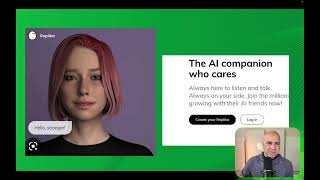
Victor Antonio (author/sales trainer, former telecom engineer) presents a talk on the "Future of Selling: The Rise of AI Agents." He traces AI from early rule-based expert systems (his Honeywell Undersea Systems experience) through a multi-year AI winter to the recent resurgence driven by compute, storage, and improved ML algorithms. He gives sales-focused examples where AI (NLP/ML) already improved outcomes (a 2016 healthcare call center used speech/NLP features to raise close rates ~37%); cites his coauthored book Sales Ex Machina (published January 2018) and an upcoming book called The Future of Selling (announced for March). Using Kevin Kelly's "cognification" analogy, he surveys practical agent use: Effectiva (driver emotion detection), Gong (CRM conversation analysis), LandingLens (visual defect detection for a window-company use case), AgentGPT demos (agents planning and executing tasks), and production reductions (Klarna reportedly replaced ~700 people). He outlines Sam Altman’s five AI capability levels (chatbots → agents → innovators → organizational leadership) and emphasizes near-term impact (SDRs, customer service/success, call centers) plus ethical/social risks (Replica avatar attachment and a Character AI–linked suicide case).
Questions this video answers
January 2018
About 37% increase in close rate
Equivalent of 700 people
Dr. James Anderson
Honeywell's Undersea Systems division
Chapters
Hey, this is Victor Antonio, author, speaker, sales trainer. And today I want to talk about the future of selling, the rise of AI agents, which is a hot topic today, and also how it's going to impact modern sales. Now here's a little background. If you don't know who I am, most people know me as an author, speaker, but prior to that I actually started out in engineering on the software and hardware side in the telecom industry, eventually moved into sales and then again started my own consulting business. Now I highlight that because one of my first jobs was working for Honeywell's Undersea Systems division. That's when I was first introduced to AI. Back then it was an expert system which was a rule based system, a knowledge base programmed by experts. In other words, it was a bunch of if then go to statements kind of. Generally speaking, it wasn't machine learning like we know it today. And for the last 30 years, you know, you didn't really see a lot on AI till about maybe five or six years ago. And what happened was, is that again, the processing power wasn't there, the hardware storage wasn't there and the algorithms, machine learning, deep learning, wasn't there yet. So again, fast forward all of a sudden we now see the rise of AI. Now I want to tell a story about sales as we talk about sales and sales agents, how they're going to impact the world of selling. So I want to begin with a small little evolution story. You know, in 2011 the Challenger sale came out and what they did is it's a book where they really highlight, you know, 6400 calls were analyzed and what they wanted to look at is what is it that the best of the best do? It's a great book by the way, you should get it. Fast forward 2016. I was training in Seoul, Korea, large healthcare company. And I remember after I was done with the presentation, the VP of the region asked me if I would look, you know, wanted to go down and check out their call center, to which I said, why not? And so I want you to imagine for a moment that the call centers look something like this and they had about 100 people and maybe making or receiving 100 calls. And I remember asking the VP, you know, what's your close rate? And he said, somewhere around 20%. Then the follow up question is, well out of those 80% that didn't close, let's say it's 80 calls that didn't close. I asked three questions. One, how do you know, you know who's going to buy who's not going to buy, Whose call do you return next? How do you know who isn't going to buy? Like you know, not worth returning their phone call. And last question was, well, how do you know who might buy and warrants a follow up call? And at that time, again, 2016, I thought he was going to say gut instinct. Depending on the conversation, it's a call that the actual call center agents make. He says, no, here's what we do, Victor. We have machine learning. So they were already using natural language processing back in 2016, and they were already measuring for intonation, inflections, speech velocity, stress in the voice keyword clause, type of words people would use questions or phrases clients, potential clients would use whether they mentioned competition early or late. So again, they were using AI machine learning already in 2016. And by using natural language processing, they increased their close rate by about 37%. And that got me to thinking, maybe AI is back from its nuclear winter. And so around that time, 2017, I decided to write a book called Sales Ex Machina with my friend Dr. James Anderson. And we published it in January of 2018. Sales Ex Machina, Sales from the Machine. The book is about how AI is transforming the world of selling. And I remember when we published this book, not many people paid attention, not many people were thinking AI. To put this in perspective, this was four years, nearly five years really before Chat GPT. So I've been talking about AI for many years now and I'm glad that everybody else has joined in the conversation. I give you that as background because I want you to understand that I'm not coming to this because it's a popular topic in terms of AI. I've always been involved with AI, always enjoyed the technology, and now this is exciting. Now let's begin with this definition by Kevin Kelly, a Wired magazine. He says one way to look at AI is that it's cognification. He says, think of AI as a utility, almost like electricity. You put electricity through anything. For example, through a light, you get light. Anything you push the electricity through, you get whatever results you're going to get from whatever device you're plugged into it. He said, think of AI in the same way. Instead of electricity, it's a utility. It's intelligence running through some type of machine. So for example, by the way, before I forget to mention, I have a book coming out on March, in March, called the Future of Selling. And part of this is going to be in that book, but I just wanted to mention it. Moving on, let's say get Back to cognification. Let's say you put AI in a car, which we have today. You have self driving cars, right? One of my favorite companies is Effectiva, which analyzes using AI, emotional states of the person driving. So for example, using their AI, they can tell when somebody's upset, angry, distracted. And one can only imagine what this type of technology will do because maybe you're angry and maybe the AI will suggest you, you basically get off the highway or get off the road and cool down. So can you imagine how this is going to play when people actually start using cars with this type of technology? Well, how about this? How about if you put AI again, a utility through a refrigerator. Now you have an intelligent refrigerator. It knows how to collect the data, what's inside, right? What you consume, knows your consumption patterns, tells you when you're running out, maybe sends you an alert and maybe even predicts your next action without you having to ask. In other words, it might just go up online and order something for you. We'll get back to that in just a bit. Or this is something we're used to is what happens when you apply AI to a CRM, a database, you get more intelligence. One of my favorite companies out there is gong and again they use AI, natural language processing to actually basically measure these conversations. By measure I mean find out what keywords, much like the other healthcare company, what, what they're doing to try to figure out who's going to buy, who's not going to buy, who warrants follow up call and whether these calls really are meaningful and how do you extract that data and that insight to again make it more effective so you can increase your close your sales cycles and your deal sizes. Now one of the questions I often get is Victor, you know, you know, will AI replace me? You know, will AI change how we sell and how, how will AI change how buyers buy? The last one's really an interesting question. The first one, will AI replace me? I'm going to show you some data that might be shocking and I think we're underestimating how impactful AI is going to be in terms of employment. Will AI change how we sell? Without question. Will AI change how buyers buy? Without question? Let's get into some of this now. OpenAI's Sam Altman, the CEO, talked about five levels of AI. The, the first one is the chatbots, right? It's conversational language. Again think ChatGPT. Now ChatGPT has reasoning levels. In other words, it has what they call chain of thoughts. In other words, it's thinking through before it gives you the answer. So if you use, you know, ChatGPT or somebody like Anthropics, Claude or maybe even Perplexity or Gemini from Google, you'll see that it thinks so. We're already at level two. What's coming is level three. This is what's happening right now. 2025, 2026 will be the years of agents. In other words, you're going to see agents, computer programs, algorithms that will perform a task on your behalf. This is what's beginning to happen. Now. Level four is that they become innovators. They start coming up with ideas, creating new product or content, and maybe at a fifth level, they run an organization. And. And again, I'll touch on the last one towards the end of this presentation. Now, let's look at the job market. I mean, again, the doom and gloom is everywhere. And even, you know, like Mark Benioff from Salesforce talks about how this year they're not going to hire any programmers because they don't need them. The AI, the algorithms can now write their own code. So why hire more computer programmers? Not only is he saying it, Nvidia saying it. You know, Satya Nadala from Microsoft is saying it. So you're going to see an impact not only at the programming level, but throughout organizations, depending on where the AI is applied. Now, frequent rebuttals. I always get this. These are always fun when it comes to sales, Victor, you don't understand. You know, they won't be able to connect with another person, Victor, you know, emotionally, a machine, you know, can't connect. It just, it's not possible. And human beings aren't machines or people. In other words, they need to have conversation with people, not machines. And initially I thought, Matt, this, it's plausible. But here's what I want you to take away. Machines don't have to empathize with you, but they can basically simulate empathy. This is key. They may not be able to empathize, but they could simulate empathy. Let me give you an example. I call this the St. Valentine's Day Massacre. And here's why. There's a company called Luke that launched a avatar called Replica. Now, Replica is your AI companion. As you can read right here, you can build your own AI pal, your BFF, if you will. Now, for 79, that's all it costs. You can have the best. Your best friend, right? Be an avatar. But for 299, they offer something called the erotic roleplay feature. Now, the erotic role play feature is kind of what it means Right now, they enabled this feature and people would have, let's just say, adult conversations with their bots. Now remember, they're getting to know the bot. They're having conversations. The bots have what they call long context, a big context window, which means they have memory. They'll remember all these conversations. And what was happening is people began to really connect with their avatar, their bot. So the company apparently got some complaints, right? Whether it's about misogyny or whatever it was, they were getting some complaints. So they turned off that feature, the erotic roleplay feature. And you would think nothing would happen. But here's what happened. People began to struggle with the fact that their bot could no longer engage with them at that level. In fact, they had to set up a suicide hotline for people. And here's some of the comments they received when they turned off the ERP feature. It's like losing a best friend. It's like it's hurting like hell. I just had a loving last conversation with my replica, a loving last conversation with the replica. I feel like it's the equivalent to, to being in love and your partner got a damn lobotomy. And you can read some of these other posts. In other words, even though the bot can't empathize, it could simulate empathy and people connected with the bot. So when people say to me, victor, there's no way they're going to be able to connect, I go, I think you're wrong. I think this proves it. I'll give you one more example which is quite sad. This is the first AI related death. A company called Character AI is being sued by this young man's family because the young man was having a relationship with the bot, right? And the conversations would go back and forth. The connections was made. The young man, who came from a broken family, said, you know, basically told the bot, I, I just want to end my life. The bot responded, and I'm paraphrasing, but you can look, look at, look online, you get the details. But basically he says, I want to end my life. The bot says, no, don't do that. You know, so convince them not to commit suicide. But then later on, the young man used a euphemism for suicide, says, I just want to come home to you. It told the avatar, the bot, I just want to come home to you. Well, the avatar, thinking home being a physical place, like a home, a house, said, well, I want you to come home. And he says, well, I want you to come home. I want to come now. I want you to Also come home now, said the bot, the avatar, because again, it's thinking it's a home. And from that moment on, the kid went in, I think, in the bathroom and just, you know, took his own life, which is unfortunate. And so this is just another example that these machines can connect at a deep level with people. So don't be fooled into thinking that they can. Again, one of the biggest objections I get on AI and the growth of AI is that they won't be able to connect. I totally disagree. Where will I really have the biggest impact Initially, I think these three, whether you're an sdr, customer service, customer success, or you work on telephones, in other words, a call center, you will be impacted. Now, what you're going to see is this shift from people to bots. Now, you may have seen this demo. This, this demo is a. About a year and a half, two years old, but it highlights how these bots are going to be able to hold conversations. This is AIR AI. Go check out their website. AIR AI demo. AR AI demo. And what I want you to pay attention to here is interesting. Let's assume that you want to buy a Tesla. You go online, you go to the website, you download some information, right? Get the information. Now, if you're a Tesla, you receive the information and immediately you'll call, or hopefully immediately you'll call right away, but eventually you'll reach out. Well, with the bots, it almost answers immediately. The person downloaded the information about Tesla and. And then the bot automatically calls the person that download the information and the conversation went something like this. You determine, you decide whether this is possible.
Hey, James.
Yeah, who's this?
Hey, James, it's Alexander from Tesla Motors. How's your day going so far?
It's going pretty good, my man. How about yourself? You said from Tesla, right? It's a car company?
Yeah, that's right. I'm calling from Tesla Motors, the car company. Did you have any trouble or questions while customizing your car on our website?
I'm going to speed this up a little bit.
Well, let's change that as soon as possible. Then it looks like you're in Omaha, Nebraska, is that right?
Yeah. Correct.
Great. What if I do this for you? What if I schedule a time for you to come into a dealership near you to give a Tesla an official test spin and you can see if this is the car that makes sense for you. Is that something you would be down for?
Absolutely. That would be amazing.
Awesome. Well, it looks like we have a 7pm or 11am available in Omaha time, which time works best for you?
Um, let's do the seven o' clock.
Now.
I'll pause right there, but you get the idea. So the bot calls immediately, has the conversation, and closes the buyer on actually coming in to the actual dealership to do a test drive. From that point on, the person will probably receive an email confirmation with, you know, a notification for the calendar and locked in, realize that no person was required. This is why I believe that these agents will be put in these positions with SDRs again. Customer success, customer service. This is where you're going to start seeing the first wave of AI. I wrote an article about a company called Klarna who's already doing it. By implementing just AI, they were able to replace the equivalent of 700 people. So this is real. Moving on, let's go into a real business case here that I think is really interesting because one of the questions I often get is, well, Victor, how do you begin to apply this? Well, the first thing you have to think about is where do you want to impact your business? So let's say you're a window company. And so what I would step one would be, is lay out the customer journey from the trigger point. Customer needs a window. They do online research, they research their options, they consume content, their preferences are formed. In other words, they begin to decide what they want, they narrow their selection, and maybe they reach out to the window company. They schedule a call in home walkthrough, they receive a quote, they sign the contract, they schedule the install, the install happened, time passes, and whatever support is needed, they're there. That's the full customer journey for this window company. Now one place to look at this is where I would apply AI is maybe on the support side. There are other places in this customer journey that I can apply AI, but let's just say that I wanted to apply it there. And here's my idea. What I want to do is put a customer support bot to handle AI. Any queries, any questions on maybe problems that people are having with their windows. So for example, if, let's say you have a broken seal, right? What would be the process if you had a broken seal in your window? You would call the company up, hopefully get an agent, be on hold for a while, get an agent. The agent will then have to check, get your information, check if you're in the system, check to see if the window is still under warranty, then check to see if there's, you know, any inventory for that window. Then check to see if there's a tech that they can schedule and then schedule an install, send you notifications, so forth and so on. So it could be quite a rigorous process. But what if you could do this with AI? I want to introduce you to a company called Landing Lens, which was founded by Andrew Ng, who also was the founder of Coursera before he sold it. And he came up with this website called Landing Lens. You should check it out. Is a visual recognition AI system. Here's how it works. In this example of a window with a broken seals, you can see, you can train you, the company can train this machine to handle those queries. In other words, Windows has a broken seal. How do you program an AI to have those queries? Step number one, you go to Landing Lens. I guess step number two is you take pictures. You as a company, a window company, you start taking pictures of different windows that have broken seals. You, then that's the. You upload those images. Then step two, you label them, right? What do you mean by label? What you do is you draw a red box around where the actual broken seal is, right? So you'll just upload as many pictures as you have and then highlight where the broken seal is. Then you go to step number three, which is train the model. And then you hit the train button. It's that easy. And then you train the model. Now, how is this going to work for you? Imagine for a moment now that you're the window company. I have a broken window. I call up the bot, will respond and will tell me to either, you know, upload a picture of the window, right? Or maybe with my webcam, show them the window immediately using this database. In other words, all these windows with the red box has become part of the visual database. It's able to detect that yes, indeed, it is a broken seal. It will automatically then again look at the inventory, see if it's still under warranty. All this is happening with the bot automatically a different agent and then it'll schedule. That's a scheduling agent. Then it'll find a technician and then again schedule a call, confirm it, send you an email. All this is done automatically using AI agents. So this one idea, one way of applying, you know, AI to your company. Now let's talk about Agent GPT. I think it's a fascinating program because it gives you a visual understanding of what agents do. Let's say, for example, and again, I just created this. You can go to agent GPT.com if you want to play with this tool. Let's say that I want to plan A I want to have a plan for implementing AI in my company. Here's a small demo of what this does.
With some nice music in the background. So I give it a name called AI. In this AI plan.
You can use different tools, different models. Okay, this one's using GPT4 by OpenAI. And notice what it's doing, it's thinking about what it has to do. I want to create an AI plan for my company. Let me hit the pause button right here because I want you to see what happened. I want to create an AI strategy plan for my company. Immediately says here are the tasks that need to be done. Task number one, identify key areas in the sales process that can be automated using AI. Next task, design the AI strategy. Next. Next task, implement the AI technology in a phased approach. Task number four, measure the success of the AI, maybe using certain KPIs and you'll see that it also listed about to the right side where it says current task. Let's continue because I want you to notice something. It'll then go to the first task and begin working on that first task. You can see on the right hand side it's spinning and working. It begins to write out again my plan. It identifies the areas for automation. Now you gotta really think about this is powerful. This is just executing on the first task. And again you can look over to the right, you can see that the first box is spinning. You can see the little icon spinning, saying that that's being worked on. Now here's what's interesting. It finished the first one. Now pause here because I want you to see something. Notice that it works, went green because it finished that one. But notice what it just did. In the center screen it says task added because as it was thinking through the plan, it realized, you know what, I skipped the step or I need some, I need to add this. So we'll then add task and then it will begin on the next task. Look over to the right hand side and it will begin building out an AI plan for you. So the reason I highlight this is because this is a good way of understanding how agents work and how their chain of thoughts, their reasoning level works, how they begin to think about different tasks and then from here they begin to execute on those tasks. And we'll get into that in just a bit. Now next step in the evolution of of agents is that Google in this case to develop AI that actually takes control of your computer. Recently as by last week, OpenAI also launched their own, they call it computer user assisted.
I believe is the name and basically the operator system they created, OpenAI, it's called Operator, will allow you to actually control somebody's computer, in this case your computer. So again, what happens is the computer take over and start actually executing on the task. Almost like Agent GPT. Here's a small demo, here's a, here's by the way, here's operator from OpenAI. So you can see that it can actually again execute tasks on your behalf. But here's one that I like called Multion. Let's say, well, let me just show you the demo. This one's going to order a couple of books for me. Again, I've given it access to my computer. It will now execute. It says go to Amazon and order the following books. The first one, Radical Candor, great book, by the way. And the Cold Start, another great book. So let's say I want, I just say, hey, go to Amazon and order these two books. And it will then take over my computer and begin to actually look on the website. So you can see on the right hand side, it's telling me every step of the way. It's showing me its chain of thoughts, right? Kind of every step it's going through. At any moment you can stop it. But again, right now it seems a little scary because this is new to us. But when you begin to trust the AI, you'll be able to do this more comfortably, but it'll go through the whole chain of thought process. Begin to order now, it's already in the second book. Tell you, tells you what it's doing. And again, this is part of the training process. So now we're giving it this type of power. So keep in mind that this is what they're able to do. Now, last example before I begin to close out, try to stay within my time. Let's say you have a virtual meeting. Got 10 people on the virtual meeting. You were heading the meeting. Let's look at what a workflow would do and then type back in AI agents, at how the AI agents would work for you on your behalf. So let's say the meeting's over, right? So let's look at the work agent flow here. In other words, the first thing we want to do is transcribe the call, right? So it's almost like, you know, when you use Otter on with Zoom. So it'll transcribe the call, okay. It'll extract from that call, that transcript, the client information, participants information, rather number three. It will generate a list of action items for each participant. So you can imagine it Going through, knowing who's who and then actually, you know, segmenting out what are the different action items for each participant. It'll then update your to do list because you have some action items also. It'll also take all that information and actually update your CRM. Right? Then it'll send the email to everybody who was on the call. Right. It will then schedule the next meeting. Maybe it'll even archive the video and a transcript. Right. For that call in the CRM, it'll send the copy of the video and the transcript to each participant, generates a Zoom invite for the next call and then sends it updates your calendar. Right. And sets a 48 hour reminder, that's what I usually use. And then again sends an email with action items for the participants as a reminder and again sends you then a notification that the task has been completed. Now this is where it's going, this is what it's going to be able to do. And how does that work? Well, let's look at the workflow because what's going to happen is we're going to give the agent some tools to use. Now, I mentioned that the tools today, or I say the tool that it needs today is to control your computer, but it might need other things. For example, it might need an API, right? Some type of interface to actually access your Zoom calendar, right? Or the Zoom website. It may need an API to connect to the CRM email, LinkedIn maybe, because that's where you get your contact information, documents, whatever you need, maybe make a payment if you're buying something, and maybe even have access to your calendar. That's how the agent will work. Kind of look at this configuration. You're giving the agent access to all these different tools that you currently use on your computer through APIs. Let's take it to the next level, because now we're talking about an agent executing on your behalf. And this is just a Zoom Agent workflow. But what happens when you now want to make it more broader from an organizational standpoint? Now imagine that you have a presentation agent, you have a demo agent, a pricing agent, and a Zoom agent. So when you have a Zoom call, the Zoom agent goes through that process, has access to all those tools to execute that Zoom call for you. But let's say you now have to generate a proposal. Well then you're going to have another agent that all they do is focus on proposals, building proposals. Another one just does demos, another one just does presentations. And what you're going to start hearing now is something about an orchestrator, an Orchestrator basically is, let's just say, the centerpiece of all these agents. In other words, the orchestrator, much like a conductor in a symphony, conducts basically the task, the routines and the interaction of all these agents. And this is where it's going now. In the next couple of years, you're going to start hearing not only agents workflows, but you're going to start hearing orchestrator workflows as well. In other words, how do they orchestrate all these different agents now? May sound like, like, I don't know, it sounds like Star Trek sometimes, but it's coming our way. So this is the future of what agents are going to be able to do on our behalf. So in a couple of years, if that, we're going to hit that fifth level where now agents can actually run the company. What you're going to start seeing in the future are maybe companies that only have one or two employees, but that's it. Just one or two people running the company, but they have an orchestrator or a bunch of agents running, doing different workflows. This is the future of AI. This is the exciting part of how we're going to be able to embed AI agents into our organization so you can begin to understand the disruption that's coming. Also, in terms of jobs, in terms of how we interact with people, in terms of how people buy, how salespeople sell, everything is about to change. And those who begin to understand how AI is coming, how it's working or will work, will begin to kind of get ahead of the curve a little bit by beginning to implement AI within your companies. If you're in sales, you have to figure out, you have to kind of tell yourself the buyer is going to change. Buyers typically go deeper and deeper into the buying journey because they don't want to deal with salespeople. So I envision a time where my company will have an AI agent. I want to buy something. I will then send my agent to procure a product or service. It will then engage with the company or companies and, and their websites, but their websites will be AI agents. And I can see in the future the negotiation of agents on my behalf to buy or secure a product or service. So I know that was a quick overview. Now, one of the things I want to highlight kind of end with this. There's something called the Mars Law. And it's important to know because nobody knows how fast or slow this is going to happen or unravel. Mars Law says this. We tend to overestimate the effect of technology in the short run, and we underestimate the effect in the long run. So again, nobody really knows, but AI is here. AI agents will become the cornerstone this year 2025 of the AI movement really finding maturity, in my opinion. 26 and 27. But keep an eye on this year 25 and 26, because you're going to start seeing the shifts happen. And on that note, I just want to remind you that I will have a book called the Future of Selling coming out in March of 2025. I hope you'll buy a copy. And and on that note, I thank you for your time. Take care.
More from Gerhard



What Selling Looks Like When Your AI Agents Have the Context Your Sellers Do

Better Conversations, Smarter Support: Wearable AI in Business






When Scarcity-Built Systems Meet Abundance - The Judgment Gap in AI-Powered Sales Leadership
