Going Beyond Bots and Voice-Only Role Play
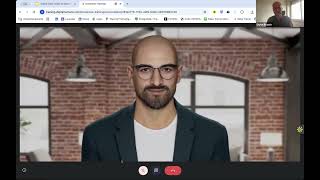
A recorded presentation and demo (Q&A) by Owen of Unique showing an immersive digital-human role‑play platform for sales and customer‑service training. The content explains the product purpose, scenario/assessment design, example hotel front‑desk role play, analytics/feedback capabilities, implementation time/cadence guidance, and contact/demo info.
Questions this video answers
Around 10 minutes.
About five minutes.
"84% of reps misquoted last year" and "68% of managers report that they didn't have enough time to actually effectively do coaching."
Welcome back, everyone. Now you're in for a treat. We have Owen be in the house. He is head of Immersive Training Products and director of Sales of Unique. And I need to say something about Owen. He has a. A great history. You explain it, Owen, explain your Scottish heritage.
I was just explaining to Gerhard that my name comes from Macbeth, or BT is derived from Macbeth. So I have royal roots, but no royal bank account, unfortunately.
So you've not been knighted yet?
Not yet. It's a matter of time. Maybe after this demo it would go so well. Right.
So head of Immersive Training, that really, that, that word means a lot to me because we are in an immersive environment. When you look at the revolution that's going on with AI, we are inundated with information and the world becomes a chaos and chaotic for the buyer and the seller. And what Owen's company is doing is to establish clarity in conversations, in communication. And I'll let you take it from here, Owen.
Amazing. Gerhard, thank you very much. That's super kind of you. And that's exactly it. So I'm just going to jump into a couple slides to start with, just to kind of set the scene in terms of where we're coming from, how I've got to this point, and then I'll jump into the demo so that everyone can kind of get cracking with the more interesting bit as quickly as possible. So give me one second.
Cool.
Perfect. I'm assuming you can see my screen now. Okay, perfect. So thanks everyone for taking the time. So just to give a bit of background around Unique, but with a company that's been around for about 10 years now, we've worked with some of the biggest brands in the world, like to Dell, Qatar Airways, T Mobile, and we've essentially created this digital human technology, is what we call it. Sophie being an example of an avatar there, which is essentially an avatar that sits on a website and typically drives someone towards a conversion point through a back and forth and conversational experience. What we realized over time is essentially that we can use that same technology to create a role play and practice experience. That means that people, and in particular sales reps, can get better at practicing those difficult conversations before they're in the field and then receive feedback in terms of how they performed. If you're thinking about simulation, role play, we essentially have thought about it, in a sense that elite performance is key. You have pilots who have to go through many, many hours of simulation before they get into a cockpit. You have athletes who have to do plenty of practice before they get on a field on the game day. And we're thinking about, okay, why isn't there an effective way of doing that in a business environment and in particular sales environment too? So this is essentially why we've gone ahead and created the product that we have. Really what we're trying to answer is the question around how can we improve people's ability to handle difficult conversations through realistic practice? And there's a few different scenarios and context in which this takes takes place. So if you think about a new salesperson learning how to do discovery, for instance, or a seasoned rep learning how to position a new feature that's just been released by the product team, or perhaps getting someone to improve a new methodology that you just implemented at your organization and outside of sales, you could have a customer service rep trying to get better at handling an angry customer, or a newly promoted manager having to handle a performance management conversation for the first time. It's really trying to think about how can you do as good a job as possible through practice effectively in that space. I'm getting a. Give me a second. I just need to share my screen. Full screen. I'm getting a little note from Ashley. Thank you. All right, this is not going to work. All right, I'll crack on with the slides. Small pause. Sorry to our director of marketing, Ashley, but I thought it'd be interesting to bring up these stats. So essentially Salesforce came out with stats earlier this year, which I thought two were super interesting. One was that 84% of reps miss quoted last year and 68% of managers report that they didn't have enough time to actually effectively do coaching for those reps as well. And really what our platform has done is trying to bridge that gap between the two. So thinking about how can we create a platform that creates a safe space and safe environment in which that people can practice those difficult conversations and how can we essentially take the feedback that management would give those reps in those conversations to put it into a platform so they have a safe space in which to a practice and receive feedback as though the manager is in the conversation with them too? And at a high level, if we're thinking about why training doesn't necessarily work all the time will often fall short. Doing effective training at scale is super difficult and often looks like something like a monthly enablement meeting or perhaps whatever comes up at a 1 to 1. And getting it to do continuous training at scale is even harder than that. So really what we're trying to think about is how can we make role play and practice as effective as possible and as realistic as possible. Because right now people are often being put in stage in front of people at an RKO event, being made to practice, few discovery questions and actually not getting the effective practice. They need to do a good job to test their core skills so that they feel ready and prepared when they're going into a conversation. Because the role playing practice now as they're doing isn't good, they're therefore becoming disengaged. Additionally, as you probably are well aware, there's many, many training technologies and in particular AI roleplay technologies that are coming onto the market right now. And really what we're seeing that they're missing is a couple key things is a realistic and interactive back and forth so that actually reps feel like they're getting as much out of it as possible, the scalability side of things. So how can you make sure that you can scale to as many people as possible? Because if you're just doing virtual learning or video training, it can become expensive, particularly if you're using actors. And it's there's difficulty scaling that. How can you also take into account the physical reaction that takes place on the call? So if I'm leaning in, I'm more interested in what you have to say. So therefore I'm going to adjust my pitch versus if someone is maybe a bit more disengaged, how can you replicate that in a conversation? And how can you also give people analytics that are truly effective and useful to improve and create change in a positive manner? And ultimately these benefits apply both a broader business context and a specific sales context too. But it's thinking about, okay, how can we get people to be given better and more effective training? And as a result, how can we improve staff engagement? Can we improve overall business performance? Because people are now being able to close more deals, they're able to close more deals consistently, which means that results become more predictable and that means that CEOs and CROs are more happy. And ultimately, how can we make sure that the way in which this training is delivered is customized to each organization effectively so that whatever good looks like to your organization can be trained at scale across your whole salesforce? And then finally, just going to leave it here with this quick bathtub analogy that our CEO likes to use all the time. But there's a lot of AI roleplay solutions coming onto the market and he often thinks about if you're learning how to swim, there's no point in learning in just a bathtub what you really want to do is have a swimming pool that enables you to think about how can you practice things that are difficult, how can you practice swimming in deep water, how can you overcome obstacles of having to perhaps swim for a longer length of time? If you think about that in an immersive training setting as well, how can you try and make reps feel more comfortable in those positions that are difficult for them to be in? So ultimately, when they get in the field and you're trying to, and you've already mimicked a situation that they're going to face, that's difficult and it comes time for them to sink or swim, how do you know that they're going to do the right thing? And essentially that's, that's the very quick five level overview of where we're coming from. And I'm going to jump into the product now too. Give me a second. Perfect. And again, just want to make sure you can see my screen. Gerhard, if you could give me a thumbs up. Okay, perfect. So in here is the unique immersive training platform. And essentially, as you come in as a rep, you'll be able to see any number of scenarios that your enablement team or training team or whoever's responsible for creating these roleplay scenarios has set up and created. So this could be split in any number of different ways that could be based on the type of conversations are going to take place. So is it a discovery call, is it a negotiation, is it a closing call? It could be split by Persona, it could be split by type of industry. Again, you can really slice and dice this in any way, shape or form that you wish to make sure that your reps are practicing as effectively as possible. I created this hotel guest scenario just trying to think about what is something that will probably be applicable to the wider audience of everyone that's on this call. And in this case, I'm trying to make a receptionist, essentially a face to face salesperson, feel comfortable about handling a back and forth with an angry and disgruntled guest as they come in expecting a room upgrade. Before I jump into the conversation itself, I'm just going to show you what we do to create something that's effective on the back end in order to make sure that the conversational experience feels really as realistic as possible. So when we go about creating these specific scenarios, there's really a few key elements that go into creating as realistic conversations experience as possible. The analytics that the rep gets on the, on the back side of it so that they essentially get effective, effective Feedback in terms of how they can improve for the future. And additionally, how do you make sure that the training objective you're trying to drive in with whatever practice scenarios that people are probably using is as effective as possible. So to run through this here, the way that we think about it is this training objective is thinking about what skills you want the participants to practice. So in this case, I want to get a receptionist to be better at handling a difficult guest wanting an upgrade in a hotel environment. As a receptionist, I would need to practice opening with genuine empathy and professionalism, conducting structured service discovery, explaining some upgrade policies, and offering and negotiating appropriate recovery options. Because I need to know that I can't just offer a room upgrade in this case. Ultimately, the underlying problem that I'm trying to address here is that front desk staff can struggle to maintain composure and ownership when a guest expects an upgrade and that isn't available. Again, this can be applied to any sales conversation that you wish. I'm just using one example here that I thought would be applicable to many people across the board. As we move further down, we have your assessment criteria. So this is really thinking about what good looks like for your organization and how do you put that into the feedback and analytics that come out of the end of it. So we have five standard assessment criteria here. So assessing an agenda, emotional connection, discovery, etc. You also have the ability to put in your own customized assessment criteria. So for what good looks like for your organization, you can input it here so that it basically it takes the transcript what was spoken about, compares it against assessment criteria and provide a report on how they performed in that. So in this case I created one called Selling the Value, offering an appropriate recovery option. So I gave a brief description around what is expected in this conversation and how it should go and what good looks like, what okay looks like and what poor looks like so that the system is able to understand what, what a performance that would be expected in the conversation itself should go like, and how they can get feedback on that too. And then finally is around the scenario context and this is really thinking about how can you provide as much input and depth to the conversation as possible to make it feel realistic. So in this case I'm thinking about what is happening in this person's day to day, the digital human that I'm going to be interacting with. That means that they're going to be behaving in a certain way. What is it that they care about in their world. So in this case it's a room upgrade. They have something happening in their day to day life. That means that this room upgrade is super important and what are the objections they're going to come up against so that you as a rep need to try and figure out how you're going to overcome them. So in this case I've given the context that James Bishop is a long time loyalty member and frequent business traveler. He's basically misunderstood. That complimentary upgrade subject to availability is definitely what he's going to get. He's going to be tense, he's going to be frustrated, he's going to open the exchange abruptly. And I gave some information as to how that conversation should go. I also added in some transcript of how that conversation should play out ideally. So I basically created a little back and forth using ChatGPT as a always handy tool and then also the Persona 2. And this is thinking about what is the visual representation of the person and the personality in terms of how they're going to interact with this back and forth. So in this case I said his role is a frequent traveler and guest. Again, this could be completely customized to whatever your organization's ICP or buyer percentage might be. I chose someone who happens to just look a bit like myself. And then I also created this custom personality where he's going to be blunt, quite impatient, he's going to have short responses, he's going to have specific demands. And again, you might have any number of types of customers that you're speaking with day to day and you're trying to think about how can you replicate what those, those conversations and back and forth might be like. You can put those personalities into the platform itself so that you can get reps practicing with any number of types of people as possible. We've all been on calls when people are very open to sharing all their problems and the pain points that they might be having. We've also all been on calls where people are very, very short and direct and don't give you much time at all. We're trying to be able to create that customization and ability to grasp someone's personality and input it into the system. So you're putting reps in a difficult positions so that they get better when they're in the field. And then finally we just have some participant instructions which you saw on the page before, but essentially a bit of info about what's happening in the roleplay scenario, what my task is, and again what I need to do as a rep. And I'm going to jump into now being a front desk manager at hotel and role Playing with the digital avatar. James. James. Hey, James. How are you?
Can't hear him.
So you can't hear Gerhard? Can you hear that or not?
I. I can hear you, but I cannot hear the other one.
Give me one second. Right, let's try round two. James, tell me a little bit more about that.
I was expecting an upgrade, but it seems that none are available. I'm not happy with the standard room I've been assigned. I've been a loyal customer of this hotel for years and I expect better.
Gerhard, can you hear that? Perfect.
Good.
James, I'm sorry to hear that.
That's not really helping. I need someone to take ownership of this issue and offer a solution. Just saying good doesn't fix my problem.
I think you misheard my colleague there. Just so I understand, clearly, your booking mentioned the complimentary upgrade, but you've been told there's nothing available, right?
No, that's not what I said. I was expecting an upgrade because I'm a loyal customer, but it seems none are available. My booking didn't explicitly mention a complimentary upgrade, but I've always been upgraded in the past.
Okay, well, we can't guarantee an upgrade every time we don't have a room available, but I'm curious to know, like would acquire room, maybe help alleviate the problem. Them.
A quieter room might help, but I'm not just looking for any quieter room. I need a room that's going to ensure I get a good night's sleep because I have a big meeting tomorrow at 7am and I need to be well rested.
Okay, well, we'll do our best to accommodate that. And I guess I'm curious then, do you think a late checkout might help as well?
A late checkout might be helpful, but it's not just about the checkout time. I need a room that's going to meet my needs, and so far I'm not feeling like that's happening. A late checkout is a nice gesture, but it's not a solution to the problem. What I really need is a room that's quiet and comfortable and a guarantee that I'll be able to get a good night's sleep.
All right, so I'm just going to pause there for a second. But as you can see, I can try and have as any back and forth that feels as natural as possible to me as possible. And I can ask any question, it will come back with something that makes sense within those, I guess, the confines of what we put in place in that scenario context we were creating earlier. Again, this could be applied to any sort of conversation. So this could be a really deeply technical conversation with a director of machine learning at a very intense IT organization, or this could be somebody on the parking lot of a secondhand car place and you're trying to think about how, how would somebody, how would somebody basically sell, I know, a secondhand Toyota? Again, there's a huge amount of flexibility in terms of the types of conversations that can be had. And the rep is then given the opportunity to sell in their own style and manner so they can practice in their own way, such that gray area in the way that people sell. And they will then get objective feedback based on how they perform based on those assessment criteria that put in place earlier. So I'm just going to exit out of this and now what it's going to be doing is comparing my transcript of what was said with the assessment criteria that was put in place.
And.
It will give me this summary of some things that went well. So I said, I kept a calm, friendly tone, some areas for improvement. I missed chances to acknowledge his frustration and apologize. I didn't give a clear owned action plan. It gave me some information on how I performed against those assessment criteria too. As I go a bit further down here, it'll go into more depth about each of these individual sessions. So I'll choose the one I spoke about earlier, setting the value. So things that I did that went well. I asked for more details. It will give me a specific quote in terms of what went well. Some areas for improvement is I didn't offer a concrete recovery option. I only floated a couple ideas without committing to anything. And then it gives me very specific suggestions for improvement in the future. So I can offer multiple specific options. I can ask directly which thing he prefers. I can show ownership, stating exact steps you'll take in the timeline for delivering a solution. And then finally it's thinking about not just what was said, but how it was said as well. So this is thinking about, okay, am I using a correct number of filler words? Am I speaking at an appropriate speed? Am I listening enough in the conversation? Did I speak for too long as well? And then I'm just going to go up here and I can then also, as a leader, see across my organization, how much are people actually engaging in these conversations themselves? What are people improving in as well? So I can click into specific users. So I'm going to click into Jono in this case and I can see over a period in time he's in this case improved at discovery skills versus overcoming Objections. And over that specific time period, what has he done and how is he scoring? So you as a leader can see that. Okay, I'm trying to get my reps to practice in this very specific skill. I've given these three different scenarios. How are they performing in these scenarios? And this is how they're going to improve going forwards as well. And I'm going to pause there in case anyone has any questions.
Well, this, this is really amazing. I'm. I'm just thinking back at the role play that you did and I, in my mind it triggered a lot of sort of ideas about how sales leaders or sales trainers can structure role plays in a way that it actually reflects reality because you did really well. But I think that the avatar was extremely well trained in being difficult. And so there are two questions. One is how long does it take to train the avatar and how do you train it? And the second one is how much practice should salespeople allow themselves to in order to become proficient in handling such a challenging situation?
Yeah, that's a good question. So the first part is for me to create that specific scenario took around 10 minutes. So there's a lot of detail that goes into there. But essentially through the use of training documentation that you can, that you probably already have as an organization that you're created around. Okay, how do I handle a specific scenario? And we don't recommend necessarily replicating an entire 30 minute conversation because that's very difficult to do and people get quite disengaged. There's very specific objections that you know they're going to come up again and again and how can you get reps to practice them and you have documentation around that. We can take that information and input that into the system and create essentially a profile around the person, as I showed you, that matches someone within your ICP and the amount of times that people should practice. What we tend to see is that repetition works best. And so we've done some work with other organizations in the past, but they've seen that people doing the role plays training just once versus seven times, they feel much more comfortable in their pitch. They're able to figure out what is the way in which they're pitching something that then responds in a way that you'd expect. And then as a result they then get better in the field too.
Yeah, I think it's a, it's a great process. And when I think about, you know, I've done a lot of role plays. What, what is your favorite time span for role play? What is ideal because what I found is that the longer it goes on, the harder it is to analyze it.
Exactly. Yeah, I mean, that's exactly it. I think for us we've found that the sweet spot is around the five minute mark where it's enough that you can get enough depth and back and forth in the conversation that it feels like you're really trying to figure out maybe an objection that someone's trying to overcome or going through this negotiation period. Beyond that, the analysis becomes very difficult to handle. And also the, I guess the goal of the training becomes much more muddied. So if you can really align a very specific roleplay scenario that comes up with the specific training objective you're trying to drive, that's when the two really work together.
So I want to invite the audience, I want to encourage you to think of two or three questions that are on your mind right now when it comes to role playing, to what are some of the scenarios that you wish that your salespeople could be better, could improve? Because when I, when I think about the, the image of the somebody lying in a tub and teaching them how to swim, that's, that is, you know, exercise in futility. But the pull to opportunities open is wide open. So think about two or three ideas that you are thinking of where you as salespeople can, with a little bit more practice, can improve the performance and have better conversations with customers. Be more persuasive, be more resilient, be more adaptive, be more responsive, be more available or be more present in the moment. There's so many opportunities to practice. So I'd like for you type it in, share it now and let us know what you think and how you think this can help you perform better. Owen, when you first, you've been doing this for a number of years and your company has been in business for 10 years, what is the biggest misunderstanding and misconception that you have encountered when it comes to simulations?
That's a good question. I think I touched on that earlier, but it's the idea that you need to replicate an entire conversation to get value out of it. When it comes to a training objective, I think that is one of the biggest challenges that or sometimes the hurdle that we come up in conversations quite a lot. I think another element is that just having voice only is enough. That is something that we're coming up a lot with. Like right now it's quite easy to put, you know, a speech model on top of ChatGPT, for instance, and have a back and forth and role play just the Conversation itself. But actually when you're thinking about, okay, and this is the direction we're going in as an organization, but what is the physical element of a call that is important? So what is your body positioning? How are you responding to the person on the other side of the screen? That is the element where there is a gap right now that we're trying to fill in terms of thinking about, okay, it's not just about what's being said, it's how it's being said, it's how you're presenting yourself. There's a whole, I guess, different analytical points that you need to consider when you think about how does a rep perform effectively either on an online call or in face to face as well.
I think there, there's another element that I don't know whether you measure this, but when I think of many, you know, I do a lot of interviews and I ask very specific questions and then people answer part of it and then they drift. So, and then all of a sudden we are talking about a different subject and I have to call them back and say, well, you haven't fully answered the question, so how do you measure drift in a sales conversation?
So that's a good question as well. So in the platform itself, you can essentially, you can give inputs, which is like, this is what good looks like. And you can, because large language models are now much more powerful than they ever have been. As everyone I'd imagine on this call knows. The ability to be very specific on the analytics and to be like, this person needs to stay on point for the duration of their response and make sure they don't move away from what this best in class looks like. You can then get percentage score on how you performed in that specific metric or specific measure.
So we have three minutes left. Can you share a little bit more about how people can get in touch with you? They can learn more. How can that benefit from working with Unique?
Yeah, absolutely. So for anyone that would be interested in doing a demo, I'll be more than happy to create a scenario that is much more specific to your business. You can reach out to myself. I think I'll drop my LinkedIn in the chat if possible, Gerhard, but if you go to unique.com that's u n e-e q.com you can reach out to us then and I'll be in touch and happy to run you through a customized scenario and role play situation. And you can try out with your own reps just to see that, you know, it's not just me doing A demo, but you can see the back and forth. But really when you try out yourself, it does respond as you'd expect someone to in the field.
And Amanda just dropped a link to your LinkedIn profile so people can connect with you on LinkedIn. And Ashley dropped a message where you can book a demo. So is there anything on your website where you offer sort of a guide to effective role plays?
Yeah, actually what I can do is we have, we have like a. What does good sales training look like? And what does good sales role play look like? We can follow up that one pager also, I think, Ashley, if you're there, if you're able to push people towards the right web pages, that'd be super helpful.
Awesome. Is there another slide?
No, we're done. This is it.
So I want you to share one quick customer success story.
Sure. So the best one I can think of is not they're not public, but essentially work with a large tech company, thousands of reps, and they use this across five different use cases. It's around onboarding with new reps and having people up to speed as quickly as possible who are new. How can you get existing reps up speed up speed to their specific methodology and way of working as effectively as possible? How can you use sales role play or the immersive training platform to get people to do recruitment? How can you do a good job of making sure that you can essentially have RKO follow up, that is effective training once that's taken place. And then finally, how can you ensure that when product features are being released all the time, which is what's happening now with 5 coding all these other things that enabling AI, AI fuel product teams to release things more quickly. How can you ensure that people are up to speed and how best to sell certain features as soon as possible?
Well, Owen, I can't thank you enough for sharing your expertise. I share your passion for helping improving the profession of selling. I want to say one more thing. One experience that I've had were I found salespeople resisting to role plays in the beginning. And what I found is that they thought that they were so much better than they actually are in the field.
And.
And I discovered a psychological factor which is confirmation bias or whatever it's called. People think they're better than they are and. And they're not unless you show them. Unless you find a way to demonstrate how do you measure up as a sales professional and that that's what video role play is all about. And that's why I'm so passionate about it. More organizations need to share the. The gaps that exist in performance. And there's so many. And then, you know, there's so much more to learn. And from my personal experience, I started playing chess a few years ago on Chess.com and I realize that even after I mastered all the rules and all the techniques that I really sucked because I did not understand there were three parts of the game. The opening, the middle game, and the end game. And it's the same in selling, in selling the discovery. If the discovery is wrong, it's like having the first button of a shirt being wrong. All the other buttons are wrong too. In the middle game, where you have a clear understanding of what the customer is experiencing and how your value proposition could help them. And then the end game, you know, it's all about objections and getting the right stakeholders on the same table to negotiate a deal. So selling to me is infinitely complicated. And we all need better tools like unique to become better.
It's a perfect page. Thank you, Gerhardt.
More from Gerhard



What Selling Looks Like When Your AI Agents Have the Context Your Sellers Do

Better Conversations, Smarter Support: Wearable AI in Business






When Scarcity-Built Systems Meet Abundance - The Judgment Gap in AI-Powered Sales Leadership
