How to Call Your Number Without Asking a Single Rep
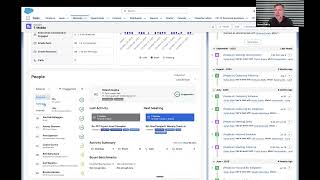
Jesse Daly from People AI shows how their platform uses AI to pull sales data from emails, meetings, and Slack to automatically forecast revenue and spot high-value accounts. The system claims a 2.6x win-rate increase within six months and identifies what top performers do differently.
Questions this video answers
7 years
10 years
2.6x increase in win rate within six months of deploying the deal qualification component.
Welcome back, everybody. Now you are in for a treat. We have Jesse Daly in the house, his field CTO with People AI. And I wanted to remind you what I said in the beginning of this AI demo day that we are at the precipice of a. An amazing challenge, an amazing transformation. And the transformation is AI. But what AI needs in order to function is a foundation of good data. And Jesse, you are a cto, you are data scientist. You can express this much better than I do. So please lead us to the land of discovery, how we can use data in a way to help salespeople perform better.
Yeah. Well, thank you, Gerhard. So, yeah, just in the way of introduction, Jesse Daly. I'm Field CTO at People AI. I've been with People AI for 7 years and prior to this I spent 10 years at Salesforce, number of other go to market companies. So been in the space longer than I care to admit. And I think one of the challenges that we've always had is when you point your knowledge, if you, if I were to look at like Salesforce or my CRM and try to understand like how healthy is this account or is this customer happy or are they likely to buy, well, it's really hard to do that. So that's, that's what Gerhard was just driving at, where it's. Without data, you can't get into, you can't pass go at all the use cases you want to get to, like executive briefings or forecasting or any of those AI use cases your organization is pushing for. So this is AI demo day, so we're going to be talking a lot about AI at people during this, during this presentation. And I didn't get any slides, so I'm a tech guy, so we're going to jump right into the technology. But I really want to focus this around two really important things. The first is you as sales leaders. How do we make your life easier? The name of this session is how to call your number without talking to one sales rep. So how would that be possible? And then secondly, I want to talk about how you can make your reps more productive with AI. So I'm actually going to start in a different place, which is inside of an AI application. And I'll tell you, I'm about to jump on a plane right after this. I'm flying to Seattle to meet with one of my biggest customers. And as an executive that gets into the field a lot, I have a lot of moments where I don't exactly feel like prepped for the call or if I was prepped. I feel like the sales rep had to put in hours and hours of work. Now, there's a better way to do this with AI. And let me show you how that could be done. Because what if I started my day inside of an application like Claude? So this is, this is Claude or Chat GPT. And what's great about this is this is mobile. So I'm on my way in the Uber to the airport and I want to get up to speed on a customer. So with People AI, what we've done is we created an MCP connection. So this is a data connection, actually an AI to AI connection between claude, which is a Frontier Deep reasoning model, and the People AI data set. So throughout the course of this presentation, we'll be talking a lot about the data that People AI creates and why it's so important. But right now I want to show you this. By default, if I were to ask Claude or ChatGPT or Microsoft Copilot about an account, it wouldn't really know much about that account. But when it can connect into a tool like People AI, it, it could start to do some really amazing things. So let me show you a quick example of this. Give me an update on the nationwide account. Okay, so I just talked to my AI application here in this example, claude, and a couple of things are going to happen. First of all, Claude knows that it has access to this tool, this mcp, and it's going to send in a request to the People AI data set using its deep reasoning model. And you can see right here, it's actually gone off to find the account. So it's going to search inside the People AI data set for the account and then it's going to pull down all the data about this account, including the account status. So in real time instead of call. So what would this process look like? Before, I would call the sales rep in a panic, be like, hey, get me up to speed on this account, I need all the detail about this opportunity, etc. It would be a panicked morning to get this type of information, but now we're having AI models talk to AI models. And look at this. It's spitting out a very comprehensive overview of the engagement we're having with this account. Key strategic priorities, risk factors. I can walk in with my executive briefing that's better than anything I could get from my sales team. And this is the promise of AI delivered where instead of wasting time internally on, you know, documentation, executive briefings, forecast calls, I have all this data at my fingertips and just to show you the magic of this, what's happening here, and I'll introduce you to a new concept around how MCP works. So this is an 8, like Claude talking to people AI and it actually sends requests over in plain text. So this is literally AI talking to AI. So now we've hit like the singularity where AIs converse back and forth. And it asked the question, I said, give me an update. It said, which executives are engaged on this account? What are their strategic initiatives? And then it went off and queried the people AI data set for that to answer that question. Okay, so I want to start with the end because I think it's so interesting what happens when you extend data throughout the organization with AI. And we're going to be talking about some of the other use cases, but let's go back to the problem statement just for a moment here. So I pulled up Salesforce and I was just alluding to this. Like I said, I spent 10 years at Salesforce. You know, it's probably the best CRM that's out there. But regardless of what CRM you use, we have a problem. When I look at an account or an opportunity, I see this, right? This is not data that humans were ever meant to use and process to understand customer health or deal risk or anything like this. I guess in theory I could kind of click around in here and maybe like read some conclusions or read some notes, but AI could do such a better job with this. So let me explain how people AI works. What people AI is doing is when you turn on people AI, we ingest all of your sales activity data. So this is all of your. All of your emails, all of your meetings, call transcripts, Slack messages, LinkedIn, any kind of digital touch point. And there's so much rich data in there. So we process all that data, we filter out anything that's potentially sensitive, we match it accurately to the accounts and opportunities, and then we actually enrich your CRM by creating contacts and syncing in all these activities. The other thing we're doing is we're creating summaries on all the key topics. So behind the scenes we actually have a ticker tape, a data set which is available to you of all the key things that are happening in your accounts. That's why I could go to Claude in that MCP example I just showed you, and pull down all that data. It's organized in a way where I can comprehend it. So people AI is literally building a revenue story of every key moment that happens in your accounts and opportunities okay, so which leads me with, hey, what are the key topics that are being discussed? What are next best steps we need to take and what are the potential risk factors on this account? So right out of the gate when I pull up T Mobile, I can see all the things that I need to be aware of on my customer account. And behind all this we have receipts. And by receipts what I mean is we have a the actual data set. Let me see if I can pull up a good example here. Okay, so here's a meeting that we had with T Mobile. I've got my meeting insights, so no more note taking. All I do is click record in Zoom or Teams or Google Meet, whatever you're using, just click record. People will process the meeting, pull out all the key things that happened. And we're doing something really unique here. We are giving you all the Persona data. So here's all the Personas that I met with. And this may be a little bit small on the screen, so apologies for that. But if you look at, look right here, you can see like, hey, here's a vice president of operations, Tricia. Right? So Trisha is a VP of operations. Lindsay, also a VP in operations. So I've got some VP level people on this meeting. Why is that important? That's important because as a selling organization, I want to know is my team getting to executives to win big deals? This is a challenge that we have. Like so many companies I talk to their sales organization isn't getting high enough in the organization. Well, this is not CRM data, people. AI maintains a first party enrichment database. So we will actually enrich all of these contacts with seniority department which is part of your data set. So now whenever you run a report on are we getting to this type of Persona or selling to executives in our accounts? That's a data set that's now available to you. It's done automatically. One of the things I like to say is no salespeople are harmed in the making of this data. There's no manual data entry. That's done people AI collects all the data. We filter out anything that's potentially sensitive or personal and then we sync it everywhere it needs to go. And that's all done automatically. And understanding you have a very messy CRM environment because nobody has a clean CRM environment here. That's the dirty secret. So we come in with the assumption that your CRM data is a mess, but we can make it work. Okay, so I just showed you all the meetings that were happening. The other thing we're Doing here is we're stack ranking all the contacts. This is sort of your freshness indicator. And you'll notice that People AI is giving engagement scores to all of your contacts, accounts and opportunities. You can use this to see, let's see, like, hey, who actually is engaged here. There's your external people, your partners. So if you have a channel sales motion, we'll actually track partner engagement in your accounts and opportunities. This is patented technology to People AI. And I could see who is the internal cast of characters that are working this account. Ryan, Jeff, Eric, Andrew. These are my top people that are working on the T mobile account. Okay, so all this data is pulled in right at the account level. And of course you could access an LLM which is. And these are prompts that you designed to do things like, hey, what's the health on this account? Or create a follow up campaign email for me. And all this data rolls up across the account hierarchy. So if you have complex account hierarchies, you could summarize this across all the child accounts. This is something even Salesforce hasn't figured out yet. Now you're probably looking at this and thinking, okay, this is really good for the knowledge on one account. But what happens when I want to go across many accounts at the same time? Well, I got you covered. And this is when we start to get a little bit more into the forecasting capabilities of People AI. Okay, so I just pulled up a prospect account list. You'll notice that I'm using the People AI application embedded right into Salesforce. So there's one place to go. You can just log into your CRM and you got everything you need right here. Now this rep has 19 prospect accountants. So they actually got their hands full. They got a lot of stuff to do. And remember that engagement level from earlier. Here it is again. And as a sales rep, usually there's a break point where you can no longer support your territory right around here. So these accounts are lying dormant. Now, as a sales leader, I could have a. There's a couple things I could do with this information. One is I could encourage my seller to use some upsell signals like, hey, what's going on at Evernote? That might be a good upsell signal for us and go outbound. The other thing I could do is I could use this for territory management so I can start to find the dormant accounts where there is opportunity and reassign those accounts to reps that have bandwidth. Okay, so now I'm in the seller view here. And you'll notice I Just did something really interesting. I clicked into a signal. So people with people AI, you can create custom signals for different things that you want, business processes that you want to operate these signals. Think about them as AI agents that can run across huge sets of data and do things like predict account health or finding a reason why a customer may upsell or help me with next best actions. Classic example. And we've been talking about next best action in an account for a long time, long time. And I've been in the CRM space for a while now. The reason why it hasn't really materialized is without data about what's happening in the account down to the detail level, it's impossible to get to next best action. But with the people AI data set underlying everything now, we could start to create campaigns and get to things like next best action. Now I'm showing you some examples here of signals. And it may be like, okay, this is interesting, but who actually creates these signals? What I want to show you now is how easy it is to create one of these on your own. I'll tell you, I have a couple customers that really were very interested in this signal I'm about to create. So I'm in the signal builder right now, and this is an admin interface. But imagine you're sales operations leader and your executive team gets out of their quarterly executive meeting and they say, all right, we need to understand in our opportunities, are we getting to getting to executives in the account? Do we have cio, cto, CEO engagement in our top opportunities? Because guess what, if you don't have that level of engagement in your opportunities, somebody else is there having that conversation. It's probably your competitors. But how do you figure that out at scale across all the opportunities in your forecast? That's where the signal builder comes in. So I'm going to call this the above the line signal, and I'm going to give it some instructions, analyze all of these accounts or opportunities and see if we have executive engagement. And by executive engagement, that's defined as meetings with cio, cto, CEO, or any C level executive. If we don't have executive engagement, when I click on the prompt, return next steps and people I should target to align with executives. Okay, so you get the idea. I was just talking to my computer, kind of gave it some instructions. This is obviously pretty rudimentary. You can get a lot more sophisticated. You can build in scoring systems, you can build in like grades, like account health, things like this. But you get the idea, okay? We mean with executives. The only other Thing I'm going to do is I'm going to give it two responses. I'm going to say, are we above the line? Are we below the line? Oh, and I should probably give it instructions. If we have above the line engagement, which means meetings with executives, return above the line. If we have no executive alignment, return below the line. Just going to define that a little bit better there. Okay, now let's talk about the data sources. Because we have different data sources that people AI can, can pull into these different AI signals, the first of which is CRM data, which we know is messy and chaotic, but you know, there's some good stuff in there. We're also going to pull in all the people AI data. These are the, the metrics, the chronicle of events, the Persona data that we're enriching. If you're doing medic qualification or deal qualification or account planning, we can pull in that type of data too. And I'll show you that in a moment. I can also point public company news like 8Ks or financial reports, or if you have an enablement portal, we could pull in all of your enablement data. Okay, so that's it. I'm just going to go ahead and run this. Oh, sorry, I don't know what happened there. I'm going to run this signal and we're going to see in real time organizing all my opportunities by above the line or below the line. And just in. Just to tell you a story about what some of my customers are looking for this, a lot of my customers. So, so look at this. Across my customer base, the trade desk is below the line. I have no executive engagement in this account over the last 30 days. And so I just deploy the signal. It was rolled out inside of my admin interface. I could test it, make sure it's working correctly. But now I could also push that out into my pipeline reports. So let me show you this. Now I just pulled up a pipeline report and when I click on Manage columns, I've got this, maybe it's already been added above the line signal. So here's my above the line signal. When I click save boom, I could see am I above the line or below the line on my accounts looks at Hall Logic, I'm above the line. That's obviously really good at wme, I'm below the line. Okay, so let's think about the process by which this would be done before if, if we wanted to organize all of our top opportunities by something like above the line or, you know, how do we accelerate this deal or whatever that might be. We're going to our Salesforce admin. They're creating 40,000 lines of Apex code, trying to get the CRM data organized in a way where we could do this not with AI. With AI combined with the power of the people AI data set, it's so easy to start organizing your business and rolling out key executive initiatives. Okay, so let's get to the forecasting here. I have my pipeline and as a sales rep I could see, you know, which deals do I am I working on, how am I engaging them? At any point I can click in and get the details on that deal. Remember those receipts I showed you before? Everything's right in this view as well. So I could click through and be like, all right, we had 13 meetings. We're actually meeting with executives, but we haven't met with legal and procurement, which, you know, is a good late stage signal. Okay, now one of the challenges that a lot of organizations have is they're rolling out sales methodologies and you probably are using Medic or Bant or Spiced. And with people AI, you can create custom sales methodologies that are not just field sitting in Salesforce. They are driven by the data that your sales team is generating and you can use people AI to coach on those business processes you're trying to drive. So in this example, I'm in a medic shop, so I got my medic scorecard here and the rep was asked to summarize the metrics that define success for this project. So the Republic meeting next week to discuss metrics. Okay. Not very helpful. Right. So let's actually take a look at the AI coach and see what that gives us. So I'm using my AI coach and look at this, look how specific this is. Operational cost reduction of 30%. 30%. Here's the people that are calling out these specific initiatives so I can make sure that we're with the right level cfo, for example, is establishing budget. Here's. I could look at the quality of the response that I've gotten. So this is so different than just having like keywords being mentioned on calls. This is looking at complex deals and understanding what are the key moments that are driving your qualification. So instead of having generic responses put into Salesforce, now I've got very deep responses that are driven by the things that are actually happening in the deal with specific metrics, for example. And it doesn't just need to be metrics. I can put in, for example, economic buyer and get coached on like, hey, who's the right EB on this account, Linda Kim, CFO's the, the economic buyer. And this is, We've been asking them for this forever. Help me, help me identify an economic buyer. And by the way, Linda, zero engagement. So we gotta start working with our EB on this opportunity. Good to know. Okay, so that's AI being used to drive the, the sales qualification process. We're coming to the end here. The final thing is this all needs to be rolled up into a forecast. One of the things that we talked about was being able to submit your forecast without talking to a single rep. Well, here I could see the forecast for the business if I drill into one of my territories here. Let's take central. Here's all the deals that make up my central forecast. So people AI has a forecasting application. Here's all my deals and commit. Now you notice a couple interesting things here. I've got predicted sales stage. This is ensuring that like the sales stages are forecasted accurately. I've got deal risk. I've got a lot of signals that I wouldn't usually have as a sales leader. So I don't need to call my rep. I can jump in and say, hey, why is this deal risky? Here's the reasons why. That's great for coaching. It's great for forecast health and accuracy. The final step here is with people AI, you can roll up your forecast and submit it across the organization with notes and with overrides. Now, for many of you already have a forecasting process or a forecasting tool. I just want you to know that all this is very customizable so we can accommodate a lot of different forecasting tools, scenarios. So don't get hung up on the, the things that you see on this screen. We can customize this for your specific forecasting process. From there I can look at my GR global forecast and I can figure out what are the risk factors across my forecast. And this is the most important thing. So if I want to know across my committed deals in the central territory, what you know, risk factors or things should I be aware of, I can use forecast headlines to pull out the key topics. It looks like budget, resource allocation, integration are my biggest areas of concern. Here's the deal impacted by integration and when I click in, I could get some more details. So when we think about rolling out strategic programs on like why deals are stalling, this is your tool set and if we can do anything to unstick these deals and be ahead of that, that's how we win more business and get a more accurate forecast. Okay. So thus concludes the prepared content of the demo. I wanted to pause it and see if any questions came in as we have a few minutes left here.
Thank you, Jesse. It's really amazing to see this in action. And people AI is legendary for delivering accurate forecasts. So a couple of questions. How quickly do sales teams see measurable improvements in productivity and revenue performance?
Yeah. So I'll give you two measures. The first measure is around sales rep productivity. So as soon as you deploy people AI, you've automated a lot of business processes for them automatically. So they're not entering contacts, they're not creating activities. There's less sort of busy work for them. So that's an immediate productivity boost. But I think productivity is great. But I want revenue, right? I think we all really want revenue. So within the first six months of deploying the people AI solution, specifically the deal qualification component, that's just one component of this, our customers see a 2.6x increase in win rate. So imagine you executing on deals 2.6 times better. That's like top line revenue that you could take to the bank. So you'll start to see that a productivity boost right out of the gate. And then as you implement strategic initiatives, you'll see results based off of that. They can directly impact revenue attainment.
Thank you, Jesse. What does people. How does people AI clean, de, duplicate and enrich CIM data?
Okay, so this is part of the, I don't want to say magic of what we do, but it is like there's a lot of like AI models that run in the background. Let me give you a quick overview on this because I could probably take 10 minutes with this answer. So in our data pipeline, we have a filtering data, a filtering process. So we. The first important thing is before you enrich and sync and deduplicate, you need to filter out personal stuff. And I'll tell you this is important because I know other solutions that do this and they sink in shipping labels or 401k statements. There's a lot of like personal stuff in this AI data set. So that's the first important step. We have natural language model processing in there. We have advanced filtering built into this. The second thing is we are analyzing all the data inside of your CRM and processing it so that we can detect any duplicates or existing contacts. So we will never create a duplicate contact, but we will enrich your database with net new contacts. I just ran a POC with a customer. They have a thousand sellers that the. Over the last two years, those sellers had missed 300,000 sales engaged contacts. They just didn't find their way into Salesforce. These are the people they're actually meeting with, not random lists or things like that. Those like marketable sales engaged contacts that were missed. So we'll detect duplicate contacts. And then we have score based matching. So we're not using rule based matching, we're using score based matching based off an AI based off of our customs patented AI to match activities to opportunities. And we have capabilities to match against multiple opportunities we could match based on a keyword. Anyway, I can go on. Don't get me started on this. If you want to learn more, definitely reach out to me and I could, I could tell you all about it. Here's the key takeaway. We know that your CRM is messy. I don't expect you to have a clean CRM. Nobody does. It's gets really, really bad. Our customers like IBM, Red Hat, hp, Palo Alto Networks, Okta, Boeing, they all have really messy CRMs. And we're ready for that. So bring it on.
So how do you connect all the data lakes or puddles that need to be integrated? One lake?
Yeah. So it's actually this is the kind of the beauty of it, it's pretty straightforward. We have a Office 365 and G Suite connector. We have a CRM connector. We have kind of standard connectors for all these things. They've all been vetted by the most intense IT organizations in the world. We're a Microsoft certified partner. So we have standard connectors that kind of pull all these things together and it may seem like complicated, but I deployed, I've deployed large publicly traded companies with 5,000 employees in days using people AI. We went on site, we met with the different teams, their email and calendar team, their CRM team, we can get moving very quickly. So that's the beauty of what we're doing here. It doesn't need to be overly complex.
How does your AI differentiate signal from noise?
Yeah. So our AI is a specialist on go to market activity and sales. So we trained IT as a sales leader and there's activity for activity's sake and then important activities. So what we can do is we can hone in on specific Personas like executives. One of the challenges I think a lot of systems have is they could show a lot of activities happening, but who cares? I sent 10,000 emails. What happened? I just have a lot of activity. But if I'm sending me emails and getting responses from the right Persona, for example a CTO or a meeting with Executives that matter or Personas that drive engagement. That's how you kind of get through all the noise and get to, like, what's actually driving the business. And as part of the People AI implementation, we'll give you benchmarks on this. So we'll actually let you know, here are the signals that drive success, and then here's what the noise looks like.
How do you measure user engagement post launch?
Yeah, so I actually ran the customer success team@people AI, so this is something we think about a lot. We have built in, logging on all the activities that are happening. So we can see, we could share with you, like, hey, here's the things that your team is doing using the People AI application. And that could be like, they're filling out medic scorecards, they're engaging with the mcp. So we'll give you sort of all the analytics around adoption of the People AI platform.
Final question. Can People AI identify top performer behaviors?
Yes. And this is what I alluded to, and I wish I got into this. I, I can tell you right now in your quarter who's going to hit their number. And I think I'm one of the only people that could do that. Not people. Like, we're the one of the organizations that could do that because we have benchmarking. We can look back over the last two years and apply that to every quarter and see, like, hey, here are the indicators of success. If you have these behavior patterns, that's going to drive optimal outcomes for you. And then you can use that to sort of stack, rank and understand which salespeople are going to be successful before sales instinct kicks in. Like you as a sales leader, you know, like, somebody's going to be good or not. Now you have data to get to that decision quicker and then help to coach them or manage them out, depending on which direction you want to take it.
That was awesome. Thank you so much. Jesse, I had the pleasure and privilege of interviewing your CEO, Oleg Rokinski. And he really made me think about how native AI companies like yours, much more nimble and can give companies a much quicker boost in a shorter period of time than any other company that's out there. Because there's so many legacy competitors, legacy systems that bolted on AI that cannot compete with you anymore.
Yeah, yeah, it's a quantum leap. I really started to see the matrix. So if you want to talk about, definitely reach out.
All right, so I suggested you connect with Jesse on, on LinkedIn or visit people AI or, you know, send him, send him a message, look at the People AI website. It's so rich. And Amanda just dropped the link to your LinkedIn profiles.
Oh, fantastic.
Connect with you. And she also dropped a link to peopleai.com people AI. We ran a little over, but it was totally worth it. Jesse, thank you so much for educating us and open our eyes to new possibilities.
My pleasure. Thank you.
More from Gerhard



What Selling Looks Like When Your AI Agents Have the Context Your Sellers Do

Better Conversations, Smarter Support: Wearable AI in Business






When Scarcity-Built Systems Meet Abundance - The Judgment Gap in AI-Powered Sales Leadership
