How to Do More with Less: Future-Proofing in the Age of AI
Sharon Guy explains how AI has reshaped work since 2022, using her experience at Alibaba where an AI image tool cut manual content creation. She argues the real shift is from executing individual tasks to designing systems and asking better questions, a move she calls going from busy bee to beekeeper.
Chapters
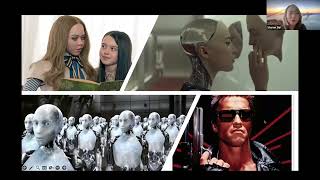
Hello everyone. Thank you for joining me virtually. My name is Sharon Guy, and as you might notice, we're talking about AI, and coincidentally, I'm named after it. I promise you I did not change my last name in the year of 2022 when we saw ChatGPT. And from my perspective, 2022 was really a pivotal year because, you know, in historical times, we had sort of the BC years and the AD years and the year zero marked a lot of important things. And then I think 2022 is one of those years that marks also a very important thing, which is more so the democratization or the proliferation of how accessible these AI tools became to the general public. So since then and around those years, I saw my life change when I was working in a more traditional corporate role. And back then I kept an eye on it. And lo and behold, sort of many years later, it then tsunamied into the current wave of things that it is right now. And we'll talk a lot about some of the big headlines and which headline is real or what is hype and what is noise. But, and let me know in the comments why you think there is a lot of bees here, or if you can think of a way that a lot of bees are tied to AI. Because from just appearance, it might be two completely disparate, separate, unrelated things, but there's actually a bit of a commonality to them. So, uh, next. So this is a bit about me. Um, I came from more of a, I started out my career in actually backend IT infrastructure. So, uh, back in the day, every company had its own data center and I helped a lot of CIOs and CTOs build up their own data centers. We would help them source server equipment, networking equipment, storage equipment, connect the three together, and then you have your data center. And then depending on the type of company you were, different companies would literally rent a large sort of server farm, which is a big space, and put in a lot of racks and cooling. And so that was the early years. And then 2012 came along where we saw cloud happen and everything went into the cloud. We started to kind of write down or tone down our physical infrastructure when everything went into the cloud. And that was right around the time when I went into the application layer too. So, when I joined something called Alibaba, and if you know of the company, from my point of view, a lot of folks who are from the US or from the Western Hemisphere, they kind of look at a company like Alibaba and just think that it sells a lot of physical products and it does. So, if you go to alibaba.com, it's a big marketplace where you can source and buy a lot of products, but it's actually There's a very complicated B2C version to it too. And I see Jim holding up The House That Jack Ma Built, Duncan Clark. I remember that book. One of the— I think there's about 3 to 4 books that's been written about Alibaba and Jack and his vision and what he did. It's actually funny because I take Jack as great inspiration for a lot of things that's happening in AI because Jack did not come from technology at all. He was an English teacher. That was sort of bread and butter full-time role. And then he goes on to build one of China's largest tech companies. And I think the lesson that you can have there is sometimes in the AI space too, you don't also need a technical degree or you don't have to be a software engineer to take part of it or take advantage of it. As long as you kind of are very in tune to what it does well, what it doesn't do well, and the differential in that, then you can do a lot of things with it. So leaving the company, I wrote a book. And so now I'm sort of on that, my second book called How to Do More with Less Using AI. And the first chapter, if you have the book, is my story of when I was touched by alien fingers or when I feel like aliens started to reach out to me. It wasn't aliens, it was just a new AI tool that the company was rolling out. So the year was 2018. And if you've ever heard of this term, called 996 before. It's very common in Chinese tech ecosystems and realms. And if you ask some of the AI founders in San Francisco, they know this term very well too. It's a work schedule where you're working from 9 a.m. to 9 p.m., 6 days a week. I must pull everything to reality, though, in that it wasn't like that all the time. But during this period of what we call Double Eleven, which is kind of similar to an American Black Friday. It's very important for the company because GMV numbers or that those revenue numbers will directly impact stock price. Stock price will impact employee compensation. Employee compensation impacts, you know, if you can afford a down payment to your house that year. So during that time in November, it's, it's very, very important. And it was right around this time too where we would hire an extra thousand-some people and they would come from different marketing agencies. Some were extremely senior marketers, copywriters, designers, ads specialist folks who would help us with this extra workload. But I was then shown this tool. So this is the homepage of what we call Taobao or that app. And in red is this banner where you see the copy that's written on this image. Each word, the way that this photo is designed, the copy. The photo, all of that used to be put together by different teams and it would sort of be in an assembly line pattern. So this person finishes the photo, passes it to copy, copy passes it to marketing, marketing passes it to ads. And it was this very streamlined thing, but it was very manual. And so that's why we needed to hire all of those thousands of people during this November season. That night, as we were all 996ing, we were pulled into this office and I was shown this tool by our software team. And he said, you have to check this out. And so, um, that was the early days where we came up with our own version of kind of a rough Midjourney of sorts. If you've ever used Midjourney before, or Nanobanana, or ChatGPT 4o Image. Now, now in 2026, it's very common for us to write a couple of sentences and out pops this photo, uh, that you can use, or banner that you can use. But back then in 2018, it was very novel and it was very novel in that we, we we realized that we didn't need all of those extra people to write and edit and go back and forth. And all of the time that we all spent just communicating from team to team, all of that was kind of gone in that single night. Because the year after that, we changed our hiring strategy, we changed the way that we organize everything, because all of these different banners would pop up based on our, our input, our prompt, and depending on the product category that selling, the image changes again. And we also realized that when we were sending this out to be tested, that the AI-generated images actually improved click-through rates and it also improved the purchase rate in the end. And so this used to be the homepage back in the day, and a lot of these things were manually put there. So we would literally come together as a large team, think the first icon is going to look like this, the second sort of section is going to look like that, the third is going to— and all of that was manually put there too. If you go to like a Walmart.com mobile app, you open it and there are different banners that are selling you different products. All of that is still put together by people. And it was that day that we realized that— and I'm sorry. And so when we realized that a lot of these AI-created products or images actually sold better, we, we started to decrease the amount of real estate that we would need humans to curate. So we made everything a lot more algorithmic and personalized. So much so that that real estate of the, the where they recommend new products, that piece just increased more and more and more as the years went on. And then behind the scenes, a machine, our own machine learning algorithm also got better and better, as we more finely classify different demographics and people. But during that whole time, this This was sort of my— this was the perfect way to capture my or our mood or mood at the time, which was mind blown. We couldn't believe that this is something that we could leverage so well. And I think this emoji is relevant today to today too, for all of us who are, whether you're getting started, whether you're creating your own open clause on your computers, whether you're trying Claude Co-Work for the first time, mind-blowing kind of mindset that you have because of all the things that's happening so quickly in the AI space. The thing though is for a very long time, there's a lot of fear around it, especially with job erosion. And we see the headlines where somebody like Jack Dorsey lays off 4,000 people or 40% of his company over a fortnight. Oracle just did the same last week. You see these headlines and you think that, you know, The AI is gonna at first be useful but then become very feared. I think the reason why we are so fearful sometimes of AI is because of Hollywood. And through all of these movies throughout time and literature, it's really painted a very negative picture what AI can be. Should we fear it or should we be cautionary of it? Yes, but I don't think we should have an unthought-through sort of blind faith blind fear to it either. And I think if, depending on, you know, what city you're in, industry, people that you talk to, sometimes we can have that because we're very biased toward it. And the bias comes from all of the decades of these Hollywood movies that we used to watch. If you've ever dialed into an automated phone tree and there's a singsong voice that says, dial 1 if you want to reach this department, dial 2 if you want to reach another, and then you want to yell representative over the phone, we've all had this experience. And this is also the experience that we're having with what's happening in AI today too. Because if you are a user of it, you'll notice that it's not very good sometimes. And the reason why it's not very good, or it just kind of feels kind of dumb almost, like sure, it's trained on all of the world's data, it can pass LSATs and MCATs, but sometimes the response it gives back to you is just kind of dumb and you have to retrain it and you have to re-edit it and repurpose it. And so this is the two words that I think is very important for us to all realize, which is narrow AI and general AI, and that there's a line between these two right now where, yes, all of these AI systems can pass all of these tests with flying colors, but there is— but AGI or general artificial intelligence, which is something that equates to the intelligence of actual humans where they're very versatile and can learn on the fly, it can and just figure it out. Um, you know, especially in the sales world, I think, uh, where I think in a lot of sales situations you can't really teach someone to respond a certain way so that the client kind of agrees with you. It's definitely through experience and trials and tested. And, you know, that's the difference between a very junior sales rep that's just graduated college who will probably also say do a lot of kind of dumb things, right, and, and wreck the sales deal or not be able to close it, versus somebody who's a senior sales rep and is really tenured, and they kind of just sometimes have that magic to them. Um, they kind of just know how to respond in a certain situation, like not quote too low or not quote too high. That, all of that is sometimes hard to train, but all of that belongs in that second lane, the, this AGI, general AI lane, and we don't have that yet today in 2026. And so that's the important marker that I want to, message that I want to have for a lot of people who fear it is that it stops at a certain point. And that is why we get so frustrated when we're talking to these robots on telephones. We want the representative, we want to talk to the human because because the human just understands us. Something that is happening though is in the realm of tests. Actually, one more, one more note I want to make on this is they recently also just had a called an AGI. There's always these AGI benchmarks to measure, oh, are we closer or where are we? If you Google something called ARC AGI. So ARC AGI-3, it's a new test. There's a mobile game called Bubba Is You, and it's an interesting game because it's like a Game Boy kind of setup and you're kind of taken into this scene or you're taken to this sort of game room and there are no rules. So there are no rules. That are told to you of how to win. So they put this game in front of the smartest AI models that we have and all of the humans, and the humans could pass a lot of those tests without knowing what the rules were. But the AI side would only pass these tests maybe 1%, 2% of the time. And why is that? And you can later go and play this game as well. And That's another marker of we're just not really there yet because humans just have the ability of, you know, in the game you can bump around this little, this little block and do a lot of tests and see if it's actually going to get you to winning or does it work or does this block move? There's a lot of experimental kind of activity that's going on in our brains that eventually causes us to trial and test, trial and test. Oh, and it gets us to win the game. But in the AI world, they're very good at following instructions if the instructions were very clear. But if you just sent them to this game and told them, now go win it, they're so lost. And so that's why they're passing these tests at 1%, whereas the humans are still passing this at 100%. On the, on the enterprise AI side, where we know a lot of these AI projects were started out as pilots and a lot of them has have failed. And I think maybe some of us are seeing these two disparate data points, right? So on the one hand, we're being told that they're passing LSATs with flying colors and MCATs with flying colors. And on the other hand, when we're implementing it to these enterprise scenarios and piloting them, 95% of these AI projects are failing. We are currently at a time where all these companies are investing a ton, but only 6% of these organizations are seeing AI with an EBIT return. So if AI is so great, why does it feel like I'm working now more than ever? There's this thing called AI burnout, where because there's a lot of new things that we can outsource to these AI systems that we're taking on more work. And that's something called— and so what's happening? And so this is similar to this thing called information technology. And we went through that too, we didn't see productivity uptick until many, many decades later. So this guy, his name is Robert Solow. He is an economist that got to win the Nobel Prize the same year. And his famous quote is, you can see the computer age everywhere except in the productivity statistics. And that's something where we're seeing also in AI. And why are all of those projects failing, or why is there not a massive bump to our revenue or massive bump to our profit numbers if, based on all of these studies, is the productivity number won't increase until probably many decades later, because that's exactly what happened in the information age. It's what happened in the manufacturing age too, when electric motors were invented that replaced the steam engine and factory owners took the, uh, big motor out, or a steam, um, engine out and put in the electric motor. And it wasn't until many decades later that we saw that productivity. So, um, the thing that a lot of, I think, organizations fall, fall behind in is when they're thinking about implementing something like AI, they're thinking about the tech first instead of the people and process first. Um, and so the book that I wrote called How to Do More with Less is the, the whole premise of that is to try to get people to think about their roles more. So starting with their people and process more and having the tech kind of last. Um, and so why are there bees or, or what is the involvement with bees? This is why, uh, I think that 2022 is the marker line. And prior to that year, we were all working busy bees. So on Monday morning, we would open our laptop, go through all the emails, go through the to-do list, and we sort of would knock off each to-do one by one sequentially. And then somebody else interrupts us with a ding of some sort, and then you kind of, you know, prioritize, and everyone has their own prioritization system. Whereas I think post-2022, we now have the privilege to work like beekeepers or keepers of the bees. And if you know anything about beekeeping, is that beekeepers simply create the environment. So they set up that the, the, the houses where these bees can thrive, where they know where to go to get hunt or pollinate. There's different roles with the different types of bees in a hive, and they simply just, you know, change things as needed. They'll intervene as needed, but the work is largely done by the bees that they're raising. So let's This takes us to the beekeeper framework and this type of mental model. And it depends on if your day kind of looks like this, where 9:00 AM you're processing unread emails, 10:00 AM you're updating spreadsheets, 11:00 AM you're writing a status report, 1:00 PM you're attending meetings, compiling research or formatting presentation slides. Or is your day more like a beekeeper where you're reviewing AI's work, you're designing some sort of workflow, you're coaching teams on on prompting strategies and you're enabling others to understand how to use AI better. You're working in a cross-functional role where, because AI is very poor in systems thinking because they don't live in our real world, are you that human glue that glues different teams together? And most of the, the job here is evaluating AI output, making judgment calls, deciding what to prioritize, what not to do, and building stakeholder holder relationships. So a bee's mindset is they do the tasks, they're using the tools, they know answers, whereas a beekeeper is going to design systems, they orchestrate workflows, and they ask better questions. Because if you have used these tools enough, you will know that the quality with which you input or ask the question is directly going to impact the output that you, that you get. So, um, Now, if you're using Claude, there's such a robust skills and plugin system with it. And skills at the end of the day is just a very, very long and very, very detailed prompt that this Claude or AI agent has to pull and read and get to know and learn about the context of, of this project that you're doing to produce something for you. For you that's much more relevant for you, that it's just a better quality answer. What is true though is that the length of tasks that these AI agents can do is increasing. And right now there's also no clear winner. So I boxed in red the 3 most popular tools. I think ChatGPT really was, you know, at the helm of it all when it had 80% some market share. And now in 2026, it's really dimmed down quite a bit. And Claude seems to be everyone's favorite. Gemini had its moment too with Veo and all the video capabilities and the image capabilities that it had. Perplexity is an interesting one. If you have not tried that yet, it's one where you can toggle and change the model within. So if you don't subscribe, if you don't have a subscription to Gemini, Claude, ChatGPT, Perplexity is an interesting one if you wanted to just get that and access each of those models and kind of shift things as it And Qwen is a model from Alibaba. They recently launched something very similar to Claude Co-Work called Axio, which is a general purpose agent that's very autonomous. It can go on the internet to search for things and also build Shopify stores, do sort of general productivity work similar to, to what a Claude can do. It's very, very new. They're just launching it at this time. Moment. And then there's Deepseek, which is more used in China, but quite a remarkable and important company, I would say, just because of the way of training its models that it did with very little budget and the impact it had on the stock market. I'm not going to play this full video, but this is basically somebody from Anthropic showing computer use. And computer use is the next sort of iteration in the AI space where they can take control of your— or if you've heard of agentic browsers, um, they take control of your computer. You're, you're still inputting a command, they take control of your browser and they're clicking things for you. Um, maybe they are, um, opening up Salesforce and literally taking the notes from Granola or Zoom calls that you've had with a client and populating it into Salesforce or HubSpot for you and updating that CRM for you if you, if you worked in sales. So this is— let me just check on the time. So this man's name is Sam Altman. He's the OpenAI— he's the CEO of OpenAI, and he says that AI will make it possible for one person to build a billion-dollar company someday. And we don't know if this is true yet or if this will happen. There's— if like there's bubbling, there's things that's bubbling in media right now that, that where he says this has already happened. It's a company called MedV, but it's in— I don't know, it's in the GLP space and it's a little questionable. It's not a classic company that is sort of a billion-dollar company. And he thinks that it's happened or that it's very possible to happen. And the way that it would happen is through the reorg of different teams and the usage of different agents. So within the sales world, for instance, you have SDRs, or in the old way you had a team of SDRs versus in the new world you have one, what they call a go-to-market engineer, and this person's job is to use different set of tools versus the tools that SDRs used to use with the same type of results. And so this model though, this way of consolidating teams into kind of a single person, super IC or super individual contributor pattern is happening though. So recently we just had Jack Dorsey, who used to be the CEO. I think he's still the CEO, or he used to be the CEO of Twitter. It's the current CEO of Square. And he wrote this essay on his vision of how reorgs are going to happen. And there's 3 roles that he thinks will be sifted through after all of the reorg shakeups. One is this super IC. So an example of a super IC is like a go-to-market engineer where it's one person, but it's doing the job of 7 to 8. Another one is called somebody that's called a DRI or a directly responsible individual. And this kind of is the old SVP of sorts, or kind of like a project manager of sorts, the person that is directly responsible, it's in the name, of, of rolling out a product feature or a project of some sort. This person has a lot of power and resources that they can use in a company. And then the third is a player coach. So this kind of replaces the old managers that would coach you if— and listen to your calls on Gong and say, you know, when the customer said that, you probably should have responded this way. So they're more of a— and they're called player coach. So he thinks that As teams are reorged, that those are the three sort of large roles left and everyone else is going to support one of those three roles or, or be probably a super IC to, to build. We don't know if this is actually going to be the way that future companies are going to reshape their orgs, but I think what is important is for a lot of us to learn what are those worker bees and how can we start to outsource a lot of that previous work, or if we were, you know, a more— if we were an IC before, how do we become the super IC is through using tools like whether it's summarization type of tools, AI PowerPoint building type of tools where you're inputting a prompt and a deck is presented to you and then you can sort of tune the deck as you, as you need. Um, and avatar creation, a lot of sales reps are, so, um, you know how we get a lot of emails and cold emails in, in the sales world. So a lot of sales reps, um, what they would do is they would shoot a video of themselves with a video message, and sometimes they would have to shoot each one based on each follow-up. It's very repetitive. It's a lot of shooting and, um, there's this tool called HeyGen that allows you to create an avatar of yourself that really looks like you. And all you have to do is feed it the script. HeyGen just became live as a connector also within ChatGPT. So now within ChatGPT, if you have already created an avatar of yourself, you can literally send it any script you want. And then ChatGPT is calling HeyGen to create this video for you. Welcome to the new era of video creation with HeyGen. Simply Type your script to get started. Hello, I've been sharing. I've been here. So that's a little mini video of me speaking German. Of course, I speak no word of German. Prompt to deep research. This is a pretty old feature by now where, you know, we used to spend a lot of money on research firms, market analysis type of firms to give us very detailed reports. And all of that can be very much outshone. Outsourced to AI. Prompt to podcast. But the, not just that we can make podcast episodes now as a format of marketing, but this is more, the message of this product is more so that the formats of content is quite interchangeable and easy to transform within the world of AI. So if you ever played with NotebookLM before, you'll know that if you have any sort of document and no matter what format kind of lives in, whether it's a video even, or an audio file or a, a mind map that you can transform it to one or the other. So I remember we used to have a lot of, in sales teams, we had, we would have all sorts of documentation for our products and they would be in these like single page PDFs and somebody had to take all of the words from from the PDF and reorganize it all into a deck that we could then use for different situations. So different situations are different, you're using different types of formats. And that used to be all very, very manual work. But now that's definitely something— welcome back, everybody— to outsource to AI. Prompt to app, there's all of these vibe coding tools now where you're, um, the— you don't really need to code or know software engineering, you can just spin up a web page or a mobile app. This is something called Vibe Coding. Claude Cowork is something where it's— it belongs to the Claude family, so it lives more natively in your computer. You can— it looks into your— the files that you have in your computer. And Claude recently introduced something called Dispatch where, say, if you left your computer at home and now you're on your mobile phone and now you're at a client or somewhere else. If the two devices were paired before you left, then you can be pulling certain files from your computer, editing it in a certain way, and then putting it back or emailing it out without actually physically touching your computer. So it's just a, it's an easier linking, a linkage of devices for that's, that's more attuned for people that are sort of on on the go. And, um, what Claude Co-Work is doing is actually not that novel already because Perplexity just introduced something that's called Perplexity Computer, which is quite similar. It's something that where you can look within the files of your computer. Um, um, and so that way of, uh, navigating with another piece of hardware as an agent isn't very novel anymore. Because I think by now the world has sort of acclimated to this thing called OpenClaw that you can set up in a certain machine or a virtual machine or another computer. A lot of Mac Minis were sold out at this time where a lot of people bought it to to set up OpenClaw. And the reason for that was, you know, in normally in work, if you're turning off your laptop, it's sort of all work is shutting down for the day. Whereas if a claw or your claw is living or being used from your Mac mini or from another computer, then it can still keep doing things and you can sort of text it to do stuff like look at things on the internet or write scripts for you or whatever your, your job entailed. So lastly, I'm just going to skip all of this part and go to this slide. So some takeaways is I think it's important to know the difference between narrow and general AI and just know that there, there are things, as I mentioned, the things that were— that's very unique to humans, like your innate ability to know what to do in a certain situation without being taught how you should act in a situation, is something of the general AI realm or world, and that is still not here yet, no matter what these tech CEOs tell you. Um, to know the difference of a bee type of task and a beekeeper type, type of task. Uh, so sometimes when I work with companies, I look at their teams and I look at each person's individual roles and we evaluate how much of your time is still being spent on a bee task versus how much of your time is being spent on a beekeeper task, because more than ever, um, where you're spending your human hours are, is going to be more important than ever. So don't waste your time on B tasks when there's, there's some sort of agent that can take that on. AI doesn't replace people, it replaces the tasks. So as long as we're— so I think the way to, you know, if you work in as part of a large company, the way to keep up to date or to truly future-proof is if you're constantly replacing parts of yourself, if you're constantly trying to find what am I doing that's kind of a B thing, what am I doing that's kind of a beekeeper thing, and if you are getting really you're really good at doing the beekeeper thing and you continue to know what to give out to the bee, then knowing that balance will serve you very well and will likely have you beat out all of these changes and disruptions that's happening in the AI space. And the last, AI will get exponentially better. It is getting better and better, but the things that cannot be outsourced, outsourced is ownership. And something else that really can't be outsourced is caring, caring about something. So if I tell my AI agent to do, I don't know, to do whatever part of my work, it will do it, but it will not really give a damn. Whereas if you're hiring someone to do something, they, I mean, depending on the person that you hire and if they're motivated and what they're working for, most of likely this human will care for their work. And they will want to do well, they want to improve, they want to get promoted, they want a bigger scope. And so that is something that also cannot be— it's not even outsourcable, it's just, it doesn't exist in the AI world. So lastly, if you're interested in chatting more, feel free to scan this kit, it'll give you a link to all of those different tools that I mentioned during the presentation. And then if you're interested in getting the book, it's on Amazon. It's called How to Do More with Less, or if you search my name, it would pop up. And finally, feel free to find me on any of your favorite social media channels. Thank you so much again to Gerhard for inviting me, and best of luck to everyone in your AI journeys.
Wow, wow, Sharon, that was so amazing. I took a lot of notes and here's my insight about what you offered. You offered us more than a framework. You offered us a new lens to look at AI. And I just want to reflect on the, on the busy bee because because the busy bee sees only the flower in front of it. But the beekeeper sees the whole garden. And in the case of sales, the whole addressable market for honey and how to make more.
That's a— I'm gonna use that. That's exactly what I mean when— or that's exactly what we mean when we say systems thinking and how do you think in a bigger system. Um, because yeah, as smart as these AI agents get, uh, they are very intelligent, they know a lot of things, um, but they sometimes just miss the bigger picture.
Yeah, yeah.
Go ahead. I need to share with the audience that, um, what you didn't talk about is your own creativity, uh, that comes from the curiosity of expanding your own capabilities. So you're expanding your capabilities with AI, but on the other hand, you also write comedy routines. You also create music. And I think that the way you look at AI is how can I expand my level of creativity and productivity? In a way that it brings joy to me and brings joy to the world.
And I think that's another key factor, is that joy is the point of it all. You know, what we want to do is create more moments that are satisfying on either a professional or personal level so that there's a higher joy factor in our life, because because we've delegated to AI what it can do instead of retaining it so that we feel productive.
I also want to mention Jim is not just an author, but he's also a musician and he has written songs and he plays the guitar and he spreads joy with music. And that is, I have no musical talent.
You should try Suno and you'll be surprised, which is this music generating app that—
yeah, I have tried that and actually, you know, used other AI tools to write a rap song and then put it into Suno.
But, you know, we musicians need music fans. So as a consumer, you're serving it well. Yeah, I wrote a song for Gerhard after a long conversation years ago. I just, I was inspired to write a song called Selling Power. I said, we've got the power to make a difference, the power to make things pay, the power to, uh, fix your world and mine, to find a better way. Um, so get your products packaged and check their price appeal, do your market research, then let us take the the wheel. We'll show you how to get the results from, uh, from those who have the need. Uh, I've forgotten, I've lost the lyrics, but that was the essence of it. It was a fun song.
Yeah, I can't believe you can still recall all of that.
Lead with the need if you want to succeed. That was one of my hooks. Lead with the need if you want to succeed.
A lot of—
yeah, no, I think, I think it's important. I think especially for folks that are, you know, maybe are on the edge, or, um, I— the— a lot of the AI workshops that I have done are in rooms where this AI concept is very foreign to them, or they're non-technical, or, you know, maybe they're not 22 years old and was born in the internet age, and they're sort of learning about all this. And that, that piece is very important, where you kind of can see how it's actually relevant to you in, in your everyday life. Um, and just the gradual usage of that is, um, yeah, it makes it a lot easier and a lot less scary.
Absolutely. Thank you so much, Sharon. Um, we, uh, want to have you back soon.
Enjoy San Diego.
Thanks.
More from Gerhard



What Selling Looks Like When Your AI Agents Have the Context Your Sellers Do

Better Conversations, Smarter Support: Wearable AI in Business






When Scarcity-Built Systems Meet Abundance - The Judgment Gap in AI-Powered Sales Leadership
