Lead in Ways That Make Others Want to Follow
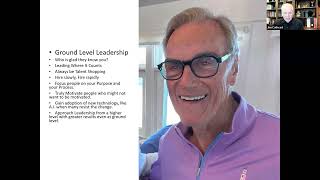
Jim Cathcart delivers a keynote on self-leadership and becoming someone others want to follow. He shares stories from mentors like Walt Disney and Earl Nightingale, and covers caring leadership, culture, motivation, and purpose-driven storytelling drawn from his global speaking career.
Chapters
You know, if you can't lead you, you shouldn't be leading others. And that's why we had Todd Duncan on before me, because Todd was talking about self-leadership and how it all starts there. Years ago, I gave a presentation. I received an award called the Golden Gavel from Toastmasters International, and my presentation was titled All leadership begins with self-leadership. And so seriously, we do need to be able to get ourselves to do what needs to be done when it needs to be done, even if we don't yet feel like doing it, and still do it well, do a good job of it. So how do you become the kind of leader other people would want to follow? Well, what kind of leader would other people want to follow? Someone who cares. Someone who has his or her act together. Someone who's going somewhere we want to go. Someone who's willing to listen. Someone who is absolutely committed to getting the job done and doing it right. Someone who looks, feels, and smells like a leader. So how do you become the kind of leader others will follow? Let's go to the next slide. This is my mentor, Joe Willard. Now, I've got lots of mentors, but number one in my world is Joe Willard. Joe Willard was for many years general agent of the MassMutual Agency in Massachusetts Mutual Life Insurance in Tulsa, Oklahoma. And he hired me when I had been a trainer at the United States Junior Chamber of Commerce national headquarters, he hired me to come into his agency and be his confidant and his sales manager, sales leader, more of a sales trainer than a sales leader because he wasn't bringing me in for the sales I would make, but by the way I would help his people make sales. And Joe has always told me, he calls me JC, he said, JC, think like the person you want to be and ask yourself, how would that person do today's work? So he said, years ago, I was a sales rep and I wanted to be the company's leading salesperson. So I asked myself every day, how would the sales leader do the work I'm about to do. And he said, I upgraded everything I did. And the more I thought, how would the sales leader do this? The more I improved every part of what I did. And I became the sales leader. And then I became another level of sales leader. And then they made me general manager. And Joe went on to become the leader of the general agents and managers counsel in MassMutual. So Joe's a dear friend, a person I love and admire, and Joe's leadership shows up in me. Now, there's two levels of leadership. There's one level that you'll get taught in college, and that's all about strategies and concepts and, and, you know, high-level leadership. But where most of the world takes place is at the ground level. So let's talk about ground-level leadership. Let me ask you just a few basic questions. How would you answer this question? It's not what you know that counts, it's— yeah, people say who you know. Okay, it's not who you know that counts, it's do they know? Who knows you? It's not who knows you that counts, it's who's glad they know you. If you put your focus on making all of the key people in your world glad that they know you, your possibilities will explode. You'll expand to horizons you never even considered. So look at every relationship not with, how can I make them happy? How can I serve them? How can I get something from this? How can I whatever? How can I make them glad that they know me? Well, what would make them glad? If you took an interest in them, that would make them glad. If you did things for them that helped them, if you found out what they want and helped them get it. You know, Zig Ziglar is famous for the line, You know, you can get everything you want in life if you'll just help enough other people get what they want. Well, that's the key to leadership. So people want to go, people want to do things that matter, and they want to be with people that care about them, and they want to get their example from people they can admire. So be that kind of a leader, leading where it counts. What does that mean? It means leading people to something that matters. Don't just get up in front of your people and say, hey, we need to hit $1 million this year or $100 million, you know, whatever. It's not a— numbers mean nothing. The meaning of the numbers is found in the things those numbers indicate. The behaviors, the relationships, the accomplishments, the possibilities. The experiences. So when you're looking at leadership, lead people to something they can see and feel, something they could tell their family about, something that you can create a story around. Walt Disney, when he created Disneyland, he told Art Linkletter— and by the way, I heard this first person from Art Linkletter himself— years ago backstage in Dallas. He said Walt Disney said to me when we were in Tivoli Gardens in the 1950s looking at these beautiful plants and the way they had laid this place out, I noticed he was taking notes and I said, hey, Walt, why are you taking notes? He said, Art, look at the little twinkle lights in the trees. Yeah, they're pretty. No, no, none of the bulbs are burned out. He writes it down. Do you see the benches? What, the park benches? Yeah, freshly painted. And the bathrooms are clean. And Linkletter said, well, why are you writing all this down? And Art Linkletter was told by Walt Disney in the 1950s, Art, someday I'm going to build a place like this for families. Disneyland was taking shape in the head and heart of Walt Disney, and Art Linkletter was there to observe it. How did he grow Disneyland? With a story, with a vision. He said, I want to build the happiest place on earth, and he literally did that. And when he created it on paper, he told his story that way, and then he had a working model built on a table so he had something he could travel with and show to other people so they could see the entire park and he could tell the stories about Tomorrowland and Frontierland and Adventureland and so forth. Think about your leadership. What are you asking people to buy into? What's the dream that they get to hitch their wagon to that star? And then always, always, like Joe Willard told me, always be talent shopping. Everywhere you go, every restaurant, every car wash, every business meeting, be talent shopping. Look for people with admirable qualities because they might just open some doors for you. They might even want to come to work for you. Joe built an agency that did epic sales improvement from $71 million to $231 million in a 5-year period with the same number of 19 salespeople. His agency became number, uh, in the top 5, uh, twice out of 125 agencies in a 5-year period. And when he took over, At the first of those 5 years, the company was thinking about closing the agency because it was so weak. But at the end of those 5 years, we were the example everybody wanted to fly in and learn about. Okay, so always be talent shopping. Who else could you bring aboard? Maybe from an entirely different field. My son is a former HR executive with the Four Seasons Hotels. And he had 26 years with Four Seasons, and he's now a general manager of a resort hotel in Santa Barbara. But he told me one time as HR exec, he said, Dad, when I'm hiring people, when I'm interviewing, I'm not looking for a graduate of the Cornell Hotel School. I'm not looking for hospitality experience. I'm looking for a a four-seasoned person. I want to know that the person I'm interviewing has the qualities that would make them feel like family in our organization. See, that's your DNA. Your culture is your DNA. And if you're a leader who's cultivating a culture of happiness and optimism and possibility and forgiving mistakes and exploring new potentials and trying things that don't put you at too high of a risk, but do open new doors for you. If you're the kind of leader that's exciting to be around like that, the kind who takes time to acknowledge good behavior openly, the kind of leader whose door may not always be open, but it's always unlocked, and you're always available to have a private chat with somebody, and you truly listen, 'Cause listening is wanting to hear, not just letting the sound vibrate on your eardrums, right? If you're that kind of leader, people want to follow you. And so if you're hiring, if you're the one doing the hiring, hire very carefully and very reluctantly. Be very slow to make a come aboard decision and be very fast to say, you know what, this isn't working for either of us. You'd be happier somewhere else. So fire rapidly and keep people focused on your why, your purpose, and the systems and processes that will get you to your purpose. Like Todd Duncan and, and, uh, some of your earlier presenters were saying that the discipline of the process is what gets you to your purpose, that confidence comes through competence, and competence comes through following proven processes. So keep your people inspired by the purpose and committed to the processes and systems, because a system is to a business what a habit is to an individual. And you need good habits. All right. How do you truly motivate people who might not want to be motivated? Well, first off, Everybody is motivated. I've had people say to me, no, no, you don't understand, you haven't seen my people. I've got people that are not motivated. No, you don't. They may be motivated to avoid responsibility. They may be motivated to slack off and not do their job or to get away from work as early as possible to go fishing or go to a movie or ride their motorcycle, but they're motivated. It's just that you don't agree with their motives. So find out what their motives are and structure your business around appealing to their motives to achieve your outcomes. Figure out a way to make your work and the skills they will develop by doing your work relevant to the things that motivate them. And they will be organically, naturally motivated to do what you want. How do you get people to embrace AI? People hate change. No, they don't. People adore, people demand, people love change. Jim, how could you say that? If you go to the movie, would you be upset if they were still showing the movie you saw last time? Of course you would. You want a new movie, you want change. If you go to a restaurant you've never been to, don't you want a big menu to choose from? Don't you want to try out various things to find a new favorite? People love change. What they hate is discomfort, confusion, and embarrassment. So find a way, like Mark Eaton was telling us with the role play, the virtual role play, find a way to give people to practice the new skills, to try the new things, to have an experience with AI where they're not yet on the firing line and being observed by the rest of the world. Give them a way, like with myfuel.io, with Todd Duncan and me and Gerhard and some of your other presenters. We are faculty in there, and our knowledge base has been uploaded into Fuel. So you can go in there and interact with our various AI bots and ask us questions about anything, and you'll be answered with a wealth of knowledge, not just from our brains, but from all of our collective knowledge base. And approach leadership from the highest level possible, because that's what's going to get you ground-level results. For example, when 9/11 occurred and we were attacked and the World Trade Center came down and the Pentagon was attacked, when that happened, our nation all of a sudden stopped focusing on when the mail was going to arrive today or whether they could find a good parking place or whether we had someone else using our coffee cup in the lunchroom. And we realized, hey, we got a bigger issue. We need to survive as a nation. Let's draw together. We're all Americans. So be the person not that starts emergencies, but the person that reminds people of the bigger issues. Let's go to the next slide. And I'm going to move rapidly through the rest of these slides. I've been a professional speaker now for 50 years full-time. I've addressed 3,500 different audiences all over the world, and I've literally spoken for pay at conventions in all 50 US states, every province of Canada, and 25 major cities in mainland China. I mean, I've been in South America, Europe, Australia 10 times. So, When you say, Jim, what's your research based on? It's based on in-person, live, long-term, face-to-face experience with the leaders in various industries across a broad spectrum all over the world. Next slide. And keep your finger close to the next slide thing. My message is, if you want to be the kind of leader other people would naturally want to follow, Be a magnet for what you want. Next. When you're in front of a group, every eye is on you, but your eye is on all of them. So your attention is spread among, in this case, 1,000 people. Their attention is focused on one. When you're the leader, you need to make sure you're attending to, paying attention to them, that you're noticing whether they need you or not. You're reading the room to see whether what you're doing is working or not. But you need to be sure that what you're doing relates as best as possible to everyone in your team. Next. Thank you. How do I become a great speaker? Next. Become a great person. And then agree to give speeches. How do you become a great leader? Become a great person, a person worth following, and then people will follow you. Next. Be the person who would attract the results you seek. I love that. Yeah, someone put that on a coffee cup for me. I didn't do that. Next. The world is asking us every day, what do you want? And if we don't know what we want, you know what we'll get? We'll get what someone else wants by default. How do you lead in such a way that other people will want to follow you? The way you do it is simply be the kind of person that they would like to follow. How do you have good neighbors? Be the kind of person they would want to live next door to. How do you be a good parent? Be the kind of parent your kids need and hope you are. The whole point of this is that we have the capacity, as Todd Duncan was, Duncan was telling us, to become the kind of person that would get the sort of sales results we're seeking, that would build and grow the kind of sales organization we want, and We ought to be asking ourselves every day, how would the person I'd like to be do the things I'm about to do? What I do in my own business is I groom people to become a professional expert, and then Cathcart Institute certifies them as a certified professional expert. So if you'd like some more dialogue with me on that, just go to cathcart.com expert and check it out. And I'd love to talk with you. Gerhard, over to you.
I have a quick question. How many books have you written?
28.
And which one is your favorite?
That's a hard question because I've got 3. One is The Acorn Principle, which is the one that I spent the most time on, like 9 years. And it's about knowing what makes you who you are. It's a, it's a pretty in-depth psychological guided tour through what makes you who you are. Next one is Relationship Selling, which is about treating relationships as an asset and managing them from their stages of mere transaction all the way through lifelong partnership, because that's a manageable process. And then the other one that I'm really fond of is what to do when you're the speaker. And I wrote it for people like us who have given thousands of speeches or hundreds maybe, and we're comfortable in front of a group. But what about when you're working through a translator? What about when the room catches on fire or there's an emergency in the meeting? Or what about when the guy before you went an hour overtime and you got 5 minutes to do a 1-hour talk? What about all the things that come up? So that one's a favorite as well.
Which one was the number one bestseller?
Number one bestseller had to be The Acorn Principle because it came in number two in the entire world in the year 2000 as an ebook right behind Stephen King and ahead of Robert Ludlum who did the Jason Bourne series. Out of 2,000 titles, Acorn Principle was number two. And it's still available.
And among them, you talked about your mentor. Among the great people that you have met, and you have met so many of them, which one stands out that really influenced your thinking where you made the transformation on the inside to the best version of Jim Cathcart?
Well, thank you for that. I've met and had Norman Vincent Peale in The Power of Positive Thinking in my audience and on stage beside me. I've shared the platform with Zig Ziglar and been hired by the Ziglar Learning Corporation to train their people. You know, Tony Robbins, I've had lunch with him, done the firewalk with him. And so name them, you know, Brian Tracy has been at my house for Christmas time and me at his house. Tony Alessandra, Les Brown, on and on and on, Todd Duncan. Not the least of which is Gerhard Schwander. But it has to be Earl Nightingale. I was a clerk at a government agency in Little Rock, Arkansas, making $500 a month and I heard him on the radio and started following his advice and became a fanatical student listening to Earl's recordings every day for 5 years. Years later, I was a full-time speaker and trainer at first teaching Earl Nightingale's courses, then other people's courses, then my own. And then Earl Nightingale out of the blue called me and said, hey, I want to publish a program around an article you wrote. And it was one by me and Tony Alessandro on personality types. He sold $3.5 million worth of it in the first 2 years. We went from nobodies to world famous in 2 years. Earl Nightingale.
And he had a recording called The Strangest Secret, and in his inimitable voice, absolutely, he said, we become what we think about most of the time.
Yep. Strangest Secret by Earl Nightingale and Think and Grow Rich narrated by Earl Nightingale written by Napoleon Hill, whose business partner was W. Clement Stone, who I knew and worked with. And Og Mandino was the president of Success Magazine, which was owned by W. Clement Stone. Aug Mendino, of course, wrote The Greatest Salesman in the World. Aug and I became good friends. I had dinner at his home. We had a long relationship together. Sad to see him go.
Thank you so much for this wonderful presentation.
You're very welcome. Thank you. Take care.
More from Gerhard



What Selling Looks Like When Your AI Agents Have the Context Your Sellers Do

Better Conversations, Smarter Support: Wearable AI in Business






When Scarcity-Built Systems Meet Abundance - The Judgment Gap in AI-Powered Sales Leadership
