Managing Is Not Leading Nor Coaching: Staying out of the Measurement Trap
Jeff uses Ignaz Semmelweis, the physician who discovered hand-washing saves lives but was ignored, to show how organizations obsess over metrics while missing what actually drives performance. He argues leaders must shift from managing by numbers to leading with purpose, trust, and tough questions about who they serve and how they show up for their teams.
Chapters
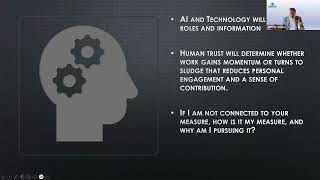
You know, I'm really gonna kind of start with a parallel, and this is gonna really, you know, not to be morbid, but you know, in 1840, 20% of all the mothers giving birth died of a something called perpetual, perpetual fever. Effectively, it was childbirth bed fever, and the death rate was higher in hospitals than it was in home birth in Eastern Europe in the 1840s. And you think about that for a second now, as we think about, you know, where we are in life, um, that's kind of amazing. But yet someone in the 1840s literally came up with— you've never heard of this person, and I'll tell you more about him in a minute. He was the first person to really start the sanitation/handwashing protocol for physicians. And as crazy as it sounds, think about how antiquated medicine was. Is physicians would literally move from autopsies to deliveries, and they never washed their hands. And so they would be, you know, doing these things, and suddenly they were introducing so much bacteria, so many different things. And a guy named Ignaz, Ignaz Semmelweis in Hungary, basically a Hungarian doctor, figured out that, boy, we gotta wash our hands. Seems really commonsensical, seems like something that should be fairly implemented, And here's the crazy thing. It wasn't almost until his death in the 1860s that it became standard protocol. And you wonder why. It's like, okay, this seems very simple. It's literally a life and death matter, but you guys were talking about it a little bit. And people think about it, it was ego. And it was ego on his part of basically making people feel bad for failing and not doing it and not taking the protocol as seriously as what he wanted it to be. And it was ego of doctors saying, we know better. Who is this person to tell us what it is we're doing? And so I kind of look right now at today's business world and, wow, rather, you know, difficult. We have an obsession right now, in my mind, with measurement. And it's a way to try to understand things. So, we track the numbers and we really just understand the numbers. We have so many different ways to measure things. And if you look at the metrics, back when I started as a salesperson, metrics were pretty easy. Did you make your quota and did you make your profitability? Now, it's how many sales calls you make? What did you do? How'd you do? What, you know, all these different things. And then we've got AI, you know, going in there. Then we've got, you know, CRM. We've got all these different forces that we've become as leaders kind of obsessed on the tracking of numbers. And we're really neglecting the human force behind the numbers that drive them. Now, throw into the fact we've got a group of people who are all these different generations who communicate differently, understand things differently, and more importantly, are driven very differently. We were, when we were speaking of, you know, obsession and working hard and all these different things of how we do things and how we contribute. In our generations of people. That's different now because what we've created is a group of people who really are not— they understand win, they understand lose. And we have managers who are trying to create accountability by using measures to motivate, innovate, create accountability, develop, coach their people. And if you think about the title of this, which is, you know, Managing Is Not Coaching Nor Leading, And really, it becomes this trap we get into that we aren't developing our people. Our people don't feel accountable. They're not motivated. And all of a sudden, we're just more measures. We got to have more measures. We got to have more measures. And I'm going to invite us to take a step backwards on the measures and really say, what really drives performance? Is it, do you wake up in the morning and think, Man, I can't wait to look at my metrics to see how I'm doing today. Not a lot of people do, quite honestly. A lot of people really wake up in the morning looking for fulfillment, looking for engagement, looking for ways to do things differently. And what we know for sure is, as a leader, you have to ask some pretty tough questions of yourself first in order to really make that transition to leadership from management and get out of the number obsession. Now, I'm not going to sit here and be silly enough to say numbers aren't important. We have to have measurement. We have to have success. We have to know what the score of the game is. If you think about, you know, I laugh a little bit growing up as a kid, we played baseball in the neighborhood or we played baseball on teams or softball or football, you name it, whatever it was, we always knew what the score was. We kept score. Now, I was at one of my nephew's soccer games, who is 6, and all the adults were talking about, you know, we don't keep score, we don't do this, we don't do that. Trust me, Wyatt knew what the score was when he walked off the field. And so, we know what winning and losing looks like. But as a leader, we have to ask ourselves a couple of questions. And these are difficult questions because the answers we get from our team members may not be the answers we're expecting. Which isn't bad, but just makes us have to think differently. And the first question is simply this: who and what are we serving? And I use the little cocktail waiter there or server, but the reality is it's what are we serving and why are we serving? So what is it, why are we, and who is it? And a lot of times I don't think we have done a great job communicating that to our team. We think we know, but we don't know where, how they're interpreting it. And so the next question from kind of the who and the what are we serving, the next question becomes, how are we serving them? How are we leading them? Are we leading them on measurement? Are we leading them on aspiration, inspiration, innovation? How are we, and more importantly, how do they want us to serve them? How do they want us to develop develop them, how they want us to create a different world. And then to me, the most important one is how am I showing up for my team? What do I look like to them? What do I come across as? Do I come across as a measurement-obsessed human, a person who has expectations— pardon me— of things that are just so not connected to the team that I've really lost who I am and what I am as a leader. And guess what? They aren't really even willing to follow me out of morbid curiosity. And those are the things that we kind of think about ourselves from a leader perspective. A couple of tough questions to ask from the beginning. And when you think about the business environment, it's really noisier than ever. Markets are chaotic. We talked about AI, we talked about, you know, slow in decision-making process. We've got more information, but slower in decisions as you guys kick this conference off. And basically what we found is, um, you know, the keystrokes can deliver so much information and I would say almost too much information. And then we have to sit down and figure out, is it real? Is it not real? What is it that's really we're looking at here? Is it factually correct. And then we have to ask ourselves, you know, in the AI world, you know, they're really kind of cheap and malleable. And I am really shocked by some of the leaders I work with who are basically asking AI about their own people. And I almost find that rather humorous if I were honest about it, because it's like the best way to find out the people you work with are to ask them. Don't ask AI, ask them. But yet the number of leaders who are typing in, you know, how do I motivate my team into the, you know, some AI generative thing and they give them a world of information that probably isn't even close to being accurate, not because it's false, but because it doesn't understand your team and the personalities, the things that are required. Then throw on top of that a huge number of people who are different generations. If you got all one generation, it's great. But if you don't, oh boy, now what do I do? And so it really, you know, are you then typing into the AI generation generator? How do I motivate a Gen X? How do I motivate a Gen Y? How do I motivate a Gen Z? And it can just give you so much information that really is unnecessary if we're honest with ourselves. So that's the business environment we live in. And what we've learned through a lot of research— I wrote an article for a magazine called Leader to Leader, and it was really about how do we really lead inside of this kind of now algorithmic world. And what we find is that Viktor Frankl, who was an incredible psychologist who literally survived, you know, the Nazi internment camp and created what's now known as logotherapy in the psychological world, is he found some really interesting things that I think are important. We tend to think of measurement and how important it is. Measurement is a head thing. It's not a heart thing. It doesn't connect, or necessarily it can connect. And what happens is, is we don't really have meaning. We don't have meaning for our people, our teams, for ourselves. And so one of the things that we talk about in leadership is connecting to the why of our organization and the why of our people and bringing those together. So what happens is, is that meaning actually matters more through Frankl's research. That meaning means more than comfort. And if you think about the experience this group of people had who survived these things, is they had zero comforts. No comfort whatsoever, literally no comfort, but yet they had meaning while they woke up every morning. They found meaning in their lives and why they're there. And that created a purpose that created their why. And so when we look at leaders, it becomes awakening our meaning and that of the team and connecting it together. And what we found through a lot of research is when you have connected meaning and why to measurement, You now awaken performance. And now I can actually develop and coach because I'm developing and coaching to what matters to you, connected to what matters to our organization. And those two things come together as an incredibly powerful resource. Unfortunately, when you're a leader focusing on just one thing, a measurement or success, not connected to the meaning or engagement, What happens is you start losing people, then you start throwing in generational work. And so I like to say what you really look at is the little diagram here. Your heart moves into your head and those two now become the intellectual and the emotional connection and the purpose connection, which then helps us be motivated and motivated as a leader, but also starts creating culture because our culture is now about the why, about the connection to the why and creating performance. Those 3 things come together as one tool. And what we know is information, honestly, it no longer influences people because there's so much of it. So, if we think of all the information that's out there, it really, it's almost difficult to influence. So, people start influencing people. Wow, what a concept. And that's based upon when they look, when people seek meaning, and we connect to their meaning. They're also looking for the need for respect and trust. And as a leader, this is something that really is important because every one of us walks into a room every day and says, oh, my team trusts me. But you have to ask yourself the question, do they really? And do you really trust them? Because if you don't, it becomes apparent, it becomes almost an unwritten conversation. And so, when you think about how do I ask that question, and I'm going to show you a model in a little bit here about how you wind up having these types of conversations that I think are really important. Because once you can get people motivated, coached, and developed, you can't do it if they don't trust you and you don't trust them. And you don't have really trust, credibility, rapport, respect for yourself and for each other. And those 4 elements are critical for success. And you have to have all 4. You don't get 1 and not the other 3 or 3 without 1. They literally are all interconnected in every relationship in Italy from a leadership role perspective. And so what you wind up doing is you wind up thinking of what I call leadership tools. And the leadership tools are simply this: Viktor Frankl's really hypothesis of meaning is especially important to individual contributors. Because if you're an individual contributor, you have to have meaning. And meaning isn't, hey, I'm working for the company and making my goals. It's meaning, what do you want? Why are you doing this? What is the reason why you work? What do you get out of this? What's your passion? How do you connect your passion to what we do? And then when you recognize the human needs and match them to the business needs, i.e., the measures, That's where synergy happens and innovation happens and change happens. And so what requires that is an appealing individual culture and an organizational culture. And the two are different. An individual culture is unique to the person that you're working with. The organization is more about your group of people, your team. And so now you're guiding your teams and your people that have outcome not only to the team, to the individual, but then also the organization. And that becomes really a powerful leader tool in terms of how we do it. You know, basically, as we think about AI and technology, you know, it can really reshape roles and information. It is already. And that's a big deal. We understand that. And that's not going away. I look back to, you know, I look at AI a little differently, is not from a fear perspective, because if I were fearful of AI, like let's say people were before laptops were around, where people in accounting departments, you know, 10, 8 to 10 people sat in accounting departments making journal entries, calculating depression with, you know, 10 key calculators, and suddenly that was all done automatically those people didn't disappear from the workforce. They were used for more productive ways of our business. And that becomes really critical for how we do things. So human trust really helps us gain momentum. And so that really gets rid of the sludge that happens that reduces the person's engagement and really a sense of contribution. And that's what happens is measures that are not connected literally create sludge in your, your organization. So if I'm not connected to a measure and I'm not connected to how this measure and why I'm doing it, I'm really not gonna pursue it very heavily. And if I am, I'm pursuing it because you told me, and you know, everyone wants accountability. Well, there is no accountability If there is no purpose, if I'm not engaged, I don't understand the purpose. I don't understand the why. And if you don't know why and I don't know why, why should I care? And secondly, when I fail, you're the one who I fail. You failed as the leader. You didn't. I did what you told me. We've all heard that as leaders. I did what you told me. Didn't work. Sorry, boss. Got another idea. And that really kind of makes it difficult. And I kind of teed this up. When we think about the leadership test, it is truly, do I have this interdependent relationship, a relationship of equals? Someone's always got to be responsible for the outcome or responsible for the results. But literally, my team has to have an interconnectedness that's more and more based upon trust, credibility, rapport, respect, and what it is.. And if you look at even sports models now, professional athletes have more psychologists in their teams than they do sometimes skill coaches because they want to make sure they're in the right mindset. And that's— I'm a big believer in the why, and that's where this comes into play. So, if you think about those types of things, how do I do this and how do I do it in a way that really creates a connected team. And we understand the why, the why of the organization, the why of the individuals, and the why of the team. And it's at those moments you have to ask your team and you have to ask the individuals, do we have this kind of relationship? And you have to do it in an open environment to be able to accept the answer you may or may not get. And the best way to know whether this is real or not is I always ask this question of people I work with, especially senior-level people. And the question is, how will you leave? Because no matter where you are, no matter what you're doing in your job, sooner or later you'll leave. You'll leave because you retire. You'll leave because if you're the owner, you sold it. You'll leave because you died. You'll leave for some reason. You will leave. And I always ask this question, when you leave and you're walking out to the parking lot or hopping on the train or wherever your means of transportation to get to your destination of home, will the people be cheering, crying, or don't care, agnostic? And people will say, what do you mean by cheering? I said, the number of leaders who've left organizations when they were gone, that people were so happy they were gone, they were cheering of their demise. Don't care is apathy, which is really almost worse than cheering because people just don't care. They don't do anything. They become apathetic to trying anything. And the one that I love to talk about is, are they crying? And the reason they're crying isn't because of anything negative, it's because the contributions that you created, the culture you created, the organization you created, the way you made people feel, they're going to miss that. And they don't know who's going to step into that breach. And if you think about that every day, what happens is, is you change your mindset in terms of not being trapped into measurement, but being trapped into leading. And through an exorbitant number of research, you know, research, people who lead have a really much greater chance of success than those who manage. I'll leave you— I kind of started with the story of Simovice and Dr. Simovice and what happened. Well, here's what happened. As I mentioned, it took almost 20 years for this to take place. And here's why. One, what he did was those around him, he made them feel so poorly because they didn't believe in what he said. And so basically he was so terrible to his other doctors who didn't, you know, use sanitary type of processes or procedures that basically he became an outcast. And you think about that from a leadership perspective, it wasn't until after somebody else came up with this, quote, same good idea that suddenly we've now got, you know, we've eliminated this globally to a high degree of what's happening. And no one would ever do an autopsy and go perform a birth. We've created specialization. So many other things have happened, but the reality is the simple fact of you could have started this immediately of a simple washing of your hands could have saved, you know, literally tens of thousands of people's lives. But ego and many other negative aspects of it got in the way of making that happen. So when you think about it as a leader, what's going to be the rest of your story? How are you going to make the connection between measurement, coaching, development, team culture, and bring it all together? So with that, I'll kind of really turn it over to questions that the audience may have, or Gerhard or Tricia, you may have in terms of how we look at things. I wanted to leave a little bit of time just to kind of get us, you know, give a sense of what it is and who we are.
Wow, that was fascinating to me because I read Dr. Viktor Frankl's book. I think it's a manual for all good leaders because people need to be centered on the why. The leaders need to understand the why of the followers. And somebody once said, the bigger the why, the bigger the try, the easier to how. So if you look at what Dr. Franklin endured in a Nazi concentration camp and looked at a blade of grass and say, Here's life. Let's focus on what works and not focus on what could be devastating. And meaning can be defined. We have to define it for ourselves. We don't have to wait for somebody to define it for us. And we have a choice. And I think that good leaders are good meaning makers.
Well, and by asking, what is the meaning for you of your team? People know why they do what they do. And if they don't know why, they're probably in the wrong job. And you don't have to really coach or develop much because they probably really honestly are saying, I'm only in a holding pattern here for a period of time until I can find something else or until, you know, my time is up. And it really is fascinating. We were talking about sales, the number of sales professionals that I see, and we see literally tens of thousands of them a year that really have just kind of given up. They can't find another job. They went into sales because someone told them they were good with people, and now the whole job changed. I mean, it's like Moore's Law. I call it Sibley's Law. Business is changing now, you know, doubling at the speed every 24 months as opposed to what it used to be. I mean, if you went to the '40s, '50s, '60s, '70s, even the '80s into the '90s, sales was pretty easy. I mean, it was little tweaks here and there, but then suddenly about, you know, the mid-'90s, things just started accelerating so much and they got trapped. It's like, oh my God, this isn't what I want to do and I don't want to develop. And I'd say some of it's a leadership issue, some of it's a motivation issue of I've got a job that pays really well and I don't know what to do in order to get out of this, you know, to be able to replace this.
I want to go back to something that we should not overlook. A lot of people are suffering in business because they have poor leaders, because they have difficult business decisions that need to be made and people get laid off. So when you bring two phenomenal people like Dr. Semmelweis and Dr. Viktor Frankl, they have both something in common. Which is they stood at the edge of human suffering and they realized that people were dying from an invisible threat, like the handwashing for Semmelweis. And the meaning, the antidote to meaninglessness is meaning. So meaning We could say that meaning is the handwashing of the human spirit.
I like that. I may steal that at some point. Thank you. I'll give you credit the first time. After that, I'm going to own it, just so you know.
You do.
Jeff, I'm curious, where do you think the crux of the challenge is in terms of understanding where that meaning is, generation, or with massive disruption, where, where do you think that gap really is, or the misunderstanding that really feeds it? Because, you know, we're looking at decades of the younger generation. It's like, I don't know, humans are humans and we all seek meaning to your— both of your points, Carol.
Um, It's a, it's a really good question, Tricia. And, and I would say this, and not to— I think younger generations understand meaning more than older generations. And, and I'm speaking as an older generation person because I think about my career and different things that I did, and, and I had meaning because I found meaning for me. But there were a lot of people around me who were like, hey, this is my job, I got to do my job, and this is what I got to do. Whereas with technology and so much access to so many different things, there's a lot more questioning, not in a negative way, about, "So, why are we doing this?" or "Why am I doing this?" And we don't really have a lot of leaders who have a good answer. So, it becomes, "Well, because we're measuring it," or "Because I told you to," or "Because that's what the boss has said," or "That's what the board said," or "That's what the shareholders said." And instead of taking a step back and going, why do you think we do this? Why do you think it's important here? Why do you want to be here? Why do you want— what's important to you? What are the things that— what drives you to want to come to work? And it's kind of surprising how few people actually, as leaders, ask that question of their people. And maybe it's because they don't want to know the answer. Maybe it's because they're going to say something other than because you're the greatest boss in the world or whatever it is that, you know, their ego drives is. And I really just believe being— it's always, you know, there's an old book called Servant Leadership. And, you know, there's so many different people who talk about this and have talked about it for literally decades in some case. But a lot of it was just like, hey, this is a good book and boy, this is interesting. I think now we are in the world of we have to practice those types of things. And isn't necessarily the servant leadership, but it's helping connect people to the whys, the why they're here, why we're here, and where are we doing. And then the measurements kind of come naturally. I mean, I have a client, literally their sales team and sales leaders have 14 measures. And I laugh and they report on a monthly. So, I don't have any clue. And their name, They shall remain nameless. I have no clue how much time the leadership, the salespeople, and all the managers spend calculating these 14 measures and reporting on it. And why didn't I do this? And why didn't I do that? And I kind of looked at them. I said, you know, I think you really only need 2 measures. And they said, what's that? And I said, how much revenue are we generating? And how much of it's from new business? And I said, That will really get you a long ways. And I said, you don't need to know how many sales calls they're making or how many customers they contacted, because guess what? There's no meaning to it. They will check the box. They will drive by, stop at a place, drop off the catalog and the card and ask, is anyone here who makes these buying decisions? Nah, sorry, they're not available. Okay, thanks. Put it in the CRM system, check the box, move on to the next one. Hey, I did my 50, I did my 50 prospecting calls this week, boss. How many did you get? Zero. Then no one asks, how come? What did you do? Why did you do it? Are you enjoying this? It's like, nah, check the box. As opposed to, what, here's why we want you to do this and how can you do it? How can you do it differently? How does it work for you to be a, you know, to prospect or do business, new business development? What's, what excites you? And if someone says, well, I'm really not into finding new customers, I'm into servicing existing customers. Okay, I gotta put you in a different spot because I'm asking you to do something that you're never gonna be good at and not enjoy it.
So Gerhard, we've started the morning off with deep thought and then it's in the chat as well, Jeff, what, what drives each of us? And I think that's a wonderful way to go into a first networking session.
So, well, and just, you know, I put this up there, scan this code if you want to learn more about Carew or Come to one of our workshops. We'll give you some, some cash off, or just mention us as Sales 3.0, or next time I'm just going to call it the Gerhard discount. So that way it's just very real and attached to a human being. But now we've got some things coming up on leadership and different things, and we'd love to see at crew.com or find me on LinkedIn, and we'll be happy to chat. So thank you guys so much.
More from Gerhard



What Selling Looks Like When Your AI Agents Have the Context Your Sellers Do

Better Conversations, Smarter Support: Wearable AI in Business






When Scarcity-Built Systems Meet Abundance - The Judgment Gap in AI-Powered Sales Leadership
