Master Your Mindset: Unlock Personal Growth and Business Success
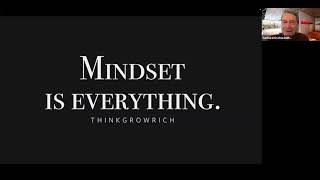
Craig Cushman of Finfit Life and others define mindset as your belief operating system and show how it drives your skillset and toolset. They cover momentum, emotional intelligence, and consistency as practical frameworks for sales and leadership.
Chapters
I recognize some of those names. Welcome, everybody. My name is Gerhardt Gerhard Schwartner. I'm the founder and publisher of Selling Power magazine. And feel free to unmute yourself because I have a question for you right off the top. And Bob, you're the first victim.
In a second. I'd like to introduce our expert today, Craig Cushman. He is the head of marketing of Finfit Life. And what's interesting about their company, they discovered something really fascinating in my book, which is there is a distinct relationship, a clear relationship between physical fitness and financial fitness. But that's not what we are going to talk about. We going to talk about mindset. And I like you, the audience, to answer one question. And we begin with Bob. He's a good friend and.
A good thinker. He's a good head. And the question is, how do you define the word mindset?
The combination of the values and morals that you have as, as a person and how that's directed toward an outcome. I guess that might be one way of putting it.
So there, there's something to work on. Start there.
I. I think it's a good definition. Who would like to be next? Unmute yourself and maybe show your video.
Or if you're shy.
Hey, guys. This, this is Eric. I'm driving in the car, so I'll keep the video off. But I think mindset is how you view things. Your perception of the world, your approach to problems, your approach to opportunities. You know, is it an obstacle, you know, every problem, or is it an opportunity to grow and.
You know, find. Find something creative in a situation that normally would stop you.
Thank you, Eric. It makes sense.
Tony Scholar.
Where are you located?
Can you unmute yourself so we can hear you?
Hi. Hello, everybody. Good afternoon. I'm in Brazil, in Sao Paulo. Welcome.
Thank you. A pleasure to be here. It is. It is a very small city with only 20 million people. Right.
So what. What would be your definition of mindset?
Me? Yeah. Okay. Mindset means.
Focus.
Where are you putting your focus.
To make your business grow? That's a better definition for mindset. Mindset, in other words, could be something like something that you wake up in the morning. Yes. And you go out throughout the day with the same thoughts, with the same focus until you shut off your machine at 10pm Right, right. It makes sense. Thank you very much for contributing your thoughts and your perspective. I think focus is something very, very important. We all need to make a clear decision what to focus on and what to not to focus on.
Fabio. Welcome to Masterclass thank you very much, Garrett.
Good to see you. So what be your answer to the question, how do you define the mindset?
I would say that mindset is like when you start.
When you start a race, depending the car that you have, the preparation that you have then can happen whatever during the race. But when you start, you have the best motor you can, the best training that you had. And this is mindset. I mean when you go out to sell you, you can go out because you want to go to help others or you want to sell something or you want to.
Or you want to make something different, you know. So when you start, you have your mindset as the base of what you are going to do.
Well, I like that analogy. You make it more mechanical that the mind is like a fine tuned engine that can pursue goals that are really big or dream big and set all the action in motion so that you can achieve that goal and be glorious and successful and happy.
But, but I need to know, does Fabio. Fabio has a very Italian name so I'm assuming it's either Lamborghini, Ferrari or something else. So what, what is it? Fabio, which, what's the motor?
Now forget, forget Italian, European. We are out. We are out.
Perfect.
Now you have to have an electrical Chinese engine.
Very good.
I just read an article half an hour ago in the New York Times about.
Porsche losing 28% of market share in China because they built faster cars, electric cars that drive like sports cars and at half the price.
Yeah.
Mindset now is from, from Asia is not from, from Europe anymore.
Right, right.
Can we get one more mindset definition? Who would like to join that.
Outspoken group that wants to be heard and shared?
Anybody else?
Well then the next person would be Craig to take over. Can you sort of consolidate all those definitions and share yours?
Yeah. So first of all, thank you to everyone that's here. Gerhardt, thank you for being consolidator of human thinkers and doers and having this opportunity for us all to come together. And I appreciate each of you that had something to say. I actually love these definitions. Bob's the morals that drive the outcome. Eric's view and approach to creatively overcome obstacles. Tony's focus for growth.
At least until 10pm specifically when he shuts everything off. I like that. And Fabio's.
Fine tuned car prepping up front so that the results are at least in as much control as an outcome as possible. So I love that for me, mindset an interesting thing because mindset is the present.
Present moment of, of choices and you know, emotionally we we wake up every day with something different. We, we are, you know, all human beings are, are emotional creatures. And so we're subjected to the, the waves and the, and the es and flows of, of emotions based on any number of things that occur. And so when our mindset and when we're consciously aware of our mindset, which is, for me, it's our fluid choices, much like what was said, it's the dynamic changes that happen all day. It's our emotional shifting and it's seeking to live in some kind of optimal flow. And I think that's exactly what the fine tuning that Fabio talked about, which is getting to that flow where, where winning is somewhat, somewhat predictable based on, based on our, our conscious awareness of, of retooling and, and maintaining control over our mindset. And I think, I think the, the hero work that we all get to do with each other is, is to. You know, I've heard the definition of hero as.
Help encourage responsible optimism. I like that definition. It's kind of cool because it's, it's really about moving people to the best thoughts. I think that is, that is heroic. Yes. There are people that save other people's lives and, you know, do brain surgery and all of that. I think those are heroic things and those are heroes as well. But, but true heroism for me.
Came clear from actually a 9th grade English teacher, a woman I didn't like. I was actually not doing well in high school. My parents had gotten divorced a couple years before at a key age. I was 13 or 14. And I had some rebellion going on in my life and I wasn't doing very well, and this teacher kind of just disrupted me. She got, she. I was failing the classes and she invited me to come after school for three days a week, and she, she was willing to part with her time to, to give me my time. And I was smart enough at least to recognize if I didn't do that, it was going to affect my GPA and probably mess me up for college and everything else. But so I did. I went, I went after school with her and, and interestingly, I, I grew to love her because she was serving me and, and I was humble enough to receive her training. And, and to this day, funny enough, this is an aside, but to this day I can still quote the first page of the Odyssey of Homer because she made me do that. She made me memorize it and stand in front of the class.
And perform it. Now what was significant about that is I had almost a failing grade and I ended up getting An A minus, which statistically is impossible. But she. She gave me a lot of extra credit because.
I was humble enough to receive what she was giving. So why am I telling you all of this? Because I think what mindset is, is something that is dynamic and we need people who are heroic in our lives. And for me, the definition of a hero comes clear to me when I think about Mrs. Gromalski from my high school, and I defined it this way. It's one who inspires others to rethink possibilities, break through limitations, and become something they wouldn't on their own. Because all three of those things occurred for me.
I was forced to rethink what was possible for me. I was forced to break through limitations, and I became something that I might not have on my own. And so to me, Mrs. Gromalski remains a hero. And I think that that's the hero work that we get to do, and that's how important for me, mindset is. In fact, you can see on my screen, mindset for me is everything. And I think, you know, I know that all of you are here because you have ideas and goals and things that you. You want for yourselves. There's something bigger for you. There's something bigger for me. And I'm never too old to, to. To make changes, to set new goals. And I know there's something bigger inside of me. There always, There always is, and there always will be until the day that I'm no longer here. And I. And there's a lot of noise, a lot of doubts, a lot of challenges, a lot of things that, that, that show up, that limit us, that, that we have to take control over that little voice that, that lives in our, in our mindset. And I, and I believe that the three areas that, that we leverage in life come down to these three things. I think these are the three pillars of every relationship. They're the three pillars of marriage, parenting, friendship, all of it. It's our mindset, our skills, and the tools that we're a part of. So mindset, skillset, tool set. And Gary Vaynerchuk is probably the most famous one to say something about mindset where he says, you know, you train for mindset, you'll develop skills, but you train for mindset because this is the area that, that propels you through and links to that, that, that Nietzsche statement that when, when you have a powerful enough why, you'll, you'll go through any how. And this is, this is the relentlessness, the, the, the never say die mindset attitude. That combination. So for me it's all about how do we create the movement, how do we create the motion and get through the emotion to get to the pure motion that creates momentum and get off of being inert, get off of sitting still or get off of our ego, get off of our fixed mindsets, put those aside and get into our growth mindset. And so we want to create momentum. So many people that I talk to throughout my life and have for forever will admit I need more energy or I'm feeling stuck. Everybody gets to a point like that. And so we, we, we are looking for what's, how do we get unstuck. And this is the, this is the conversation of momentum. Now in a, in, in science definitions, it's mass times velocity. That's the actual equation of momentum. Mass times velocity, the size of something and, and the size of that something moving and, and the speed of it. You can take it to a, a sales conversation. It's the size of your sales force and the sales velocity in which a business is moving through. That is, that's some business momentum. But you can also take it to a very personal level, which is it's a state of mind. And, and I believe that when you create a belief system around the fact that you're, you have momentum, I literally have a practice where I will look at myself in the mirror and say I have momentum. I have massive momentum. Now what that does for me is it creates an immediate relationship between where I am in the present moment and what I believe is actually happening and that space exists. And I know well enough that nature does not allow for a vacuum, so it fills it in. And so when I say I have momentum, I actually in, I, I actually created out of nothing. I'm a pure entrepreneur for momentum. I just create it by simply declaring that I have it and, and magically somehow manifests itself. And so I believe that the most powerful momentum isn't, isn't mass times velocity, but it's the belief system that you have it and it becomes a magical state of mind. Now this is, this is, leads into what I'm, what I call nothing new here, nothing earth shattering, but what I call a belief operating system. Some people call it a belief system, some people call it a, you know, a results operating system or whatever. But we all have operating systems. Computers have them, organic systems have them. There are, there are systems everywhere around us that are, that are, that are operating systems. We have them as well around beliefs. And fundamentally we are always looking at our results. And if you ask I've asked this of hundreds of thousands of people around the world. How many of you would like to make more money this year than you made last year? And to a person like it's literally every single person says yes. But if I ask how many of you would like to make less? Very, very few to none want to make less. So on both sides of that equation, we're always thinking about our results. Now what's interesting is, is results are two things. One, it's our desire for gain. So psychologically I think you all know this, but it's our desire for gain and our fear of loss. And actually the more powerful driver is actually our fear of loss. But, but we, we sit and we look at our results. Now our results are sort of in my mind, broken into kind of, you know, a few pieces. One of them is our perception of our results. Here are results. This is what it means to us. This is, you know, this is the accomplishment of a goal or, or not. And, and it actually speaks to results can be our goal. It's some people happen stance in life and they, they don't take control. And it is whatever is happening to them. So they're either happening to life or life is happening to them, but they have results in it. And that leads to the third kind of component, which is the constant empirical data you get on the scale. It tells you a number. You have no relationship to the way that the scale does it. It just tells you a number. Unless you cheat on the scale. And, or you can look at your bank account, or you can look at the car you're driving, you can look at the house you're in, you can look at the quality of the relationship you're in, the quality of the relationship with your children. All of those things are empirical data points that speak to a result. Now what's driving the result? What's driving the result is always the same thing. It's our behaviors and actions. Again, no science, no secrets here. But the behaviors and actions are our patterns and our habits. What lives underneath all of this is really just a classic amount of life created habits that are both conscious and unconscious, subconscious if you will. And then the patterns we choose to bring about, that's what drives our results in many ways. We cannot control the actual results, but we can control the behaviors and actions we take. So that's not again, a new piece of information. Corporations spend many dollars to try to create the behaviors and actions that you want, but it never really lasts. It never really works. Why? Because you have to get into the underneath, under the hood. If you're using Fabio's example, you've got to get under the hood and see the mindset that lives with, with the human that you're, that you're talking to. What is their present state, what is their present mindset, what are their, what's, what's their dynamic change? What's their fluid choices, what's, what's there? And, and it has to actually also correspond with the attitude. So because if you have a positive attitude, you're likely to take positive behaviors and actions. You're likely to take some, some risk with excitement, risk with resilience versus maybe excitement with doubt, which creates fear, which creates hesitation. So behaviors and actions yield the results. So if you're, if you're going into your behaviors and actions with the right mindset and the right attitude, the higher the likelihood you're going to get the right results that you dream about. So this is where this becomes really important. And you want to try to hack into this operating system as much as possible and create a positive attitude. Because here's the thing. A positive attitude can assure you that you're on your way. A negative attitude is likely going to create you being in your way. And so those distinctions, it's a small distinction, but it's a huge, huge distinction on the result. It's much like that 1%. You know, if you're, if you're taking off in an airplane and you're off by one degree, it said that if you go around the world, you'll be like 800 to a thousand miles off course. It's a tiny little thing in one end and a huge result in the other. So it is, it is an important part of what we do every day to manage that. And so that, that sends us into these, underneath that. Because if mindset and attitude was it, then we would, then everybody would be super successful because they would control that. Because we can to a degree. But the problem is, is there's, there's something deeper. And we, we are unfortunately hampered by our story that we tell ourselves. We're the traumas. The little voice that says, I doubt this or I fear this, or we failed at this before. And all, all these ideas come up when you see a light of possibility and hope. You end up, you know, fighting with yourself and that, that unconscious programming needs to be rewritten. So the hardest work we do as human beings is to go into our life story and conditioning and rewrite it and make, make our, our story of, you know, a, an adventure and A love story and a comedy and a fun, fun thing instead of a. A horror film and something that doesn't go well. So people who take the time to go deep into the conditioning, which I think this conversation is a part of.
Make magic happen for themselves. And that's the hardest part. The easiest thing you can do is to secure and build your talents. Now, talents for me are knowledge and abilities. And Gerhard and I were talking earlier, and he told me about an app that can teach you how to juggle. Now, I happen to know how to juggle a little bit, but. But you know what's fun about that is it's a talent. And once you learn how to juggle and you can move your hands the right way and get the results with three balls in the air or whatever, it's kind of a cool thing. You accomplish something, and you're excited to go tell somebody about it. This is the whole point about talents. Talents spark renewal. Talents spark energy. Talents spark positive attitude, which then sparks and leads into the way you approach the behaviors and actions you must take in order to achieve the results that you're getting. So you might as well get in and build your talents so that you can affect your results. You might as well get in and adjust your conditioning, because it affects your mindset and affects your behaviors and action. You might as well, because if you don't, you have a sure chance of not getting the results, but if you do, you have a much better chance of increasing your results. And I think for me, that's. That's the process. So now there's a. There's systems and process. And I just wanted to define this really quickly. This is something that. That I've had conversations with at length over time. I used to always think it's just about the system because everything's a system. Life is systems everywhere, or, you know, or the world is a system. And. And so I would. I would think, all right, so I have these beliefs, and I've got this cool system that should. That should do it. But no, it's actually how we process and take action. And so our beliefs and our actions. Our actions are predicated on our beliefs and our system. Success is predicated on the way we process through it. So. So we are. We are. That. We are the process through the system and the actions through the beliefs. Now, in everything, it's about an evolution to revolution, right? So we're constantly evolving, and we're constantly creating a little bit of new revolution in our lives. In Fabio's example, we could talk about RPM RPM of the finely tuned engine. Revolution is just the way that you go around the sun or go around an event or how you create new actions in your life. This is how I see it, right? Information comes to us or we seek it or we go get it. And as we bring new information in, that is an, an evolutionary experience. We evolve our brain with something new. New ideas, new relationships, new possibilities. And as we, as we get that information and evolve, now we have to seek to understand what does that mean, right? And, and that becomes a revelation. So we go from, from evolution to revelation. Now I understand what this means. Well, now I'm sitting with the, with the decision making around the implications. This, what's the implication on me personally and professionally do I accept that? Because now that, that requires some rebellion, right? This is, this is, I'm going to rebel against the status quo of my, of my existence and I'm going to do something different because if I don't change, I get the same results and I want something different and better. So I've got this new information, I've got this, this evolution. I've got this revelation. Now I've got this rebellion and I'm going to change. And then I make a commitment or we can call that a resolution. And then that resolution puts me in firm decision mode to take action which then becomes the revolution to create a new possibility. This is evolution to revolution for me as a, as a human being in my brain and my soul and in my heart. Now then I have to step into the skills that connect me to humanity. That, that, that put me in as a great leader or that put me in as a great individual performer or put me in it as a great father, husband, friend, whatever, contributor. And so I, I feel like the, these six things are fundamental keys to, to total success. Our ability to take complex things and simplify them as best we can for ourselves and for the people around us with, with energy, spirited simplicity is, is a really powerful decision to be as a human being and then work to create communication with the people around us through adaptive communication. Not everybody hears the same words. Sometimes we have to say things a few different ways from a few different angles based on people's, you know, personality types. There's four primary personality types. I speak in one form of language, but somebody who's in it speaks in another one. So if I speak from energy and community, that doesn't register with a knowledge gatherer. So I have to adapt my communication and respect the human that I'm talking to with Love and appreciation. And I will actually get far more results as a result of being like that, which then I need to underpin that with resilient optimism. Nobody likes a dud. Nobody likes a negative person. Nobody wants a black cloud to roll on into their world. Storms come. I get it. Negative people come. I understand that. But we don't want that and we don't like it and we don't actually have to subject ourselves to it. And worse, we shouldn't be that. So if we step in, if we recognize that we might be the purveyor of negativity, we should slap ourselves in the face and put on a resilient optimistic ideology and start to add value to the world around us through optimistic language and thought. Now that may sound rah rah or woohoo to some people, and if it is, then you shouldn't listen. Go stay in your negative Nelly camp with the other negative Nellies because life gets done with people who believe in possibility and actually speak it into existence. And, and I think everybody in this call is. Is inclined to be more like that than less like that. And then we have to be disciplined around that and we have to be coachable. We have to be humble enough to recognize we don't know what we don't know. We never will. There's always something we can learn from every single person we encounter, every single scenario we put ourselves in. There's a nugget of wisdom there. I'm hoping that there are one or two in this call. I don't know all the answers to everything. I'm just here offering up my intellectual property from my years of experience, and hopefully it's of some value to each of you. But it's, it's staying coachable and learning and seeking to the best information that we can, because that's a talent which then affects our attitude, which then affects our. Our behaviors and actions, which then increases our results. And that's the, that's the whole thing. And then we consciously model that over and over again, share it with others, etc. And it comes down to a little less conversation and a lot more action. So Elvis was singing about this 50 years ago, and it's still true to this day. And so for me, it's about the way we approach a day, the way we plan a day, the way our blocking and tackling. And so we start the day in any given time. We have our life's list of things. We've got our emails, our meetings, our calls. We have some interruptions that come they're not all important, they're pretty urgent. They're things that have to get done. But then.
Without fail, crises and problems come about. And so we get moved into the important and urgent area of life. These things, they're critical, they're important, they've got to get done. They pull us away from the daily activities of emails, phone calls and meetings. So those things. So we go back and forth all day long between these two things. And so as, as, as Tony was talking about, we, you know, we are focusing growth here and we want to shut down at a certain point in the day, but, but then what happens is we get exhausted, so we, we need a little mental break. So we walk out, we walk away from things and we, we do some trivial things. Time wasters, Facebook, TikTok, whatever it is that you do. And what ends up happening, more problems burn and more meetings come. And so we go. We're in this it what they call at Franklin Covey we used to call this the Devil's triangle because this is, this is where it is. But really life happens. Life's greatest moments come in the second quadrant, which is where we do planning and we live our values and we get clarification and inspiration. We dream, we create. This is the place. It's not urgent, but it's really, really important. And so this is a place for blocking and tackling that we go. And, and in those places, that's where the, what I say are the rich epiphanies. This is where the, the where like the universe downloads into our brain and, and we be, we become someone who steps into optimal flow. This is the mindset of maximum results. And it's the best moments occur when a person's mind is stretched to its limits in an effort to accomplish something different and worthwhile. This is, this is the definition of flow from, from the book flow. And it's this, these are the best moments of life and we, we want to put ourselves into those places because I know this to be true about all people. It's true for me. I'm in a constant movement of good to great. When Jim Collins wrote this book, now this is like 20 something years ago now, but it's, it's iconic and it's referenced all the time. And the reason is because.
The enough research to show the movement of, of 30s P500 companies that went from good to great and what it, what exactly it was that that made the shift what was happening at the transition point that those good companies. Good, good, good, good, good, good, good Good returns, good, good results shifted and went to great. How did they get this hockey stick scenario? Well, there was a conscious decision. The conscious decision was made by a leader, a new CEO, a new executive board member, a new team. And a conscious decision to do something radically better, radically different in the environment, shifted the performance. It wasn't an insane thing. It was an adjustment, a tweak and a refinement, but that created a transition point. Now, I think that this same scenario is equally.
You know, it's equally available to an individual. We individually want to go from good to great. And I, I think we see it in organic systems and in, in the world around us. And we can see it. I like to look at the butterfly. So we have this, we have this caterpillar. Caterpillars are not something we all notice. Sometimes we see them if they're climbing up a tree or they're. They crawl on us while we're out having a picnic or something. But caterpillars are not necessarily something we are all enamored by. They. Look, they're just worms with legs, right? So they're, they're, they are what they are. But we know what they are and we know what they're predestined to become. We know what they're about. So at a certain point, they make a decision. It's time for me to step into myself. It's time for me to stop waiting and start starting my journey to awesomeness. And so it climbs into a tree, it grabs a leaf, it starts chewing on it, wrapping it around itself, and it goes into what's called the chrysalis. Now this is a beautiful thing in nature. In the spring and summer, we could see this, where these things are sitting in the trees. And we know that that caterpillar made a decision. It's living a pretty good life. It's enjoying eating the leaves, but there's more to it. And so it climbs into the tree and it disintegrates itself. It literally chemically releases the, the things necessary for it to actually, literally turn into goo. So it goes from good to goo. And this is a very interesting decision. It's a risky decision, and it's a risky one for all of us. When we step out of what we can control and, and, and release ourselves into something bigger. We take a risk for ourselves and, and we go from good to the state of unknown. But it's only in that state of unknown, like the chrysalis, that it recalibrates itself and it becomes something great, something we love, something we are enamored by that. When it lands on us, it tells us a story. If we see one, we go, oh, that means this or that means that or that's my great grandmother landing on me or whatever. It is the story that you talk to yourself about butterflies but we all love butterflies. And this process is good to great. That butterfly that's so beautiful to you, that's moving around and catching your eye at one point was just crawling around on the ground that you wouldn't have noticed it. So this is a very interesting reference. And it's a conscious decision. The, the, the caterpillar made a conscious decision to be great and it went and it exerted enough energy and persistence to create something. And Benjamin Franklin said energy and persistence conquer all things. A positive energy. Back to the belief operating system. It's your attitude. The right energy is your attitude. The persistence is also part of it. You can't just have a great attitude and life then falls in your lap. You have to have the resilience, the rigor, the discipline. All of that has to go along with the positive relentlessness and the, the intent to do good, be good and influence people. This is a energy and persistence conquer all things equation. And if you understand that and you, and you take that in and practice life this way, you win. It's like that. And then you have to build the skill set to actually connect with other human beings. So once you make that good to great decision, recalibrate yourself, have the right attitudes. You then have to make sure that, that you have aligned yourself and acquired the emotional intelligence. Number one, to self regulate, to know when it's time to create change. Number two, to self motivate and help do this with other people. To have empathy. You know, this is where, this is where life changed. I'm going to tell you right here in emotional intelligence there. The world is full of narcissist and self entitled people. And there is no emotional intelligence without empathy. And there is no emotional intelligence without self awareness. It's just not possible. And so, so unfortunately that's, that's the way it is because all of this feeds into intentional social skills that connect. And this is what emotional intelligence is all about. This is what Daniel Goleman has made his, his career doing and our eq. It's great to be super smart. It's great to have a great intellect. I have no question about that. It's a very important thing. But there are a lot of smart people who cannot connect with other human beings. You know that there are a Lot of doctors with no bedside manner. There's a lot of, there's a lot of people that have big brains and no heart and they just can't connect. So our ability to connect with other people is our emotional quotient and it affects our business. The way we communicate, the words we choose. Our physical health, our spiritual health, our mental health, our financial health, our physical health is all involved in, in that. And then that bleeds into the quality and the intention in our relationships. And relationships are what actually get us to success. None of us, none of us gets done anything without the, the love, support, belief and help of other people. So EQ is, is, is the name of the game. And here's the deal. Daniel Goleman has done all kinds of proof points on this. Top Performing salespeople are 85% more productive than the average performer. That's just a fact of the matter. So one of the biggest skills to unlock and unleash your total success would be your ability to refine, define, increase your, your emotional quotient, your emotional intelligence because.
You will be 12 times more productive than the lowest performing people in your organization. That's a fact of the matter. That's, this is indisputable, incontrovertible data points from, from Daniel Goldman's practices. So when you are approaching something for the first time and everything is, everything can be new for the first time. First time you had a child, the first time you got a house, the first time you got a new job, the first or your first day on the new job, everything has some complexity because you're trying to see all the moving parts. And as you're making that ascent up the, the new thing, you need instructions, you need the, the content of what you're doing. And you need to be sure that you're clear on the context, the why you're doing it. And, and you need the coaching how to get there. And this, the grind up the mountain is, is very difficult, no question. But when you get there, when you get to the top of this mountain, this is where you celebrate all wins. And this is a psychological imperative. If you want to win and continue to win, you've got to get to the top of the mountain and celebrate it. And then as you're coming down the mountain, you just need the support and, and you will ultimately duplicate this process. Now you're going to have headwinds. That's the, that's the indication of the, of the colored arrows in there. You have headwinds coming at you. So your ability to Speed this up is when you can turn these headwinds into tailwinds and you'll increase the results and increase the speed. It's literally about an hour different. If you fly from New Jersey to Los Angeles, it takes, it takes about six hours going to L. A and about five hours going back. Only reason is because you have a jet stream of air. One's coming out the head of the plane and one's at the tail of the plane. That's it. That's the only difference, the same distance. So when you understand that there's simplicity on the far side of complexity, it's complex to fly against the wind. It's less complex on the other side of it. And as you build these skills, these, this, this intelligence, these, this competence then becomes confidence. And the thing about, about confidence, confidence is the energy that transfers from between people. So confidence is what gets us the results. And it, it feeds into and bleeds into the way we take the story of, or the facts of our business, the facts of who we are, the facts of our offering, and then we, and then we can weave it into the story. Because the facts tell the, the, the part of the brain, the prefrontal cortex, the thing that does the validation of the information coming to them. This is, these look like, these sound like facts. They, the story hits the emotional side, the emotional intelligence side. The stories do the real selling and people don't remember the facts. They remember how they felt about you telling them the facts. And so having the outline of a good story is actually crucial. So I, I created this eight points short story many, many years ago. I've trained it to many companies. And the whole idea is how, is to give you an overview of, of what a good story, what a respectful way to communicate with somebody. It's kind of an elevator pitch stretched out a little bit, just, you know, who you are. Hey, I'm, you know, I'm this. I was a stock broker and then I found this new opportunity or I wasn't looking for an opportunity or whatever the case is, and how I found X company was and what impressed me the most about it. And now what it's doing for me is, you know, whatever that is. But you want to know what the best part is? The best part is I get to do this with my family or I created this business for my family or whatever. So does that sound like something that would be of interest to you or whatever? And then, great. Okay, the next step is this is story selling and story and sales movement through a process and the Reason I'm sharing this is because it is a technique that can guide thought, that can. It's a talent that can create confidence in your attitude, which is a positive one, which would then yield better results and actions which lead into the results. So that's what I was meaning by that. So it's practical, it's tactical, it's a technique. You take the technique, you practice the technique, you add your personality, your profile, your personal authenticity. Now what you just learned from the outside becomes congruent with you, and that confidence is, is emitted to the people that you're talking to. And that is where your skill set now becomes an important part of your mindset. And it affects your indomitable will that you cannot fail. So this is an important part, and it keeps emotions in check because we know this for sure. When, when emotions go up, intelligence goes down, feelings go up, logic goes down, and you only have to remember the last time you had an argument with your spouse or whatever.
When you, when you are speaking from a place of emotion, a lot of times you don't have access to all of the facts and you say stupid things that you have to apologize. So when you can be in a place of power, the way you communicate, you keep your emotions in a state of equanimity, and you're a lot more powerful as a human being. And this is all about selling. This is all about being able to be a great salesperson, a great impactor, a great communicator. And Robert Kiyosaki said a long time ago, I think it might have been in the cash flow quadrant, I believe is where he said this, that the ability to sell is the number one skill in business. And in fact, I totally believe that. So if you see yourself as a sole proprietor, business owner, salesperson, or even if you're in an employee scenario, you still have the opportunity to create.
Entrepreneurial results inside of the role that you play. And everything is sales. So the way you dress, the way you talk, the way you look people in the eye, the way you shake their hands, even when people tell me, which they do all the time, I'm not a salesperson, I will often challenge them and say, you are literally trying to sell me the idea that you're not selling. And the reality is, is everything sells. Everyone sells. And, and it's the number one skill in business. And so that's number one. And then you need to actually bring people on to help you build your, your, your business, your team, whether they're customers or whether they're, they're they're business partners. So you have to be able to sell what you're doing, the dream to your team. And the team has to know how to sell. So you have to teach selling how to your team. So that leverages the third piece, which is teaching. So everything is an educational opportunity and experience. This is what we do as business owners. We, we, we, we sell, we build teams, and we teach our teams how to sell. We teach our teams how to build teams, we teach our teams how to teach. This is the, this is the skill set of a, of a business owner, leader, driver. And underneath us, we have systems, Many, many systems. I've referenced Stephen Covey here a couple of times because I'm a huge fan and I worked with them. And so we have seven habits. That's one system. But then we also in our business have back office systems and HR systems and payment systems and IT systems and logistical systems. All of those are systems. We have accountability systems, et cetera, which leads to that, that one underneath which is accountability. Our, our driver toward numbers, whether they're quarterly numbers, monthly numbers, whatever the case is, we are, we are looking for how do we drive revenue, how do we increase the number of people in our team, how do we, you know, move ourselves up in our career path and how do we keep the customers that we have and keep them happy and, and keep them coming back? That's, we're accountable to many levers, many numbers in our, in our business. So we have to know our numbers. Numbers actually don't lie. People do, but numbers typically don't lie. And all of that sits inside of the culture. And I, you know, Peter Drucker was the one that famously coined the, the statement that.
Culture eats strategy for lunch or breakfast, one of the meals. But it was culture. The way we set up our culture, the way we set up rules around us for ourselves or for the team that we're leading. The better we are at creating and enforcing rules, the bigger and the stronger our team is. The why we do the business we do is the context. The who and what we do it with and how we do it is some of the content of the business. Both are in tension with one another. And that tension keeps, keeps the, the, the culture strong. Now I think that there are seven Cs of success that drive pretty much every, every human being, every relationship in every business. And, and this is a simplification, I understand there's, there's a multiplicity of, of, of other, of other words that we could add to this. But these are the seven that, that one day landed on my brain as a what I called a bfo. A blinding flash of the obvious and I was like, oh, this is what it is. The seven seas. It sounded good because you know, that's a, that's a term that we refer to the world, the world's oceans and so forth. But the seven seas. So it's the content. When we're stepping into a new opportunity, a new business, a new leadership scenario, we need to know the content of the world around us. We got to get, we've got to get good at that. That's where we start, that's where we start to begin to build some confidence. But then we also have to align it with the context. What's, what is the, what are the core values of this company? What are the core values of the people around me? What are my own personal core values? Is there an alignment? Is my why and their why the, you know, are they, are they, you know, copacetic or are they, are they conjoined? Because if they are, that's where success can actually fly. So we need to know the content, the context and then we need to build up our skill. We have to skill up in our ability to speak to the content that's here to speak to our why the company, core values, etc. And build that confidence. As we, as we emerge through that, as we build competence and skills, it automatically builds confidence. And this is what I said in the belief operating system before, when you get a talent, it, it immediately shows itself as confidence and, and confident people are felt before they say anything. And so once we have that confidence in innate inherent within us, then we begin to master the skills of persuasive communication. Effective communication. Choosing language skills, choosing sentences, choosing.
When to pause.
Right? There's power in the pause. Just we notice it. I've been talking non stop from the beginning, but just that moment where I.
Paused, you actually made note of that because it's a, it's, it's, it's, it's, it's a communication skill. And then we, as we, as we build our communication skills now, our commitment to what we're doing, why we're doing it becomes clearer and clearer and it's no longer a wish, but it's actually commitment. And there's a very big difference in distinction in a committed person. And then we pay the bills. Long term with consistency. The short term income gets created here. The long term income comes through consistency. There's very powerful things to know about inconsistency. And as our competency grows, then our ability to impact how much we sell actually grows as well. So I've become acquainted with the fact that there's really four things that impact the volume of products and services we sell. One is the number of opportunities that we have available to us. So if we want to increase our lifestyle, we have to increase the number of prospects, no question. Now we also have to work on the average deal size that we're working on. So we need to create larger deals and increase the size of the deals that we work. And then the better we get, the more we win. So instead of 1 out of 10, we go to 1 out of 5 to 1 out of 3, whatever the case is. And if we get really good at what we're doing, we're constantly increasing the number of opportunities, the size of the deal and the amount that we win. And then that is then divided by the length of the sales cycle. Sales cycles can vary depending on the business you're in. But here's, here's the, here's the equation. If you can increase the top line by 10%, 10% more sales opportunities, 10% more prospects, 10% larger value of each, each contract that you're working on. And if you can, if you can increase your win rate by 10%, if you could do all three of those by a small margin of 10% increase in the next month or the next year, and you can decrease the length of the sales cycle by 10%. If it's 90 days, make it 80 days. If it's, if it's 30 days, make it three weeks. If you can do that and do these top line, you have a massive increase in velocity. I said in the beginning, momentum is, is mass times velocity. Velocity is a big part of this conversation. And you will have a 40, 47% increase in total velocity by making small 10% incremental increases in the three and decrease by, by the, by the one. Now again, I said that that money, long term money, is paid inconsistency. And I believe that many people understand the law of, of, of compounding interest.
It was Albert Einstein that called it the 8 8th wonder of the world. And it's a very simple equation with, when it comes to interest, it's the, it's the amount of interest you're receiving on your investment. Take 10,000, $10,000. And if you got 10% in interest on that $10,000, then you divide that 10% interest into the number 72, which then becomes a 7.2 coefficient, if you will, and, and so if you take that and say that what that number, what that 7.2 number means is that that's the number of years it will take for your 10,000 to double, based on the 10% interest it's receiving on a compounding basis for the next 7.2 years, and then it turns into 20,000, and that continues on that journey. Well, this is the power of, of consistency. It's the power of, of compounding, and it's the power of leveraging residual income. Well, the same holds true with people. You can compound knowledge, you can compound people in your team and, and all of it. But this is, this is the power of consistency. I've asked this question. Many of you have seen this. This has been around for a long, long time. So if you've seen this before and you're bored with it, I apologize. But it's always good to just, you know, look at it. If I were to ask any one of you, would you rather have a penny that doubled every day for 30 days, or would you rather have a million dollars on day one? Take your pick. I get a variety of answers. The, the, the funniest answer is always, I would like both. And the answer, that's a great answer. But if you had to pick one, you pick one. And so many of you have decided that already. You're sitting here going, if you've never seen this before, you're like, yeah, I don't know. And so you, so you might say, I want to. I want a million dollars, because that's pretty awesome. You get a million dollars today. You got some, you got some choices you can make.
And so, but as we go forward, here's what's interesting. You take the penny and you double it every day for 30 days. So for 12 days, your penny on day one has turned into $20.48. So the guy that chose a million dollars is way ahead. He's already got a new car. He's already on, you know, is in the Maldives and whatever. And you are sitting here with 20 bucks, and you're like, that didn't do anything for me. But it keeps going. And so for the next few days, it turns into 13, $10.72. So this 18 days, that guy's got a million bucks. He's probably down to 750,000 at this point, playing around, and you're only at 13,000. You're not, you're not excited in this first 30, these first 18 days of what's happening, but it starts to get a little more exciting because for the next six days, it moves from $2,621.44 to $83,886.08. This is starting to look like a game that, that is fun to play. And it is, because by day 30, it's turned into $5,368,709.12. From a penny to 30 days later, it's, it's turned into 5,000 or $5,000,000. So this is an amazing thing. So you just won massively. But it all happened toward the end because you paid the price consistently through the beginning. This is life. Everybody understands this on some level, but few people actually discipline themselves to do this. Now, here's what's interesting. If I were to ask you, okay, well, what's the, what's the cost of doing every other day? What is, what's the cost of inconsistency? What if you just, instead of, instead of doubled every day, you doubled every other day. So then that becomes a really interesting question because.
Many people will say, well, if it's 5, 5.3 million for, for 30 days, it's probably something like a couple million bucks. That's, that's the mindset. And that's what you would think. Well, that's half because you know it's going to get there. But unfortunately that's not at all how this game is played. So if you just did it every other day, then by the time you got to 30 days, you would only have $163.84. There's a savage price to pay for being inconsistent because it's, it's not getting enough time to do its work. This is the hidden cost of inconsistency. And, and so you know, when you're, you'd much rather have 5.4 million and then 163, 84. So this is why having the mental discipline to stay on the game every day, this is kind of what, what Tony was talking about. It's focus for growth. It's wake up with the same thoughts. And yeah, you can turn it off at 10 and wake up the next day, but you stay consistent because if you, if you give yourself time off, then you, you miss the opportunity. You are the cause to your effect. Cause and effect is a universal principle. There's no, there's no arguing the, that that exists. What we do affects what we have. And get that. Those are the results. The results at the belief operating system that I talked about at the beginning are your goals, your empirical data, etc. That's your effect. It exists because of your cause, which is your behaviors and your actions. And those exist because of your mindset and attitude. And those exist because of your conditioning and your talents. And so I would encourage you on a couple of fronts. Number one.
Love yourself. This is a really important thing. The older I get, the more I understand how important this process is. Happiness in life and business occurs when we are intensely focused on an activity of our own choosing that's neither under challenging nor over challenging. And that has a clear objective and that receives immediate feedback. That is, that's when we are in an optimal place. And when we love ourselves, we're really able to love other people. When I talked about being a hero, one who inspires others to rethink possibilities, break through limitations and become something they wouldn't on their own, you understand that what we think we become, what we feel we attract and what we imagine, we create. So, so, you know, if we are doing that for ourselves and helping other people do that, then when we are confronting people in uncertain times, and in many cases, many people's lives are in uncertain times, we can argue that a lot of what's been happening the last few years in the US has been a lot of uncertainty. But here's what's really interesting. When in, in uncertain times, those who are the most certain win. And they win big because they're like a lighthouse of possibility. And, and it's a, it's, it's a, it's a foregone conclusion that, that people will want to know more about what's happening for you. And you become instead of, instead of a mindset of a victim, you're, you're the, you have the mindset of a victor where you're in control, you're moving forward, you've got power, you are, you're self driven and you appreciate what's happening in life and you're seeing the abundance as opposed to being a victim. Where you're coming from a place of scarcity.
And you're feeling controlled, structured, and you're, you, you like contract. Energy is, energy is, is the name of the game. And, and energy is, is unleashed when you operate from love and it is contracted when you operate from fear. So if life comes down to a love versus fear equation, it's pretty clear which one you, you want to choose and who you want to be and how you want to show up to other people. And this is the second point, which is to serve others. When we're, when we're in the mindset of serving others, there's a book, there's a book I love called Radical Leap. It's by a friend of mine, Steve Farber. And, and he has a quote in the book where he says, do what you love in the service of. Of people who love what you do. Do what you love in the service of people who love what you do. So it's a three part story. Find the thing that you love when you're in a flow zone. It's because you found passion and you're ex. You're executing on the, on the, the. The enormous benefit and energy that's created from passion. So doing what you love and if it's. If you're good at it and it makes you money, you're in. You're in the right spot. And, and so you do what you love, and then it has to be in service to people. If you're not serving people, what are you doing?
There's 8 billion people on the planet and everybody needs something. So serving people is. Is the biggest opportunity we all have. So do what you love in the service of people and then make sure that they love what you do. Don't. Don't half asset. That's a really important part. Make sure they love it. Because here's the. Here's the real deal. If a customer. A customer is not a customer until they come back 12 times. Now, that's an equation that comes from my friend Kelly Richie, who actually worked. He was partner to Robert Kiyosaki as they were building the rich dad business in the United States ten years ago. And he said, a customer is not a customer until they come back 12 times. And I actually like that. I read something similar from Seth Godin and other people. You want your customers to love you, not just like you. You don't go to a restaurant. You just are like. You go to the restaurants that you love. That's who you go back to. You go to the places and the services that you love those people. You work and talk to the people that you love, not the people you just like. And this is, this is a big secret. So do what you love in the service of people who love what you do.
People are motivated by kind of the same stuff, right? There's seven motivations that people that, that people have. One, they want to. They want to do what they were created to do. Joy is found there. Mark Twain said the. The. The two most important days of your life. One, the day you're born. Two, the day you find out why. So people want to do what they're Created to do autonomy. People want the freedom to control their lives. There's four freedoms they're driven by. They want time, freedom, money, freedom, relationship freedom and purpose freedom. They want to do what they want to do. They want to be able to afford to do what they want to do when they want to do it. They want to be able to take the people with them that they want to take with them for the reason and the purpose that they want to take them. Whether it's philanthropic or just playfulness or whatever, that's what people want. Everybody's driven for freedom. It's innate in all of us relationships. They want to do things with others. Everybody wants to do things with people who are cool, who are fun, who are energized, who are driven, who are clear, who have, who have something to bring to the table. And everybody seeks progress. People want to experience personal and professional growth. You are all here and I'm grateful for it because you're seeking momentary or incremental or event driven personal and professional growth. And I hope something has stretched you a little bit. Mastery. Everybody wants to excel in their skill and recognition. The deepest psychological need every human being has is to be appreciated. Created. That comes by the way, that comes from the book Mindset by Carol Dweck, which is a great book. She has all kinds of nuggets in here that mindset or mindsets are just beliefs. It's a combination of those things. But people are, are really, really wanting to, to have mastery in their skill and they want to have that personal and professional growth. And oh, I'm saying that on recognition number six. I apologize. So they, they want to be appreciate, to be recognized for what they do, seen and heard. And then financially, everybody wants more money. They want to be financially secure people. I'm in the financial services and health and wellness space and baby boomers and, and older Gen Xers are worried about one thing primarily and that is outliving their money. And so, so we are constantly creating solutions for people that, where they can find a pathway to financial security. We're not here to talk about that. That's another conversation. All right, so now get out and change the world is the third thing I wanted to say. Inspire a champion's mindset. Be willing to set aside your ego and get and practice and role play and figure out how to amp up your game and know that you're in the service of other people so that they love what you do. Always be comfortable in the uncomfortable. Always be curious. This is a growth mindset. This is the anti fixed mindset. This is anti ego pro spirit because remember this, your ego wants to prove your and, and, and fight. Your ego wants to fight to say it's right, I'm right, you're wrong. All that, that's what, that's what is inherent in an ego. Your spirit, on the other hand, wants to optimize and wants to share and wants to expand. So if you can move out of your ego and into your spirit and be comfortable being uncomfortable in that process, you will be beginning the work that will set you on your pathway to greatness. And you'll step into it with love for humanity. And that's really what life wants. Life wants you to win. It wants you to get out of your own way. So, so stop stopping yourself and start starting yourself. And, and you will find levels of success you've only dreamed of. And, and I appreciate all of your time. That's all I have to share.
For this, this session. And I'm grateful to have taken a part of your day. I'm grateful that you've given me the opportunity to share some things with you. If you would like to connect with me, you can find me on various social media platforms. You can follow my podcast which is called Fit Talks. F I T T A L K S and I'd be happy to have any moments of time and one on one with anybody that, that has any interest. So with that I will stop and gerhard I'll. I'll bring it back to you.
Thank you so much. I took a lot of notes and learned a lot from you. I think that there are a couple of things that I, I'd like to add, but before I do that, I'd love to hear from. I see Greg Frederick, you joined us and he is a very accomplished individual, very competitive.
Can you unmute yourself, Greg?
Here we go. Thank you.
Hey Greg, how are you? Good.
Very, very good presentation. I appreciate it. I jumped in a little. I didn't catch it all, but.
So when, when it comes to racing, you are a championship racer.
What, what is the mindset in your opinion? How does the mindset sort of compute. Assess a situation that's competitive, that's doubtful, that's risky. And how does the mindset create that energy that you need to win?
So in my experience, particularly working with high level athletes.
And for salespeople for that matter, because there's a lot of similarities and crossover between high performing salespeople and high performing athletes, it really comes down to this, to the point of, you know, whether it's the Risk if of going 30 or 40 miles per hour on a bike over a 60 foot job or signing that 10 million dollar sales deal. It's the not making it bigger than it really is and understanding, you know, the minds. The faster, the bigger the stakes are the getting the mind to slow down to.
And I think Craig, you touched on, on flow state, right? But it's, it's like getting into that flow state where everything seems to slow down the bigger the consequences. So it's really getting into that mindset and training people to be in that mindset when the stakes are high but also going back to, and again I apologize Craig, because I was jumping in and out of your conversation. I kept getting distracted with calls. But.
You know, it's the small steps, it's for us and what, how we build mindset. We always go down the path of the building self awareness first. And then self awareness allows you to get into that growth mindset and spot opportunities where other people don't don't spot or what other people don't spot. So it's about taking advantage of opportunities, seeing opportunities, capitalizing on those opportunities and as those opportunities come, those stakes get higher and higher.
Right.
And then you're able to embrace the higher stakes more commonly than, than the people that aren't trained on, on peak performance or in peak performance mindset training.
I love that, I love that. Greg. Actually you know the, I didn't spend a lot of time on self awareness but one of the, I think one of the highest compliments I ever received was from a guy that's a high level consultant to CEOs around the world. And, and he made some comment about.
My self awareness. He, he was actually maybe a little hyperbolic. He said I might be the best or most self aware guy he's ever met. I, I, it's not, I don't want, it's not, I'm not trying to make that about me. What I, what I took away from that was how, how much I valued the fact that a relentless effort to be aware of what I'm good at and what I'm not, what I do and don't do and, and how to, how to.
Supplement and optimize because I, I don't have all the answers. I don't have most of the answers actually, but I do amazing people around me so, so they supplement what I don't have and then optimize what I do have and then, and then I can, I can exchange that with them as well. So I think, I think what you Just said is, is right on that. Like it starts there and yeah, without it, without it. If you're, if you're, if you're.
Live in, in not being aware of yourself, then you're inhibited and you, you can be, you'll ultimately be taken down by the thing that you're not looking at.
Yeah.
The way I like to put it, Craig, is if each of us are stars with five points, you know, our stars should be very pointed, but our orbit around us is what should be well rounded.
Right.
It's the orbit, it's the people we put in that fill in the gaps of our stars that make us well rounded.
Love it, love it. Better to pull an organic thing together like, like orbiting because that's what we do with each other. So that's awesome. Love it.
I want to toss the ball over back to Bob Britton. You.
Made some comments during the presentation and I want to hear a little bit more about your comment where you, you touched on.
Proactivity versus reactivity.
Oh yeah.
I guess it's one of the oldest decisions that we make. Right. Are you going to be.
A victim or not?
Right.
So you don't want to be a victim. We don't make a choice of actually being very proactive and controlling what you can control. When you start to see the control over what's in your life over to something else or somebody else, that's when your mindset starts to deteriorate.
So it's important to take stock of what it is that you actually have within your control. And the very first thing we do every single morning and I tell people when they're working for me is this, is that, you know, you have a choice to make every morning. Are you going to be in a good mood or are you going to be in a bad mood? It's as simple as that. The first choice that you make every morning when you open your eyes is that, and if, you know, I'm a very positive person. So I'm always thinking about what can I do that's going to be good and happy and positive. And so there are other people, and I think we all know them, that they're not happy unless you're not happy. So, so those are the kinds of people you want to avoid.
Well, I want to hitchhike on that idea because of something that Craig said earlier is the ability to love yourself, which made me think that the relationship that we have with ourselves is really the blueprint for creating a relationship with other people. And we are not aware of the Blueprint, unless we look at other people and see the reflection of love in their eyes when you love them.
Yeah. The other thing to keep in mind too is that you cannot please all the people all the time. It's not going to happen.
And you have to understand that you have a purpose in life and there are people that are going to gravitate towards you and actually be repelled by you as you go through life. But.
You need to embrace the fact that you, you're here for a purpose and you know, see if you can't discover what that purpose is and then work toward it, that's, that's a good mindset as well.
Yeah. I, I, I Gerhard, I think you, I think you are, are bringing to front and center exactly the, the whole idea is the more we understand that what's happening out and around us is actually a reflection of what is happening inside of us. And if in the moment, this is kind of what Greg said, that the moment that you change your awareness to that, then, then you start to do the work in the shadows that Carl Jung always talks about. Right? So we, we, we can, we go out and confront what are we running from and what are we running towards, and we start to do that work in internally and it, it then ultimately reflects externally. And so the blueprint, as you said, is exactly, it's exactly that life is a weird journey because we should be told that at the beginning, but we're not. It's like we have to, we have to fumble along, we have to fail forward until we figure it out and happens and, and we, we meet somebody like a Greg or a Bob or Gearhart, and we, and we get this, get this insight and that changes everything. So, so it is, in fact, life is, is, is a, a direct reflection of, of how we are operating our blueprints. I used to always say to people, you know, almost in like a, almost like in a pastoral sort of at the front of the church kind of way, I'd say, well, listen, if you ain't got it, you got to go get it. And then when you get it, you got to go get it. Got it. That's what I would say. And, and the whole idea is that the, the, the, the real information in there is if you don't have clarity on who you are, go get the clarity on who you are. Work that, work that control that Bob talks about. Wake up every day, make that decision, because every as you do that, you can't give what you don't have. So go get it. That's your first job. Second job is go give it over and over again, and it gets better and better. So that's the deal.
I think another way to look at this is to watch what you say to yourself.
And there are two things that we are telling ourselves. One is we make statements and we create stories. So when something happens, we create a story, retell the story, and then we think that's an accurate reflection of reality, but it isn't. It's just one version of reality. There are many different stories we can tell. And it's the same with statements. So if I have an experience and I'm driving and somebody is cutting in front of me and I had to slam the brake to avoid an accident, I can say, what an idiot. Or I can say, that's inconvenient. And when I say, what an idiot, I'm really expressing anger. And somebody who was not aware made a stupid move. And we all make stupid moves, but by labeling it that's inconvenient, it takes the toxin out of the air and you are not angry and your blood pressure doesn't go up. So we need to watch what we say, the statements we make about different situations. When you don't close the sale, that is a stupid customer. He didn't realize that he's making a mistake. You know, I can totally explain, make a different statement and say, maybe there's a learning opportunity. Maybe there's something I can do better next time. So in what. What I'm leading up to is that we live in a very, very challenging negative world with negative messages. We experience about 60,000 thoughts a day, according to NIH research, and 80% of those thoughts are negative. And there is a study that says that in order to flourish in this world, you need a ratio between three to one, three positive to one negative thought. So we need to flood ourselves with positivity. And as Bob said, you make that decision in the morning when you wake up. You can say, that's a bad day, or I had a bad night. But if you know that there are negative thoughts around, become aware of them and change them to the positive opportunistic equivalent. Because life is nothing but opportunities that are disguised as hard work. And we all can win by shifting our mindset.
Yeah. No, I love that. That's. That's right in line with, with, you know, just the, the battle that goes on in our head all the time between our. Our ego and our spirit. That's like. Well, you just nailed it. That's it. It's the ego Just looks outside and everything is happening to you and that person's an idiot. But your spirit, it doesn't think like that. It doesn't operate like that. It's just looking for opportunities to find good everywhere it goes. So the more you operate from, from the, the spirit that you are here to impact the world and make a difference. Unless the ego that has to prove that you're good enough and that you're, you know, that other people are bad and whatever. The happier you are in life, the more self aware, as Greg talked about that you become and the more valuable you are to other human beings and the more, the more you contribute in life. Life is, Life's not about what we accumulate for sure. And, and it is very much what we depend on what we look or depends on what we look for. But life, life is a great life is about what we contribute, not what we accumulate. But interestingly, the more we contribute, the more we accumulate. It's kind of a cool deal.
So.
I think there's also one more thing that's worth mentioning is that we want to be clear about the why, you know, why is Greg coaching other people to win? Because.
He realized very early on that he can be bigger than what he thought he was and he exceeded and he exceeded his own expectations. So he knows the blueprint of growth and he shares that blueprint with other people. But at the heart of all of it is that the bigger the why, the bigger the try, the easier the how.
Well, that was an amazing session, Craig. You led us to a lot of wisdom. Thank you very much. And I recommend that anybody who has listened to this or is reviewing that because we are recording it, go to LinkedIn and look up Craig Kushman. Do you have your email address.
That'S on LinkedIn?
Yeah, everything's there. It's my connection through my company, Finfit Life. You can find me on YouTube there, you can find me on Instagram, you can find me on Facebook. I'm, I'm, I'm out there. I'm easy to find you. It won't take you, won't take you long.
I think there's one word that I want to sort of associate my mind with, which is optimizing. I think you have that ultimate optimized mindset.
Thank you. I appreciate it. It's a, it's a constant work. I don't think I'm, I don't think I've mastered it yet. I've got a long way to go and I'm appreciative of being around a group of people that are like minded and like sold who are working every day to just be better and better.
At what we do so and I want to recognize Carl for showing up consistently and contributing and he.
You. You shared that that prayer with us in the in the comment section in the.
Carla, can you hear me? Thank you.
Yeah have a great day.
So what's your takeaway today? What are you going to be doing differently tonight? Give up always play to win? Absolutely.
Well thanks everybody that was an amazing session. We recorded this and we are going to make it available as one an executive summary which I create and then a link to the video and we put it on a on our YouTube channel and we also publish it in our master class.
Thank you Craig.
Thank you Gerhardt. Thanks everyone. Appreciate it. Have a great day.
Thanks everybody. Thank you. Thank you Frederick. Thank you Carl. Bye bye.
More from Gerhard



What Selling Looks Like When Your AI Agents Have the Context Your Sellers Do

Better Conversations, Smarter Support: Wearable AI in Business






When Scarcity-Built Systems Meet Abundance - The Judgment Gap in AI-Powered Sales Leadership
