Revv Up Revenues: The Fuel Your Team Needs to Succeed
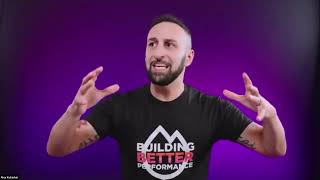
A recorded presentation (YouTube) featuring Alex Kutsishin with Gerhard Gschwandtner about Fuel — a performance-as-a-service platform that rethinks corporate education by prioritizing implementation and measurable performance over information. The talk diagnoses traditional training as broken (access, one-size-fits-all, long-form fatigue) and proposes sports-inspired, AI-personalized microlearning, performance analytics (notably a salesperson’s hourly rate), and a usage-based pricing model to democratize personal development and improve team culture, retention, and revenue.
Chapters
So this all really started with, with my co founder, Todd Duncan, who should be listening, maybe typing something into chat there to say hello to everyone. And he, he contacted me and we started a conversation about this topic which I'll just share a screen for just two seconds for everyone see the topic. He said, he said, alex, education is broken for so many different reasons. So many different reasons. And you got to understand that this isn't just coming from anyone. Todd is an educator, 30 plus years. He's got more than 20 books published, three New York Times bestsellers. Over 7 million people have gone through his program worldwide. And he came to me and said education is broken. And here's what's interesting. When you find an expert in a field and says their field is broken, this is for everyone listening here because this could happen to you anytime something is missing, something is off, put your ear to the ground because something seismic is happening. Okay? And so when Todd said that education is broken for all these reasons, and one of the biggest reasons is access and the separation of haves and have nots and this long form fatigue and one size fits all and all of these different reasons, we had to rethink it. We had to reinvent the way people think about personal development. And the biggest thing that you'll hear as we get into this and why we're doing this is it's no longer about the information you can stuff inside your head. There's enough of that. 99.999% of things out there is about to give you more information for you to store up here. And Fuel said, wait, it's, is it about more information or is it about the implementation of the information? Can you do the thing you learned? And we were inspired by the most incredible performance and culture model that we've been able to research in history, which is the sports model, the professional sports model, which consistently never going backwards, always going forward in performance and culture. How people are committed to accomplishing the impossible and how do they do it as a team? Team? How do you find the same like minded people to keep doing the same thing over and over again? We'll get into a little bit more of that. So the reason we got into it is to really democratize personal development and training all around the world. We'll see how, how we do that with, with our AI system in just a moment. But that's why we got into it so that there isn't this Pareto principle inside businesses anymore. You'll hear me talk about that a little bit more too. 80, 20 is ridiculous.
It's a silly thing that I want to mention which is when you look at the sports team.
You have the best player in every position and that's not happening.
Yes, that's it. Stars in every position and it's not happening in sales, it's not happening in businesses. We have adopted that 20% will do 80% of the work. Big mistake. Well, let me, let me, let me take that back. No, it's not. We had to learn that to get to where we are now. Life is always like that. Right? We have to, we have to go from somewhere to somewhere. And this is just the evolution of completely shattering and eradicating the concept that you don't need stars in every position or you can't have stars in every position. That's not true. You can absolutely have stars in every position that want to be there. So I love that you brought that up.
You have a metric to measure stars.
That's right.
And that blew me away when I went to your website and checked out some of the videos and then you showed me that there's one simple formula to.
See whether somebody is a star or a potential star or a growing star. And, and that is the, the number. Well, why don't you explain it? Do you have a slide?
Okay, yeah, let's do it. I'll explain it right now than I am. So look, this is so key. Okay, so Fuel being the world's first performance as a service platform, we also.
Wanted to give all the businesses out there access to performance analytics in a way that it's never been done before. Everyone wants to focus on analytics and look for a million different data points then make a decision. Okay, everybody watching, watch this. I'm going to explain what you're looking at and then you tell me within seconds in chat. And I don't know if I can see that from my screen, but maybe Gerhardt can give it to. In seconds you're going to realize should somebody be on your team or should somebody be replaced? How are we gonna make that so easy and evident and easy, by the way, in a sense that you're not gonna have to break your brain over figuring out does this person have a chance to do better? Okay, so what is this? We've realized, okay, the most important metric that you can measure for a sales human, for a salesperson or somebody in a commission or revenue position, right, that's being measured for their sales ability is their hourly rate. Their hourly rate. That's the most important metric to track for the health of the sales Human. Just like the heart rate is the most important metric to track for the human. Human without the sales part in it, hourly rate is the most. Why? Why hourly rate? What does that have to do with. Because if I'm on commission and my personal hourly rate is going up, okay, my personal hourly rate is going up. I make a percent of the commission. Who makes the other percent? You? The company makes it. So if my personal hourly rate's going up, it is a clear indicator that I'm making more money for the company. No if, ands or buts. If my personal hourly rate is going down or not really moving, kind of stagnant. But below baseline, you can see the baseline for this company. $70 an hour. They want to see each one of their people be at least at 70. Why? Because that's $150,000 a year in income. And when people reach that level, they don't want to go below it. So they know that if they can get more and more people above that $70 an hour, they're going to have more and more committed people. And so one metric. And so I ask you all, you just seen two people, saw two different names. Who do you keep? Who might need to go play another sport? Because not everyone is suited for every single game they choose to play. And that's okay. Nobody in sports gets mad when they replace a under skilled. Doesn't mean they're bad people. They just don't have the skill necessary. Nobody in sports gets mad when you replace that under skilled person with someone who has the skill and the drive to keep improving. Nobody's mad. In fact, the whole team is grateful when you start to put that kind of effort, that kind of thought into building the team. Believe me, professionals want to play with professionals. That's. That's a fact. So you can see here in just seconds, you can now realize who you need to support. And I can start clicking on some other people, right? Mindy's doing fantastic. Watch this. I'll go down here and I'll click on it this way. Okay, here's David. You've. None of you have ever met David. This is his hourly rate since January. The goal line is right there. What do you think we should do with David? You have three seconds to make a decision. It's easy. That's the thing. We're breaking the mold on saying that things have to be difficult to see performance. And who needs your help? How do we improve? Doesn't have to be that way. We've been taught that it has to be complicated it's not true. It can be fun, and it can be easy, and it can be supportive.
Was that helpful?
Yeah, that resonates with me. Because you created a metric that nobody else is using, and it's so simple. The hourly rate of a salesperson can indicate is a performance indicator, and if it goes up, they perform better. So what's not to like about it? Because when the salesperson performs better, the company performs better. And now we bring it back to your premise, which is a star player in every position in every category. And so now salespeople wants to see the scorecard on how they're scoring the hourly rate. They want to be more competitive. They want to do better.
Yes. Yes. Yeah. And it's. And. And this is really about meeting your people where they are, not where you expect them to be. One of the biggest challenges in business is saying to someone, I need you to perform at this level right here. But I. But I'm currently here. And your assumption is I can perform at this level. That's an assumption. Okay. We don't know because we're dealing with people who have ears and eyes and a mouth. Apparently, they can do any job. Right. Because they can. They can do. They can talk. They show up. They're human. They're physically here. But that's not true. One of our instructors has an amazing book written out there. Don't send a duck to eagle School. Right. Not everyone is going to be an eagle. Right. But you have to recognize it, Recognize it early, and actually have empathy and support for that person rather than shaming them and making them feel like you. You are terrible. You. You shouldn't be here. No, it's a different approach you can't think about. If you keep someone on your team that is not performing to the level of standards that you've set. What you're saying is I care more about you than everyone else on the team.
It's all you're saying. I care about trying my best to take someone that will never be an eagle and turn him into an eagle than all the eagles I already have on my team. And that is what this. This helps prevent and grow eagles.
And. And I think that, you know, let's. Let's pull the analogy of a duck. Yes. That. That can fly or it doesn't have claws or doesn't have a beak like. Like an eagle.
Those are the.
The ducks need to realize that what. What holds them back is two things. One is that don't have the knowledge or the insight or the learning that the star Players have. But there's something else inherent in the. In the duck, which is.
Sort of. It's not an action animal. And nails is about action. And why can eagles fly higher? Because they have wings. And what gives them wings is the absence of weight. And the weight that weighs people down is internal. There is no difference in a salesperson that is not performing well.
A sales manager doesn't know. Is this a skills deficiency or is this a motivational problem that we need to address? So a salesperson that feels depressed with a salesperson that's overly anxious and yet they are highly skilled and highly trained that perform just as poorly as the salesperson that has no skills.
Exactly. It's exactly what the challenge is. You've framed it perfectly. So we talked about that. Education is broken. It's broken for all these reasons. And by the way, if I was just to literally erase those. Solving that is enough. Just solving that alone would be enough to help the world. Okay, but we're solving more than that, right? We're solving a little bit more than that. And what you're talking about is so key. Okay. It happens to be the second slide in this entire presentation is that so often teams operate under high pressure and it leads to burnout and disengagement and just fear and lack and operating from a place of. Of not having rather than a place of abundance. And so you have this decreased productivity and eroded confidence and turnover and all of this stuff. And guess what? Exactly what you just said, Gerhard, that could be happening to your best skilled person that is currently feeling so much pressure. And we all know that when there's stress and pressure, if we look at the brain psychologically, and we have the three parts of the brain, the minute you feel lots of stress and pressure, you go into fight or flight. When you're in fight or flight, there is no language inside your reptilian brain. Zero. So you could have the best salesperson on your team feel stressed and burnt out and not supported and can't move his mouth properly. As a matter of fact, I have examples of that. Literally physical examples of it. We went ahead and did this research for everyone here for everyone's benefit. So, like, the examples you're about to see illustrate that neglecting positive and supportive work environments can have a direct and measurable impact on the company's bottom line. Like, we all hear that if you're not elevated, if you don't feel supportive, you don't feel confident it's going to make an impact. But nobody's ever taken the time to find real physical evidence, we did. We redacted the names of the companies. There's no reason to smear their names. But these are real companies with real situations that happen. And this is a really good one here.
Where is it? Uh, yeah, the very first one. This is a tech company. 20% decrease in annual sales after its top performing sales team experienced burnout and low morale due to relentless pressure and lack of support. The number one team, uh, I encourage everyone, by the way, on this call. And here I'll, I'll, I'll, I'll, I'll blow this up for everyone. Gerhard. I encourage everyone on this call, take a screen cap of these. I, I'm not gonna dive into every one of these in detail. Um, take a screen cap. Okay? You can read them for yourself later. But these are real events that happen inside organizations that stem from lack of support, low morale, not engaged, stressed out. And so it doesn't matter how good you are, when those things happen, your skills fly out the window because you go back to your reptilian brain. You go back to the part that has no speech, no ability to, to have empathy and contemplate and have creative thinking. It's survival mode. And when your top performers in survival mode, what's happening to the rest of the team? Right? And so, and so how do you elevate above that? What can you give people to, to really elevate them? Here is the key piece that I'm going to talk about today. Okay. The key thing that I can talk about today is every leader. If you all did just one thing, just one thing, your companies would reach levels that's hard to imagine. Okay.
My, my history. And I won't get into all of it, but my, my, my last company, we built the fastest growing company in the fintech, fintech mortgage technology space. 7,000% growth in the first, first four years. And what I'm going to tell you right now, we did there. We did there. That's exactly what we did. We did one thing, focus on each individual person's personal development. Because if you make them great and they're the best versions of themselves and they've chosen to be in your company in this role, then allow them to be the best version in this role. When we talk about athletics, when we talk about sports. I chose to be a quarterback. I chose to be a point guard. You don't have to inspire me to.
Be a point guard.
I chose that.
Right?
So one of the things is when you start to inspire people about the things they choose they might be in the wrong place. And so the biggest thing you're going to hear from me today is how important it is to give everyone an outlet to be the best version of themselves. And we need to stop thinking that we know what's best for our people.
Think about that for a second. We don't know what's best for our people. I'll give you one more example here. Let me stop sharing so I can give you this example about sports. Okay? In sports, if anyone is a professional athlete or professional sports or organized sports in college or anything, put some stuff into chat and get engaged and let everybody know that you're there. What makes professional sports or organized sports so special? Some people would say it's the rigorous physical training that the team makes people do. That's not what makes it great. That's called accountability to your team, to your players, to your franchise, to the fans, to the, to the owners. That's the accountability. You hired me. I'm going to show up and do the best I can while I'm here because you hired me. But what makes professional and organized sports amazing? Why we are willing to pay thousands of dollars to sit and watch professionals, not 20% of professionals. All professionals. Stars in every position play is autonomy. If we were to strap a GoPro to all the athletes chests or their foreheads, it'll be funny on the forehead, right? Not good, but chest, let's put it on their chest. Put it on their chest. And we followed them home after practice. What we would find is that none of them go to sleep at the same time, eat the same food, have the same mental exercises, wake up to do the same workout, late workout. Their psychiatrist, psychologists, physical therapists, they're all doing it their way for them, knowing what makes them great at what they do. That's what fuel is about. How do you get the best out of each person for themselves rather than for you? Okay, we know that, that if we really boil it down, just boil it down, there are two things we all want in this life. I challenge any one of you. Again, there's a chat, let me know. I challenge any one of you to say that there's more that we want out of our life. Okay? Now, making the biggest impact, that could be a billion shades of things. But if you boil it down, we want to make the biggest impact and live our best life. Period. Okay, so what does this have to do with every professional on this call today? Because we've discovered that it is in the employer's hands to actually help people Achieve this. Currently, a lot of employers say, I'll give you sales training, skill training there, product understanding so you can understand the product. The rest is on you. But you know what? The best organizations don't say that. The most successful organizations don't say that. As a matter of fact, I've seen some of you registered in this call, so feel free to chat and chime in. The best organizations focus on confidence. I have a whole list of companies that I can pull up. Airbnb and Nike and Google and Southwest. I can keep pulling up companies and I'll keep pulling up companies that you'll be like, oh, I know them. Oh yeah, I've heard. Oh yeah, I use their stuff. Oh yeah, I'm a customer. Why is that? Why do we know these brands that after they reach a certain level, they have to change the way they approach things? And what they realize is. What they realize is that their people.
Are their fuel. Their people are their fuel. So fuel represents two things. It represents the people in your company because the fuel will either good quality fuel will get you to everywhere you want to go, or you'll break down on the side of the road. That's people. It also represents what goes inside those people. What are you giving those people. And if you look at Salesforce and Unilever in Patagonia, you'll find that they're putting well, being, confidence and giving people a chance to be the best version of themselves for themselves. And what happens is when things start to happen in the market, they know they have a solid team that is glued together, they work together. They are in it for themselves. They just happen to wear the moniker of this company. That is the goal, right? The confidence and happiness is a huge part of the success of, of these big brands that we constantly read about. We may even own their shares. And it's a good thing we do because they're doing the right things for their people who then in turn do the right things for their customers. It's a beautiful cycle. But if you just invest in getting people to reach a certain result without growing themselves, you're gonna have lots of turnover constantly. You're gonna have to hire rehire, stress, all this good stuff. But if you give people a chance, you'll discover two things. You'll discover those that want to be there because they want to be there and those that are there for a potential paycheck. And I don't even have to ask you this question. Who would you rather have on your team?
Right?
You already know. So how can fuel Help. What, what, what is it that.
We have.
Tried to shatter? Okay. Number one, it's how we build and support the culture of our company. Which by the way, what is culture? Culture is a combination of people that all agree to one thing and all move towards that and have a similar. Right. They're in this together, they have similar beliefs and there's an approach that everyone in the organization believes in. Besides the vision of the company. There's a feeling, right, you can walk into. You know, I'll just bring up a, a larger than life example like, like a Gary Vee. Right. You know, when you go work there, there's going to be a culture there. When you go work for, for, for Microsoft, there's going to be a culture there. It's, it's there. And so it's about talent and culture. That's right. So it's about building skills and building people and creating a place where they can be themselves and believe and do the thing that you want them. So how, how can we help? That's one is be able to help drive culture by helping drive talent. Right. Increase talent. The other thing that is very important that you saw that in the education is broken thing, by the way, if you took a screen cap of that, good for you. That's a really good list to look through because you may be doing some of those things yourself. I had a call yesterday with a large group that said everyone on their, in their company complains about how administrative tasks like stopping to do an hour and a half call about this thing or learning that thing for an hour and a half or two hours or having to, to, to have a breakout session for four hours somewhere and how they'd rather be focused on their, on the things they have to get done. And she's, they're being, they're asking her, how can you support me on my time instead of your time? Think about that question for a second. How can you support me on my time instead of your time? Because when you schedule that two hours that's convenient for you because that's when you can be there. But I had things I had going on. I had calls I was making. I had to reschedule things now. Okay, so the concept of developing people at their own time is a very interesting, makes sense. People are like, of course this shouldn't. Yes, but, but it's not, it's not prevalent. It's not what's happening all the time. So fuel makes it possible for people to grow without interrupting sales calls, interrupting prospecting, follow ups. Some of the other things they have to be doing every day. It fits into their schedule right now. You're not going to stop all of your other training. You're not going to stop those things. This isn't here to say that all completely doesn't work. No, it's reintroducing something. It's a compliment to those things until you start to see the shift. And you might start seeing people say I need more of this, please give me more of this. Right. Thank you for the support. I'm getting all of this at my time. I really appreciate it. I'm growing, I'm feeling good. The other thing that's very important and we're talking, you know, we're here at the AI summit. How.
Do do you as an organization implement something without disrupting.
The entire company? Right. Like sometimes there's a rollout of a company of 10,000 people on a team and disrupts everything for months. Now this is as easy. You heard Gerhardt talk about this binge worthy for personal and career development. Binge worthy Netflix style education. Well, we decided to take something else from Netflix which is how you onboard. How quickly can you start using Netflix? As quickly as you can type in your email and password. That's it. And then you tap a button and you're watching. That's fuel. From 10 people to 10,000. Everyone can get started in 60 seconds. And so what happens when you have this style of support? Okay. This platform, this is the outcome, this is the benefit that you're getting a happier team, more confident team, a more skilled team, team that feels heard and supported, team that's having more fun. And you're going to see an elevated level of performance which then creates much more profits for you. Okay. I'm sure that's a biggie for everyone on this. What else do we get? And again you get all this without interrupting their time. Okay. You'll also get to learn people like you've never learned them before. You'll know your team like you've never known them before. Because when you force them into a training, all you have is obedience. That's the thing you've learned. I have an obedient team. When you create autonomy, you start to learn what's really interesting for people, where people are. You're gonna see that when we break this down, which you'll see in just a second, that.
People will choose the thing that they feel is important to them. I think either Gerhard may have mentioned it or one of us may have mentioned in conversation. You prioritize the Things that are important to you. And so when you're prioritizing things for your people because it's important to you, but it's not important to them, what percentage of them is focused on what you're saying you already know. That's why you have the separation. That's why you have 20% doing 80%. No, it's about how do you get people to do the thing they find important and valuable to them. And of course, with your guidance as leaders, you just don't want people running around completely. That's why in sports, it's autonomy, accountability. Go be the best version of yourself. Come to this, to this practice at the peak level of your performance, but then you're accountable to knowing the plays, knowing the team, knowing the players, knowing that. Right. So it's a combination. But with autonomy, you can learn so much about where your people are and how you can help them grow. One of the other things we wanted to shatter, I think this is very important for everyone to hear, because we're shattering all kinds of things when it comes to platforms, is instead of every person in your company having to pay for a platform that they may not be using at the moment, we have a usage model. If you have 10,000 people and this month a thousand used it, that's all the people that pay. Right? Because we want them to want to do it. We want them to get engaged, and we don't want you, as an organization, to pay for things that aren't being used. I came from that world. I hated that. I hated having companies call me and say, look, out of our 800 people, 300 are in it all the time. The rest aren't in it all the time. So we're going to cancel the whole contract. And it's like, oh, my gosh, there's 300 people that see value in this, and you're going to cancel this for everyone because they're. I just never liked it. And when I had a chance to shatter that. We're shattering it here. All right, let's kind of get into a real quick look, and then I'm going to show you examples of performance and how we were using AI to. To make this work. So first Da Vinci said, you can't solve complex problems with complex solutions. So this is as simple as it gets. Okay? He was. I know, Gerhard, you interview people from, you know, hundreds or thousands of years ago. I didn't have a chance to interview.
Da Vinci, but maybe your friends from the past can maybe inspire him to have a call with Me. If you could do that.
Well, we can create a da Vinci bottle that is going to paint your living room.
Da Vinci bot. Hold on, hold on a second. I'm going to get the, I'm going to get the, the Alex bot. One second.
All right.
All right. Alex bot is here. Sorry you have to deal with the human side of me now. You got the bot side of me. Fuel. I hope we're getting laughs and smiles and all kinds of stuff in chat. If, if not it would. Yeah, you put a smiley laughing smiley face gear her. Pretend you're laughing uncontrollably and tears are coming out of your eyes. So Fuel is built on four pillars. This is very important because when you just focus on skill building and one thing like sales and you don't have self life and leadership, it's like Swiss cheese. Some lands and some goes right through one of those holes and you're wondering why some people don't make it to the next level. And so you need a way to grow in a multi dimensional fashion, not just a one dimensional fashion. I just need you to get better at sales. But what about communication, time management, personal development, My energy, my emotional intelligence, my problem solving skills. Great. You taught me sales. I know how to say this thing in this line, but when somebody says something different that I'm not used to, where's my creative problem skills? Where's my. So all of these things, it's built on all of these things. The other thing everyone needs to understand is remember we're not about knowledge, about putting more things in here just to put them in there. Knowledge is saying you understand. Performance is proving you understand. And this is a performance platform. Why performance over knowledge? Because, and it's sad to say this, but it's true. Everyone listening to me speak right now will remember 5% of what I said. If this was written, you'd remember 10% of what I said. But if you practice, if you were to say what I'm saying, right, if you practiced what I'm doing right now, 75% you, you would retain. So just imagine 75% of everything I'm saying. If you were to practice this presentation, you would be able to do it that way. So the power is in the practice, not knowledge and memory and just trying to remember things. It's in the ability to implement the thing you learned so it becomes part of you implementation. Again, in sports, no coach is teaching you how to play the sport by watching videos or reading things. That's a part of it. But what they say prove it to me now do it. That's what Fuel is. Fuel is an implementation, a practice platform so you can implement what you're doing through these micro learning performance tests, which you'll see in just a second. And here comes the AI part unlike anything that exists today. Fuel was inspired by TikTok and Instagram and Netflix and Spotify. Why? What did they do? What made them special? Why do you all have those companies in your pockets right now? You have them in your pocket because they've customized the experience just for you. You will never log in to Instagram or TikTok or something else and scroll after scroll after scroll, hate your experience. It will never happen because their system algorithmically understands how to give you what you want. That's what Fuel does. But instead, Fuel does it by giving you what you need. Based on our NLPP Next Level Performance Path algorithm. The system recognizes everything that you're doing and how other people in your company and industry are performing and starts to recommend lessons and courses based on your personal growth path so that you can reach that next level. Instagram and TikTok want you to watch the same video as 50 million other people. They just want you to like the same thing other people like Fuel wants you to be like the best performer in your industry. Right. So how do we do that again? We took it from sports. Michael Jordan didn't retire and all his film get locked away and no one can have access to it. No. Sports actually believes in generational wealth. They believe in sharing what we've learned from the past with the people that are going into the sport now so they can even do better. Right. In business it's challenging. Sometimes the top producers and people who are doing better, they don't talk about it, they don't how they do it, when they do what to do. Fuel makes that easy. It does it automatically. I'll show you in just a second. And then finally, I think it's very important to.
Let me make sure I get this right. I think it's very important to understand this part of AI. Remember, we're at an AI summit. How are we using AI?
Every single course we develop can be translated into every language and have the distinct dialect of that language. You're going to hear this, I'm just going to show you an example. And then we're jumping right into the platform. We're going to start looking at some things in the platform.
An Italian version.
Let me try, let me see.
Okay.
Sono il co fundatore la prima piata forma al Mundo di performance commiservizio il creature de la pugrande librea. Video digitality. Okay, so what you're looking at, you can see I'm here. I speak a couple languages, but Italian is not one of the ones. I speak fluently. And so this is a human video, human version of me. The only AI in here is my mouth. And we can make it speak in any language, with any dialect, so that when people around the world are engaging with this content, they can feel like it's coming from someone that they can understand. It's in their language, it's in their dialect. And so everything I'm going to show you is and can be translated like, see, I'm. I'm Alex Bot. I can speak Italian. You saw that? The. The human Alex couldn't do that. Oh, we got fireworks. Did you see that? That's incredible. How do we. That's cool. How do we do that? That's. That's selling power, everybody. Only selling power gives you fireworks. Okay, I want to show you how this looks and how this feels. Remember we talked about this being Netflix? You can see on the left side that all of these lessons Look, I mean, 5, 6, 5, 4, 4, 3, 4, 2. Right. So microlearning at its best, at its finest. And I want to show you some examples. Okay, So I know we have, what, about 15 minutes, Gerhard, just to be clear?
Yes, 14.
Okay, 14 minutes. I'm going to do this quick one. I'm going to pause it halfway through it when I jump into another one so you can see it. And then we're going to show a performance test, because it's not knowledge, it's being able to do the thing you've been taught. So watch.
Hey, it's Todd Duncan. Welcome to Fuels Short Shots, the ultimate micro lesson. These short shots are designed in five to maybe seven minutes max to give you one idea that you can use in business and in life. Test your performance knowledge of that idea, and then encourage you to come back time and time again as you perfect that idea. Remember, microlearning is about the continued aggregation of marginal gain over time. So these ideas, the first time you hear them, are not going to be the only growth you get out of them.
You.
You got to keep coming back to fuel, because the ideas keep getting amplified, larger and larger and larger. Also recommend that you have your success journal. This is mine. I take this everywhere I go. I've been doing.
I won't go. I won't finish that. But this. I thought that was a really cool Quick video on. What is this like? I think Todd did a beautiful job explaining that. I also want to show you really quickly. I'm going to forward this a little bit. This is Brian Biro, he's another speaker if you've ever been to an event. So if you've ever seen Brian, give me some thumbs up and some hearts and some love inside the chat or say yes, he's incredible. Breakthrough speaker. If you ever seen videos or pictures of people in a large audience and they have boards and are breaking boards, that's Brian. His courses, by the way, some of the top performing courses in the platform right now. I think you know, you had mentioned the numbers, the performance numbers. I'll just pop them up on screen for a second. This is how much usage growth there has been. That means people are consuming. This is the learner growth, which is great, 200% is great. But the lesson, consumption is twice as fast growing as the learners are growing. And the amount of time they're spending in the platform is three times as fast growing than the number of members growing. So the content is something people want over and over and over again. I'm going to show you this. Everyone's about to learn something that blew my mind. I'm going to forward this a little bit and then I'm going to play it for you.
Your energy. And we started on our ETP to take this into the realm of real breakthrough because when you hear, you forget. When you see, remember, when you do, you understand. And the ETP is your chance to really create a whole new level of energy in your life energy transformation program. And what we've learned is to use that 10 point energy scale. Hopefully you've been checking it every single day at the end of your day and honestly measuring yourself, where did I live? On that 10 point scale, as that number rises, you will rise. With it. You will move from okay to oh yeah. Today we're going to add an application, a tool to help you take it to a whole different level. In our last session we learned, by.
The way, what you're all about to learn. You're all going to be able to go, oh my gosh, this happens to me all the time. How did I miss this simple but powerful thing. Watch that.
The first secret to elevating your energy by choice instead of chance is to change the way you move. If you want to move your life, you got to move yourself. But to do that, sometimes we have to apply something that I call the principle of exaggeration. It's something that I coined that phrase when I was a swimming coach. And when I was a swimming coach, I had many swimmers who swam like this. They had high elbows. Now that's good in swimming, you want to have what's called a relaxed recovery. But some of the swimmers got in the habit of pulling with a wide arm carriage in relation to their body line. That's not good in swimming because where you want to pull is under the center line of your body where you have maximum power and maximum balance. But if I said to a swimmer who I can clearly see is swimming way out here, and I said to that swimmer, pull down the center line of your body, just like I may say to you, you're living at level 5 on the 10 point scale. If I said to him, pull down the center line of your body, guess what? They answered back to me. They never said, I can't. What did they say? They always said, I am.
Okay, first of all, mind blown. How many times have we told somebody, hey, you got to do it this way? And they go, I am. You're like, what? I can see you're not. Watch this. How do you get over this?
Because what felt normal felt good. They want to do it right and they think they're doing it. So did it do me any good as a coach to say to that swimmer who I can clearly see is way out here, pull down the center line of your body? No, it did me harm. Because they already think they are. In fact, they think, what's wrong with coach? Does he need glasses? He can't see. How could I help him? Or how could I help myself? If I want to break through, I have to apply the principle of exaggeration. And I did it hundreds of times. I would say to that swimmer who's swimming way out here, when your right hand hits the water, I want you to pull it as far across your body to your left as you can. Way over there. With your left hand, pull it way over there. Now, as soon as I say to a swimmer who's pulling way out here, to pull down the center line, pull way over there. Guess where they pull right down the center. How does it feel? Totally weird. And that's exactly how I want them to feel. Because unless it feels different, they won't break through.
Okay, this is just an example of how, first of all, people can have this information. I'm going to jump to the performance test, but more importantly, how you leaders can use this to get your point across. One of the things we've heard from sales leaders all over the world, not just the United States, all over the world is. My team stops hearing me. I've been telling them this, but then when somebody else says it, they're like, that's genius.
We should do that.
And you're like, I've said that for four months and you didn't hear me. And so a lot of leaders are using this to get points across, messages across, discover where their people are, meet them where they are, help them grow from that place, see what interests are, see where the skills that they feel like they need to get better at. And they use this to meet them where they are. Because after you complete a lesson, okay, this is a performance. It's not. You are not asking somebody to say, I understand the law of exaggeration. We're asking you to be able to do it. How will you commit to increase your mood? Consider. So he teaches you how to. The law of. I skipped forward through it, but the law of exaggeration teaches you how to use it. And then he's getting you to do it, getting you to say, ah, this is how I would do it. Not understanding, but actually being able to perform. And so.
From there, that's where something like this becomes so ultra relevant. When you start to have a gym, a library, and I'm going to stop sharing here in just a second ear heart.
And you see their performance, where are they trending? They're trending down. They haven't been in the library, they haven't been working on themselves. They're giving you excuses like, I don't have time. That might be a chance for you to say, this may not be the sport for you because now you've given them all the outlets, vice versa, how do you discover those people on the way up and give them the right sport? The biggest challenge is guess what happens. The people that need you the most.
Don'T get you because the people that are doing the worst are drowning. And what do you need when you're drowning? Help. And who do you ask? Your leadership. And so there's somebody like.
Emily over here that could probably do even better. But because leaders are typically helping people who are drowning, they don't have time to spend with the people who really need their chance to expand. And so fuel will make it very easy to discover who are your habitual underperformers? Who are your rising stars? And where is that sweet spot? The middle of your team is the biggest opportunity. And how do you get all of those people performing above standards with ease and joy and fun? And so.
That's our approach to saying, hey, it's not about information, it's about what do you do with that information. Enough information out there. My 9 year old can tell me about what quantum physics is, but if I ask her to do quantum physics for us, she would have no clue what the heck I just asked her to do. So implement rather than just stuff your mind.
That was amazing, Alex. And I want to tell the audience that you are actually teaching on October 2nd at One Piece, a masterclass. And the master class is called the five Pillars of a Peak Performance Playbook. And Todd Duncan is going to join you and I will do is I will share the link.
In the chat. Amanda, can you. No, I. I got it. Here we go.
And, and here's the thing, Gerhardt, everyone that and I know we're almost sold out, so very few seats left. Everyone there will get free access to fuel. Okay.
And the master class is free as well.
There you go. That's right. The master class is free but extremely valuable. And so there's a few, there's a few seats left. So highly encourage you if you thought what we talked about today was inspiring or interesting or controversial and it's like, hey, is it really that much easier to build teams? I want to challenge you to say yes. Yes. And try it and get out of your comfort zone. Get in here and see what we're doing and learn for yourself a new approach on performance rather than just knowledge gathering.
More from Gerhard



What Selling Looks Like When Your AI Agents Have the Context Your Sellers Do

Better Conversations, Smarter Support: Wearable AI in Business






When Scarcity-Built Systems Meet Abundance - The Judgment Gap in AI-Powered Sales Leadership
