Sales Coaching at the Frontline Manager Level
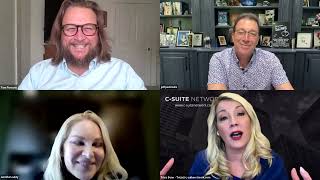
Frontline sales leaders Tom, Jennifer Latty, Jeff, and Gerhard discuss coaching managers through the shift from individual contributor to leader. They stress hiring slowly, firing fast, teaching core fundamentals like relationship-building and consultative selling, and giving junior reps high-stakes work with support. Trust and hands-on mentorship matter more than scripts as buyer behavior changes.
Chapters
I am so thrilled about this conversation, Gerhard, and the whole day has been incredible. I feel like the energy is just like building. And at the very end of the day, Gerhard and I are gonna be encapsulating the big takeaways, and I have no doubt that this conversation is going to be part of those big takeaways. I have the incredible honor of having Jennifer, Tom, and Jeff here with us today. I take the approach that if I have to go through a full bio for everyone, then there's, there's nothing I can do to help anybody. What I want to do is jump right in. We're going to be talking about sales coaching at the front manager level. How do we get that exponential success? Where are the challenges? What are the opportunities? And we're just going to have a great conversation that we want everybody to be able to jump into. So I know Amanda will put the LinkedIn links in the chat. Please put your questions in because we want to make sure that we're having a great, great, great conversation. So I'm going to start us off by just saying, look, this topic is huge. Each of you has an extraordinary background that is totally different from each other's. And so I'm going to ask— maybe I'll ask Tom, if you want to jump in first and just by way of background, give us a little bit of an idea of how you approach this conversation given your background.
Well, I've, as I said in my bio, I've sat in every seat in that ecosystem. And so I have a unique perspective as the seller, as the manager, as the regional guy, as the agency, um, as a trainer, as a strategist, um, and now my own daughter's company, uh, teaching her the, the business of sales and marketing. I just have a unique perspective of what the motivations are and issues that each party is dealing with. And so I can see things from a deeper level sometimes when I'm in a sales scenario.
So there are a few different scenarios going on. Okay, so speaking of different scenarios, I was able to be with Jennifer Latty hosting in New York City last night, and we had the opportunity of giving out lots of incredible Maribel chocolate. But Jen, do you want to jump in and just give a little bit in terms of your background and how you're looking at this kind of, this whole space of the manager?
Sure.
So similar to Tom, I think I've kind of touched every aspect of sales that there is from retail to wholesale to corporate. So if there's something that describes a sale, I've probably done it. Through all of these different iterations of going through different levels and being in sales, I think that each time you obviously learn and grow. And that certainly brought me into managing people because I think what I learned through working with all of these different companies is what makes a good manager and what makes a not good manager. So, you know, for me, you know, talking about working with the teams that I've worked with or currently work with, you know, it's obviously all about listening. It's about teaching, being open, wanting people to do better than you, you know, because you're not in competition with your team. You know, a great team makes a great manager look better. And, you know, I think that's kind of how I, you know, live every day.
I think you just gave a number of us PTSD because, uh, or the reminder of PTSD we may have experienced on those teams where that is not the case, where everybody's in competition including the people who are supposed to be coaching you. Okay, before we jump into more of that, Jeff, if you want to jump in, please.
I've been around sales literally my entire life since I was about 6 or 7. My parents, uh, both work for World Book Childcraft. And as I got promoted, I went with them and I went to their conferences and I listened to their motivational tapes in the car. I sold stereo speakers out of the back of a van when I was in my late teens. I owned Subway sandwich shops. I've sold sandwiches. I've sold $1 million of software. And now for 20 years owning this company, working with Global 5000 companies and building out their sales infrastructure. So I've seen it from systems, from technology, from people. But it really does always come back to people. I mean, you know, for as much as you can have these systems and infrastructure in place, it is that moment of truth. And great salespeople and great sales leaders really relate to people.
So I'm going to kick off the free-for-all because we're just going to have that great conversation. We all know there's the challenge of the promotion because you were good at doing one thing and then you're promoted into doing another. And the sales, you know, that actual manager of the team, it's the perfect example of that. And I think all of us who've had sales functions have been in that situation where we're making that transition. So, so where do things go wrong? Where do they go right? What does that look like? And how do we really be mindful of how we move forward successfully as we're supporting our managers in their sales roles?
I'll jump in. I, I was in a corporate environment where I was the seller and made the move to sales manager and Sometimes mentorship is deliberate and ongoing, and sometimes it's fleeting. And I got someone to pull me aside and said, you got this sales manager role. I'm going to tell you that the difference between you now and the way you were then is that when you were a seller, you did everything you could to win and you were in control of that at every level. And now you have not only less control, winning looks different because you won if you did, you made the activities, you did, achieved the goals at every level. But now you don't win until everyone does. And you're going to become impatient with that. And if you can overcome that impatience and recognize that you win when everyone else wins, you can make the leap from what appears to be a self-centered role in sales. Because even if you're fighting for the client, your sales manager thinks you're definitely fighting for yourself. And maybe there is that going on in some people, but when that clicked with me, that's what made the biggest difference. And I found myself realigning and evaluating what success looked like because of it. And I, I didn't get impatient and, and maybe, um, slowed down in the process because I just felt like I wasn't getting anywhere. And I could feel those two things fighting in me as as I made the leap. And luckily, I, I, I finally figured it out within a few months, and it was off to the races at that point. But that, that, that was where it hit me, and I, I was very lucky to have a good, good, uh, fleeting moment from a mentor.
Yeah, for me, I think, I think sales is guilty sometimes of doing some of the same things as marketing. Um, you know, you, we spend a lot of time training the new salespeople on the products, getting them demo certified, teaching them whatever sales process we might have, helping them with objections. And don't get me wrong, those or all things are important, but we really don't spend a lot of time teaching them how to have a conversation and how to listen and how to have empathy. And I go back to my opening comment about relationships. I mean, great salespeople build relationships not just once, but they sustain them, they build them, they grow them, they network over time. So I think for me, moving into management, you know, the biggest lessons I've learned are really how to teach my people how to communicate effectively, which is an ongoing job, especially in today's day day and age with all the channels that we have to deal with.
And I agree with that also. I think that, you know, with managing, you have to share your knowledge, obviously. But in sales, I think that a lot of people don't realize that it's also about— obviously, you have your relationships, which is by far the most important thing in sales. But it's also about hunting. And I think you have to teach people how to hunt because a lot of people look at a salesperson and they don't realize, they don't think long term, and they don't realize what's really involved in building a good salesperson, you know, making them a success and how you're finding this business. So something that I really focus on with my team is hunting and really trying to teach them how to hunt and how to reach out and how to network. And that's something I like to share because, as I said, as you see these people grow, you know, your goal is is, you know, really, you know, you really, we can piggyback off of their success that we're helping drive.
I'm sitting here and I'm thinking through the different traps that I've fallen into. You know, one of them, and so when you're gratified to see a team come together, a team win, you will do anything to create that feeling. Right? And I can feel that with all three of you. There's, and I'm sure everyone listening in right now all over the world are thinking, "Oh, that feeling, it just feels so good." And then you have the traps that you fall into. I know one for me is, let you, Jennifer, you said it, teach how to hunt. Well, let me teach you how to hunt. And then I hunt it and then I say, "See, that's how we hunt it." But that doesn't mean that they've actually learned how to hunt themselves, or the fishing analogy or whatever it is. So what have you found to be most successful in terms of that transition where it's like, I am showing you and then that means you're delivering? And at what stage do you pull the plug and say, this isn't the right fit, or they need to be in a different role, or maybe you need to be in a different role?
Well, hopefully that's not the case.
There's a couple things in that statement, but I mean, Well, one, I'm a big proponent of hire slow and fire fast. I mean, I think especially as you get further into your career, your instincts are pretty good driver. You have a good sense of who's going to make it and who's not. And sometimes just people aren't coachable, or even if they are, they're just— the gap is too wide. And you have to look at what that's going to cost you with the rest of the team that you have. But I think it's, you know, for those that do make it, I think you, you show them, then you do it with them, and then they, you have them show you, um, and then show that mastery until you move to the next skill. Um, and depending of course on what you're selling, that, that curve could take a couple days or it could take months. It just depends on, you know, what, what, how, what, how big of the item I guess you're trying to sell.
I've worked in company sales companies where you have had, management had no sales background. And I always found that those were the least effective managers that you can work with. Because if you come from sales and you're managing in sales, it's a big advantage for the team. I do believe that you can spot somebody if they're going to be successful or not. And it's really based on seeing how motivated they are, how willing they are to learn. And I think that I never want to be micromanaged. And if I have somebody on the team or somebody I've worked with where I have to even consider micromanaging, I think that's time where you just completely end it. Because I think that if you don't trust and if you haven't made the right hire, micromanaging doesn't have a place anywhere. So that's always my sign. If I don't trust somebody or if I don't see results happening— and everybody needs a ramp-up period. You can't be a superstar are, you know, right, right off the start. So as you're going through the process and you see the growth in someone, I think that that's really, you know, that's the joy you have out of managing a team. But for me, if, if I, if there's any micromanaging, we're done. It's just that simple.
You know, I want to tie something together that Jeff and Jennifer both said in separate contexts, and that is that when Jeff talks about them doing it while you watch, or that you do it and they watch, then they do it and you watch, and then they do it without you. I think one of the things that would tie the trust factor that Jennifer's talking about together is the, the fourth thing, and that would be where they do it and someone else watches, where they are now a peer-level leader. The amount of trust that comes from that when the sales manager can literally let it go, it still instills a lot of confidence, not only for the newbie, for the peer, but also for that peer to feel a de facto leadership role. And there's implications on that on every level because as a sales manager, if I want to move up and I'm going to replace my seat, I'm looking at people who know how to lead from where they are, not just wait for a title. And so those type of things build trust, I think, in the The sequence of doing it and they watch, they do it, you watch, and then they do it by themselves. And then the fourth thing is of them doing it and somebody else watches, I think, uh, is a, is a real critical piece to that trust.
That reminds me, we have some questions we're gonna go out to, but, uh, early on I wanted to be able to leapfrog that cycle. So I came up with this, okay, this is leapfrogged growth. And what I did was I had the, the more junior people on my team take over the responsibility of doing something that was very challenging for them with support, you know. So I was in the market research industry. They get to present the methodology in front of the client. Well, I'll tell you what, the slides that they prepare for the senior team become a lot more precise and a lot more, uh, like, just, uh, the quality improves exponentially because they sat on the hot seat just to present one slide. But when you're sitting in front of a client and you've got to justify that what you've presented is correct, that ups the ante and also creates the, the opportunity to sit in that hot seat to be able to take next steps with a maybe a smaller client the next time, etc. So, um, okay, so we have questions. Bruce McDuffie asks, can coaching be perceived by the team as micromanaging?
So long as you're coaching, I think, you know, I think again that comes back to the style and, and the trust factor and, and kind of how you bought get somebody on board. So I think there's a difference between a good coach and micromanaging. You know, I've been micromanaged before, and as I said, you know, I just don't have any— you know, for me, you know, if you have to do that, you're done. And you know when you're being micromanaged, you know, if coaching is helping, you know, learn and succeed, where micromanaging is really just You know, I think that there's an ulterior motive there that is not always—
I do think though people confuse micromanagement with accountability, you know, and they're not the same thing. You know, if I trained you how to do something, I set the expectation, and then you don't do it, whether I'm coaching or you're a manager, it's well within boundaries to then hold you accountable. But I think, you know, micromanaging is like, did you do this? Did you do that? Did you do this? Like, I'm in your face. It's different. And I think sometimes people misunderstand it. So it's important to communicate that effectively.
It's clearly a part of the hiring slow process in my mind. What Jeff said earlier about hiring slow, why is it slowed down? Because I'm going to have to have a conversation or more with you about how you perceive coaching in the first place. And I maybe in the process, I'm asking them how they would perceive this, that, or the other of certain things that that I do as a manager, are you going to be in line with that? Because we're candidating each other. This is a marriage of sorts. This is not just—
I'm looking for them in the interview, right? We're giving them feedback and we see how they respond.
Exactly.
Selling, then you already know that this can be a problem.
So the thing I think that triggers sellers to think differently when they understand that I'm for them is to say Tiger Woods had a swing coach, Tom Brady had a, I think, a nutrition coach in an office next door to him at some point. Um, you know, Michael Jordan had a shooting coach. These are the most elite of their field, and, and yet they had deliberate practice, private deliberate practice. And when you reframe it like that, sometimes the, the seller will recognize that you're not discounting their capabilities, you're calling up their opportunity.. And that distinction is, is a trust builder also. But some of them, if, if they're not gonna be able to get out of that feeling that I'm feeling micromanaged here, then, then maybe, maybe this isn't for you, you know? And, and, uh, maybe we find that out before we actually have them, uh, come on board. But, um, this is universal. I mean, there's a lot of sellers who just think, you know, to be, to be put in deliberate practice with a sales trainer is is like discounting me as a person. And you just have to reframe that conversation if that's what they're thinking.
You know, we talked— well, we spoke earlier about this conversation and the whole ethos of the team. So the manager has the individuals, and we've been talking about that. But then there's the ethos of the whole team. And Tom, you had raised with COVID there's sort of this in some areas, sort of a malaise, or things have changed so much. Where do we actually stand? What does that look like? And so I'd love for all of you to just bring us into your thinking and your conversation around what that looks like and how to manage that, because it's not— it would be so much easier maybe if it was just one-to-one. It's not. You've got to—
I would really like to hear from the field, truly, if I'm unique in my experience. Experiences that sellers since COVID have gotten into a funk. Um, and I would love to hear— yeah, Tom, you— sorry, you got a, a terrible situation. The rest of us are doing fine. Um, but I, I'm kind of have a suspicion, even watching Jeff nod his head, that maybe we're not— maybe we're not in that world, that, that people are generally cynical, or— and it's not their own fault necessarily— that things are not good where they're at. We've got a war going on. There's all kinds of changes to the selling process. I mean, even in the world I'm in, it takes 8 calls to get a meeting with a decision maker. And when I got into this business 25 years ago, that was 8 calls was like you're sluggish on getting the sale, let alone getting the first meeting. So, it's not sometimes not the seller's fault. But I'm curious about, and I'd love to hear from Jennifer and Jeff on this too, is uh, what else we can do to help call up a seller? Because it— nobody— nothing happens until somebody sells something, right? I mean, it's important to everybody's ecosystem. So I, I'm curious to hear what everyone else thinks.
I mean, well, I think that's an interesting way to look at it. I don't think it's so much salespeople getting into a funk. I mean, look, I mean, to stay in selling for a long period of time, you're gonna have ups and downs, and you're gonna have to go through some tough spells where you can't close anything to save your life. And next you're on a winning streak. That's just part of the game anyway. I think that's more towards the end of what you said. The buying experience has changed for all of us, and it's not— the pandemic was just an accelerator. This has been happening for 10 or 15 years. I mean, people are more distributed. They're buying virtually. They don't want to engage with the seller. They can get more information. AI makes it easier than ever. And now as agentic commerce moves from just B2C into B2B, you could make the argument, what does a salesperson do at all anymore if the buyer is doing everything and everything to move all the way around? But I just think the professional role of selling is changing. We have to be more facilitators and experts within our domain and help our customers buy. A lot of the traditional ways we all grew up learning and teaching how to sell are changing. You know, I think having a formal sales process of any kind is a waste of time. You know, with all due respect to my colleagues at all the sales training companies, because it was designed for a bygone era. You know, I think we fundamentally have to rewire our engagement with our buyers, which means we have to rewire how we coach and train and develop our next generation of sellers.
And so does this— is this different? And Jen, perfect for you to jump in. Is this different retail versus B2B?
I think there's a huge difference because, you know, on retail, you're talking about sales that are very transactional. And, you know, a lot of the sales are coming directly to you, where in B2B, you have to be much more strategic and you have to think long term. You know, and part of, you know, just kind of touching on, you know, Tom and Jeff, what you had mentioned earlier before is that in sales, I think there's just some basics that go along and it's kind of Sales 101. But in my book, it's all about relationship. It's about honesty. It's about following up. I mean, there are certain things that no matter how hard it gets, the relationship is first and foremost because you can take those relationships wherever you go. And I think that really makes a good salesperson stand out. And then, sorry, Trish, but going back to the B2B side, you really do have to think long term. And it's not always— in my book, at least. It's not always about winning the sale because even if you don't win it, you've already established you have that contact, you have that relationship. Because I will tell you that, you know, 90% of the time that comes back to you in some way. So although we all want to make that sale, we all know, you know, what comes with that. Sometimes it's good that you don't close it right away because your long term from that is going to be much more beneficial.
I, I want to add one little, uh, semicolon to something though about the B2B side, um, where the requirement is more consultation.
Yes.
I don't want to give— I don't want people to come away with this thinking, wow, thanks guys, no hope at all, I'm going to be replaced by a machine. I, I would, I would offer an alternative that the more nuanced the product or service that you sell, the more human creativity, which I heard about in the last session, that is required, the less the machine can replace you and the less commoditized the business. Now, working in the advertising business where CPMs are all over the board, for instance, because not everybody in here is in advertising, briefly, it's You can buy for something, uh, video for $40 cost per thousand or $20 cost per thousand, but what you are getting in value is completely different. And a human's ability to detect the value attached to the goals of the client determines the right fit. And that is, is a machine is not capable of future focus. It's, it's based on a collection of past. So I want to just give hope to those who are thinking this Am I even in the wrong profession? No, you're not. We need more people who think about the client and their needs first and how you can solve them, whether you sell them or not, which I think is a, is an important distinction in consultative selling that I'm bullish about. That consultative selling a lot of times sounds like listening for the client's needs to match your product to that solution. But in the world I live in, especially in marketing and advertising, it touches basically every department. It affects everybody. And the fact that you get to know that in marketing and advertising means you are responsible for information that is not just how much of this do you want to buy, that there are solutions that you may not sell that are part of a client's need, and you have to be willing to give recommendations, even dare I say, referral relationships in those scenarios to be a true consultant. Otherwise, the best you can be is a partner. I want to know, I want to be an institution. I want my seller to be an institution in that business. And you can't do that by only recommending what you have.
I agree with all that. And look, I've been in technology for 30 years and I'm constantly in and around it, but I just opened up my desk drawer because I have these, right? So I still write personal notes to people every week and send them out. By mail because as much as I'm new school, I'm still old school, right? And, you know, there's things that you can do that make a difference. And these are things that AI can't replicate, you know, is just being a human, thinking about the relationship, their kids, their wedding, their anniversaries, the Little League, you know, and then just being present. Yeah, we're all trying to sell our stuff, but, you know, if we focus on being present in our customers' lives and building true relationships, then in a lot of ways everything sells itself.
You know, when we have— we get, you know, get a lot of inquiries in. And when we do, there's many times where either, you know, I or one of our salespeople will reach out directly by phone because it, you know, talking about that human touch, everybody could do business through email. But when you do speak to somebody and, you know, you're kind of engaging, you know, with that first phone call and finding out what their needs are, really, it kind of sets the tone and moves you forward. And I always say that, you know, I think that, you know, writing a personal card, you can't get better than that. All the luxury brands still do that. It really, it means so much. And, you know, for— I just lost my train of thought. I'm sorry.
Not at all.
I was actually just thinking, Jen, that personal touch and the relationships I feel like I'm like extra glowing because I've known all of you for years and those are very personal relationships and then you reappear in each other's lives, you know, and it's so meaningful and you look for opportunities. I actually had someone else lined up to speak and I got to reach out to Jeff and say, guess what? I'm so excited. Can you come and join us for this conversation? And just like absolutely delighted. And anyway, I'm, I'm, I'm, I am excited about how we're opening up this conversation because there, there's, we've had a lot of conversation about AI and all the different tools and the technology and so on. There's one concept and, and thank you so much everybody who's participating in the chat. This is fantastic. There's one comment here. Bill Whitlock says, I have always given my team's permission to fail but learn. And, and then, you know, they build their scales, their skills and their they're, you know, sort of working through that improvement. And so I would love maybe as a quick wrap, could you share an example of where a fail became a success? And as you're looking at this, the sales manager's role.
I'll start while everyone else is thinking about because the one immediately pops to mind. I once had a seller who came to us from a competitor where he had an advertiser that was loyal to him, except when he came, he had to also build up their belief in what he was selling now. And it took him 9 months to get it. And, and the whole time he was always feeling like he was looking over his shoulder that he should get this done sooner. And I said, I'm not going to supersede your relationship with this client. I can help you build his belief on our product and value, but I'm not going to take this over. You're going to close this deal. And he got it done. And in his whole sales life after that, he always referred back to the fact that he knew he was going to make it here because I didn't push him to do it my way, to sell my way. It was, I'm going to incorporate the way you sell to this client with that relationship and build the credibility on the other side with that. And that's going to take some time for both of us.
Um, I had hired a woman away from one of our competitors, and she had an excellent reputation as an account manager. And I knew— and I had sold against her before— and I knew she would do a good job. But she really struggled her first 4 months. She wasn't selling anything. She wasn't building a pipeline. But I, I knew her, and I had a long relationship. So it was one of those things— I knew she could make it. So I just ended up clearing my schedule for 2 months, and I went out on numerous sales calls with her. Around the country and we just sold together and, you know, just let her absorb from me and I absorbed from her. And, you know, then we just— it just clicked, right? And then she got on this run. She became our number one seller for 3 years in a row, you know? So it's just sometimes, you know, environmental factors, all kinds of things. But like when you really believe in your team, you got to be willing to put the work in, you know, to be able to get your people there.
Yeah, and I had a similar experience where I also had somebody that just wasn't making it, and I sat down with her and showed her the way that I would do it, but did it in a very friendly way, you know, not dictating what she should do, but just being very suggestive and showed her my style. And then, you know, more importantly, I had her shadow, you know, other members of the team, because I do think that, you know, Training, you know, on the spot is the best thing that you can do. And I think that if you're shadowing other people, you can pull what you like from them and what you don't like. And what I was really proud of is that this person ended up becoming also one of our top salespeople. And it felt great because you see somebody, you know, you see when they click and they finally get it.
Incredible. Gerhard, I can't believe the time is already up, but I know it is up and I hope you enjoyed the conversation.
I love the conversation. I love the stories. And I think stories are really the primal sort of inspiration for human change. Like Jeff, when you gelled with that woman and supported her and learned from each other, that is the secret to Good coaching that I think that any good leader has to have two qualities. One is you have to be a good teacher, but the second one is even more important. You have to be a good student, and we can never learn alone. We always need other people to help us grow and the trust to take the chances, right?
I, I, during COVID there was a lot of conversation of accepting failure. And my whole definition is there is no failure if you know you have an important mission to deliver on and you get your butt back up again and you go at it a different way or you learn whatever it is. Speaking of being a good student, you learn whatever you needed to learn to be able to deliver on that mission. So Gerhard, thank you so much for giving us all the opportunity to deliver on this mission. Jennifer, Tom, Jeff, thank you so much for joining us today. It's been incredible.
Thank you.
Thank you.
More from Gerhard



What Selling Looks Like When Your AI Agents Have the Context Your Sellers Do

Better Conversations, Smarter Support: Wearable AI in Business






When Scarcity-Built Systems Meet Abundance - The Judgment Gap in AI-Powered Sales Leadership
