Sales Superpower: High Productivity AI Prompting
Jonathan from Momentum and Siobhan from Demandbase discuss how to use AI prompting and agents to boost sales productivity. They cover prompt engineering, AI coaching, and share a prompt library designed for sales teams.
Thrilled to be able to speak with a mentor of mine and someone who I deeply respect. With Siobhan, we'll get into how amazing she is in a second, but grateful to be here and grateful for selling power. So ready to rock and roll. How are you, Siobhan?
I'm fabulous, Jonathan, thank you. I'm so excited to see this presentation. You and I have talked about this for a long time, so it's great.
To see it come together many times. This is gonna be fun. Okay, so let's get into it. So today the objective we want to do in the 30 minutes hopefully we have together is go through like what is Y aigtm how's the foundational principles? Apply some hopefully breakdown into prompting and then I'll give you some takeaways and some goodies and if we have time, hopefully gives you some. Some time for questions, musings, ponderings, thoughts, pontifications, inquiries, or comments. Again, stay to the end. I'll make sure I share with you the prompt library for momentum that I personally wrote. 200 plus go to market prompts and I'll show you some examples of what those are in a second. But without further ado, let's get into it. So Siobhan, if I'm gonna actually take my stab at this, it's okay. So Siobhan is what we like to call one of the OGs of enablement. She's someone who's been around from the inception of the concept. She's been at Salesforce, she's been at Ringcentral, she's built these programs from minuscule nothing programs to these world class standard of what enablement programs should and, and everyone aspires to be. And I had the privilege and ability to have her as a mentor of mine two years ago at a company I was not doing enablement. And then we just became good friends and I've just had nothing but respect and awe for her brilliance, her ability to break through the, the, the, the crap, so to speak, and just be able to get to a place where you can actually have impact from enablement point of view. So I'm just thrilled and honored to be able to talk with you, Siobhan. So you, you want to add anything else?
No, thank you very much. I mean, it has been a real pleasure working with you. My, my knowledge of AI was very low a couple of years ago and you became my mentor and still are when it comes to AI and how to use it properly and prompt experience. And those of my teams have expanded exponentially because of the work that we've been able to do with you and your, your GTM AI Academy is an incredible place. There are how many now, 50 demos on there of various AI tools available and it's a great place for folks to go and just talk about where we are right now and get examples and see how people are using it and you know, all the new discussions are coming out there. So, uh, you're my, you're my guy, you're my guru when it comes to this.
Well, it means a lot because I'm, I just call myself a, a nerd. I don't know if a guru's right name. I'm definitely a nerd though, so I like this stuff. The other cool connection with us is that Demand Base is a customer of momentum. So demandbase uses momentum as a technology. Um, I was a customer Momentum before I became part of the team two years ago. So I, I know it from the world of, of using as a customer now being the head of growth, which is a lot of fun. So, but today we want to give you some practical things to kind of take away some things today and actually use AI, hopefully a little bit better. So in the comments, I know we actually cannot see your comments, but I'd love to see and hopefully that the Selling Power team can share with us. Where would you put yourself on this spectrum? So light green is just, you know, you can see yourself. Someone just talk about AI, but don't really apply it. Darker mid blue is the people applying to the roles. Light blue is people using AI agents. And I don't mean ChatGPT, I mean actual AI agents. And then the dark, dark blue in the center is people who are actually implementing AI agents across the team operationally. So I know we can't see your comments, so hopefully the Selling Power team can let me know, like, how are we doing? Like, do you see a pattern of what people are at? If you don't mind putting in the comments because we can't hear and see you, we're going to keep going, but I'd love to have you put in the comments where you feel like you're at and then the Selling Power team can tell us where you are. So AI in general requires a little bit of a mindset shift where I'm sure you probably all have heard this. When you put in mediocre results, you get mediocre, then you put in mediocre directions. If there's a problem with the output of AI more than likely or not. Oh, good. Thank you for all these Comments? Thank you for this. A lot of light blues and blues. Cool. Thank you for the feedback. If there's a problem with the output of AI, most of the time it's a problem with you and how you're prompting it. I don't mean that in a you're a wrong or bad person. It's more about. It's how you communicate with the AI that's like limiting its ability to help you. Ironically, AI forces us to become better communicators. Like, I'm a much better communicator now than I was three years ago because of AI. And once upon a time, this was a stat that. I don't know if it's still relevant or I should say accurate, but about six to nine months ago, there's a stat that said that anyone who signed up and paid for ChatGPT, after one to two months, they canceled. And the question is, why would you do that? One of the most powerful technologies we've ever had on the planet in the last hundred years is something that people can pay for 20 bucks. And yet they're canceling. So why is that? Because no one taught us how to talk to AI. So if you are feeling like you're not getting value out of AI or any tool, it's not your fault. We don't know how. No one's taught us how. And so we don't know how to get real value of it. And we're all kind of discovering this together as we go. So use this an example to kind of compare. I love comparisons. Siobhan, let's just pretend for a second you are the British baking show cake making expert and you won this last year. How about that? Let's present. Okay, let's do it. So if I knew you're a British baking show baking expert and I said, okay, Siobhan, make me a cake, what would you give me?
I would give you red velvet. I would probably put sprinkles on the top and cover it in dinosaurs.
That's the most creative cake that anyone told me yet.
Actually, I do.
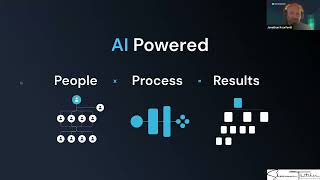
Godzilla. Godzilla. Okay, Godzilla. Thanks for warming up on that one. So I love it. You're definitely most creative. I've asked this question 100 times. Yours definitely was most creative. I love it. But let's just say I. I'm allergic to red velvet. So then you, you know, I get allergic and you get kind of whatever kick. But the point is, even if you're an expert, I don't know what I'm going to get. And it's not your fault. It's my fault because I'm not communicating. So if instead I came you with Siobhan, I said, okay, I need chocolate cake, no sugar, I need a healthy replacement, need whipping cream, cherries, cocoa, three layers for a wedding that's Elvis themed. You do much better job at appeasing me because I'm being specific what I'm asking for obviously. Absolutely. So same concept applies to AI and how we talk. I find that we've been trained as humans to be short in how we communicate in presentations like this to each other on text messaging. So instead of saying Y O U R A you put in ur. We shortcut everything with communication and AI forces us in a good way to become a little bit more clearer in how we talk. So what we want to do, there's a lot of things we can do in these three pillars alone. But to get results it's all about the people, the talent, the skills and then the process going into it. So the question I always ask myself is how do I AI power the people? How do I AI power the process which will therefore AI power the results as a natural consequence. So today we want to get into really quickly. I want to show you where we're going and then we're going to kind of bring it back down home to Earth to talk about how do we apply that now with prompting. So agents is the key term that everyone's been talking about for the last year at least. Agent AI was built out by the co founder of HubSpot. Then Agent Force came out in October. I think you were there when that happened. Wasn't it pretty close to that Siobhan? Something like that? I can't remember but it's last year and so everyone started talking about agents. OpenAI came out and, and launched out what they believe is the five stages of AI which looks like this. So level one was November of 2022 when ChatGPT 3.5 came out. Level two was last year with the O1 models and all the reasoning type models. Agents is this year. Innovators is what's coming very, very quickly next and then organizational AI Think about like a Jarvis running the entire Stark Industries in Iron Man 3. That that kind of concept is what's going to come after that. So I wanted to show you so you kind of see like where we are now and then where we're going to give you a clue of like how things are working as a whole is. This is just my opinion. Most people I talk to are kind of stuck in the middle here of not really using AI agents yet, but they're definitely using like the reasoning models in ChatGPT or Claude or something else. Would you agree this Javon, what do you think?
Oh, absolutely. Yeah.
Okay, cool. All right, so I'm going to break down to help conceptualize this concept of agents into qualifying a sales lead. So old school world, let's say no AI. A human has to go out and manually gather info, create an email they have to reach out to, they have to ask questions and think about what questions we're going to ask to the customer, then log the information to CRM if it ever happens. And they do a manual follow up. What, what most people are doing now is that they slap on prompting on top of it. And so they prompt and say, okay, Gemini chatgpt, whoever, they go research this person and then tell me what email I should send or what questions I should ask. And then also after the conversation is done, they'll throw the transcript into AI and say, here's my five fields, would you please give me the stuff I need to put into the CRM? And then the human does a follow up. So very, very common. And most people I talk to are here. The next level is when you have, instead of at the center of the human doing everything, you have an AI agent. So the next level is when an AI agent looks at your calendar and says, hey, you got a meeting with the CFO of a bank tomorrow. I'm going to go out and automatically research this person for you and give you an outreach that you can then send. You've got to approve it and then send it. And then the AI agent can say, based on the research I did, here's the questions we, you should probably be asking. And then auto logs the CRM and auto proposes follow up and et cetera. So momentum falls right in here. And on this one, which is multi agents. So same concept, but Instead of having one agent doing research, you have like 10. An example would be, let me ask you this, Siobhan, for an expert level salesperson to do good research, how many things they have to research to have expert level, what do you need to find out?
Oh, they got to find out everything about the company, the person, the market, the their team, what does the financials look like? Anything, objections, who are their competitors?
Everything stuff, they gotta come a pro, right? So in this world of multi agents, instead of one agent doing everything that you just said, Siobhan, right now, current state, if you take one agent and give it one task, like just finance is this one agent and then just the market and then just LinkedIn and then just PR. Then all those agents come together and then collaborate and then give this research package to a human automatically, which is awesome. So that same concept applies for every single step of the way. Which momentum sits on this side of the thing. It helps you understand what we do a little bit more. So moving into this now, let's think about, okay, if that was one use case we're talking about, what if it was across the entire experience of a salesperson, where lead generation, research, outreach, conversations, analytics, strategy, content, scheduling, all of it is done automatically and all of these agents all talk to each other and obviously to the human, and then feed that data into some sort of centralized database like a snowflake or like a salesforce or et cetera. So this is the world that obviously most people are not in yet, but this is definitely where we're going. I realize this looks like a UFO that was not on purpose, it just kind of happened that way. So. But you take the same concept. The core of all of this is prompting. What makes these AI agents run is one, access to tools and two, is the prompts they're trained on. So which is why we're going to get into prompts today to help you kind of start conceptualize this and you can start building out stuff, but take the same concept and then apply it to every single role in the organization. Finance, marketing, sales, hr, like any, any of the teams you don't see on here, everyone will have the same concept where you'll have this fleet of agents doing different things for you and you'll be doing the more strategic, high level stuff. Like for example, Siobhan, I know you're doing a lot with AI, but like, let's just say current state versus future state. If you could, what would you be doing? If the piddly doo stuff was done by agents and you could just focus on what Siobhan only can do with your genius, what would you be doing?
Oh, I'd be focusing on strategy, absolutely. I'd be talking to everybody I could get my hands on and figure out what the new, the nuances are that we are missing or the gaps that are there that are not easily identifiable. It's the. I like talking about it as finding out the thing behind the thing.
Yeah, yeah. Which, which I would say you're an expert at. But it's that level of genius that AI cannot replicate. Siobhan, because Siobhan is your soul, your experience, your knowledge is unique. Even though you can put all this stuff into an AI. AI is not going to replace you anytime soon, which is good. So then the world, I love this world. Thinking about like what would I do if 38 of my 40 hours of my day was to spend on strategic stuff? That's fun, would be awesome. You know, so going to this concept again, think about this. And then organizationally there is like one mother load agent that understands everything going on in the organization. This is what's called organizational is because it has an idea of. Sorry about that. It has an idea of what's happening across the organization. So take the same concept and think about how we're going to buy and sell. If you had one AI that knew what was happening across the entire org, then it would also know like okay, we probably need to go get a product. So I need to go talk to this other AI agent from organizationally to figure out this product or service or I need to go talk to this one or this one, then do a competitive analysis on the offers. So in a sales world, I don't know yet. And this is the thing, we don't know this is coming, but we don't know yet as humans how, how well or if we like to work with AI on different buying levels. We don't know that yet. It's like still kind of discovering, but this concept is where we're going. Again, think about Jarvis with Stark Industries. That's where Jarvis could understand what's happening organization and go out and like go find products or services, which is crazy. So any thoughts on this? Sean? This is kind of like a mind blowing concept.
It's, it's mind blowing. It's, you know, it looks a little scary from, from the image but then again if you conceptualize it into big individual, you know, buyer company A, seller company B, the, the idea that a company would be spending its hard earned revenue on the right tools and products and people in order to be able to provide the right support to their customers and the most effective support to their customers because of all the research that they've done. I mean that we're talking hundreds if not thousands of hours of time given back and productivity increases. I mean just amazing what, what we'd be able to do.
I think I, I totally agree with that. Like it's the time alone is like massive. When you start thinking though, when you're able to take that time and, and then the impact of speed of strategic decision making, that's where the real power comes in. Because yes, the time is a huge time Savings. But the other side of that is like how fast you can move as a result as a business, which is kind of crazy.
Well, it means because we'll have all the information, right? I mean how many people? If it's not in Salesforce, it doesn't exist. Well, right, That's a lot of administrative things are missed. In this case, all of the gathering of that information will not be missed.
Yeah, which I think we don't know yet because a lot of people are used to not having us once you have it, like where's this been all my life? So it's pretty cool. All right, let's get into it. So there's tons of different types of AI. I'm going to try and zip through this because of time. Well, I'm going to focus on today, just the text based because I'm sure obviously most of you using some sort of text based AI. And I'm going to give you example of a couple things. This just so you know, is GPT3 and I want to show this because most people don't know this. It's been trained on millions of parameters. Those parameters are all the content you see in front of you. So Wikipedia, New York Times, BBC Mathematics, Hacker News, like all this stuff was what put into the brain of chat GBT so it could answer your questions and understand how we communicate and etc. Etc. So when you think about if all this exists in the brain of ChatGPT and you put in a prompt that says give me a good email for cold outreach, it's going to go read and say okay, let's look at Enron emails, let's look at what good email means, let's look at outreach and all these random different things and then give you an average of a mediocre result that says something like I hope this finds you well and you as a user are disappointed because the email is horrible and that's not good. So what we need then is like you take the concepts, you know, as an expert salesperson you say, okay, there's a lot of things that goes into it, but a few things you need to have to help you make a good email is the pains, the title, industry trends, personalization. And then when you put that information to a prompt and then load it in, you get a much more context rich specific message because the AI understands what you're talking about. It can't read your, can't read your mind and give you better results. So again, this is where we were three years ago and this is where we Are now this is again another mind blowing thing.
Unbelievable.
And the reason why it's crazy. It's like we were here, now we're here. So I'm showing this because it makes prompting fortunately easier, but also more essential because you have so much more power. Compute data, training data. You have to kind of fine tune. So keep going. I like to call context is king with AI, Structured context is what we're going to talk about today. Is Supreme Emperor a little bit better. So think about the concept of rain. Rain by itself and go back here. If it falls on rock, it can't cut through rock unless it's thousands of years. However, take that same material, water, and focus it in a 60,000 pressure psi water cutter. You can cut through granite. So no difference in the material except for the differences in the focus. So what we want to do is help teach you what can happen with AI when you focus the energy. I'm going to show you a difference in prompting using a visual AI. So it's a text, text to image generator called Midjourney just for experiments. Just so you know, this has been trained on. Unlike ChatGPT, which was trained on like Enron emails and YouTube videos and research, Mid Journey was trained on visuals and concepts and images. So if I wanted to have a concept of Godzilla because I'm a Godzilla nerd, I'll go into Mid Journey and say, show me a picture of Godzilla and it gives me this, which as you can see, this is a T Rex with glowing eyes. This is offensive to my five year old self. This is not Godzilla. So I've got to go into my tool and say, okay, let's try a little bit better prompt which is as you can see here, lit up like a movie scene. Smoke around him. And I get this. So it's closer to Godzilla but not quite there. I want to get movie quality. So because I know that Mid Journey is trained on visual concepts, then I need to speak to it in visual concepts. So even if you don't know anything about what this prompt means, this little thing right Here is Sony FE 24 through 70 millimeter is a camera type and distance and lens. You may not know what that is, but AI does and I can use this prompt and therefore I'll get this same tool, way different results and the only difference is the prompt. Any thoughts on this, Siobhan?
It's just really, really clear that you have to be precise and knowing what it is you're going after or what you're trying to go after is really paramount. So Think about what you want to find in a lot of cases before you really start digging in. And you can get there a whole lot faster if you've actually thought about what, as you said, context is king.
I totally agree. I love it. And like you said, like this precision, kind of like the cake, the cake making thing, it's the same concept. So today, let's get into the meat, which is why I want to get to all this. Con concepts are used to get to this point, which I want to talk about. Three keys of better output for AI or prompting. So they are structured format, words have power and examples. These are three keys that I literally teach every single day, that if you have only these three things, you're prompting to take it to the next level. So let's talk about this real fast. Here's the paragraph. I'm gonna leave this up for a second so Siobhan and everyone else can just read and consume this. You don't have to read it out loud, Siobhan, just consume it. So this is a pretty basic prompt. And then there's gonna be this one. So this, the prompt is the same. As you can see, the only thing I changed is the hashtags and the titles. The rest of the prompt is exactly the same. So here, Siobhan, before I go into my spiel, what, tell me the difference between this for as an expert communicator, what do you see the differences being very.
Everything has been compartmentalized into how I would normally consume it. I want to know about the company's information. Now do the analysis for me and tell me what it looks like and put it into a table so that it's easy for me to read and compare and then anything else I need to know.
I love it. So from a time perspective, is it faster, easier for the left side or the right side to consume it?
Much, much faster on the right side, right?
Because it's broken down for you. So same concept. AI is really good about structuring unstructured data. You could give it a wall of text and it can figure it out. However, it's easier and faster for the AI to have structure. So it understands like, what is the importance of each concept. So these hashtags, just so you're aware, this is called markdown, when you go into a Google Doc or Microsoft Doc, you have when you click on the like heading 1 or heading 2, when you copy paste it into ChatGPT, it will create it into hashtags. What that just means is hashtag1 is heading1 hashtag2 is heading2, and so on through heading3. Formatting and hierarchy matters. Think about it like a book. If I put the title of a book in the middle of the book and it was like a line in the book, it wasn't like titled, you wouldn't know what the title is. So same concept, your prompts need to be written kind of like a book where you tell it like, what's the formatting, what's the hierarchy? So understands very quickly what you're trying to get to. That's number one. Okay, number two, what's the difference? Siobhan, if I said act as someone who's wearing this really cool duck shirt or versus saying you are someone wearing a really cool duck shirt, what's the difference?
One is very precise. One is this is the situation, go from here. Where the other one is kind of wishy washy.
Exactly. It's the same thing with this. Rules versus law. What's the difference, Ron?
Between rules are more guidelines to me than anything else. Where law is you must do this.
Yeah. Like one you can go to jail for, the other one you can't. So this same concept applies to all these things. But the AI doesn't just take the words, tokenize them and then understand the math and the predictive nature of it, which it does. And it also understands the weight behind the words you're using. So that's why I say with most prompting again, we as humans, I, I get lazy. I'll say I don't talk to anybody else. I get lazy sometimes. But when I want really good results, I have to be very aware of the words I'm using in concepts because AI understands what these mean. I see the question in the, in the comments. We'll get to that in one second. Last one is this one which is qu or examples. So this is a good friend of mine, Christian Kraus. He's an amazing thought Leader on, on LinkedIn regarding sales and reaching out and prospecting that can stuff you don't follow him, please do. He's awesome. But he has this, this post. I screenshotted his post and he talked about the cold email non negotiables. So I was like, I'm gonna make a prompt about this. So let's take all of the, let's take all of the concepts we learned, the three keys, let's put it together into this. So we have the hashtags, we have the hierarchy. I took his concepts here and I added this one little part saying, tell me what questions you need answered. She can make the perfect cold email for me. And then lastly is the example below. So I, I not only talk about the concept of the email, but I want to show it an example. So Siobhan, you and I talked about this many times in enablement. If you tried to train a brand new person on anything and all you gave them was examples and no context, how well do they do?
They're not going to do very well. They may, you know, be lucky with a bluebird, but for the most part they're, they're just not going to, they're not going to do what they need to be able to do and especially connect and align with the customers.
Right. If you go the opposite direction, if all you gave them was context but no application, no examples, how will they do?
It's just a, it's a feature war. Everything becomes a check mark and then all it does is come down to price essentially is what it boils down to.
Right, Right. So prompting AI is very, very similar which is why I think enablement people are really good or should be good at AI because it's literally like training a human. I need to give it the concepts and context and then examples and it performs really, really well. Okay, so I'm going to go to the question real fast. It says future state. Where would one begin building this for the company today? Are there tools for buyers to have agents screen potential supplier agents before supplying them? First question is hopefully we'll get to it today. Hopefully it's prompting to begin. And then second question is it doesn't exist yet, but it will. Like you're talking about a question or a concept that should be applied, we just don't have yet because we don't have buyer agents or potential supplier agents yet. So it doesn't exist. But it's a good idea. She go build it. Okay, so I'm going to send you all and I'll send it to the, the team here so they can go through this. But I created using all these same principles a prompt library of 200 plus for sales, customer success, bunch of other ones like and to give you example of one like this, on the left hand side is my competitive battle card prompt which I gave to Siobhan a while ago. But this is a great problem.
I used it when I was looking for work, when I was looking for a new opposite to compare the companies against each other.
That's really funny. Yeah. So there's the committed battle card. This is no one about AI strategy. So just, you know, this is the type of Prompts that exist. There's 200 of these in, in the prompt library, which you'll have for free just as a, as a thank you from me to coming today. So I think for now I'm going to, I'm going to pause there because we're almost at time and I usually have a little bit more. We'll pause there. You okay with that? Any questions? What do you think, Siobhan?
Yeah, I think that's. I think it's good. The fact that they've got access to the library and I've seen that library and it is absolutely amazing. Basically, anything you want to be able to do, there's already a prompt that exists.
And yeah, Siobhan, I'm going to ask you this question they asked before, like from the future, from current state to future state, because I know you're right in the middle of this with demand base. Like what are you doing now to convert over to more AI agent type stuff?
Well, Demandbase itself has agent base, so we've already got AI built into some of the tools so that they can, they can talk to each other. The agents are there. We're connecting closely with Salesforce, for example. So the agents are talking to each other. From an enablement perspective, we are using it for AI coaching. So when we are having people practicing pitches, for example, they do their first pitch and the AI comes back and gives them their coaching results immediately. So from a frontline manager's perspective, instead of a manager having to try to figure out where the gaps are, the AI shows in the gaps like this. So the managers, again, it's about performance and productivity. The managers can be really specific and zero in. We also on a weekly basis share a lot of these prompts and all these things and what we call the in case you missed it, Slack, which is just, hey, you know, here's something we saw. Here's a prompt you might want to try or. So there's a lot of socializing that's going on. And also there is a channel within Slack called within a demand base called AI Enthusiasts, which is a lot more techie than then our. In case you missed it. But you know, as an organization and I know with my team themselves, I'm like, look at AI capabilities before you try doing something manually. Look at that first. Use the tools that are there. You've got a junior assistant. Take advantage of it.
Yeah, when you going off of like the currency future state, like in the world where a salesperson has agents at their disposal for every major category, we're not there yet. Like the technology doesn't exist where these agents can collab. It's coming with like MCP and other API integrations. We don't have it yet. So you as a leader thinking about a salesperson's day to day and like with the ever changing role of AI, how are you handling current state and then building towards this kind of agent support system?
A lot of it is getting them to to use the tools that exist. Like we've got tools like Momentum and some others and it's educating on this prompting capability. What can they actually do? A lot of it is getting people to get out of the beliefs they have in their mind of what AI is capable of and to get past the fear. And you and I have talked about this a lot, right? I've been fearful of trough of disillusionment. Oh my God, this is so cool, right? That kind of thing. So you're going to go up and down with what happens and it is getting them to take the risk, getting them to try these capabilities and see what comes back understanding. Of course there are caveats with it, but for the most part it is encouraging people to put the fear aside and go and try things. The only big caveat is don't share anything internal externally. Right. Don't do that. But other than that, a lot of these capabilities that you can do behind firewalls, once they get going, the feedback we hear from people is it saved me 10 hours this week. I was able to respond to a customer and really dig into what matters to them because this research was done for me. I didn't have to ask all of these discovery questions that they've heard so many times before. I can go directly into what the pains are for somebody in that market in that role.
Yeah, I love that. So as you. Because enablement is like a really, really cool seat because you can see across functionally what's happening, where the big impacts are right where I find that a lot of people, their strategy is basically throwing a license of ChatGPT or whatever AI tool at their team and expecting them to be number one, prompt engine engineers, which they're not. And number two, we actually get value out of it. Whereas with you as an able but you're looking more about the system as a whole and how it's working. So how do you decide on where? Like for example, you talk about the AI coaching. Why was that the thing you chose to do versus possible other scenarios and how did you make that decision to make sure you can do the best Thing first.
Yeah. So the decision was made because we recognize that a lot of frontline managers, for example, are put into the role with very little training on how to actually coach, coach their people. They're told, you know, make sure the pipeline is there, report back on the pipeline, but they're not taught how to help people help their teams move through the sales process. The result being that at the end of every quarter, these sales managers become super reps and go out and try to close everything, which means high discounts, deal slip, all of that kind of stuff. So by able, by being able to add this AI coaching into it, it not only can it give them guidance on how to help their people, but it saves them all of that time to actually try to learn where a lot of these issues are. Because frankly, a lot of frontline managers were high performers. And being high performers, a lot of it is unconscious competence, which means they don't know how to tell you what they do, why they do. So this AI coaching allows that what does sounds like a positive, but can be a challenge. AI coaching allows that to happen.
Do you. You're using.
Sales.
Which one? Which one are you using? Sales. Thank you. So sales hood's using. If I. From a data point of view, because I'm curious now, it's using or integrating into Salesforce and to the conversation. So as both access to both the CRM data and whatever else. Is there anything like probably the training you've done to it too, like the. Any methodology training or that kind of stuff?
Yeah, we just stood it up recently, but even just with our first program, imagine this now, just with our first program, we never had to teach anybody how to do it. That was the other thing. They simply got an email, they clicked on the link, Boom, in they go. They're recording their video, they're getting all that information back. It's fun, it's entertaining. We have a group that isn't due until mid October, but the group that was due by the 19th of September, we had 85% completion. 85.
Amazing.
And for a first thing, you stand up. And a lot of it is because that was fun. They go in, they do their video, they get coached immediately, they do it again, and they do it again. And they do it again and it's just reinforcement. It's amazing. The results.
Barry. I know I have time. I have one thing to say though, is like what I know, which is awesome because you're obviously a customer momentum is that it wouldn't be the same if you didn't have that rich CRM data without momentum. But you also need to have the AI have the ability to actually coach because momentum gives the data from the CRM point of view. And then the next agent can take the next step of saying, okay, now we have this data, we can actually take the step on what's being missing to work it. So it's cool to see these texts starting to work together in these different ways, you know.
Yeah. And it tells us things like, you know, we need to do more storytelling, things like that. And that, you know, the data is there now. It's not a matter of listening to hundreds and hundreds and hundreds and hundreds of calls. It's right there.
Yeah. Cool. We're done. You keep going.
Great job.
Thank you. Very interesting.
Appreciate you.
Can you do me a favor?
Yes.
Can you share your screen and can you go to the GTM Academy and show what you have created that your side hustle that I think is very, very valuable.
I have not. You're kind, let me do this, but I was not planning on doing this, so appreciate you giving me a chance to do this. Okay, so if you go to gtmaacademy.com I launched this a month after ChatGPT launched, which is just. Just different teams doing different stuff. So I have a ton of. If you go to the courses page, I have a lot of free stuff here you can go into and use for free. I have a lot of training that's either it's either tool based, meaning we can deep dive into Claude or Microsoft Copilot, or it's role based, meaning how does a salesperson use these tools day to day today? So it just depends on what you're wanting to get to. But there's a ton of stuff in here. And again, if you go here and you go to the free, you'll see all the different free stuff that's in here already if you want to have access to it. So thank you for letting me talk about that.
Thank you. And Siobhan, give us the one sentence elevator pitch for Demand Base.
Demand Base allows companies to really figure out what their customers and their prospects are really looking for. And it allows you to market to the appropriate people. We're using AI to create buying groups, for example, something that was very, very manual. And you know, it's not always the obvious people that are part of a buying group. But now with AI and Demand Base, these buying groups can be created automatically and it just blows people away. They're like, oh my God, I don't have to do that. It's like, nope, here you go. And here are folks at that company you may not even have considered that are part of this group.
That's awesome. So you're expanding the market.
Absolutely. Yeah, yeah, yeah. And it allows marketing and sales to talk together because there's a DB1 for marketing and a DB1 for sales. They share. They're not. They're not in conflict.
Harry, your thoughts on this presentation?
It's great. I really appreciated seeing what you're doing, Jonathan, and how you broke it down. So it's very visible for us in terms of the agents etc. So thank you.
My pleasure.
You. You expose the brain of AI.
Yes.
I'm an. I'm a nerd. I know AI experts. I am not one. I'm definitely a nerd that. I just love and enjoy this stuff too much so. It's too much fun.
It looked like a neural network, you know.
I know, right? Well, thank you again for having us. I really appreciate being a part of this. So thanks.
Thank.
You.
More from Gerhard



What Selling Looks Like When Your AI Agents Have the Context Your Sellers Do

Better Conversations, Smarter Support: Wearable AI in Business






When Scarcity-Built Systems Meet Abundance - The Judgment Gap in AI-Powered Sales Leadership
