Secrets to Building the Foundation for a Fabulous 2026
Lee Levitt outlines a four-step sales model called Peel: Prepare, Engage, Enroll, Lead. He introduces three tools to use with customers: Business Value Hypothesis, Influence Map, and Relationship Bank Account. The foundation rests on curiosity, authenticity, passion, resilience, and integrity, plus a daily reflection habit.
Chapters
You.
Lee Levitt, Principal Consultant with the Accelero Group. We work with clients to improve sales results through value selling initiatives and hands on coaching leveraging 25 years in sales, sales leadership and global enablement at Google, Oracle and a number of early stage companies. It's great to be here with the Sales 3.0 community. So many great conversations this week, including one this morning with Sue Woodard about stories and stories, opening hearts and Jeff's conversation about the neuroscience of selling an elite community, elite communicating and my good friend Ron about talking about negotiating and the upcoming conversation with Todd about trust. So let's talk about enablement just briefly. You know when I first started researching enablement at IDC 20 years ago and talking with Gerhard about it, I was on his video podcast about 20 years ago talking about it. We define it as the right information at the right time at the right place. Since then my perspective has shifted. Today I define enablement as driving seller behavior for the benefit of the buyer and we're going to talk about behavior change throughout my slides and we've heard about behavior change through most of the week. We're here to talk about building your Sales foundation for 2026. My goal today is simple. To give you a way to build momentum.
Without adding complexity. Because you sure know it. Your world is complex enough. While much of the world has become increasingly enamored with shining objects, shiny objects such as AI and.
Agentic tools, your end customers continue to focus on business goals, milestones, OKRs and MBOs. And they're increasingly confused and frustrated. They need your help more than ever. For those of us managing or enabling sales organizations, we have to focus on building and strengthening the operational foundation that ensures success.
So our theme today is foundation building, creating the mechanics, the tools and the mindset that consistently drive success, no matter what's happening around us. We'll look at what customers are really.
We'Ll look at what customers are really struggling with today, how to take the lead in the sales process and approach practical model you can apply immediately after this session. Well, wait for after Todd's session in the wrap up because it's good stuff. But maybe take the afternoon off after the end of this conference and start up Monday morning. I'll also prescribe specific next steps and share multiple resources that you can use. On Monday. I promise to take a couple of deep dives into specific topics and with others I might just touch on because we only have 30 minutes now. Normally I'd suggest that you grab one nugget from this presentation, something that interests you and try it. But today I'm presenting a series of techniques that together will significantly improve your sales results on the order of 30 to 50%. Yeah, a lot. They need to be taken on as a system. Good salespeople are already doing much of this informally. It's your opportunity as a sales leader or or a sales enablement professional to take it from informal to a formal approach to get better results. And remember, throughout this conversation, the purpose of selling is not selling, it's buying. Let's start with the reality. Customers today are overwhelmed. They're navigating shifting priorities, new pressures, and constant organizational change. And inside every account, you've got more stakeholders, more noise, and more simultaneous and initiatives than ever before. So here we are, late in the fourth quarter. I know more than a few of you are looking at this photo and thinking, that's my sales organization with the wheels coming off. It's not. You guys are fine. Out in the real world, things happen. Business units collide, organizations get get shuffled. Milestones are missed, fenders are banged. It's the customer's wheels falling off. Oh, by the way, these next 10 photos. I took them at Limerock a few years ago. My favorite racetrack. And three things surprised me as I was hanging over the pit wall. One, the noise, the cacophony of engines and the squealing tires. Two, the striking colors and constant activity. And three, the cloud of tire smoke from race cars leaving the pits. It reminded me a lot of selling when I was in field enablement. At Oracle, even the best customers can only prioritize two or maybe three initiatives at a time. You might think your solution is a priority, but you're competing with dozens of other demands on their time and attention. Executives asking for new functions, managers asking for more visibility, employees asking for more support, better services. Customers asking for more functionality. Customers aren't just deciding what to do, they're deciding what not to do. Everyone's competing for budget people and executive bandwidth. And just when something gets resolved, a new wave of challenges hits. The environment is constantly changing. Sometimes things work. Sometimes customers manage to keep initiatives on track. Sometimes they don't. This is the chaos surrounding our customers. And then they ask, why should they do anything different?
Customers ask themselves this constantly. I've seen multimillion dollar deals go cold because customers just don't have the interest or bandwidth to take on something new. No interest in reprioritizing the no matter how large the discount offered at the end of the quarter, they're good with BAU business as usual or their old Chevy pickup and Airstream travel trailer. They still work. They know the limitations and challenges of that current rig. The new thing represents the unknown. It represents risk, organizational risk, personal risk, reputational risk. So why should they do anything different in 2026? Because in this business environment, they have to. Competitors are making changes, becoming more competitive. Customers have higher expectations. Wall street wants increasing returns. But customers aren't looking for a salesperson. They need a guide. Someone who can create structure, clarity and confidence. Customers need someone to lead them. Just like this gentleman in that tweed jacket on that vintage Vespa. Or someone to take the driver's seat. Selling today isn't about pitching product. It's about change management. Customers are paralyzed by fear of making a decision. This is where your exceptional sellers stand out. They don't wait for customers to lead. They take the driver's seat. They orchestrate the process. They align stakeholders. They create momentum. Matt Dixon and Ted McKenna document this in the Jolt Effect. Customers need direction. They need you, us to take the driver's seat. Not to push them, but to steer them. To help them discover what's possible and and how to get there. If you do this well, you become indispensable. Indispensable. Your job is to organize their reality. If you just fulfill demand, you're a fax machine. Your job is to create demand by showing them what's possible. Or to use Gerhardt's favorite word, to co create. Selling is all about change management. Helping customers to prepare for things to go differently. They've never done this before. Whether it's acquiring another company or rolling out a customer retention system, or implementing prescriptive tools, most customers don't know what's possible. It's your job to help your team create that awareness of possibility. To lay it out, to lay it out. Organize it. Help them to understand what's possible, what they must do and what they must expect.
So let's talk about the mechanics of success. A repeatable model that ensures better results. It's a simple model. Organic, even. Peel.
Over 10 years ago, Zach Kahn set the world record for peeling an orange in 4 1/2 seconds. This was probably not the first time he peeled an orange. Practice does make perfect. Deliberate practice builds capability, unconscious confidence. Stephanie and Gerhardt talked about the power of role playing and deliberate practice in the opening sessions on Monday. And Tim Reister said that reps who participated in five role plays, just five deliberate practice, saw their revenues increase by 7 to 30%. We need the same muscle memory in sales. I call it peel, prepare, engage, enroll, lead. It's a structured way of driving deals forward while creating real value at each step. By the way, this is not a new sales methodology I'm launching today. Let's stick with, with all of, all of the ones that are out there. This is just a way of thinking about how to engage with customer, how to prepare for and engage with customers. So this is what most selling looks like. Only one step. Engage talking at the customer. We skip those other three steps. Prepare, enroll and lead. And this positions the salesperson to, to be the choreographer for the customer. Let's take a look at each of those four steps. It starts with prepare. Not a five minute LinkedIn scan. I mean deep research and hypothesis building. We're going to talk about hypotheses in a little bit. Preparation is one of your greatest differentiators. This includes research, curiosity, account planning, meeting planning and deliberate practice. Marianne Vanella said yesterday that 84% of enterprise deals die in the first meeting, usually due to lack of good prep. That is unconscionable. Top sellers never wing it. They orchestrate every customer interaction with intent. But they also make it feel natural and effortless. Once you've prepared, the next step is engagement. How you craft and deliver your message. This is not about presenting more slides or potentially any slides. It's about saying the right thing to the right people at the right time in the simplest possible language. It's not about your pitch or your product. It's about using their language. It's about confirming what you found in prep. Without using their language, there's no communication. And it's all about communicating, connecting, how the customer wants to connect, using their language. So to find their language, become the CSI profiler. Take a look at this job posting. It gives you a lot of visibility on what's going on in the customer's organization. A lot of product information there. But even more interesting, let's take a look at LinkedIn and find something that Danny Harris posted on LinkedIn a while ago about Gerhart. I've known Gerhart for a long time. Changing mindset. Genuine and authentic person who will listen, engage and be open to the power of positivity. Does this capture Gerhart? Absolutely, yeah. So here's the most important sales person. Here's the most important thing a salesperson can do. Identify the customer's language of value and use their language to connect. So what do I mean by language of value? It's how the person describes the world or how Danny described Gerhardt. It's the words they use. It's their value system. Here's an example. I'm a car guy. My language of value is performance. So when I'm interested in buying a new car, my pitch to my wife is, honey, I'd like to buy the Porsche Cayman. And the reason I'd like to buy the Porsche Cayman is because it's a mid engine car. And because it's a mid engine car, it will perform better on the track.
And the answer is no, because my wife's language of value is not performance, its cost.
So let me redo that pitch using almost identical language, using almost identical. Almost identical conversation, but using her language of value. Honey, I'm interested in buying the new Porsche Cayman. And the reason I'm interested in buying the new Porsche Cayman is because it's a mid engine car. Now, right to that point, same details, same product pitch. Now here's where it changes.
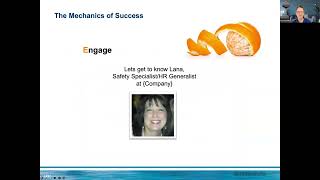
Because it's a mid engine car, it'll be less expensive when I take it to the track each week. It'll be gentler on tires, I won't have to spend as much on tires. It'll be less expensive, it'll be easier on suspension, so it won't cost as much to maintain. So here I am now, pitching to her language of value. I'll let you know how that turns out. So let's take a look at language of value used in engaging with a prospect. This is a real scenario, one I used for an enablement workshop recently. I'm sharing it as an example of how to help reps build their engagement abilities. Let's get to know Lana, safety specialist. We'll take what we learned from her profile and I've highlighted a few things here. Analyze operations, pinpoint areas for improvement, implement plans and create communications that align with her goals and her language of value. So here's an opening that we put together to call on Lana. Interested in talking with you about how you manage multiple information sources to maintain and improve your safety, to improve employee safety. We echo that a couple of times and then we get into. Before I share my thoughts, I'd like to explore three key areas. Second, I'd like to talk about business decisions you're making, how to improve your results. And even though this was for a tech sales organization, we're talking about what Lana cares about, how she sees the world.
The Lana story is an example of how to create and use the language of value. And success requires prepping for each call. Understand what the individual does each day, Picture it in your mind and I'll show you an example. Of how I do that. Be curious, be ready to pivot.
Here's a practical tip for my sales enablement peers. Make the experience real for your team. And this is the story I told a day in the life of Lana, the safety expert, helping them to get ready for the conversation. First, I show the environment, the shop floor. Second, I make it real for them. If you've ever worked in a plant or called on a plant, or even visited a plant, you've seen the sign by the front door. Organizations take great pride in boasting about the number of days without injury, without a lost time accident. It's really serious. I've worked in several plants and those are. This is taken very seriously because there's nothing sadder than when someone has to erase that number, that source of pride regarding safety, and they write that goose egg up on the board. And you know what it means? It means someone got hurt. One of their friends is out of work, one of their friends is injured and might be at the hospital. So this is serious. And when I use this to talk with salespeople about the reality of that environment, they can internalize it and take that conversation right to Lana. And then I also show them the rest of how that environment works. The reality of the customer's environment, the language and tools the customer use, the dashboards they might use. Oh, and by the way, what happens when an executive is successful? In addition to the organizational win, frequently there's a personal win as well. And it's important for the salesperson to understand that, to get a visceral feeling of what goes on with the customer. And sometimes it can be quite specific. A two week trip to Hawaii, to Tahiti, or buying a new Jet Ski. And I put that up there and I show the reps and they get pretty well trained on responding with the hey, what's, what's Lana's goal here? Jet Ski. Let's move on. To enroll. Enroll is the emotional side. Great sellers don't persuade, unlike Giovanni Ribisi here from Boiler Room. They enroll. They make the customer feel ownership of the discovery process. Customers don't buy because you're passionate. They buy because they feel the problem, the opportunity, and the path forward. Now here's an interesting scholarly tidbit. The root of sell is to give or to promise. You have to enroll the customer in the mission to get them to want to change. If they don't trust you, they won't follow you. And with regard to passion, I had a coaching client with a $200,000 purchase stall at the Last minute with a regional hospital. I asked him what impact might there be if they didn't undertake the upgrade for this automation software. He said potential elevators might stop running. Patients might get caught in those elevators. Patients might die. I asked how he felt about that. He said he was angry. I suggested he take that anger, that passion, to his customer. The deal closed the next day.
And finally, lead leading means offering prescriptive advice. Here's what to do. Here's how to decide. Here's what matters most right now. Here's how to move forward. Customers aren't looking for options, they're looking for direction. Take them on the journey, lead them up the hill.
So to enable Peel, we use three simple tools. They align teams, create organizational clarity, and help us elevate conversations with customers. And here they are. The Business Value Hypothesis, the Influence Map, and the Relationship Bank Account. Some of you are using portions of these now, perhaps informally and perhaps even formally. When you formalize the use of these tools, they become so much more powerful. So let's talk about the Business Value Hypothesis. This tool forces us to articulate the customer's problem in business terms. What's the problem or opportunity we're solving? What's the financial impact? What's the value of engaging in discovery with a customer? And without a value hypothesis, we're not even selling, we're just talking. It's an educated guess on solving a specific problem. And sometimes the problem is buried, sometimes the problem is latent. Customer doesn't even know that the problem is solvable. So here's an example. Again, another coaching client calling on another hospital. And we talk about one of the most common activities undertaken at a hospital, right behind hand washing. We estimated that doing away with this activity would save.
Staff time 1000 hours a day for an activity that's considered a necessary evil, but one that adds zero value and can be solved with technology that you and I use every day. We calculated that the hospital might save $12 million a year in hidden cost.
And reduce staff frustration. Now, my coaching client has never talked to the hospital about this. They never said, we want to address this problem. They don't see it as a problem. They just see it as we've been doing this ever since computers were in hospitals. And so he will approach the customer with a hypothesis on a problem that's completely hidden right now. And so here's a couple of examples. I'm not going to go through them. They'll be in the slides if you want to grab them later. But industry trend management challenge benefits of Improvement, estimated value of solving and who might be interested. If you're in sales leadership or sales enablement, create sheets like these industry by industry for your salespeople so they have a starting place. And by the way, many salespeople find it very difficult to come up with that good estimate of the value of solving a problem. Usually I have to add a couple of zeros.
So the business problem hypothesis is just one of the value hypotheses. The second is the financial impact. What's the value? Third is the influence impact. Who cares? Fourth is the solution hypothesis. Do we have something in our portfolio that might be relevant? Then we want to validate the hypotheses through conversations with stakeholders. And. And even if we get it wrong, the fact we tried creates a deposit in our relationship bank account and we're in discovery. And I ask the question, what's the value to the customer in engaging in collaborative discovery or as Gerhardt refers to it, co creation? What's in it for them? Why will they dedicate time and provide access? If the salesperson doesn't know the answers to these questions, they don't get time or access.
So let's move on from the business value hypothesis to the influence map. This is what the buying team typically looks like to most reps and how it's represented in Salesforce and other CRMs. But that's useless. We need to know how the decisions are being made by whom and the strength of our relationships with those people because those are all moving targets and we need to improve them. So here's the influence map. Every deal has politics, every decision has influencers to you'll never meet unless you map them and approach them and engage. This tool tells you who matters, what they care about, how to align with them and where you need a champion. The title is simple. Roles are more important. Roles include economic buyer, key stakeholder, influencer, internal coach, cheerleader, and more. Very different than titles. When you lay out the influence map in detail, you see where you need to improve relationships or find additional people. And so we track relationship strength and the trend of that relationship strength for every person. So we're going to get into the relationship bank account because that's the measure.
For our relationship bank account. That's just a way of thinking about the strength of our relationship with customers. Every interaction is either a deposit or a withdrawal. Are we creating value, building trust, being curious, following through every insight you bring is a deposit. Every time you send a link to a relevant article, it's a deposit. Showing up for lunch and learns is a deposit. Every ask is a withdrawal. Most reps try to withdraw asking for introductions, pulling together resources for meetings, closing the deal before they've made enough deposits. You have to earn the right to ask. And the concept of the relationship bank account is really useful because as you track it and see changes, you can make specific investments. We've got a key stakeholder where our balance is zero. We're not closing this deal if that balance is zero. So we need to do a make good there.
So let's talk about the glue that sticks it all together. Is sales art or science? It's actually both. The tools, the hypotheses, the maps are the science. They provide the structure so the art your personality can shine through. And these five traits are the glue that hold everything together. Curiosity customers feel when you're genuinely interested. Authenticity. No one wants a polished pitch. They want a real human being. Passion, not hype, but deep belief in your work and concern for the customer's outcomes. Resilience, staying steady when things go sideways and integrity, doing what you say you'll do. These aren't soft skills. These are competitive advantages. And here's a tip. While understanding the customer's language of value may be the single most important thing a salesperson can do, a daily habit can can be the single most important thing that improves their results. And here it is. At the end of each day, think about three things that worked well that day and consider one thing that you would do differently for a better outcome. Write these down in a notebook and that daily introspection becomes a powerful force multiplier over time. And I ask my coaching clients to text me at the end of each day what they found and that the day to day habit of doing this causes improvement over time. It's absolutely a powerful, powerful force multiplier. Resources and Next steps There's no need to reinvent the wheel here. It's your job to prepare your team for success. We're looking for a shift in mindset and we're looking for consistency in preparation and performance. As Jeff Bloomfield said an hour ago, salespeople will revert back to habits when when under pressure. So we need to build new habits, better habits. We have the tools necessary for success. Do we have the sales hygiene and discipline to ensure that these tools are employed. So I'm going to provide a QR code shortly for these resources. So get your phones out. You can find these resources at the link at the bottom. Accelera group.com resources I'm also going to provide the QR code on the next page. And by the way, the page acceleragroup.com resources also includes an overview of the Seller Group Value selling framework and a hands on playbook. So everything you need to do to get started. I've also got a podcast podcast. Thoughts on selling.com with fantastic conversations from across the sales ecosystem. Gerhart was on recently and we had an absolute blast. So take a quick snapshot of that or a quick link and grab those resources. Again, there's no gate there, so enjoy.
And feed your brain. Here are some of the books that shape my thinking, especially the Jolt Effect on Customer Indecision and the Four Agreements by Don Miguel Ruiz. Be impeccable with your word, don't take anything personally, don't make assumptions and always do your best. Those are words to live by. So what can you do Monday? Implement formal account planning and call planning. No winging it. Make prep non negotiable Practice enrollment Getting emotional. Buy in and coach your teams to take the driver's seat. I tell sales engineers not to go on calls that salespeople haven't developed business value hypotheses for and a plan developed and discussed. You can also ask me for help. We help teams define significant sales productivity improvements and coach individual salespeople to develop a performance mindset and focus on the activities that truly make the boat go faster. So a question came up. How do we work with clients for value selling and other sales productivity improvement projects? We work hands on with your team to identify gaps and conduct training or facilitate workshops to improve skills. Importantly, we also work with sales leadership and management to ensure ongoing support for these initiatives. Coaching includes a focus on the performance mindset and the day to day habits that ensure sales excellence ranging from account planning to meeting and call prep to my favorite role playing and I'd love to continue the conversation. Connect with me@accelera group.com or on LinkedIn or through the Thoughts on Selling podcast. Hit the QR code, set up a meeting and let's explore how you can assure success and this coming year. Thank you. And here's to building a fabulous 2026.
Lee can you backtrack? Somebody's asking.
Deliberate practice creates what? Can you fill it in for me? It went by too fast.
Sorry. So deliberate practice creates the muscle memory that when a, when a rep is under pressure, they do the productive thing. It's. It's the same reason that that you know, when we think about the Karate Kid, the wax on, wax off.
The kid didn't have to think about how to move his hands when something happened, he did it instinctively. In the same way, top salespeople don't think in selling conversations, they, they. They're present. It's just like improv. Dan Pink and to selling as human equates enterprise selling with improv. And there's two key points from his conversation. One is every statement is an offer. And two, take care of your partner. So in improv, you never have time to think. You just do. You act, you react. In top selling conversations, there's no time to think. What should I say when the customer said that? You have to respond without thinking. So when you do that deliberate practice, you're building that muscle memory of how to do the right thing in the moment.
Well, Lee, can you show the QR code one more time?
Yes. This is the QR code for all the resources.
That's wonderful. Yeah, keep it on. I want to thank you for helping us think beyond today's deals and the last quarter and the pressures and focus on the foundation for 2026. And I think your guidance, your vision, your appeal to prioritize, to strategically plan and move forward with disciplined execution, you offered a clear roadmap for building the momentum we need to succeed. And you also reminded us that great years don't happen by accident.
That's right. Or in the. Or in the fourth quarter, build. Build that foundation for success in. In Q1.
Yeah. That's all engineered by the choices we make today. And that's right. Systems that we build behind the scenes. And your ideas are extremely practical. They're actionable. And I think you provided us with deep insights.
For leaders that look to elevate the performance and build the competitive advantage. So I want to thank you for sharing your expertise.
Thank you, Gerhard. It's always a pleasure to share the lectern with you.
More from Gerhard



What Selling Looks Like When Your AI Agents Have the Context Your Sellers Do

Better Conversations, Smarter Support: Wearable AI in Business






When Scarcity-Built Systems Meet Abundance - The Judgment Gap in AI-Powered Sales Leadership
