The 10x Sales Leader: AI, Data & Automation as Force Multipliers
Chris argues sales leaders must shift from intuition-driven selling to data-centric systems using AI and automation. He walks through concrete tools: a GPT interview wizard, AI call-analysis for coaching, voice-enabled role-play simulations built in minutes, and pricing analytics that surface margin risks. The US labor shortage makes developing existing talent urgent.
Chapters
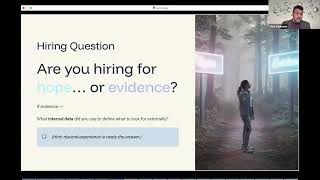
When, and Gerhard, as you were alluding to, and Jim, you as well, I think that the challenge that, you know, our sales leaders have, particularly in an environment where, you know, price, there's a lot of pressure on price, is to not commoditize your product or your service or your offering when it is truly not a commodity and to sell on the value and the totality of the value you bring, which, as you mentioned, is, is a mindset issue, a mindset issue. And I think that's really the discussion I want to have as it relates to AI. And so what I want to focus on is how sales leaders, those of us who are tasked with and responsible for leading a sales organization or a group of sales folks, can leverage some of these technologies. But the key part of that discussion is it's not actually a tools or a technology discussion. And so what I really want to focus on is that mind shift. This is really a discussion about your operating model. This is a discussion about how to leverage the things of the moment that we have available to us. But a modern sales leader is really a builder of a system. And so this is a systems building discussion more than it is a technology discussion. And ultimately, I think we are in this moment of shift. And there is an incredible opportunity available to all of us who are involved in sales. And as Gerhard alluded to, although my responsibility by title is HR, I don't view the HR role any different than sales. It is a sales job. I am selling a different product in some cases. The product I'm selling is the company. In some cases, I am selling an idea within the company. And then in other cases, I am working directly with, you know, customers. And I use this as an example of the type of mindset shift that is necessary. I think some of what I think about when I work with our sales leaders, whether we're examining a new product or we're examining a new channel, we're trying to deepen where we are within a certain region, or we're trying to expand market share, or in our case, because we are, we sell a physical good, we're trying to protect margin in a period where there's inflation as it relates to cost. The old model, and I'll say that we have been guilty of this within our organization, was a little too intuition-driven. It was a little too kind of hero-based, you know, the greatest salesperson on the team becoming the most important person on the team. It was a lot of challenge for a leader because you had a lot of data that you had to manage. And we'll talk about how that has evolved, whether you're using a third-party system or a system of your own. And we relied too frequently on our gut. My first job in my working career was in commission sales. My second job was in commission sales. I come from a family of sales folks who both of my parents were in commission sales. And As I transitioned out of the early phase of my working career into later phases of my working career where I managed sales teams, I think I've been guilty of all of these things. And as I look at the moment we are in today, and as I look at the challenges that our own organization faces, I see an incredible level of importance put on operating in a new model, one where a sales leader is operating at a systems thinking level, where engineering the type of performance we want becomes incredibly important, particularly as we think about the talent pool or the supply of labor in the United States not growing as fast as the demand for labor is growing, which, by the way, is not a COVID problem. Sometimes there is a misunderstanding that the challenges we face at bringing talent into our organizations is driven by some weird thing that happened in 2020. Not true at all. The labor supply and labor demand imbalance began way back in 2018. And the macroeconomic structure we live in is not set up that this is going to get better. This actually gets harder. The birth rate is declining. Fertility rate is declining. The labor participation rate is slowing down dramatically. In fact, I looked at a bunch of BLS data and a bunch of analysis that said by 2033, the expectation is that we're only going to be growing the supply of labor in the United States by less than half a percent. Meanwhile, the number of people who turn 65 every day is growing by 13% in that period, meaning folks in the latter part of their working careers are not being replaced by new working talent. And so if you are sitting there as a sales leader, you have a significant challenge. It means we're going to have to rely more on data about not only how do we acquire that talent, but how do we develop the talent that we have? Where does potential live? Because developing talent or teaching new skills is going to be incredibly important. And that means we're going to need to focus a lot on the evidence that's in front of us. And really, as a sales leader, that means your hardest working salesperson and relying on the hardest working sales folks, the ones who are going to pound the pavement and talk to the most people and have, you know, all of those traits that you care about that manifest themselves in effort, is going to be a lot less important than the sales leader who can engineer the type of outcomes they need on their teams. And so this is really about moving from instinct to intelligence. And I'm starting a discussion about AI with some fundamentals. And the first one is before we as leaders learn how to leverage AI within our sales organizations, we've got to start with defining what great work means. I talk to sales leaders all the time and they tell me, my goodness, the stuff that matters to me are, you know, the best salespeople on my team can grow revenue, protect margin, and really develop their pipeline. And the first question I ask is, well, how are they doing it? What are the traits that they are demonstrating that suggest to you that they will be successful? What are the traits of your best people? And how do you identify what those traits are in the formulation of what good sales work looks like. And so I start with, I think, a fairly basic fact, and that is if you cannot describe what makes your best sales reps your best sales reps, you can't scale them. And so before you can even consider leveraging new tools, you have to start with, well, what makes my team great? And then ask the question, Well, what might be impeding them from being great? And how can we leverage some tools to get them better? One of the things that I have seen on a sales organization that sometimes impedes our ability to bring in the right talent is we aren't doing a good enough job at developing the skill of identifying talent in other folks. And it goes back to that fundamental idea that I just brought up, which is if you cannot describe what great work looks like, how in the world do you you for it when you're trying to build your sales team. And so if you're trying to build repeatable behaviors and durable long-term skills, one way that you can leverage an AI tool across your sales organization is in helping the leaders who are reporting to you get better at what they're identifying in a candidate. And so on your screen is a QR code. If you scan it, It'll open up ChatGPT and bring you to a custom GPT that I built. And we built this to help folks identify what great work looks like. It's really easy to use. If you have an open job description for a salesperson, whether they're sales support or an actual salesperson, you can use this as a wizard. Send the link to that job description. If you have a resume of a candidate you're interested in interviewing, Upload the resume of the candidate. It's going to ask you, based on your job description, are these the traits you're looking for in a good salesperson? And if the analysis based on your job description doesn't quite get the traits right, you can correct them, give it the traits. And then what it's going to do is build you a structured interview guide that will help you ask better behavior-based interview questions of that candidate in front of you to help you identify, do they possess the traits that I am looking for? And, and again, you can't understand what those traits are unless you know the traits of the most successful people on your team, because what you're really trying to do is match up the traits of your most successful people to whether or not this stranger sitting in front of you possesses those traits. I use this as a very simple and easy example. This custom GPT was deployed across our sales organization to say, hey, if you're hiring for an outside sales rep, or maybe you're hiring to enter a channel of sales that we don't have as much experience in, it's a newer channel to us, what questions are you going to ask? How are you going to identify a successful candidate? It's an example of how a tool helped, but the bigger question was the system. And the system in this example is what does great work look like on your team? What are the traits of the best people on your team? How do I identify those traits in a stranger so that I am building a team that has repeatable behavior patterns that are going to set them up with success? The other side of this is, and everybody does this differently, if you are in a sales organization that brings talent in because HR is just feeding you candidates and you are not working closely with your HR team to make sure that they are calibrated on what it is you are looking for, if you're not walking through that with them, you're probably missing out on an opportunity to reduce work for yourself. A lot of what we're going to talk about is about how to reduce the work on our plates by using these tools. And so my other recommendation here is you should be partnering with your HR team to really help calibrate those recruiters that are looking for these traits in these strangers as well. And so I start with a simple example. It's a custom GPT. I built it. You can use it. You can use this on your teams and just take and share the link. And ultimately, it will help speed up the time it takes to get you or folks reporting to you better at asking questions. It's beautiful because it will also suggest to you follow-up questions you should ask, and it will describe for you why it's suggesting you ask those questions. You can prompt it to do all sorts of wonderful things like have it tie those questions to the candidate's resume you uploaded so that based on the resume it sees, it's crafting questions for you. But those questions are to identify a trait. So if you are looking for adaptability in a salesperson, go ask the people interviewing, what questions are you, are you asking people to identify whether or not they're adaptable? This is going to help you identify those questions. So this is an example. And why is, is this important? Because if you are operating in an environment where labor is getting tighter and you are out there fighting for the best sales reps in the market, or you're trying to find the best talent with the highest potential to become future sales reps, you need to work through a process that is really fast. That is as frictionless as possible and is ultimately really manager-friendly. So I start with the example of how to leverage a particular tool to get your teams better interviewing. But the other example of this is there are plenty of tools out there. MSI has both built them and partnered with some third-party technology firms to borrow some of their technology that allow our sales teams to reach out to candidates, particularly if you know folks in the market, but, and then ties the AI to the, our exchange server. And so that our AI can take over some of this junk work. So if you're a sales leader, you probably don't want to be spending a whole lot of time scheduling and coordinating interviews. You don't want to spend a whole lot of time going through the back and forth and reminding folks and candidates. You want to spend time building relationships and then making assessments. AI is wonderful at taking some of this most basic low-hanging fruit and finding patterns in calendar availability and suggesting interview times and all sorts of fun things. At MSI, one of the things that we did is we said, we've got to get people in the door faster. And, and I've got to be mobile-friendly. Sales folks, particularly in the environment that we are in, are on the road. These folks are operating off of cell phones. So if your process is not optimized to be mobile-first and text message-friendly, it's not going to work. So we tied our AI into the ability to text with candidates so that if I'm talking to a sales rep who might be interested in a job, that rep is able to text us while she or he is on the go. Our AI can text interview schedule times to those candidates. The candidate can select one. The AI is going to do all the reminders and follow-ups. The AI is going to remind the hiring manager about interviews. Text message the resume to folks and try to make the process frictionless. So the other angle of this is when I am looking at AI, I'm not just looking at productivity improvements, I'm looking at improving speed. And the question is, again, really, are you hiring for hope or evidence? And ultimately, I think digging into better interview questions and faster processes, particularly when you're recruiting high-performing sales folks is critically important. I want to move on to another idea, particularly around training. How are you training your sales team? I'm going to go back to mobile first. I think the US government actually just partnered with a company called Aerist. This is an organization that's been around for many years now to do training on how to use AI. It's free for like every US citizen. You can go Google search it and find it. But what is interesting about their solution is it is a solution that was built really for an on-the-road commissioned salesperson because all the training is delivered via text message. And that is a huge thing, particularly when training is not at the top of any salesperson's list of interesting or maybe even value-added things to do. I'll give you all kinds of ideas around training. But before we get there, again, if I'm thinking at a systems level, I am trying to find ways as a sales leader to reduce the amount of time that I am spending on junk work so that I can spend time on value-add work to improve both the skills from a durable and a technical perspective. And then also the sailing ability of my team. And so using AI to analyze calls, incredibly effective, particularly if you have a sales support team that is supporting your sales organization. You can dump all those calls into an AI solution and have it evaluate the quality of the caller. You can direct it to listen for very specific things and then report back to you. Things like solutions like Zendesk and other kind of large calling platforms tie in with these. The other beautiful tool to use AI for is pattern recognition. And so objection pattern recognition or skill gap identification and identifying when did we miss an opportunity to present, for example, an alternative solution to a customer who comes to us and says, well, what you're presenting to me doesn't solve my problem. That is not helpful to me. And maybe I had a solution that could have solved that problem and we missed the opportunity to present it. Present that alternative solution to the customer. AI is very capable at understanding all of the solutions at your fingertips and then analyzing either from a support or an outbound sales perspective, whether or not we're suggesting the type of solutions that are fitting the customer's need, particularly when the customer has an objection to what was initially offered. Real-time coaching insights is another great example. We have this with many folks on our sales support team. Where the AI will be able to analyze calls and then provide feedback like, hey, here are the points in which the system was able to recognize some friction with the customer. We are frustrating the customer. If our goal is to have a frictionless process, this is where it broke down. Here's something you could have done or something you could have said to try to better service that customer. And here's what you did instead. And here are some suggestions. Now, you, the, the beauty of these systems is you don't have to let the AI do the direct coaching. You can have the AI flag someone's manager and have the manager go listen to the call. And then, and then the beauty is they're not just listening to tons of calls or they're not just reading tons of sales visit reports to identify these things. The AI is flagging it to them. So you're making better use of your manager's time. As I think about that kind of coaching multiplier example that I just gave, I think personalized development plans, Product training is another great example. I'll tell a quick story at MSI. Wouldn't shock you to know that an on-the-road sales rep doesn't like logging into a computer to do product training. And we were struggling to get sales folks to go through our product training. Well, the beauty is if I think about the system and I expect a salesperson to be on the road 4 to 5 days a week, That means they're spending a lot of time in their car. And when you're in your car, you can be making outbound calls or receiving calls, but there's plenty of downtime when you're driving. And so ultimately we said, we've got to find a way to deliver this product training using a different mode. And I want to be able to generate bite-sized training content. And so we went down the path of product podcasts where we were able to take all the information from our product team, dump it into the AI solution. We started with a free solution, NotebookLM. If you have not played with it, you should. I think there are now some for-pay levels of NotebookLM, but we were able to dump in all that product information into NotebookLM and generate an incredibly realistic two-speaker podcast where the system would actually start telling the story over 5 minutes. Of this new product. And then we could create a series of podcasts or a podcast with a series of episodes that sales reps could listen to in their car. And suddenly it's become one of our most completed pieces of sales training. It's easy and bite-sized. It fits the problem because we were thinking about the system and we were able to deliver that through a podcast to a sales rep in the car while they're driving to visit customers. And so now our sales team has more product knowledge. And so there's so many different ways that you can use these tools. The beauty of the example I just shared with you, it was free. It now costs a few dollars a month, and these are not long-term commitments. So you can explore and the sales team can do that exploration. You don't need to go get an HR team involved or a learning team involved. You can do this exploration yourself. And you can start testing these things. The other beauty is when a better solution comes along, 'cause this is moving so fast, you can go use that better solution. We shipped from NotebookLM to ElevenLabs because I wanted to be able to have a little better control over those podcasts. And the beauty is it was easy. One month I stopped paying Google, the next month I start paying ElevenLabs. Either way, the costs are low. These are cheap and easy ways to solve a problem. But we start with the problem. We didn't start with AI as the solution. We backed into the right tool to solve that problem. And so the question is, if you're training and onboarding sales folks, is that a generic or individualized experience? It would not shock you to know that the data of the kind of largest percentage of the workforce now, which is your millennials and Gen Zs, suggests very heavily that personalized training is significantly more effective at retaining people than generic training. And what is interesting is what retains the newer generations in the workforce based on the data is folks who believe that they are learning and growing and developing. That retains them more than money. And so ultimately you can use these AI tools to create wonderful individualized training plans. You can identify where people are falling short and use these tools to help create supplemental training. And you don't need a whole lot of time to do that. The other side of this is, oh my gosh, I got to get people out of the habit of just thinking that working hard solves the problem. I need people to work smarter. And AI within your CRM is an incredibly powerful tool because you can start to identify skill weaknesses. I'll give you an example. As Gerhard shared, we build our own sales system. We do not use a third-party system. It is a system that we designed and has all of our data. And so we We then took an AI model and let it crawl across that system. And we said, hey, let's go start identifying patterns in behavior, both in terms of customer visits and actual sales, and identify where are we strong and where are we weak. And lo and behold, I could start to identify areas where pricing isn't making a whole lot of sense. And I can start to identify teams around the country where I think we need to do some more work on pricing because we give so much autonomy to our sales folks to set pricing. And I can find patterns on where I need to dig in a little bit more on pricing knowledge and skill because of the disparity I'm seeing. And I can see it within teams. I can drill down and go, oh, this team that sells this type of product and this other team within the same location are doing two different things. Let's have the AI go look at the customers. Is there something truly different about the customers? Because every salesperson will tell you, I have the worst customers that push me the hardest on price. And oh my goodness, they are more demanding than anyone else's customers. And every salesperson thinks this about their customers. But I can let the data identify. I can use it to identify pipeline risk. Like, are we selling enough of our new products? I know my margins on my new products are better. I know that my new products are non-commodity products where I don't need to compete on price the way some of my older products might be commoditized and price becomes more important. And so the throughput of my new products are incredibly important in the system. And I can identify, well, what types of customers are more likely to buy the new products based on success around the country, identify the customers who are not having that success, identify the sales teams and the people in those sales teams that don't seem to be getting that level of success. And now I can direct a sales leader's attention to say, hey, I want you to go dig in, but you don't need to go dig in on everything. I need you to focus on new products. You're not selling enough of the new stuff and that's hurting the margin in your building. And so I can now start to connect and tie these things together by allowing the AI to find patterns in my data instantly. Instead of having to do all this work in Excel inside spreadsheets. And the beauty here is I'm trying to surface insights. I don't care about making more dashboards. And then that gets down to the kind of one of my last big points, which is our goal as sales leaders should be eliminate the junk work from the process. I want my sales team spending time selling. I don't want my other sales leaders spending time pulling together data for check-ins and getting ready for one-on-one meetings. I don't want them to spend time listening to 50 different calls. They can find the 2 that has feedback in it. I don't want them to spend time reconciling a bunch of stuff to figure out what is this rep doing or not doing. I want to get them the data that allows them to get to those insights faster so that they can have more impactful conversations so people can get out and sell. And the goal is to keep salespeople selling. But to do that, I need to keep my sales leaders focused on the highest value work that will help their sales teams improve margin, go steal some market share, or improve the health of their pipeline. And so the other example there would be, hey, I sat down with my sales leaders and said, what's going on with these check-ins? Where are you struggling? What's working and what's not? And one of the big issues was, gosh, we don't have time to do these things. Well, what do you mean you don't have time? You talk to your sales reps all the time. Clearly you have time for this. And the real issue is I don't have time to pull together all the data to get the insights we want. So if you can partner with your HR team and your IT team to figure out how to make that process easier, magic happens. We sat down and said, all right, well, what, what do you want at your fingertips? How do we build you some tools to create it so that you can click a button and we can take all of the data out of our sales systems, take all those insights and auto-generate something for you. So everything's at your fingertips, the patterns that you care about finding. Or the elements that you always want to be able to check on can be built at your fingertips at the click of a button. And so we leverage some large enterprise data solutions. We leverage a little bit of AI to do the processing. And then we figure out how to present it in a way that makes it easier for a sales leader to have a quick, impactful conversation and they spend no time putting the data together. So if I'm thinking about my system, I want to also figure out how to get the junk work out of it. And ultimately it comes down to how much of your time or your team's time is spent selling. What you want is your team on the road selling. What you want is your team on the phones. What you want is your sales support team providing the level of support that allows your sales folks to go out and sell. And so our kind of starting point is how do we cut in half the amount of junk work that distracts us from selling. And, and really, as a sales leader, as I said in the beginning, that requires a unique skill set. And so this is based on a, a significant level of research, over 100,000 leaders talking about what skills are necessary for leaders to be able to do these things. And it wouldn't shock you that one of the biggest skills is inspirational levels of vision, big picture thinking, people who can think really big and then develop talent and foster the level of collaboration necessary to pull off the type of transformation that we're talking about. Strategic acumen and the ability to drive results. I call that execution. You got to be able to execute. And then because this mindset shift is going to require a skilled communicator, you need to always think about who are the biggest champions for change within your organization to pull that off. I'll break it down to something easier. What I am looking for in a really good sales leader is someone who can think at a system level, who's curious and was willing to experiment because that's the necessary ingredient to develop the AI fluency that I need. I need someone who's intentional with change management and is really good at working across teams. Because if you do this on your own, or at least if you try, you will be fairly unsuccessful. And so really, this means innovation has to be a discipline within your team. And the last piece of advice that I will give is it's impossible to keep up with all of the tools in AI available at your fingertips. And so one of the things that we did is we said, we've gotta have some R&D, and that's a great way to use an intern. So we have interns that will come in and do nothing but R&D what is available. They go demo software, they go play, and they teach us about kind of what is happening right now. And then we let our leaders say, hey, I'm interested in that idea, let's go deeper there. But I think an internship experience within sales has been incredibly successful because that's a group that you can say, go do this research and tell me what's the art of the possible.
I love that, Chris. Good stuff. Thank you. And the idea of interns as explorers, you know, it's kind of like hiring a group of scouts and saying, hey, go out and find out where the trail is so we can make it to the West Coast. That's, you know, you're looking for people who are just curious, who are willing to experiment, and you're giving them a platform to do it on, and they come back with insights, and they don't even have to want to work there. They've just got to be someone that enjoys discovering things. That's good thinking. And I love the whole flow of the presentation. Because you walked us through a very rational approach to doing things that in many cases are not rational. And the human factor, you know, the vacillation of personality and circumstance. But good solid stuff. Thank you for that.
Absolutely. I appreciate it.
Chris, I want to ask a couple of more technical questions when it comes to AI role plays. Can you describe this a little bit more in detail? How are they set up? How do salespeople engage with AI to do role plays? And how do you measure whether the outcome is actually leading to behavioral change?
Yes, I'll give you a really narrow example. I sat in a sales meeting in the heart of all the tariffs increasing price, and we were talking about protecting margin with sales leaders, and the number one Concern was, well, how am I going to help my sales reps when their customers push back? We have to talk about price and, and prices going up, not down. What do we do? So while I was in the meeting, I jumped into ChatGPT. I built a custom GPT to roleplay this. And so what I did is I fed it— we had, you know, market data about what all of our competitors were doing. I dumped in all of their letters about their price increases. I then took all of the concerns I was hearing and I said, here are the concerns. And then I told the GPT, you are a customer, you have to push back against this price increase. And here are all the things you might say. And I'm just dumping in what I'm hearing the sales directors and the VPs saying, hey, we got to figure out how to help our reps. They're going to run into this. And at the end of the meeting, I said, hey guys, here's a link. I built this thing in 20 minutes during a live meeting because building a custom GPT is incredibly easy. And I sent it to everyone. And then I sent an FAQ because I asked ChatGPT, generate an FAQ and give me some responses to these types of questions. I sent the Word document. I said, can you just go play in this? And then because After about 5.0, ChatGPT built in its natural voice into custom GPTs. You don't have to do this typing with a GPT. You can hit the little free custom voice button and you can have a conversation where it is now live with you and it's the customer. I programmed it to be the customer. You are now trying to talk about this price increase. It is pushing back against you and you are now saying the things that we wanted you to say off that sheet back. To the GPT. And Gerhard, I'll tell you, sometimes the hardest part about the conversation is just having it. And it's not even just having it, it's starting it. That's where the nerves for a salesperson lives. And so my goal was not to give them a script of what to say, but I wanted them to practice saying these things out loud to get them comfortable. Oh, here's this thing. It asked me a question. I didn't think of this. How would I say that back? Let's try it again. And then the way I programmed it is to, at the end, evaluate how good I did as a sales rep and give me pointers. And so one of the measures to your, your second part of your question was, do sales reps feel more prepared? Do they feel ready to have these conversations? And we went out and asked sales reps and the feedback was overwhelming. They were like, oh my gosh, why didn't we have this for every conversation we were about to have? You know, the anecdotal feedback was they felt more prepared. I could look at the data at the end and say, well, what did we get in terms of the price increase? Again, I give a lot of autonomy on pricing. I might set a minimum, but I let you break that. And so ultimately, where are we here? And then we could measure the success of that round versus other rounds. And then, and then lastly, and again, this is because my goal was to get people comfortable having this conversation. We went back to the sales leaders after that and said, hey, if you thought this worked, if in terms of getting them comfortable, getting them ready for that conversation, what else do they need to role play in practice? So do you— and so now the exploration is, well, how are we talking about new products that are not commodity items? We sell commodity and non-commodity products, and some of our sales reps are really good at selling commodities. And they just stay away from everything else because it's harder because you can't sell on price. And so now we said, well, how do we identify where else this works? And the feedback has been overwhelming in terms of teach me how to build that. I really liked that. How did you make that? And so the other measure was how many people are asking us to teach them how to do what I did in 20 minutes in the middle of a live call?
Well, I have two things to say. Number one, Your mindset, let's build it, is going to save the company a lot of money because number 2, you could have gone out and bought a tool.
I mean, we absolutely could have, but here's the third part. Speed matters. I can build it faster than I can find a company to sell it to me. And so, you know, and I believe in the 80-20 rule. And this is not— there are actually some platforms and some companies that build significantly more more sophisticated tools than I'm describing that are wonderful. But in that moment, when I need you to go get these conversations done, or you, I know you're going to get these questions and we've got prices that need to go up because you've got to protect your margin. Like if you don't, the math stops mathing, costs go up and suddenly your sales price goes down. Like that math doesn't work. And so ultimately, you know, speed was a factor in the 80/20 rule mattered a lot. If I got 80% of the benefit for 20 minutes worth of work, well, that's a real 80/20. 20. But anyway, if I could do that, that's the win.
That's powerful. Thank you, Chris. This has been excellent. Especially liked your, uh, podcast, uh, product podcast idea. That's another thing, you know, there's time available for training that we don't think of as training time.
Thank you, Chris. You did a fantastic job. I want to promise you I want to do some video interviews with Chris and siphon off the collective intelligence that he can share with our community. Thank you so much for doing this.
Thank you.
More from Gerhard



What Selling Looks Like When Your AI Agents Have the Context Your Sellers Do

Better Conversations, Smarter Support: Wearable AI in Business






When Scarcity-Built Systems Meet Abundance - The Judgment Gap in AI-Powered Sales Leadership
