The AI Advantage: Enhancing Revenue Enablement for Tomorrow's Success
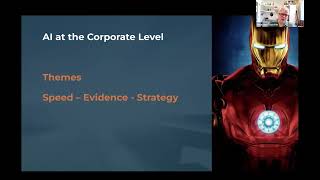
Siobhan Thatcher walks through how AI boosts revenue enablement and operational efficiency. She covers three core themes: speed, evidence, and strategy. The presentation includes concrete use cases like predictive sales, personalization, and conversational intelligence, plus guidance on prompt engineering and governance.
Chapters
You.
Today, what I want to talk about is why there is an AI advantage for enablement. And of course that means that downstream for the revenue side of the business, right, we have a lot of influence on the revenue and how can AI help revenue leaders and the enablement teams to get more from it? And one thing that I do want to point out is that there is a thread throughout this presentation and, and that is that in order for AI to be put into place properly, there has to be different strategic approaches to go to it. So let me just start with some numbers. There's a company out of Canada called AccelerateAI CA that is working with organizations to determine where within their companies AI can be used and how can it be used. There's three types of AI. There's robotics, augmentation and automation. Where can it be used and how. And these are some of the numbers after only five clients, these are some of the numbers that they are discovering across the board. Is that on average for every single individual in an organization, I'm not just talking sales, that they are able to save 10 hours per week per person per role for work that can be done by AI instead of having human there. So think about this for a minute. What can that do? What do you think those extra 10 hours can do? It can help people get a more balanced work life harmony. It could help them work on say an additional project where a lot of the other work is being done by AI. So they've got that extra time. If you've got a group of 500 employees, we're talking 5,000 hours per week. That's just one of the numbers. Now let's think about somebody's annual salary, what that trains, what that translates out to. If you think of an annual salaries, the impact of this is $33,000 on average across everybody in an organization. Means that companies can use that time, that money for AI tasks instead that with our 500 person company, that's $16.5 million worth of operational work that could be done by AI in a year. Think of these numbers are mind blowing. Now what's interesting is these, these applications, these AI tools can be used by 90% of a company across all roles. So we're talking people that are, you know, handling the appointment setting and all of that all the way through to the full C suite. Everybody in the company can use these. What's interesting too is that the companies that are adapting the fastest, and this may be a surprise, but probably not is finance and insurance. Think about that for a minute. Why do you think that is? That's because they've got so much regulation that they've already got around data and all of that, that they adapt very quickly to this. So what do the numbers look like when you think about the whole company? Well, here's how AI is splitting out within organizations. This is what they're seeing again is that 52% is robotics and RPA. So think about chatbots and all of that. It's pretty much ubiquitous throughout a company. Then you can take a look at the machine learning, the augmentation. This is more around when you're talking about predictive. Right. What does it look like for next quarter? How are we going to write? That's about 20% of the work and then 28% of it is generative AI. So this is a very positive. But it also can be a bit of a concern because unless there is management, governance and all those things that are necessary around these tools, you've got 30% of your company going out and using something that you may not know how they're managing it. And as we all know, that security and data governance and all of that is so critical. So, Forrester, this is from last year. And these numbers, as you can imagine, are probably even more powerful now. I'm sure they are. Peter Ostrow from Forrester gave these numbers out last year that in North America alone, 28% of professionals are using gen at work regularly. Another 13% are using it outside of work. I use it every single day, not only to do my day job, but if I'm looking how to do an image of my dogs playing poker, which I did the other day, which was a lot of fun, and 38% more have experimented with it. Right. That's a lot. Now think of those numbers. They were 20, 23 and 24. What are they going to be this year? So what does that mean when it comes to organizations? Well, there's a couple of things. Companies have traditionally staffed for operational roles. Those operational roles, Remember, we're talking 98% of roles in an organization have some operational factor that can be handled by AI. The staffing is going to change significantly so that those roles are going to be coming. Roles for influence versus operational. Now, when I say influence, what I'm talking about is folks that know how to use the tools. There was a study done by Go to Market AI.
In joint with Bryant University, I believe.
And part of the thing that came out of that is that companies are interested in AI. But the most powerful factor that they found that organizations really Want is the ability to learn how to use it properly. So that's the prompt engineering. So if you haven't taken any type of training around prompt engineering and how to ask the proper questions and how to get detail to get what you want, then I really do highly encourage you. Now, when I talk about AI at the corporate level, I like to think of AI like Iron Man's suit. I saw this analogy a couple of weeks ago and I thought it's perfect. Because when you think about Tony Stark and you think about how brilliant he is and all of the wonderful things he can do, he can do a lot of things, but he's limited in some ways. When he puts on that suit, there is no limit. But there is a caveat. The suit can't work without him. And so you put those two things together and he's pretty much unstoppable. And that is what AI can give you. So I'm going to talk about three themes right now. I'm going to talk about speed, evidence and strategy. So when I talk about speed, what do I mean by speed? Executives right now are being hounded by their employees, by their shareholders, with what is your plan? What are you going to do? How quickly can you get me the AI information? How quickly can we determine how AI can be used across an organization in the right way, safely and with full security protocols and governance? What is your plan? And this is what speed is about. Because as we've seen two years ago, three years ago, AI was there. But people are like, yeah, you know, we'll never use it. Well, AI to computers is like the horse and buggy was to cars. I mean, once that switch happened, there was no going back. It's here and it's going on now and there are no do overs. So let's talk about a little bit about AI today. Back in 1973, my dad went to Queen's University in Kingston on a military bill, which was awesome of them. They actually got him his degree and he took computer science and one of the courses that he had was an AI course. And he said back then that it was cool, but there was no way during his lifetime that AI would ever show up in corporate or be used for anything other than some deep think tank somewhere buried deep in the mountains of Colorado that it was using it. Well, he's 88 years old and it's here and it is. Hundreds of tools are showing up daily, which can be very overwhelming. And we will talk about that. It's permeated our lives right in, in Good ways in. In a lot of ways and in some struggles in others. And it's had a very significant impact across the industries. And it's not new. It's been around for a long time. But what has been new is they figured out how to make it so that it can help companies connect the dots. So let's talk about some of the leadership challenges that are out there. Right? There's a lot of challenges that exist. I mentioned a few already. We're talking about ethics, we're talking about governance, talking about budgeting. We're talking about what time is available to do all of this, because of course, you've got to keep the planes flying. So it's overwhelming. There's ambiguities and uncertainty. Where do you start? And in fact, the gentleman that is following me in the next presentation, Jonathan Carvoort, is an absolute expert at this. And listen to him. The capabilities, right. Are we limited in internal resources to put implementation in place and to do the studies and figure out all this kind of good stuff? What is the capacity? Right. Are our employees engaged? There's a lot of fear around AI in the employee organizations because they believe that AI is going to take their jobs. Well, there have been studies and I think it was Gartner said by 2030, there'll be 12.3 billion new jobs available for folks and new roles because of what AI can take off the table. So it's actually going to be creating all sorts of new roles. Again, these roles need to be ones that are creative and intuitive and willing to not be operational, but to go in and actually figure things out through insights. The demand, right. It's being demanded, as I said, right. Speed is an issue. Competition. What are all of our competitors doing? The bar of entry to AI tools right now is fairly low because there are so many. But that doesn't mean that they're all doing things that are necessary. There are AI tools that I've seen that are there just because someone thought they were cool, but provide absolutely no value to a business. So you have to think about that. The unification. The employees are trying all sorts of different things. And so you have to be careful about how that's working. And can you determine what tools can actually be used in more than one role? So rather than one. Way I describe sales and Amen a lot of times is that we're the personal trainers as opposed to the bartenders. Right? The bartenders are doing things one off, right? Well, right now AI is being used like bartenders. Give me this. Give me that. Give me that. Instead, companies need to think about AI and create personal training programs so that it's done well, it's managed, and that there is a way to actually track and see what's happening.
The cost, how much is it going to cost? What is the investment for this? Again, we've got to keep the planes flying. And lastly, how long is it going to take and are we too late? Well, I'm here to tell you, you're never too late. You may not have started yet and in fact there are industries that are just now getting into this. But there is no too late. There is. If you don't start at all, then you're going to get yourselves into trouble. So what is our job right now? Our job as enablement folks, our job as support organizations is to help our executives look like heroes, look like Ironman, right? We need to get our executives what they need faster than the competition gets it so that we are using AI appropriately. And as I said, if you haven't started yet, that's okay. You still have first mover advantage. So for those that don't understand what first mover advantage is, I'm going to illustrate it right now.
Who knows who Pete Conrad is? Most people have never heard this name, right? Doesn't matter what generation you're from. Pete Conrad was the third man on the moon. What an accomplishment. Nobody knows who he is.
I'll bet everybody that is watching this, with few exceptions, knows exactly who this is. This is Neil Armstrong on July 20, 1969 stepping onto the moon, right? There is a benefit to being first, that is first mover advantage. So how does that apply when it comes to business? Well, let's talk about first mover advantage. When we're talking about things like predictive analytics, data driven insights, right? This can be used here. AI excels at processing and analyzing large volumes of data. I mean it just roars through that stuff. When we talk about operational efficiencies, think about automation, right? Repetitive and time consuming tasks and streamlining operations and increasing productivity. That's all. So think about AI powered chatbots and virtual assistants and things like that. Personalized customer experience. So the customers, now you can actually give them information and interact with them in ways that is very personalized for the marketing campaigns, product recommendations. Because one thing that AI does that does it much, much faster than humans is connect the dots. And it's the connecting the dots that is where it really, really shines. Doesn't mean it can't be done without caveats, right? AI will tell you the truth and will tell you a lie with the same level of confidence. Yeah, right. Look at any image, look at the hands in the. There's a good chance that either have three fingers or six. It just struggles with some things. So you also have to be able to make sure that you vet what you've got. Now we can go into a lot of depth. And Jonathan, and I'm sure you've heard others already over the last two days talking about LLMs and data and all that kind of good stuff. I'm not going to go there. But what I am going to say is that that information, properly vetted and governed, can actually give you amazing, amazing data. Innovation and product development. Right. Are there gaps? Think about all the calls that your AES are talking with, with your customers. What if you could gather all those calls together and say, where are we, AI? Tell me where you think there are gaps in our product delivery that these people are asking for. Right. So let another tool, let AI figure that out for you. And it significantly helps with that competitive intelligence. Oh, my Lord. I have used it. I'm doing a whole bunch of job interviews and everything else and I've used it to create through a, through a competitive prompt that I got from Jonathan. Thank you. That allows me to say, take two companies and compare them in a whole bunch of different ways and give it to me so that I can have it reach out and do all of that research for me instead of me spending hours and hours and, you know, however much time doing all that research, it's just incredibly powerful. So it's about adapting again to the world around you. And I do want to say it doesn't matter how old you are. It just doesn't, doesn't matter what generation that you're from. Be curious, get in, go and talk to people like Jonathan, like Stephanie, like the folks that you're seeing at this, at this conference to determine how they're using it. So let's talk about evidence a little bit. Right? Well, evidence in corporate evidence comes up as roi. So what does ROI look like? Well, the ROI here is to show that it's actually working. So when we think about some of the numbers, 79% of companies agree they need to adopt it, right? 79%, but almost 60% worry that they're not going to do it properly or they won't be able to quantify that. So there you have to have a way to measure this. And again, talking about this company that I mentioned earlier, they were working with an organization, had 80 people in it the ROI was what was, I think in the first year the ROI was something like 25%. In the second year the ROI was 5, 350. Somewhere in that number they had to go back and double check and triple check their numbers because they couldn't believe those numbers were there. But that was it. So the ROI can ramp fast. So that's what we're talking about when it comes to the evidence. Now what are some of the skills in the workplace? Now I mentioned this already. What are the shifts, employment shifts? The people that are being hired into new roles are those that have done and learned about the AI, about the various tools. How can AI affect the role that they're doing? A lot of people have actually shifted what they are actually doing in their own roles. To go from I was doing this, now I'm doing this and I'm enjoying it so much more. So as I said, There's 12 million people, not 12 billion, 12 million from the study. My numbers are a little inflated. So use cases as well. Use cases is how you tell the story, right? This is how we get that information across. Now what questions are being asked by executives and I will bet that all of you have heard them asking these questions. How much time can we save if we repurpose for productivity across the organization with AI? What are the economic implications of AI on our organization and what can we potentially save and or reinvest?
Which occupations and tasks can be augmented or automated across our organization with AI?
What are the most appropriate AI application types for our organizations? Which use cases are there that will yield the greatest gains? What are the objectives and KPIs that we can address beyond the typical efficiency metrics? How are these data driven insights going to be used to generate a practical roadmap?
Now let's talk about strategy and here is where, especially as enablement folks. But even some that are trying to get, budget, get, get and do that, that disruptive type of work. Typically when you look at the executive level, the senior executives, they're in two branches. One branch is operational, the other branch is disruptive. They don't always agree. So you have to figure out how to get them to come to a compromise around something like this. And you do this through strategy. So what are some of the strategic decision making considerations that have to be made? The business impact and the value assessment, that's pretty straightforward. The feasibility and data availability. Again, this is where finance and insurance are way ahead of the curve with most other organizations because their stuff has already been regulated. They know their Data is good so they can jump into these tools so much faster. Right. What is the potential for automation? Does it add complexity? How can decision making be enhanced? So these are some of the things that have to be considered. This is what the senior execs are asking in order for them to make decisions around how we do this. So if you think of a typical SWOT chart, this one we've created a little bit different. But essentially what we're looking at is you've got saving money, making money, and then you've got enablement and sales and corporate strategy. And if you look at this from the squares, we're going to start in the bottom, right? We are absolutely rock stars when it comes to making money. Right. If we weren't, you would not be in sales. You're going to have ups and downs, there's good years, bad years. But we all know that it is such an empowering game and that's what we do. We make money, we help our customers make money. We're very good at that, saving money. Maybe not as much there, but we're still okay. We're still okay. But here is where we are challenged. And I have seen this across not just enablement, but across a lot of the organizations that are working with sellers and that is at the corporate strategy level. Can we tell them how implementing this is going to have an impact with them when it comes to saving money? Not yet. There's, there's some, there's some that's coming in, but we're not there yet. But when it comes to making money, we're not really good at that at all. We're, this is why corporate organizations and senior leadership come back and go, you know what you need to do more. I don't, how is this going to help us? Where is it going to give us money? So this is where we, in our conversations, in order to talk about impact, actually have to talk about these things. So when we think about AI for revenue enablement, all right, revenue enablement, sales enablement, corporate enablement, go to market productivity, however you want to frame it. There are things that we have to think about. Adam Grant, for those of you who have heard of him, he's the one on LinkedIn that does the pink colored infographics that have some kind of very pithy statement in them. He made this one last year and I really liked it, is that the hallmark of expertise is no longer how much you know, it's how well you synthesize. Again, we're talking operational versus this, being able to Connect the dots. We had information scarcity. So people were rewarded for the ability to acquire the knowledge, the research, all of that. Now because that is relatively easy to get. Again, caveat that it's got to be vetted. Information abundance, which is where we are now, requires pattern recognition. This is again you have to do prompt engineering well to be able to get this across. It's not enough to connect the dots or connect the facts. The future belongs to who connects the dots. And this is again where AI works. So what I'm going to do now for the next few minutes is just go over different types of applications in AI. I am not talking about any companies. This is just the types of applications that can be used with AIs like sales forecasting. Right. No surprise there. So AI models used to predict sales, you've got, analyzes CRM data, pulls all of this information together. Where before sellers needed to go to five or six or ten different places. Now with a lot of tools they can get the information they need very quickly. They're more reliable, reduced errors. Right. Better resource application content personalization. This is awesome. This is where in my opinion, and I'm going to preface that with in my opinion, the days of the corporate decks are quickly disappearing because the information in a corporate deck takes a lot of time to put together and it gets out of date so fast that those corporate decks become very expensive and not really worthwhile putting it together. Teach your people prompt engineering and they'll be able to pull all that information together quickly, customize and to the point that their customers really care about. Right. We're not trying to sell to customers, we're trying to help our customers buy. And this content personalization can really do that. Sales coaching and training, that is always an issue with organizations. Typically the frontline managers next line up, they're so busy, they're like we don't have time to coach, we can't do it. There are now tools out there that are very, very good one Stephanie, that do sales coaching and training and you can actually use those with avatars and whatnot and, and fully fill them up with the types of roles and scenarios that you run into and have people do it. When they can do it. It can be self serve. That's quite different than where we were before. Lead scoring and prioritization. Pretty straightforward on that one. The machine learning algorithms. This is where that fits in.
Conversational intelligence. Well, we've already got tools, I'm sure everybody is familiar with GONG and course and some of these other ones. But now Imagine that you can take all of that data and tie that in with all the other data that you've got, all the structured and unstructured. Right. Gong does some of that. But there is a gold mine of information that is out there in the rest of the world that can be tied in now through these tools. Deal health analysis. Right. What's true, what's not, do we really have it? Can we compare? Can we say, you know, let's triangulate this to ensure that what we're getting is what we really need. Customer insights and segmentation. Right. Let's look at our market. What does our market look like? Is it a total addressable market or is it a serviceable? Serviceable. Addressable market. Right. Who are we really serving? How do we figure that out? Automating repetitive tasks. Let AI do the grunt work. Right? Let them do the grunt work. Do your workflows, let them work that all out. Agentic AI, this is where it's starting to show up. Churn prediction.
Productivity analytics. A lot of these that you're seeing have been done in the past, they just take a long time now with AI it can be done so much faster. Advanced deal predictive analytics, dynamic enablement content. So not only can you say pull all those pieces together now, let me put them there, but to do it dynamically on the fly, let's say a customer or prospect comes to your site and says, hey, tell me about and it goes and looks at this person everything it can find and says I'm going to present them this because I based on all the knowledge that we have about our serviceable, addressable market and we can give it that information very quickly. Skill gap analysis and adaptive learning. Right. How do we set it up so that sellers can get better? Right. Can enhance their skills, make their performance better. This can really help with that. Real time marketing and competitive insights. Already described an example where I, I use it all the time. When I hear somebody say, hey, we've got this new, this new company coming in, I'm like, well let's compare them with one I know and see what we've got out there. Enhanced buyer journey mapping, that's another one. What does that customer journeys look like? Predictive sales compensation modeling.
AI powered partner enablement. Right. A lot of companies are using partners now instead of hiring on all sorts of new people. Right. How can we ensure that they're enabled? Well, as well, virtual deal assistance. You're seeing that everywhere. Emotion and sentiment analysis and sales conversation. So it's not just like there's a company called Amore. And they're fairly new. But what they do is they say it's not only the words they're saying, how are they saying it, what is the tone, what are the facial expressions. And this AI is helping you determine they're saying this, but what I'm reading is something else completely different. Full funnel AI optimization. This is where we're really seeing agentic AI coming in. Right. And agentic AI again, there are people I'm sure that have been on this, this conference that have been talking about this, but agentic AI is where it can actually, I'm not going to say think for itself, but it knows that based on past histories and things that are happening, it can start making decisions for you and moving things forward. So what are we talking about in summary?
Well, right now we've got things like predictive sales content personalization, lead scoring, sales outcomes. Right. With improved efficienc. Seeing that already in abundance. What is coming up fast, and I would venture to say a lot of this is already here is the deeper personalization is the dynamic, responsive, data driven processes that are occurring. So I know it's overwhelming. It's totally overwhelming. And sometimes when things are overwhelming, it looks like there's no way to get there. So mine is just focus on this. Focus on where you are right now. Focus on the very next presentation. Jonathan Carver is a guru in this stuff. It's amazing. And I want to leave you with this one thought. This is a quote from John Malcolm. Value is created when an undiscovered need meets an unexplored possibility, creating an unexpected spark of creation. That to me is a description of how AI, when used in your pocket as a tool, can help you become so much more productive.
Thank you, everybody. I am Siobhan Thatcher and hopefully you got something out of this. I really enjoyed talking to you all.
Thank you. Siobhan, you made me think that of the analogy that AI is sneakers for the mind. That makes you run faster towards your goal.
Exactly. Sneakers for the mind. I love that.
That was so good.
Made by Nike.
Oh my gosh, Siobhan. I was trying to take notes and I, I just couldn't do it fast enough. So I found myself. I'm like, I need to take a picture of this and say this thing to you. It was so good. And people in the chat were like, like, are we gonna get a recording of this?
Yeah, yeah, yeah, we, we're recording it and we share the recording with everybody. So expect an email from us where you get access to every recording.
And we're gonna share a link and we follow up with a. With an email on how to do it.
Awesome. Thank you. Thank you for allowing me to attend. This has been fun. Thank you. Thank you.
You did a phenomenal job as always. And if anybody wants to get with in touch with Shivon, what is your website? Shivonthacher.com Shivonthacher.com Awesome.
It's one. I've had it forever and now I'm actually using it.
More from Gerhard



What Selling Looks Like When Your AI Agents Have the Context Your Sellers Do

Better Conversations, Smarter Support: Wearable AI in Business






When Scarcity-Built Systems Meet Abundance - The Judgment Gap in AI-Powered Sales Leadership
