The End of Sales as We Know It: Is Your Team Ready for 2025 & Beyond?
This is a recorded conference presentation (Dec 2024) where Jack (with Gerhard moderating) argues that sales is undergoing a new playbook driven by four converging disruptors—COVID-driven remote/hybrid work, widespread AI adoption, a next-generation workforce, and an expanding but fragmented tech stack. Jack emphasizes that the micro-level activities of top performers (the “Jeffs” and “Jennys”) drive outsized results, but remote work and siloed systems make those activities hard to observe. He introduces Front Race, a tool that (1) connects existing company systems (CRM, email, telephony, video conferencing, messaging, etc.) into a single view and (2) applies AI to surface actionable insights—pipeline risk ranking, deal-level recommendations, productivity scores, and ROI of tech. Front Race is positioned as non-disruptive (no new heavy system), quick to deploy, and methodology-agnostic. The talk includes audience polls/questions and a Q&A covering integration time, custom systems, data requirements, and a free trial offer.
Questions this video answers
About 72 hours (up and running in a day or two).
December 3, 2024.
67 months in a row.
- 92% of workers multitask during virtual meetings (stat cited). - ~90% of people prefer hybrid or work-from-home options (stat cited). - 82% of companies utilize virtual interviews (stat cited).
No — he describes Front Race as connecting existing systems (CRM, email, telephony, video, messaging) rather than adding another heavyweight system.
Chapters
Welcome back, everyone. And Gearhart, I have a question for you.
All right.
Is this the end of sales as we know it?
Absolutely. And Jack is here to tell us.
Thanks, everybody, for attending. I'm actually in Florida, so the beach here is for all you folks experiencing snow right now to keep your engagement may just to watch the beach and the ocean and the end of sales as we know it. Is your team ready for 2025 and beyond? Little ominous, but I hope to make this time enjoyable and light hearted and entertaining. I assume if you're like me right now, you're assessing. Do I want to stay here for the next 30 minutes and listen to this guy? I was just about to say that the stat says 92% of workers are multitasking during virtual meetings. So what I'd love to do is try to keep your attention. There's what, 30 minutes is 1 48th of your day. And so what I want to do is I want to tell a brief story. They say stories are engaging. And then share a few things that I Hope will make 2025 the best year of your career. I met Jeff. Jeff was a coworker of mine in local business here in South Florida. And listen, everybody knows a Jeff. You know, a Jeff or a Jenny, and that's the person that's killing it, right? They're doing something special. Jeff was great. He was great. And I knew it right away. I could feel it. You know, when you're around super successful people, you feel it, right? And like most of the greats, Jeff was unique. He was a little different. He was a public safety officer. He hung out at the fire department and the police department. That was a love of his. He went to law school. He was became a lawyer, an entrepreneur. He was analytical, smart, purposeful, and all the things he did, he really set the standard for success. And in those days, a lot of training development was done, involved shadowing. They'd be like, hey, go shadow somebody. Shadow the successful people. And you just follow them around. It was like. It was like professional stalking, right? You'd follow around everywhere. I think about today, imagine work from home. If they said that today, hey, Bob, go sit at Steve's house for the next three weeks in his living room, right? Or imagine if there were different genders. Bob, go sit at Susan's house for three weeks. I don't think that would work, but I digress. Okay. I had the opportunity, shadowing Jeff, to see sit next to him for several years, right? And I had the chance to see everything he did. His sales Calls, demos, negotiations, the emails he sent, how he built relationships. It was amazing. It was an amazing experience, life altering for me personally. And I learned the one thing that stuck most of all. I learned this one lesson. It's the little things that create greatness. It's the little things. Listen, everybody knows the big things. Everybody knows the pitch and the pricing FAQs. Gerhardt mentioned all the core things about sales. But listen, you don't hire somebody and hold back the pitch or the FAQs, right? You don't go, let's see if Chuck can figure out the answer to the FAQs. You don't, you hire somebody, you give them all this stuff. Everyone has the big things, right? Greatness is built on the little things. It's the small details. And I saw with Jeff when I was swimming around, I saw how all the small details added up. He would outperform people by 2x, 3x 4x. It was crazy. It was crazy. Then we fast forward to today and it's still the same. The small details create the greatness. They, there's, they would, there's. That's what turns doing okay to do an extraordinary, right. John Wooden, famous coach at UCLA basketball coach, said it's the little things that make the big things happen, right? But there's a catch, especially today in today's work structures and with all the automation, all the systems we're hearing about these two days, it's nearly impossible to identify these details. The things that actually drive success, right? We, it gets lost. We have all the work from home and the video conferences and the silo tech system. It's hard. And the reality is that a lot of people and a lot of companies are stuck. They're stuck because in the early days, look, from those early days when I was with Jeff, you I learned that if you can identify what the Jeffs and the Jenny's and the elite performers are doing, you can have amazing success at any company in almost any circumstance. I say that from firsthand knowledge. Listen, I had the opportunity to grow into running a large sales team of over a hundred reps. I had a software as a service team reach going amazing 67 months in a row. Crazy. And I've been a part of executive teams and founding teams of companies that have sold for eight and nine figures. So it all works. It works, but it's not easy. It's like the stories. I love the credit sidebar credit to AI Graphics. This is not a live shot obviously. This is back in the day. Remember in school we heard about the gold rush. The gold rush was people searching for nuggets of gold to change their life. To change their life. They're already. And there are already nuggets or goals within your company. The Jeffs of the world have already figured it out. The key and the hard part, though, is finding them. And that's what I want to talk about today. That's my setup. I want to talk about how to identify the specific activities within your company that will generate success in 20, 25 and beyond to unlock greatness within you, your team and your company. How do you find the goal? Right. With all that's happening, how do you find the gold nuggets, the things that are actually going to drive success and not be tricked into focusing all the fool's gold? Some of the legacy things? That's what I'm going to talk to. That's what I'm going to talk about today. Good. That's my setup. All right, so here's what I want to do. I want to talk about what's happening in the market, what's happening to companies today. How do we. How can we be great? There's two dynamics. One's at a company level. So we have the opportunity, based upon my last two companies, to talk to CEOs and company leaders all all over the country, all over the world. And almost every single one of them is confronting this dynamic, this dynamic four or five years ago. They were crushing it. They were crushing it. Sales were going through the roof. They were growing at like 30, 40%. Things were amazing. Then the pandemic happened, right? Everyone dipped, everyone went down a couple years. But they're back. They're back, right? The companies are back. We've moved through Covid, thank God. Right? But they can't get back to crushing it. They're stuck. They're like stuck at this 80% level, this ceiling. They're back and they're better, but they're not back to like when it was crazy good. They're struggling to get back to crushing it because they can't identify the activities that are creating success. They're unable to do it today. That's what's happening at a company level. And then to go to the core of the presentation, which Gerhart and Stephanie set up to add to that, there's this huge seismic shift on taking place in sales, on how to achieve sales success. There's this convergence of several major disruptors dramatically altering sales. We all know this. None of them on their own necessarily would be earth shattering, but cumulative. They're overwhelming the sales process. And we're like type A's. We're like, let's overcome, let's overcome. So I just want to take two or three minutes to take a deep breath if you're listening and internalize what I'm about to say. Because again, we try to overcome. Sometimes we don't hear the things that are happening to us. So the four things, the first one is Covid. We all know about COVID what have you. But Covid changed everything about how we worked. Everything. There's work from home, hybrid. We go video conference to video conference just like this. This would not been a had. This wouldn't happen five years ago. Most likely being on this virtual conference, hiring people you never met. So let me just give you some stats. 90% of people in a recent survey, 90, 90 plus percent of the people said they want a work from home or hybrid option. Today, most employees spend up to a third of their work week in video meetings. A third and one more, 82% of companies say they're utilizing virtual interviews. So they're talking to people, all online, hiring them, making a decision based on virtual interviews. Like how we work is completely different. It's crazy. Then we all know AI. So you stack an AI on top of it, right? So you're like, everybody's got to be AI. You go into every website, you gotta. If you don't have webi on your website, you're probably not in business. So you gotta at least have them on your website. And then to the panel discussion before me, how do you use it? What are the tools? What should I be using? Right? Everybody feels like you got to use some AI. If you're not, if you're not using AI, it's like this, you're not using AI. Okay, well great, call me on your flip phone later. As you're putting in your VHS tape into your vcr, you're like, what? So you feel so outdated. You feel like you're not keeping up. But the problem is most companies don't know what's driving their success. So all AI is doing is expediting failure. It's crazy. It's crazy. The third dynamic, the third disruptor, is this next generation workforce, the next gen workforce. And so listen, some of these people, those of you in the hiring process know this. Some of these people have never been to an office. They went to school and they're out. They've never been in office. They've never sat in a cubicle. They have no idea what rush hour traffic is. When you talk about rush hour, they think it's a reference to an alumni event for their college or fraternity. Sometimes, right? They always have an AirPod, typically in one ear. They're always listening to something. It was funny in my office, literally a year or two ago, youngster had an airpod in his ear. What are you doing with that? He goes, listen, what? You said always be learning, right? So I'm always learning. So I was like, touche, touche. Keep your AirPod in, right? The next gen has multiple screens they're working on all the time. They always have their phone next to them. They'll text each other even when they're sitting right next to each other. It's crazy. But listen, it's not just the youngsters. It's not anyone that's in the workforce today. We're all trying to figure out what we want to do. We're all working in these boxes now, these digital boxes. A lot of folks have side hustles. Some people working for two companies. We're trying to figure out, even if you're older, hey, what do I want my work life to be in 2025 and beyond? It's a huge, huge issue for everybody. So this next gen workforce, and then last we all know this, the tech stack. Lordy, lordy. We just heard about some of these all today and you'll hear about them tomorrow. There are a ton, a ton of new companies, sales enablements, rev ops tools. I don't even know what rev ops and sales anymore were five years ago, right? There's hundreds of them. Contact information, automate marketing, analyze calls, track pipelines, sequencing, go to market training, you name it. Crazy. In fact, let's do this in the chat, in the polling. Well, I'd love for can folks who, whoever, when you're watching this, how many applications does your company currently use in the sales process today? So I'd love if you could put that in the chat. In the chat, put in how many different systems is your company using? And so I'll give you a minute to do that, Molly, while that's happening. I'd love to hear in a second. But look, if you're like me, you get two or three calls a week about the next great app, right? You gotta have to have this. You have to have this, right? And the thing is, this is what's happening. Why are we interested in those systems? Why do we take those calls? Because we're all looking for the gold. While we're looking for the gold nuggets, somebody mentioned gong in the earlier panel, like Gong, you're like, I just want to record all the calls. I want to analyze them because I want to find the gold nugget. Nicole, I want to see if can we improve something. We're looking for Gold Pipe Drive. I want to analyze my pipeline. Is it working? Is it not working? We're all looking for little gold nuggets. We buy these systems and it's just overwhelming. Molly, what's the. What's the top. Who had the highest number of applications they're using that they put in the chat? We have a few folks saying that they use up to eight and some people have lost count at this point. Woo. Imagine, look, it's so hard. Sales and client service and building a company is so hard. Imagine trying to learn eight systems and be good at them. And be good at them. It's overwhelming what we're doing to people. So listen, these four variables is the convergence. These are four disruptors creating entirely new playbook for how to achieve sales success. That's why events like this are so popular, because none of us are sure, because here's what's happening. Almost everything is different than it was just five years ago. How we market, how we prospect, how we communicate, how we demo, how we train, how we hire, it's almost all different.
So, hey, where does that lead us? December 3, 2024, where does that leave us? So again, when we talk to CEOs and companies all across the world, they come down to these four questions. They're like, hey, almost every company and every sales leader is asking these four questions right now. Not only at the end of this year, but literally right now, today, this week in December, what can I do to increase my sales for next year? Should we return to office work from home or be hybrid? How do we do better training? Our current staff, our current team, how do I get them to be in a better place? And do we need to alter our tech stack? These are the four questions everyone is consumed with right now. And so I just want to dive into them, talk about how do we make the decision? How do we be great at this so that we have a great next year? Right, so this is your standard bell curve. So how do you be great next year? The bell curve, everyone on the right, high performers. And so this is what a lot of sales managers say. Hey, just be like the high performers. Just do what Jeff and Jenny down there are doing. But listen, it's like saying, if we applied that to sports, it would be like saying, just go do what Michael Jordan and Tom Brady are doing that would be challenging, number one. But it's even worse today. Think about what's happening. You're not only saying, go be Michael Jordan and go be Tom Brady in the top 10%, but you don't even get to watch them play. With work from home and all the digital stuff, Imagine saying, go be Michael Jordan and go be Tom Brady, but all you get is the final score. You just get the final score of the game. You don't get to watch the game. That's what we're doing to people in sales. We just see their closed deals, we just see their final performance, their metrics, but we don't get to see them a lot. We don't get to hear them, we don't get to shadow them. All that's gone. It's crazy. So it's super hard. What you're trying to do, what you're trying to do is uncover what are the Jeffs doing? What are the best people doing? Identifying that. Because once you identify that, what you're really trying to do, you're not trying to make everybody be in the 10%. It won't happen through the history of time. That's why we all know the bell curve. What you're trying to do is the following. You're trying to share the lessons learned of the best so that your middle 80% get marginally better. Again, I want to repeat that. Your middle 80% get marginally better. Because you'll see on the screen, this is again a ChatGPT stat. If you're able to do that, your final results will improve by over 30%. Everyone doesn't have to be a superstar. It'll never happen. The best companies in the world, it doesn't happen. So it's probably not going to happen at your company. So how do we do it? How do we. How do we make that happen? I'll share that in just a minute. Then where should you work? Where's the best environment? Where should you work? Well, listen, shockingly, most companies, we know this in our gut. Most companies are making this decision with no data. If you watch companies like Dell on Amazon and Google lately, they made these pronouncements and it's not gone well. And so what's happened to the companies? Anytime there's a blip, when things are fine, everything's fine. No one says anything. As soon as there's a blip, sales are down, revenue's down, profitability's down. Inevitably, the people that run the companies are worked in offices for decades, literally and they re they want to revert back to the office. The first thing you want to do, get back in the office. Get back in the office. So they've had a blip. Things aren't great. And so they say get back to the office. Almost mandated. And most of the time what happens as soon as they say that, you know what the best people do? The best people are like, what? They have options. They're like, I ain't gone, I'm not going back. So now you got a blip. Now you just lost some of your best people and you just made a bad situation worse. The reality is whether you return to the office, work from home or have hybrid, it should be determined individually. You need to be able to assess your people and know not it doesn't apply the same to everybody. That's challenging to do though. And so I want to ask another question in the chat. What would you, what do you want to do for next year in this group we have what work structure would you prefer for 2025? So again in the chat, if folks could put in there, where would you like to work most of all? The stat in the recent survey said 90% want a hybrid or work from home option. I just want to see if that's also indicative with this group as we're in this virtual conference. Jack, we have a couple of folks in the chat, some folks at Amazon that say they're getting sent Back to Office 2025. No data to prove why. Amen. That's what happens if you go. You can Google it's. It's amazing crazy what's happening, right? The third, the third variable is how to train and develop a people. So I just. There's a new dynamic about training your people. Some people you've never met. As I mentioned earlier, people have different priorities today. Do they want to be all in and da da da. So there's three parts of it. One is identifying the things that drive success. I'm going to come back to that. So what are your best people doing? What are your just doing? Okay, training on those. There's no. That's not a nirvana. How do you train on those? And then measuring the impact. So there's two areas where this fails. Number one, training on the things that aren't the real thing. You're training on the fool's goal. Come back to that. And then number three, how do you measure and iterate Today here's what happened. Leaders say I told them or I trained on that. We did a training. In fact we did Three trainings, everybody's good. But do you follow up? Do you know if anyone's actually doing it? Statistically, not anecdotally, are they doing it? And do you know the impact? Is it actually helping? Somebody said we should do diagnostic selling, we should use gong da da da. Like do you know the impact? Do you have the data? Not because the system's good or we should have AI. Do you know the impact? Most people don't. And lastly, is this fourth dynamic. Alter your tech stack. Do you need more things? Listen, if you don't tune into anything else, if you're milling around your house, if you're not paying attention, just this one statement, listen, your company does not need another system added to their tech stack.
It's the last thing, that's the last thing that everyone wants. No one wants more stuff, okay? More is not better. That's what I say to my wife. I'm like, you don't need any more shoes, you don't need any more purse. You don't need another Louis Vuitton purse. You got enough. More is not better. You don't need another tech stack item and I'll tell you why in a little bit. What you need to do is get the data and the information out of the systems you already have, right? And once you do, are people using the systems Again, in the, the prior panel discussion, one of the ladies mentioned, I don't know, are people not using some of the features? And then here's a crazy one. This is going to be crazy. Are people, are the systems helping or are they hurting your sales?
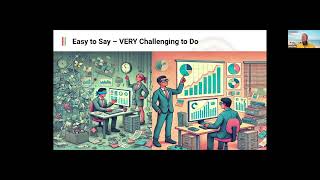
Imagine buying a system that hurts your sales process. No one does, no one does that on purpose. But we don't know, we don't have the data. And so here's what's happening. It's easy to say, it's easy to say, move the curve to the right, analyze people individually. Like look at the, look at the training stuff and then measure and iterate. Get all the data out of your tech stack. Are they really using it? It's hard. It's super hard. Companies are trying. It's not like people are sitting around, you know, twiddling their thumbs, but they have little to no data. That image on the left again, thank you. To chat. GBT and images. There's no data. They're blind. It's a blind problem solving going back to what they know or what they think they knew right, years ago. It's the black hole in the sales process. The art of sales we like to hide behind. Like what Actually creates success. What creates success? So let's talk about how, how do we deliver it? How do we find the gold nuggets? Right? Oh listen before I do that I just want to share I mentioned a couple times we our team has the as the benefit, the luxury, whatever you call it, the opportunity to talk to CEOs and management teams all across the world and what we each week we put out a newsletter. E newsletter you go in the QR code if you want to hit that every Saturday morning we send out short little less than 10 minutes will take you to read learnings things in AI world, insights, what have you. My staff, my marketing team loves to call it a think letter. They said people have enough news so they don't want to call it a newsletter. So an e think letter you'll get every Saturday morning. So if you love some of the things you've heard here, want to stay connected, hit the QR code. We can get you the E letter. It'll e newsletter will come out every Saturday morning. But I want to go back to the beginning. Back in the day. I knew watching and learning and identify the activities and details that Jeff was doing on every day was the key to success. I knew it was the little details that was the goal. That was the real goal. Everyone was trained but it's a little details I got to watch up close and personal. Right? The fool's goal. The fool's goal is the stuff we think works. Maybe it used to work. Maybe we were told it worked. Maybe our boss said we had to do it. The reality is if we're super honest, we don't have the micro data to know if it really works. Most of its opinions, God bless the systems we have, it stops at a certain level and they're disconnected. Right. What we do, what front race does. I want to tell you about the solution this company. We provide you the facts based upon the specific data for your company. And and here's how it works. This company front race that we're launching today with selling power. There's two simple steps to this tool and by the way, this is a tool in your tool belt. Not another system to add. Okay. It's step one is we connect all the data across all the systems your company has today. Communication, operations, we connect the dots. CRM, email, telephony, video conference, messaging, et al, whatever you got. Again, not another system added. We connect what you already have. This thing is up and running in a day or two. Not a six month, six week integration. Shut the company down. I can't do anything else. It's a tool. You plug in and you're gone, right? Now listen, some of you are going to say, well, I have some of this or I already do it, or my AI does, or my CRM does. It doesn't. I've had every CRM tool the reason we released this, right? It doesn't. This is one view of your data, all your data in one place. And so if parts and pieces are all over the company, you know this. Every time there's a problem, if there's a problem at your company, you have to go research it. It takes hours, right? You lost a deal, you know, somebody quit, suddenly you got to go touch 10 systems, find all this stuff, right? It's not that it's all your data in one screen. You can click and see it all in one place. And then what's amazing, the second step, there's AI applied to it, this comprehensive data set. So you have all the data together and then you apply AI to it. And it provides this continual insights and analysis all the time. Not at the end of day, not the beginning of day, all the time. AI shows you all the things you don't see. That's what AI is great at. There's all these AI tools. God bless, no shots in any other system. Again, we don't replace any of them, but we connect what's there and we show you the things you can't see. Listen, you're already swamped. If you're a leader of a team, you're interviewing, hiring, training, setting budgets, tracking pipeline, managing a team, trying to motivate, set the tone of the fuel thing. Personal development, professional development, you're in meetings with the executive team, one on one clients, right? No one goes home and goes tonight. Let me just go look through the data and see if I find stuff. No, no, it's not going to happen. Front race is your virtual business assistant, business analyst. So people are like, what the hell does that mean? So let me show you, I'm gonna give you some quick examples I get as I get short on time. Listen, imagine this, here's, I'm gonna give you five examples for deal stuff. Imagine all of your deals. The ranking of your deals based upon your company's data. Not someone's opinion, not your sales rep's opinion. We're gonna rank your pipeline based upon the success and failures at your company and all the interactions, all the micro data, is that gonna close or not? Imagine getting a list of your at risk deals and not just the deals are at Risk. But what can you do to increase the likelihood that it closes? Crazy. Again, all AI driven. Not you driven. AI driven. What are the top risks to achieving your monthly, quarterly and annual goals? Imagine getting a report of bombs that you don't see yet that might go off, right? And then on the deal side, the last one, characteristics of deals closed the last 30, 90, 180 days, right? Are what vertical markets are there, in what company size? Is it getting better? Is it getting worse? Do we have a lot of momentum somewhere? What about what's the best sales process, right? Statistically, based upon a company's performance, We've all had this question, what should you do? What's next? Well, imagine, look, you're somewhere in a sales process and you get told if you make a call, 47% more likely you'll get the deal. If you send an email, 16%. But if you send a text, you're actually going to have less likelihood to close the deal. How crazy is that? And again, it's based upon your company's data. What's worked and not worked. Same thing here, look. AI applying all the time. You reach out to people in one graph. It shows you. When are you reaching people the most? Not a Harvard study. We've all seen the study. It's Tuesday morning, before 9 or after 6 or after 4, right? No, this is based on your company, your industry, your product. When do you reach people the most? What about response? We have this thing, all the CRMs, how many calls and how many texts and how many emails? Who gives a crap if no one's responding? What AI is able to go in and find who has the best response rate? This is a live chart for a live client. We have one of their Reps has a 37% response rate. One of their low people is like 3%. I mean, so what would you do? You'd go find that person, right? Crushing it. Crushing it. What about had this whole debate where I should work, where am I good at working, right? What, what front race will do for you would actually let you set a productivity score so you can figure out where are people working the best? And this is customizable. What things do you feel like are important? So here, person one and three, they're good. Work anywhere they want. Person two needs to be in the office. Person four can be at home, right? But it lets you have a score, some data on what should happen, right? Those are the facts. Those are the facts of how to become better. So how do you get back to crushing it? What? That's really what it's all about. How do we find the goal? How do we do Great. Here's what it is. It's uncover the exact activities that generate sales success. What are they? Right. Analyze the effective effectiveness of individuals in each work setting and let them work accordingly. Who wants to make somebody less efficient? Measure what's being done and what versus what should be done. Right. And do we need to alter our tech stack? Hey, connect all the data and then assess the ROI of each system. Find the gold nuggets in the mix of all the fool's gold that we're talk that we're. We're told about. Right. And so this is my last slide. Listen, as part of selling power in this conference, we're actually giving you access to Front Race for free. You get it? You can log on. If you're looking for one big thing, the thing that gets you over the hump, the thing that gets you back to crushing it, the thing that moves you from good to great, you have to try Front Race. Scan the code, just fill it out. You can use it for free. We'll give it to you for several weeks. You'll be up and running. By this time next week, you're going to have a completely different view of your company. You're going to have the all, all this data, right? And so then people are like, well, why would you give it for free? What's going to happen? There's got to be a hook. Listen, here's being totally open. We have found when we deliver the initial set of data, it's unbelievable when you see the raw data about your company, you can't go back. You can't go back. It's amazing. And so we want that, we obviously want you to be a customer of what we're doing, right? So look, click on the link, get Front Race finally have one last thing. Listen, if you're wondering whatever happened to the Jeff guy, the guy I met was so blessed to learn from, well, he is crushing it. Jeff's married, has a couple beautiful kids. He lives in a big house in South Florida, flies on private jet. He's still a public safety officer in an agency in South Florida. Again, a love of his. But he's also the CEO and co founder of Front Race. It's amazing. We're co founders and so he's been a major driving force behind this entity. So let us help you find the gold in your company. Go get the Front Race app. No obligations. We'll do all the heavy lifting. It is amazing. God bless And I'm right at 30 minutes.
Garak.
That was awesome. I have one question, quick question. How long does it take to connect everything to front race? Do you need to have wires for that or you want.
Here's the. It's a former Pricewaterhouse Cooper's consultant. Do you want my sales answer or you want the, the video, the conference answer? What, what answer do you want me to give you?
The real answer.
Right. The. The real answer is you're up and running in like 72 hours. And it's not the tech piece, it's just us interacting with you as your company. Figure out. What system do you have? What setup do you have of those? We'll take all those notes down. Our tech puts the build and we literally get on the phone with you and you go live with the data. We. You actually see the data live populating in the single view. So within a day or two, you're up and running. It's the most amazing thing we've spent. We've had big teams. We spent the last several years developing this application to make it simple, easy to solve all the problems we had running big teams and small teams. By the way, some of our biggest clients have less than 5 reps. Knowing what the heck those people are doing, how do they work? It's amazing.
So what if you have a system that's developed by a third party? And that's a question from the audience.
Great. So literally any system. So it takes a. If you're. You have a completely custom system, it's going to take our tech team probably a little while. Right. If it's not one of the big CRMs and some of their communication systems. But to date, we've not found a system. We've been at this a couple years. We couldn't build for. We need an API key and so, you know, there's a 99% chance we'll build and be able to integrate the data because again, we're sucking the data in and putting it in a unique view.
Somebody else is asking, does this compete with Clary?
Interesting. I know Clary. So we've used Clary. I would just humbly say the following. We don't compete with anybody. I'm not. I don't want to replace anything. If you have Clary and love it, God bless. Right. What we're trying to do, all those systems, we've used a lot of them, they just give you a sliver of the view. It's like the whole analogy. We know you're looking at part of the elephant. Right? You're looking at some part of the elephant, it looks different if you're looking the front of the elephant or the back of the elephant or we show you the whole thing. And not only do we show you the whole thing, it's all links. So if you want to, you see all the action happening at a company, you can click on it and see all the emails, you can see the video conferences, you can see everything happening in one screen. That's what we're trying to give to you daily and let AI analyze the crap out of it and tell you the important things that you're missing.
You know the med pick methodology, how do you overcome the need for that?
I have, I don't know the med pick methodology.
Well, any sales, any sales methodology, any, any process that a sales team is supposed to follow.
Well, one, you know, one of the nice parts about the solution, again, at this stage of my career, my, my third startup is we used to go to people and say, change what you're doing or this is how we do it. And what's great about this, it's, it's almost like crowdsourcing being effective because when we do a build and we show somebody all the data, they'll be like, oh, this part right here doesn't really work. And so we're like, all right, we'll either leave it blank or if you want to nudge your people or modify something, we'll modify with you. So we, again, we don't approach anybody and be like, you need to change what you're doing or what. We will meet all the security protocols so your data is safe. But what's great, it's, it's self correcting, right? It's like, it's like when you start getting healthy, right? Molly and I talk about all the time. If you're trying to get healthy, it's like, it's like you have to give up everything you decide as you go through levels do you want to start, how healthy do you want to get and how much insight do you want to have? It's really up to you. And so love that part about what we're doing because there's no obligation anywhere along the line. You can pull the cord at any point you want.
So one of our attendees says, sounds like it's sales methodology agnostic.
Yes, 100% excellent.
So we have one question, audience of video and we don't have the time. But what I want to promise is that we, I'm going to post that video on YouTube with your permission and then we can share the link later in the chat or we can send it in a follow up email. Is that okay with you?
Certainly. Wherever you want to do. I'm totally game.
Okay, one last question. What if we are currently onboarding a CRM system, shouldn't we wait?
Well, depends what system, but whatever you're, you want to get that live and then we can integrate your other things as you're doing it and as you set up your, whatever your API and your protocol and your data fields are, we'll as you add that system because we've done as people are doing, we'll just keep adding things as you go. And so whenever it's totally live, we'll add that data set in. But you can, you can go online, scan the QR code, start the process today, and once your CRM is fully integrated or fully live, we'll add that to the core data set.
Brilliant. Thank you, Jack. And thank you Molly for moderating the chat. You did a phenomenal job.
And I know, Jack, you have picked an amazing teammate for this presentation today.
Stephanie, what's your take?
I love it. I was just wondering how much data is required to start to train the system and get insights. Well, again, what I mentioned, it really is up to each company. We have companies that give us all their stuff five, six, seven years back and we have some that are like we changed things like six months ago, so I only want to do that forward. So we let the companies decide. But what's great about the AI engine, as you get into it, those who are not, it gets smarter every hour, every day. So the more data you put into it, the more it gives you back. So again, the companies can decide how much or how little and when they want to plug in and when they want to take things out.
It's a no limit front raise.
Totally awesome. Thank you so much.
More from Gerhard



What Selling Looks Like When Your AI Agents Have the Context Your Sellers Do

Better Conversations, Smarter Support: Wearable AI in Business






When Scarcity-Built Systems Meet Abundance - The Judgment Gap in AI-Powered Sales Leadership
