The High Achiever's Achilles Heel: Blind Ambition
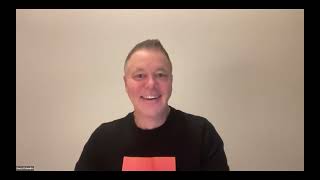
YouTube interview (Sales 3.0 Masterclass) featuring Kerry in conversation with Gerhard Gschwandtner and Stephanie about Kerry’s fall from success into burnout and addiction, his near-suicidal low point, and his recovery and transformation into a motivational speaker. The discussion covers triggers (blind ambition, overwork, exercise-then-alcohol), a pivotal encounter with Todd Duncan, therapeutic steps (psychologist, wellness practices), and Kerry’s mission to help others via speaking and nonprofit work.
Chapters
Foreign.
We're here with Carrie, Calendra and Gerhard. Is there something I heard about an ocean cruise and money? Like what do we. What is happening here?
An ocean cruise? Well, Carrie is in Australia and he's also a speaker on Fuel Inc. And I.
Listened to his story and I was fascinated. And the partners, the co founders of Fuel, put us in touch with Kerry and they said, you got to meet Kerry. So I did an interview with Carrie, which is on YouTube. And after the interview, I decided we need to have Kerry speak at our sales transformation summit. Why? Because I firmly believe that his story and his story is about self transformation is so important in order to help people transform their sales and their lives. Because we all get face. Are faced with crazy challenges in this world that we didn't invite to into our lives, that just come into our lives for some reason or another. And we need to recognize that we are challenged every single day on a. On a physical, psychological and economic level. And we need to create a better mindset and a better skill set in order to win in all three areas.
Does that make sense?
That does. That does. I think a lot of people feel like you might be talking about them that are tuning in too.
Yeah. And what, what is amazing also is, and Carrie will share the story, that one voice, one conversation, even one word can change people's lives. And I remember a conversation in Baltimore at a Sandler training conference. There was one.
Sandler distributor walked up to me and he said, thank you for saving my life. And I said, what did I do? And he says, I was down and out in sales, lost my best customer. I had a messy divorce. I thought my life was totally meaningless. And I see Selling Power all about one edition, about positive thinking and the specific strategies on how to win. And he says, I had contemplated suicide before I got this Selling Power edition. And I read the magazine and.
My plans went out the window and I focused on recovery. Because fundamentally every setback is a setup for a comeback. And that's what we want to talk about.
With, with Carrie. And Carrie, we feel honored that you joined us.
Thank you so much, Gerhard. Good morning everyone from Australia. It's just past 5 00am in the morning here. Thursday morning. Thursday morning, Correct. Right.
We are still in Wednesday on in the United States.
It's great to be here. Absolutely wonderful to be here.
So let's start from the beginning. Kerry, you were.
A very successful mortgage broker.
That's right.
And you made a lot of money and a lot of people went after you. They wanted to do business with you. And then what happened?
That's right. And I hit rock bottom. I, I burnt out. I, I being a high achiever, still a high achiever. I've realized that a lot of high achievers don't, don't know when to stop. They, you know, as we talk this, this Achilles, Achilles hill is that they, they don't have a plan. They, you know, as we, as, as we've often talked gear hard, you know, blind ambition, they just keep going, going, going without a plan. And I, I burnt out. I burnt out mentally and I burnt out physically. You know, I was telling my personal trainer yesterday morning that he goes, you've got such strong legs. And I said, he goes, why have you got such strong legs? And I said, it's because I did two spin for those people who don't know what spin is. Two, two bicycle classes a day for six, for six years. So I was physically, I was physically burnt out. I didn't realize that you could burn out from exercise, but I did. And the mental and the physical burnout just happened to come at the same time and it was a train wreck.
So you described in the interview we did, described yourself as somewhat an addictive personality. What, what was your choice of poison?
Well, once, once exercise stopped, you need, you know, for someone that enjoys that, I'm going to use the word hit, enjoys those endorphins.
The, that sort of, you know, high achiever personality, they, they thrive on that. And so I turn to, you know, alcohol to numb the pain, but the, the addictive personality craves more alcohol. And so quickly it became three, you know, three bottles of beautiful Californian Kendall Jackson. I'll be, you know, straight from Point Kendall Jackson. Chardonnay, my favorite. And you know, KFC.
And you know, then coffee and croissants the next morning. And then that just turned into a, you know, me, me becoming, you know, 38 kilograms, 76 pounds larger than what I was. So just put all that into perspective. Wow.
And while you still were working eight hours a day, or did you cut the hours?
16, 15. 16 hours a day. Work, work didn't stop because I had to keep the, you know, the, the money machine printing to, to, to live this lavish lifestyle that went with it.
So you, you had to finance your wine and Kentucky Fried Chicken habit.
Yes.
And croissants, don't forget.
Yeah, yeah. Almond croissants. Yeah, I had one staring me at the face the other morning and I said, sorry, not today.
Describe the, the moment where you came to the realization that it cannot continue. That Way.
Well, it was either. You know, I'm going to be blunt. It was either death. It was either going to take my own life, which was. Was on the cards, or.
I somehow had to pull myself out of a really dark, dark, dark place and turn it around. And, you know. Yeah, that. That was a. That. That. That was the two choices. Yeah. Yeah.
So I. Help me understand that. That emotion. How would you describe that?
You know, there are so many people that are out there suffering in silence. That. That is. That is it. That is the truth. I've. I've been through it. I've lived through it. I. Now, I like to think that I'm. I'm not going to say I'm an expert on it, but I'm. I've challenged myself to. To learn more and be a spokesperson for. For this. And when you want to get yourself so, you know, let's just call it blind drunk, so that. That pain is just not there at the end of each night, and you black yourself out. And then you hope that you don't wake up the next morning. That's. That's the description. And when you do wake up, you. You don't want to open your eyes. You. You want that room to be so dark. And. And to the point then when you just. You don't want life to continue anymore. So I. I've been there. I know what that's like.
Would you say that.
This is a feeling that is associated with rage against yourself or shame?
It's a combination. It's a mixture of guilt, shame, loneliness.
Fear.
Anger.
And immobilization.
Pardon me?
Where you feel immobilized.
Absolutely immobilized. Yeah. You. You literally, you. You have to pull yourself. I had to pull myself out of bed.
It reminds me, I interviewed Dr. Abraham Silesnik at Harvard Business School, who was a psychoanalyst and essentially said that disappointment is very isolating. It's very. It's a taboo in society. You can't go to your person sitting in the next cubicle and say, I'm disappointed. Because they are going to say, well, don't tell me your problems. I cannot solve my own. So that disappointment and shame and fear is isolating. So the real question here is, what was the breakthrough? What broke the ice for you?
Well, I, you know, I, you know. You know, we've talked about this before, Gerhard. I never really. My mother raised me as a. As a Catholic, right? And I was told, you know, you need to be a good young, you know, Catholic boy. But we never went to church, so I. So I never really believed in God until one morning when everything changed for me and I was at my office miserable, checking emails. You know, this event was happening in Melbourne, a mortgage event, Huge, big mortgage event. And then this guy, Todd Duncan from the United States, he was coming. And.
I still to this day cannot explain, and I don't know if I ever will, why his face told me that he, that Todd would be the man that I would talk to. I would tell him all my problems and then end up doing business. Business with this man from the other side of the world. And today, in some shape or form, not only do we do business together, but we are beautiful, beautiful friends. And, and his wife and him are coming to join me in two months out here in Melbourne to, to on. On a speaking tour. So if that's not divine intervention, then I don't know what is. And I can be totally honest with you. Not, not everybody is a, you know, a spiritual person, but like I, I pray every night when I go to bed now for, for different things. And so that, that was my, that was my finding. So it's. I'm thankful for it. I'm really, really thankful for it.
So when you were sitting in the audience and Todd Duncan was on stage.
What, what went through your mind?
I realized that there's a chance here. I, I realized that this is the moment to turn things around and reshape my, My, my. Reshape my mind. My.
You know, I was a great salesperson and I still am a great salesperson.
I, I think that what, what comes to my mind when I, and I know your story from, From Todd's perspective as well, that, you know, stories are really the, the construct that we use to explain our lives and the story of you is, Is not always true. And it takes some, sometimes another person's story to superimpose it over yours and see that there are gaps in the way you see the world.
Correct.
And Todd shared his story of being very successful. The ironic thing was that when, when I spoke to Dodd, he read Selling Power magazine at one point where he wasn't successful. And we had an article on goal setting and he wrote down his goals on a three by five card and that included.
His own home with an ocean view, with a tennis court and a family and everything. And after I don't know how many years he achieved that and he laminated the card and he still has it. But then he had a setback and lost 90% of his fortune. And he was not telling the story until he realized his story can help a lot of other people. And he helped you and then you sought him out after the speech. Then what happened?
Yeah, well, I find this part the best because they, they meaning Todd and his wife. You know, his wife said, you need to come to our event next month in California. So I did. And this is the part that I love the best. I went to Hollywood, which is one of the most favorite things that I love doing when I come to the US And I, I treated myself to a four day beautiful weekend in Hollywood before I headed down to Laguna Beach. And the, the negative voice in me said, it's okay to go out and have a few drinks tonight before you head down to Laguna beach and the rest is history. I went on the biggest bender that you could ever im to the point where I could not attend the first day of that event. So the negative voice said, yep, I've won. You fucked up. Get on a plane and go back to Australia and never speak to these people again. But the positive voice just came out and smashed that negative voice straight in the face and said, get your ass over to that event and go and apologize and attend the last three days. And that's what I did.
Now that's a fork in the road. If I had have got on a plane and gone back to Australia, who knows, I might be dead by now. But the, the fork was that I went and I felt like a dickhead.
But the rest is, the rest is history. And today I'm, I'm, you know, I'm doing business with, with Todd. We're doing events together in Australia. You know, this is, that, that, that was the defining moment. That, that's the, the decisions that can decide which way your life is going to go.
What a powerful story. Stephanie. When you listen to Carrie's story, what comes to your mind?
It just, it sounds like so many people who struggle and you know, pushing through the things that we feel shameful about, it takes that victim mentality away. Right. It empowers us so we can be powerful and it helps us to kind of reframe what's happening so that we could change it, we could do something different. So I think that this story is very much empowering to show us, you know, we don't need to be victims of whatever our circumstance. We can just approach the problem in a new way and rewrite our story.
Yeah. Yeah.
Well, I think that.
You know, you, you're an educator, you're, you're exposed to a lot of younger kids.
Are they challenged more than adults do? You think in this economy or in this society.
You know, it's different. And I mean the students in college, they're dealing with different things, right. Than actually out there in the workforce. Although some of our students are working and they're working to try to help pay for their tuition. And you know, there are things that are out there that are happening where if their parents are getting laid off, then that's going to impact their ability to stay in school. And so they have a full time job of being in school and getting their work done, but they're also job seekers, so they're looking for internships and opportunities. But they're also heavily influenced by the same temptations that we are with watching TV or social media or the social pressures. So I think it's just a little bit different. But a lot of the students that are at Bryant University, they are high achievers. And so I think that there's some similar threads that we see here.
Right?
Yeah.
And do, is there a mechanism for helping students with, with counseling at the university if they have a problem?
Yes, I think since the pandemic began, mental health appointments actually went up four times or 400% of what they actually. And so there's a lot of resource support on methods for coping, how to communicate more effectively. Time management is a big one and just helping students to take the first step to do something.
Gary but what help did you seek out besides start talking with Todd Duncan.
Yeah, look, well, you know, the, the first one of the things was that, you know, I, I saw a psychologist. I what, what I realized was that you actually met, you have to find the right psychologist. I think I went through three psychologists until I found the one that, that, you know, worked for me. And funny, we were having a laugh the other day because I still go and see him and you know, it's actually like.
I can share anything with, you know, with my psychologist and I, I feel so comfortable with that. There, there's no, there's no barriers and there's no boundaries to, to that discussion. So, you know, so finding the right psychologist is, is just as is important.
But I, I also discovered wellness and you know, it's quite funny that, you know, I talked about the addictive personality. You know, if, if you, you need to get off alcohol or bad food or drugs, then it needs to be replaced with something else. So that's now insane. Wellness. But I had a really bad day three days ago and I had a meeting at my wellness center with the management at the wellness center and.
Maybe I'm Fortunate that I can, but I canceled all meetings for the rest of the afternoon. And I went into the change room, I stripped off my clothes apart from my bathers, and I went into the spa sauna, cold plunge. And I spent two hours in solitude thinking about.
My. My bad day and, and how. How I fix that mentally and how I be. Come out a better person to, to take on the rest of the world. So, you know, wellness is a, Is a huge. I, I think it's underrated. I really do. Every. For anybody who says, oh, this wellness stuff, it's all fluff and all this, it's. That is so untrue. Wellness is, Is. Is so underrated. Yeah.
Yeah. And I, I remember there is a psychologist in Australia, Dr. Michael Bernard, and he wrote a number of articles on Mindset. And I did an interview with him and I asked him what is the goal, what's the objective? And, and the gist of it is.
To have his long explanation translated into something that's very tangible. It's really achieving optimal functioning on a physical. On a cognitive and emotional level so that your mind thinks straight. Like, you know, you go in a cold plunge and all of a sudden you shock your. Your brain into a different state. And that different state creates a different explanation for your situation. So you, you edit your story about you, and that in itself is curative. And you talked earlier about that, that negative thought. And I, I think that everybody has sort of the. On the left shoulder, the inner critic, and on the right shoulder, the inner champion. And our mindset needs to make a decision to silence the inner critic and nurture and grow the inner champion.
Yeah, absolutely, 100%.
So how does it feel to help other people? Obviously, you helped a lot of people through your speeches, and I want to hear more about that, that road that. The mission that you're on to help transform other people's lives with your story and with your prescription.
Yeah. Well, it's interesting because I never saw myself as a, you know, like, as a, As a speaker. I never realized. And I think partly, maybe that's just because. Because of, you know, the person that I am, but I never really saw the, The, the, the power of my message is probably how I would say it. And, you know, Todd, I have to say, you know.
Not only did he bring that out in me, he. He has made me realize that I do have a gift that I can, I can share and offer. And, and that was evident, you know, speaking around about three years ago to an audience of 2,000 people in Palm Springs. And when you have people come up to you and tell you that they nearly jumped off the top of a, you know, 20 story hotel, or a young guy in his 20s who is, you know, been in and out of rehab, you know, on, on very hard drugs because he can't handle the pressure of the mortgage broking industry in the United States, or a lady who tells you that she actually did physically get to death and her husband revived her and that my story helped those people, that's just three people out of 2,000 people that came up to me. So, so the fact that they said that my story gave them hope is, is really testament to what, what I do and what I want to do. And I've, I've just joined a not for profit organization in Australia, which is the largest mental health organization in Australia. And I will be doing some not for profit speaking to audiences in all sorts of industries here in Australia.
Well, I also want to share with our audience that Carrie is going to be in the United States in October and if you want to invite him to speak at your company, he's available, you can reach out to him on LinkedIn. We just dropped a link where you get in touch with him and.
Yeah, Amanda just dropped that link.
Where you can reach out to Kerry on LinkedIn and you know, meet up with him or you can schedule a meeting with him. I had many Zoom meetings with him and I want to support you wholeheartedly because I firmly believe that your message comes from a source that we really don't have. Because I think that disappointment, well resolved becomes the cradle of ambition that changes other people's lives.
I would agree. I would agree. Thank you so much, everybody. It's been wonderful to be here. Thank you.
Thank you, Carrie. Have a wonderful day and.
I hope that your friend will recover quickly.
Yeah, thank you.
More from Gerhard



What Selling Looks Like When Your AI Agents Have the Context Your Sellers Do

Better Conversations, Smarter Support: Wearable AI in Business






When Scarcity-Built Systems Meet Abundance - The Judgment Gap in AI-Powered Sales Leadership
