The Human Edge: How Meaningful Conversations Outperform AI in B2B Sales
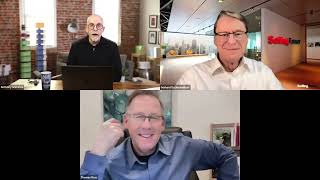
Gerhard Gschwandtner and Anthony Iannarino argue that AI handles admin work and meeting notes, but human conversation still wins deals. Sellers need to master talking to people, not just prompt engineering. Gartner warns machine-to-machine purchasing is coming.
Chapters
And today we want to focus on a. On a topic that is near and dear to my heart, which is the human edge.
Yes.
How meaningful conversations can outperform AI in B2B sales. And we'll make it a fireside chat. And I want to invite the audience to chime in with questions so I don't feel so alone. Anthony has what I call encyclopedic knowledge of the field of sales. And my first question would be.
Let's start with the. The elephant in the room. You know, the, the sales tech stack has expanded. There are. When you look at Salesforce app Exchange, you can look at 10,000 different applications.
Salesforce has changed to Agentic AI, the AI assistants, the intent marketing data platforms.
And yet when you look at the win rates, they have not improved. And sales reps spend.
They're going down.
Yeah, the sales rep spend less than a third of their time selling. So Anthony, with all your books, what, what went wrong? Where, where are we missing the boat here?
One of the things that human beings do is try to do as little as they have to. Right? That's what they. They will try to do as little as they have to. And I don't think that's the right thing. But I want to share a couple ideas I have with you because I've been thinking about this. AI is really important for us right now and it's going to be for the future. Now there's no doubt in the 1700s and the 1800s, we used steam and other ways to take the burden of human labor. We've had horses, boats, cars, planes. And if Musk gets his way, space. Even though there's nothing in there for us through all the. The centuries, there's nothing like labor, like you had to do it. You had to use either your hands and your. Or you have to go and get a steam or a horse or something like that. And now we're in another time, in 2022. I know.
Gearhart was around at a time right there. We were surprised to find a chatgpt. And I picked it up and I started to use it for a number of ways, mostly for research, even though I read a lot of books, because GPT doesn't provide the context for the results of the prompt. So you can get the prompt, but it doesn't mean that you have the context and the understanding. And that's something that we have to start thinking about. We can't just go to.
To this oracle, whatever you want to call it, an oracle, you go and you ask it and it gives you the answer, even if it's not right, even if it's a hallucination, all those things. But now we, we have a tool that does crab for cognition and other things like writing, creating content, dozens of applications that make life easier, more interesting, and raising the value of a large number of the ways that we create value now. And I think that's true. You think that's true? Yeah. It's a good tool. Right.
Well, there is the marketing hype of AI and there is the reality of AI. And I think we need to make a distinction between the two.
We are in sales and we are used to.
Hyperbole and. But as salespeople, we also know that not everything that is described in brochures turns out to be verifiable reality.
Yes.
I would, I would add one other thing to that, and that is application. Right. So sales and. Or marketing says with respect to AI is what it is, but it's the application thereof and it's the few that actually make good use of it who can give us the best responses. The reality is most people still are not there.
I don't think they spend enough time on prompt.
Huge part of it.
Yes.
Yeah. I think that the best wing that I've done this for, if you, if you care about this, about AI, I start a prompt and then I tell the prompt, make this a better prompt. And then when it makes me a better prompt, I say, that's not good enough. How do we make it even better than this? And then I end up with this giant prompt and everything is great because I keep telling it, that's not done. Do more. And it does. And it, it's very easy to do that.
I don't, you know, you know there is AI for that, right?
There's.
There's a couple of apps that actually do that really well.
What are they?
One's called promptimize AI and that's I use. And it does a fabulous job. So it's prompt my.
In the chat for me, so I can pick that up. The prompt is the whole thing. Right.
Put in, put Thomas, put it in the chat.
I will. In case other people want it too.
Yeah. Thank you.
Of course.
I think AI can help humans do more and better work. And I'm going to say this a couple ways. In a couple ways, I hope I can do this the right way. I believe that AI will become an agent and it will take the burden of our administrative tasks. I need to do this because if I have a, any kind of task like that, I'm going to have, like, I'll have measles on me or something. Like, I. I'll start to hyper th. And I can't do it. I hate administrative. So I hope I can leave this to AI to do these things that I do not want to do, because I hate anything that is administrative. I just caused me to have hives.
You're allergic.
I am. I am. But we shouldn't to reply just on AI to do the reading and doing the deep reading to keep our minds working. And I think that we have to still do this. So I've said this before. If you're not reading and you're not getting context and you're not looking into something more than just a prompt, I think that the cognition for people like that will go down and the people who decide to go AI and they will have cognition going up because they have a helper. And this is so different. In. In the 1800s, it was just labor. Now we've got something that can take care of cognition for us and help us do better work. And I think that's what we should do. This. But I don't think that we should give up with everything else, like reading, reading papers, having conversations with other people, learning things. And I think that that is going to be important. I've got two things to say here before we'll have more time. Gear harder. And I play chess. He plays it well. I pay it not so well. And I'm learning Latin right now because I think smart people would do Latin. So you got to do something, right? Whatever you do, you have to do something to keep yourself sharp. You just can't go to the Oracle and ask her the question and get the prompt. I just don't think it's going to be that way. We have to find a better way to use this. If you are using it for writing and you think that you're going to publish it, I will promise you, you can't do that because you can't copyright a prompt of whatever the re of that is. It's not used. It's not yours. It's because you use GPT. It's not yours. You can't use it in a book or anything like that. But you could put it in the book, but people will probably say, I don't know if that's really yours or not. So for me, I just write everything longhand and then I'm. I'm like, really like writing it with a pen because it's better for you. Right. Do you know that Thomas, you know.
I didn't know that.
I do.
I do that myself, but.
But I don't.
I still use the. The laptop a lot for writing, and I only use pen now for notes.
Just for notes.
I'm trying to do it the other way. I'm trying to do the pen.
What was the point of what that is to say, why is it better for you?
You will retain more of it.
Oh, I see.
Okay. I. I have to worry about retaining.
Do you use a Kindle. Right. Tablet.
No, I do.
I do that as well. I actually have a Remarkable.
Yeah, because that. The. The kindled scribe allows you to write and save files and.
Yeah, yeah, that's what mine does, too.
It's called remarkable. Same thing, Garrett.
Yeah. So there. There is a question from the audience.
When. When it comes to a salesperson who has not played with AI, what tasks do you think are best for a sales rep who has not used AI yet? What should they try?
I'm praying first when I.
I think the first thing that they should do is build a very good prompt for editing their work. So if you write something.
It'S just the best editor I've ever had. I've got typos and books that were done with publishers. I think that the first thing that they should do is make sure that they have clean text, because I think that's a great one.
I think I'd also recommend they use a transcription tool for their. For their meetings and their discussions. So, I mean, if I'm a salesperson today, starting out today, the first thing I want to do is save as much time as I possibly can and be as organized as I can. And some of these tools take away all of that drudgery. Will write my emails. I can go in and fix them, adjust them accordingly. I can use prompts in these transcription tools. I can carry all of the meetings that I have. I can go back and query those meetings. I can create my own database. I can link it to my CRM. I can link it to any other tools. So that's where I would start if I was talking to a salesperson who's starting today. In fact, that is what I tell salespeople who started today.
Are you a good writer?
Am I a good writer? I'm an okay writer. I don't know if I'd say I'm a good writer, but I would say I'm. I'm an okay writer.
Okay, good. Then you don't have to worry about it. Right.
You know, we all have to worry about It. But I, I mean, I've done enough writing in my day. But you're right, I mean, salespeople still have to learn how to write, to know how to, what to say to people, when, where and how. But these tools can save a lot of time and energy in that regard. And, and you know, you. The whole focus of this, I think, was to talk about how human conversations.
Yes.
Are the critical piece.
Right now.
We can get salespeople talking to customers more than they do today, which is, you know, in some cases less than 10%, then we've already achieved something.
So the question that comes up in my mind is how can human conversations become better with AI?
With AI?
With AI, yeah.
Well, how. Tell me about that.
Well, we had a wonderful presentation by Marianne Vanilla today where she made us aware that most salespeople go into meetings unprepared about. They don't have a roadmap for the conversation or for the meeting where they don't find alignment or first of all, they don't know how to build a business case or they don't find an alignment between the buyer's needs and your solution. Would they.
Forget critical items that they don't should bring into the first meeting that they don't think of? So I think that that's a prompt, right? Yeah. Here's the thing that my, my latest discovery is that AI will make smart people think better and average people act more confused.
I think that's true too.
Well, hopefully what it starts to do, though, is motivate the average people to take advantage, learn more about it, and then become better users.
See, the thing is, the big buzzword out there is conversation mastery. So what does that mean? That you have a great conversation with a buyer around their needs, around their situation, where you co create a solution. And the question is, what makes for a good conversation? To me, a good conversation is that you align on a human level, that you align on a business level, you align on a need, problem, solution level.
And you also the client, so that they get the understanding, the decision that they're trying to make. A rare decision, I would say.
Right.
And, and it's a rare decision, and they're trying to get it right on the first time. So that's what they're trying to do. So we have to take care of these clients. And right now, everybody I know in training will all get the same thing. Indecision. Just indecision. They can't make the decision.
Right.
That's because we're not teaching them how to understand the, the decision that they're making and what factors they should consider and what they shouldn't. And that's our job. Now I don't believe that people know this yet, but I think this is where we are. I see it all the time. What I do. They don't, they don't think enough about how do we teach them to have this conversation and how do they make that decision and if we do this, I've been in sales for, I don't know, 40 years, something like that. Long time, I know how to have a conversation. But if they don't know how to have that conversation, it's very difficult for them. And so they'll go to their solution way too soon, talk about their company, not focus on the client and what they need. And I see a lot of that going on and I try to get most of these people to move into an insight based.
Approach where they can really create value for the client and win deals. Because that's what we're supposed to be doing, right? Yeah.
And, and I think the other word that we need to introduce in this conversation is trust.
Salespeople need to earn the trust. And.
I remember interviewing.
A guy at Harvard who has written a program about trust. And I walked away with was that if you as a salesperson allow yourself to be put in a position of vulnerability.
That creates trust.
It does for sure. Yeah.
That and that and coming in prepared.
Right.
And asking the right questions and, and, and being able to understand the other person at least a little bit so that you can converse on the, on, on the right level. You know, sales is easier today in some ways than it was when, when, when I started, I don't want to say because I started before, before you did, Anthony. So I went at it even, even, even longer. But you know, you learn, you learn by talking to people and you learn that jump. And I didn't ask this and I didn't ask that and I didn't get the, I thought it was such a great conversation. Turns out I didn't get any of the right information. So you learn that. Now what AI does a little bit is it can help you do that a little faster. So it can remind you along the way, it can give you different pointers. It can also prep things for you where you may not have gotten to that. And that's what Marianne was talking about today, Gerhardt. She has a system that preps the rep quickly before going in. And that's an extremely helpful tool. So these are tools, but conversation, you still have to learn from by doing it. And, and you learn how that the.
Only way you can.
It's the only way you can. It's the only way you should. So great tools, but they don't take away from the art of conversation.
That's right, yeah. And I do think that if people think that they're going to do all of this by AI, I need, I'm seeing so many things right now where it's AI, we're going to do your BDRs, CD SDRs, we're going to make it all them. That's, that's not selling, right? That, that is not selling.
There's something else. We are in a distraction economy where the machines that try to get our attention with, with images, with messages, we get notifications, we get distracted. And one of the biggest things that we need to teach salespeople is how to be laser focused, how to eliminate all the distractions, how to focus on the now, on the present moment, on the micro expressions, on the prospect's face, on their tone of voice and on not just thinking about what am I going to say next but how do I sense.
The other person, their, their mood, in their thoughts and how do I process that? Because we need to respond to the client and not react to the client.
The last large deal I did in my family's business I was asked to go because the, the, the number was just high. It's $7.5 million.
And it's a three year deal. So quite a bit. So I was asked to go and I said I'll go. It's very interesting thing. There were 12 senior leaders, like all of them were senior leaders. I'm trying to figure out like how much money did they spend on this? Like there's 12 senior leaders. Most of them didn't say anything to me and they talked to each other most of the time. Like for two and a half hours I was there and that was a long time. I think I maybe talked to three people during multiple time. At the end of it they said we need you to come back but not next week, but after that we need you back for two and a half hours. Another two and a half hours. This is not really that difficult. I was in staffing for years, I could do this. We didn't need to do all this. But they did. So they did. And they decided that at the end they said we've, we've looked at every staffing firm in Columbus, Ohio and you're the only people we're going to work with because we're just Different. We're very, very buttoned up and we're very compliant and we do really good work. That, that was one of the things. But I'm watching and just these people are talking to each other. They're trying to make decisions while they're there. And I was just watching and just taking notes on what they're talking to each other about. And that seems to be. Was very helpful to go back the second time. And I have all the notes of the things that they were talking to each other about which made it really easy that we want it for sure. And we've got a three year deal and they're already asking for another one. So I'm probably going to have to do that because we've got people that are going to take care of that one from now. So that's it. But it's a different time. You know, people are talking to each other because they don't want to get it wrong. And I think that's the indecision that we have that all of us that are doing training can see this. So.
Yeah, I remember in one of your books, I don't know which one, you said that buyers don't need more information, they need help making sense.
Right?
Yeah, that's right. Yeah.
Making the decision. Yes. Yeah, that's our.
So the thing is, if you are sitting with all those decision makers that talk amongst themselves.
It'S very hard to.
My sister who is running that, she didn't say anything. The entire two hour and a half hours, she didn't say anything.
She didn't say a single word. Nobody's cared. They were talking to each other mostly. It's a really interesting scene when you see these people talking to themselves.
And not talking to us. And I just listen and then take notes and that's it.
So what do you say? That selling requires a lot of patience and allow the buyer to talk himself or herself into or out of a sale.
That's right. You got, you got to know the room.
Yeah, yeah. That room is a weird one. That many people. Not that it's not talking too much to us, but to each other. And I think that's. We're going to see a lot of that.
That's where your real skills came in, Anthony, because that's a whole different set of variables.
Yes.
Really be skilled to be able to.
Put that to play. Yeah, it's a. It's just a very different time. It was. I remember when there was only one person that I was talking to. Right. That was the decision maker. That was it. And There might be two people now. You walk in 12 people, 14 people.
What is this? All these people. But that they're not going to make a decision without these people and they want to get consensus. Not easy to do. But that's our job now. So it's changed and now we have to do the strategies that work now. Not, not to make too fine a.
Point on it, but what AI can do to help in that is to help us identify who within the company likely makes up that 12 so that we can now connect with all of them independently. And by the time we get to that stage we're hopefully in a better position than we would have been otherwise.
Yeah, I think that's a good thing to do too. I, I also do a lot of research. I can't share it to you because it's so long on this thing that I did. I was working with a client today and they were trying to understand what an insight based approach looked like. And so I, I did the research on their company in their industry and I sent it to them and I haven't seen anything back from them but I think it gave them an understanding of what I do.
Sure.
I very deep research on 15 headwinds and tailwinds. You don't need that many. You maybe need four. Four insights, that would be enough. But I, I have to pick what I think is going to be the one that's going to help them the most. So that's what I do. So I did that today. Now they got it. I'll see what they think about it because they weren't sure what that meant at all.
In my experience, most companies don't know the first. You know, they know the first one or two, but after that.
Yeah.
So you're, you're enlightening them, you're educating them, you're helping them understand what the real market is. So that's correct.
I've decided that I. Insights aren't enough. Non obvious insights are enough.
I want to want to throw in a few audience questions because I think they're very relevant. And the first one is Vince is asking what is going to happen when we have to sell to AI instead.
Of humans get an AI and your AI is going to talk to that.
It's going to be AI to AI.
Yeah.
If my AI sales agent talk to your AI buyer agent and then we look at the report.
That means I have to have a prompt to make sure I have an aggressive buyer or seller. Right.
Does you think it knows now how to do that.
Well, there are, there's research by Gartner that says that by 2027, 35% of all purchases are done by machines. And there's a category. An AI buying machine is typically a.
You know, a vending machine that runs out of stuff that sends a signal to the transaction. But now that is actually built into, you know, like you get a notification when your car reaches 40,000 miles to change the tire. But in complex machinery now construction equipment, machinery that is worth a million dollars, they have different a sensors that, where AI senses that a part it needs to be replaced and it, it issues an order.
Yeah.
And you know, I, I think in retail it's, it's very similar that when people at Walmart run out of stuff, then they have an advanced warning signal and then automatically buy.
Don't see you as a target guy. I think you're maybe a Costco guy, right?
I. I'm not a Costco member.
You're kidding.
No.
I, I think that that's my European thinking that. American. American. When I first came to this country, I was so perplexed. Why would our VP of sales had a snowmobile, he had a ping pong table, he had a pool table, he had those flipping machines. He had a yard full of toys and motorcycles and two cars. And he was a toy freak. And I thought he never has time to play with anything. And he has a boat he has never used. So I found America to be so excessive where people are hoarding stuff and all the storage facilities are filled with stuff that people bought that they never use and they don't have room for it. So you put it in storage and pay for it.
I've got that problem right now. I'm running out of room for books in my house. So I 3,000 now and that's quite a bit.
And I think Costco makes you buy too much and you. I think less is more.
Yeah, I agree with that.
I'm trying to simplify everything in my life. It's hard though. Sure.
Sure. But, but getting back to that question. Yes. That day is coming and it's not far off. AI will be selling to AI. It already isn't something.
If it's transactional. I would say. Yeah, that I. We're out.
No, think of the manufacturing plant that's ordering parts for this. That's all automated now.
Yeah, that's gonna be.
Mike.
Figure out the Luddite kind of thing. What's that? What are we going to do with these people?
Right.
Mike is making.
What are we going to do with those? Yeah, this. I don't know. I got a book. It's not there anymore. I took it home. It's called the.
The Machine. It's a great book. And it's what happened in the 1700s and 1800s. They started taking the machines and breaking them. Yeah.
So that's.
I don't know. AI. We'll see.
AI is a bit of a different story.
Thomas.
I have a side story. Do you realize that Anthony and Arena's initials are AI?
I'm the. The original A.I.
That'S right.
You are the Oracle.
I'd like to be the Oracle, but I don't think I have that much energy to do that for all that.
Well, with that screen in front of you and access to A.I. you're the Oracle.
Mark Bregman said, Ironically, nearly 60 years ago, Star Trek TOS had an episode where the Ms. Computer was supposed to handle all aspects of the starship. It turned. Didn't turn out well. As Mr. Spock said, computers make excellent and efficient servants, but I have no wish to serve under them.
That's right. There you go.
And that brings us to everything with.
AI now they're writing with AI instead of putting their own thoughts on there.
And that'll come full circle though, you know, and we're already seeing that you. We can all recognize AI written material more or less now, so. And right away you discard it because. Yes, exactly.
It loses credibility. And.
Frank Cispitus from Harvard Business School yesterday said. Told us that he was looking at the paper that Peter Drucker wrote in 19. 1967 at. In the McKinsey Quarterly. And the title of that paper was the Manager and the. And the story was about the IBM 360 computer. Okay.
And you can actually go to McKinsey's website and.
Search Peter Drucker, McKinsey Quarterly 1967. You can download it. And it speaks the same language. I mean, this, the same idea is true for AI than what he wrote about the computer.
Right.
It's a good tool. It's like a. It's like a, A screwdriver. It does one thing right. It does it. And that's what we needed to do.
The difference is, is that every day there's a new version of the screwdriver. So it is evolving and mutating while we speak. So by the end of the day.
But when we get to AGI, then we're going to have another conversation.
That's a. That's a whole new conversation.
I signed all the things that Say don't do AGI. We can't.
What do you, what do you think of the book Surveillance Capitalism?
Which one?
Surveillance Capitalism?
Yeah, it's a giant book. It's a giant book.
Yeah.
Yeah. It's a big book though. But I like big books. I can't help it. I just like reading.
Well, it makes you think big.
Yeah, think period.
Yes. And then I, I've started to do what I used to do when I was a younger person. I write, I will read chapter one and then I write down all my notes in a notebook so I could remember what I thought was important. I'm doing that on A one right now. And then when I go to chapter two, then I'd write out everything and then I just go to my notes after that, after I read it. So that's how I do it. I read the book one chapter at a time, making sure I have all my notes and then I have something to go back on without having to read the book all over again. Sometimes I like to read books more than one time, but they have to be really good.
So in this conversation there, there, there's one more element that we need to discuss, which is the fakes that AI can produce and how to prevent it and how to recognize it. Because.
The deep fake videos, the deep fake images, the, the fake authors, they're fake everything. So how do you protect yourself and how do you know what is authentic and real anymore?
For me, I just write whatever I'm going to write myself. I'm just not going to have it to write anything for me. But I will ask it to edit me. And I've got an edit that says you're not allowed to change anything other than it's like a punctuation, a grammar problem. So I have a prompt that does that and that makes it very clean and I like it that way.
But you do make a good point, Gerhardt. And you know, one of the things that's coming up, and we saw some of it today, agentic AI. So as more and more people use these co workers and these AI in that capacity, your ability, the gatekeeper just got tougher than ever.
Right?
So it used to be the gatekeeper, you smiled and made a good relationship with him or her and that would be the important gateway into that company. Right? That was back in the, back in the day and then that sort of went away. And now you had to go to a number of different mechanisms in order to create that contact in that relationship. Now it looks like we may have to start Getting through their AI before we can get to the person that we need to talk to. So that's going to be a whole new element in, in the sales process. That is to say their agentic AI and.
The people that I'm trying to get a contact with, I call them every single time. I always pick up the phone. I want to be a human talking to a human. I don't want nine emails back and forth. It's a waste of time for everybody. Five minutes on the phone, you can get done a lot of things. But if you have to go eight or nine emails back and forth, terrible. You know, it's like people get somewhere, I guess of over 150,000 or 150 a week or something like that. It's in terrible numbers.
You mean in terms of the emails?
The emails, yeah.
I get that daily. Most of his junk. Right. So email for me now is just.
I'm trying the fixer AI.
Okay.
And it, it puts in the things that are important.
It eliminates all the other junk.
Yeah, that's it. So I'm trying it. It seems pretty good. It leaves too many of the things that are not useful still lifting there. They should get it to move out to, into another place. Like just leave it somewhere else. It's challenging.
A lot of people don't answer their phone. So you've got to find other ways to get to them.
I want to bring this conversation to the beginning. The human edge. How meaningful conversations outperform AI and B2B sales was our topic. And.
What I'd like to point out is in the age of AI, I think we have achieved.
Access to infinite intelligence at the cost of human compassion where people have.
The capacity to know everything and the freedom to care about nothing.
Yeah, I think that's true. I wouldn't call it intelligence, I would call it data.
So they have access to it or information. Yeah.
It's up to us to put that information and data together in a way that has impact.
I, I think that we need to look at information and data as a foundation that needs to be solid. You know, when you build a house, you start with the foundation and you never look at that, you never see that when the house is built. But if the foundation is solid and stable, the house is solid and stable. And that's why we need.
To have a, a data structure in every organization that is ethical. That's true, that's authentic, that's useful. Where everybody can have, can benefit from the information to make better decisions and to create more customers.
Can I say something?
Oh, sure.
All the stuff behind Gerhard is fake. He's speaking all of that. That is not his office.
Very true.
It's. It's a fake.
Isn'T it?
But it's a nice facade.
It is, it is. See, this is just organic here where I am.
Yeah, yeah. I can blur my background.
He's got books in the back. See, he's a human. Sure. Yeah.
Yeah.
What's your block?
My favorite book. Probably a. The AI Economy. That's probably one of the. One of the ones that, that I've enjoyed most recently.
Most of the books I've been reading now have been about how society is being changed by AI and technology and.
Where it's going against the machine.
I have. Yes.
It's a good book, huh?
Great book. Yeah.
I think it's scary though.
It's very scary. And there are a lot of good ways and bad ways things can, can, can go. But it's people like us that, that help the younger generations go.
The. What is it a hack? You know that one? Yeah, it's in shed a kit or something like that. It's about. That's. It's in the name. It's Corey Doctor's new book.
Yeah, no, I don't think I've read that one.
Yeah, that's, that's a good one too. And how about the Shallows?
Yes, I've read the Shallows.
Yeah, that's a good one too. Right?
AI Valley. Yep.
Yeah.
You know, the, the.
The rapid pace of change is what concerns me the most.
Yes.
You talk about compliance and you talk about ethics. Because of our speed, those are being ignored entirely. And, and that scares me. So that, that can leave some, some big holes that people can take advantage of in a way that we haven't even thought of yet.
Yeah, well, somebody will do it because there's criminals always everywhere.
And when you talk about fake stuff, as Gerhard was, that's, that's the danger. So, you know, now we've got fake videos of it on everything.
Right.
We need to conclude because we are running over time. I've enjoyed this tremendously and we could go on for probably three more hours without repeating ourselves.
But I think we are going to lose the audience.
So I want to say goodbye.
And I think that we're going to skip the, the wrap up because we had like a freestyle rap session around AI and humanity. It was very, very enjoyable. Thomas, thank you for being the CO emc. And in honor of your presence, I want the, the last wise word from, from you to conclude our day, and then we see Everybody tomorrow at 10:30.
Well, thank you for that, and it's been a privilege and an honor. And besides that, it's been fun, you know, and I learned a lot today from all these different people. And one of the things I learned is that everything you think, you know, there's more to it, and as things change, they just continue to change. And, you know, there were examples today that we saw where, you know, the, the simple thing of podcasts. What else can we do with podcast? How can we take, take advantage of that? What else can we do with videos? How else can we use videos in our sales process? There's so many things that we can, we can do better and more efficiently, and AI is nothing more than a tool. It's, you know, it's a fantastic tool, and, and it's going to get better and, and better and, and, and hopefully we, we, we use it in a way that's, that's impactful and positive for everybody. But for salespeople coming on today, this would be my, my last word. If you don't understand and start using AI daily today, and I mean an hour a day, every day, in six months, you will not have a job in sales.
Marw, thank you.
Thank you, Anthony. Awesome.
More from Gerhard



What Selling Looks Like When Your AI Agents Have the Context Your Sellers Do

Better Conversations, Smarter Support: Wearable AI in Business






When Scarcity-Built Systems Meet Abundance - The Judgment Gap in AI-Powered Sales Leadership
