The Science of Peak Performance
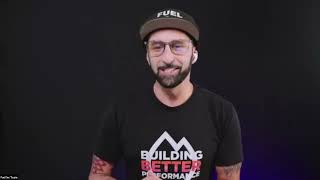
Alex explains the power law of practice and how deliberate practice with expert feedback drives peak performance. The session includes a sales role-play demo with Tom Searcy and covers how Fuel applies these principles to professional skills training.
Chapters
All right, so let's talk about the science of peak performance. Okay? About six weeks ago, we at FUEL were about to commission some. Some scientists and mathematicians to prove something. Because we're like, okay, look, how do we prove that skill? Practice, Purposeful, repetitive practice improves performance in that skill that you're practicing. So we wanted to prove it. And if anyone's in chat just wants to laugh about it, you can. Before I even start sharing the details, guess what? It's been proven. It's been proven since the 1800s. There's an entire law around it. So I want to show everyone this, because this right here should blow everyone's mind, especially after what you heard Ron talking about just now and a couple other people today that were. They were talking about practice and role playing and things of that nature. Okay?
So when we went to Jim, JW is the local neuroscientist, and he's got a bunch of mathematician friends. We're like, hey, we'll just ask jw. He'll help us put together the study. And he goes, nope, just look it up. It's already been done over and over again, like, okay, so let's look it up.
So we.
This is a condensed version, okay, of all the research, and I encourage you all to go see this and do this research for yourself.
So what the law says quickly, kind of just skim through that. What the law says. Okay, you can skim through that real quick. But what. I'm going to start scrolling and you can take a screen cap of that if you want. I'm going to start scrolling a little bit. And in 1885, they discovered that memory and skill follow a predictable curve based on repetition. Okay? We all kind of know that intuitively, right? I do something over and over again, I get better. But that's not true in all cases, which we'll talk about in just a second, right? It's not just all practice. All practice does make an impact. But if you are practicing bad habits, you will see over time your results will decline, okay? Because you've improved your bad habits.
Okay?
So in 1981 and 1993 were some of the largest breakthroughs in this study. Okay? Now we're talking. Remember, we're talking about the science of. Of maximum performance and how it is law, okay? This is the law. So.
Newell and Rosenblum formally showed that nearly all human skill improvement follows the power law of practice. Okay? Power law, like gravity's law. You can't challenge that, right? Newton got hit. Couldn't stop that thing from hitting him in the head can't. So what happened in 1993 was the, the biggest breakthrough and what, exactly what Ron was talking about, what others were talking about. You can't just practice. You have to practice a specific kind of way. Something very special has to happen. And what I'm about to read to you should open up everyone's eyes to the fact that there is a way, proven, scientific way why professional athletes are elite. Not because they're born with talent. Not because they're born with talent. It's actually the first part. Prove that expert guided practice is the biggest factor in accelerating improvement. Expert guided practice. Okay, where do we see that sports, what do we mean? An athlete doesn't just practice and then go play a game. An athlete's practicing and he's got a coach in his ear going, if you do this, you'll run five seconds faster around the lap. If you do this, you're going to jump 3 inches higher. If you do this, you're going to hit harder. If you do this, you're going to push 200 pounds further. They don't just watch them practice. They're constantly adjusting things and they're constantly making improvements. So they're always getting better. It is more important than talent agent experience. So how many people come in to an environment, a new position and go, well, it's going to take me a long time to figure this out. I don't have the experience, I don't have the natural talent. And it's all nonsense. It's not true. The science shows that if you have expert guided feedback every time you practice, you will improve. You can't even help it. You will get better even if you don't want to. You cannot not get better. Let's pause there for a second. I think this is worth the discussion. I think this is worth unpacking a little bit because this right here shows us why athletes, the military. I just spent time with one of 70. He's one of 70 master chefs in this country. And he said, alex, what you're talking about is exactly how chefs become master chefs. We don't cut the onion a thousand times, so we know how to cut the onion. We cut the onion a thousand times so we can never make a mistake cutting the onion. That's why we do it. We'll never make a mistake again. That's why we do it a thousand times and we practice. So let's, let's address this. What, what, what are your thoughts here when you see something like that?
Gerhardt, Thomas, any thoughts yeah.
So when, when you're getting practice and when you're getting people that are actually coaching you and, and you're getting feedback while you're doing that, you can improve dramatically.
I totally agree. There's no arguing with science.
Practice makes perfect.
Perfect. Practice makes perfect.
Right?
That's. And Ron just said that in his last session. It's not actually. Hey, everyone, listening. Practice does not make perfect. Especially when you're having them practice with other peers or people that don't really know what's going on and they start giving them feedback that's detrimental. That's, that's what happens all the time in school. Okay. The school system wanted to bring this type of role play and practice and teach back into the school system, but it fails. You know why? Because the teacher says, okay, now turn to the student sitting next to you and practice. And the person you're practicing with has no clue what the right result is. They go, nice. That sounded really good. And it was way off. And every single person in class. Yes, we practiced. The best way to apply that is for that teacher to practice with every single student. Not possible. They're the expert. They are the only ones that should be practicing and role playing and helping people improve. Not a peer that's also trying to learn this. So huge mistake. If you're doing this right now, now in your own company where you all role play together and you're role playing with people who are trying to role play and figure it out for themselves, mistake results go down sometimes, they go up sometimes because you'll have somebody really, really good who is great, who's role playing because they want to practice and refine themselves, but they actually can give good feedback. But in most cases.
Say it again.
Can you show us a practical example of perfect?
Yeah, I'd love to. I thought you'd never ask.
Okay, so.
Let'S do a couple of different practices. Okay. Since we're here, we're talking about sales. I'm gonna start with, with a sales practice. Okay. This is Tom Searcy. For anyone that doesn't know, I'd look him up. He is, wrote the book on, On Hunt, Big sales. He sold into 190 of the Fortune 500 companies. His approach, his methodology is world known. I mean, he is, is, is remarkable.
So thank you.
Somebody big whale hunting. Right?
He is, he's just incredible.
Right?
And so.
What I'm going to do is I'm going to do a scenario. And Ron mentioned this too. If you don't know what the scenario is, the Details. You can't get the right practice. So here I am. I'm going to set up a scenario. I'm just going to make. Make one up. Unless. Gerhard, do you want to. I can unmute it. I can have you do it. You want me to do it?
You do it.
All right. I'm doing it. All right. So we're going to make this scenario up.
Hi, Alex. How can I help you today?
Hey, Tom. I'd like to do a roleplay scenario with you. A sales role play where I'm a salesperson at a technology company that sells performance improvement and morale improvement and overall team improvement. And you are CEO of an organization that has more than 500 people. And we've been. We were referred to you by a mutual friend who says you're looking for ways to improve team morale, engagement, performance, the whole thing. And I'd like to role play that with you now.
Sounds like a valuable conversation to have before we dive in. What's the specific goal you're trying to achieve with this role play session? And on a scale of 1 to 10, how confident do you feel about achieving that goal? Right now?
The goal I want to achieve in this is to move the conversation to contract review. Get you. Get you excited enough to move the conversation to contract review. And my confidence in this right now is 6 out of 10.
Got it. Moving the conversation to contract review is a clear objective. And would you like to start with a simpler scenario and gradually increase the complexity or would you prefer to jump right into a more challenging situation?
You know, the guy I'll be talking with is a straight shooter and seems pretty tough actually. So let's just jump into a challenging conversation. Let me give you a little bit more about this guy. This guy is in his early 50s, has been very successful, has just been promoted to CEO in his company and wants to make big changes and make an impact so he can prove that they made the right decision.
Understood. A challenging, high stakes scenario with a newly promoted, results driven CEO. I'm ready. Let's begin. CEO Persona activated. Alright, Come on in. I've heard you were referred by mutual friend's name. They mentioned you have something that could help us with team morale, engagement and performance. Frankly, we've got a lot on our plate right now with my recent promotion and the need to make a significant impact. So let's cut to the chase. What exactly do you offer and how quickly can it deliver measurable results for an organization of our size?
Thanks so much for taking the time to meet and I'm Glad that Gerhard, our mutual friend, brought us. Brought us together. You know, before we dive into it, I do want to make sure that the introduction was timely and worth it. Are you still in the mindset and need to see morale, engagement, and performance improvement across the board?
Yes, absolutely. As I said, I'm the new CEO and I need to demonstrate that this company can achieve significant improvements. Morale, engagement, performance. These are all critical areas. If your solution can genuinely move the needle, I'm all ears, but I don't have time for fluff. What's your solution? And what kind of impact can I expect and how fast?
Okay, let's start with the area of improvement that you need most for your company. Instead of trying to tackle all three at once, which area do you feel will make the biggest impact if we improve?
That's a fair question. If I had to pick one area to start, it would be performance. We need to see a tangible increase in productivity and output. If performance improves, morale and engagement often follow. So tell me, how does your solution directly impact performance?
And when you say performance, are you talking about in a specific area, specific department, or across the board? Is there, like sales, customer success, marketing, accounting, finance? Like, what is a specific department or across the board needs to. Needs improvement?
We need to see a significant uplift in our sales performance. That's the engine of this company, and frankly, it's been sputtering. I need to see revenue growth, larger deal sizes, and a more predictable sales pipeline. So how does your solution address those specific performance metrics and sales?
All right. What a great question.
So before. Before I continue this, Gerhard Thomas. Is this good? Do we want to keep going, or is this a good enough demo to show? Because there's some good questions I just saw pop up in chat as well. Should we keep doing it, or is this a good place to pause?
I'd like to hear your elevator pitch to the CEO.
Okay.
All right.
Sorry about that. Ramble there for a second. So your question about how is this specific. How is this going to impact sales performance directly? Okay, so FUEL is built on a mathematical law of performance. It uses the science of practicing with expert feedback to guarantee. Well, forget about guaranteeing. And it's not even a guarantee. It's not just a guarantee or a promise. It's the law. If. If and when your team starts to practice. And every time they practice, they have guided expert feedback that proves. And we can show you some real evidence with organizations that are doing this now from around the world, it proves that what happens is confidence shoots through the roof. And when we're talking about sales, since that's the most important thing for you to increase performance on, nothing improves sales performance like confidence. Now of course, if you don't know your product and you don't know your service and you know the value, you can't even if you're confident it's not going to work. So you still need the skills, you still need the ability to know your product or service, your company and the value it adds. And every time you practice with that in mind, and there's all of this guided feedback, every single person continues to improve even if they don't want to. It is just law. So how do we increase performance and sales? Sales metrics, we give everyone the confidence and the ability to apply themselves and perform at the highest levels every time. And they don't just hope to win deals and meetings. Fuel is designed for you to find the meeting inside your calendar that needs a specific outcome and practice that meeting before the meeting happens. It is just like preparing to play a team the week before. You have to play them and you're going to play every team differently. And that's exactly what this platform does. It allows every person on your team to practice for a specific scenario, not just a generic one.
I appreciate the explanation of Fuel and its focus on confidence through practice and expert feedback. The analogy to preparing for a sports game is helpful. However, I need to understand the tangible outcomes more clearly. You mentioned mathematical law of performance and science of practicing. Can you provide a specific example of how this translates to increased sales performance performance in a company like mine? For instance, what kind of improvement in sales metrics like conversion rates, deal size or sales cycle length have your clients seen and within what time frame I need to see the roi?
That's such a, such a great question. Well, we're seeing within, within the first 90 days of any team that's joining the platform and implementing this, this practice, seeing a 30% increase in the first 90 days on, on all types of metrics. Right. That 30% numbers is, is a generic number across the board in conversions.
Follow ups, referrals, contracts, all. It's, it's an aggregate number of all of those different things happening. But performance improvement at a minimum of 30% in the first 90 days. Some people are seeing 100% growth in the first 90 days. As an individual performer, not as an organization, but as an individual performer. They're seeing that kind of result. And one of the biggest things you'll start to hear from your team is they could not imagine being able to perform at these levels because they've never had someone constantly giving them ways to improve. They've just been winging it, right? They warm up with the customer that they're talking to. That's a mistake. And what happens is after just a few days inside the platform, their confidence goes through the roof. And you're going to start seeing text messages, emails and calls that say, thank you for this, I need this. I can actually show you one from today from a Fortune, a Fortune 100 company that sent us an email today saying how this is transforming them right now. So if you'd like to see that, I can forward those things to you.
A 30% increase in sales metrics within 90 days is certainly compelling. And individual performers seeing 100% growth is impressive. You mentioned that fuel helps users practice specific scenarios, not just generic ones. Can you give me a concrete example of how that works in practice for a sales scenario? For instance, how would a salesperson prepare for a negotiation with a difficult procurement team? Or how would they practice handling a specific objection from a C suite executive? I need to visualize how this translates into real world application for my sales team.
This is such, such great questions. Well, it's exactly as you just described. Every situation can be completely customized. You're able to share the customer profile, the company profile, your product details, and use all of that information to create the scenario that the AI, which by the way, all experts, all experts in their fields, are able to take the information that your sales team provides and then role play based on that scenario. And because our system is not a large language model, it doesn't just answer question, it's a small language model. It only uses the expertise of the people you're talking to. So if I was to ask an expert for something like hey, help me cook a pot roast or what's your crypto investment strategy? Unless they're experts in that, they will never answer it. So as your team role plays, they role play with an expert that isn't that is specifically designed to help them in that sales scenario or presentation scenario and not just some random GPT or some random data that's just going to come up with answers every time you ask a question. It's not about giving you an answer. It's about giving you a concise, accurate answer every single time and not making things up. Because I asked you for the fifth time the same question. The answers have to be concise. In general, big, big language models are not great for enterprises because they cannot predict similar responses over and over and over again. Whereas here, every single salesperson that comes into practice will get the same great information. It's like sitting with that expert one on one every single time.
I understand your frustration. My apologies for the repeated line of questioning. I'm trying to ensure I fully grasp the practical application for my specific needs you've highlighted that fuel provides.
Hey, Tom, can you do me a favor? Can you give me a grade and a summary so far of how I'm doing on a scale of 1 to 10?
Okay, let's pause for a moment. Overall, I'd give you a 7 out of 10 so far. Here's a quick summary. What went well? You've done a good job of establishing the context and understanding my core need for improved sales performance. You've presented some compelling data points like the 30% increase in metrics and the individual growth potential, which definitely grabbed my attention. Your explanation of fuel focusing on practice and expert feedback is a solid concept. Areas for improvement. While the concept is clear, I'm still looking for a more concrete step by step example of how fuel would equip a salesperson to handle a specific challenging sales scenario, like negotiating with a tough procurement team.
Team.
Or addressing a C suite executive's objection. I need to visualize the practical application and how it direct.
All right, so this is just one example of all the different instructors on here that help you practice what you need to practice and apply so that you can become not just proficient, but you can actually master. We like to talk about Fuel is mastery in making. Because you are actually practicing how masters practice. You're actually getting feedback like masters get feedback. You're not just hoping. You're not just listening to a podcast or reading a book and hoping it makes an impact on you. You're learning and applying. And the one thing we didn't show, which I'll show here in just a second, is the small language model, which is very important. How can I help you today? Hey, Ali, can I get an investment, a crypto investment strategy from you, please?
That's outside what I focus on and would rather not guess. I specialize in meditation, mindfulness, calming the mind, managing worry and anxiety, and related topics. Okay. Plus every single expert here, right? This is important. This is why large language models aren't built for this. They're not designed for this. Not what this is for. Every single expert is an expert in their. In their content. So she's never going to just make something up. She's not even. She doesn't even know that other stuff exists. She can't make it up. She can only show you what she knows. And she knows all of this. Okay. She knows everything about meditation. And when you go and look at all the other experts, that is what you want for every single department. Every single department. I know sales is the core focus and you got to have that engine running. But this is designed to help everyone in every department. How do you communicate? How do leaders communicate? Tough conversation with somebody you might have to let go or might have to do this with or might have to move them around. Don't just hope to have a good conversation with that person, practice it. Know that you're going to have a good conversation. And so that's the science of maximum and peak performance is not just practice, perfect practice with experts that give you feedback. And I went quickly through it, everyone. I didn't do an entire role play where he stops and gives me feedback on his own, sends me a summary, tells me how I can improve it. I didn't even show you uploading a call transcript and having any one of these AIs tell me how I could have done better on the call. Suggest a conversation, suggest an email, suggest a text message, voicemail, script, all of it. This is an entire ecosystem that helps you accomplish whatever you need to accomplish in enterprise, in business, in personal development. So most of most people that realize that large language model. So everyone goes to ChatGPT and Gemini and Claude and they're like, help me write this email, help me write this text. But every time you go it tells you something different and keeps making things up. When you have a small language model with experts, you will always get better guidance. Thomas, you and I talk about this all the time. I don't use Chat, GPT or Gemini anymore for any content writing, anything at all. It's all through experts.
Let's focus on the recommendation that Tom Cse made in his summary about your performance where he specifically said, I need to visualize a scenario where your solution can help me or help you as a salesperson.
Negotiate a deal with. With an enterprise client. So could you practically take that recommendation and feed it into the Gitima AI avatar?
Yeah. So the recommendation from Tom CRC to be fed into a conversation with. With Jeffrey, right? To get his. Absolutely. Yes, you can. Absolutely. I did just. I'll give you a live example. I did this today. We had a call with Salesforce today. I wanted to write an email. I never just want to write an email from the top of my head anymore just to make it up. I write it up, I write, I bring it into Fuel. I said, hey, Tom, help me make this better. And then I took it from Tom and took it to Merrick, the personality expert, and said, hey, I'm speaking to an owl Dove. How would you take this amazing email from Tom and now make it fit an Al Dove Persona? And it was beautiful. And I sent it out. Right. And I used it that way. So, yes, I can take the recommendations from Tom and then take it from one expert and move it to another expert and see how Jeffrey would do it, get his recommendations. If I want more expert recommendations, like if I want Thomas's feedback on a way to approach it, I could get Thomas's, too. So that is. You made a great point. That's exactly what this is for, is a combination of experts that can help you in their expertise rather than just one singular point of entry and output.
Okay, let's ask Jeffrey.
So you want me to grab what I got from.
Tom and plug it into for Jeffrey. Okay.
Right.
So.
Here we go. This is the recommendation.
Or areas of improvement.
Yeah.
But zero in on that negotiation scenario.
So.
The negotiation scenario with a tough proc.
Procurement team.
Okay. Yep. Like a negotiation. Okay.
Right. So eliminate the first line and a half from. From the input after the wood peel. Okay, good.
So, okay.
I need help getting better at the following. Okay.
Boom. Okay, so he's going to tell me now. Here we go.
Then I can take this and take it out into the voice portion and actually start to practice it. Right, Right. So I can use this to set it up. I can use this piece to get some information, and then I can move it over.
Okay. Alex, you're aiming at the big leagues. Negotiating with tough procurement and handling. CC is. Here's the deal. It's all about value, confidence, and smart questions. And so he's going to give me this, and I'm going to be able to take this, and then I'm going to be able to apply it in a practice. So this is. I love the scenario you just came up with, Gerhard, but this is. This is exactly how you would use. That is you could go to an expert like Jeffrey, get this, and then go back and now start to practice. Remember, the key in sales, everyone is not knowing what to say. It's actually being able to say it. Okay. Like, there's a lot of people that read lots of books and go, I know all the different ways I could do this, but they just don't have the confidence and ability to move their mouth in that fashion. This gives you practice.
Can you also shift over to Tom? CSE'S video lessons that you can consume afterwards.
Yes. Great, great question. So in, in this particular example, where do I have. Tom doesn't have his, his content in there at the moment that way. But I could go to. Let's just go to Amir for a second and I could be in the middle of a conversation with him and I can ask him something like this.
Hi, Alex, how can I help you today?
Hey Amir, I'm in sales and I want to, I want to get better and, and just be more confident in, in my sales. Can you rec. That would help me, you know, increase my confidence and improve my, my sales skills?
Absolutely. I hear you want to boost your confidence and sharpen your sales skills. That's the spirit. I recommend starting with my lesson called Master Sales Win Life. In this lesson I share my own journey from humble beginnings to becoming a top 1% high performer.
So the answer is yes, you can ask when you're in it. They even the AI will actually recommend a lesson. When it sees that you're talking about things that, that it knows exists inside the lesson itself, it will actually recommend it.
Can you. That's the purpose of that lesson.
Oh yes.
Hi, my name is Amir Syed and I'm so happy you're here. My career has been filled with lots of adventures and I started off as a cold caller and what some call the cold caller to baller. I've made over 100,000 cold calls in my career rejection. And I have a great relationship. And during that journey I have become one of the top 1% high performers in my respective industry. And as of today, I'm leading over a thousand other high performers in one of the most dynamic coaching communities in the country. But it didn't always start that way.
This was by the. This, this is one of the most watched courses in In Fuel. Amir is. And he's. He does lead one of the largest groups in the country of high performers. Constantly growing. So yeah, all of the content that's here is powered by their expertise. So yes.
So what you're saying is you have created a learning system within MyFuel IE where people can follow courses and then role play with the experts and get expert advice whenever they're needed. Whenever they run into a tough situation, they can ask Kidimo or Tom CRC or 60 other experts.
Exactly right. And again, this whole conversation is about understanding that performance is not a guess. If you are not getting performance improvement from your team, it is something you are doing or not doing with your team. It is not a guess.
It all Comes down to the micro learning and then putting it into action. So it's one thing to listen to something, it's another thing to practice it. So you're bringing, you're bringing those two concepts to play and now you can, you're creating top performers. Just like any athlete who practices shooting oops for four hours every day and suddenly they look like they're incredible. They're not. They're incredible because they practiced four hours a day. So it's the same that you learn it, you put it into action.
Exactly right. Don't hold.
What is, what is your special offer for the holidays?
Okay, so. Well, Gerhardt, I was going to keep this without any sort of sales stuff going on.
Something I know you've created something that looks pretty special.
Yes.
Where is it? With your. Let me just see if I have the.
Yes. Here we go.
Okay, so. Whoopsie.
All right. So for your audience, okay. And for your audience only, here we've created a 90 day victory sprint to beat the end of the year slump. But really this is about everybody. The end of the year slump is not just the end of the year slump. The end of your slump typically rolls into January, February. So it's about running through the new year, not to the new year. It's running through the new year. And so we have this 90 day victory sprint. And anyone that, that joins this victory Sprint, you get access to the entire platform, plus three very special playlists that don't exist inside the platform. Only for those that sign up for this victory sprint, you'll get a playlist of these micro lessons on finding leads. You'll get a playlist on micro lessons on connecting with leads. And you'll get a playlist of micro lessons on converting and closing those leads. You'll also have access to special prompts. Let's do a role play where you're a potential client who doubts my experience. Okay.
And there are two different ways to engage with this. We created this special. The hundred dollar offer is all you, Gerhard. This was you asking us to something special for your audience. Make sure that they have something that they want to dip their toe into this and really see it in action that they can do that. And then for those that are ready to just accelerate, finish strong and crush next quarter, we have this offer for $280. So for our $280 or $100 you get. For the $100 offer, you get over three hours of AI practice, plus access to all of the content inside the platform, including those, those playlists and Access to our live virtual events that happen every single week so you can meet our instructors live and very important. That's all part of retention of knowledge. And then for those that are like, hey, I'm not, I don't want to just hit the next level. I'm ready to break through. You get 16 and a half hours of interactive conversations, roleplay scenarios, script review, the transcripts, all of those things. So both packages are available. I'm going to post it in, I'm going to post this in chat. Here it already is. Thank you. Somebody else posted it, so thank you very much.
Yeah, and it's a, this is a one time payment. Just so you know, when you get a hundred dollar program or the 280, it's a 1 time payment that gives you access to fuel for an entire year. Even though this is a 90 day sprint. Because we want you to dig in and practice and apply yourself every single day, not just once in a while.
Well, thank you Alex. That was an amazing presentation. I have seen your website when you started in the early days and the pace of improvement is amazing. You, your engineers, behind the scenes, brilliant people that you, you're the orchestra leader and you make them sing well.
Thank you. And, and they're easy, they're, they're easy to, to lead because they don't need any leading. They're, they're, they're stars and they would be doing this in other organizations. We're just lucky to have them here. And that's part of, that's part of the magic. Stars in every position is a philosophy that we believe in and hence the platform.
Great session, Alex. We need to wrap up and move to the next session. Thomas, one sentence summary of this amazing session by Alex.
If you're not practicing, you're not improving and this gives you a quick, easy way to practice every day on your time, when you're comfortable and you don't have to take some managers time away, you can do it on your own and be ready for every call you have and close 10 times more business.
Thanks everybody.
Thanks Alex.
Great job.
Thank you.
More from Gerhard



What Selling Looks Like When Your AI Agents Have the Context Your Sellers Do

Better Conversations, Smarter Support: Wearable AI in Business






When Scarcity-Built Systems Meet Abundance - The Judgment Gap in AI-Powered Sales Leadership
