This One Time At Brand Camp: Driving Success With Your Story
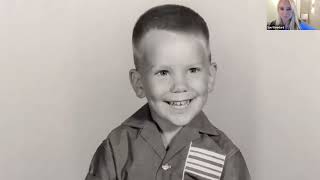
Sue Woodard explains why stories matter in sales and marketing, sharing five practical secrets: find your story, use emotion, empower others, capture it, and activate it. She uses her father's influence and her entry into mortgages as examples of how stories increase engagement and revenue.
Questions this video answers
Find your story; leverage emotion in your story; empower others to tell the story; capture your story (record/store it); activate your story (repeat/use across channels).
suewoodard.com
me@suesu.com
Chapters
Well, we as we decided to start a little bit earlier. So the official presentation will start in eight minutes, but sue and I decided to have a little fireside chat for eight minutes as a warm up. And for all those that are in the session, you get a bonus. Welcome Sue.
Thank you so much for having me. I'm honored to be here and honored to be here with all your guests as well.
I have seen you on fuel, MyFuel IO and you created courses.
What made you decide first of all to work with Fuel and what do you think of their platform?
I think it's a super powerful platform for, you know, it's for people that are doing any kind of selling. And let's face it, if you're in selling, relationship management, customer success, I mean it's, it's an invaluable tool for learning. And the reason I got involved is, you know, partly because of great relationships that I have had for so many years. You know, Todd Duncan and I have been friends for, gosh, 25 years as one of the founders. Alex Cutsish also have been friends with him for, gosh, five or 10 years now and had the great opportunity to meet, you know, very high caliber people like yourself and your team. And so it was kind of a no brainer to want to get more involved with Fuel.
So what are you most passionate about when you address audiences? What drives you?
You know, what I get most excited about is I've been working with sales or success teams for about 35 years. And what makes me the most excited when I talk to an audience that generally is sales, sales enablement, marketing, leadership is, you know, I like to have, have fun with the presentations. But what's most important to me is giving people actual tactical things they can bring back to their business. I've heard I'm a great student of people who are public speakers and there are people who are phenomenal, entertaining, wonderful speakers and you leave going, oh, that was so good. But you don't have anything to actually go do, right. And so what I really get excited about is ensuring that the folks who are listening, I mean, I spent a lot of my career in sales myself and I know it's hard and so I like to provide. Yes, we want to have, you know, strategy, we want to have fun, we want to have some inspiration. But I really want to make sure that people leave with a playbook of what they can go back to their desk and do the next day.
Well, you, you strike me as a highly respected thought leader in the customer success in business. But There are two things that stand out for me. One is you act on a very strategic platform, and yet you were deeply human.
That's a great compliment.
I want to know where that comes from.
You know, honestly, it. I would say my inspiration in my life is my dad. My dad passed away about two and a half years ago, and he was.
It was very interesting. I remember at his funeral, there was about 35 guys who came over that I'd never met before that told me your dad was literally my best friend. And that's how. That's how my dad made people feel. And I saw that when I was growing up. And so as I got into the business world, I remember him even telling me, he said, when you go into interviews, he said, ask questions. And I said, well, dad, an interview. Aren't they supposed to be asking me questions? And. And he said, no, you ask questions. He said, you connect with the person. You let them talk and share, and you connect with them and have them feel seen and heard, and you'll be surprised at what happens for you. And I watched my dad do this masterfully throughout his personal and professional life. And so that was honestly a big inspiration for me, is my own dad.
So what you just did is you told us a story that made you a lot more relatable, and you are creating a bond with the audience through your personal stories, but at the same time, the story that you told.
Is.
Makes you vulnerable. And.
Yeah, it makes me. Makes my throat lump up a little bit. I'll be honest. I mean, you know, it's. You know, but it's. It's real life. And I always think about that with both an audience that I'm speaking to, clients I'm consulting with, or just anybody you come in. In contact with. You know, everybody's got a story, right? Everybody's got, you know, got real life happening. Every single person that's listening on this call, they've got stories that are happening in their personal and professional life right now, today.
And that reminds me of what Maya Angelou said, that people will forget what you looked like or will forget what you said.
Yes.
They will never forget how you made them feel.
That's right.
The reason I want to tease out that nugget of wisdom from you is because you are not afraid of sharing your feelings.
That is true. That is true. I've. I would say for better or for worse, personally and professionally, I wear my little heart right here. But I have, you know, I found it's. It's actually just being human.
Being personal Being myself and being vulnerable has, has helped me in business because like I said, everybody out there, everybody you're connecting with, kind of high powered executive it is you're trying to sell to on the other side of the table. They've got stuff going on in their life too. They've got, you know, things that are happening. They've got family things, they've got, you know, hope streams, concerns that are far outside of, you know, the product or service you're talking to them about.
Yeah, I, I grew up in an European environment and.
Then during the time where I grew up, people were not showing their emotions. And when I came to the United States, I thought, why are people so willing to be vulnerable and, and wear their emotions on their sleeves? It was a culture shock for me and was a learning experience. I had to navigate that very carefully because it was counter to my, my learning experience.
It's true. I actually remember reading once that we're talking about, it was a travel article I was reading about St. Petersburg and they said, people think there's something wrong with you if you walk around smiling at people and saying hello because there's like, it's not what you do.
Right, right.
It is funny. And I actually grew up in Minnesota and lived there my whole life. And that is full of Scandinavians who are, you know, pretty, pretty chill. But my, my Southern father from, from Georgia, he brought his y' all up there to the north and, you know, and it's like I said, it's been a, it's been a fun adventure.
So I want to shift gears and I want to encourage you to share. And I will be back with a few more questions, so please take it away. Sue, educate us on how to drive success with your story.
I will do it. Let's dive right into it. Hopefully everybody can see my screen. And what I'm going to do is actually give kind of a quick hit speed tour through one of the keynote presentations that I give. As I mentioned, I've been working with sales and success teams either on social media. Sales or success teams are with them via consulting for about 35 years. And yes, we're going to do a little snapshot of one of my presentations that I give to sales, marketing and leadership teams. And before I start a presentation, they normally read this lovely, long, you know, boring bio that I wrote, of course, about my accomplishments and helping companies build revenue and awards I won in media appearances, blah, blah, blah. And even though I wrote it, you kind of have to do it. I can feel the audience eyes glaze over. And sometimes I share the actual story of how I got started in my industry, which, like most stories, is a little bit more interesting. So the true story of how I arrived in real estate, finance and technology was my college boyfriend broke my heart. Yep. 19 years old, broke up with me, and I actually dropped out of college, moved back home, and I went to work for credit union, opening checking accounts and doing car loans and so forth. But at our branch, we kept getting robbed. Okay, we were robbed three times at our branch. And the last time, it was actually my roommate at the time, one of my closest friends, robbed at gunpoint. It was very stressful and traumatic. We had to go to the bureau of criminal apprehension and look at, you know, mug shots and all these crazy things. And I thought I got to work in a different branch. And the only job that was open at a different branch that I felt might be safer was in the mortgage department. And I did end up falling in love with this industry that helps real people achieve homeownership. But that's the real story of how I got into this. Now compare that to a boring bio of, you know, accomplishments and so forth. You don't really remember that as much, but you do remember probably the weird story about my boyfriend breaking up with me, gun, gunpoint, LED robberies, and then getting into the industry. Because we remember stories, right? Human brains are wired to actually remember stories. And we all have stories as we were talking about just a moment ago. And what I know is this is in business stories create relationship relevance, retention, recruits recall, repeat business, referral, business results, and revenue. And revenue is not a dirty word here. Sometimes people get uncomfortable being like, oh, we can't just be all about revenue. It's like, yes, we can. You know, I mean, we're here. We are not nonprofits. We are here to actually drive revenue. And that is okay. And by the way, for those of you who like alliteration, I do too, and you're welcome. But this is true. Stories create all of these things. And I'm going to tell you a quick story about how stories do create revenue. Back in 2009, there was a journalist named Rob Walker, and he did a really interesting kind of social experiment, and it was called the Significant objects Study. And you can look it up online. It's very interesting. But what he did is they purchased 200 items for about a dollar each. They went to thrift stores, garage sales, things like that, and purchased all these kind of funny little items like you see on the screen. And then he reached out to 200 authors and had each of them write a backstory for each of the objects. Then they listed them on ebay with that backstory to see what was happen, what would happen. Now, they took great care not to. You know, they're not trying to hoax anyone. They weren't trying to say this thing was owned by Mark Twain or anything like that, but they just put a very interesting human backstory behind the object. Here's an example. Look at this amazing ceramic horse head. They purchased this for 99 cents at a thrift shop. You can see it's about, you know, maybe five inches tall, something like that. They added a story to it. And I wish I could see you because I would ask you this question. How much do you think it sold for? So I'll tell you this. 99 cent horse head sold for $62.95, with the backstory that went behind it, providing color about its history and so forth. And that's about a 6,400% increase from, from the price that they paid for this. And all in with the 200 objects, they paid about $129. And with the story married to them, they got $8,000 for the objects. Okay. Now, all of the money was donated to charity, of course. And again, nobody was hoaxed in this. You know, it's a really interesting.
That stories actually work, and stories work because we're human, and we are human emotional creatures. We are wired to respond to stories. And in fact, we've been telling stories since the beginning of time. It was the very first way that we ever transferred knowledge was telling stories. And I love this image because I so want to know, like, what story this guy is telling. But we went from telling these kind of stories for communication. Then there was pictures and paintings of our stories, then there was hieroglyphics, then we went to text. And now we went to the penultimate most powerful form of communication, PowerPoint. Yay. I know. Now I'm a big fan of PowerPoint. But think about it. What do you think we as humans are actually most wired to respond to it's stories. That's what our brain, our old little brain, that's what we're most wired to adapt to. And you can tell when a story comes up in a conversation, that in a presentation, people start listening in a very different way. And what I know is that for all of you listening, you and the brands that you represent and your team members and people and your own customers and the problems that you solve for them, you have a story worth telling. And I want to help inspire you very quickly today to start telling it. So to give you just a little bit of foundation about why this is so important right now is you just can't afford to be a commodity. Regardless of what it is that you're out there selling you, you can't afford it. It's very interesting when you look at some of the stats out there. Consumers actually say that stories influence their buying decisions. 83% of consumers say that, that stories influence their buying decision. 66% of people say that consumers really just want regular people stories from brands. And I think this is really important because guess what, we all are and our customers are is we're regular people. You don't have to hire the celebrity endorser to, you know, do some big spotlight for your brand. Regular people stories is what people relate to. 68% of people remember stories. Interestingly, only 5% of people remember stats, which means you may not remember this slide anyways, but there you go for some interesting statistics for you. But what we're going to do is very quickly go through the five secrets of driving success with your brand story. So the very first thing is to find your story. Now, I don't say make up your story or create your story because you already have stories in your business. You have a story, your team members have stories, your customers have stories, your business partners have stories. You just have to go find them. You know, some examples of this is how did you get into your industry? Why did you join your particular company? Maybe your founder story or company history. There's many stories out there about how employees helped someone or how did a customer dream come through, through what you. Through what you do at your company. What were some of the hardships and how were they overcome? It's very important in storytelling to tell the real story, not just the highlight reel. Kind of think back to my, you know, the bio of accolades that I couldn't tell you and the real story of like kind of this weird path that I took to get into my industry. I'm going to show you a very quick example of a 30 second founder story and hopefully you'll be able to hear the audio. But this is a good example of finding a story that already existed and then starting to tell it.
Grew up in a small town.
You trust everything you hear and your word is all you have, and your word is your bond. There's a humility part of fairway that's very important and that's. I personally think that's an upbringing from a small town. Nobody has any money in small towns, nobody cared. But as long as you treated people good, that was all that mattered. 25 plus years later, fairway, that's what we look for.
So when I was presenting to this company, of course I had to pause it on his epic like 70s hairstyle there because his team definitely enjoyed seeing that. And what I do present to different audiences or different conferences, I always will weave in their own people, their own stories, because you can find a lot of really interesting and great things out there. But this particular founder story that I used for one presentation, I love partly because it was infused with emotion. And that brings us to secret number two. Secret number two is about leveraging emotion in your story. Very interesting because emotion creates, increases your memory of certain.
Events and activities and presentations and people. Emotional stories connect us with strangers and they provide what's called rapid forecast, meaning we can kind of more quickly make an assessment about somebody and do we like them and do we trust them? When you feel emotions, right, and it's interesting, like probably none of us can remember what we were doing last Wednesday morning. We can probably all remember our wedding day, the day a child was born, a grandchild was born, things like that. Because your brain just behaves differently when something happens, that emotions are involved and it actually does behave differently. I'm going to give you a snapshot of what your brain on stories looks like. It looks a little something like this. There's this amazing group of chemicals that fire off in your brain when people hear a story and get positive emotions attached to that story. You've got dopamine, oxytocin. I always accidentally say oxycontin, oxycontin, oxytocin, serotonin and endorphins. And this is called the angels cocktail. And when you have these things going off in your brain when somebody is, is listening to a story that's got these positive emotions attached to it. What it causes in people is that you see the person telling the story is more human, you feel more bonded to them. They seem trustworthy. You tend to feel more generous and compassionate and charitable. You're paying more attention to what they're talking about. If you've ever been to a charity gala, it is why they tell you stories, because they work. A couple of ideas for bringing emotion into your own stories are things like these. How do you improve lives? You know, what is it that you do that makes your customers lives better? Triumph over adversity, whether that's in your business or something. For a customer. Humans love the hero's journey. They love that there was a challenge, but then these things happened and then da da da da. And you can make your customer the hero. The brain loves those stories and they have a lot of positive emotion that goes with them. And again, you and your team and your customer have all these stories, probably great stories. We just need to go find them. So bringing it to life. We'll go to the third secret of driving success with your story. You want to empower other people to tell the story. When you think about who are the storytellers in your business, hey, it's everybody. It's all your team members. It's your leadership, your recruiters and your own customers. They become the storytellers of your business. And you want to empower and encourage people to tell those stories because people at heart are naturally pretty good storytellers. Some people are better than others. You probably know someone in your family like I do with my, you know, my father who is such a great storyteller. You probably know someone like that and you think, oh, I might not be as good, but people are wired, hardwired to be pretty good storytellers. And if you make this a part of your, your culture, you think about who they tell the stories to. The listeners are other team members, right? Team members talking to other team members about something that happened with the customer and you know, what are the stories that they're telling there prospects in your business for a sales team. It is so powerful when you start telling about another customer, whether they be named or unnamed and how you solve problems and made something great happen for that customer. Maybe other business partners, recruits coming into your business. And all these listeners of course become your next group of storytellers. I'm going to give you a quick example. It's about 25 seconds long of capturing a customer story really well.
When we first opened our doors in January 2020, our goal was to build a legacy. The hidden gem is full service event venue nestled right here in Hope, Michigan. When we first started out, we knew right away to partner with Dark Bank. They worked with us to build and grow our business. And now we provide you anything you need for a special event you're putting together. There's just something incredible knowing that Dark bank believed in us from the beginning. They truly are a community focused business now.
I love that story. I can feel little angels cocktail flowing because think about how magical that is. You have, they had this bank had their own customer sharing the story. The customer is having the opportunity to talk about what they do at their business. But they turn back to their relationship with Dart bank and how foundational that was. That is an amazing story for dartbank to share, for this customer to share. So it's a good example of a customer story. Let's go to the next secret for telling your story. Number four is capturing your story. Now I'm going to ask, I can't see the chat, but if I asked you, do you recognize this picture? I know that a bunch of you would say yes, I recognize the picture of the midnight ride of Paul Revere. This particular picture was actually off of a Smithsonian article because you probably know that it wasn't just Paul Revere. The article was entitled the Midnight Ride of Paul Revere and some other guys. There were two other guys, William Dawes and Samuel Prescott. And believe it or not, Paul Revere, unbeknownst to many people, actually didn't make it to Lexington. It was Samuel Prescott who was the guy who actually completed the whole journey. But here's the interesting thing. Why does everybody know Paul Revere? Because Paul Revere captured the story. He captured the story of this midnight ride and told it over and over and over and over and over and over again. And so it became the legendary midnight ride of Paul Revere. And then there were some other guys. So this shows you the power of capturing the stories of your business and telling them. Right. The biggest advice that I'll give you, I'm not going to go through this in detail, but don't overcomplicate the step. You know, we all are tracking around with like thousands thousand dollar cameras in our, in our pockets, you know, with our phones. You don't need to have a lot of crazy equipment to do this. You don't need a big production crew. You can capture these stories really easily. Video interviews, writing them down, keeping them in a shared drive and sharing your drive with other people, capturing stories from your team about how they've helped a customer. There's lots of different ways to do that. But you don't want the stories to get misremembered, misstold, or worst of all, forgotten. In the interest of time, we're going to skip right to the fifth secret of driving revenue with your stories, which is activating your story. Now what this means is that you have the stories, now you've got to activate them, meaning you got to get it out of your head and into someone else's. You probably have heard the statistic that it takes nine times of saying something to a customer before they actually start to hear it and remember it. And Generally, we get tired of getting the same prospect and talking to them about things like, I've already told this person this, I've already had this conversation. But we have to remember, of course, our prospects and the folks that we're talking to, a lot of things going on in their world. And we hear our own stories all the time in our own heads. But our customers and our prospects don't connect with them in the same way. You have to make the story repeatable. You have to activate it. Some ways to do that is of course, via your websites. I learned I didn't know this, but About Us is like the number two hit place on a website. Using your stories in your digital and print marketing. Believe me, when you start out digital, print marketing, social media, and you start telling a story and you tell a customer story named or unnamed, but when you start making it real and having people connect to it, they're going to read the rest of that piece in a totally different way. Maybe newsletters, maybe pr. But most importantly, it's operating with consistency and telling these stories more often and make them a part of your culture is that this is what we talk to our prospects about. These are our best customer stories that we want to share with them. We want to share these within our team so that on the days when times get tough, these are the stories that help lift us up. Here's how we've overcome challenges in the past. There's so many powerful things about telling your story. So to wrap up those final things again, the five secrets are finding the stories of your business, leveraging emotion in your story, empowering others to tell your story, capture your story, keep them somewhere, and finally activate your story and make sure that you are using it. And I will tell you, the power of story is incredibly personal to me right now. I shared with you early on, hopefully you were all on early with Gerhard and I, but I shared a little bit about my dad. My dad was an amazing storyteller and his eyes would twinkle and he was just a wonderful storyteller and he would tell stories about our family history. My mom has Alzheimer's and she is losing her. Stories are going away and sometimes funny things will happen. When we were cleaning up some things in our house, you know, she'll. She'll tell me about this priceless thing that was made by great Aunt Annie and you know, it was handcrafted by her. And the next minute she's telling me, oh, that's something I got at Goodwill, you know, and you're like, ah, which one Is it? And so it's very personal to me right now that I know I become the keeper of my family stories. And it's up to me now to start telling those stories and passing them on. And this room, this virtual room that we're in, is full of stories. Your brand is a story. You each have a story. Your team members have stories. And more stories are happening every single day. So I encourage you to get really good at telling the stories. In your business and in the sea of sameness out there, you and your brand can be unforgettable. So I appreciate you coming to brandcamp, as I like to call it. If you wanted to reach out to me, I'd love to connect with you on LinkedIn. You can go to my website, which is su woodard.com, or you can email me@suesu.com but thank you for the time.
That was amazing. Thank you so much. Sue. I think what you showed us is that the stories that we tell, they shape relationships, they accelerate trust, they help customers feel understood. And stories don't just inform, they transform. And stories give people reasons to care, to remember, and to act. That's right. Judging by the wonderful feedback we are getting from the audience.
Oh, good. Yay.
Well, love you. Great presentation. Very powerful. Three heart signs. Awesome.
Thank you. Hearts back to all of you. I. I loved having the time.
Even jealousy from Bob Britton. Did sue steal one of my presentation decks?
Oh, no, no. But I'll share mine with you. I'd love to see yours.
I love it.
And also, it makes me think of what 6 sigla said. Logic makes people think, but emotions make people act. And when you just talk about data and facts, you create the best educated customer who won't make a decision. But if you use emotion, emotions make people act. So. And that's why I think it's so powerful what you shared, that stories will open people's hearts, and you have shown us that when you opened your heart, we all stepped in and felt welcome.
Wow. Thank you. Thank you. I. I feel it. I wish I could see everybody and that we could be together. But you know what? I'm. I'm so honored by this opportunity. And. And thank you for. To. To all of you for joining.
One more tip from.
The trick with telling a story is to tell it and then shut up. I think it's a powerful advice.
True. Is that. Is that a sign? Are you telling me to. You know.
Is it time for me to shut up?
No, I think there's. There's another story which Is Roger A, who was the.
CEO of Fox News. He had a consulting company before he went to Fox, and he was advising Ronald Reagan for his debate. And the critical issue was the age. Age is always an issue in every presidential campaign. And. And Ed Mies told Roger Ailes when they did the rehearsals, do not bring up the age. We don't want to talk about it. We don't want to have the president get self conscious and nervous about it. And Roger disagreed and he said that did the rehearsals. And after the rehearsals, they walked from this room downstairs to the Oval Office. And as they were walking, Roger found himself next to Ronald Reagan. And he says, Mr. President, do you have any counter ideas if the age question should come up? And at me's behind said, oh, no, don't. Don't do that. And Ronald Reagan said.
You know, I have that line of youth and inexperience that I can use against Walter Mondale. And in the real debate, he says, when the age question came up from the moderator, he says, I made a promise to myself that I will never bring up the age and inexperience of my opponent. And he blew it out of the water. And Roger told him, after you deliver that line, shut up.
Yep.
And when you look at the video, the video is on YouTube. Ronald Reagan delivered the line.
Smirked, took a glass of a sip from a glass of water, and he didn't step on the line and he won the election.
Yep. Yep. He was class, class act all the way. And I know that clip, it's. It's worth looking up.
Right. Well, thank you so much, Sue. That was.
Thank you.
Yes. And I hope the rest of the day is absolutely wonderful. And thank you again to you, your team, your amazing team, and of course, your great guests here today as well.
Thank you, Sue.
Take care, everybody. Bye. Bye.
Bye.
More from Gerhard



What Selling Looks Like When Your AI Agents Have the Context Your Sellers Do

Better Conversations, Smarter Support: Wearable AI in Business






When Scarcity-Built Systems Meet Abundance - The Judgment Gap in AI-Powered Sales Leadership
