Transform Your GTM Strategy & Uncover Your True ICP Using AI-Driven Data Intelligence
Mike shows how technographic data and AI can sharpen your go-to-market strategy and find your true ideal customer profile. He maps product-adoption journeys, predicts next purchases, and identifies high-propensity lookalike accounts using a cloud-services SMB example.
Chapters
Foreign.
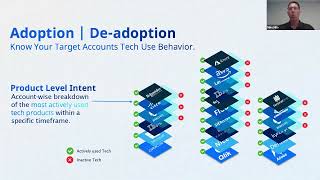
To talk about data intelligence, how to transform your gtm, how to use insights and data insights to either do three things. Define your gtm, define your GTM strategy, understand what your ICP truly is and letting data tell the story. Or better yet letting data intelligence tell the story. Right. So this product became to be. I've been in the data space for a very long time and it's looking at specific insights. Today we're going to talk about what's called technographic data technographic intelligence and how we can utilize this to the best of our ability to be hyper focused and solve for what our pain is in the marketplace. Whether you're a multi, multi billion dollar SaaS product or you're an embryonic company, we all need to understand who our buyers are, how to hyperfocus and hyper define those buyers and really build these GTM plans and strategies and and get really narrow and focused on our ICP versus what our ICP really is, what our data tells us it is through journey mapping and technographic intelligence. I'll use that word again and define it further. But really solving for the pain, right? Because in B2B SaaS and that's kind of what we're built for in the B2B SAS world. It's tough out there, right? And most of the time your, your companies or your accounts won't buy from you. Whether it's in a land and expand type of methodology, whether you're embryonic and building a new product and new go to market strategy or whether and you're a multibillion dollar company bringing a new product to life. We need to understand how we're going to place our bets and do it actively. So moving on here, if I make sure my slides working again, how do we get here? Right. Data is an insanely complicated world. We've all heard about data. It's nauseating and sometimes it's not fun. But let's look at 10 years of data maturity. Right. You know back 10 years ago I was at working for some big agencies like Gartner and things like that. It's all about aligning firmographic, doing account based marketing, getting that single pane of glass. How do we that Persona, what does our customer look like, all those wonderful things and then how do we fuel that so we can't. We gave rise to what's called the CDP and the CDP engine. So now we have another plain of glass to look at. We got our CRM database, we put a CDP on top of that and we think we got a market to where our buyers are. We're going to do some things like cookie tracking and IP mapping and do some database enrichment and then we're going to use all that cool stuff to do audience marketing, audience management. We're going to orchestrate this with the CDP engine. We're going to target, we're going to chase people around the Internet, we're going to put ads on their Yahoo banners and things like that. And now we're kind of in this AI world, right? So in the last three or four to five years AI has changed the lotto, right? So it's char, it's changed programming for hyper targeted type of campaigns, it's changed audience management and now it's also going to change using things like large language models and AI based intelligence. It's going to help us hyper target the companies that are in product or in market for our product next. So knowing the pathways and journeys and knowing the answers to the quiz before the quiz is even asked, if my company's bought three or four or five products beforehand, I know they're going to buy my product next or they're going to buy my customers or competitors product. I want to be there at that pinpoint in the journey, that moment in time, in that inflection point so I can influence that customer journey specifically towards my product or get out of the way and let them choose my competitor and wait, not waste sales cycle energy and more long lines money. So again, who needs these insights, right? In the past and even today we need our marketing, marketing ops, sales ops, data science leaders, what have you going forward is with AI in the mix, our AI sellers, our chatbots, our AI BD engines, our AI targeted outreach, audience management engines. And when it comes to more complicated solutions and solution pathways, we need to train our AI solution engineers. If we have complicated products we're selling, taking to market or we're competing with others in that space. And again, it's all about understanding the current gaps in the go to market motion. So if I'm a multi billion dollar company bringing a new product to life with a current book of business or a current ABM strategy or goals, how do I understand what these gaps are? Because I think I might know my customer journey based on product market fit of the products I brought to life before, I think I know what it is because I'm a new product, I'm embryonic to the market, I'm going to go ahead and attack what I think my customers are. But how can I use targeted account information knowing what a map looks like of a company knowing what products they're using, what tech products they've adopted, what tech products they've de adopted. And then how can I use LLM and AI to really understand that methodology of a journey of a company so I can be there at the right time? And again, technographic intelligence, I'm coming back to that word, is really what we see as technographic insights married with intent data. And say that again. Technographic insights. So again, the chemical profile of a company. So a company's using this entire tech stack. I know what that tech stack looks like. I know what that picture looks like. That's a static picture. I can now take intent data and I can search what that company's doing. So what all the Personas and people that company are looking, they're going online, they're looking for new products, they're looking for new software, they're looking for new SaaS technologies. I can marry picture A and picture B together. Here's what they have now, here's what they're looking for. And I can put that into what we call technographic insights. Knowing where the puck is going and we can skate to where the puck is going and be right there at the next iteration to place our service or business. So again, what's intent data? It's really the map of first party data and third party data. And that data comes from different sources. Bigstream, co op data, you may have affiliate data, you may have data you purchased outside of your company. Right. So what you have in your company, first party data, I buy third party data and I get some versions of intent and there's hundreds of different versions of what intent data is nowadays. And we have our own version of what intent data is and we call that technographic data. So we live in the technographic data world, right? So let's going to kind of look at our account data and our modern B2B tech stack. We got our firmographic data, we got our contact data of customers we know in our abm we have customers we don't know. And then we have an idea now where what the companies are using, right? So technographic data now versus six years ago now it's a little more fluid, it's out there in the marketplace. I have an idea what companies are using, what software they're using. And I have some intent that I can buy from other sources. That's great, that's cool. But now what do I do with it? How do I execute upon that? So again, we've built a data intelligence platform using AI so eight, nine years ago versus today, the AI, the intelligence models, what we've built was something that didn't exist years ago. So how do we identify companies with a product market intent fit based on their technographic picture, again what tech they're using and then also actively market for my product or service. And then I can be razor focused, hyper focused, laser focused in terms of marketing or reaching out to those individuals, whether they be known or unknown and make sure we have product in front of them for a perfect fit. And that can help us define not only our ABM strategies but also really define our icp. So again it's rigging the game. How can we use what's called technographic intelligence to rig the game? And everyone is kind of familiar with this, right? We've all seen the wall in my what's one of my kids favorite show. But again if we know where we can drop that ball and if I know the pathway in the journey of that ball is going to happen, I'll let that journey happen or let that journey play out. But at the last moment in time before that ball drops in bucket 10k or $10 if I can influence that inflection point, that moment with their software buying journey. Now imagine this is a software buying journey. They bought products along the way and at that last second I can make that influence. That's what we're bringing to market. That's the intelligence we're giving companies and it's, and it's actually changing the game day over day. So as we kind of unpack that again technographic data with the adoption trends in churn trends and again this leads into modeling. So again we want to understand what their past tech was, what their current tech is and this leads to help us understand their future technologies. So again using AI now more than ever to understand millions and millions of pathways and journeys in companies. So We've mapped over 20 million companies and 20 and hundreds of millions of buying journeys from product ABC that leads to DBCA in terms of what products they're going to buy next. So looking at past tech, current tech, we can predict the future as to what companies are going to buy based on the size of the company, the scope of the company. And we can map that anywhere from embryonic companies all the way to trillion dollar organizations looking at what they're going to buy next based on these modeling and these features. And it's all done through kind of AI. And what does that process look like? And again it's not so much about our company, our process. But if you're not doing something like this similar, I'd recommend getting with a company that can process this kind of data and feed this kind of data to your organizations in real time so you can build these hyper focused models. So it's really about looking at data assets, right? We look at things all over the world. We grape, we scrape billions and billions of data points if you will. Anything from resume databases, social streams, jobs, anything you can think of, 10Ks, 10Qs to learn as much as we can about the companies and the people within them, to have a really good understanding and build an understanding of what technologies they're using. And then with that we can use AI cleansing and understand what pathways and models they've done. If they walk so far to see what products they've purchased and in what sequence of products they've purchased. And then we can spin that through our AI prediction engine, knowing that companies bought these five or six products, they're going to buy these four or five products next based on their journey mapping of those products. So again, we call that our next tech purchase technology. And again other companies are out there doing something similar as well. It's not so much about us, but find something that works for you in your data pathways to understand what this looks like. So if you look at the modeling and going back to that kind of that, that.
That graphic before with the wall, if we know what that journey looks like, if I know exactly where that ball might land and based on the products they've bought before, then I can be there at that moment to influence that next purchase. And that defines my icp. My ICP might not be in this instance if I'm Adobe analytics. It's not when that company bought Salesforce, it's not when that company moved from the Salesforce to Marketo, they propagated Adroll, they need to put a Oracle blue Chi wrapper on top of it. And now at that point in time, in that perfect inflection point, Adobe, that becomes a highly targeted IC opportunity for Adobe and that defines their tail. So using these technology adoption sequences, really hyper focuses on where you spend your energy and efforts. And now if you're looking to chase someone across the Internet using Programmatic Media, Programmatic bad buys, you can put more money into that client that's specifically in market for your product versus others who you may think are in market for your product at that particular time. And again, organizational intent is another version. So again, if I'm fortunate, if I'm Silver Peak in this instance, and we have this pathway of adoption trends from Dell to AWS to RingCentral to Zscaler, Fortinet and we need some cloud options or opportunities. Again, I want to identify that pathway, that journey. That journey could be important to me or that last purchase could be important to me. Depends on the company, depends on the B2B SaaS instance. We can define all that or help you define what that journey is. So perhaps you might want to understand when this company bought RingCentral. Maybe that becomes a blip on the radar and helps us define our ICP in our future business that could be six or eight months down the road. So it's all about using technographic intelligence to use AI predictive modeling to place our bets and win our bets almost every time. So again, I'll finish on a couple slides here as my time is kind of nearing close technographic insights we can help you or others can help you as well provide the technographic data and insights to kind of help you understand what those, those hardware and software buying purchase buying decisions look like. How can we understand those neural links? There's neural pathways and exploit those to our best bets so we can get in front of our customers at the right time. More along the lines of if I'm a large company and I want to protect my product, I want to protect my my walled garden and I have a known customer base, I want to know when customers or clients in the market looking to de adopt my product. So that's also an important methodology. If you're a large company. Again maybe your GTM is or your go to market for 2025 or 2026 is let's make sure we can keep the clients and customers we have and we want to know six months or ahead of time and understanding adoption trends of when companies or Personas are looking to find Competitive technologies or SaaS products or solutions in the marketplace that would be amazing to understand that intelligence. And then last, as we understand our new B2B tech stack for 2025 and beyond, it's really about looking at our whole account data. So our entire account is about our firmographic data, our contact data. Yes, we can get real time technographic data. Again, that picture of what technologies are being used. And again it's a picture, it's a static screenshot in time. But again taking all that together and understanding what the next moves are in the chessboard for that company, what the next tech purchase is going to be based on, where they're going, what they've adopted, what they bought, what they've de adopted that is what's moving markets and that's what we call technographic intelligence. And we feel that's a game changer as we kind of move to 2030. So some companies like from us or others, how do we present this data? It can be done in dashboard, dashboard methodologies, we can build walled gardens, we can do all kinds of things with data and oftentimes we never touch a company's data lake or proprietary data. So we can do all this in various sandboxes and things like that to make sure that we never disrupt any company's first party data, which is so mission critical.
And again, as I close and our 20 minutes is kind of almost coming up again, looking at what we're going to do or what others could do for you is again step one, really understand and prioritize what the propensity is, what you think it is, what your first party data tells you. That's great. Step two is really segmenting and profiling at the product level. So understanding what the technographic challenges look like today, what the product adoption trends are for the company, what products they have now, where does your mark and that will define your market fit and your product market fit can help you understand your go to market strategy. And then the last, when we want to hyper target our icp, we want to actually use that data driven intelligence or that technographic intelligence saying we know the companies, we know the firmographic companies, they're the right size scope within our, within our TAM model. Yes, we think it's properly segmented, we have the right portion almost to market to, but do we have the right time and the right influence? And that's where that technographic intelligence can give us that last leg, that last few inches of the mile to really position ourselves to those right Personas and right companies at the perfect time to make that influential decision. So with that I'll pause there, maybe leaving a minute or two for questions, comments or anything else.
So Mike, can you give me a practical example of a company that you have recently worked with where you laid out that blueprint and helped him grow?
Yeah, absolutely. And I had this prepared just in case I would come up. So here's a cloud services company, can't name names specifically, but they were looking to understand from a cloud adoption methodology what products and we help them identify three things. What products led to more adoption of cloud services, what specific products led to larger propensity of or using larger workloads in a cloud based environment and number three, when was it the right time? To reach out to these SMB enterprises to really position these cloud services. So in this instance, we use what's called our NTP data. We built the whole background of the products and the companies that they think they wanted to market to in the SMB. We really helped their define their SMB market. And then using firmographics, which they already had the firmographic intelligence of what their clients were, we actually helped them uncover all the companies using these products. So, for example, are they using Zoom 8x8 WebEx or blue jeans? That's number one. Number two is great. Are they using any cloud services now? And number three is looking at those things and taking the firmographic information of the company. How fast they're growing, how many people they are, what is their revenue potential if I produce or put my cloud services in front of this individual now? So what we help to find is, yes, we can find companies adopting these technologies which lead to a high buying propensity. But at the very end is, that's great, but do they have the money or can they expand? And is that expansion worth the effort to sell our cloud services into these SMB companies, hoping they're going to grow up into big boy and big girl organizations going forward? So that is one use case we did for a large major cloud provider. Can't name names, but if you can follow along those trends, that was something.
What I find fascinating is that, you know, when you look at medical technology as an analogy to what you just said in, in the past, doctors use X rays to diagnose. And then all of a sudden you have 3D imaging where you get a totally different picture, where you have more granularity, you can turn things around and zoom in and diagnose more accurately. And I think that's what's happening in the marketplace. AI provides a better diagnostic tool to dial in on all the dimensions of an icp and also gets you the ability to message those people and speak their language.
I think you said it best and what a great analogy that is. And I'll adopt that analogy. Thank you, Gerhard. But I think what AI has allowed us to do as a company, or all others as well, is take a static image. So five or six years ago, we had an X ray and it's comparing an X ray to a 3D enhanced MRI. Today we have a 3D enhanced MRI. We can scale, multi scaler, we can look, we can dive, we can zoom in, zoom out versus just that X ray and think how much more we can do with that. And AI has allowed us to do all that deep learning and map all those product integrations that frankly, five years ago we couldn't do.
How do people get in touch with you?
You can get in touch with me at my email address. I think you guys have that. It's Mike Pro PlusData co. My phone number's on there as well. Happy to have any chats, Mike.
MikerOPlus data co.
Correct.
There's no M. No M. And how do people engage with you when they reach out to you? Do you schedule a consultation or a demonstration or what's, what's the typical thing to expect?
Yeah, absolutely. It's really about, you know, let's have a consultation and then, you know, for free. We'll just take a look at, we'll understand. We'll begin to map some of their clients. So, you know, with permission, with companies, they say, here's our current TAM or icp, what we think it is, here's our list of one client or customers and I can, we can dissect how you won those customers or versus how you think you won those customers and begin to map any trends, if you will, based on technology mapping. And we can begin to understand, hey, the customers you've won adopted products, xyz, BCDA and then yours. And then we can go out and hunt for more of those look alikes, if you will, to really help you become hyperfocused.
So you almost do like an ICP effectiveness audit.
Yeah, like an audit, almost. A free X ray, if you will. Yeah.
More from Gerhard



What Selling Looks Like When Your AI Agents Have the Context Your Sellers Do

Better Conversations, Smarter Support: Wearable AI in Business






When Scarcity-Built Systems Meet Abundance - The Judgment Gap in AI-Powered Sales Leadership
